Industrial facilities carry a unique theft profile. A single factory floor can hold tens of thousands of dollars in tooling, raw materials, copper wiring and finished inventory — much of it sitting behind ground-floor office windows, control rooms and parts cribs that go unmanned for entire shifts. The perimeter fence and the camera array get the security budget, but the windows are where forced entry actually happens. The FBI’s 2024 data shows 83% of forced-entry incidents come through a window or door, and the average loss runs $2,661 per event. On an industrial site, that number is usually far higher once you factor in downtime and replacement lead times on specialized equipment. Window security bars close the cheapest, most-exploited gap on the property.
Why Industrial Facilities Are a Target

- High-value, portable assets. Hand tools, dies, copper, catalytic-grade metals and packaged inventory are easy to grab and easy to fence — and most of it lives near ground-floor glass.
- Long unmanned windows. Night shifts, weekends and seasonal slowdowns leave control rooms, tool cribs and admin buildings empty for hours, giving intruders time to work undisturbed.
- Predictable perimeters. Standalone admin and gatehouse buildings sit at the edge of the lot, away from the main floor’s foot traffic, making their windows the path of least resistance.
What Window Bars Add to a Layered Defense

Cameras and alarms record and notify — they do not stop anyone. Physical bars do. Research shows 85% of opportunistic break-ins are abandoned if the intruder isn’t inside within 60 seconds, and 60% of burglars skip a building entirely when they see visible bars. That deterrence is the point: a hardened window turns your facility into the harder target on the block. SWB bars are galvanized steel with an electrostatic paint finish, a 30+ year lifespan, and a DIY install of 15–30 minutes per window at $85 per core module — versus $300–$1,500+ for custom commercial fabrication. They slot into a layered program alongside your fencing, lighting and monitoring without a fabrication contract or a single welded joint.
Choosing the Right SWB Model by Building Type
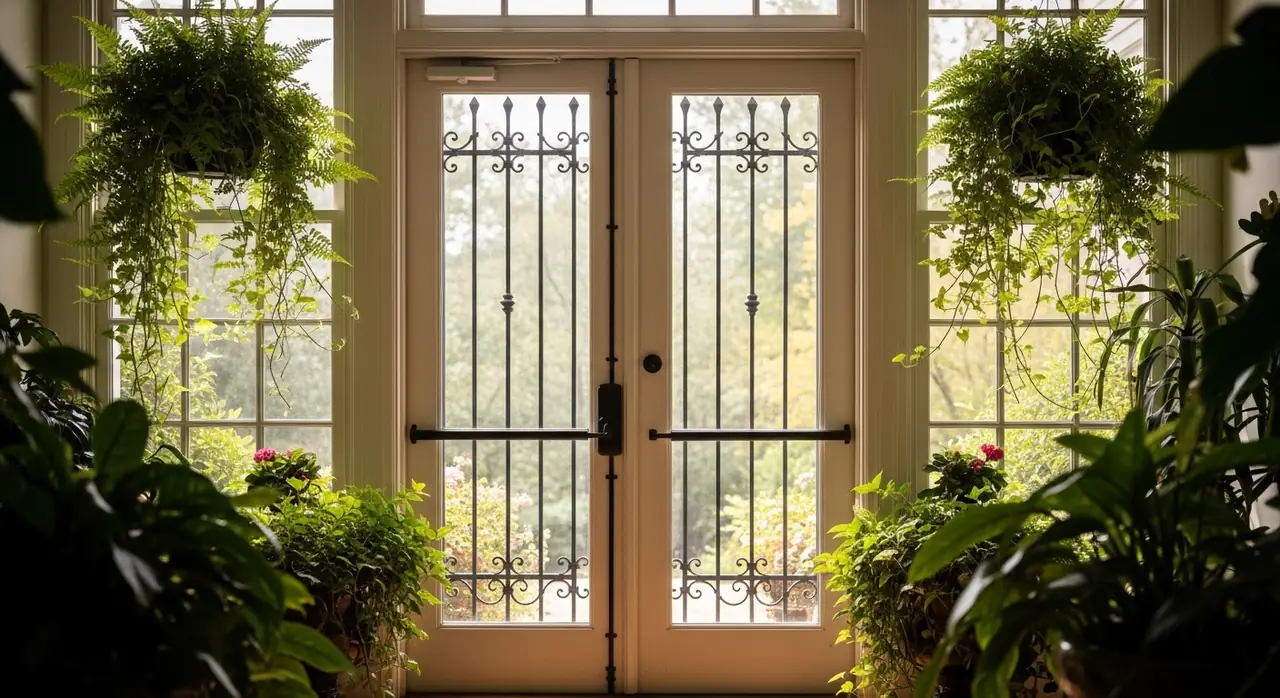
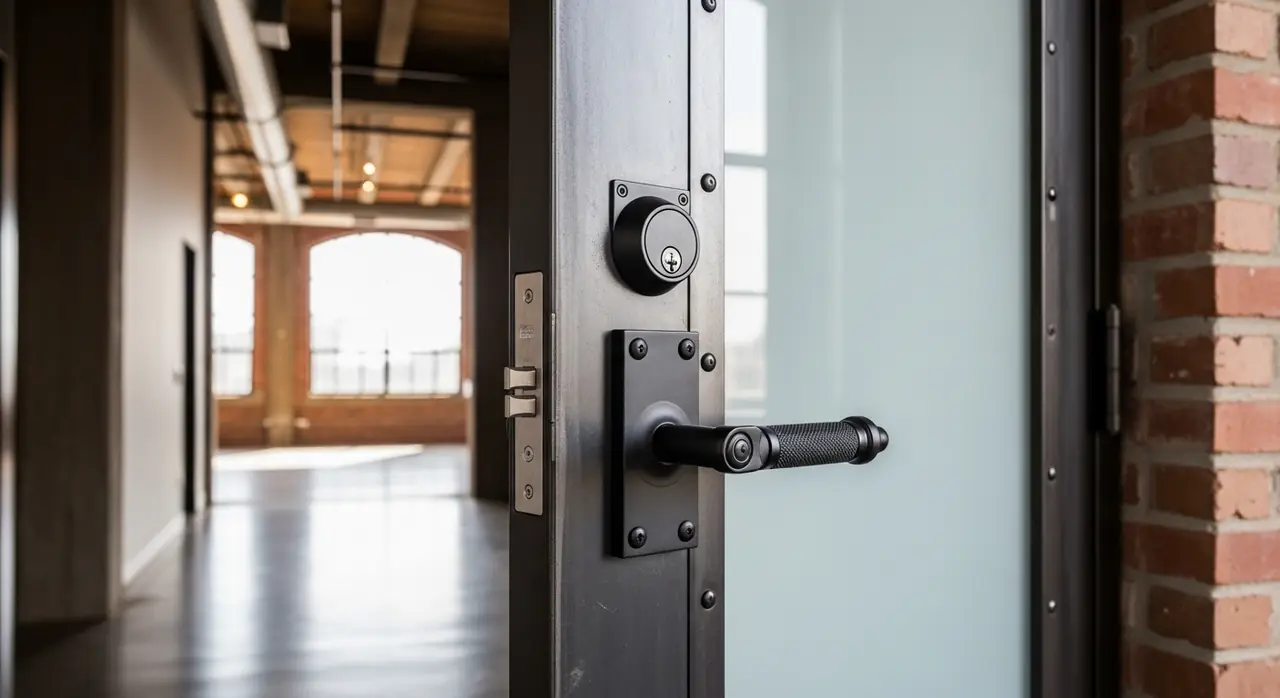
Industrial sites mix construction types — tilt-up concrete, masonry admin blocks and standard-framed office windows — so model selection depends on the opening, not the whole property. Browse the full lineup on the products page or use the guide below.
| Building / Opening | Recommended Model | Why |
|---|---|---|
| Masonry, concrete, brick or stucco walls | Model B | Wall-mount with heavy-duty anchors, exterior-rated and light-commercial approved for tilt-up and block construction. |
| Standard-framed office & perimeter windows | Model A | Telescopic 10″–65″ height, modular width to ~79″, with frame or wall mount for fast coverage. |
| Staffed control rooms & egress windows | Model A/EXIT | Tool-free quick-release from inside, inoperable from outside — secures the opening without trapping workers. |
Fire Code Is Non-Negotiable on a Staffed Facility
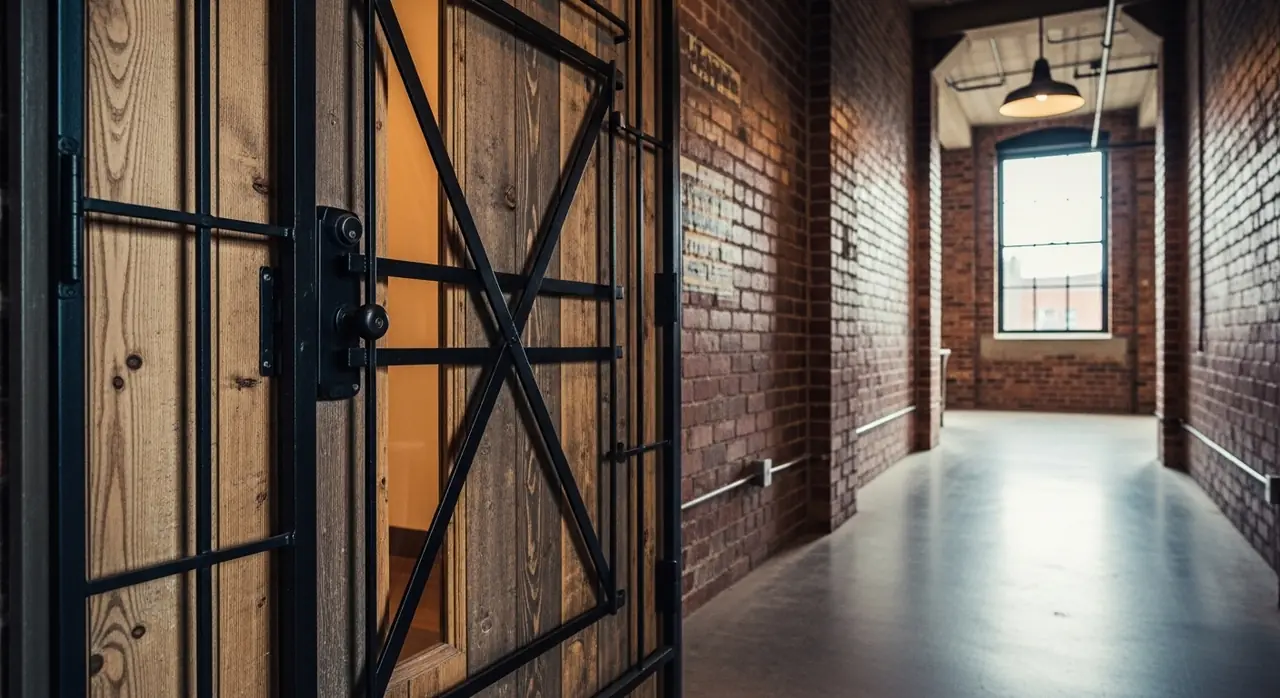
Any room where employees work a shift — a manned control room, a QC lab, a perimeter office — has egress windows that must release from the inside in an emergency. Fixed bars on those openings are a code violation and a liability. The Model A/EXIT solves this with an integrated, tool-free quick-release mechanism that meets IBC, NFPA 101 and IRC R310 requirements while staying inoperable from the exterior. Before you specify a single unit, read our breakdown of window bars and fire code so every staffed opening on the site is compliant from day one.
Specifying at Scale
A facility-wide rollout doesn’t require a custom quote for every wing. Because SWB models are telescopic and modular, one Model A spec covers a wide range of standard openings, Model B handles your masonry walls, and Model A/EXIT covers the staffed rooms — three SKUs for an entire site. At $85 per core module with 15–30 minute installs, a maintenance crew can harden dozens of windows in a weekend without halting production. For mixed commercial campuses, our commercial window bars overview maps models to building use, and a single quote request can scope the whole property at once. Be clear-eyed about scope: SWB bars are built to defeat opportunistic and forced-entry attempts on standard ground-floor windows and office or perimeter buildings — they are not blast or ballistic hardening for high-threat structures.
Frequently Asked Questions
Will Window Bars Slow Down Production Installation?
No. Each unit installs in 15–30 minutes with basic hand tools and no welding or fabrication, so an in-house maintenance crew can secure ground-floor windows during a normal shift or a weekend without shutting down the line.
Can the Same Model Cover Different Window Sizes Across the Plant?
Yes. Model A is telescopic from 10″ to 65″ in height and modular in width to roughly 79″, so one specification adapts to most standard office and perimeter openings instead of a separate custom part for each window.
Are These Bars Rated for Exterior Industrial Conditions?
Yes. The steel is galvanized with an electrostatic paint finish for a 30+ year lifespan, and Model B is exterior-rated and light-commercial approved for masonry and concrete walls exposed to the elements.
Harden every ground-floor window on your industrial site — without a fabrication contract.
Get a commercial quote sized to your plant, control rooms, and perimeter buildings.
Request a Commercial Quote →