Window Security Bars for Seniors: Safe Aging-in-Place Solutions
Seniors living alone are disproportionately targeted by burglars, and window security bars remain one of the most effective physical deterrents available. According to the Bureau of Justice Statistics, adults over 65 who live alone experience higher rates of property crime than any other age group living independently. The reasons are predictable: perceived vulnerability, predictable daily routines, a higher likelihood of keeping cash and jewelry at home, and windows that often lack modern security hardware. For the 93% of Americans over 65 who say they want to age in place, securing those windows is not optional. It is a prerequisite for staying safe and independent in the home they love.
But window security for seniors comes with requirements that younger homeowners never have to think about. Bars must be easy to operate with arthritic hands. Quick-release mechanisms must work for someone with limited grip strength. Installation cannot create trip hazards or obstruct mobility aids. And for seniors with cognitive decline, the entire system must be intuitive enough that a confused person at 3 AM can still escape a fire. This guide covers every consideration specific to seniors and aging in place, from product selection to installation to caregiver access, so you can make the right decision for yourself or for an elderly parent.
Why Seniors Are Targeted: The Uncomfortable Truth
No one wants to talk about this, but the data is unambiguous: burglars actively select homes occupied by elderly residents. Understanding why helps explain why window security bars are such a critical countermeasure for this population.
Perceived Physical Vulnerability
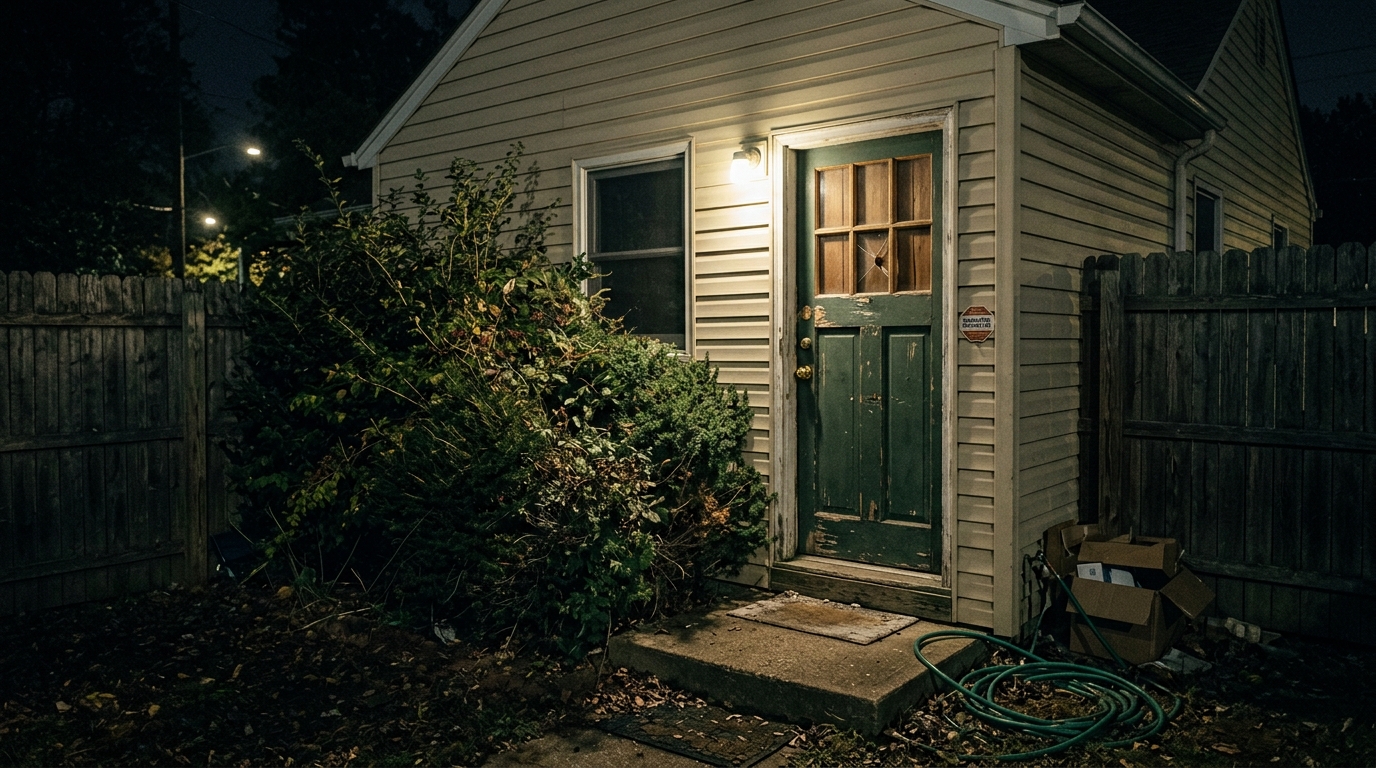
Burglars assess risk and reward before selecting a target. A home occupied by a person they perceive as physically unable to confront them, chase them, or restrain them represents lower risk. Seniors who use walkers, wheelchairs, or who move slowly are visually identifiable from the street. Burglars who case neighborhoods during the day can easily identify which homes are occupied by elderly residents based on mobility aids visible through windows, handicap ramps, and the general pace of activity around the property.
Predictable Daily Routines
Seniors tend to follow highly consistent daily patterns: morning walks at the same time, church on the same day, doctor appointments on predictable schedules, and social activities at senior centers during set hours. A burglar who watches a home for just two or three days can map a senior's entire weekly routine with remarkable accuracy. They know when the house will be empty, how long they have, and when the resident will return. Window security bars eliminate the opportunity regardless of the homeowner's schedule because they are a 24/7 physical barrier.
Cash and Valuables at Home

Seniors are statistically more likely to keep cash, jewelry, prescription medications, and important documents in the home rather than in bank safe deposit boxes or digital formats. A lifetime of accumulated jewelry, collectibles, and emergency cash stored in bedroom drawers and closets makes senior homes higher-value targets. Prescription medications with street value -- particularly opioids and benzodiazepines -- add another incentive. Window bars on bedroom windows directly protect the rooms where these valuables are most commonly stored.
Outdated or Absent Security Hardware
Many seniors live in homes they have occupied for 30, 40, or 50 years. The original window locks, door hardware, and security features installed during construction may never have been upgraded. Single-pane windows, simple sash locks, and deteriorated weatherstripping create easy entry points that a modern security system would have long since addressed. For seniors on fixed incomes, comprehensive security system upgrades feel financially out of reach. Window security bars offer professional-grade protection at a fraction of the cost of a full security overhaul, which is why they are the single highest-impact investment a senior homeowner can make.
Social Isolation
Seniors who live alone have no one to notice a break-in in progress, no one to call for immediate help, and no second set of ears to hear a window being forced open at 2 AM. The increasing social isolation of aging Americans -- exacerbated by the loss of spouses, friends, and the physical limitations that reduce social activity -- means that many seniors are entirely on their own when it comes to home security. A physical barrier that works without human intervention addresses this reality directly.
For a comprehensive overview of how window bars fit into a complete home security strategy, see our best window security bars guide for 2026.
Aging in Place Demands Layered Security
The aging-in-place movement is built on a simple and powerful idea: seniors should be able to live safely and independently in their own homes for as long as possible, rather than being forced into assisted living or nursing facilities. According to AARP, 77% of adults over 50 want to remain in their current home as they age. But aging in place only works if the home is genuinely safe -- and that includes safe from criminal intrusion.
The Four Layers of Senior Home Security
| Layer | Function | Examples | Limitation for Seniors |
|---|---|---|---|
| Detection | Alerts you that someone is approaching | Motion sensors, doorbell cameras, security cameras | Requires monitoring, technology literacy, and response capability |
| Deterrence | Discourages an intruder from attempting entry | Visible security bars, lighting, alarm signs, dogs | Passive -- works automatically without senior intervention |
| Delay | Slows an intruder who has decided to attempt entry | Window bars, reinforced locks, security film, deadbolts | Passive -- works automatically without senior intervention |
| Response | Engages help after a breach is detected | Alarm monitoring, 911 call, medical alert button | Requires the senior to be awake, aware, and able to act |
Window security bars operate in both the deterrence and delay layers simultaneously. A burglar who sees steel bars on windows often moves to an easier target without attempting entry -- that is deterrence. If they do attempt entry despite the visible bars, the steel construction physically prevents access -- that is delay. Both functions work 24/7 without requiring any action, awareness, or technological engagement from the senior resident.
This dual-layer passive protection is uniquely valuable for seniors because the two layers that require active participation -- detection and response -- are exactly the layers most compromised by aging. A senior with hearing loss may not hear a motion sensor alarm. A senior with limited mobility may not be able to respond to an alert quickly enough. A senior with cognitive decline may not remember what an alarm sound means. Window bars work regardless of all these limitations.
Ease of Use: The Non-Negotiable Requirement for Senior Window Bars
The single most important feature in window security bars for seniors is ease of operation. Bars that require significant grip strength, complex multi-step release procedures, or fine motor skills to operate will fail the people who need them most precisely when those people need them most -- during an emergency.
Grip Strength and Arthritis
Arthritis affects over 54 million American adults, with prevalence increasing dramatically with age. By age 65, roughly half of all adults have some form of arthritis. By age 75, the majority do. Rheumatoid arthritis and osteoarthritis both reduce grip strength, finger dexterity, and the ability to perform twisting or pinching motions. Any window bar quick-release mechanism that requires a pinch grip, a twist, or a strong squeeze will be difficult or impossible for an arthritic senior to operate.
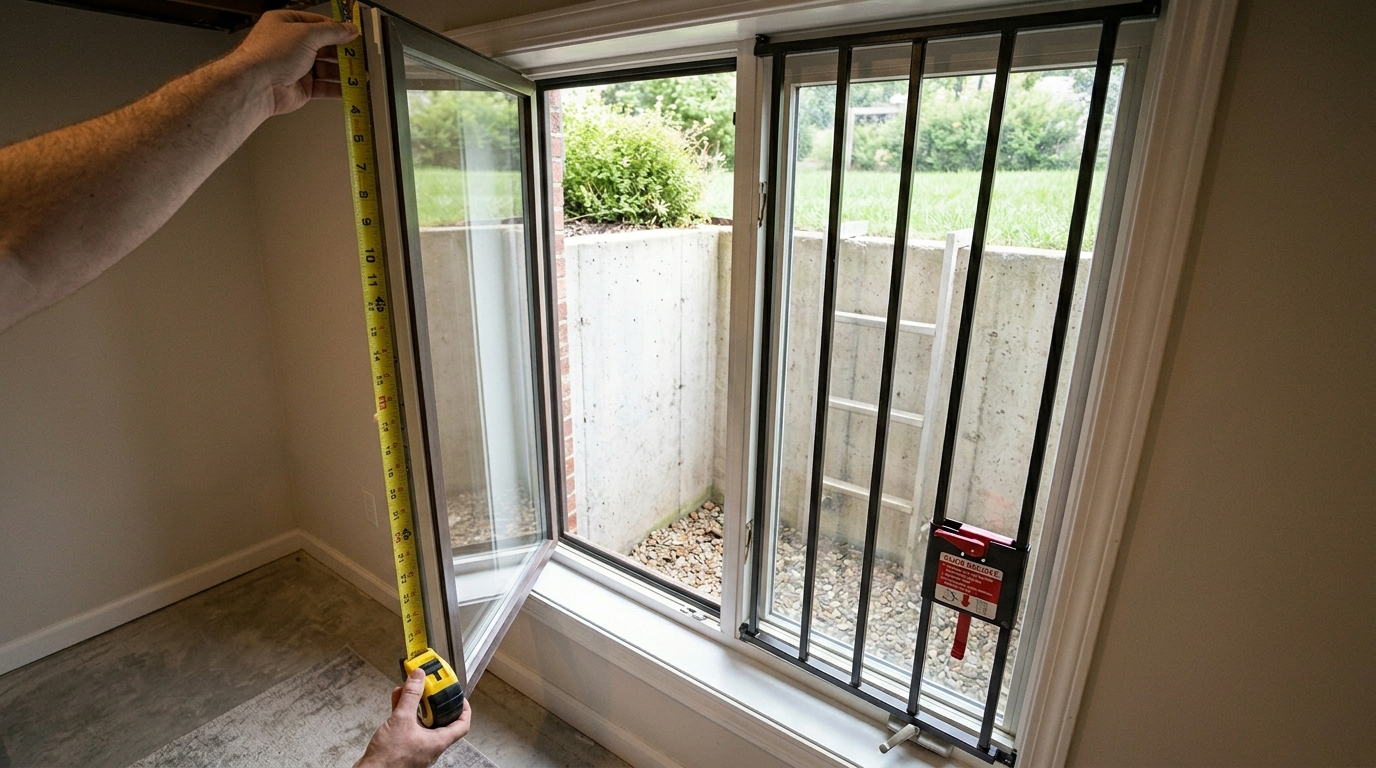
The ideal release mechanism for seniors uses a lever or push-bar action that engages the palm and forearm rather than the fingers. This type of motion relies on larger muscle groups that retain strength longer than finger muscles. The SWB Model A/EXIT uses a lever-style release that operates with a push motion, making it operable even by individuals with significantly reduced hand strength.
Visual Impairment
Age-related macular degeneration, cataracts, glaucoma, and diabetic retinopathy affect millions of seniors. In a fire scenario where smoke further reduces visibility, a senior with pre-existing visual impairment may have effectively zero visibility. The quick-release mechanism must be locatable and operable entirely by touch. Mechanisms that require visual identification of a button, latch, or pin fail this test. Lever mechanisms that are positioned consistently at the same location and operate with a single directional motion pass it.
Cognitive Accessibility
Approximately 6.7 million Americans over age 65 have Alzheimer's disease or another form of dementia. For these individuals, complex multi-step procedures become impossible even under calm conditions, let alone during a fire. The window bar release must work with a single, intuitive motion. Push, pull, or lift -- one action, one direction. Any mechanism that requires a sequence (push then turn, lift then slide, press and hold) may exceed the cognitive capacity of a person with moderate dementia.
The Ease-of-Use Comparison
| Release Type | Motion Required | Grip Strength Needed | Usable in Dark | Senior Suitability |
|---|---|---|---|---|
| Lever release (SWB Model A/EXIT) | Single push/pull | Low (palm/forearm) | Yes (tactile lever) | Excellent |
| Thumb-turn latch | Twist | Moderate (finger pinch) | Moderate | Fair |
| Pin-pull release | Grasp and pull | High (finger grip) | Poor (small pin) | Poor |
| Hex-key release | Insert key, turn | High | Very poor | Unacceptable |
| Keyed lock release | Insert key, turn | Moderate | Very poor | Dangerous for seniors |
Any release mechanism that requires a key is categorically unacceptable for senior use. Keys get lost. Keys end up in purses, on counters, in drawers. During a fire, a senior has seconds to act, and searching for a key in a smoke-filled room is a death sentence. The IBC and NFPA already prohibit keyed releases on egress windows for this exact reason. For seniors, the stakes are even higher because their escape speed is already reduced by mobility limitations.
ADA and Accessibility Considerations
While the Americans with Disabilities Act (ADA) applies primarily to public accommodations and commercial facilities, its design principles provide an excellent framework for evaluating window security products for senior homes. If a product meets ADA operability standards, it will work for virtually any senior regardless of physical limitation.
ADA-Informed Design Standards for Window Bars
- Operable with one hand: The release mechanism must not require simultaneous two-hand operation. Seniors recovering from stroke, managing one-sided weakness, or using a mobility aid in one hand need single-hand capability.
- No tight grasping, pinching, or twisting: ADA Section 309.4 specifies that operable parts must not require these motions. Lever and push mechanisms comply; knobs, pins, and twist-locks do not.
- Operable with no more than 5 pounds of force: ADA specifies this maximum operating force for accessible hardware. A stiff, corroded, or poorly maintained release mechanism that requires significant force fails this standard and may be inoperable for a frail senior.
- Mounted at accessible height: ADA-compliant reach ranges are 15 to 48 inches above the floor for a forward approach. Window bars and their release mechanisms should fall within this range, which standard residential window installations typically satisfy.
Installation Adjustments for Accessibility
When installing window bars in a senior's home, make these accessibility-specific adjustments:
- Position the release mechanism on the most accessible side. If the senior has a dominant hand or stronger side, orient the release toward that side.
- Ensure the release is reachable from a seated position. A senior in a wheelchair or who sits on the bed to operate the window needs to reach the release without standing.
- Clear the approach path. Furniture, oxygen tanks, medical equipment, and mobility aids must not block the path from the bed or primary sitting position to the window.
- Label the release mechanism. A large, high-contrast label reading "PUSH TO OPEN" or "PULL TO RELEASE" in 24-point bold text helps seniors with mild cognitive impairment and assists caregivers who may be unfamiliar with the system.
Quick-Release Egress: Why Every Senior Needs It
Seniors die in house fires at a rate 2.6 times higher than the general population. The National Fire Protection Association reports that adults age 65 and older face the highest fire death rates of any age group, and the rate increases with each decade of life. The primary reason is reduced mobility: seniors cannot escape as quickly as younger occupants, and every second of delay increases fatality risk exponentially.
Window security bars without quick-release mechanisms trap seniors in exactly the scenario where they are most vulnerable. A bedroom fire that blocks the door leaves the window as the only escape route. If that window has fixed bars, the senior has no exit. Firefighters arriving at the scene face the additional delay of forcing the bars from the exterior -- time that may exceed the survivable exposure window for a senior with respiratory conditions.
Why the Model A/EXIT Is Essential for Senior Bedrooms
The SWB Model A/EXIT (~$92) addresses every senior-specific concern:
- Lever release operates with palm pressure -- no finger grip, no twist, no key
- Single-motion operation -- push the lever and the bars swing open
- Tactile identification in zero visibility -- the lever is locatable by touch in complete darkness or heavy smoke
- IBC/NFPA/OSHA compliant -- meets every fire code requirement in every US jurisdiction
- Full egress opening -- bars swing completely clear, providing the minimum 5.7 square feet of clear opening required by code
- Operates from inside the room -- no exterior access needed, which means it works whether or not anyone else is home
For a detailed look at fire code requirements by state, see our state-by-state fire code compliance guide.
Dementia and Cognitive Decline: Special Safety Protocols
Window security for a senior with dementia presents a dual challenge. The bars must keep intruders out and simultaneously prevent the senior from wandering out through a window -- a documented risk with moderate to advanced Alzheimer's disease. At the same time, the bars must still allow emergency escape during a fire.
The Wandering Risk
According to the Alzheimer's Association, 6 in 10 people with dementia will wander at some point. Window exits are a known wandering pathway, particularly at night when sundowning behavior peaks. Standard window locks may be insufficient because some dementia patients retain the motor skills to operate simple locks even after losing the judgment to understand why the lock is there.
How Window Bars Address Wandering
Window security bars provide a physical barrier that prevents window exit regardless of whether the window lock is engaged. For seniors with dementia, this is more reliable than any lock-based solution because:
- The bars are permanently mounted and cannot be "unlocked" by habit-driven motor actions
- The quick-release mechanism on the Model A/EXIT requires a deliberate, intentional action (pushing a lever) that a confused person is unlikely to perform accidentally
- The bars are always in place -- they do not depend on a caregiver remembering to engage them
Balancing Wandering Prevention with Fire Egress
This is the most difficult balance in senior window security. The solution depends on the severity of cognitive decline and the care environment:
| Cognitive Status | Recommended Approach | Product |
|---|---|---|
| Mild cognitive impairment | Model A/EXIT on all bedroom windows. Senior can likely operate release in an emergency with verbal prompting. | Model A/EXIT |
| Moderate dementia | Model A/EXIT on bedroom windows. Caregiver present or on-call must be trained to operate release. Interconnected smoke alarms with caregiver notification. | Model A/EXIT |
| Advanced dementia with 24/7 care | Standard Model A on non-bedroom windows for security. Model A/EXIT on bedrooms. Caregiver is the primary person responsible for operating release during fire. | Model A + Model A/EXIT |
Critical note: Never install fixed bars without quick-release on a bedroom window occupied by a person with dementia, even if a caregiver is present 24/7. Caregivers sleep. Caregivers have emergencies of their own. The building code requires quick-release on egress windows, and that requirement exists precisely for situations where the occupant cannot help themselves.
Caregiver and First Responder Access
Seniors who receive in-home care -- whether from family members, home health aides, or visiting nurses -- need window security that accommodates caregiver access patterns without compromising security.
Caregiver Training
Every caregiver who spends time in the senior's home must know how to operate the quick-release mechanism on every window bar. This is not optional. Include the following in caregiver orientation:
- Walk through every room and identify which windows have bars and which have quick-release mechanisms
- Demonstrate the release on each window with the caregiver watching
- Have the caregiver practice the release on at least two windows until the motion is confident and automatic
- Practice in reduced visibility -- close the curtains or turn off the lights and have the caregiver locate and operate the release by touch
- Post written instructions near each window bar with the release mechanism type and operation steps
First Responder Considerations
In an emergency, paramedics, firefighters, or police may need to enter through a window if the door is blocked or if the senior is incapacitated near a window. Quick-release bars on the Model A/EXIT are designed for interior release, but from the exterior, firefighters can access the release mechanism through the window opening if the window itself is open. For scenarios where the window is closed and locked, firefighters will break the glass to access the interior release -- the same procedure they would follow for any egress-compliant window bar.
Some fire departments maintain a file of homes with window bars in their district to ensure responding crews know what to expect. Contact your local fire department to register your address and specify that your bars are quick-release compliant. This information can be the difference between a routine rescue and a delayed one.
Medical Alert System Integration
Many seniors use personal emergency response systems (PERS) -- the classic "I've fallen and I can't get up" devices. These systems are designed to summon help when a senior cannot reach a phone. Window bars complement PERS devices by providing the physical security layer that a medical alert button cannot. A PERS device summons help after an event; window bars prevent the event. The two systems address different risks and should both be in place for a comprehensive aging-in-place safety plan.
Best Window Security Bars for Seniors in 2026
After evaluating every window bar on the market against the specific requirements of senior users -- ease of operation, accessibility, egress compliance, and durability -- here are our recommendations.
Best for Senior Bedrooms: SWB Model A/EXIT (~$92)
The SWB Model A/EXIT is the only window bar we recommend for bedroom windows in senior homes. Its lever-style quick-release mechanism operates with a simple push motion that requires minimal grip strength. Key advantages for seniors:
- One-hand, one-motion operation -- push the lever and the bars swing open
- Low operating force -- well within ADA-informed thresholds for accessible hardware
- Tactile identification -- the lever can be found and operated in total darkness or smoke
- Telescopic adjustment -- fits standard residential windows without custom fabrication
- Frame mount installation -- no masonry drilling required for wood or vinyl frames, keeping installation fast and minimally disruptive
- IBC/NFPA/OSHA compliant -- meets every fire code in every US state
- Powder-coated steel -- 20-30 year lifespan with zero maintenance
Best for Non-Bedroom Senior Windows: SWB Model A (~$90)
For kitchen, living room, bathroom, and utility room windows where fire egress is not legally required, the SWB Model A provides the same steel construction and telescopic adjustment at a slightly lower price point. The absence of a release mechanism means these bars are permanently fixed -- no chance of accidental opening, no mechanism to maintain, and no possibility of a confused dementia patient operating the release.
Why These Products Beat the Competition for Seniors
| Feature | SWB Model A/EXIT | Big-Box Quick-Release Bars | Fixed Decorative Bars |
|---|---|---|---|
| Senior-friendly release | Lever -- palm push | Pin-pull or thumb-turn -- finger grip | No release |
| One-hand operation | Yes | Some models require two hands | N/A |
| Operable with arthritis | Yes -- minimal grip required | Difficult -- small pins or knobs | N/A |
| Fire code compliant | IBC/NFPA/OSHA | Varies -- verify per product | No -- illegal on bedrooms |
| DIY installation time | 15-20 minutes per window | 30-45 minutes | 45-60 minutes |
| Material | Powder-coated steel | Painted steel or aluminum | Wrought iron or steel |
| Approximate price | ~$92 | $40-$80 | $100-$300 |
Room-by-Room Security Plan for Senior Homes
Senior homes have different security priorities than homes occupied by younger families. Here is how to approach each room.
Master Bedroom (Priority 1 -- Model A/EXIT)
The bedroom is where a senior is most vulnerable -- asleep, often with hearing aids removed, and at maximum distance from the front door. Bedroom windows are also where burglars most commonly find jewelry, cash, and medications. Every bedroom window must have Model A/EXIT bars. Fire code requires egress capability, and the quick-release provides both legal compliance and genuine life-safety protection.
Ground-Floor Windows (Priority 2 -- Model A or Model A/EXIT)
Ground-floor windows are the primary entry point for residential burglaries. The FBI Uniform Crime Report consistently shows that windows account for a significant portion of forced entries, with ground-floor windows being the most common target. Use Model A for living room, kitchen, and dining room windows. If any of these rooms doubles as a sleeping area (a common arrangement for seniors with mobility issues who can no longer use stairs), use Model A/EXIT.
Bathroom Windows (Priority 3 -- Model A)
Bathroom windows are often small, obscured, and overlooked by homeowners -- which is exactly why burglars target them. A small bathroom window that a homeowner assumes is too small for a person to fit through may easily admit a slim intruder. Model A bars on bathroom windows close this vulnerability. Since bathrooms are not sleeping rooms, egress-compliant bars are not legally required.
Basement Windows (Priority 4 -- Model A)
Basement windows are the number one entry point for burglars in homes that have them. They are typically concealed from street view, shielded by landscaping, and accessible from ground level outside while being below grade inside. For a comprehensive guide to basement window security, see our interior window security bars guide.
Sliding Glass Doors (Priority 5 -- Model A Modular)
Many senior homes have sliding glass doors that open to patios, decks, or gardens. These wide-span openings are both a lifestyle feature (easy access to outdoor space) and a security vulnerability (large, often poorly locked, and easy to force). The Model A's modular configuration stacks multiple units to cover wide spans. For details on securing sliding doors, see our guide on how to secure sliding glass doors.
Installation Considerations for Senior Living
Installing window bars in a senior's home requires attention to details that a standard residential installation does not.
Minimize Disruption
Many seniors are sensitive to noise, construction activity, and disruptions to their routine. The SWB Model A frame-mount installation takes approximately 15 minutes per window and requires only a cordless drill. There is no concrete dust, no heavy equipment, and no extended construction timeline. A typical 8-window senior home can be fully equipped in a single 3-hour visit. For more on installation timelines, see our installation time guide.
Avoid Trip Hazards
During and after installation, ensure that no hardware, tools, or packaging is left on the floor where a senior could trip. Clear the approach path to every window of any obstacles, and verify that the installed bars do not protrude into the room in a way that could catch a mobility aid, oxygen tubing, or the senior's body as they move past the window.
Test with the Senior Present
After installation, walk the senior through every window bar in the home. Have them practice operating the quick-release mechanism on each Model A/EXIT unit until the motion is confident. This is especially important because muscle memory formed during a calm, well-lit practice session is what the senior will rely on during a dark, smoky emergency.
Frame Mount vs. Masonry Mount for Senior Homes
Frame mount is strongly preferred for senior homes. It is faster, quieter, produces no masonry dust, and is reversible if the senior moves. The no-drill installation guide covers additional options for seniors who rent and cannot modify the property.
Guide for Adult Children Securing a Parent's Home
If you are reading this because you are worried about an aging parent living alone, you are not alone. Millions of adult children face the same concern: Mom or Dad insists on staying in the house, but the house was never secured for the realities of aging. Here is a practical action plan.
Step 1: Have the Conversation
Many seniors resist security improvements because they interpret them as a signal that their independence is being questioned. Frame the conversation around the home, not the person. "I want to make sure the house is as safe as possible" works better than "I'm worried about you." Emphasize that window bars protect the home -- they are a property improvement, not a concession to frailty.
Step 2: Assess the Home
Visit the home and walk every room. Identify:
- Every ground-floor window -- these are the highest burglary risk
- Every bedroom window -- these need egress-compliant bars
- Window hardware condition -- are existing locks functional?
- Furniture near windows -- could a fall-risk parent lean against a screen?
- Approach paths to windows -- are mobility aids blocking access?
- Sliding glass doors -- are they secured beyond the standard latch?
Step 3: Order the Right Products
- Model A/EXIT for every bedroom window (~$92 each)
- Model A for every non-bedroom window (~$90 each)
- Model A modular configuration for sliding glass doors
Step 4: Install During a Visit
Frame-mount installation is a perfect weekend project. Bring a cordless drill, a level, and a tape measure. You can equip an entire house in an afternoon while spending quality time with your parent. The installation process is straightforward enough that no professional help is needed. See our installation time guide for detailed timelines.
Step 5: Train Everyone
Before you leave, ensure that your parent, their caregiver (if applicable), and any nearby family members or neighbors who have a house key all know how to operate the quick-release mechanism. Practice at least twice per window.
Step 6: Schedule Maintenance Checks
Add window bar inspection to your regular visit routine. Every six months, test the quick-release mechanisms, check mounting hardware tightness, and apply a light silicone lubricant to pivot points. This takes 15 minutes for a whole house and ensures the system stays functional for decades.
Cost and ROI: What Senior Window Security Actually Costs
Seniors on fixed incomes need to know exactly what they are spending and what they are getting. Here is the real math for a typical senior home.
Typical Single-Story Senior Home (8 Windows + 1 Sliding Door)
| Window Location | Count | Product | Unit Cost | Total |
|---|---|---|---|---|
| Master bedroom | 2 | Model A/EXIT | $92 | $184 |
| Guest bedroom | 1 | Model A/EXIT | $92 | $92 |
| Living/dining room | 3 | Model A | $90 | $270 |
| Kitchen | 1 | Model A | $90 | $90 |
| Bathroom | 1 | Model A | $90 | $90 |
| Sliding glass door | 2 modules | Model A | $90 | $180 |
| Total | 10 units | $906 |
$906 for complete window security on a typical senior home. With a 25-year product lifespan, that is $36.24 per year -- less than $3.05 per month. Compare that to a monthly monitored alarm system at $30-$60 per month ($360-$720 per year), and the cost advantage of window bars becomes clear. Bars are a one-time investment with no recurring fees, no technology to manage, no false alarm fines, and no dependence on internet connectivity or power. For a full pricing breakdown, see our cost and pricing guide.
The Cost of a Burglary for a Senior
A home burglary impacts a senior more severely than a younger victim:
- Average property loss: $2,800 (FBI UCR data) -- but seniors often lose irreplaceable heirloom jewelry and cash reserves
- Emotional trauma: seniors experience higher rates of post-burglary anxiety, depression, and fear of returning home. Some never recover their sense of security and move to assisted living as a direct result of a break-in.
- Physical injury risk: a senior confronted by a burglar faces catastrophic injury risk from any physical altercation. A fall during a confrontation can cause hip fractures, head injuries, or worse.
- Loss of independence: a burglary may be the event that tips the balance from aging in place to institutional care -- costing $50,000-$100,000+ per year in assisted living fees.
$906 to prevent an event that could cost $50,000+ in assisted living and an incalculable loss of independence is the most straightforward cost-benefit calculation in home security.
Complementary Security Measures for Seniors
Window bars are the foundation, but a complete senior security plan includes additional layers. Here are the most effective complementary measures, ranked by impact and ease of implementation.
Motion-Activated Exterior Lighting
Bright lights that activate when someone approaches the home deter burglars who rely on darkness for concealment. Solar-powered motion lights cost $20-$40 each, require no wiring, and can be installed by anyone who can use a screwdriver. Place them at every ground-floor window and at all entry points.
Reinforced Door Hardware
A Grade 1 deadbolt with a reinforced strike plate and 3-inch screws into the door frame costs under $100 and takes 30 minutes to install. This addresses the other primary entry point that window bars do not cover.
Medical Alert System (PERS)
A personal emergency response system is not a security measure per se, but it ensures that a senior who is incapacitated -- whether by a health event or a crime -- can summon help with a single button press. The two systems complement each other: bars prevent entry, PERS summons help when needed.
Interconnected Smoke Alarms
Since fire safety is integral to the window bar decision, upgrade to interconnected smoke alarms that trigger throughout the house when any single alarm detects smoke. This gives a senior maximum warning time to reach the window and operate the quick-release mechanism.
Visible Deterrent Signage
A security company sign in the yard deters some burglars even without an active monitoring subscription. Combined with visible window bars, the message is unmistakable: this home is protected, and easier targets are available elsewhere.
Frequently Asked Questions
Are window security bars safe for elderly people living alone?
Yes, when you choose egress-compliant bars with a lever-style quick-release mechanism. The SWB Model A/EXIT is specifically suitable for seniors because it operates with a single palm-push motion that does not require strong grip, fine motor skills, or keys. Fixed bars without a release mechanism should never be installed on bedroom windows in a senior's home because they block fire escape. Every bedroom window must have quick-release bars, and every adult who visits the home -- including caregivers and family members -- should know how to operate the release.
Can a person with arthritis operate quick-release window bars?
It depends on the release mechanism design. Pin-pull and thumb-turn mechanisms require finger grip strength that many arthritis sufferers lack. Lever-style mechanisms like the one on the SWB Model A/EXIT require only a palm push or forearm press, which engages larger muscle groups unaffected by finger-joint arthritis. Before purchasing any quick-release window bar for an arthritic user, verify that the release can be operated with an open palm rather than a pinch or grip. Testing the mechanism in person before installation is strongly recommended.
Do window bars help prevent seniors with dementia from wandering?
Window bars provide an effective physical barrier against window-exit wandering, which is a documented risk for people with moderate to advanced Alzheimer's disease and other dementias. The bars work even when the window is unlocked or open, providing protection that does not depend on a caregiver remembering to engage a lock. Quick-release mechanisms on egress bars like the Model A/EXIT require a deliberate lever action that a confused person is unlikely to perform accidentally, but they remain operable by caregivers and first responders in a fire emergency.
How much do window security bars cost for a senior's home?
A typical single-story senior home with 8 windows and 1 sliding glass door costs approximately $906 to fully equip with SWB products. Bedroom windows use the Model A/EXIT (~$92 each) for fire code compliance, and non-bedroom windows use the Model A (~$90 each). This is a one-time investment with no monthly fees, no subscription costs, and no technology to maintain. Over the 25-year product lifespan, the cost averages to approximately $3 per month for complete window security coverage of the entire home.
Should adult children install window bars for elderly parents?
Yes, installing window bars is one of the most impactful things an adult child can do for an aging parent's safety and independence. Frame-mount installation takes 15 minutes per window with basic tools, making it a perfect weekend project during a visit. The key is framing it as a home improvement rather than a response to vulnerability. Order Model A/EXIT for bedroom windows and Model A for all others, install during a visit, train the parent on the quick-release mechanism, and add a twice-yearly maintenance check to your visit routine.
Are window bars ADA compliant?
The ADA applies primarily to public accommodations and commercial facilities, not private residences. However, ADA design principles provide an excellent framework for evaluating window bars for senior accessibility. The SWB Model A/EXIT meets key ADA-informed criteria: it operates with one hand, requires no tight grasping or pinching or twisting of the wrist, and the release mechanism operates with minimal force. For seniors with disabilities, these design characteristics ensure that the bars are usable regardless of physical limitation.
Can caregivers operate window bar quick-release mechanisms?
Yes, and every caregiver who enters a senior's home should be trained to do so. The quick-release mechanism on the SWB Model A/EXIT operates with a simple lever push that any able-bodied adult can perform in under two seconds. During caregiver onboarding, walk through every room, demonstrate the release on each window, have the caregiver practice on at least two windows, and post simple instructions near each barred window. Refresher training should happen every six months or whenever a new caregiver begins service.
Do window security bars reduce home insurance for seniors?
Some homeowners insurance companies offer discounts for physical security improvements including window bars, though the discount amount varies by insurer and state. Typical discounts range from 2% to 10% of the annual premium. Contact your insurance agent to ask whether window security bars qualify for a discount on your specific policy. Even a 5% discount on a $1,500 annual premium saves $75 per year, which over a 25-year period adds up to $1,875 -- more than twice the cost of the bars themselves. Keep your purchase receipts and installation photos as documentation for your insurance claim.
Will window bars make my parent's home look like a prison?
Modern window bars look nothing like the stereotypical jail-cell bars of decades past. The SWB Model A and Model A/EXIT feature sleek, low-profile vertical steel bars with a powder-coated finish in black, white, or custom colors that complement residential architecture. Frame-mount installation positions the bars flush within the window frame for a clean, integrated appearance. Many homeowners are surprised at how unobtrusive modern bars are once installed. The visual impact is minimal compared to the security benefit, and neighbors who notice the bars are more likely to view them as a smart investment than an aesthetic compromise.
How do I convince my elderly parent to accept window bars?
Frame the conversation around protecting the home rather than protecting the person. Seniors are more receptive to "let's upgrade the house" than "you need protection." Share specific local crime data rather than abstract statistics. Show them photos of modern window bars to dispel the prison-bar stereotype. Emphasize that bars are a one-time installation that requires no ongoing effort, no technology to learn, and no monthly bills. Offer to install the bars yourself during a visit so it feels like a family project rather than a clinical intervention. And if resistance persists, point out that window bars also protect the home's contents, which often resonates with seniors who have accumulated a lifetime of irreplaceable possessions.
Take Action: Secure Your Home or Your Parent's Home Today
Seniors deserve to age in place with dignity, independence, and genuine safety. Window security bars deliver all three. They are the single most cost-effective security improvement a senior homeowner can make, and for adult children worried about aging parents, they are the highest-impact gift you can give.
Here is your action plan:
- Identify every window that needs bars. Walk the home and list every ground-floor window, every bedroom window, every sliding glass door, and every basement window.
- Choose the right product for each window. Model A/EXIT (~$92) for every bedroom. Model A (~$90) for every other window.
- Install in an afternoon. Frame-mount installation takes 15 minutes per window. One person, one drill, one afternoon. Done.
- Train everyone. The senior, every caregiver, every family member with a house key -- everyone practices the quick-release at least twice.
- Maintain twice per year. Test releases, check hardware, lubricate pivots. Fifteen minutes per visit.
Every day without window bars is a day your home -- or your parent's home -- is unprotected. The investment is less than $1,000. The installation takes an afternoon. The protection lasts 25 years. There is no reason to wait.
Ready to get started?
- Model A/EXIT -- Quick-release egress | Senior-friendly lever | IBC/NFPA/OSHA compliant | ~$92
- Model A -- Telescopic + Modular | Frame or wall mount | ~$90
- Best Window Security Bars 2026 -- Complete buyer's guide
- Pricing Guide -- Full cost breakdown
- State-by-State Legal Guide -- Know your local requirements