How to Secure a Sliding Glass Door: 7 Proven Methods Ranked
A sliding glass door with only its factory latch can be defeated in seconds. That is not an exaggeration. The standard hook latch or toggle lock on most residential sliders was designed for weather sealing, not security. Whether you rent or own, live in a house or an apartment, if you have a sliding glass door, you need to secure it beyond the factory default. This guide ranks 7 proven security methods from most effective to least effective, explains how each one works, and tells you exactly what each one costs.
Not every method is equal. Some physically stop an intruder. Others just slow them down. A few only detect the break-in after it has already happened. The ranking below is based on a single question: if a determined burglar targets your sliding glass door, which method actually prevents them from getting inside?
How We Ranked These Methods
Every method was evaluated on four criteria:
- Physical prevention — Does it physically stop an intruder from entering, or does it only deter, delay, or detect?
- Coverage of attack vectors — Does it protect against glass breakage, latch manipulation, lift-off-track attacks, and frame prying? Or does it only address one vector?
- Reliability — Does it work without power, without batteries, without internet, and without human intervention?
- Cost-to-effectiveness ratio — How much protection do you get per dollar spent?
Methods that physically prevent entry ranked higher than methods that only delay or detect. Methods that cover multiple attack vectors ranked higher than single-vector solutions.
Method 1: Steel Security Bars (Most Effective)
Effectiveness rating: 10/10
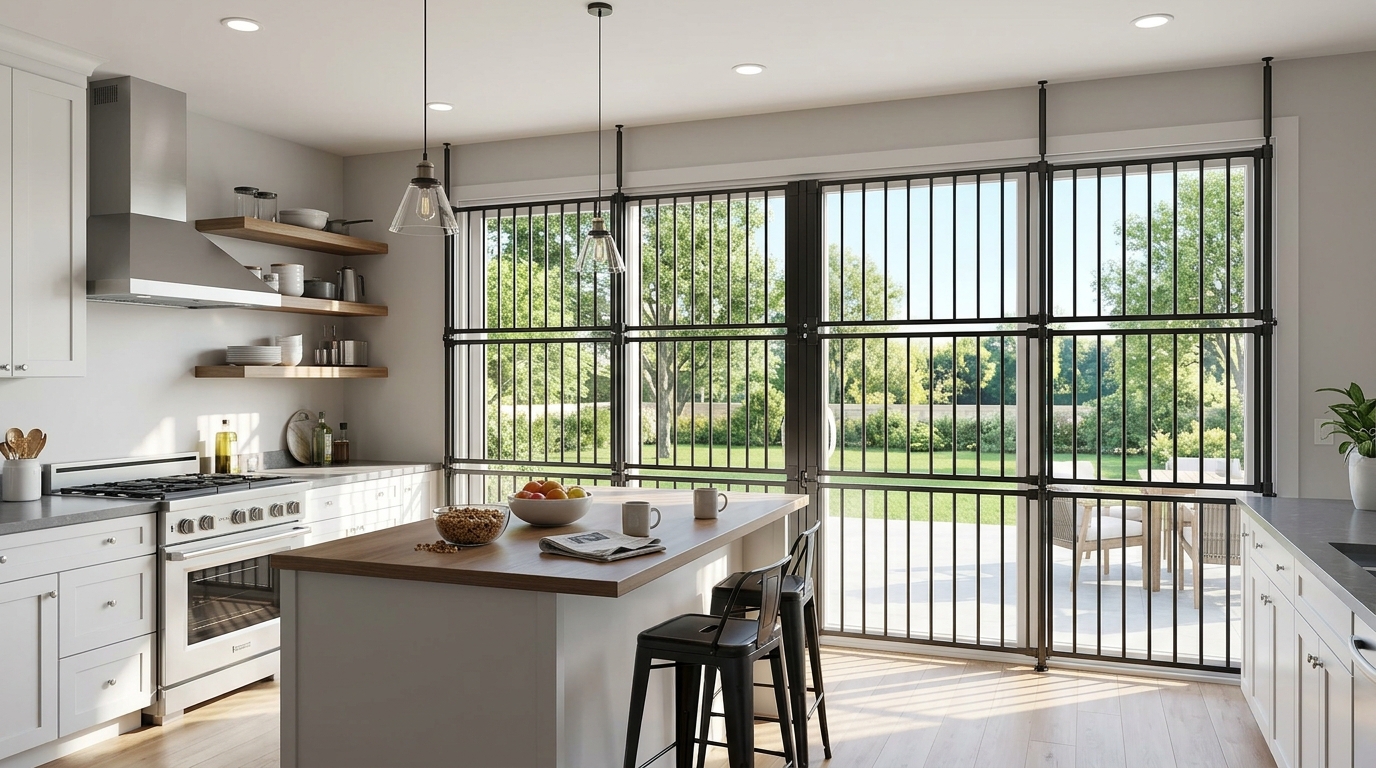
Steel security bars mounted across the sliding glass door create a physical grid that no person can pass through, regardless of what happens to the glass, latch, or track. If the glass shatters, the bars remain. If the door slides open, the bars remain. If the panel is lifted off the track, the bars remain. This is the only method that provides an absolute physical barrier against every attack type.
How It Works
Steel bars are mounted to the door frame or surrounding wall, covering the glass panels. The bars are spaced close enough that no adult body can fit between them. The steel is heavy-gauge and powder-coated for corrosion resistance. Mounting hardware uses tamper-resistant screws that cannot be removed from the outside.
Pros
- Physically prevents entry regardless of attack method
- No batteries, no power, no internet required
- Visible deterrent — most burglars skip barred homes entirely
- DIY installation in 15-20 minutes per unit
- Modular design covers any door width (the SWB Model A stacks for wide spans)
- ~$90-$92 per unit
Cons
- Visible from outside — some homeowners dislike the appearance
- Must use egress-compliant bars on bedroom exits (Model A/EXIT, ~$92)
- Installation requires a drill and basic tools
Best For
Homeowners who want maximum security and are willing to accept the visual presence of bars. This is the gold standard for sliding glass door protection.
Method 2: Laminated or Impact-Resistant Glass
Effectiveness rating: 8/10
Replacing standard tempered glass with laminated safety glass or impact-resistant glass dramatically increases resistance to break-in. Laminated glass consists of two glass layers bonded to a plastic interlayer (typically PVB). When struck, the glass cracks but the interlayer holds the fragments together, preventing the creation of a passable hole.
How It Works
The plastic interlayer acts like an invisible security membrane. An intruder can hit the glass repeatedly, but instead of shattering into a clean opening, the glass spiderwebs and stays in the frame. To breach laminated glass, the intruder must cut through the interlayer — a process that takes minutes, creates noise, and requires specific tools.
Pros
- Completely invisible — no change to the door's appearance
- Highly resistant to glass-breakage attacks
- Also provides hurricane and impact resistance
- No maintenance required
Cons
- Expensive: $300-$800+ per panel, professionally installed
- Does not protect against latch manipulation or lift-off-track attacks
- Requires professional glass replacement
- Can still be breached with sustained effort
Best For
Homeowners in upscale neighborhoods or HOA-regulated communities where visible bars are not an option, and who have the budget for professional glass replacement.
Method 3: Security Film
Effectiveness rating: 6/10
Security film is a thick polyester film applied to the interior surface of existing glass. It holds glass fragments together when the glass is broken, similar to laminated glass but at a fraction of the cost. The film does not prevent glass from cracking — it prevents the cracked glass from falling out of the frame and creating a passable opening.
How It Works
The film adheres to the glass surface with pressure-sensitive adhesive. When the glass breaks, the film stretches and holds the fragments in place. An intruder would need to repeatedly punch through the same spot to create a hole large enough to reach through. Higher-grade films (8-14 mil) provide more resistance than standard films (4 mil).
Pros
- Invisible when properly installed
- Much cheaper than glass replacement: $6-$15 per square foot installed
- DIY application possible (though professional installation is recommended for large sliding doors)
- Also reduces UV damage and provides some insulation
Cons
- Delays but does not prevent entry — a determined intruder can eventually break through
- Does not protect against latch manipulation, track lifting, or frame prying
- Film can be peeled from the edges if the intruder accesses the glass edge
- Lifespan of 10-15 years before replacement is needed
Best For
Budget-conscious homeowners who want some glass protection without visible hardware, or as a supplement to other methods.
Method 4: Security Bar in the Track
Effectiveness rating: 5/10
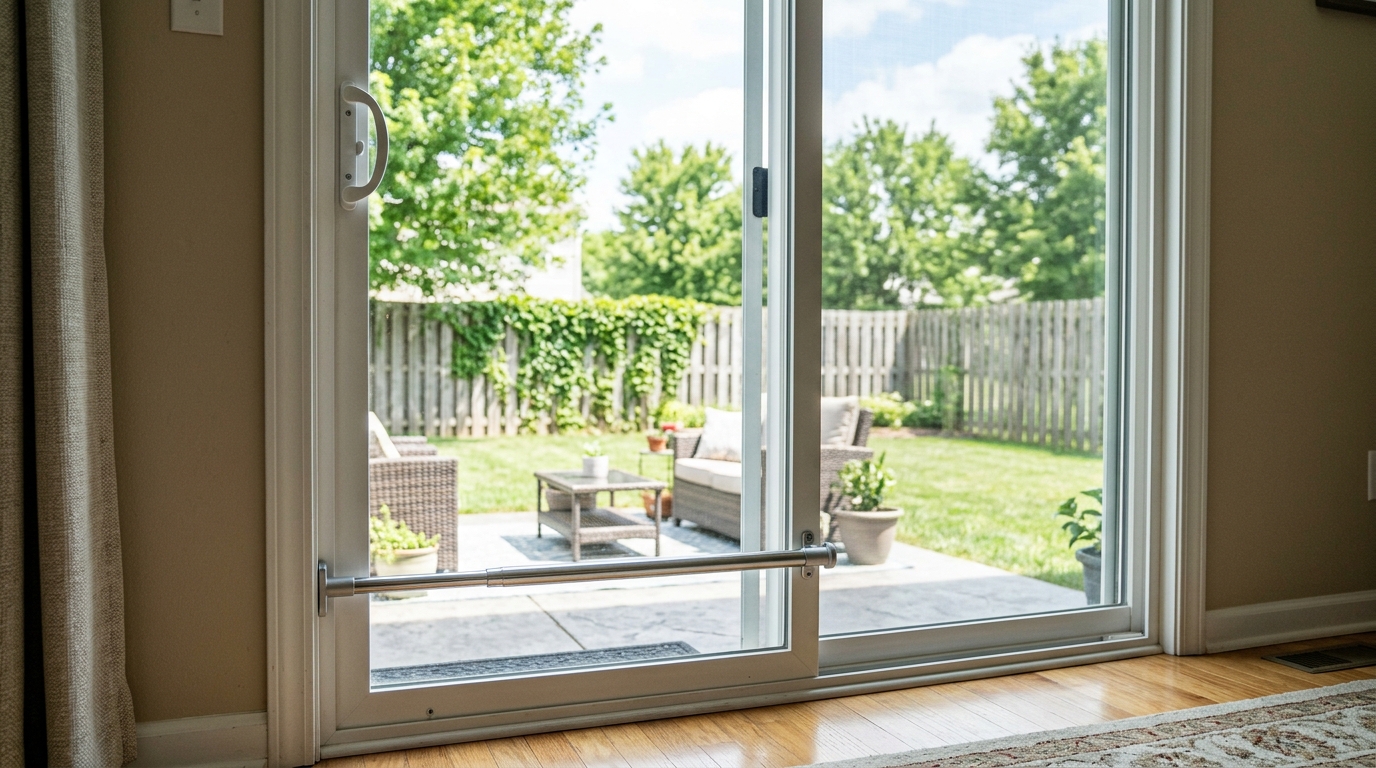
A security bar (also called a Charlie bar or security stick) is a rigid bar placed in the bottom track of the sliding door to physically prevent the door from sliding open. It is the simplest, cheapest, and most widely used sliding door security method. But it has a critical blind spot.
How It Works
The bar sits in the track behind the sliding panel. When someone tries to slide the door open (from outside), the bar jams against the door frame and prevents the panel from moving. Commercial track bars have adjustable lengths and lock into place. DIY versions use a cut-to-length wooden dowel or broomstick.
Pros
- Extremely affordable: $5-$30 (or free with a broomstick)
- Zero installation required — just place it in the track
- Effectively prevents the door from sliding open
- Invisible from outside when the door is closed
Cons
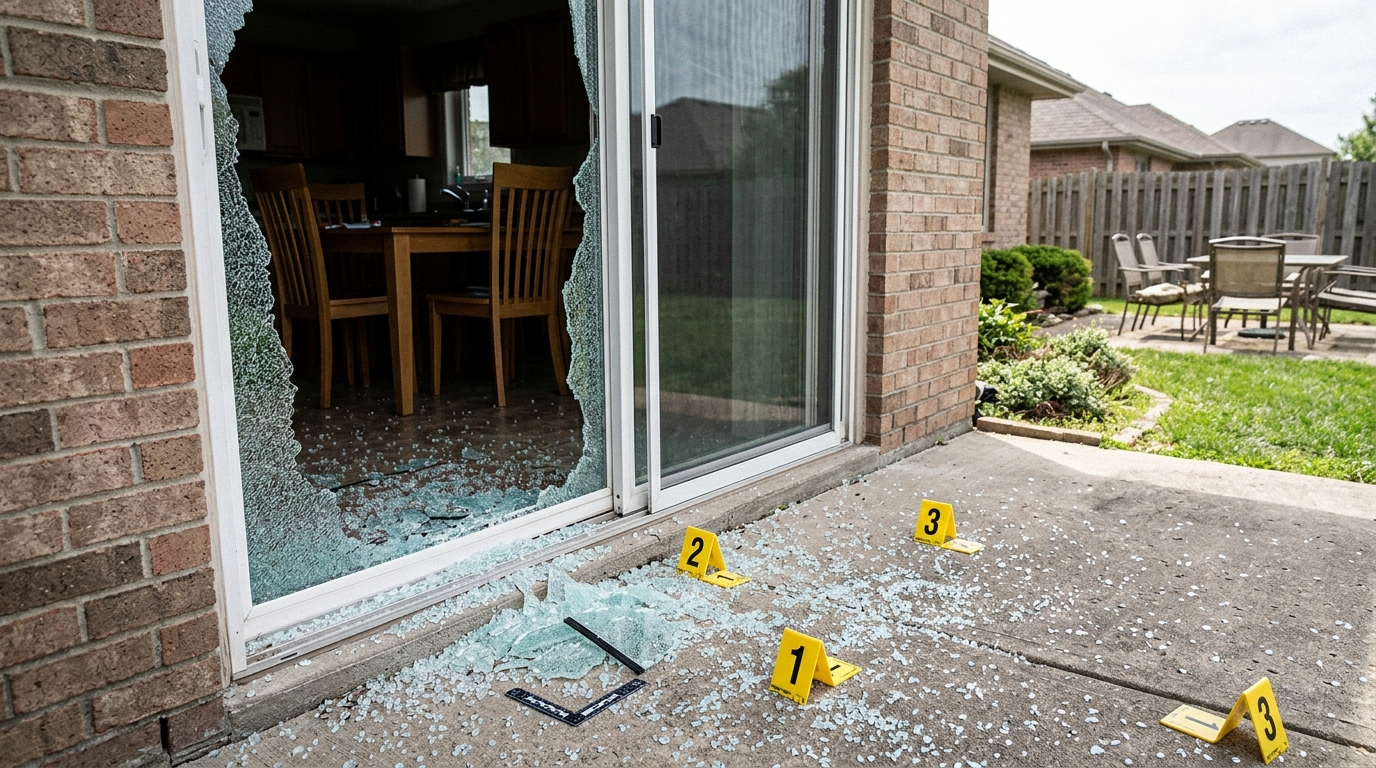
- Does not protect against glass breakage — if the intruder breaks the glass, the track bar is irrelevant because they step through the broken panel
- Does not prevent lift-off-track attacks on some door models
- Must be manually placed and removed every time you use the door
- Can be knocked out of position if not properly sized
Best For
Renters or homeowners on a tight budget who want basic sliding prevention. Best used as a supplement to bars or film, not as a standalone solution. For more on this method, see our security sticks guide.
Method 5: Auxiliary Pin Locks and Foot Locks
Effectiveness rating: 5/10
Auxiliary locks add a second locking point to the sliding door beyond the factory latch. Pin locks drill through both the sliding and fixed panels at the overlap point, preventing the door from sliding. Foot locks mount at the base of the door and lock the panel to the track.
How It Works
A pin lock uses a metal pin inserted through pre-drilled holes that span both the moving and stationary panels. When the pin is in place, the panels cannot slide apart. A foot lock uses a lever mechanism at floor level that wedges the panel against the track. Both prevent the door from being slid open by an intruder.
Pros
- Inexpensive: $15-$40
- Stronger than the factory latch
- Invisible or nearly invisible from outside
- DIY installation
Cons
- Same blind spot as track bars — does nothing if glass is broken
- Pin locks require drilling through the door frame (permanent modification)
- Foot locks can trip occupants if not recessed properly
- Single-vector protection only
Best For
Homeowners who want to reinforce the latch without visible hardware. A good supplement but not a standalone solution.
Method 6: Smart Locks and Electronic Locks
Effectiveness rating: 4/10
Smart locks for sliding doors add electronic control to the locking mechanism. They allow remote locking/unlocking via smartphone, integration with home automation systems, and activity logging. Some models include auto-lock features that engage the lock after a set time.
How It Works
An electronic lock replaces or supplements the factory latch with a motorized or solenoid-driven locking mechanism. The lock can be controlled via app, voice assistant, keypad, or key fob. When engaged, the lock pins the door in the closed position.
Pros
- Convenient: lock and unlock from anywhere via smartphone
- Activity logs show when the door was opened or locked
- Integration with security systems and smart home platforms
- Auto-lock feature prevents accidentally leaving the door unlocked
Cons
- Does not prevent glass breakage entry
- Depends on batteries or power — fails if battery dies
- Hackable — electronic locks have been demonstrated as vulnerable to wireless attacks
- Expensive: $80-$300+
- Adds convenience, not security, if the attack vector is glass breakage
Best For
Homeowners who value convenience and automation. Smart locks are a lifestyle upgrade, not a serious security barrier. They prevent the door from being slid open but do nothing against the most common attack: breaking the glass.
Method 7: Glass Break Sensors and Security Cameras
Effectiveness rating: 3/10
Electronic detection devices — glass break sensors, door/window sensors, and security cameras — alert you when a break-in is happening or has happened. They are the most popular security products in America. They are also the least effective at actually preventing entry.
How They Work
Glass break sensors detect the specific sound frequency of shattering glass and trigger an alarm. Door sensors detect when the door opens beyond its normal position. Cameras record visual evidence and can send real-time alerts to your phone. Some cameras have two-way audio for shouting at intruders (which has limited deterrent value on a committed burglar).
Pros
- Immediate notification of a break-in attempt
- Evidence collection for police reports and insurance claims
- Some deterrent value (visible cameras may discourage casual opportunists)
- Integration with monitoring services that can dispatch police
Cons
- Zero physical prevention — sensors and cameras do not stop an intruder from entering
- Average police response time is 7-10 minutes — a burglary takes 90 seconds to 4 minutes
- False alarms reduce both homeowner attention and police priority
- Cameras can be obscured, blinded, or destroyed
- Depend on power, internet, and batteries
Best For
Detection, documentation, and deterrence — not prevention. Sensors and cameras are excellent supplements to physical barriers but should never be your primary sliding door security strategy. A camera that records a burglar climbing through your broken sliding door does not undo the burglary.
The Layered Approach: Combining Methods
The most effective sliding door security strategy uses multiple methods that cover each other's weaknesses. Here is the recommended layered approach, ordered by priority:
Priority 1: Physical Barrier
Install steel security bars (SWB Model A, ~$90 per unit). This is the foundation. Everything else is supplemental. Bars stop every attack type and require zero maintenance, power, or human intervention.
Priority 2: Track Reinforcement
Add a security bar in the track ($5-$30). This prevents the door from sliding even if the latch is compromised. It is a backup to the mounted bars, not a replacement.
Priority 3: Electronic Detection
Install a glass break sensor ($20-$50) connected to your security system or smart home hub. This provides instant notification if the glass is impacted, allowing you to call police immediately.
Priority 4 (Optional): Glass Hardening
Apply security film ($6-$15 per sq ft) or replace with laminated glass ($300-$800 per panel) if budget allows. This delays glass-breakage entry and complements the physical barrier of the bars.
Total Cost of the Layered Approach
| Layer | Product | Cost (6-ft slider) |
|---|---|---|
| Physical barrier | 2x SWB Model A | ~$180 |
| Track reinforcement | Security stick | ~$15 |
| Electronic detection | Glass break sensor | ~$30 |
| Total | ~$225 |
For $225, you get physical prevention, track lockdown, and electronic detection on a standard sliding glass door. That is less than one month of a professionally monitored alarm system subscription — except the bars and track bar work forever without a monthly fee.
For a full pricing breakdown of security bar options, see our pricing guide. For installation timing, see how long installation takes.
Frequently Asked Questions
What is the cheapest way to secure a sliding glass door?
The cheapest method is a security bar or wooden dowel placed in the bottom track of the door, which costs $5-$30 or free if you cut a broomstick to length. This prevents the door from sliding open but does not protect against glass breakage. For meaningful security that covers all attack vectors, steel security bars at approximately $90 per unit are the most cost-effective option. Two units cover a standard 6-foot slider for about $180 — less than many smart lock systems and far more protective.
Do burglars really break sliding glass doors?
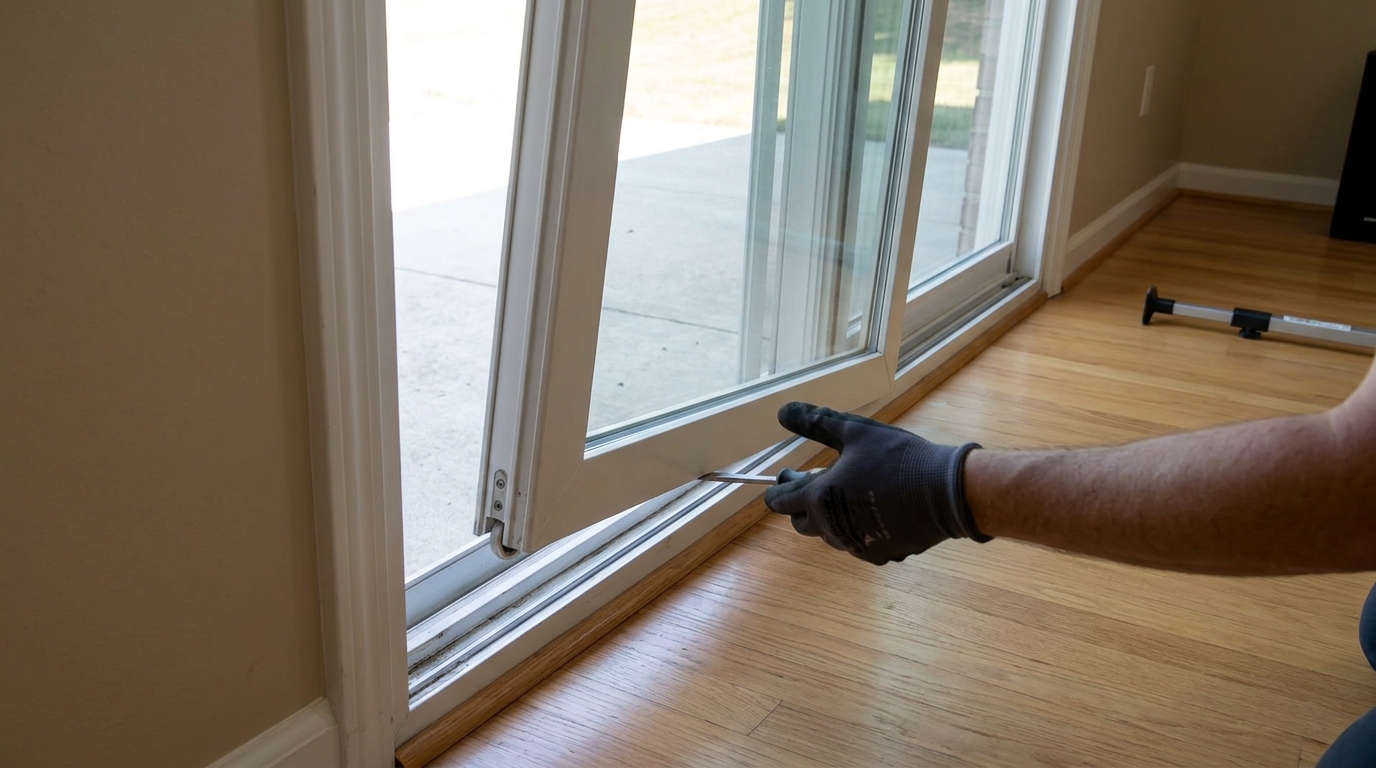
Yes. Sliding glass doors are one of the most targeted entry points in residential burglaries. Burglars exploit multiple vulnerabilities: they pry the latch with a screwdriver, lift the panel off its track, break the glass with a center punch or by throwing an object, or simply force the door open by rocking it in the frame. The rear location of most sliding doors provides privacy from neighbors, and the wide opening allows fast entry and exit with stolen items. Physical barriers like security bars are the most effective countermeasure because they prevent entry regardless of the specific attack method used.
Can you secure a sliding glass door without drilling?
Yes, several methods require no drilling. A security bar in the track requires zero installation. Security film can be applied with adhesive. Glass break sensors use adhesive mounting. However, these methods only delay or detect break-ins — they do not physically prevent entry. For physical prevention with minimal drilling, the SWB Model A frame mount requires only a few screws into the existing door frame, which is a minor and reversible modification. For truly zero-drill options, see our detailed no-drill installation guide.
Is a security camera enough to protect a sliding glass door?
No. A security camera detects and records a break-in but does not prevent one. The average residential burglary is completed in 90 seconds to 4 minutes. Average police response time is 7-10 minutes. By the time anyone responds to a camera alert, the burglar has entered, taken valuables, and left. Cameras are valuable for evidence collection and may deter casual opportunists, but they should always be paired with a physical barrier — security bars, reinforced glass, or at minimum a track bar — that actually prevents entry through the sliding door.
How much does it cost to fully secure a sliding glass door?
A comprehensive layered security setup for a standard 6-foot sliding glass door costs approximately $225: two SWB Model A security bar units (~$180), a security stick for the track (~$15), and a glass break sensor (~$30). This covers physical prevention, track lockdown, and electronic detection. For bedroom sliding doors that require fire code egress compliance, substitute the Model A/EXIT (~$92 per unit) for a total of approximately $229. This is a one-time cost with no monthly fees, unlike alarm monitoring services that charge $25-$60 per month indefinitely.