Can Burglars Really Get Through Basement Windows? What the Data Shows
Yes, burglars can and do get through basement windows -- and they do it far more often than most homeowners realize. Below-grade windows consistently rank among the top three residential entry points for break-ins across the United States, with law enforcement data indicating that basement windows account for a significant share of forced entries in suburban and rural areas. The combination of natural concealment, weak construction, flimsy latches, and homeowner neglect makes basement windows one of the easiest and safest entry points from a burglar's perspective.
This article examines what the available data actually shows about basement window break-ins, how intruders exploit these windows, how quickly they can gain entry, and which countermeasures have demonstrated effectiveness at stopping them.
What the Data Shows About Basement Window Break-Ins
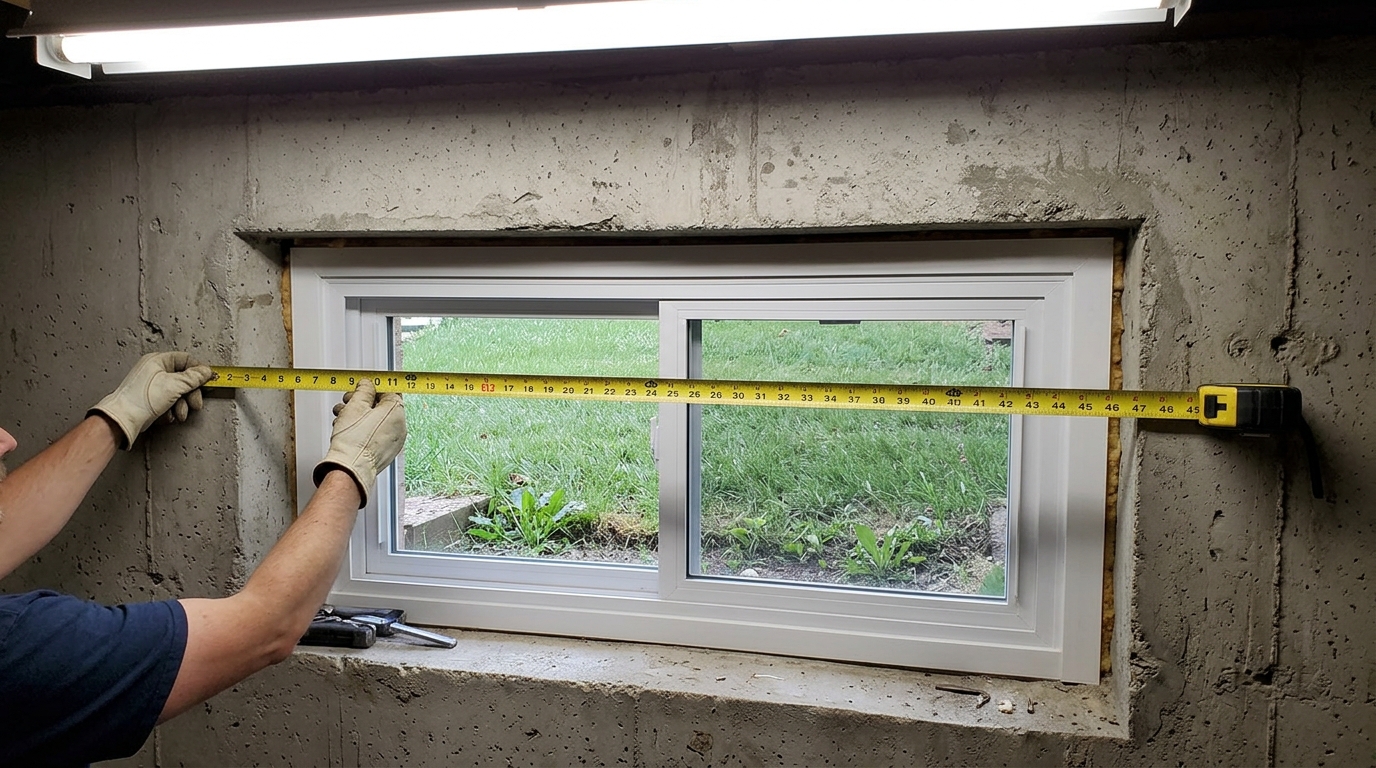
The FBI's Uniform Crime Report and the Bureau of Justice Statistics' National Crime Victimization Survey consistently show that the majority of residential burglaries involve forced entry, and that windows are one of the primary entry points. While national datasets do not always break down entry points by floor level, regional law enforcement studies and insurance industry analyses repeatedly identify basement windows as a top-three entry vector for residential break-ins.
Key Data Points
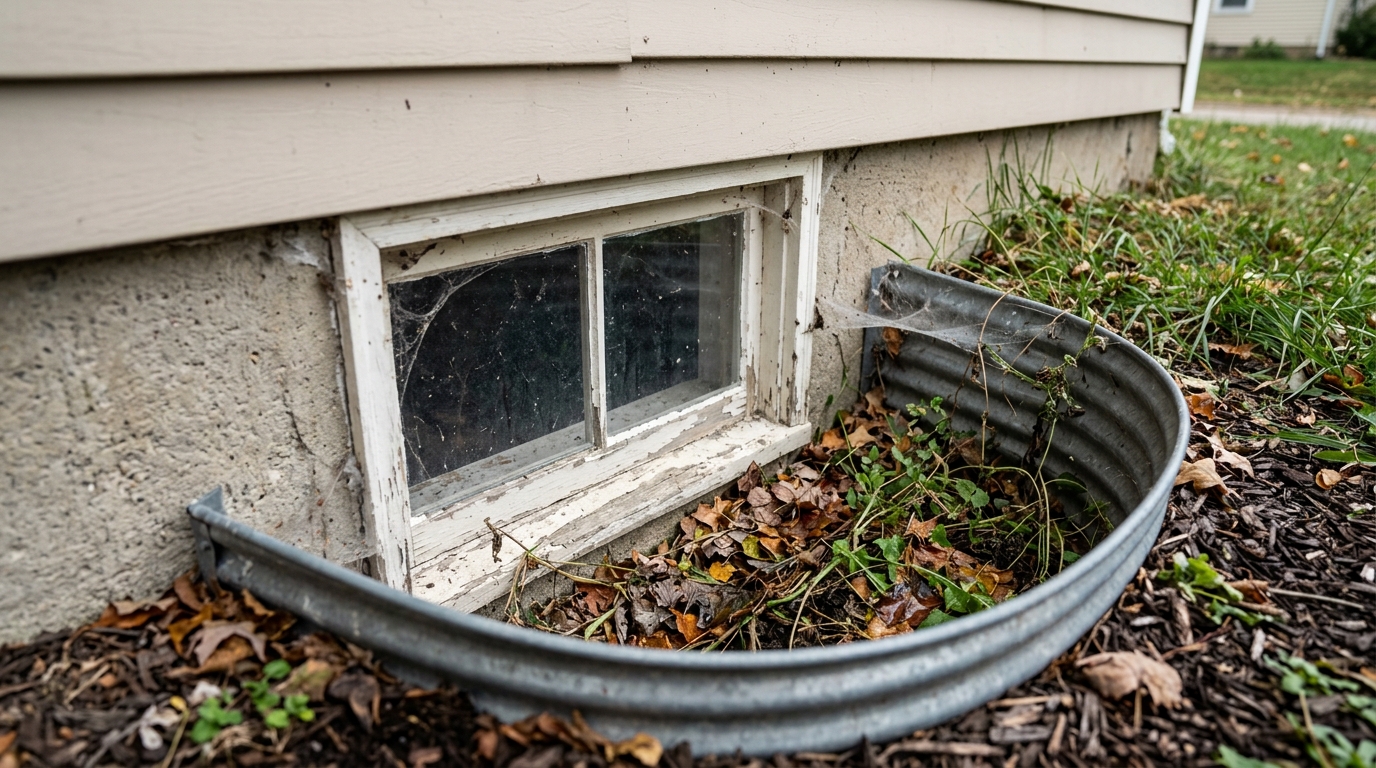
- Forced entry accounts for the majority of residential burglaries. The Bureau of Justice Statistics reports that roughly 55 to 60 percent of completed burglaries involve force, with windows being one of the most common forced-entry targets.
- Below-grade and ground-floor windows are targeted disproportionately. Analysis by multiple police departments in suburban areas suggests that basement and ground-floor windows are involved in a high percentage of window-entry burglaries, significantly more than upper-floor windows.
- Homes without visible window security are targeted at higher rates. Research by the University of North Carolina at Charlotte's Department of Criminal Justice and Criminology found that the majority of convicted burglars said they would avoid a home with visible security measures, including window bars.
- Most residential burglaries occur during daytime hours. Data consistently shows that the majority of break-ins happen between 10 AM and 3 PM when homeowners are at work. Basement windows -- which offer concealment even in daylight -- are particularly vulnerable during this window of opportunity.
What the Data Does Not Tell Us
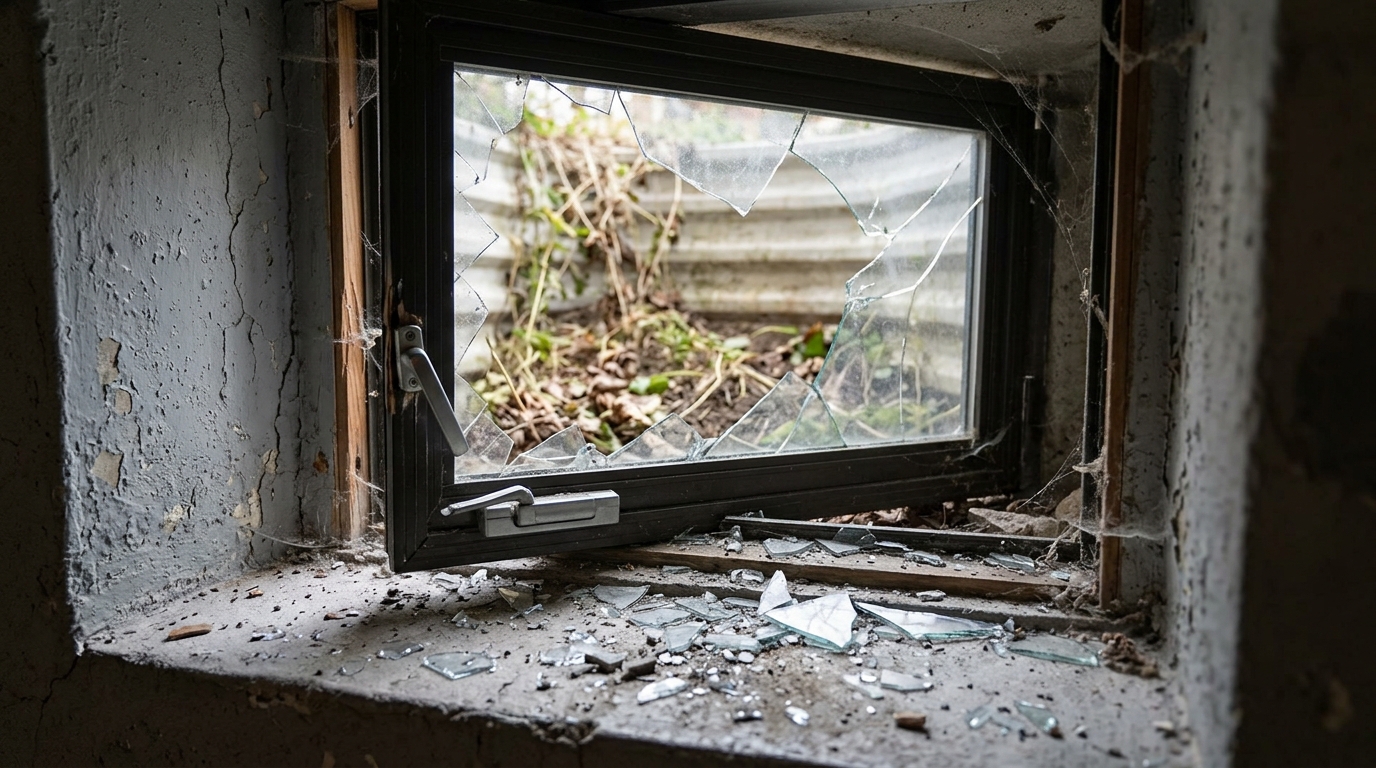
There are real limitations in the available data. National crime surveys do not consistently categorize entry points by floor level. Many basement break-ins are classified simply as "window entry" without noting the below-grade aspect. And attempted burglaries that were deterred by physical barriers go largely unreported, meaning the preventive value of security bars is likely underrepresented in the data.
What we can say with confidence is this: basement windows are a demonstrated, repeated entry point for residential burglars, and their natural concealment advantages make them among the highest-risk openings in any home.
Why Burglars Prefer Basement Windows Over Other Entry Points
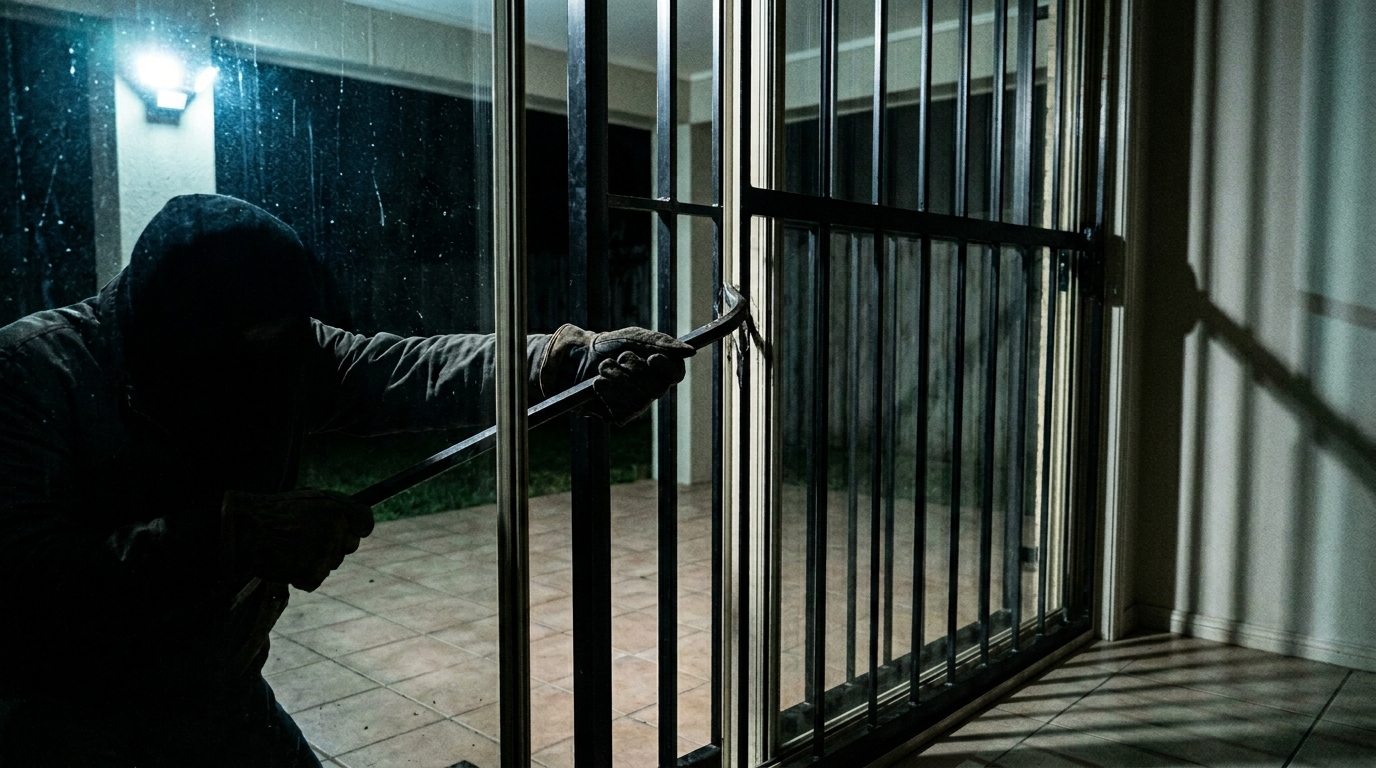
Understanding why burglars target basement windows helps explain the data patterns. The preference is not random -- it is a calculated decision based on risk, effort, and reward.
Concealment Is the Primary Factor
A burglar's greatest enemy is being seen. Every second spent visible to neighbors, passersby, or cameras increases the risk of identification and arrest. Basement windows offer unmatched concealment because the intruder is working below ground level, inside a window well, hidden by the building's foundation, and often shielded by landscaping. A person crouching in a window well on the side of a house is invisible to anyone more than 10 feet away at street level.
Compare this to a front door (fully visible from the street), a ground-floor window (visible from the yard), or even a back door (visible from neighboring yards). The concealment advantage of basement windows is so significant that experienced burglars will bypass easier-to-reach but more visible entry points in favor of a below-grade window.
Minimal Resistance
Most basement windows offer almost no resistance to forced entry. Standard hopper and slider window latches can be defeated in seconds. Single-pane glass breaks with a single strike. Window frames, especially in older homes, may be rotted or deteriorated from decades of moisture exposure. From a burglar's perspective, a typical basement window is faster to breach than a locked door and quieter than breaking a ground-floor double-pane window.
Lower Homeowner Investment
Homeowners invest their security budgets on the entry points they think about: front door deadbolts, smart locks, doorbell cameras, alarm keypads in the foyer. Basement windows receive almost no security investment. Burglars know this. They scout neighborhoods and identify the homes where the front door has a Ring camera and a Grade 1 deadbolt, but the basement windows have nothing. The path of least resistance leads directly to the basement.
For a broader understanding of how burglars evaluate home security -- and where they probe for weaknesses -- read our analysis: Do Burglar Bars Really Work?
How Quickly Can a Burglar Get Through a Basement Window?
Speed is everything in a burglary. The faster the entry, the lower the risk of detection. Basement windows enable some of the fastest forced entries of any residential opening.
Entry Time Estimates by Window Type
| Window Type | Common Security | Estimated Entry Time | Method |
|---|---|---|---|
| Single-pane hopper | Cam lock only | 5-15 seconds | Break glass, reach through, flip latch |
| Single-pane slider | Thumb latch | 10-20 seconds | Pry frame, lift panel off track |
| Double-pane hopper | Cam lock only | 10-30 seconds | Break both panes or pry sash open |
| Casement (crank-out) | Multi-point latch | 30-90 seconds | Break glass, reach crank handle |
| Glass block | Mortar joints | 2-5 minutes | Hammer out individual blocks |
| Window with steel bars | Powder-coated steel bars | 15+ minutes (if at all) | Requires power tools, extreme noise |
The contrast is stark. An unprotected single-pane basement window can be breached in as little as 5 seconds. The same window with steel security bars requires 15+ minutes of loud, conspicuous work with power tools -- if it can be breached at all. That time difference is the entire value proposition of physical security barriers.
The Noise Factor
Breaking a single pane of glass produces a brief, sharp sound that is often mistaken for a branch cracking or something falling. It does not produce the dramatic, attention-grabbing crash that most people imagine. A burglar in a window well can break a pane, pause, listen for any reaction, and then proceed. The contained space of the window well actually muffles the sound further.
Steel bars change this equation entirely. Attempting to cut or pry steel bars requires an angle grinder, reciprocating saw, or heavy pry bar -- tools that produce sustained, unmistakable noise that carries through the neighborhood. This noise is as much a deterrent as the physical strength of the steel.
The "Too Small" Myth: Can Adults Fit Through Basement Windows?
One of the most persistent and dangerous misconceptions in home security is that basement windows are too small for an adult intruder to fit through. This belief has been debunked repeatedly by law enforcement, forensic analysts, and security professionals.
How Small Is Too Small?
A motivated adult can fit through an opening as small as approximately 8 by 10 inches. Fire department training data demonstrates this -- firefighters regularly practice entering and exiting through confined spaces, and the minimum passable opening for an adult in an emergency is surprisingly small. A burglar with the same motivation (avoiding arrest rather than saving a life) can manage the same feat.
Standard Basement Window Sizes
Consider the actual dimensions of common basement windows:
- Standard hopper: 32 by 14 inches (clear opening approximately 30 by 12 inches)
- Standard slider: 36 by 18 inches (clear opening approximately 17 by 16 inches per panel)
- Egress-rated: 36 by 36 inches or larger (designed specifically to allow an adult to climb through)
Even the smallest standard hopper window (30 by 12 inch clear opening) exceeds the minimum passable size. Larger slider and egress windows are more than comfortable for an adult to enter through. The "too small" myth is not just wrong -- it is actively dangerous because it leads homeowners to leave windows unprotected.
Juveniles and Accomplices
Some burglary operations involve a juvenile accomplice who fits through a smaller opening, unlocks a door from inside, and lets the adult partner enter. This technique is well-documented in law enforcement case files. It means that even windows genuinely too small for an adult can still be exploited as part of a coordinated break-in.
Which Homes Are Most at Risk for Basement Window Break-Ins?
While any home with basement windows has some level of risk, certain property characteristics increase vulnerability significantly.
High-Risk Indicators
- Basement windows on the side or rear of the house -- hidden from street view and neighbor sightlines
- Dense landscaping around the foundation -- shrubs, bushes, and tall plants provide concealment
- No exterior lighting near basement windows -- darkness eliminates the risk of being seen
- Single-pane windows with basic latches -- minimal resistance to forced entry
- Unoccupied or seasonally vacant properties -- extended vacancy removes the risk of encountering occupants
- Homes backing up to alleys, parks, or wooded areas -- easy approach and escape routes
- No visible security measures -- no cameras, no alarm signs, no window bars signals an undefended target
- Older homes with original basement windows -- frames may be rotted, hardware worn, glass single-pane
Geographic and Neighborhood Factors
Basement window break-ins are more common in suburbs and rural areas than in dense urban centers. This may seem counterintuitive, but the logic tracks: suburban and rural homes are more likely to have full basements with multiple windows, more likely to have landscaping that provides concealment, and less likely to have the constant foot traffic that deters daytime burglaries in urban areas.
Neighborhoods with a high percentage of dual-income households (empty during standard work hours) also see elevated rates, because the 10 AM to 3 PM vulnerability window coincides perfectly with vacant homes.
What Actually Stops Burglars at Basement Windows
Not all security measures are equally effective at stopping a basement window break-in. Here is what the evidence suggests actually works versus what merely creates the perception of security.
Measures That Stop Entry
Steel security bars are the only measure that physically prevents an intruder from passing through a basement window opening. Bars mounted on the window create a steel barrier that requires power tools and extended time to defeat. The SWB Model A (~$90) is specifically designed for this application, with telescopic adjustment that fits the non-standard sizes common in basement windows and powder-coated steel that resists the moisture conditions of below-grade environments.
The research from UNC Charlotte found that a strong majority of surveyed burglars said visible physical barriers on windows would cause them to move on to a different target. Steel bars do not just delay entry -- they prevent it entirely and redirect the threat elsewhere.
Measures That Delay but Do Not Stop
- Security film -- holds broken glass together, adding 15 to 90 seconds of delay. Useful as a supplement but not a standalone solution.
- Upgraded window locks -- adds resistance to the latch mechanism but does not prevent glass breakage and reach-through.
- Glass block windows -- harder to breach than standard glass but individual blocks can be knocked out with a hammer over several minutes.
- Window well covers -- polycarbonate covers can be broken; metal grates can be lifted or unbolted. They add a layer of inconvenience but do not stop a determined intruder.
Measures That Deter but Do Not Prevent
- Alarm systems and sensors -- alert you and monitoring services, but the intruder is already through the window by the time anyone responds
- Security cameras -- record evidence but do not physically prevent entry
- Motion lights -- startle and expose the intruder, causing many to flee, but a determined burglar in a concealed window well may not be deterred
- Alarm company signs and stickers -- data suggests they deter some opportunistic burglars but have minimal effect on experienced criminals
For a deeper dive into which security measures actually work against window break-ins, with supporting evidence, see our comprehensive guide: The Ultimate Burglar Bars for Windows Guide.
Your Action Plan: Closing the Basement Vulnerability
If you have basement windows and they are not currently secured with steel bars, you have an open vulnerability in your home's security. Here is the practical, prioritized action plan:
This Weekend (1-2 Hours)
- Audit every basement window. Walk the perimeter and the basement interior. Note the type, size, condition, and visibility of each window.
- Order steel security bars. One SWB Model A per non-egress window. One Model A/EXIT per egress window. Measure first -- see our measurement guide for the precise process.
- Clear landscaping around window wells. Remove tall shrubs and stored items within 3 feet of any basement window. This is free and immediately reduces concealment.
When Bars Arrive (1 Afternoon)
- Install bars on every basement window. Frame mount takes approximately 15 minutes per window with a cordless drill. Start with the highest-risk windows (side and rear of the house).
- Upgrade window locks where the existing latch is worn or inadequate. Budget $10 to $25 per window.
- Install motion lights above each window well or group of windows. Solar-powered units require no wiring. Budget $15 to $40 each.
Optional Additions (When Budget Allows)
- Apply security film to basement window glass ($20-$50 per window)
- Install locking window well covers ($60-$400 per well)
- Add glass break sensors or contact sensors ($10-$30 per window)
- Position a weatherproof camera covering the foundation perimeter ($50-$200)
The entire core protection package -- steel bars plus lock upgrades plus motion lights for a typical four-window basement -- costs approximately $430 to $520 with DIY installation. It takes one afternoon. And it eliminates the single most exploited vulnerability in your home for the next 20 to 30 years.
The data is clear. Burglars get through basement windows because homeowners leave them unprotected. Steel bars change the equation from seconds of silent entry to an impenetrable barrier that sends the intruder to a different target.