Can Burglars Open Sliding Glass Doors? How They Get In
Yes, burglars can open sliding glass doors, and they do it routinely. A standard residential sliding glass door can be defeated in under 30 seconds using simple tools or no tools at all. The five most common methods are lifting the panel off its track, prying the frame apart to disengage the latch, breaking the glass with a sharp impact tool, manipulating the factory lock with a flathead screwdriver, and simply finding the door already unlocked. Each method exploits a different design weakness, and most sliding doors are vulnerable to all five.
Sliding glass doors are among the most targeted entry points in residential burglaries. Their rear-of-home location provides cover from neighbors, their wide openings allow fast entry and exit with stolen items, and their factory security hardware is alarmingly weak. This post explains exactly how burglars exploit each vulnerability, so you can take specific countermeasures against each one.
Method 1: Lifting the Door Off Its Track
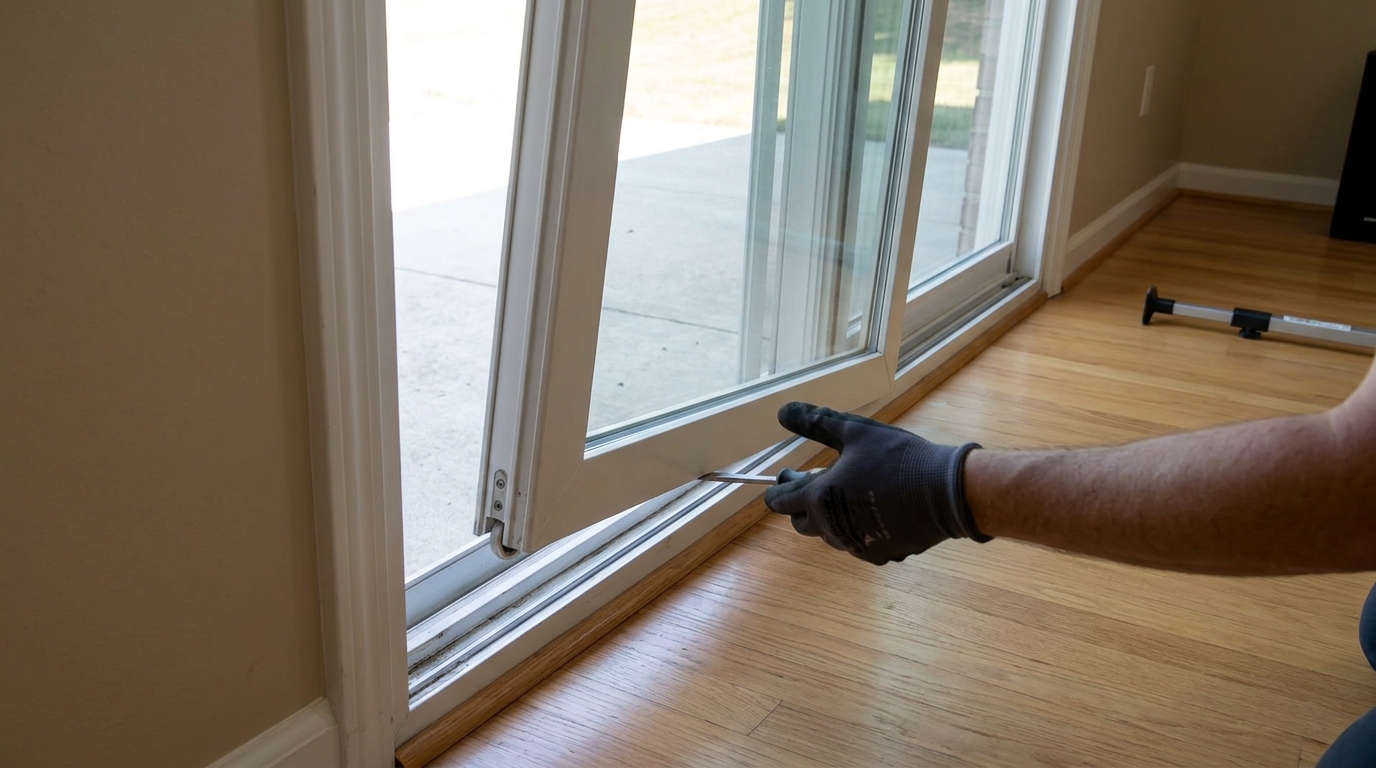
Most residential sliding glass doors ride on a bottom track with rollers attached to the bottom of the panel. The panel sits in the track by gravity and is held in place by a top guide rail with a small gap above the panel. That gap is the vulnerability.
How It Works
The intruder grips the bottom edge of the sliding panel, lifts it upward (compressing the rollers or tilting the panel), and then swings the bottom of the panel inward over the track rail. Once the bottom clears the track, the entire panel can be removed from the frame and set aside. The intruder now has the full door opening — no glass breakage, no noise, no visible damage.
Why It Works
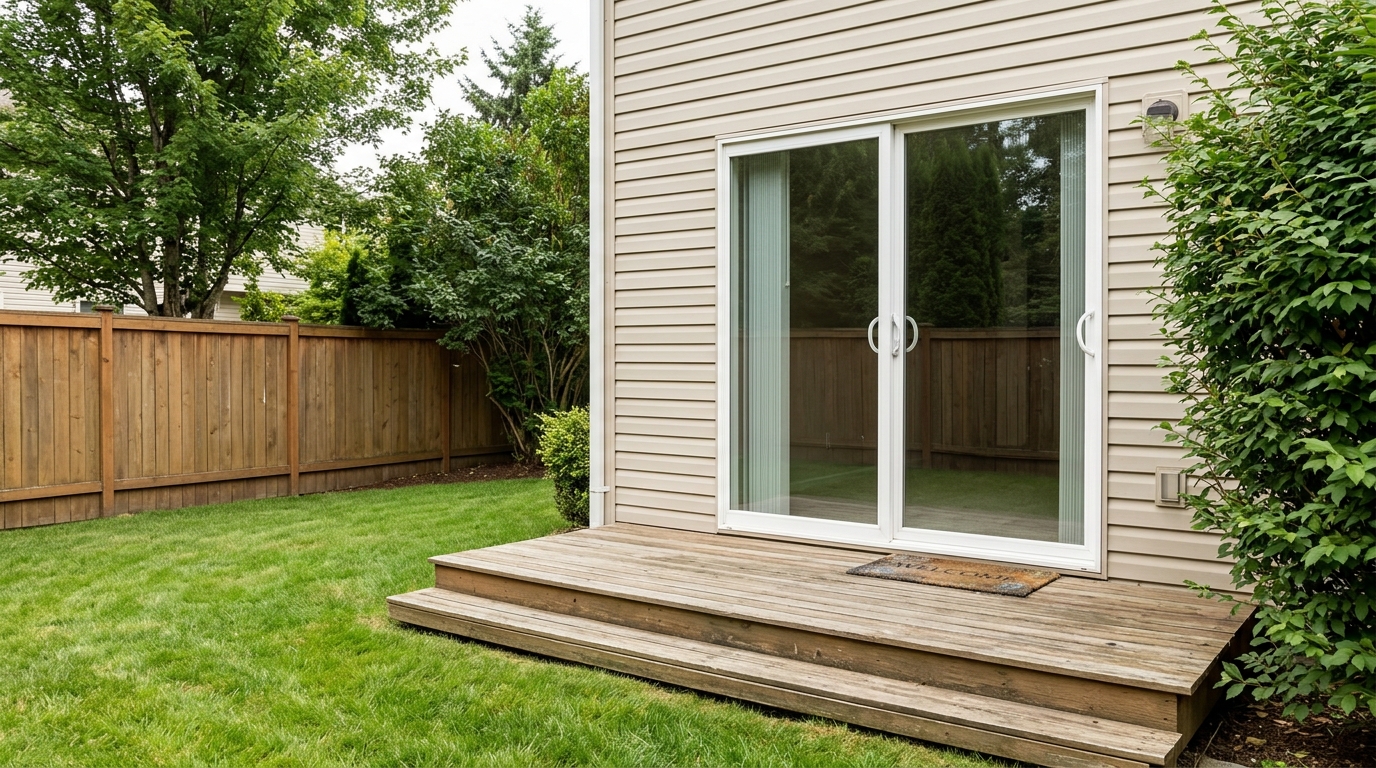
The gap between the top of the panel and the top guide rail is typically 1/4 to 1/2 inch — enough to lift the panel clear of the bottom track on many models. Older doors, doors with worn rollers, and doors that have settled or shifted over time often have even more clearance. Some newer doors include anti-lift pins or blocks, but many do not.
How to Stop It
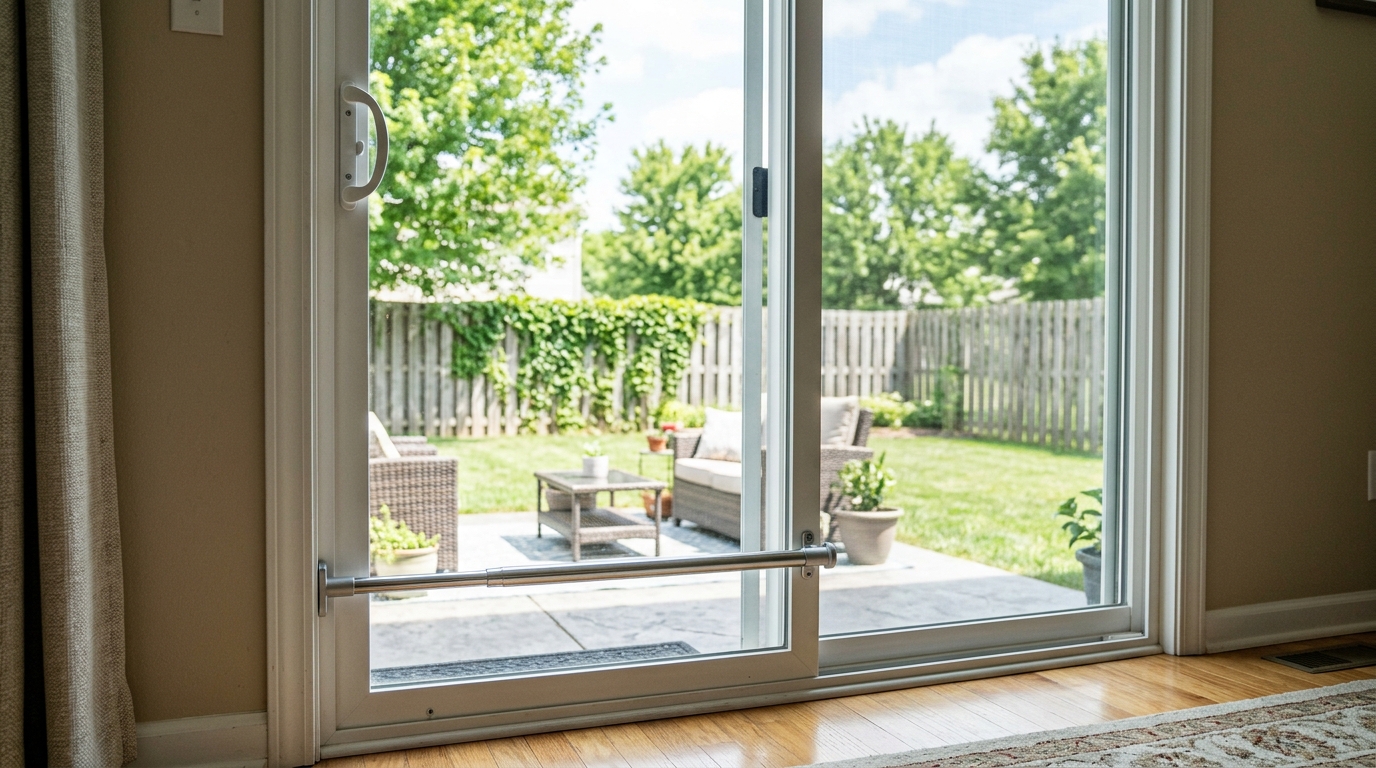
- Anti-lift screws: Install screws in the upper track above the sliding panel that reduce the vertical clearance to less than 1/8 inch. This prevents the panel from being lifted high enough to clear the bottom rail.
- Security bars: Steel bars mounted across the door frame prevent the panel from being tilted inward even if it is lifted, because the bars block the panel's swing path.
Method 2: Prying the Frame to Bypass the Latch
The factory latch on a sliding glass door is a simple hook or toggle mechanism that engages a strike plate on the door frame. The latch throw (how far the hook extends) is typically less than 1/2 inch. That is not much to overcome.
How It Works
The intruder inserts a pry bar, large screwdriver, or even a sturdy putty knife between the sliding panel and the fixed panel (or door frame) at the latch location. By applying leverage, the panels can be spread apart just enough to disengage the hook latch from the strike plate. Once the latch is clear, the door slides open freely.
Why It Works
Aluminum sliding door frames are designed to be lightweight for smooth operation. They flex under relatively modest prying force. The latch mechanism on most residential sliders was designed as a privacy device, not a security device. It keeps the door closed against wind and accidental bumps, but it was never engineered to resist deliberate forced entry.
How to Stop It
- Auxiliary pin lock: A metal pin through both panels at the overlap point prevents them from sliding apart even if the latch is bypassed.
- Track bar: A rigid bar in the track physically prevents the door from sliding open regardless of latch status.
- Security bars: Even if the door is pried open, mounted bars across the opening prevent entry through the open door.
Method 3: Breaking the Glass
This is the most direct method and the one that renders all track-based security devices useless. If the glass is broken, it does not matter whether the latch is locked, the track has a bar in it, or the door has a smart lock. The intruder steps through the broken panel.
How It Works
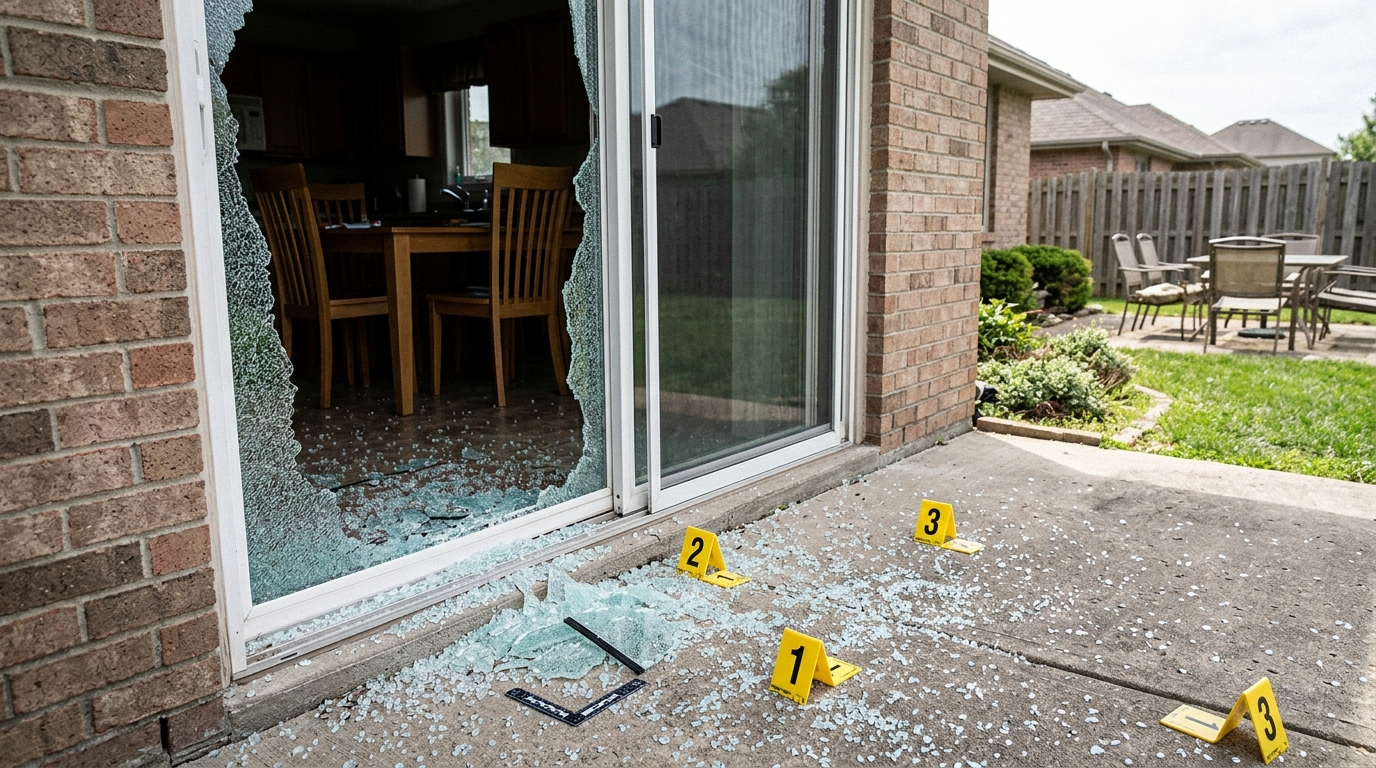
The intruder strikes the glass with a hard, pointed object — a spring-loaded center punch (available at any auto parts store for under $10), a spark plug fragment (ceramic is extremely effective against tempered glass), or simply a rock or brick. Tempered glass shatters into small, relatively safe cubes rather than dangerous shards, which means the intruder can step through the opening almost immediately after breakage without significant injury risk.
Why It Works
Tempered glass is designed to shatter safely, which is a safety feature for occupants but a security liability. A single point impact with a hard, sharp object causes the entire panel to disintegrate in under one second. The resulting sound is a brief, sharp crack — far less dramatic than most people imagine. In a suburban backyard at night, the sound of a sliding door glass breaking may not be heard by neighbors, especially with background noise from HVAC units, traffic, or weather.
How to Stop It
- Security bars — the only method that works after the glass is gone. Steel bars across the opening block entry regardless of glass condition.
- Laminated glass — holds together when struck, requiring sustained effort to breach. Expensive ($300-$800 per panel installed).
- Security film — holds broken glass in the frame, delaying but not preventing entry. Cheaper than laminated glass ($6-$15 per sq ft).
Key point: Track bars, pin locks, smart locks, and auxiliary latches provide zero protection against glass breakage. If glass breakage is the attack vector — and it is the most common one on sliding doors — the only methods that matter are bars, laminated glass, or security film. For details on how these compare, see our sliding glass door burglar bars guide.
Method 4: Manipulating the Factory Lock
The factory latch on most sliding glass doors can be manipulated from outside without breaking the glass. This is the quietest and least detectable method.
How It Works
Using a thin, flexible tool (a shim, credit card, or slim jim), the intruder works the tool between the panels at the latch location and flips the toggle or disengages the hook. On some older models, the latch can be rocked loose simply by jiggling the door panel back and forth while applying upward pressure. On models where the latch is visible through the gap between panels, the intruder can directly manipulate the latch mechanism with a hooked tool.
Why It Works
Factory latches on residential sliding doors are simple mechanical devices with minimal tolerance for misalignment. Years of use, temperature cycling, and frame settling can create enough play in the mechanism that it can be defeated with basic tools. Even brand-new latches on budget-grade sliders have limited security value because the latch throw is too short to resist any meaningful prying or shimming effort.
How to Stop It
- Auxiliary lock — a secondary lock (pin, foot lock, or loop lock) that does not rely on the factory latch
- Track bar — prevents door from opening regardless of latch status
- Security bars — make the latch irrelevant because entry through the opening is blocked by steel
Method 5: The Door Is Already Unlocked
The simplest and most common entry method requires no skill, no tools, and no force at all. The burglar walks up to the sliding door and tries the handle. The door slides open. They walk in.
How Common Is This?
More common than most people realize. Homeowners routinely leave sliding doors unlocked for pet access, child play, ventilation, or simple forgetfulness. The door may have been unlocked that morning and never re-locked. In many households, the sliding door is treated as an interior boundary rather than a security perimeter — it is left in whatever position is convenient, with little thought to whether it is locked.
Why Burglars Try the Handle First
Because it is the lowest-risk test. If the door opens, the burglar has clean, silent, zero-evidence entry. If it is locked, they move to one of the other four methods. Trying the handle costs nothing and takes one second. An experienced burglar tests every accessible door and window before resorting to forced entry.
How to Stop It
- Lock your door — the obvious answer that millions of homeowners ignore
- Smart lock with auto-lock — automatically engages after a set period
- Security bars — even if the door is unlocked and open, bars across the opening prevent entry
Why Burglars Target Sliding Doors Over Other Entry Points
Sliding glass doors have a combination of characteristics that make them the preferred target:
| Factor | Sliding Glass Door | Front Door | Window |
|---|---|---|---|
| Visibility from street | Low (back of house) | High | Varies |
| Neighbor visibility | Low (fenced yard) | High | Medium |
| Opening size | Very large (5-16 ft) | Standard (3 ft) | Small |
| Lock strength | Very weak | Strong (deadbolt) | Weak to moderate |
| Time to breach | Seconds | Minutes (if deadbolted) | Seconds to minutes |
| Large item removal | Easy (wide opening) | Moderate | Difficult |
The combination of privacy, weak locks, fast entry, and a wide opening for hauling out TVs, electronics, and other large items makes sliding doors the path of least resistance. A burglar casing a neighborhood will identify every home with an accessible sliding glass door as a higher-priority target than a home with only standard doors and windows.
How to Defeat Every Method
Each break-in method has specific countermeasures, but only one countermeasure defeats all five methods simultaneously: steel security bars.
| Attack Method | Track Bar | Pin Lock | Smart Lock | Security Film | Security Bars |
|---|---|---|---|---|---|
| Lift off track | No | Yes | No | No | Yes |
| Pry frame | Yes | Partial | Partial | No | Yes |
| Break glass | No | No | No | Delays | Yes |
| Manipulate lock | Yes | Yes | Partial | No | Yes |
| Door unlocked | Yes | No | Auto-lock | No | Yes |
The SWB Model A (~$90 per unit) creates a steel barrier across the sliding door opening that cannot be bypassed by any of the five common attack methods. Its modular, telescopic design stacks to cover any door width. Two units cover a standard 6-foot slider for approximately $180 — less than many smart lock systems and infinitely more effective against forced entry.
For homeowners who want the physical barrier of bars plus the specific countermeasures for each individual attack method, the recommended combination is: security bars (defeats all methods) + track bar (redundant sliding prevention) + anti-lift screws (redundant lift prevention). Total cost: approximately $200 for complete, layered protection. See our buyer's guide for full product details.
Frequently Asked Questions
How long does it take a burglar to break into a sliding glass door?
A sliding glass door with only its factory latch can be breached in under 30 seconds using any of the five common methods. Lifting the panel off the track takes 10-20 seconds. Prying the latch takes 5-15 seconds with a screwdriver. Breaking the glass with a center punch takes under 5 seconds. Manipulating the factory lock takes 10-30 seconds. If the door is unlocked, entry takes 2 seconds. These times are for unmodified doors with standard factory hardware. Adding security measures increases breach time significantly: a track bar adds minutes of additional effort (for non-glass attacks), and security bars make entry effectively impossible without power tools.
Can a burglar lift a sliding glass door off its track?
Yes. Many residential sliding glass doors can be lifted out of their bottom track because there is a small gap between the top of the door panel and the top guide rail. The intruder lifts the panel up into this gap, then swings the bottom of the panel inward over the track rail. Anti-lift screws installed in the upper track reduce this gap and prevent the technique. Security bars mounted across the door frame also prevent panel removal because the bars block the panel from being tilted inward. Newer, premium sliding doors may include built-in anti-lift features, but most standard-grade residential sliders remain vulnerable.
Are sliding glass doors less secure than regular doors?
Yes, significantly. A standard exterior door with a quality deadbolt provides much stronger security than a sliding glass door with its factory latch. The deadbolt throw on a standard door is typically 1 inch into a reinforced strike plate screwed into the door frame stud. The latch on a sliding door extends less than half an inch into a lightweight aluminum strike. Additionally, a standard door has no large glass panel that can be broken for entry. Sliding glass doors are the weakest exterior entry point in most homes, which is exactly why they deserve dedicated security measures like steel security bars.
Does putting a stick in the sliding door track really work?
A stick or dowel in the track effectively prevents the door from being slid open, which stops latch manipulation and prying attacks. It is a simple, free security measure that every sliding door should have. However, it provides zero protection against the most common forced-entry method: breaking the glass. If a burglar breaks the glass panel, the track stick is completely irrelevant because the intruder steps through the broken panel, not through the door opening. A track stick is a valuable supplemental measure but should not be your only defense. Pair it with security bars for complete coverage.
What is the best way to burglar-proof a sliding glass door?
The single most effective measure is steel security bars mounted across the door opening. The SWB Model A (~$90 per unit) creates a physical barrier that defeats all five common sliding door break-in methods: lifting off track, prying the frame, breaking the glass, manipulating the lock, and walking through an unlocked door. For maximum protection, combine bars with a track stick ($5-$15), anti-lift screws in the upper track ($5), and a glass break sensor ($20-$50). This layered approach covers every attack vector for approximately $200 total — a one-time investment with no monthly fees.