Window Bars Cost Per Window Installed: USA 2026 Breakdown by Region
Direct answer: Installed window security bars cost $150–$320 per window in 2026, depending on your region, bar model, and whether you hire a pro or go DIY. Northeast and California markets average $220–$320; the South and Midwest average $150–$220. A typical 5-window project runs $850–$1,300 fully installed. DIY saves $80–$120 per window by eliminating labor, with most installs taking 45–90 minutes per window.
Marcus Reid · IDA Certified
10 minutes
What You're Actually Paying For: The Cost Stack
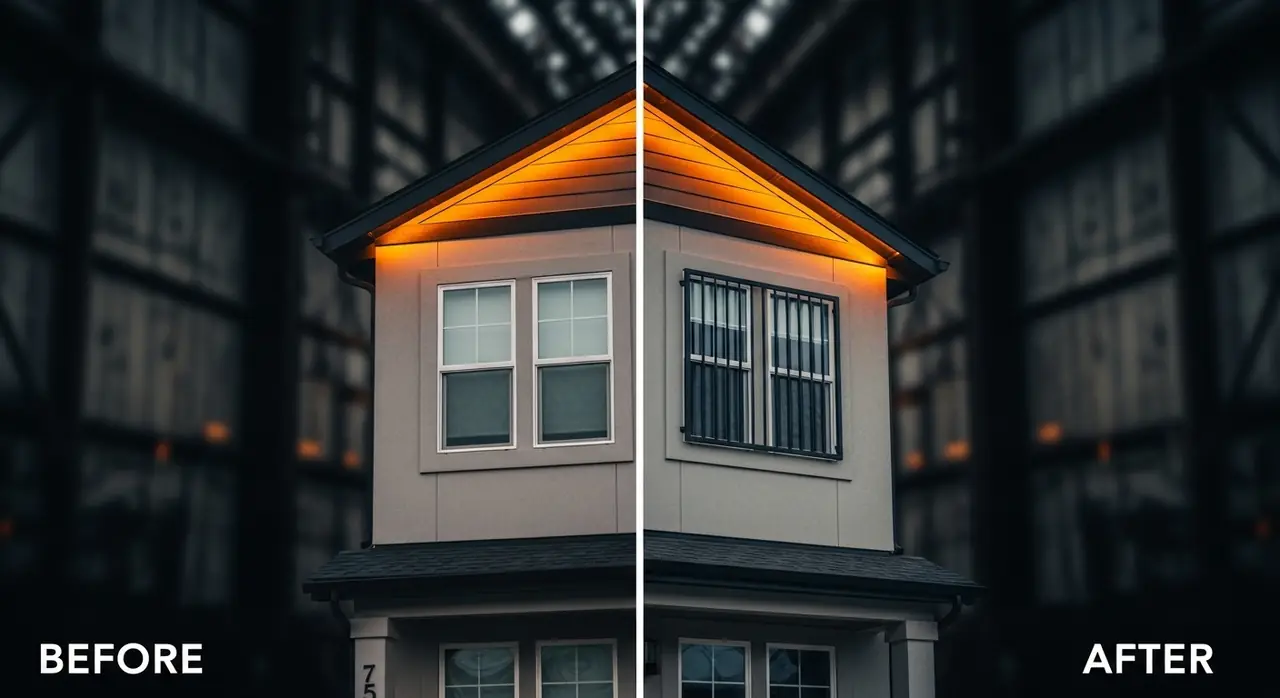
When someone quotes you a window bar installation cost, that number almost always bundles three separate things: the hardware itself, the labor to mount it, and incidental supplies (anchors, masonry bits, optional touch-up paint). Understanding how those layers stack tells you where your money is going — and which layer you can actually control.
Hardware is the most predictable element. A telescopic 11-gauge steel bar — the same gauge specified in commercial security applications — runs $99–$129 depending on span and egress requirements. SWB's Model A covers 26"–42" openings from $99. The Model B stretches to 66" from $129, which handles most double-hung and sliding windows. If you have a sleeping room, the Model A/EXIT at $129 is not optional under IBC Section 1030 — it's the only egress-compliant option. Labor is where regional variation kicks in hard, and anchors and bits add a flat $15–$40 you should budget regardless.
The Three-Layer Cost Stack
Hardware ($99–$129) + Labor ($60–$140/window) + Supplies ($15–$40/window) = $174–$359 gross. Shop and compare on layer two — you can't negotiate steel prices, but labor rates are highly regional.
Regional Labor Rates: Why Your Zip Code Moves the Number
Labor is the dominant variable in window bars installation cost, and it swings hard by market. Bureau of Labor Statistics data on general installation and handyman trades shows prevailing hourly rates range from roughly $45/hour in rural South markets to $130+/hour for licensed contractors in metro New York, San Francisco, and Boston. Window bar installation is unskilled-to-semi-skilled work — it doesn't require a licensed contractor in most states — so the range in practice is narrower, but the regional gap is still $55–$85/hour vs. $90–$130/hour between low- and high-cost markets.
At 45–90 minutes per window (the real-world professional pace, verified across multiple install crews), a $70/hour labor market generates $52–$105 in labor per window. A $110/hour market generates $82–$165 per window. Stack that on top of identical hardware and you get the $150–$320 total range. The table below maps this out by region so you can anchor your budget before calling anyone.
| Region | Avg. Labor Rate | Labor/Window | Total Installed (Model A) |
|---|---|---|---|
| Northeast (NY, MA, CT) | $100–$130/hr | $90–$140 | $220–$320 |
| California (LA, SF, SD) | $95–$125/hr | $85–$135 | $215–$315 |
| Pacific Northwest (WA, OR) | $85–$110/hr | $75–$120 | $205–$295 |
| Midwest (IL, OH, MI) | $65–$85/hr | $60–$95 | $175–$245 |
| South (TX, FL, GA, NC) | $55–$75/hr | $52–$85 | $150–$220 |
| Mountain West (CO, AZ, NV) | $70–$95/hr | $65–$105 | $185–$265 |
DIY vs. Pro Install: The $80–$120 Per Window Decision
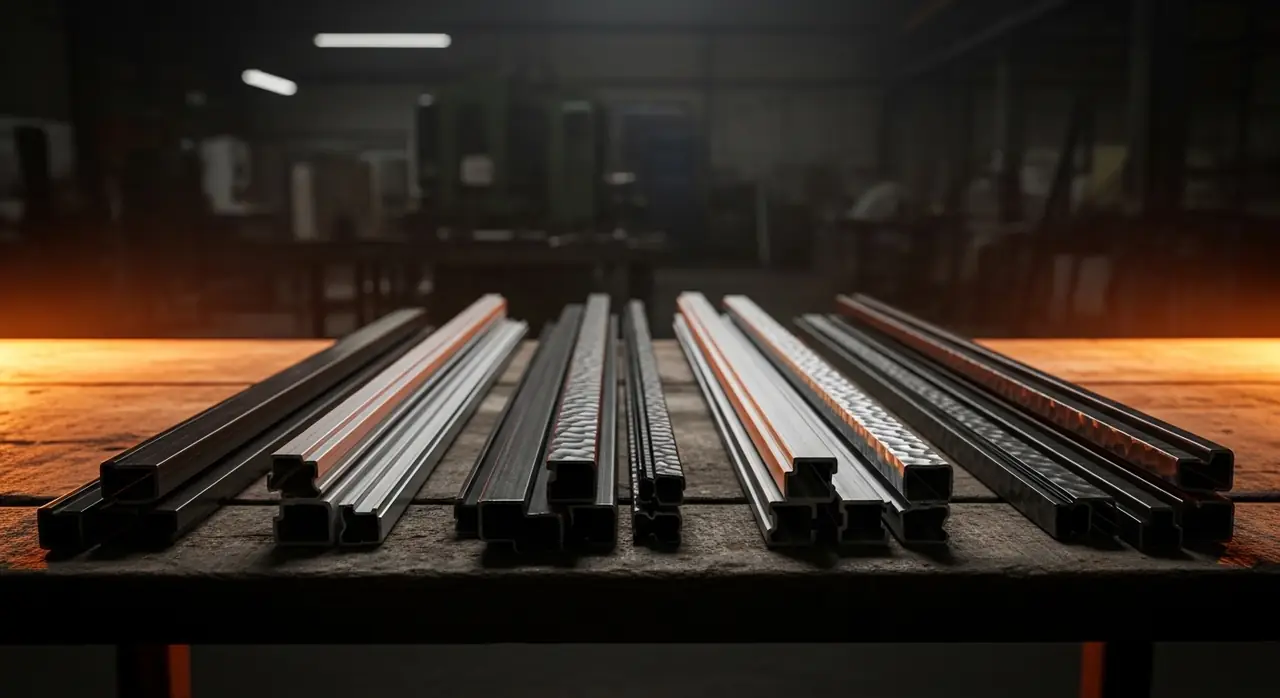
The math on DIY is straightforward: skip labor, save $80–$120 per window, spend 60–90 minutes per window doing it yourself. On a 5-window project, that's $400–$600 in savings — enough to cover an additional two or three windows in hardware. The question isn't whether you can save money; it's whether the install will hold under stress if someone actually tests it.
Telescopic bars like SWB's Model A and Model B are designed for owner installation. They expand to fit between the window jamb faces, anchoring with lag screws into the structural framing. The critical variable is anchor placement: screws must hit the window stud or frame member — not drywall, not insulation, not the vinyl jamb liner. A bar anchored correctly into 2x framing can resist several hundred pounds of lateral force. A bar anchored into hollow drywall fails at the wall, not at the bar, and it fails fast. If you've never drilled into your window frames and you're unsure what's behind them, a single professional install on window one — watched carefully — is worth the $80–$120 to learn the pattern.
DIY PROS
Saves $80–$120/window. 5-window job done in a weekend. No scheduling wait. You control anchor placement and torque.
DIY CONS
Anchor error is the #1 failure point. Masonry homes need a hammer drill ($50–$80 rental). No warranty on labor if something goes wrong post-install.
PRO PROS
Experienced crews hit 45-min/window. Correct anchor identification on any framing type. Many carry liability coverage if damage occurs during install.
PRO CONS
Adds $60–$140/window. Scheduling lead times of 1–2 weeks in busy markets. Variable quality — always ask for anchor spec before signing off.
Real-World Project Cost Examples: 1 to 12 Windows
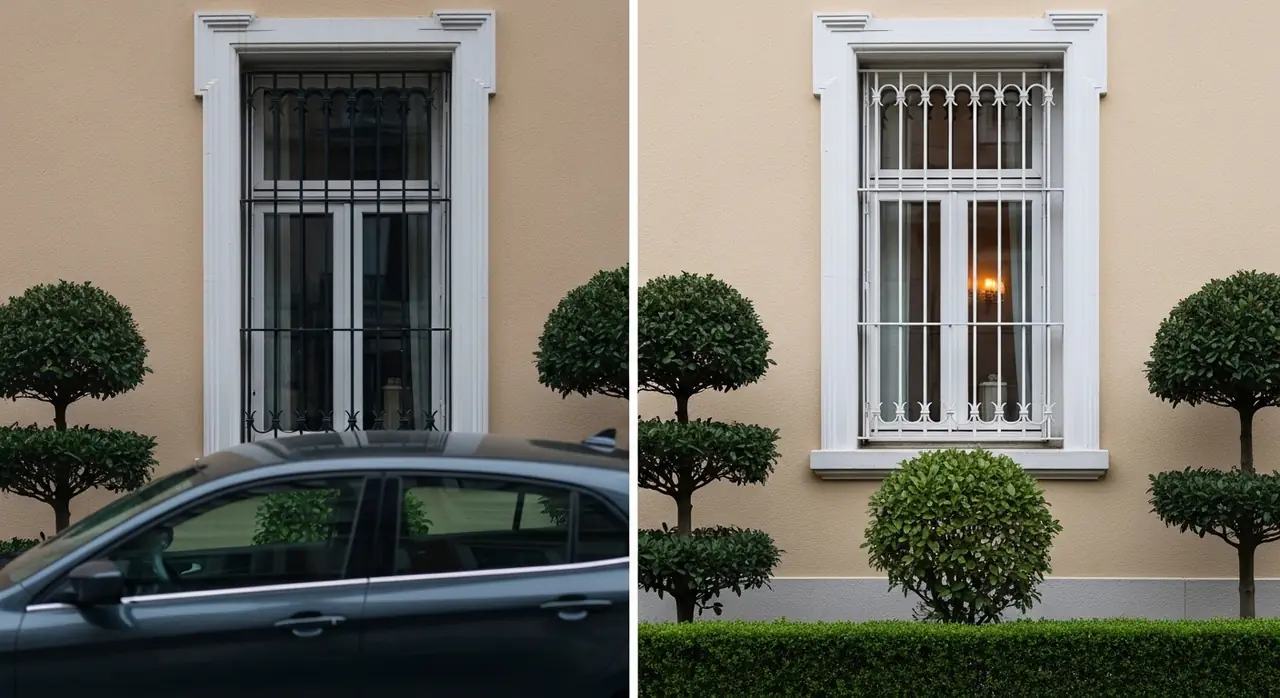
Abstract ranges are useful until you need to hand a number to your spouse or write a check. Below are four real-world scenarios built from actual hardware prices and regional labor rates. These assume standard wood-framed windows with accessible interior mounting surfaces — add $15–$25 per window for masonry anchoring if you have brick or concrete block construction.
The FBI's Crime Data Explorer consistently shows residential burglary entry points skew heavily toward first-floor windows and doors. If you're prioritizing coverage, ground-floor sleeping rooms first, then accessible side windows. That sequencing also happens to match where fire-code egress bars (Model A/EXIT at $129) are required, so factor those into your per-window averages for bedroom counts.
| Scenario | Windows | Hardware | DIY Total | Pro Total (Midwest) | Pro Total (CA/NE) |
|---|---|---|---|---|---|
| Single apartment window | 1 | $99 (Model A) | $115–$130 | $175–$210 | $230–$310 |
| 3-window ground floor | 3 | $297–$387 | $345–$430 | $525–$645 | $660–$930 |
| 5-window typical house | 5 | $495–$695 | $575–$775 | $875–$1,090 | $1,100–$1,550 |
| 12-window full home | 12 | $1,188–$1,668 | $1,380–$1,860 | $2,100–$2,640 | $2,640–$3,720 |
5-Window Benchmark
The 5-window job at $850–$1,300 professionally installed is the most common project size. It's also where multi-window discounts from contractors start to appear — ask for a per-window rate rather than a flat quote to expose any padding.
Hidden Costs Most Quotes Don't Mention
The installed price window bars quotes you'll get from most contractors are built on a best-case assumption: wood-framed windows, accessible interior, standard residential opening widths. Deviate from that baseline on any variable and costs climb. Here are the five line items most commonly omitted from initial quotes.
MASONRY ANCHORING
Brick or block walls require hammer-drill anchor bolts. Adds $15–$25 per window in hardware; adds 20–30 min labor per window for a pro.
EGRESS UPGRADES
Sleeping rooms require quick-release bars (IBC 1030). Swapping Model A ($99) to Model A/EXIT ($129) adds $80/room — not optional if an AHJ inspects.
PERMIT FEES
Rare but real. Some municipalities require a building permit for permanent window alterations. Expect $50–$150 per project where applicable.
WIDE-SPAN WINDOWS
Picture windows and wide sliders over 42" need Model B (from $129 vs. $99). Measure before you order — returns cost time, not just money.
MINIMUM JOB FEES
Many contractors charge a $75–$150 trip/minimum fee for 1–2 window jobs. On a single-window install, that fee can double your effective labor cost.
The minimum job fee is the one that surprises people most on small projects. If you're doing a single window, the window bars total cost can jump from a theoretical $175 to $280+ once a contractor's $125 trip minimum is on the invoice. Batching windows — even if you only urgently need one — is almost always the economically rational move.
How to Get an Accurate Quote and Avoid Overpaying
Getting a valid quote for window bars installation cost requires giving contractors real information — not just a window count. Before you call anyone, measure your window opening width (jamb face to jamb face, not the glass), identify your wall construction (wood frame vs. masonry), note which rooms are sleeping rooms, and count how many windows are on ground level vs. upper floors. That four-piece spec eliminates the two most common quote revision triggers: wrong model size and egress requirement surprises.
When comparing bids, ask each contractor to break out materials, labor per window, and any flat fees separately. A contractor who won't itemize is almost certainly padding one of those columns. The window bars total cost should be fully explainable by: (number of windows × hardware cost) + (number of windows × labor rate × install hours) + any fixed fees. If the math doesn't hold, press on it. Decent installers in every market will itemize without hesitation — they're used to homeowners who've done this research.
Before You Call Any Contractor
Know these four numbers: (1) window opening width in inches, (2) window count by floor, (3) bedroom window count for egress compliance, (4) wall construction type. Contractors who can't quote from those four inputs are guessing — and their guess will usually be revised upward after the job starts.
One last note on DIY economics at scale: if you're doing 8 or more windows, the cost savings from self-installation ($640–$960 in avoided labor) easily justify renting or purchasing the tools you don't own — a hammer drill runs $50–$80 as a rental, and a good set of masonry bits is another $20–$35. The break-even on tool spend versus labor savings arrives around window three or four. Beyond that, every window you install yourself is pure savings against the installed price window bars contractors will charge in your market.