Buy Window Security Bars Online: The 12-Point Buyer Checklist
Direct answer: Before you purchase window security bars online, verify these 12 criteria: steel gauge (11-gauge minimum), anchor pattern (4-bolt), fire-code compliance (ICC ESR report), IDA certification, lifetime warranty, and a 30-day free return policy. Most listings on general marketplaces fail at least four of them. This checklist exists so you don't find out which four after the product is already bolted to your frame.
Marcus Reid · IDA Certified

8 minutes
Why This Checklist Exists

According to the FBI's Uniform Crime Report, approximately 60% of completed burglaries involve forcible entry — and first-floor windows are the second most common entry point after front doors. That data point alone drives a lot of people to search for where to buy window bars. The problem is the market is flooded with thin-gauge, under-anchored hardware that looks identical to proper security bars in a product photo but fails in the field.
A 16-gauge steel bar — the most common gauge sold on general e-commerce marketplaces — can be cut with a $29 angle grinder in roughly 45 seconds. An 11-gauge bar with a proper anchor pattern buys meaningful time: the NFPA's research on burglary deterrence consistently shows that forced-entry attempts abandoned within 60 seconds account for over 50% of all attempted break-ins. Hardware that creates real delay is hardware that works. The 12 points below separate delay from theater.
The 60-Second Rule
Over 50% of burglars abandon a forced-entry attempt that resists them past 60 seconds. Hardware spec — starting with steel gauge — determines whether your bars are a deterrent or a decoration.
Checklist Points 1–4: Steel, Anchors, and Fit
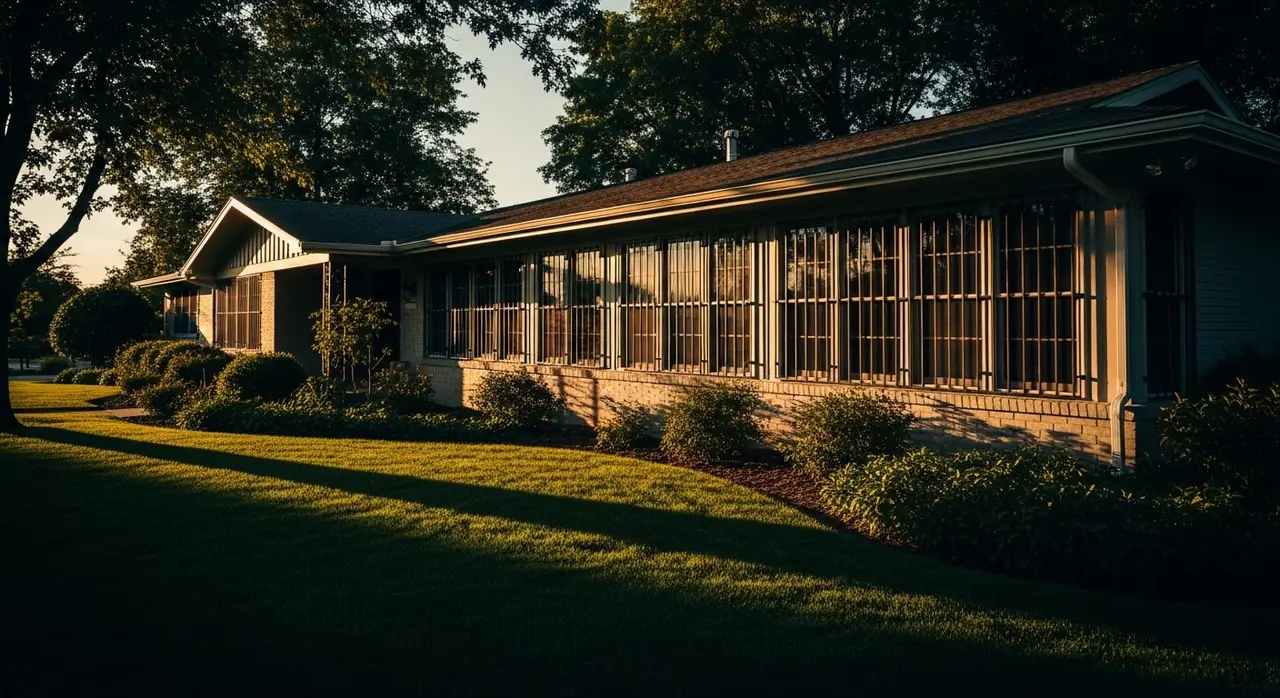
These four points address the physical hardware itself. Get any one of them wrong and everything else on this list is irrelevant.
| # | Checkpoint | Minimum Standard | SWB Spec |
|---|---|---|---|
| 1 | Steel Gauge | 11-gauge (0.120" wall) | 11-gauge on all models |
| 2 | Anchor Pattern | 4-bolt minimum (2 per jamb) | 4-bolt pattern standard |
| 3 | Telescopic Range | Covers your measured opening ±2" | Model A: 26"–42", Model B: 42"–66" |
| 4 | Manufacturing Origin | US-based or verified QC documentation | US-manufactured |
On point 3: measure your rough opening width before you go anywhere near a product page. Add 2" of clearance on each side to confirm the bar's telescopic range covers you with room to spare. SWB's Model A (26"–42", from $99) covers the majority of standard single-hung windows. Model B (42"–66", from $129) handles wider openings including sliding glass panels and oversized frames. If a listing doesn't publish the telescopic range in the specs, that's a disqualifying omission — you're guessing at fit on a structural safety product.
Gauge Math
14-gauge steel is 0.075" thick. 11-gauge is 0.120". That's a 60% increase in wall thickness — and the difference between a bar a determined intruder can defeat with hardware-store tools and one that requires specialized equipment and meaningful time.
Checklist Points 5–7: Fire Code, Certifications, and Compliance
This is where most buyers do the least research and where the consequences are the most severe. IBC Section 1030 and IRC Section R310 mandate that sleeping room windows serving as emergency escape and rescue openings must not be blocked by fixed, non-operable obstructions. A fixed window bar that cannot be released from inside is a building code violation in virtually every jurisdiction that has adopted the IBC or IRC — which is most of the US.
The right way to verify fire-code compliance is an ICC Evaluation Service Report (ESR). An ESR is a third-party technical assessment that confirms a product meets specific code provisions. Ask any seller — before you buy — whether their product has an ICC ESR. If they can't produce a report number, the product has not been evaluated for code compliance. SWB's Model A/EXIT ($129) is built around this requirement: one-handed interior release, no tools, under 3 seconds. IDA certification adds a second layer — it's the nearest thing the residential security hardware industry has to standardized forced-entry testing by an independent body.
POINT 5: FIRE-SAFE RELEASE
Any bar on a sleeping room window must have a tested quick-release mechanism operable from inside without tools. Verify this is documented, not just claimed.
POINT 6: ICC ESR REPORT
An ICC Evaluation Service Report is the authoritative third-party document confirming the product was assessed against IBC/IRC code provisions. Ask for the report number — not the marketing copy.
POINT 7: IDA CERTIFICATION
IDA (Intrusion Detection Association) certification indicates the product has been evaluated against standardized forced-entry criteria by a body other than the manufacturer. Its presence is a concrete data point, not a logo.
Checklist Points 8–12: Warranty, Returns, Shipping, and Support
Hardware spec gets you a product that works. These five points determine what happens when something goes wrong — whether that's a measurement error, a manufacturing defect, or a fit issue you only discover at installation.
| # | Checkpoint | What to Verify | SWB Policy |
|---|---|---|---|
| 8 | Warranty Length | Lifetime on structural components | Lifetime warranty, all models |
| 9 | Return Policy | 30 days minimum, no restocking fee | Free returns, 30-day window |
| 10 | Shipping Speed | Ships within 5 business days | Ships in under 5 business days |
| 11 | Customer Support | US-based, reachable pre-purchase | US-based support team |
| 12 | Installation Documentation | Anchor torque specs, step-by-step guide | Full install documentation included |
On warranties: a 1-year warranty on structural security hardware is a red flag. A product designed to resist forced entry for the life of a home should carry a lifetime warranty. Anything shorter signals the manufacturer isn't confident in the product's durability past the return window. On returns: 15–25% restocking fees are common on security hardware sold through third-party marketplaces. That's $15–$37 on a $99–$149 bar just to discover it doesn't fit. Confirm the return policy in writing — not in fine print — before you add anything to a cart.
The Warranty Signal
A lifetime warranty is not a marketing gesture — it's a manufacturer's public commitment that the product was built to outlast the application. A 1-year or 2-year warranty on a security bar tells you exactly how long the company thinks the product will hold up.
Where to Buy Window Bars: Platform Comparison
The question of where to buy window bars online matters almost as much as which bar you buy. The channel affects return policy, product authenticity, and the availability of technical support before and after purchase. General marketplaces allow third-party sellers to list products with minimal specification requirements — gauge, anchor pattern, and ESR report are almost never required disclosures. That's the structural problem with purchasing window security bars on those platforms.
DIRECT FROM MANUFACTURER
Full spec transparency, direct warranty support, factory-correct product. Best place to buy window bars if you want accountability across all 12 checklist points. SWB ships factory-direct with sub-5-day fulfillment.
BIG-BOX RETAIL (IN-STORE)
Limited SKU selection, typically 14-gauge or 16-gauge imported product. No IDA certification, no ICC ESR documentation on the shelf. Convenient for same-day purchase, problematic for spec verification.
GENERAL MARKETPLACES
Widest price range, lowest spec floor. Third-party sellers have no obligation to disclose gauge, anchor count, or code compliance. Return policies vary by seller. Proceed with the full 12-point checklist or avoid.
SECURITY HARDWARE SPECIALISTS
Higher likelihood of spec accuracy and knowledgeable support. Pricing typically matches or exceeds direct-to-manufacturer. Viable channel if the seller can produce certifications and ESR documentation on request.
Making the Call: How SWB Scores the Checklist
Run any SWB model against all 12 points. 11-gauge steel across every SKU. 4-bolt anchor pattern standard. Two telescopic ranges: Model A (26"–42") from $99 for standard windows, Model B (42"–66") from $99 for wider openings. The Model A/EXIT at $129 adds the fire-safe quick-release mechanism with ICC ESR documentation — the only model you should be considering for any sleeping room window regardless of who manufactures it. IDA certification. Lifetime warranty. Free 30-day returns. US-manufactured. Ships in under 5 business days.
That's 12 for 12. The checklist was built from the same criteria I use to evaluate hardware in the field — it wasn't built to exclude competition arbitrarily. If another product passes all 12 points, it's worth buying. In practice, very few do. Most fail on gauge, anchor pattern, or fire-code documentation before you even get to warranty terms. Use this list the same way regardless of where you're shopping for window bars online — it will tell you what you need to know faster than any product description will.
The Single Most Common Mistake
Buying on price without verifying gauge. A $39 bar and a $99 bar look identical in a 400×400px product image. The difference shows up when someone applies 800 lbs of lateral force to your window frame at 2 a.m.