Safety Bar for Front Door: Choose One That Still Lets You Out
A safety bar for front door can add a layer at the entry, but it must release fast from inside. Learn the types, limits and fire-safety checks.
What is a safety bar for front door use, and what does it do?
You lock the deadbolt, check the porch light, and still wonder whether the front door would hold. That worry sends many US homeowners and renters to search for a safety bar for front door use. The idea is simple: add a second point of resistance that does not depend on the lock alone. The risk is just as simple: the front door is often the main way out of the house.
A safety bar, also called a safety door bar, comes in a few forms. A floor brace wedges between the door handle and the floor. A drop bar sits in two brackets across the door. A push bar, common on commercial doors, opens when you press it. Names vary by maker, so judge a product by what it does and how it releases, not by what the box calls it.
Here is what a bar does: it adds resistance while you are home. Here is what it does not do: fix a weak door, short strike plate screws or a cracked frame. A bar braced against a weak frame only moves the weak point. It does nothing when nobody is home, and it is not a child or pet device. If your worry is a young child or a pet slipping out, that is a supervision and door-alarm question. A bar must never make it harder for adults to get out.
SWB makes steel telescopic window security bars, not door bars. We cover the door here because the entry and the windows beside it belong to the same decision: how to add security without trapping anyone. If windows are your main concern, start with the window security bars guide.
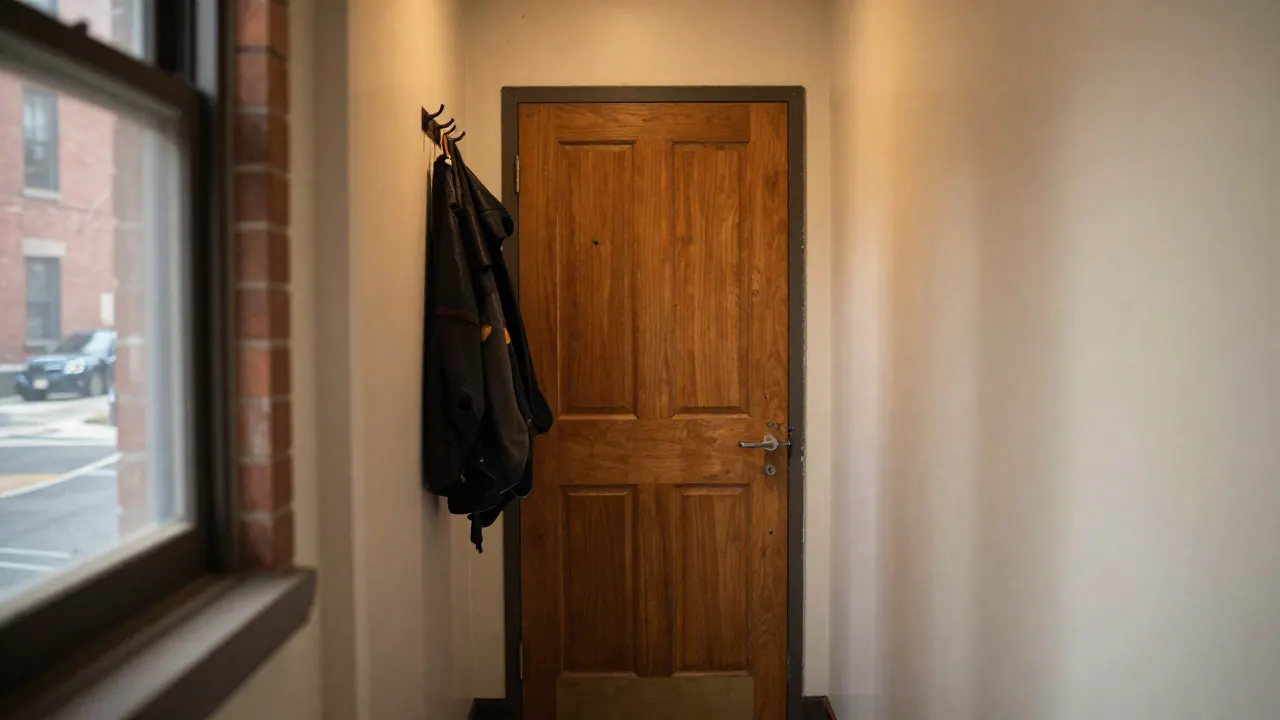
Is a safety bar for front door use safe in a fire?
Start with what fire-safety groups say. The National Fire Protection Association (NFPA) warns in its Security Bar Safety sheet that some security bars "can trap you in a fire" and "can also keep firefighters from getting in to rescue you." The sheet covers security bars in general. In our reading, the same logic applies to any bar near an exit.
NFPA's advice is plain. Find at least two ways out of every room. All exits, including barred windows, must open easily from inside. Choose bars with quick-release devices. Run a home fire drill twice a year. A front door bar that slows you down fails the first two points, because it turns your main exit into a puzzle.
Use this test before you buy any safety bar for front door use. Can an adult remove it with one hand, in one motion, in the dark, with no key, no tool and no trick to remember? Can a guest or a firefighter see how it works at a glance? If any answer is no, skip it. This is our rule of thumb, not a code section. It follows the idea behind the 2021 International Residential Code (IRC), which requires escape and rescue openings to be operable from inside "without the use of keys, tools or special knowledge" (R310.1.1). That section covers windows used as escape openings, and doors have their own egress rules, so ask your building official what applies to your door. The Boulder County guide to emergency escape and rescue openings explains the window rules in plain language.
Avoid padlocks, key-locked bars, chains that need a key and any lock that requires a key from the inside. A bar stored in a closet does not help when smoke fills the hall. Local code may differ from the 2021 IRC, and rentals and businesses often add their own rules, so check before you drill into a frame.
Which safety bar for front door setups fit a home or rental?
Not every bar suits every door. This table compares common types by the question that matters most: how do you get out?
| Type | How it works | Release from inside | Watch out for |
|---|---|---|---|
| Floor brace | Wedges between the handle and the floor | Lift it away by hand | Check that it grips your floor and that you can clear it in one motion |
| Drop bar in brackets | Horizontal bar rests in two brackets on the door and frame | Lift it out by hand | Brackets need screws in the frame; the bar must not need a pin, key or tool |
| Door and frame reinforcement | Strengthens the strike plate, hinges and frame you already have | Nothing changes at the exit | Adds strength, not a visible bar; ask your landlord first if you rent |
| Push (panic) bar | Opens the latch when pressed | Push to open | Mostly a business setup; the building official or fire marshal decides what is required |
| Padlocked or key-locked bar | Needs a key to open | Needs a key | Do not use on any exit path |
If you rent, read your lease first. Drilling into a door frame usually needs the landlord's approval, and some buildings set their own rules for hardware on entry doors. A removable brace avoids drilling, but it still has to pass the one-hand, in-the-dark test. For window questions in rentals, see our page on window bars for apartments.
A bar is not suitable when someone in the home cannot remove it quickly. Think about older adults, anyone with limited hand strength, and overnight guests who have never seen it. If one person cannot work it under stress, choose reinforcement instead of a bar. The same goes for businesses: your fire marshal or building official decides what hardware an entry door may carry.
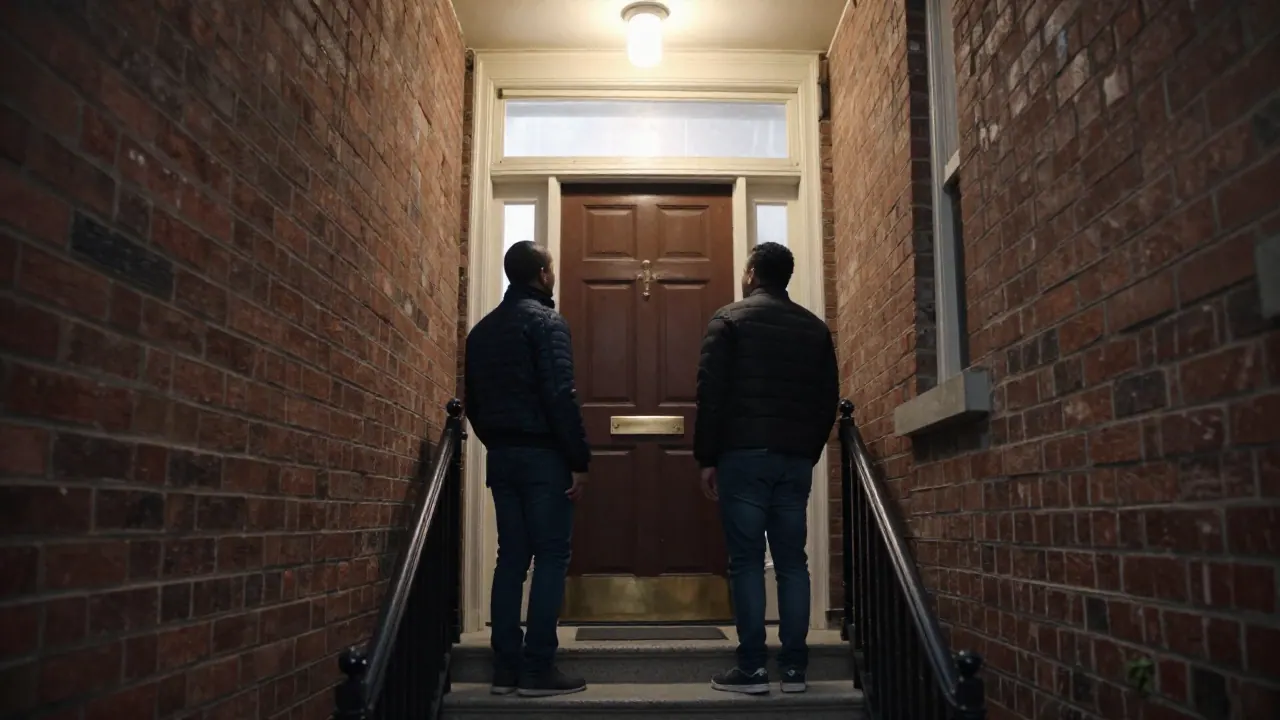
What about the windows beside your front door?
Many entries have a sidelight, a window next to the door, or a bedroom window facing the porch. A strong door with an unprotected window beside it leaves a gap. Terms like window safety bars, safety grills and window safety grill usually mean security bars fixed over the glass. They protect against entry. They are not a way to stop a fall.
The SWB Model A costs $85 per core module. It telescopes from 35 to 65 inches high, and width is modular at 16 inches per module, so you stack modules for wider windows. Bar spacing is 5.25 inches. It is galvanized steel with electrostatic paint and mounts to the frame or the wall. Installation takes 15 to 30 minutes, and the manual has you drill pilot holes and use the included anchors, so it is not a no-drilling product. It carries a 1-year limited warranty. Model A has no integrated quick-release, so check with your building official before using it on any bedroom or basement escape window.
The SWB Model B is also $85 per core module, with a 35 to 61 inch height range. It is a wall-mount design for masonry, stucco and irregular frames. SWB itself lists Model B as not rated for fire code or egress, so it only goes on windows that are not escape openings.
The SWB Model A/EXIT is quote only and sold online. SWB describes it as its egress-compliant model and the only one with a built-in quick-release: a hand-operated lift-bolt you work from inside, rigid from outside. It runs 35 inches at its base telescoping to 65 inches high, with a 43 inch base width that expands with modules. The building official decides whether your installed window complies.
This matters for window bars fire safety. Under the 2021 IRC, every sleeping room, basement and habitable attic needs at least one operable emergency escape and rescue opening, with limited exceptions. Bars, grilles and covers over those openings must be releasable or removable from the inside without a key, a tool or force greater than normal operation of the opening (R310.4.4). Fire safety window bars therefore mean bars you can open from inside, and local code may differ. Read more in our window bars fire code overview. One more limit: SWB bars are security bars, not child fall-prevention devices, and the 5.25 inch spacing does not contain small children or pets. NFPA says a window guard, gate, stop or wedge can keep a child from falling out of an open window.
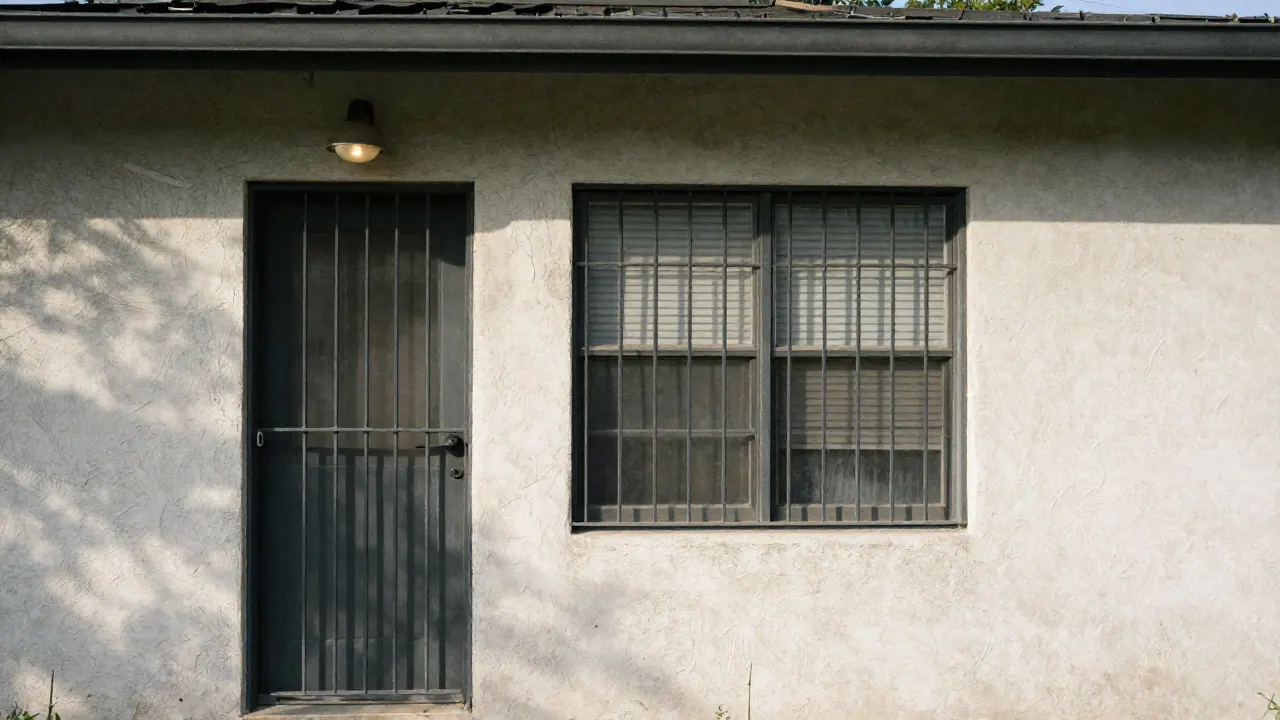
How do you set up a safer front entry, step by step?
Work through this list before you buy anything. Most of it costs little or nothing.
- Walk your home and find at least two ways out of every room, as NFPA advises.
- Check the door itself: frame, hinges, strike plate and the screws that hold them. A bar cannot fix a weak frame.
- Pick a bar you can remove with one hand and no tool. Test it in the dark, then have every adult in the home try it.
- Keep keys, padlocks and tools out of any exit path, and never use them on a bar over a bedroom or basement escape window.
- Match window hardware to the room. Bars on a bedroom or basement escape window must release from inside. Fixed bars belong only on windows that are not escape openings.
- Install smoke alarms in every bedroom, outside each sleeping area and on every level, including the basement.
- Test alarms monthly and replace them at 10 years, as the NFPA Smoke Alarms at Home sheet describes.
- Hold a fire drill twice a year and practice the exit from the bedroom to the front door and to a second way out.
If break-ins through windows are your main worry, see our overview of burglar bars for windows. Whatever you choose, treat the front door as an exit first and a barrier second. Security you cannot open under stress is a risk, not a feature.
Frequently Asked Questions
Is a safety bar for front door use legal?
It depends on your local code, your lease and the type of building. Ask your building official, and ask your landlord if you rent. Any bar that needs a key or tool to open from inside is a fire risk.
Can a door bar keep a child or pet from getting out?
A safety bar for front door use is a security device, not a child or pet product. For young children and pets, rely on supervision and tools made for that purpose, and never slow down adult exit.
Should I put a padlock on a bar at the front door?
No. Keys, padlocks and tools do not belong on any exit path, and never on a bar over a bedroom or basement escape window. You must be able to open it by hand, fast, in the dark.
Do SWB bars fit a front door?
No. SWB sells window security bars: Model A, Model B and Model A/EXIT. They are for windows, such as the one beside your door.
Which SWB model has a quick-release?
SWB describes Model A/EXIT as the only one with a built-in, hand-operated lift-bolt quick-release from inside. The building official decides compliance of the installed window. Model A has no integrated quick-release.
How often should I test smoke alarms?
NFPA says to test them monthly and replace them at 10 years. Put them in every bedroom, outside each sleeping area and on every level, including the basement.
Sources (facts checked 2026-11-09)
- NFPA, Security Bar Safety, 2019
- Boulder County Land Use, Emergency Escape and Rescue Openings (2021 IRC guidance)
- NFPA, Smoke Alarms at Home, 2018
Code numbers refer to the 2021 International Residential Code; your city or state may have adopted a different edition. Confirm with your local building department or fire marshal.
A good entry plan layers a solid door, a sound frame, working smoke alarms and a bar you can remove in seconds. If the windows near your door are the weak spot, compare the Model A, B and A/EXIT above, or request a quote for Model A/EXIT and ask your building official what your windows require. No pressure: read the sources, test your exits, and decide at your own pace.