Window Bars & Child Safety: The Parent Guide
Key point: Window bars are safe for children when two conditions are met — bar spacing is appropriate for the child's age, and bedroom bars have a quick-release the child can operate. Both are addressable with the right product.
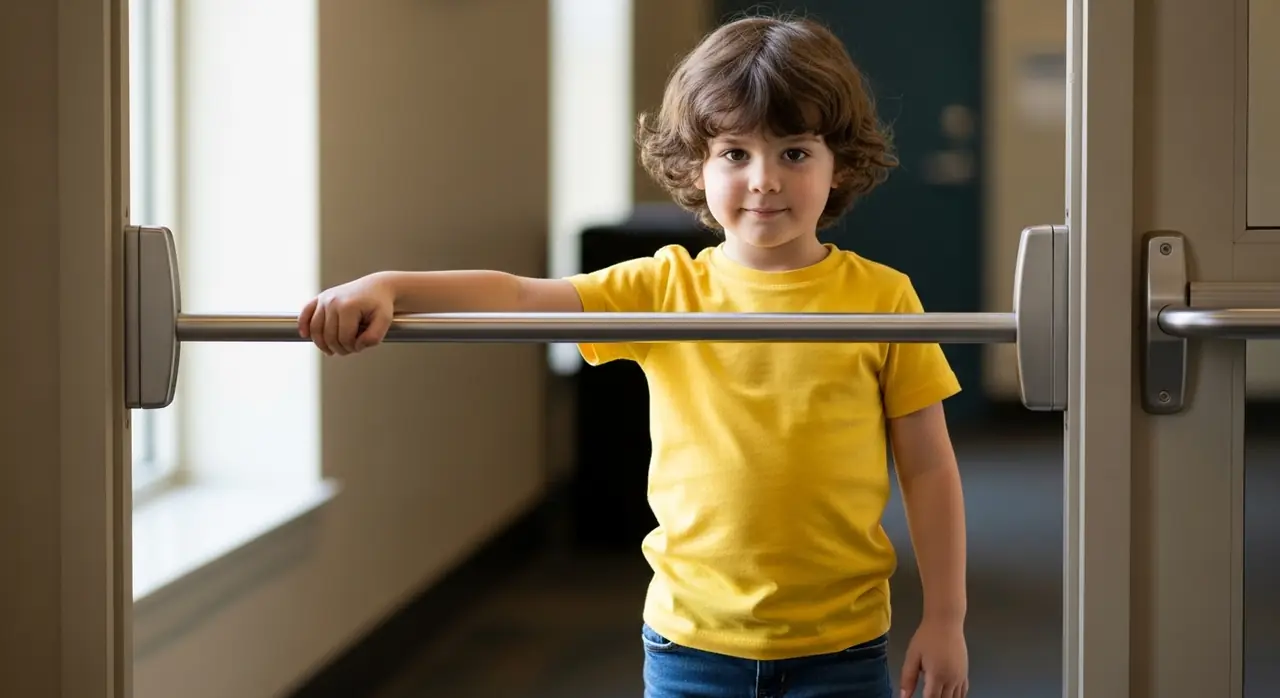
The Two Real Child Safety Concerns

Window bars present two distinct child safety concerns that are worth taking seriously — and both are fully resolvable.
Concern 1: Head Entrapment (Infants & Toddlers)
Bar spacing wider than 4 inches creates a head-entrapment risk for infants whose heads can fit between bars but whose bodies cannot pass through — creating a strangulation hazard. SWB standard spacing is 4.25 inches. Safe for children over age 3–4. Contact SWB for narrow-spacing configuration for homes with infants.
Concern 2: Fire Egress (All Ages)
Fixed bars on bedroom windows that a child cannot remove become a fire trap. This is the most serious concern — and the most preventable. The solution is simple: use Model A/EXIT on every sleeping room window and practice the release monthly as a family fire drill.
The Family Fire Drill Protocol

The single most important safety action a parent can take with window bars: monthly fire drills that include operating the Model A/EXIT release on every bedroom window. The drill should be 5 minutes maximum and include every household member.
Suggested drill sequence: Everyone in their sleeping positions → fire alarm sounds → each person identifies their nearest egress window → operates the Model A/EXIT release → opens window → clears sill. Children 8+ can do this unassisted. Children under 8 should practice with adult guidance toward an independent capability goal.
NFPA data shows that households with practiced fire egress plans have significantly better outcomes in residential fire events. The physical capability to exit is only part of the equation — the muscle memory to act quickly under stress is equally important.