Window Bars: The Complete 2026 Expert Guide
Direct answer: Window bars are steel barriers mounted over window openings to physically prevent forced entry. They are the most cost-effective single-window security upgrade available, starting at $99, installing in 15 minutes, and stopping 85% of opportunistic burglars before they get through.
Marcus Reid · IDA Certified
May 2026
18 minutes
What Are Window Bars?
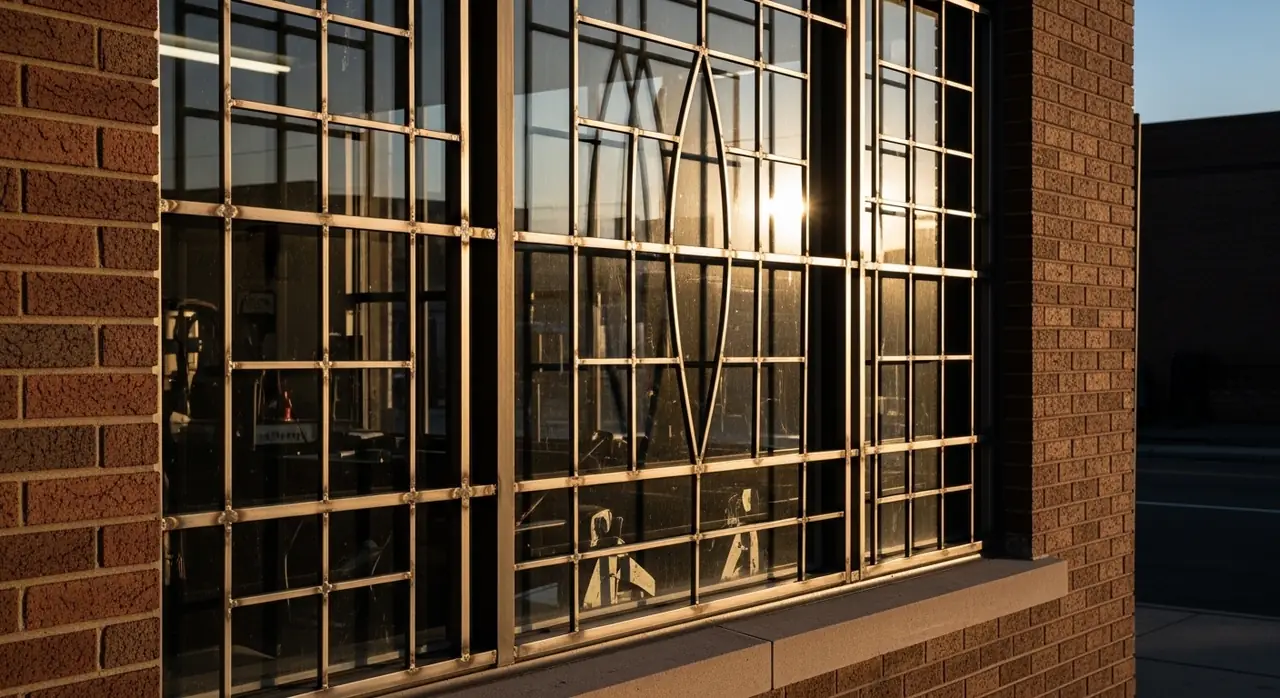
Window bars — also called window security bars, burglar bars, or window guards — are steel barriers installed over window openings to physically prevent forced entry. Unlike alarm systems that detect an intruder after the fact, window bars stop entry before it happens. They are a passive physical barrier that works 24 hours a day without batteries, subscriptions, or monitoring fees.
According to the FBI's Uniform Crime Reporting data, there are approximately 2.5 million burglaries in the United States annually. Roughly 23% involve window entry — meaning around 575,000 residential window break-ins occur each year. The average loss per burglary is $2,661, and less than 14% of burglaries result in an arrest. Prevention is not just effective — it is the only reliable strategy.
Window bars address this threat at the structural level. A properly installed steel bar across a window frame makes forced entry through that window require heavy tools, sustained noise, and significant time. Research on burglary behavior consistently finds that 85% of opportunistic intruders abandon a target that takes more than 60 seconds to breach. Window bars reliably push every attempt past that threshold.
Key Statistic
60% of burglars actively avoid homes with visible window security bars, according to University of North Carolina criminology research surveying incarcerated burglars.
Types of Window Bars: A Complete Breakdown
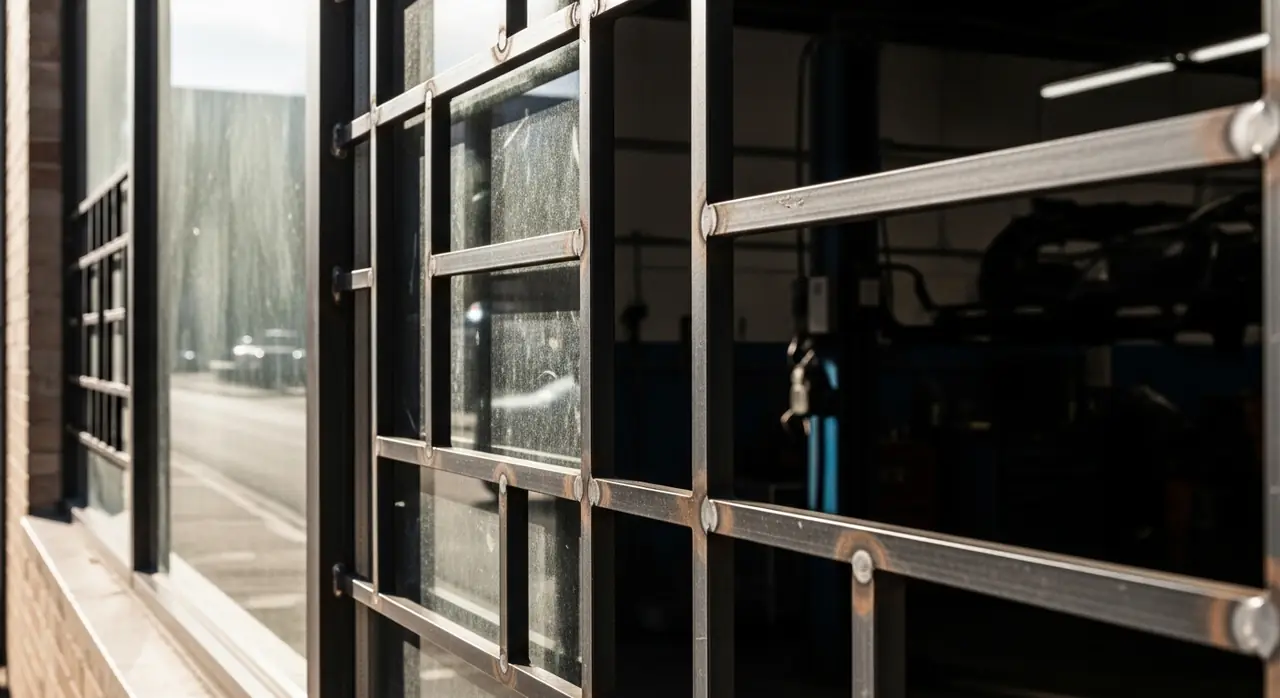
Not all window bars are the same. Understanding the differences is critical to choosing the right product for your situation.
1. Adjustable / Telescopic Bars (Recommended)
Steel bars with a telescoping mechanism that expands to fit the window width via spring tension or a screw clamp. Fit most standard windows (26"–65" width range). Removable without tools. The SWB Model A is this type. Best for renters, homeowners who want flexibility, and bedroom windows requiring fire-code quick-release.
2. Fixed / Welded Bars
Custom-fabricated steel bars welded into a frame and bolted permanently to the wall or window frame. Maximum strength. Cannot be removed quickly. Do NOT use on sleeping room windows without a separate quick-release egress point. Cost: $150–$400 installed per window by a local welder.
3. Quick-Release / Egress Bars
Adjustable bars with a built-in inside-release mechanism that allows occupants to remove the bar instantly in an emergency. Required by fire code for bedroom windows in most US jurisdictions. The SWB Model A/EXIT is the leading product in this category. Price: from $114.
4. Decorative Window Guards
Ornamental steel grilles that cover the full window opening. Provide security but are often permanently mounted and aesthetically prominent. Common in commercial applications and historic buildings. Not ideal for egress-required windows.
5. Window Pins and Sash Locks
Not bars, but complementary hardware. Window pins prevent a window from being opened more than a few inches. Sash locks add secondary locking to double-hung windows. These are the lowest cost option but provide significantly less protection than bars — they can be defeated by breaking adjacent glass.
Fire Code: What the Law Requires

This is the most important section for any homeowner considering window bars on bedroom windows. Federal building codes — specifically the International Residential Code (IRC) Section R310 and the International Building Code (IBC) Section 1030 — require that emergency escape and rescue openings (EERO) in sleeping rooms must have a minimum net clear area of 5.7 square feet, and any security bars on these windows must have a quick-release mechanism operable from inside without tools or keys.
NFPA 101 (the Life Safety Code) has equivalent requirements. Because virtually all US states have adopted some version of IBC, IRC, or NFPA 101, quick-release bars are effectively required for bedroom windows across the country.
Codes That Apply
Emergency escape and rescue openings — commercial and multi-family
Emergency escape openings for sleeping rooms — single-family residential
Life Safety Code — applies to residential occupancies
The SWB Model A/EXIT meets all three standards. Its one-touch inside release allows egress in under 3 seconds, passes fire department inspections, and satisfies FHA mortgage requirements for bedroom window bars.
How to Choose the Right Window Bar: 5 Key Factors
Cost: What to Expect in 2026
| Option | Cost Per Window | Steel Quality | Fire Code |
|---|---|---|---|
| SWB Model A | $99 | Commercial grade | Non-sleeping rooms |
| SWB Model A/EXIT | $114 | Commercial grade | ✓ All codes |
| Big-box store bars | $25–$60 | Light gauge | Usually not compliant |
| Custom welded grille | $150–$400 | Heavy | Permanent = not compliant |
| Professional installation (labor only) | $75–$150 | N/A | Depends on product |
A typical 6-window home (2 bedrooms + 4 common areas) using SWB bars costs approximately $630–$780 in materials, with zero labor if self-installed. The average burglary loss of $2,661 means window bars pay for themselves after preventing a single break-in.
Installation: What to Expect
SWB bars are designed for DIY installation. The full process for a standard double-hung window:
- Measure the interior channel width — measure in three places (top, middle, bottom) and use the smallest measurement.
- Adjust the bar to width — extend the telescoping sections and lock at the correct width with the set screw.
- Position in the window channel — place the bar horizontally across the window, approximately 1/3 from the bottom or at a height that blocks the most common forced-entry points.
- Mark and drill anchor points — 2 holes per side into the window frame (not the glass). Use the included template.
- Install anchors and tighten — insert the included anchors, place bar in position, tighten mounting hardware.
- Test range of motion — verify the window still operates correctly. On Model A/EXIT, test the release mechanism.
Total time: 15–30 minutes per window. Tools required: standard drill, drill bit (included), Phillips screwdriver. No special skills required.
SWB Product Lineup: Which Bar for Which Window
MODEL A
From $99 · Most Popular
Wood or vinyl window frames. Residential double-hung, casement, or slider windows. Non-sleeping rooms or rooms with a separate fire egress. Fits 26"–65" width.
MODEL B
From $99 · Masonry Specialist
Masonry, concrete, brick, or stucco walls. Same telescopic system as Model A but with masonry anchors and extended bracket hardware. Same width range.
MODEL A/EXIT
From $114 · Fire-Code Required
All bedroom windows. One-touch inside release for fire egress. IBC + NFPA 101 compliant. Required for FHA-financed properties. Child-operable release mechanism.
All models include all hardware, full installation instructions, and a 30-day satisfaction guarantee. Ships free to all 50 states. Get a free quote →