Window Bars & Fire Safety: The Complete Guide
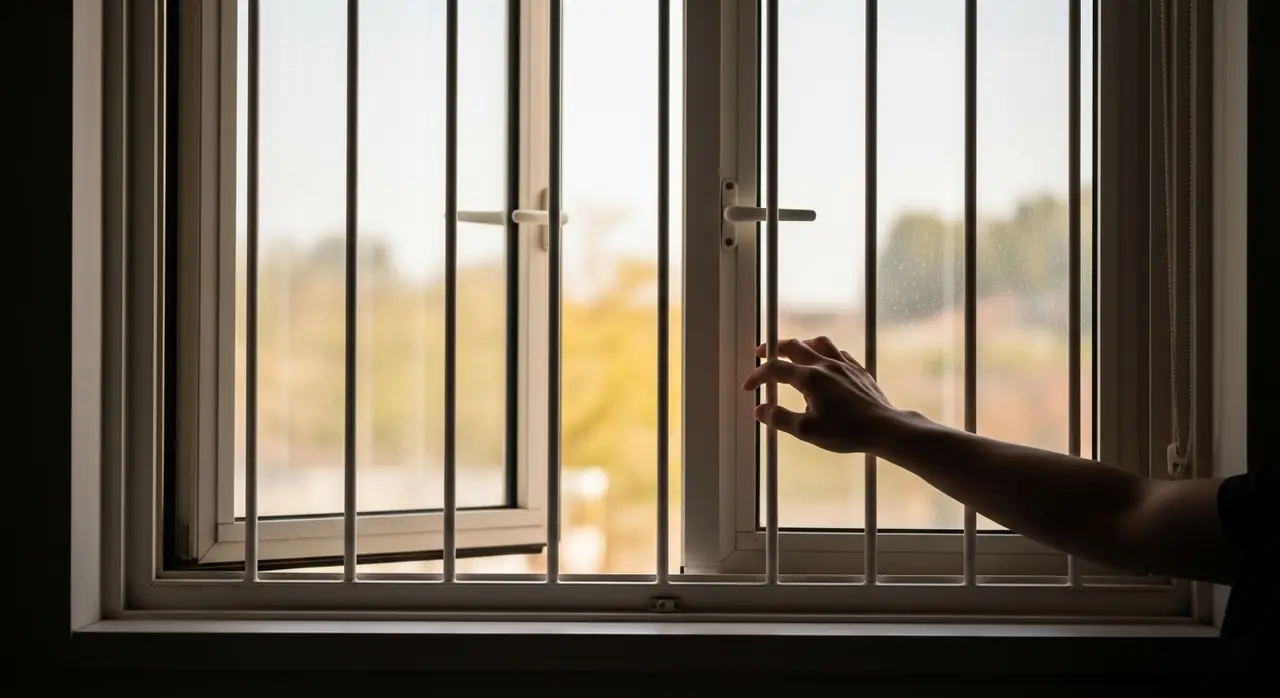
Direct answer: Window bars are NOT a fire hazard when they include a quick-release mechanism. Fire codes in virtually all US states require bedroom window bars to have an inside-operable release. Bars without this feature on sleeping rooms violate the law and create a genuine egress risk.
The Three Codes That Govern Window Bars
Three building codes create the national standard for window bar fire safety. Because virtually all US states and jurisdictions have adopted one or more of these codes, their requirements effectively apply everywhere in the country.
Applies to commercial buildings, apartments, and multi-family residential. Requires emergency escape and rescue openings in sleeping rooms with minimum 5.7 sq ft clear area, 20" minimum width, 24" minimum height. Any bars must have an inside-operable quick-release mechanism.
Applies to single-family and two-family dwellings. Same egress opening requirements as IBC. Explicitly states that security bars must have a release mechanism operable from the inside of the room without a key, tool, or special knowledge or effort.
The National Fire Protection Association's Life Safety Code. Adopted by most states for both residential and commercial occupancies. Requires that window security bars on egress windows have a quick-release mechanism and that occupants can be trained to operate it without instruction in an emergency.
All three codes converge on the same requirement: bedroom window bars must release instantly from inside without tools. This is not a technicality — it is the difference between a fire-safe installation and one that could trap occupants.
How the Model A/EXIT Quick-Release Works

The SWB Model A/EXIT features a proprietary one-touch release mechanism that is inside-only — meaning it cannot be operated from outside the window. From inside the room, a single upward motion releases the bar, which falls free of the window channel and allows the window to be opened to full egress width within 3 seconds.
The mechanism is deliberately simple: no levers to find in the dark, no multi-step process, no strength requirement. In testing with occupants ranging from children (age 8) to elderly adults (age 78), all were able to operate the release successfully on first attempt after a single 30-second demonstration.
From outside, the bar is rigid and tamper-resistant. The release is inaccessible without breaking through the window — at which point the bar is already functioning as intended by preventing easy entry.
Fire Drill Protocol: Practice Saves Lives

Code compliance alone is not enough. NFPA research on residential fire fatalities consistently identifies delayed egress — not structural barriers — as the leading cause of fire deaths in homes. The best quick-release bar in the world is only effective if occupants know how to use it under stress, in the dark, and possibly in the presence of smoke.
SWB recommends a monthly household fire drill that includes operating the Model A/EXIT release on every bedroom window. The drill should take less than 5 minutes and should include every member of the household, including children. Make the motion instinctive — lift the bar, release, open window, clear the sill.
View Model A/EXIT Specs →