

How to Secure Your Doors from Burglars: A Complete Protection Guide
Knowing how to secure doors from burglars is the most important thing you can do to protect your home, because doors are the number one entry point in residential break-ins across the United States. According to FBI Uniform Crime Report data, roughly 34 percent of burglars walk straight through a door, and in many cases they do not even need to force it open. This guide covers every practical step you can take to turn your doors from easy targets into hardened barriers that send intruders looking for an easier mark.
Most homeowners focus on alarm systems and cameras. Those matter. But a camera films a crime in progress. An alarm screams after the door is already open. Real door security starts at the physical layer: the door itself, the frame it hangs on, the lock that holds it shut, and the reinforcement hardware that keeps the whole assembly together when someone puts a boot or a pry bar to it. That is what this guide is about.
We will walk through every door type in a typical American home, front door to sliding patio door to garage entry, and show you exactly what to upgrade, what to add, and what to stop ignoring. Whether you rent an apartment or own a house, whether your budget is fifty dollars or five thousand, there is a practical hardening step you can take today that will make a measurable difference.
Why Doors Are the Primary Target for Burglars
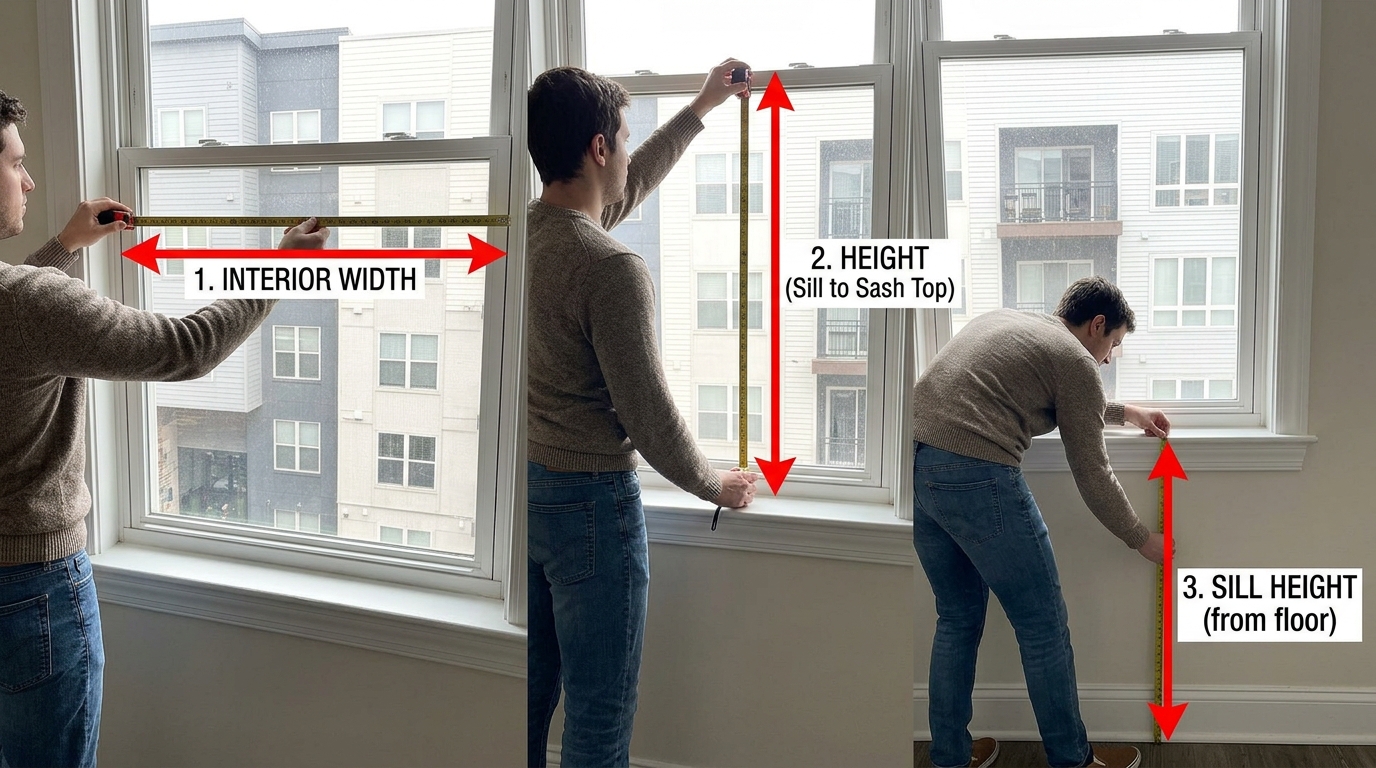
Before you invest a single dollar in door security, it helps to understand why burglars choose doors over every other entry point. The reasoning is simple, and it shapes the entire defense strategy you should build.
Speed. A burglar's number one concern is time. Every second spent breaking in is a second they could be spotted by a neighbor, recorded by a camera, or confronted by a homeowner. A standard hollow-core interior door can be kicked open in under three seconds. Even a solid exterior door with a basic deadbolt often fails in under ten seconds if the frame and strike plate are not reinforced. Compare that to breaking a window, which creates noise, leaves glass shards that slow entry, and requires climbing through an opening that may be too small or too high off the ground. Doors are faster.
Discretion. Someone walking up to a front door looks normal. Someone crouching at a side window does not. Burglars exploit the fact that approaching a door is socially invisible. They knock first to check if anyone is home. If no one answers, they try the handle. If it is locked, they assess whether a kick, a bump key, or a pry bar will get them inside faster than moving to another house. The entire interaction looks unremarkable to anyone watching from the street until the moment force is applied.
Weak construction. The uncomfortable truth is that most residential doors in America are not built to resist forced entry. Builders optimize for cost, energy efficiency, and appearance. The average exterior door frame is secured to the wall framing with 3/4-inch screws that penetrate only the door jamb, not the structural studs behind it. The strike plate, the small metal plate where the deadbolt tongue enters the frame, is typically held by two screws that are barely an inch long. A single hard kick generates enough force to rip those screws right out of the soft pine jamb, and the door swings open as if it were never locked.
Understanding these three factors, speed, discretion, and weak construction, tells you exactly where to focus your hardening efforts. You need to make every door in your home slow to breach, noisy to attack, and structurally sound enough to absorb repeated force without failing.
Step 1: Assess Every Door in Your Home
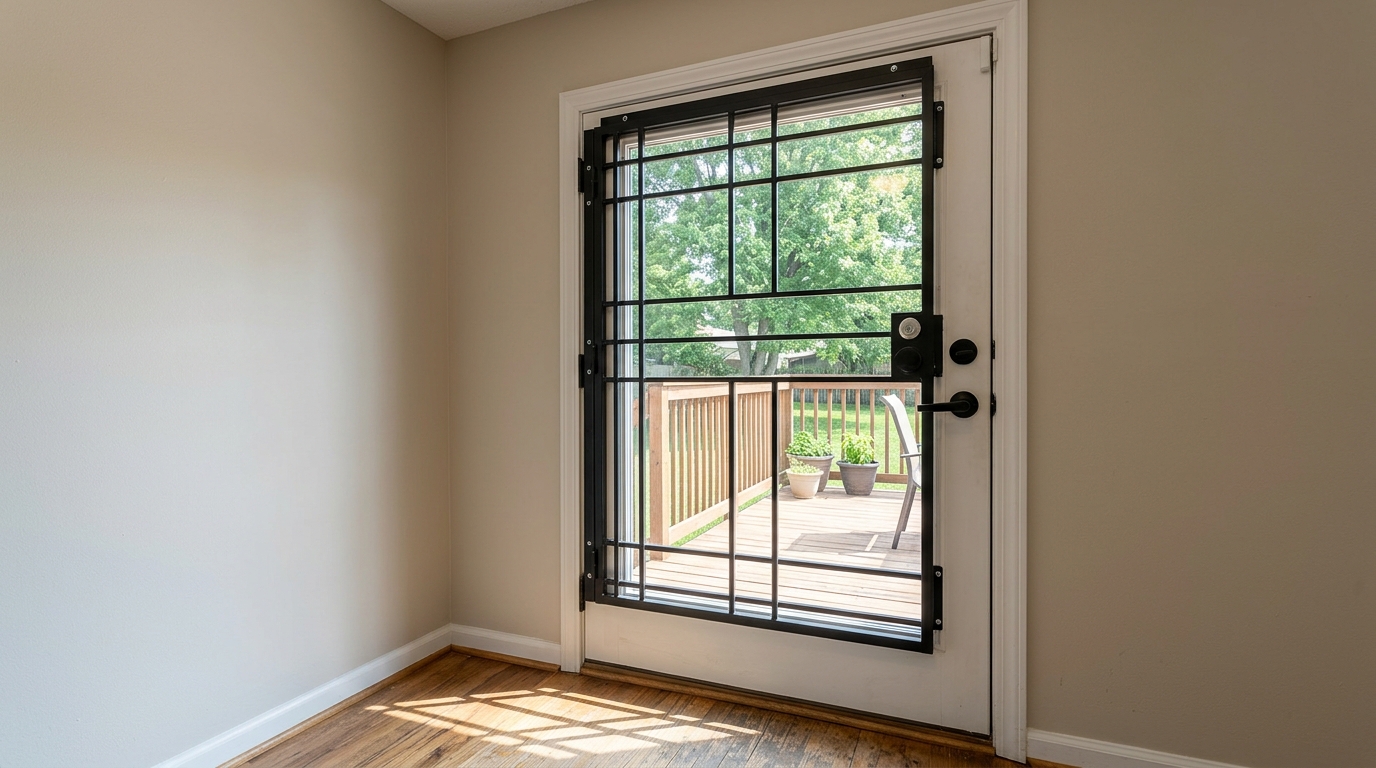
The first step in learning how to secure doors from burglars is a complete inventory. Walk through your home and identify every exterior door and every door that connects to an unsecured space. Most people think about the front door and forget everything else. Do not make that mistake.
Front door
This is the highest-profile entry point. It faces the street, it has the most foot traffic, and it is the door burglars test first because it tells them how security-conscious you are. If your front door has a flimsy lock, a hollow core, or a decorative glass sidelight panel, a burglar reads that as an easy target.
Back door
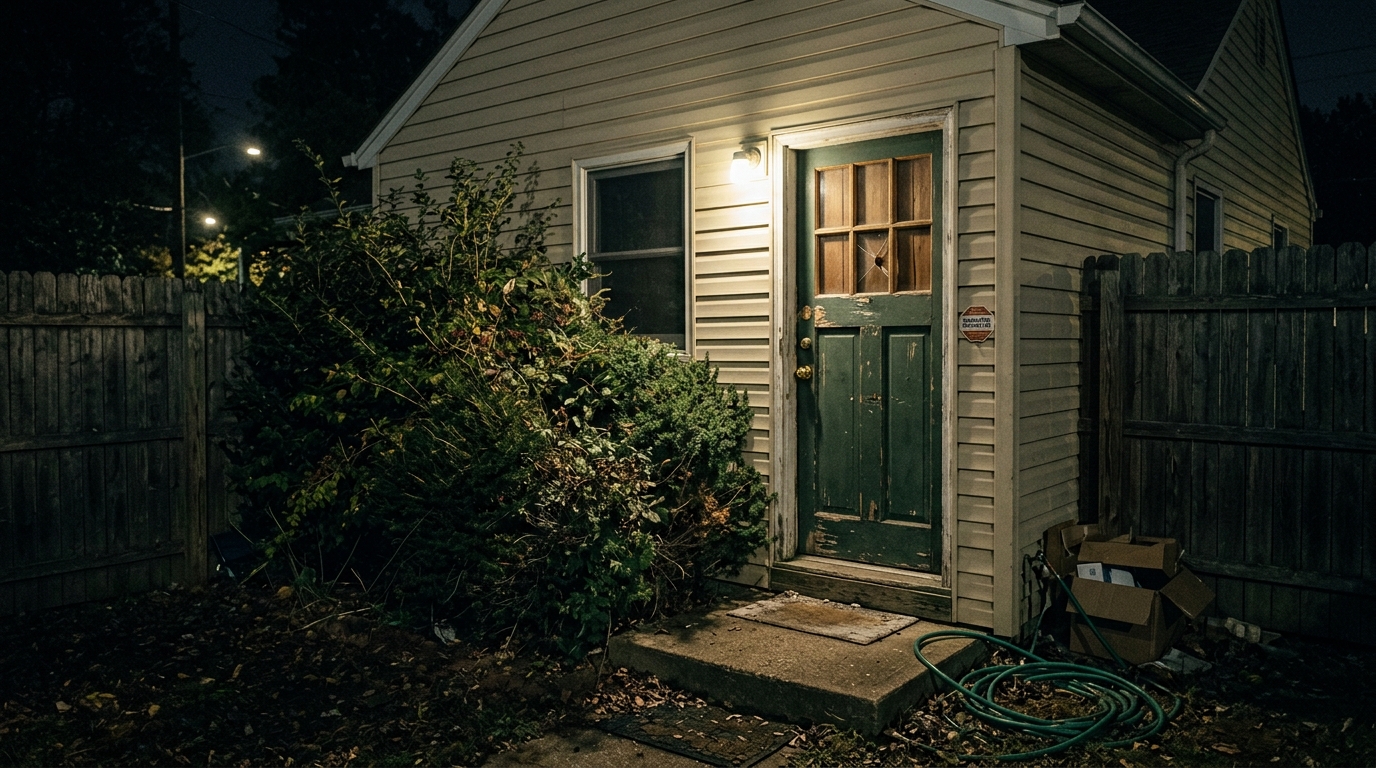
The back door is statistically more likely to be the actual entry point in a break-in than the front door. It is shielded from street view by the house itself, by fences, and by landscaping. Many homeowners leave back doors unlocked during the day, especially if they have a backyard they use regularly. Even when locked, back doors are often older, less maintained, and fitted with cheaper hardware than the front door.
Side door and garage entry door
If your house has a side entry, a mudroom door, or a door from the garage into the house, these are prime targets. The garage entry door is particularly dangerous because once a burglar gets into the garage (which often has its own vulnerabilities, including automatic openers with outdated security codes), they can work on the interior door completely hidden from view and with access to tools stored in the garage itself.
Sliding glass doors
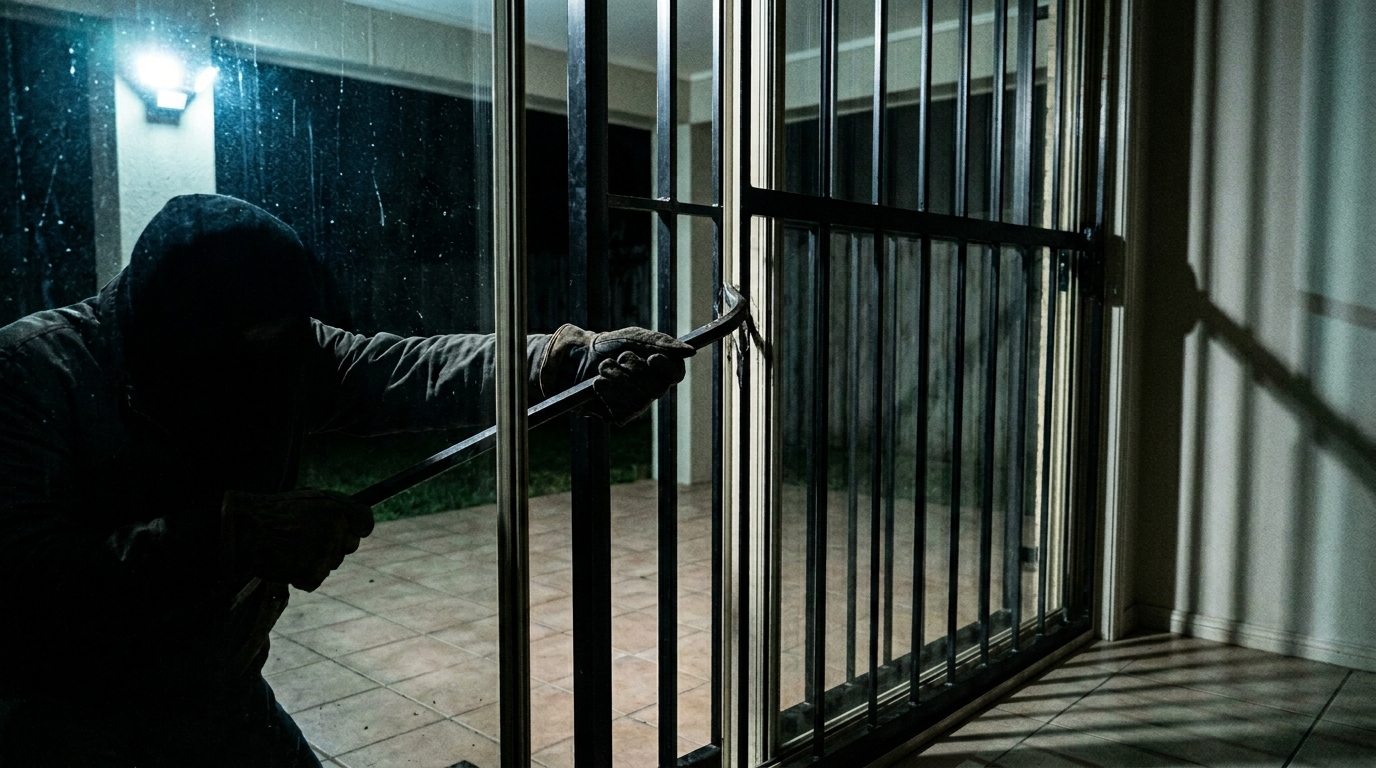
Sliding patio doors are structurally weak. The lock is a small hook latch that can be defeated with a screwdriver. The door rides on a track and can sometimes be lifted out of the frame entirely. The large glass panel is tempting to smash but also noisy. Most burglars prefer to manipulate the lock or lift the door rather than break the glass. For a full breakdown of sliding door defense, see our complete door security guide.
Basement and cellar doors
Exterior basement doors, especially the old-style Bilco hatch doors, are often secured with nothing more than a padlock that can be cut with bolt cutters in five seconds. Below-grade entries are hidden from neighbors and provide direct access to the least-monitored part of your home.
Door assessment checklist
For each door, document the following:
- Door material: Solid wood, hollow core, steel, fiberglass, or glass panel.
- Frame condition: Is the frame wood, steel, or vinyl? Are there cracks, rot, or gaps?
- Lock type: Deadbolt, knob lock, chain, or no lock at all.
- Strike plate: Is it a standard small plate or a reinforced security plate? How long are the screws?
- Hinges: Are they on the interior (good) or exterior (bad)? Do they have non-removable hinge pins?
- Glass: Is there glass in the door or in sidelights within arm's reach of the lock?
- Visibility: Can the door be seen from the street or by neighbors?
This assessment takes about fifteen minutes for a typical house and immediately reveals your weakest points.
Step 2: Upgrade to a Solid-Core or Metal Door
If any of your exterior doors are hollow core, that is your number one priority. A hollow-core door is a thin veneer skin stretched over a cardboard honeycomb interior. It weighs about 25 pounds. A solid kick will punch a hole through it or rip it off its hinges. It offers zero resistance to forced entry.
Solid wood doors
A solid hardwood door (oak, mahogany, or maple) is a significant upgrade. These doors weigh 60 to 80 pounds and resist kicking far better than hollow-core models. However, solid wood can split along the grain under repeated force, especially around the lock pocket where material has been removed. Solid wood is a good choice but not the best for pure security.
Steel doors
A 20-gauge steel door over a wood or polyurethane core is the most cost-effective security upgrade available. Steel doors start at around $200 for a basic model and resist kicking, prying, and even sawing. They do not split or crack like wood. A steel door mounted in a reinforced frame is the single hardest barrier a residential burglar is likely to encounter. Most will not even try.
Fiberglass doors
Fiberglass composite doors offer a middle ground: they resist moisture and warping better than wood, they can be made to look like wood grain, and they are reasonably strong. They are not as kick-resistant as steel, but they outperform solid wood and are far superior to hollow core.
What about glass panel doors?
Decorative glass panels in or near a door are a security liability. If the glass is within arm's reach of the lock, a burglar can break the glass and reach through to unlock the door from the inside. Options to address this include:
- Replace decorative glass with tempered or laminated safety glass. Laminated glass holds together when broken, preventing reach-through access.
- Install a double-cylinder deadbolt that requires a key on both sides. This prevents the reach-through attack entirely. Note: double-cylinder deadbolts are restricted by fire code in some jurisdictions because they can delay escape in a fire. Check your local building code before installing one.
- Add security film to existing glass panels. 8-mil or thicker security film holds broken glass in place and significantly delays penetration.
Step 3: Reinforce the Door Frame and Strike Plate
This is the most overlooked step in door security, and it is arguably the most important. A $3,000 steel door means nothing if the frame it sits in gives way to a single kick. The frame is the weak link in almost every residential door installation.
Why standard frames fail
In standard construction, the door frame (jamb) is a piece of soft pine or finger-jointed wood that is 3/4 to 1 inch thick. It is attached to the rough framing studs with finishing nails or short screws. The strike plate, where the deadbolt enters the frame, is a stamped steel plate held by two 1/2-inch to 3/4-inch screws. When a burglar kicks the door, all of the force is concentrated on that strike plate area. The short screws pull out of the soft wood, the jamb splits, and the door opens. The deadbolt itself is usually still intact and extended. It did its job. The frame did not.
How to reinforce the strike plate
The most effective single upgrade you can make is replacing the standard strike plate with a reinforced security strike plate. These are heavy-gauge steel plates that are 12 to 48 inches long (compared to the standard 1-inch plate). They distribute kick force across a much larger area of the frame, and they are secured with 3-inch or 3.5-inch screws that penetrate through the door jamb and into the structural wall studs behind it.
Installation takes about twenty minutes per door:
- Remove the existing strike plate and its short screws.
- Position the reinforced plate over the deadbolt and latch holes.
- Drive the included 3-inch or longer screws through the plate, through the jamb, and into the wall stud. Use a drill driver, not a hand screwdriver, and ensure each screw seats fully.
- Test the door to confirm the deadbolt and latch engage smoothly.
This upgrade costs between $15 and $40 for the plate and hardware. It is the highest-return security investment you can make on any door.
Full frame reinforcement kits
For maximum protection, install a full door frame reinforcement kit. These include:
- A heavy-duty strike plate (lock side)
- Hinge-side reinforcement plates with 3-inch screws
- A door edge reinforcement plate around the lock pocket
A complete kit costs $60 to $150 and turns a standard door installation into one that can withstand multiple kicks. Several manufacturers rate their kits for up to 10 full-force kicks before failure. A standard door fails on kick one or two.
Step 4: Install High-Security Locks and Deadbolts
Locks are what most people think of first when they want to know how to secure doors from burglars. Locks matter, but they are only as strong as the door and frame they are mounted in. That is why this step comes after the door and frame upgrades.
Deadbolts are non-negotiable
Every exterior door in your home must have a deadbolt. A knob lock alone is not a security lock. Knob locks use a spring-loaded latch that can be defeated with a credit card, a knife blade, or a simple shimming tool in seconds. A deadbolt throws a solid steel bolt into the strike plate and requires the lock cylinder to be turned to retract it. It cannot be shimmed.
Key specifications for a security deadbolt:
- Bolt throw of at least 1 inch. This means the bolt extends 1 inch into the frame. Some cheap deadbolts have only a 1/2-inch throw, which is too short to resist prying.
- Hardened steel bolt and anti-saw pin. A hardened bolt resists cutting with a hacksaw. The anti-saw pin is a freely spinning rod embedded in the bolt that defeats saw blades by spinning with them instead of allowing them to bite.
- ANSI/BHMA Grade 1 rating. This is the highest residential lock grade. Grade 1 locks are tested to withstand 10 strikes of 75-pound force and 250,000 lock/unlock cycles. Grade 2 is acceptable. Grade 3 is not a security lock.
- Bump-resistant pins or a restricted keyway. Lock bumping uses a specially cut key and a tap to open standard pin-tumbler locks in seconds. Bump-resistant locks use security pins (spool pins, serrated pins, or mushroom pins) that resist the bumping technique.
Smart locks
Smart locks with keypad, fingerprint, or smartphone access add convenience and can improve security if chosen carefully. Look for models that:
- Include a Grade 1 or Grade 2 rated deadbolt mechanism
- Have auto-lock functionality (the door locks itself after a set period)
- Send alerts when the door is unlocked or left open
- Do not rely solely on WiFi (Z-Wave or Zigbee hubs provide more reliable communication)
- Include a physical key backup for power failure
Avoid smart locks that replace the deadbolt with a motorized latch. If the mechanism is not a true deadbolt, it sacrifices security for technology.
Secondary locks and reinforcements
Layering multiple locks on a single door multiplies the time and effort required to breach it. Consider adding:
- Door barricade bar: A horizontal bar that braces across the door and anchors into the floor or frame on both sides. These are extremely effective against kicking because they transfer force to the floor structure rather than the frame.
- Door chain or limiter: Allows you to open the door a few inches to speak with someone without fully exposing the opening. Not a primary security device, but useful for assessing visitors.
- Surface-mounted slide bolt: A heavy-duty slide bolt at the top or bottom of the door adds another locking point that a burglar must defeat in addition to the primary deadbolt.
Step 5: Protect Sliding Doors and Patio Entries
Sliding glass doors are among the weakest entry points in any home. The standard lock is a hook latch that engages with a keeper on the frame, and it can be defeated with a flat screwdriver, a butter knife, or simply lifting the door out of its track. If you have a sliding patio door, you need dedicated hardening measures.
Track locks and security bars
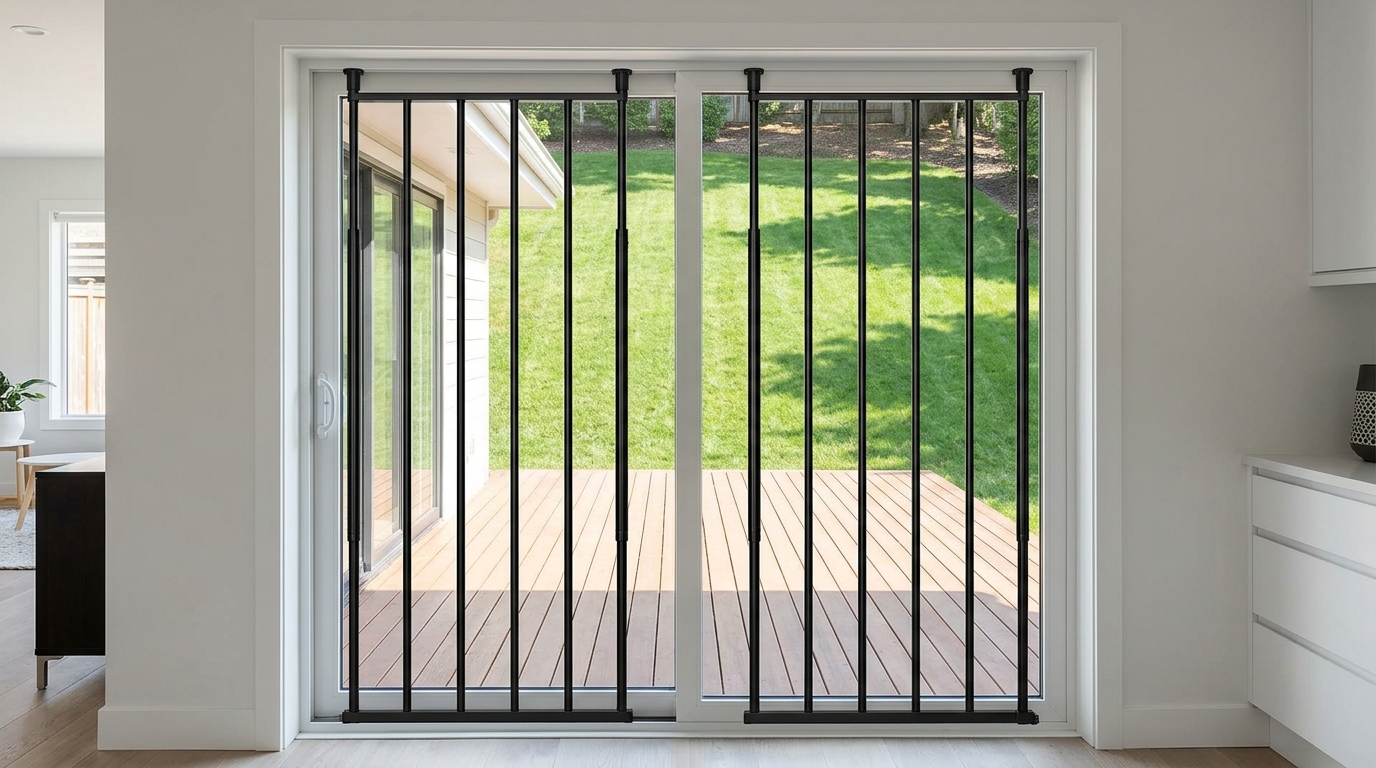
The most effective low-cost measure is a track bar or security bar that sits in the bottom track of the sliding door. When the bar is in place, the door cannot slide open even if the latch is defeated. You can use a cut-to-fit wooden dowel or a commercial adjustable track bar with a locking mechanism.
For more robust protection, consider installing burglar bars designed specifically for wide-span openings. The SWB Model A uses a telescopic modular design that adjusts to fit sliding door frames of varying widths. Multiple modules can be stacked to cover the full height of a patio door opening, creating a physical steel barrier that no pry bar or screwdriver can defeat. At around $90 per module, a full sliding door installation typically requires two to three modules depending on the door height.
Anti-lift devices
Many sliding doors can be lifted up and out of their bottom track, bypassing the lock entirely. Anti-lift pins or anti-lift screws installed in the top track prevent this by limiting the upward travel of the door panel. Installation takes five minutes: drill a pilot hole in the top track above the sliding panel (when closed) and insert a sheet metal screw so the screw head hangs down into the track. Leave just enough clearance for the door to slide normally, but not enough for it to be lifted out.
Security film for glass panels
If a burglar decides to break the glass rather than manipulate the lock, a layer of 8-mil to 14-mil security window film on the interior surface of the glass holds the broken pieces together and prevents quick entry. The film does not stop the glass from cracking, but it turns a one-second smash into a prolonged, noisy, and physically demanding effort to create a hole large enough to climb through.
Step 6: Secure Side Doors, Garage Entries, and Basement Doors
These secondary entries are where most homeowners let their guard down, and burglars know it.
Garage-to-house door
The door connecting your garage to the interior of your house is often a builder-grade hollow-core door with a basic knob lock and no deadbolt. This is a critical failure point. If a burglar enters the garage through the overhead door (by using a universal remote, fishing the emergency release cord through the top panel, or simply finding the garage door left open), they now have unlimited time and privacy to work on the interior door.
Treat this door exactly like an exterior door. Install a solid-core or steel door, add a deadbolt, reinforce the frame with a security strike plate, and use 3-inch screws on the hinges. If you want belt-and-suspenders protection, a surface-mounted deadbolt on the interior side adds a second layer that can only be opened from inside the house.
Side entry doors
Side doors, mudroom doors, and service entries often face a narrow alley or side yard with minimal visibility from the street or neighbors. They receive less maintenance and attention than front or back doors. Apply the same hardening steps: solid door, reinforced frame, Grade 1 deadbolt, and 3-inch hinge screws.
Basement and cellar doors
Exterior basement doors come in two styles: standard swing doors at grade level and angled hatch doors (Bilco-style) that cover a stairwell. For swing doors, apply standard hardening. For hatch doors:
- Replace any padlock with a high-security shrouded padlock (the shackle is recessed inside a steel shroud that prevents bolt cutters from getting a grip).
- Install a slide bolt on the interior side of the hatch door that can only be opened from inside the basement.
- Consider a SWB Model B security bar mounted directly to the masonry walls of the stairwell, creating a physical barrier even if the hatch lock is defeated. The Model B is designed specifically for masonry mounting and uses heavy-gauge steel anchored into brick or concrete, making it ideal for below-grade entries where the surrounding structure is stone, block, or poured concrete.
Step 7: Add Physical Barriers and Security Bars for Doors
Locks and reinforced frames are the foundation of door security. Physical barriers are the next level. A security bar, burglar bar, or door barricade creates a visible, structural obstacle that tells a burglar this door is not going to be quick or easy, and often makes them walk away without even trying.
Door burglar bars
Burglar bars for doors work the same way as window bars: steel bars span the opening and mount to the frame or wall, creating a grid that prevents entry even if the door is breached. For doors with glass panels, sidelights, or transom windows, burglar bars prevent the reach-through attack where a burglar breaks the glass and unlocks the door from inside.
The SWB Model A works for door sidelights and transom windows because its telescopic adjustment fits non-standard widths that are common in door-adjacent glass panels. For masonry-framed entries on commercial buildings, the Model B provides a permanent, heavy-gauge solution anchored directly into the wall structure.
If you want a comprehensive understanding of how burglar bars integrate with a full home defense strategy for both windows and doors, our burglar bars for doors complete security guide covers every configuration and mounting scenario.
Door barricade devices
Door barricade bars and floor-mounted braces are popular for interior use, especially in bedrooms, safe rooms, and apartments where exterior modifications are restricted. These devices wedge under the door handle or brace against the floor and can withstand hundreds of pounds of kicking force. They are not permanent installations, which makes them ideal for renters.
Security screen doors
A security screen door is a secondary door that mounts in front of your primary entry door. Unlike standard screen doors, security screen doors are built with steel frames and perforated steel mesh or heavy-gauge aluminum screens that resist cutting and kicking. They allow airflow and visibility while adding a physical barrier that must be breached before the primary door is even accessible. The best models include their own deadbolt lock.
Step 8: Layer Electronic Security with Physical Hardening
Physical security and electronic security serve different purposes, and a comprehensive defense strategy uses both. Here is how to layer them effectively around your doors.
Door sensors and alarms
A door sensor detects when a door opens and triggers an alert. In a monitored alarm system, this dispatches a notification to the monitoring center, which contacts you and potentially dispatches police. In a self-monitored system, it sends a push notification to your phone. Door sensors are inexpensive (typically $10 to $30 each) and should be installed on every exterior door.
Video doorbells and cameras
A video doorbell lets you see and speak to anyone at your front door from your phone, whether you are home or not. This serves two purposes: deterrence (burglars who see a camera often move on) and evidence (if a break-in occurs, you have footage of the perpetrator). Position cameras to cover all exterior doors, not just the front.
Motion-activated lighting
Darkness is a burglar's ally. Motion-activated floodlights at every exterior door eliminate the cover of darkness and startle intruders. Install lights with a wide detection angle (180 degrees), a detection range of at least 30 feet, and a brightness of at least 1,500 lumens. LED floodlights consume minimal electricity and last for years.
The layered defense model
The most effective approach to securing doors from burglars follows a layered model:
- Deterrence layer: Visible cameras, motion lights, alarm company signs, and visible security bars all communicate that this home is protected. Many burglars never get past this layer.
- Detection layer: Door sensors, glass break detectors, and video recording capture intrusion attempts and alert you in real time.
- Delay layer: Reinforced frames, security strike plates, Grade 1 deadbolts, and burglar bars physically slow down any breach attempt, buying time for authorities to respond.
- Denial layer: Steel doors, barricade devices, and secondary locks aim to stop the intrusion entirely. The more layers a burglar must defeat, the more likely they are to abandon the attempt.
For a deeper understanding of how this layered model applies to your entire home including windows, read our ultimate burglar bars for windows guide.
Common Door Security Mistakes Homeowners Make
Avoiding these mistakes is just as important as implementing the steps above. Each one creates a vulnerability that burglars actively look for.
- Relying on a knob lock without a deadbolt. A knob lock is not a security device. It keeps the door from blowing open in the wind. That is its job. A deadbolt is what actually resists forced entry. Every exterior door needs both.
- Using short screws on hinges and strike plates. The 1/2-inch screws that come factory-installed in most door hardware pull out of soft wood under minimal force. Replace them with 3-inch screws that reach the structural studs behind the jamb. This takes ten minutes and costs less than five dollars.
- Forgetting the garage-to-house door. This door is inside your garage, so you think of it as an interior door. It is not. It is the last barrier between your attached garage and your living space. Treat it as an exterior entry.
- Hiding a spare key outside. Under the mat, above the door frame, inside a fake rock, in the mailbox. Burglars check all of these locations. Every single one. If you need backup access, use a smart lock with a keypad, give a spare key to a trusted neighbor, or install a high-security lockbox rated for outdoor use.
- Installing security hardware on a hollow-core door. A Grade 1 deadbolt in a hollow-core door is like putting a bank vault lock on a cardboard box. The lock will not fail. The door will disintegrate around it. Upgrade the door first, then the hardware.
- Leaving sliding doors unbarred. The stock latch on a sliding glass door is not a security lock. Without a track bar, anti-lift pins, or security bars, a sliding door is an invitation.
- Ignoring door maintenance. Weather stripping that has deteriorated leaves gaps. Hinges that sag create misalignment that weakens the door's engagement with the strike plate. Wood frames that have absorbed moisture swell and then shrink, loosening screws and creating play. Inspect and maintain your doors annually.
Door Security by Door Type: Quick Reference
Use this table as a fast-reference checklist for securing each type of door in your home.
Front door
- Solid wood, steel, or fiberglass (never hollow core)
- Grade 1 deadbolt with 1-inch throw
- Reinforced security strike plate with 3-inch screws
- 3-inch screws on all three hinges
- Peephole or video doorbell
- Motion-activated porch light
- Security film on sidelights if glass is present
Back door
- Same standards as front door
- Motion-activated floodlight covering approach path
- Consider a security screen door for summer ventilation without compromising security
- Camera coverage of backyard approach
Sliding patio door
- Track bar or security bar in bottom track
- Anti-lift screws in top track
- Security film on glass panels
- Foot-operated lock for daily use
- SWB Model A modular bars for full-height physical barrier
Garage-to-house door
- Replace hollow core with solid or steel door
- Deadbolt with reinforced strike plate
- Self-closing hinges (door closes automatically behind you)
- Interior slide bolt for nighttime security
Basement and cellar doors
- High-security shrouded padlock on exterior hatches
- Interior slide bolt
- SWB Model B security bars for masonry stairwell mounting
- Motion sensor covering exterior approach
Side entry doors
- Same standards as front door
- Ensure door is visible from at least one neighbor's sightline
- Trim landscaping that provides concealment
- Camera or motion light covering approach
Budget Breakdown: What Door Security Actually Costs
One of the most common reasons homeowners delay door security upgrades is the assumption that it is expensive. Here is what each upgrade actually costs for a typical home with three exterior doors and one sliding patio door.
Essential upgrades (under $100 total)
- Replace all strike plate screws and hinge screws with 3-inch screws: $5 to $10
- Reinforced security strike plates (3 doors): $45 to $120
- Wooden dowel or track bar for sliding door: $5 to $15
- Anti-lift screws for sliding door: $3 to $5
Total for essentials: $58 to $150. This addresses the most critical vulnerabilities and can be completed in a single afternoon with a drill and a screwdriver.
Mid-range upgrades ($150 to $500 total)
- Upgrade deadbolts to Grade 1 on all exterior doors: $75 to $200
- Door frame reinforcement kit (one door): $60 to $150
- Security film for sidelights and sliding door glass: $40 to $100
- Motion-activated floodlights (2 to 3 locations): $50 to $120
Comprehensive upgrades ($500 to $2,000+)
- Replace hollow-core doors with steel or fiberglass: $200 to $600 per door
- Smart lock with deadbolt: $150 to $350
- Security screen door: $300 to $1,500
- SWB security bars for sliding doors and sidelights: $90 to $270 per opening
- Video doorbell and camera system: $100 to $500
The key takeaway: the most effective upgrades are also the cheapest. Replacing screws and strike plates costs almost nothing and delivers the single biggest improvement in kick resistance. For a detailed breakdown of how security bar pricing works, visit our best window security bars for homes guide, which includes cost-per-window analysis applicable to door installations as well.
Frequently Asked Questions
What is the best way to secure a front door from burglars?
The best way to secure a front door from burglars is a combination of three upgrades: install a Grade 1 deadbolt with a 1-inch bolt throw, replace the factory strike plate with a reinforced security strike plate using 3-inch screws that anchor into the wall studs, and make sure the door itself is solid core (wood, steel, or fiberglass, never hollow core). These three changes address the most common failure points in a residential door assembly and can be completed in under an hour for less than $100 in materials. Adding a door barricade bar and motion-activated porch light provides additional layers of protection.
How do burglars break through doors?
Burglars use four primary methods to break through doors. The most common is kicking, which generates enough force to rip standard strike plate screws out of a soft wood frame. The second is lock manipulation, including bumping, picking, or using a credit card to slip a spring-loaded knob latch. The third is prying, where a pry bar or screwdriver is wedged between the door and frame to pop the lock. The fourth is breaking glass in or near the door to reach through and unlock the deadbolt from inside. Reinforced strike plates, Grade 1 deadbolts, and security film on glass panels defeat all four methods effectively.
Do security bars work on doors or just windows?
Security bars work on doors as well as windows, particularly on door sidelights, transom windows above doors, sliding glass doors, and basement entry hatches. For door sidelights (the narrow glass panels flanking a front door), telescopic security bars like the SWB Model A adjust to fit the non-standard widths typical of sidelight openings. For sliding patio doors, modular bars can be stacked to cover the full door height. For basement entries with masonry surrounds, the SWB Model B mounts directly into brick or concrete. Security bars do not replace a good deadbolt and reinforced frame, but they add a physical barrier layer that makes forced entry significantly harder.
How do I secure a sliding glass door from burglars?
Secure a sliding glass door with four measures: place a security bar or cut-to-length wooden dowel in the bottom track so the door cannot slide open even if the latch is defeated, install anti-lift screws in the top track to prevent the door from being lifted out of its frame, apply 8-mil or thicker security film to the glass interior to prevent smash-and-enter attacks, and consider installing steel burglar bars across the opening for maximum physical protection. A foot-operated auxiliary lock adds another layer. These steps combined make a sliding door nearly as secure as a solid entry door, addressing the lock bypass, lift-out, and glass-break attack methods that burglars use most frequently.
How much does it cost to secure all doors in a house from burglars?
The essential door security upgrades for a typical house with three exterior doors and one sliding patio door cost between $60 and $150 total. This covers reinforced strike plates with 3-inch screws for every door and a track bar for the sliding door. Mid-range upgrades including Grade 1 deadbolts and security film add another $150 to $400. A comprehensive upgrade with steel door replacements, smart locks, security screen doors, security bars, and a camera system can run $1,000 to $3,000 or more depending on the number of doors and the products you choose. Most homeowners can address their biggest vulnerabilities for under $200 in a single weekend.
Final Thoughts: Building a Door Defense That Actually Works
Knowing how to secure doors from burglars is not about buying one expensive product or installing one high-tech gadget. It is about systematically eliminating the weaknesses that burglars exploit. Start with the cheapest, highest-impact upgrades: replace short screws with 3-inch screws, install reinforced strike plates, and put a bar in your sliding door track. Those three steps, which cost less than a decent dinner out, close the most common attack vectors.
Then layer on additional defenses based on your budget and risk level. Upgrade to Grade 1 deadbolts. Replace hollow-core doors. Add security film to glass panels. Install motion lighting and cameras. Consider security bars for sidelights, sliding doors, and basement entries.
Every layer you add increases the time, noise, and effort required for a burglar to get through your door. And time is what burglars cannot afford. The average residential burglary takes 8 to 12 minutes from entry to exit. If your door costs them even 60 seconds of loud, visible effort, most will give up and move to an easier target.
Your doors are the front line. Harden them accordingly.