Garage Door Security Bars: Steel Protection That Stops Forced Entry Cold
Garage door security bars stop forced entry fast. Compare steel bar options, costs, and fire code compliance for US homes. Shop SWB today.
SWB: High-caliber Security Window Bars experts. We bring the most advanced protection within your reach, explained clearly. Garage door security bars are one of the most overlooked yet critically important upgrades any American homeowner can make. According to the FBI Uniform Crime Report, roughly 9% of all residential burglaries occur through the garage — and in cities like Houston, Detroit, and Memphis, that number climbs even higher among attached-garage homes. The garage is not just a place to park your car; it is a direct access corridor into your living space, your basement, and your bedrooms. A standard roll-up or sectional garage door, even a modern one, can be defeated in under 60 seconds using nothing more than a coat hanger and brute force. Garage door security bars — heavy-gauge steel reinforcement systems that physically block, brace, or bar your garage door from forced entry — change that equation entirely. In this guide, Security Window Bars (SWB) breaks down everything you need to know: how garage door security bars work, which type is right for your property, how they compare to window security bars, what US building codes say, and how to choose the best steel solution for your home or commercial property in 2026.
The coat hanger attack — sometimes called the 'zip-tie exploit' — is so simple and so well-documented on public forums that any opportunist burglar knows it. By…
Why Garage Door Security Bars Are a Non-Negotiable Home Defense Layer
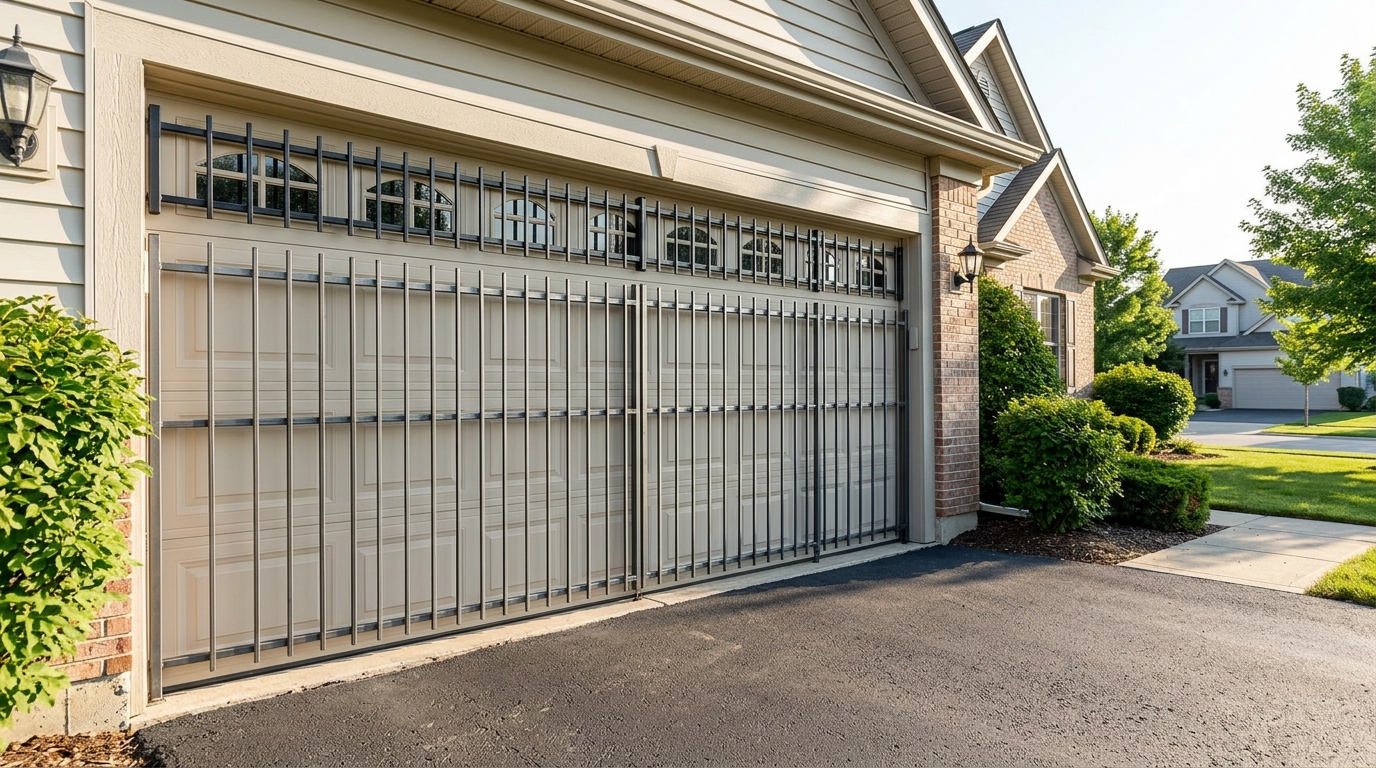
Most American homeowners invest heavily in front-door deadbolts, alarm systems, and window locks — but leave the garage as a wide-open vulnerability. The U.S. Department of Justice reports that attached garages exist in over 63% of single-family homes in the United States, and security researchers consistently identify the garage door as one of the three most exploited residential entry points. Burglars targeting garages typically use one of three methods: the coat hanger attack (fishing through the top of the door to pull the emergency release cord), brute force panel defeat (kicking or prying sectional panels), or the relay attack on smart garage openers (electronic signal cloning). Garage door security bars neutralize all three of these approaches simultaneously. A properly installed steel security bar physically prevents the door from being lifted even if the emergency release is triggered, prevents panels from flexing inward under force, and requires zero electronics — making it immune to signal-cloning attacks entirely. For homeowners in high-crime ZIP codes across Chicago's South Side, Philadelphia's Kensington neighborhood, or Oakland's flatlands, this is not a luxury upgrade. It is a baseline necessity that professional security consultants recommend as the first physical layer of garage protection before considering any monitored alarm system.
The Coat Hanger Attack: Why Your Smart Opener Isn't Enough
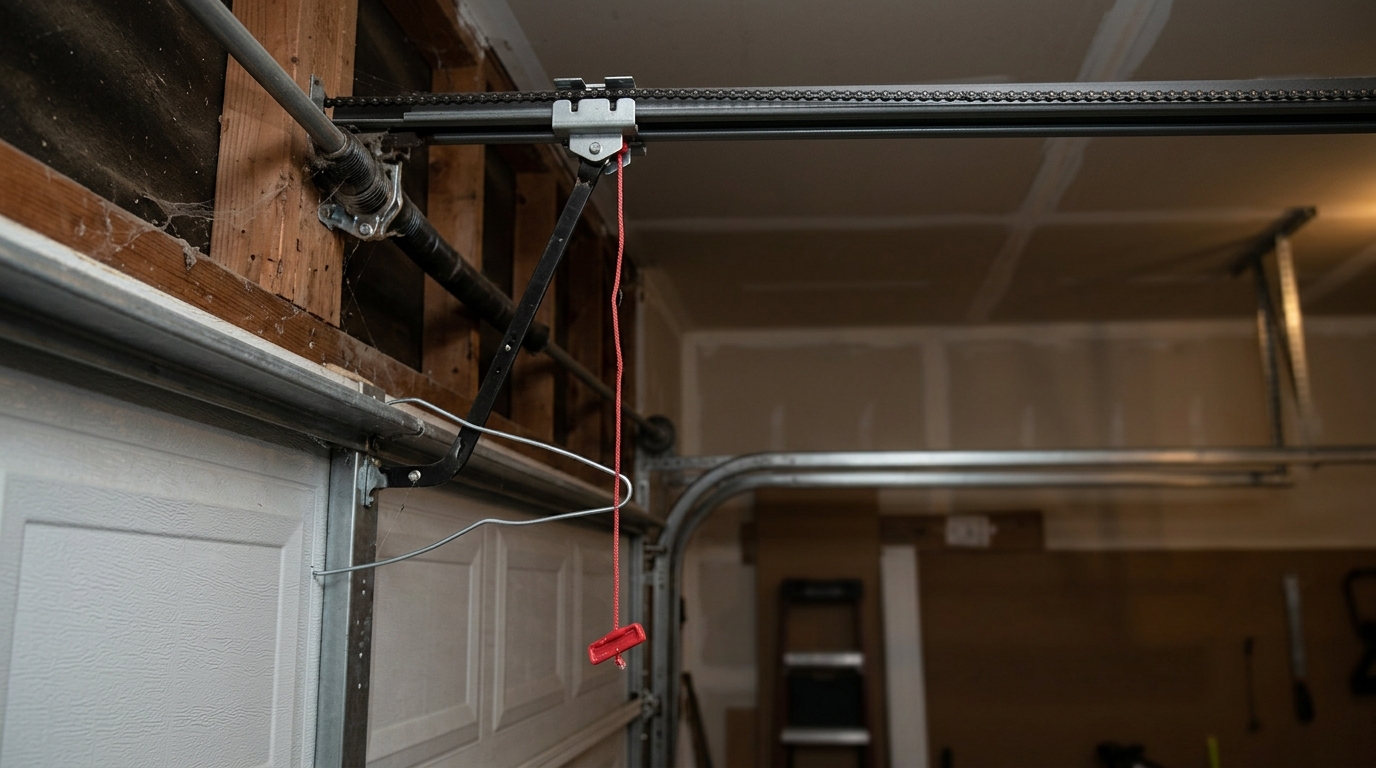
The coat hanger attack — sometimes called the 'zip-tie exploit' — is so simple and so well-documented on public forums that any opportunist burglar knows it. By sliding a long hooked wire through the weatherstripping gap at the top of a standard sectional garage door, an intruder can snag the emergency release handle and disengage the motor drive in under 30 seconds. At that point, your $500 smart garage opener becomes completely irrelevant. The door lifts freely, silently, and without triggering any sensors. Garage door security bars installed horizontally across the interior of the door create a physical obstruction that no amount of wire manipulation can overcome. The bar sits in floor-mounted brackets and prevents vertical travel of the door panels regardless of whether the drive mechanism is engaged or disengaged. Security professionals in Los Angeles and Chicago routinely cite this specific attack as the primary reason they recommend physical steel reinforcement over electronic solutions alone.
Emergency Release Security: What Building Codes Say
The International Residential Code (IRC) does not specifically regulate garage door internal security bars, but it does require that any device obstructing egress from an attached garage must be operable from the inside without a key or special knowledge. This is a critical point: any garage door security bar you install must be quickly releasable from the interior in the event of a fire or emergency. This mirrors the same egress requirements that govern window security bars in sleeping areas under NFPA 101 and IBC Section 1010. Always confirm your chosen garage bar system includes a tool-free interior release mechanism before purchasing.Brute Force Panel Defeat: Why Panel Strength Alone Is Not Enough
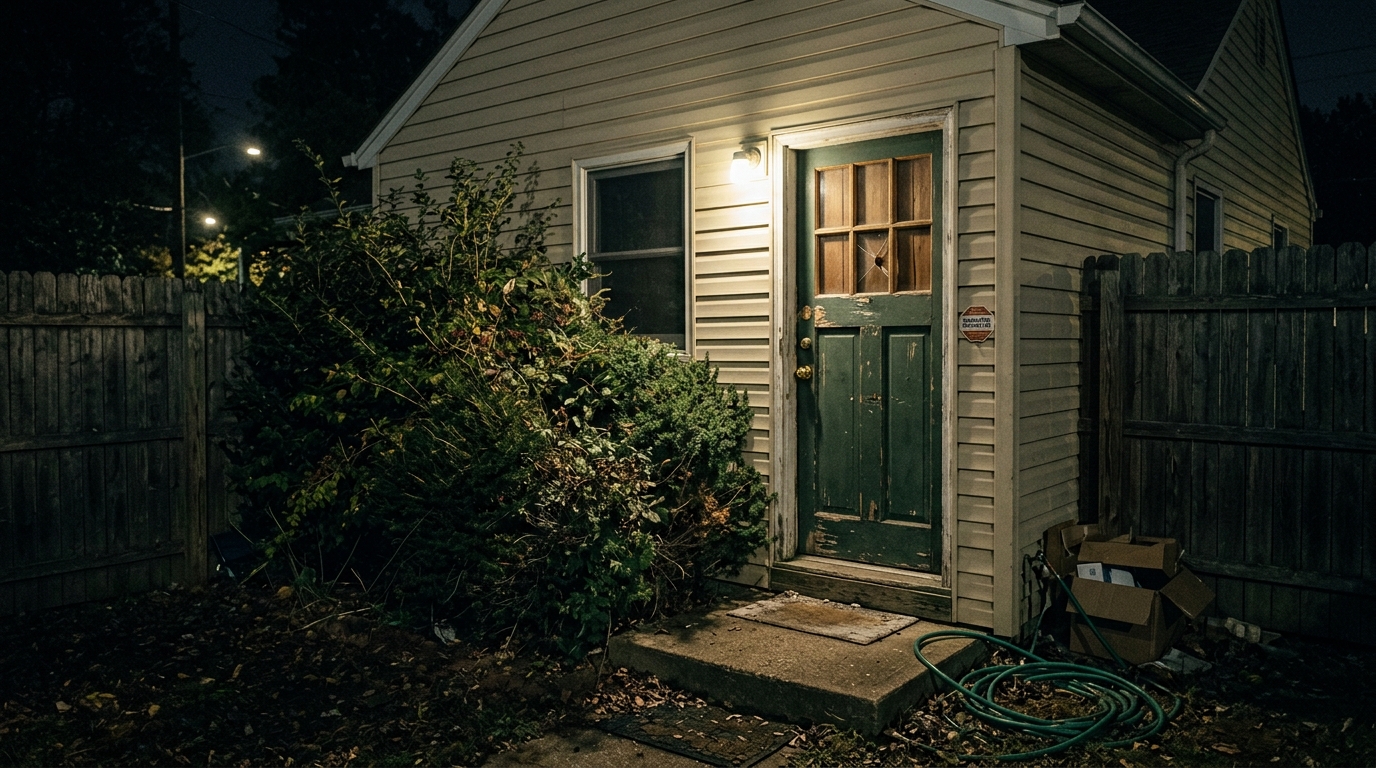
Modern sectional garage doors are engineered for weather resistance and thermal efficiency, not for resisting lateral or vertical forced-entry loads. A standard residential door panel can be cracked, buckled, or separated from its track under as little as 200–300 pounds of sustained force — well within what two determined individuals can apply in a matter of seconds. Steel garage door security bars that span the full width of the door and seat into heavy-duty floor brackets transfer that applied force directly into the concrete floor slab, distributing the load in a way that no panel or track system is designed to resist on its own. Think of it as the same principle behind a door security bar (also called a door barricade bar): the floor becomes the anchor, and steel becomes the immovable object between the burglar and your home.
Material Matters: Steel vs. Aluminum vs. Wood Reinforcement
Not all garage door security bar materials perform equally under forced-entry conditions. Steel (particularly heavy-gauge tubular steel with a powder-coat finish) offers the highest strength-to-weight ratio and the best long-term corrosion resistance when properly coated. Aluminum bars are lighter but deform significantly under sustained force loads and are not recommended for high-crime environments. Wood blocking, while inexpensive, splinters under impact and provides no reliable resistance to a determined attacker. For genuine forced-entry resistance, heavy-gauge steel is the only material that security professionals and physical security researchers recommend without qualification.Electronic vs. Physical Security: The Layered Defense Argument
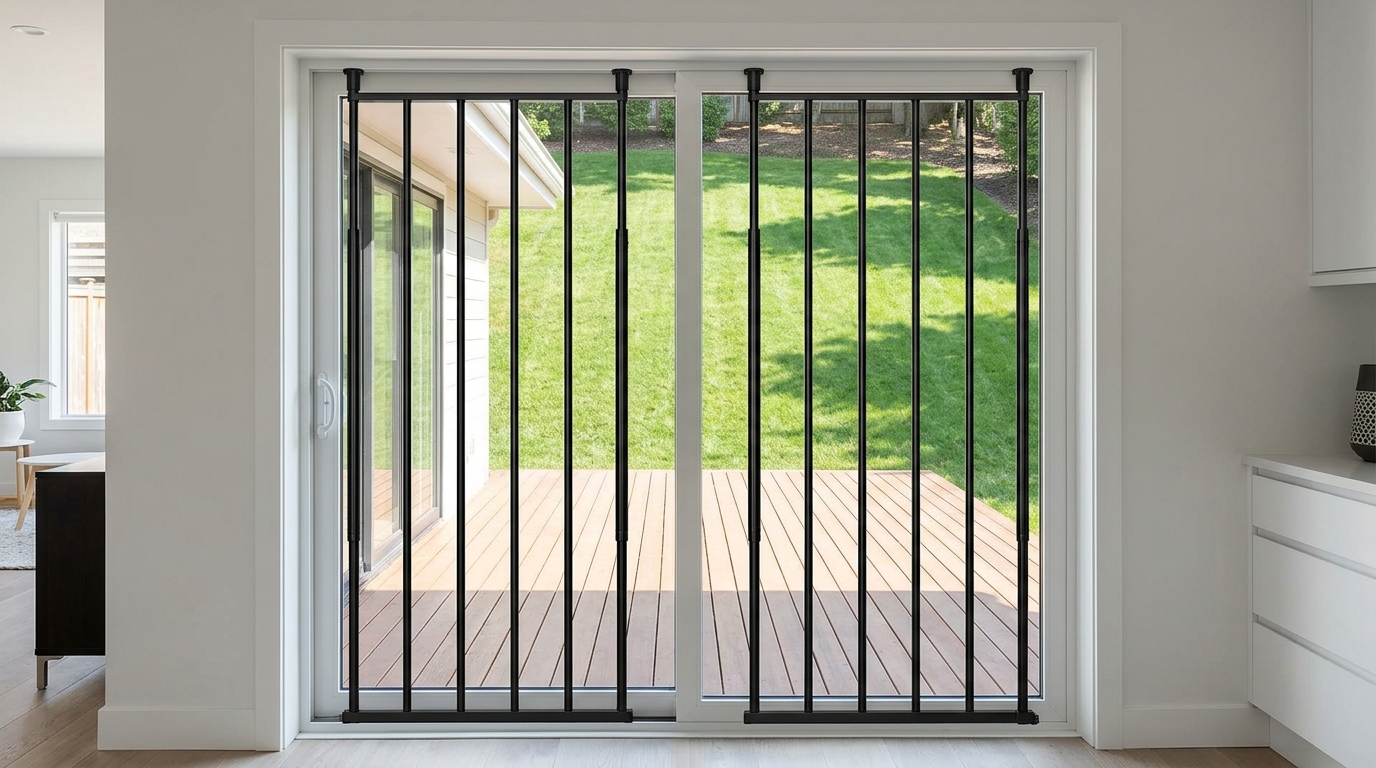
A monitored alarm system is an excellent deterrent and an invaluable notification tool — but it does not physically stop entry. Studies on residential burglary response times published by the Alarm Industry Research and Educational Foundation (AIREF) show that the average police response time to a residential alarm in a major US city is 11 minutes. A determined burglar can enter, locate valuables, and exit in under 4 minutes. Physical security barriers — including garage door security bars, window security bars, and door reinforcement hardware — are the only layer of home defense that actively prevents entry rather than simply recording or reporting it. The most effective home security strategy combines both: physical barriers as the primary denial layer, and electronic monitoring as the notification and deterrence layer. For renters and homeowners who cannot afford a full security system upgrade, a set of steel security bars on garage and window openings delivers immediate, hardware-level protection for under $100 per opening.
Types of Garage Door Security Bars: Which System Is Right for Your Property

The market for garage door security bars breaks down into several distinct categories, each with different installation requirements, security performance levels, and suitability for different garage types. Understanding the differences between these systems is essential before making a purchasing decision — particularly for property managers overseeing multiple units or real estate investors retrofitting security across a portfolio of homes. The four primary types are: horizontal floor-to-door bracing bars, vertical reinforcement bars that run floor-to-ceiling, cross-brace systems that span the door diagonally, and window-integrated security bars for garages that have window openings in the door panels or side walls. Each type addresses a specific vulnerability, and many professionals recommend combining two or more systems for maximum protection.
Horizontal Floor-Brace Garage Security Bars: The Most Common Solution
Horizontal floor-brace systems are the most widely installed type of garage door security bar in US residential properties. These systems consist of one or two heavy-gauge steel bars that span the interior width of the garage door and seat into brackets that are anchored to the floor on either side. When locked in the down position, the bar physically prevents the door from being raised more than a fraction of an inch — effectively defeating both the coat hanger attack and brute-force lifting attempts simultaneously. Installation typically requires drilling anchor bolts into the concrete garage floor slab, making this a semi-permanent solution suitable for homeowners but requiring landlord approval for renters. Most horizontal floor-brace systems are designed for standard single-car garage doors (8–9 feet wide) and double-car doors (16–18 feet wide), and heavy-duty versions rated for commercial roll-up doors are also available. Pricing for quality steel horizontal brace systems typically ranges from $60 to $180 depending on door width, gauge, and finish quality.
Vertical and Cross-Brace Reinforcement Bars for Maximum Panel Rigidity
Vertical reinforcement bars attach to the interior face of garage door panels and run from the bottom rail to the top rail of each panel section, dramatically increasing resistance to panel-buckling under lateral force. Cross-brace systems add diagonal steel members that distribute impact loads across the full door surface rather than concentrating stress at the point of attack. Both of these systems are more commonly seen in commercial applications — warehouses in Houston's industrial districts, retail properties in Chicago's South Loop, and self-storage facilities in suburban Atlanta — but they are increasingly being specified for residential attached garages in higher-crime neighborhoods. For maximum security, a combination of vertical panel reinforcement and a horizontal floor-brace bar creates a system where the panels cannot buckle and the door cannot be lifted, eliminating virtually every mechanical forced-entry attack vector.
Garage Window Security Bars: The Overlooked Vulnerability in the Door Itself
Many residential garage doors include decorative window panels — typically a row of small glass inserts running across the top section of the door. These windows, while aesthetically attractive, represent a significant security vulnerability: a burglar can break the glass, reach through, and manually disengage the emergency release handle or unlock a side pedestrian door without ever attempting to force the main door. Garage window security bars — small, adjustable steel bars designed specifically for the narrow window openings in garage door panels and garage side walls — eliminate this vulnerability entirely. This is where SWB's Model A Telescopic Window Bars become directly relevant: the same telescopic, no-permanent-damage installation system that protects bedroom and basement windows in apartments across New York City and Los Angeles is equally effective on garage door windows and garage side-wall windows. At $90, the Model A provides the same heavy-gauge steel protection for garage window openings that costs $500–$1,500 through a professional installation service. For renters in properties with shared garages, the telescopic design means no drilling, no landlord permission required, and full removal when you move out.
SWB Steel Window Bars for Garage Windows: Telescopic Protection Without Permanent Damage
While SWB's primary product line focuses on residential window security bars, the garage application is one of the most important and frequently overlooked use cases for the SWB telescopic system. Garages — whether attached to a single-family home in suburban Houston, part of a multi-unit building in Chicago, or a standalone structure on a rental property in Atlanta — almost always include at least one window opening that represents a direct access point into the space. The SWB Model A Telescopic Window Bars are engineered to fit windows 22 to 36 inches wide, covering the most common garage window sizes in US residential construction. Installation takes 15 to 20 minutes, requires no drilling in most configurations, and the matte black powder-coat finish matches both modern and traditional garage aesthetics without looking institutional. For property managers overseeing portfolios of rental units with garages, the Model A's removable design means the bars can be transferred between units between tenancies — a cost-efficiency advantage that permanently welded bars simply cannot offer.
Model A Telescopic Bars for Garage Door Window Panels
The narrow horizontal window strips found across the top section of most standard residential garage doors typically measure between 24 and 34 inches wide — falling squarely within the Model A's 22–36 inch adjustment range. Installing Model A bars across these window panels takes under 20 minutes and requires no permanent modification to the door itself. The telescopic steel bar extends to fit the opening precisely, creating a physical barrier that prevents glass-breaking entry attempts from reaching the emergency release handle or any interior hardware. Because the bars are installed on the interior face of the window opening, they are invisible from the street — maintaining curb appeal while delivering full steel-level protection. This is particularly valuable for AirBnB hosts in cities like Nashville, Austin, and Miami who need professional-grade security without visible fortification aesthetics that might deter guests.
Weight and Load Specifications for Garage Applications
The SWB Model A telescopic bar system uses the same heavy-gauge steel construction regardless of the window location — bedroom, basement, or garage. The bar's load-bearing capacity is designed to resist the same forced-entry loads as a permanently installed bar, with the telescopic mechanism providing a compression-fit installation that holds the bar firmly in the window frame without relying on adhesive or mechanical fasteners through the wall. For garage door window panels, this compression-fit installation is especially practical because the door panel material (typically steel or fiberglass) may not be suitable for drilling anchor points.Model A/EXIT Egress-Compliant Bars for Garage Sleeping Spaces
In certain residential configurations — converted garage apartments, accessory dwelling units (ADUs), and garage-adjacent sleeping areas that are increasingly common in high-cost housing markets like Los Angeles, San Jose, and Seattle — windows in or adjacent to the garage space may be subject to IRC emergency egress requirements for sleeping areas. Any window serving as the primary or secondary egress point from a sleeping area must allow a minimum 20-inch-by-24-inch opening per IRC Section R310, and any security bars installed on that window must be releasable from the inside without a key or tool, per NFPA 101 Life Safety Code requirements. SWB's Model A/EXIT addresses this requirement directly: the patented quick-release mechanism allows the bar to be disengaged from the interior in a single motion, providing full egress capability while maintaining the same steel security level as a standard fixed bar. For property owners in California, where ADU construction has surged following 2020 state legislation, the Model A/EXIT is not just a security upgrade — it is a code compliance requirement for any garage conversion with sleeping areas.
Renter and Landlord Advantages: The Telescopic Difference for Garage Security
Permanently welded or lag-bolted garage window security bars present a real challenge for both renters and landlords. Renters cannot install them without landlord permission, and landlords who install permanent bars must factor in removal costs when retrofitting or selling the property. The SWB telescopic system eliminates both friction points. Renters can install and remove the bars entirely on their own without violating lease terms in the vast majority of US states (always verify your specific lease language and local regulations). Landlords can purchase a set of Model A bars and redeploy them across different units as needed — one set of bars protecting different windows in different units over time. This reusability factor transforms the $90 Model A from a single-use security expense into a recurring capital asset. For real estate investors managing 10 or more units in cities like Philadelphia, Detroit, or Memphis — where garage security is a genuine tenant concern — the cost difference versus professional installation ($600–$1,800 per garage window professionally) represents thousands of dollars in savings across a portfolio.
Garage Door Security Bar Installation: What You Need to Know Before You Buy
Installing garage door security bars — whether horizontal floor-brace systems for the main door or telescopic window bars for garage window openings — requires understanding a few key factors before purchasing: your garage door type and dimensions, your floor material (concrete slab vs. wood subfloor), your local building code requirements, and whether you are a renter, homeowner, or property manager. Getting these details right before purchasing saves you from buying a system that does not fit your door, violates your lease, or fails to meet local fire egress requirements. This section walks through the critical pre-installation checklist for both main-door security bar systems and garage window bar systems, with specific guidance for the most common US garage configurations.
Pre-Installation Checklist for Horizontal Floor-Brace Systems
Before purchasing a horizontal floor-brace garage security bar, measure your garage door's interior width at the base — not just the door opening width, but the actual space between the side tracks on the interior. Standard single-car doors measure 8–9 feet interior, while double-car doors measure 15–18 feet interior. Confirm that your floor is a poured concrete slab capable of accepting anchor bolt installation — most US attached garages qualify, but older homes and homes with wood subfloor garages (more common in the Southeast and Pacific Northwest) may require different anchoring methods. Check your local building code for any specific requirements regarding garage door barricading devices — while the IRC does not prohibit these systems, some municipalities have specific language about devices that could impede fire department access. Finally, if you are a renter, obtain written landlord approval before drilling any floor anchors, as these constitute permanent alterations to the property in most US states.
ADA and Emergency Access Considerations
For commercial properties, multi-family buildings, and any property subject to ADA accessibility requirements, any horizontal bar or barricading device installed on a garage door that serves as a primary or secondary accessible entry point must be operable with one hand and must not require tight grasping, pinching, or twisting of the wrist, per ADA Standards for Accessible Design Section 404.2.7. Confirm your chosen system's release mechanism complies with this standard if ADA accessibility applies to your property.Measuring Garage Windows for Telescopic Security Bar Fit
For garage window openings — whether in the door panels themselves or in the garage side walls — the measurement process for SWB telescopic bars follows the same straightforward procedure as any other window application. Measure the interior width of the window opening at the narrowest point, between the side jambs or the window frame edges. The Model A covers 22–36 inches, which handles the vast majority of residential garage window sizes in US construction. For windows narrower than 22 inches (common in some older ranch-style homes in the Midwest) or wider than 36 inches (found in some commercial garage applications), contact SWB directly through the securitywb.com contact page for guidance on alternative configurations. Installation is genuinely 15–20 minutes for someone comfortable with basic measurements — no power tools, no drilling in most configurations, and no professional contractor needed.
Fire Code Compliance for Garage Security Bar Installations
Fire code compliance for garage security bars follows similar principles to window bar fire code requirements, with one important distinction: the garage itself is not typically classified as a sleeping area under the IRC, so the specific egress window requirements of IRC Section R310 do not apply to standard garage doors. However, the pedestrian door connecting the attached garage to the living space (the house-to-garage door) is subject to IRC and NFPA 101 egress requirements, and any security hardware on that door — including bar braces or barricade devices — must allow emergency exit from the inside without a key or special knowledge. Additionally, fire departments in major urban areas including Chicago, Los Angeles, and New York City have specific guidelines about devices that could impede emergency responder access to garages during a structure fire. Always check with your local fire marshal's office for jurisdiction-specific guidance before installing any barricading device on a garage door that could slow emergency access.
Garage Door Security Bars vs. Other Garage Security Solutions: A Direct Comparison
The home security market offers a wide range of products marketed as garage security solutions — from smart locks and video cameras to reinforced panels and alarm sensors. Understanding how garage door security bars compare to these alternatives in terms of actual forced-entry prevention, cost, installation complexity, and long-term value is essential for making an informed purchasing decision. This comparative analysis draws on physical security research, industry cost data, and real-world performance characteristics to give you an honest picture of where steel bars fit in the garage security landscape.
Garage Door Security Bars vs. Smart Garage Door Openers with Alerts
Smart garage door openers — systems from brands like Chamberlain myQ, LiftMaster, and Genie — offer real-time open/close alerts, remote operation, and integration with home automation systems. These are genuinely useful features for monitoring and convenience. But as a forced-entry prevention tool, a smart opener provides exactly zero physical resistance to a coat hanger attack, a brute-force panel defeat, or a relay signal clone. The smartest opener on the market lifts just as easily as the dumbest one when the emergency release cord is pulled. A garage door security bar, by contrast, prevents the door from opening regardless of whether the motor drive is engaged, disengaged, cloned, or destroyed. The ideal solution combines both: a smart opener for monitoring and remote access convenience, and a steel security bar for physical denial. But if budget requires prioritization, the steel bar addresses the actual forced-entry threat while the smart opener does not.
Garage Door Security Bars vs. Professional Bar Installation Services
Professional garage security bar installation services — typically offered by locksmith companies, security contractors, and garage door specialists — can deliver high-quality, custom-fabricated steel bar systems. The cost, however, reflects the labor and customization involved: professional installation of garage door security bars typically runs $400–$1,200 for a single-car garage, and $800–$2,000 for a double-car configuration, according to HomeAdvisor 2025 cost data. By comparison, a quality retail garage door security bar system plus SWB telescopic window bars for the garage windows represents a total investment of $150–$300 for most residential applications — delivering the same steel-level protection at roughly 80% less cost. For real estate investors, AirBnB hosts, and property managers overseeing multiple properties in cities like Atlanta, Houston, or Phoenix, this cost difference across a portfolio of 10–20 garages translates to $4,000–$16,000 in security infrastructure savings.
Window Security Bars and Garage Security: The Complete Perimeter Approach
Comprehensive residential security planning treats every potential entry point as part of a unified perimeter — not as isolated vulnerabilities to be addressed individually. A garage with a steel floor-brace security bar on the main door but unprotected side windows is still a compromised perimeter: the burglar simply breaks the side window and reaches in. Similarly, a home with fortified garage windows but unprotected basement windows or ground-floor bedroom windows has simply redirected the attacker's path of least resistance. SWB's approach to perimeter protection starts with the highest-risk openings — ground-floor windows, garage windows, basement windows, and sliding glass doors — and works outward to create a layered steel barrier that forces any would-be intruder to spend time, create noise, and risk detection at every point of attempted entry. The combination of SWB Model A or Model B window bars on garage and residential windows, paired with a quality horizontal floor-brace system on the garage door itself, creates a complete perimeter solution that most professional security consultants would charge $2,000–$5,000 to specify and install — achievable through SWB's product line for under $400 in total hardware costs for a typical US single-family home.
Garage Security Bars for Specific US Markets: City-by-City Risk Assessment
Garage security risk is not uniform across the United States. FBI UCR data and local police department crime statistics consistently show that certain cities and ZIP codes experience garage burglary rates significantly above the national average. Understanding the specific risk profile of your market — whether you are a homeowner in Detroit, a property manager in Houston, a landlord in Chicago, or an AirBnB host in Los Angeles — allows you to make proportionate and cost-effective security investments rather than over-spending on low-risk properties or under-protecting high-risk ones.
High-Risk Markets: Chicago, Detroit, Memphis, and Philadelphia
Chicago, Detroit, Memphis, and Philadelphia consistently rank among the top 10 US cities for residential property crime rates according to FBI UCR data. In Chicago specifically, the Chicago Police Department's CLEAR crime data shows that garage-related burglaries and motor vehicle thefts account for a disproportionate share of total property crime reports in neighborhoods including Englewood, Austin, Roseland, and West Garfield Park. Detroit's property crime rate — one of the highest among US cities with populations over 500,000 — includes a significant component of garage break-ins driven by the high density of detached garages in the city's residential neighborhoods. For homeowners and renters in these markets, garage door security bars are not optional security upgrades — they are the baseline physical standard that security professionals recommend before addressing any other vulnerability.
Moderate-Risk Markets: Houston, Atlanta, and Los Angeles
Houston, Atlanta, and Los Angeles present a more complex risk picture: aggregate property crime rates are lower than in the highest-risk markets, but specific neighborhoods within each city experience elevated garage burglary rates that make physical security bars a sound investment. In Los Angeles, the LAPD's crime mapping data shows concentrated garage burglary activity in parts of South LA, East LA, and the San Fernando Valley. In Houston, HPD data points to elevated garage crime in certain corridors of the Third Ward, Sunnyside, and Near Northside. In Atlanta, APD statistics highlight elevated property crime in certain Westside and Southside neighborhoods. For property owners in these specific areas, the risk-adjusted value of garage door security bars is high. For those in lower-risk suburban areas of these same cities — Plano outside Dallas, Marietta outside Atlanta, or Thousand Oaks outside LA — the investment still makes sense but can be prioritized after more statistically probable entry points like ground-floor windows and sliding glass doors.
Lower-Risk Markets and the Case for Proactive Installation
Even in lower-crime markets — suburban Minneapolis, Salt Lake City, or Raleigh-Durham — the case for garage door security bars rests on a simple risk calculation: the cost of installation (as low as $90 for SWB window bars on garage windows, plus a retail floor-brace system) is far smaller than the cost of a single garage burglary (average property loss per residential burglary: $2,661 according to FBI UCR data), the insurance deductible, the psychological disruption, and any home invasion escalation risk. In lower-risk markets, the primary argument shifts from immediate threat response to proactive risk management — the same logic that drives homeowners to install smoke detectors in low-fire-risk properties. Security infrastructure installed before a burglary occurs costs a fraction of security infrastructure installed after one.
Choosing the Right SWB Model for Garage Window Protection: Model A, Model B, or Model A/EXIT
While SWB's telescopic security bar lineup is primarily marketed for residential window applications, each model has specific characteristics that make it more or less suitable for garage window environments. Selecting the right model depends on your garage's window configuration, whether the window serves any egress function, the permanence of your installation preference, and your budget. Here is a direct comparison of all three SWB models as applied to garage window security specifically.
Model A ($90): The Best All-Purpose Choice for Garage Windows
The SWB Model A Telescopic Window Bar is the best starting point for the vast majority of garage window security applications. At $90, it covers windows 22–36 inches wide — the size range that encompasses most residential garage door window panels, garage side-wall windows, and garage conversion windows. The no-drilling telescopic installation is ideal for renters, for garage door windows (where drilling into the door panel itself is impractical), and for property managers who want a removable and reusable security solution. The matte black powder-coat finish is weather-resistant enough for unheated garages in climates ranging from Minnesota winters to Houston summers. For most homeowners and renters looking to close the garage window vulnerability with minimal installation effort and maximum cost efficiency, the Model A is the right choice. Shop the Model A directly at securitywb.com or through Amazon for fast nationwide shipping via FBA.
Model B ($91): Wall-Mount Bars for Permanent Garage Window Protection
The SWB Model B Wall-Mount Window Bar is the right choice for homeowners (not renters) who want the maximum possible security on garage side-wall windows and are comfortable with a permanent installation. At $91 — just $1 more than the Model A — the Model B uses heavy-gauge steel with a wall-anchor mounting system that delivers the same forced-entry resistance as professionally welded bars at a fraction of the cost. For ground-floor garage side windows in single-family homes in high-crime neighborhoods, the Model B's permanent installation provides an unambiguous security signal to potential intruders that the property is hardened. Combined with a horizontal floor-brace system on the main garage door, Model B bars on garage side windows create a hardened garage perimeter that effectively eliminates opportunistic garage burglary as a viable attack option.
Model B Installation on Garage Masonry Walls
Many US garages — particularly those in older homes in Chicago, Detroit, Philadelphia, and the Northeast — feature masonry block or brick side walls rather than wood-framed construction. The Model B's wall-mount bracket system is compatible with masonry installation using appropriate masonry anchors (not included — available at any US hardware retailer). Use hammer-set masonry anchors rated for a minimum 200-pound pull-out load per anchor for garage applications where the wall material is CMU block or brick.Model A/EXIT ($92): Required for Garage Sleeping Areas and ADU Conversions
If your garage includes a converted living space, an accessory dwelling unit (ADU), or any sleeping area — as is increasingly common in high-cost housing markets including Los Angeles, San Francisco, Seattle, and Miami — and if any window in that space serves as the primary or secondary egress point for the sleeping area, the SWB Model A/EXIT is not just the best choice: it is the code-compliant required choice. At $92, the Model A/EXIT includes SWB's patented quick-release mechanism that allows the bar to be disengaged from the interior in a single motion without tools or keys, satisfying NFPA 101 Life Safety Code, IBC emergency egress requirements, and IRC Section R310 for sleeping areas. For property owners in California, where over 60,000 ADU permits were issued in 2023 alone according to California Department of Housing and Community Development data, ensuring that every converted garage sleeping space has code-compliant egress window bars is not just a safety priority — it is a legal requirement with potential liability implications for non-compliance.
🏆 Conclusion
Garage door security is a topic that deserves far more attention than it typically receives in mainstream home security discussions. The garage is not a secondary entry point — it is, in millions of American homes, a direct pathway into the living space, the bedrooms, and everything your family owns. Garage door security bars address the three primary forced-entry attack vectors — the coat hanger attack, brute-force panel defeat, and electronic relay exploits — in ways that no smart device, alarm sensor, or camera can replicate. For the garage windows that represent the second major garage vulnerability, SWB's telescopic steel bar lineup delivers the same steel-level protection as permanently installed bars at a fraction of the professional installation cost, with the added benefit of no-drill installation for renters and removability for property managers who need flexible, reusable security hardware across multiple units. Whether you are a homeowner in Houston, a renter in Chicago, a landlord in Detroit, or a real estate investor managing properties across multiple markets, the combination of a quality horizontal floor-brace system on the main door and SWB Model A or Model B bars on garage windows creates a hardened perimeter that forces any potential burglar to move on to an easier target. At under $300 in total hardware costs for most residential applications, it is the highest-value security upgrade most American homes are not yet making — but should be.
Security Window Bars · USA
Secure Your Home Today
Ready to close the garage vulnerability once and for all? Security Window Bars ships fast across all 50 states via Amazon FBA. Shop SWB Window Bars on Amazon → | Model A Telescopic ($90) | Model B Wall-Mount ($91) | Model A/EXIT Egress-Compliant ($92) | Questions? Contact SWB
Shop on Amazon →Frequently Asked Questions
Most garage door security bar systems are designed for standard sectional roll-up doors, which represent the large majority of residential garage doors in the United States. Horizontal floor-brace systems work on single-car (8–9 ft) and double-car (16–18 ft) sectional doors. One-piece tilt-up doors, roll-up commercial coil doors, and custom-width doors may require different systems or custom fabrication. For garage window openings specifically, SWB's Model A telescopic bars fit windows 22–36 inches wide and are compatible with any window frame material including the steel and fiberglass panels found in most residential garage doors. Always measure your specific window or door opening before purchasing.
Garage door security bars are legal in all 50 US states for residential garages. However, any device installed on a garage door or garage window must comply with applicable egress requirements if the garage is connected to habitable living space. The IRC requires that the pedestrian door connecting an attached garage to the house be operable from the inside without a key, tool, or special knowledge. For garages with converted sleeping areas (ADUs, garage apartments), any security bars on egress windows must include a quick-release mechanism per NFPA 101 and IBC requirements. SWB's Model A/EXIT is specifically designed to meet these egress compliance requirements. Always check with your local building department for jurisdiction-specific requirements.
This depends on the type of security bar and the terms of your specific lease. For horizontal floor-brace systems that require drilling anchor bolts into the concrete garage floor, landlord written permission is typically required in most US states, as this constitutes a permanent alteration. For garage window security bars using SWB's telescopic no-drill system (Model A), installation typically does not require landlord permission because no permanent modifications to the property are made — the bar simply compresses against the window frame. However, lease terms vary widely, and some leases prohibit any security hardware modifications without approval. Always review your lease and, when in doubt, send a written request to your landlord documenting the non-permanent nature of the installation.
The coat hanger attack (also called the emergency release exploit) involves sliding a long hooked wire through the gap at the top of a sectional garage door to snag and pull the emergency release cord, disengaging the door from the motor drive. Once disengaged, the door can be lifted freely without triggering any alarm. This attack is widely documented and takes under 30 seconds for someone who knows the technique. A horizontal floor-brace security bar prevents this attack by physically blocking the door from being raised even after the emergency release is triggered — the bar seated in floor brackets prevents vertical travel regardless of the motor drive status. This is why physical steel bars are the only effective countermeasure against this specific attack vector.
Retail garage door security bar systems for the main door typically range from $60 to $180 for quality steel systems, depending on door width and gauge. SWB telescopic window bars for garage window openings start at $90 per opening. Total hardware costs for a typical residential garage — main door brace plus two window bars — run $180 to $360. Professional installation of comparable systems by a security contractor typically costs $600 to $2,000 for the same scope, according to HomeAdvisor 2025 data. DIY installation using retail systems and SWB bars delivers the same steel-level protection at roughly 80–85% less cost, with no contractor scheduling delays and typically 15–30 minutes of installation time per opening.
Yes. Smart garage door openers with open/close alerts and remote monitoring are excellent tools for convenience and notification — but they provide zero physical resistance to forced entry. The average police response time to a residential alarm in a major US city is approximately 11 minutes, according to AIREF research, while a garage burglary can be completed in under 4 minutes. A smart opener that detects unauthorized access notifies you after the door has already been opened. A steel security bar prevents the door from opening at all. The most effective garage security strategy combines both: physical bars as the primary denial layer and smart monitoring as the notification layer. If budget forces a choice, the steel bar addresses the actual forced-entry threat more directly.
Yes. SWB's Model A Telescopic Window Bars are designed to fit any window opening 22–36 inches wide, including the decorative window strips found across the top section of most residential sectional garage doors. The telescopic compression-fit installation is particularly well-suited for garage door window panels because it does not require drilling into the door panel material (typically steel or fiberglass). Installation takes 15–20 minutes and the matte black finish integrates cleanly with standard garage door aesthetics. For garage door windows narrower than 22 inches or wider than 36 inches, contact SWB through securitywb.com/contact/ for guidance on alternative configurations.
For any garage space with a converted sleeping area — an ADU, a garage apartment, or any room where someone sleeps regularly — the SWB Model A/EXIT Egress-Compliant Window Bar at $92 is the required choice for any window that serves as an egress point from that sleeping area. The Model A/EXIT includes SWB's patented quick-release mechanism that allows the bar to be disengaged from the interior without keys or tools, satisfying NFPA 101 Life Safety Code requirements and IRC Section R310 egress requirements for sleeping areas. Non-egress windows in the same space (windows that do not serve as primary or secondary emergency exits) can use the standard Model A at $90. For maximum code compliance and safety in garage conversion applications, consult your local building department and review your jurisdiction's specific ADU regulations.