Sliding Glass Door Security Bars: The Complete Protection Guide
Sliding glass doors are the single most exploited entry point in residential burglaries across the United States. Their wide openings, flimsy factory latches, and ground-level access make them an irresistible target for intruders. Security bars designed specifically for sliding glass doors solve this problem with a physical steel barrier that no pry bar, kick, or shoulder can defeat. This guide covers everything you need to know about securing sliding glass doors with bars: which products work, how they compare to alternatives, installation methods, sizing for wide spans, and the specific configurations that protect patio doors, French doors, and oversized glass panels.
If you have a sliding glass door in your home — and roughly 50 million American households do — you have a vulnerability. A standard sliding door latch can be defeated in under 10 seconds with a screwdriver. A security bar changes that equation entirely. Steel bars across the glass panel create a physical barrier that requires power tools and significant noise to breach, turning a soft target into a hardened entry point that burglars will skip in favor of an easier house.
Why Sliding Glass Doors Are the Weakest Link
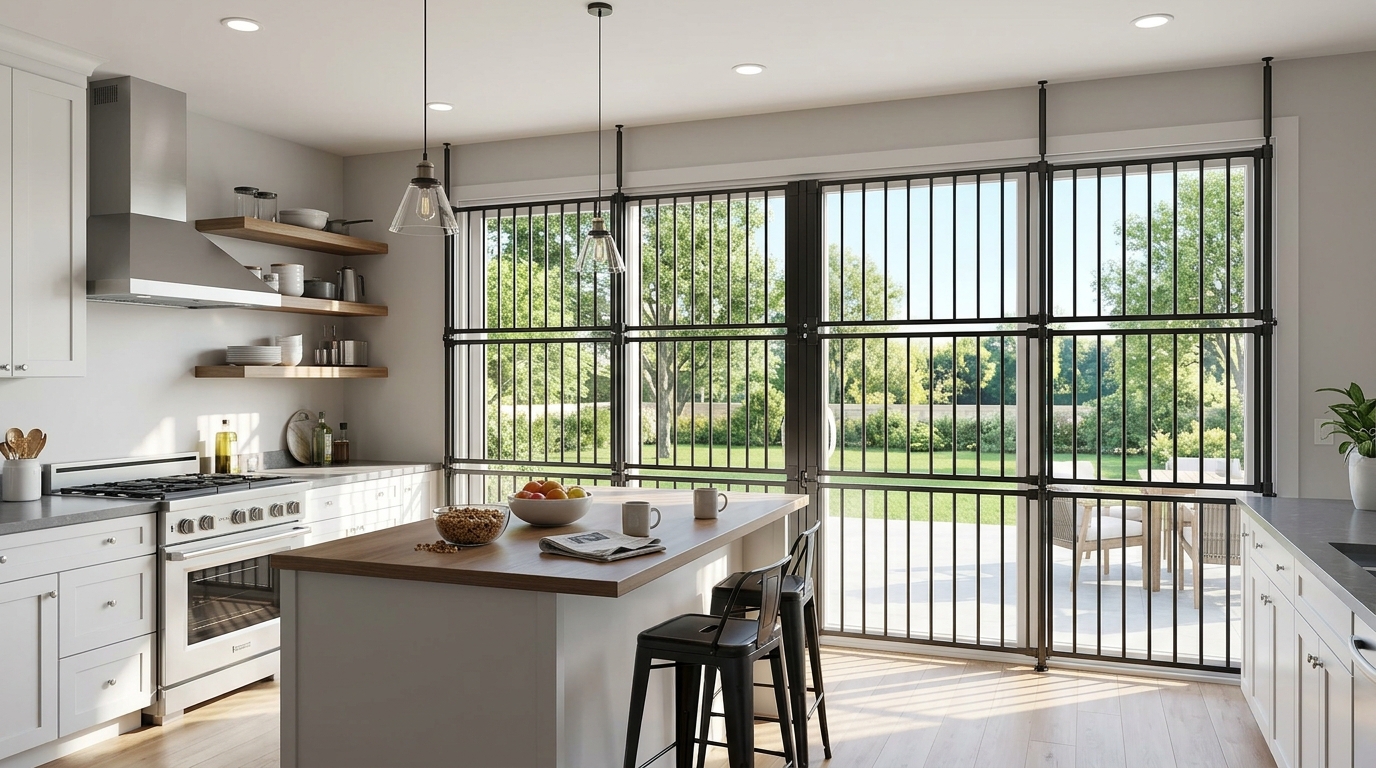
Understanding why sliding glass doors attract burglars helps you understand why bars are the most effective countermeasure. The vulnerabilities are structural, mechanical, and behavioral.
Structural Vulnerabilities
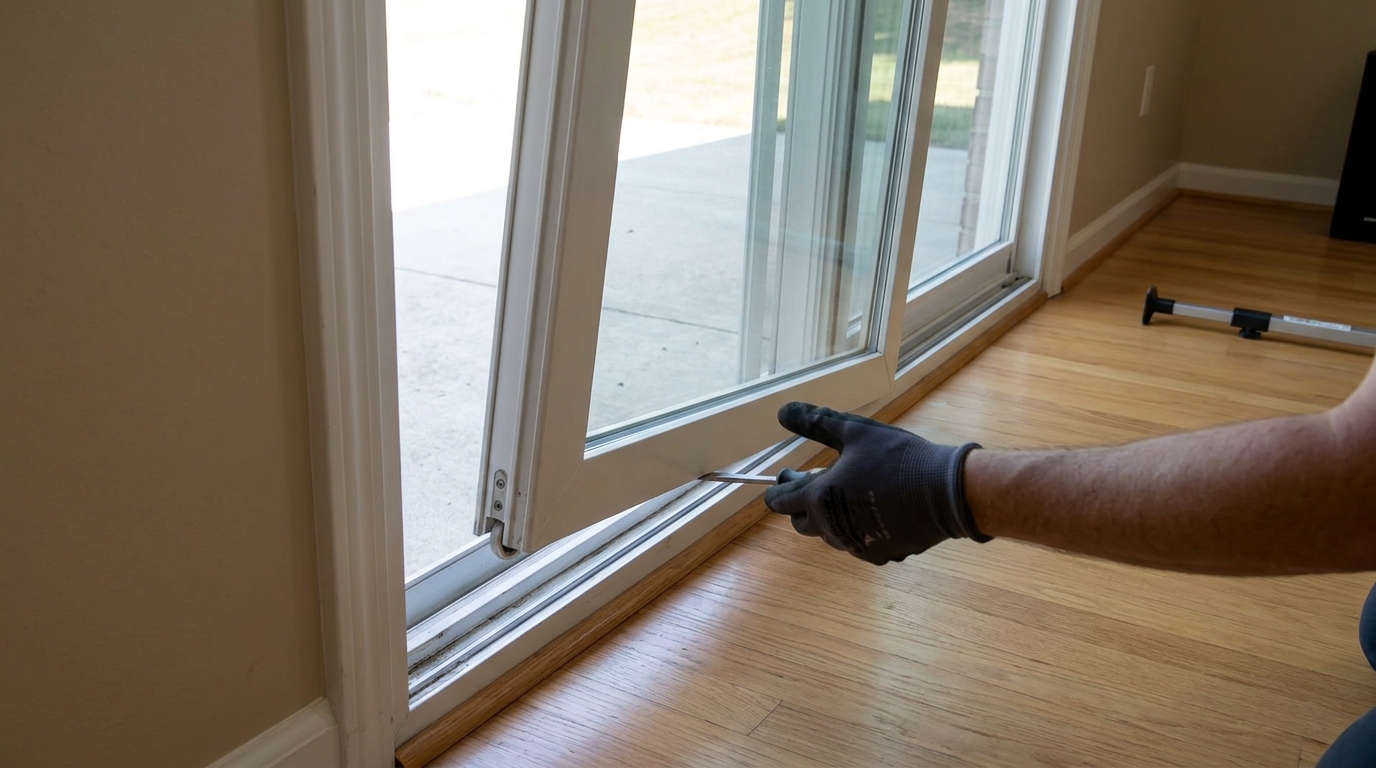
A standard sliding glass door consists of two panels — one fixed, one operable — set in an aluminum or vinyl track. The glass is typically tempered but not laminated, meaning it will shatter into small cubes when struck with a sharp impact. The frame is lightweight aluminum designed for smooth operation, not security. There are no deadbolts, no multi-point locking systems, and no reinforced strike plates. The entire assembly is engineered for convenience and natural light, not resistance to forced entry.
- Glass is breakable — a spring-loaded center punch (available for under $10) will shatter tempered glass silently in one strike
- Factory latches are weak — the standard hook latch or toggle lock can be defeated with a flat-head screwdriver inserted between the panels
- Tracks are liftable — many sliding doors can be lifted out of their bottom track and tilted inward, bypassing the latch entirely
- Frames flex — aluminum frames can be pried apart far enough to disengage the latch without breaking the glass
Behavioral Factors
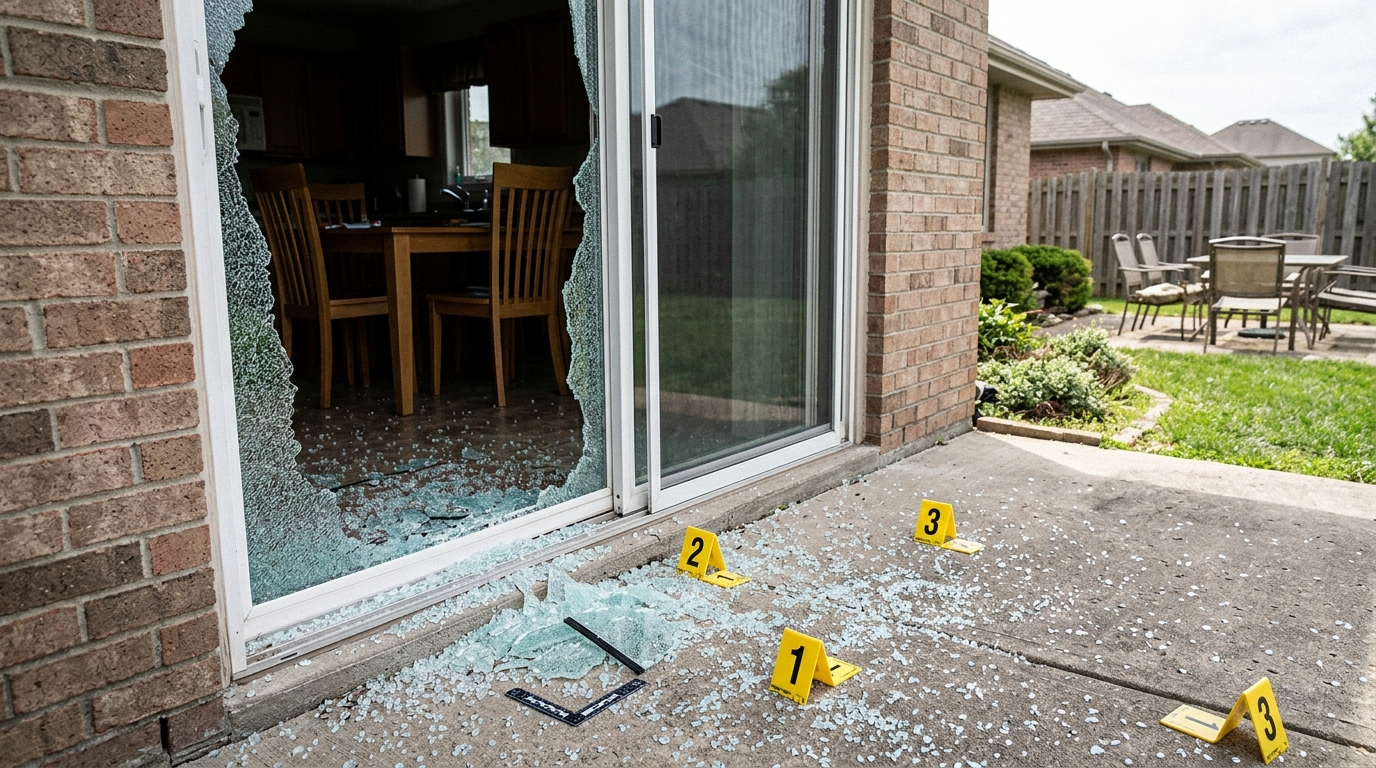
Sliding glass doors are almost always at the back of the house, facing the yard, patio, or pool area. This means:
- Hidden from street view — neighbors and passersby cannot see an intruder working on the door
- Shielded by fencing — backyard fences provide the intruder with a private workspace
- Often left unlocked — homeowners frequently leave sliding doors unlocked for pet access, ventilation, or backyard convenience
- Ground level access — no climbing, laddering, or height challenges for the intruder
These factors combine to make sliding glass doors the preferred entry point for residential burglars. According to multiple law enforcement reports, rear doors (predominantly sliding glass) account for a disproportionate share of forced entries. For a deeper look at how burglars exploit sliding doors specifically, see our post on burglar bars for sliding glass doors.
How Security Bars Work on Sliding Glass Doors
Security bars for sliding glass doors work on the same principle as window bars, but adapted for the wider opening and different mounting requirements of a door-sized glass panel. The bars create a grid of steel across the glass surface that prevents entry even if the glass is broken or the door is forced open.
How Bars Defeat Each Attack Method
| Attack Method | Without Bars | With Security Bars |
|---|---|---|
| Glass breakage | Intruder reaches through, unlocks door, walks in | Glass breaks but steel bars block entry — opening is too narrow to pass through |
| Latch manipulation | Door slides open, full-width entry | Even if door opens, bars remain fixed to the frame — no passage possible |
| Lift-off-track | Panel tilts inward, intruder enters | Bars prevent panel removal — steel grid holds panel in place |
| Frame prying | Panels separate enough to bypass latch | Bars distribute force across the frame — prying is ineffective against steel grid |
| Kick-in | Glass shatters or panel derails from track | Steel bars absorb kick force — panel and glass remain in place |
The key advantage of bars over every other sliding door security method is that bars work even when the glass is destroyed. Security film holds glass together but can be peeled. Sensors detect entry but do not prevent it. A bar in the track prevents the door from sliding but does nothing if the glass is broken. Only steel bars across the opening provide a physical barrier that remains effective regardless of what happens to the glass, latch, or track.
Modular Bars for Wide-Span Openings
Standard sliding glass doors are 5 to 8 feet wide. Multi-panel patio doors can reach 12 to 16 feet. No single-piece bar system covers these spans. This is where modular, stackable bar systems become essential.
The SWB Model A (~$90) is specifically designed for this application. Its telescopic design adjusts to fit standard widths, and its modular architecture allows multiple units to be stacked side by side to cover wide-span openings. Two Model A units cover a standard 6-foot slider. Three units handle an 8-foot patio door. Four or more units address multi-panel configurations up to 16 feet and beyond.
How Modular Stacking Works
- Measure the total opening width — the full span of glass that needs coverage
- Divide by the Model A's maximum extension — this gives you the number of units needed
- Mount each unit side by side on the same frame or wall anchors — units share mounting points at their junction for a seamless appearance
- Secure the junction points — overlapping brackets at the seams between units create a continuous barrier with no exploitable gaps
Coverage Guide by Door Width
| Door Type | Typical Width | Model A Units Needed | Approximate Cost |
|---|---|---|---|
| Standard 2-panel slider | 5-6 feet | 2 units | ~$180 |
| Wide 2-panel slider | 7-8 feet | 2-3 units | ~$180-$270 |
| 3-panel patio door | 9-12 feet | 3-4 units | ~$270-$360 |
| 4-panel patio door | 12-16 feet | 4-5 units | ~$360-$450 |
| French doors (double) | 5-6 feet | 2 units | ~$180 |
The modular approach also means you can add coverage incrementally. Start with the most vulnerable panel (typically the operable sliding panel) and add units to cover the fixed panel later if budget is a concern.
Patio Door Security: Configurations and Sizing
Patio doors come in several configurations, and each one requires a slightly different approach to bar installation. Understanding your door type ensures you order the right number of units and mount them correctly.
Standard 2-Panel Sliding Patio Door
This is the most common configuration: one fixed panel and one operable panel that slides along a track. The operable panel is the primary security concern, but covering both panels is recommended because the fixed panel can also be broken for entry.
- Priority 1: Cover the operable (sliding) panel with bars
- Priority 2: Cover the fixed panel — a burglar can break this glass and climb through if only the sliding panel is barred
- Mounting: Frame mount to the door frame is standard. Wall mount to the surrounding wall is an alternative if the frame is not sturdy enough.
3-Panel and 4-Panel Patio Doors
Multi-panel patio doors are increasingly common in new construction and renovations. They offer more light and wider openings, but they also create a larger attack surface. For these doors, the modular stacking capability of the Model A is critical. You need continuous bar coverage across the entire span, with no gaps between modules that an intruder could exploit.
Pocket Sliding Doors
Pocket sliders disappear into the wall cavity when open. When closed and locked, they function like standard sliders for security purposes. Bar installation is the same: mount to the frame surrounding the glass panels. The key consideration is that the bars must not interfere with the pocket cavity when the door is open (if you want to retain the ability to open the door while bars are installed).
Lift-and-Slide Doors
Premium lift-and-slide doors have a mechanism where the panel lifts off the track to slide. They are inherently more resistant to the lift-off-track attack but still vulnerable to glass breakage and frame prying. Security bars add the physical barrier that the glass alone cannot provide.
French Door Security Bars
French doors present a different security challenge than sliders. Instead of one panel sliding past another, French doors swing outward or inward on hinges. The vulnerability points are different, but the solution is the same: steel bars across the glass panels.
French Door Vulnerabilities
- Multiple small glass panels (lites) — each lite is easier to break than a single large pane, and breaking one provides enough space to reach the handle or deadbolt
- Center astragal is weak — the vertical strip where the two doors meet is the weakest structural point and can be kicked through
- Hinge pins can be removed — on outswing doors, exposed hinge pins can be pulled to remove the entire door
- Deadbolt throw is short — many French door deadbolts have a shorter throw than standard entry doors, making them susceptible to spreading attacks
How to Bar French Doors
Each French door panel gets its own set of bars, mounted to the door frame (not the door itself, since the door swings). For a pair of 30-inch-wide French doors, one Model A unit per panel is typically sufficient. The bars cover the glass area while allowing the door hardware to remain accessible from inside.
For French doors that serve as bedroom exits, use the Model A/EXIT (~$92) to maintain fire code egress compliance. The quick-release mechanism allows the bars to swing open for emergency exit without tools or keys.
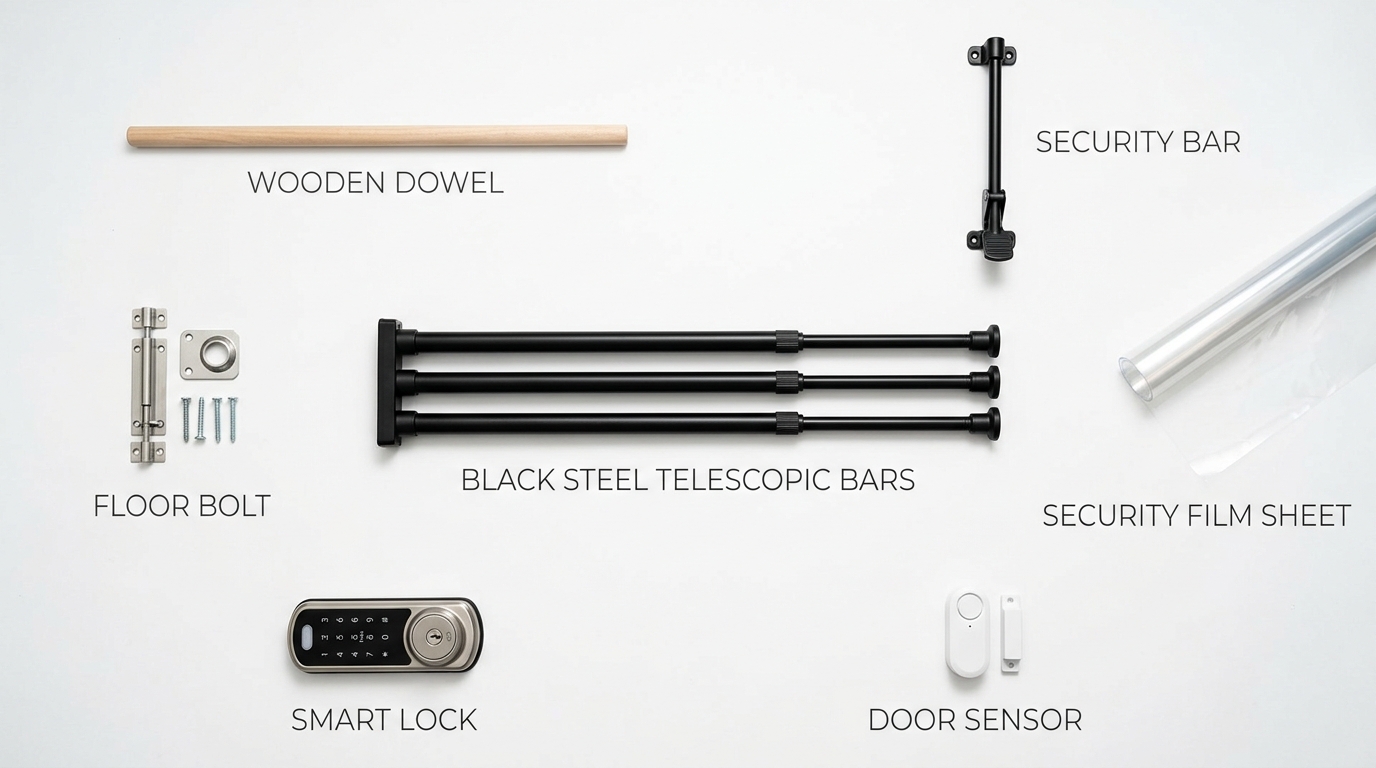
Security Methods Compared: Bars vs Sticks vs Film vs Sensors
Homeowners considering sliding glass door security have several options. Here is how they compare on the factors that actually matter: whether they prevent entry, how much they cost, and how much effort they require.
| Method | Prevents Entry? | Stops Glass Break-In? | Cost | DIY Install? | Maintenance |
|---|---|---|---|---|---|
| Steel security bars | Yes — physical barrier | Yes — bars remain even if glass shatters | $90-$92 per unit | Yes — 15-20 min per unit | Annual lubrication |
| Security stick / bar in track | Partially — prevents sliding only | No — useless if glass breaks | $5-$30 | Yes — 30 seconds | None |
| Security film | Delays entry — does not prevent | Partially — holds glass together, can be peeled | $6-$15 per sq ft (installed) | DIY possible but difficult | Replace every 10-15 years |
| Glass break sensor | No — detection only | No — alerts but does not stop intruder | $20-$50 per sensor | Yes | Battery replacement |
| Smart lock / pin lock | Partially — prevents sliding only | No — useless if glass breaks | $15-$80 | Yes | Battery replacement |
| Security camera | No — deterrence and documentation only | No | $50-$200 per camera | Yes | Power, storage, cleaning |
| Laminated glass replacement | Delays entry significantly | Yes — glass holds together under impact | $300-$800 per panel (installed) | No — professional only | None |
The Verdict
Security bars are the only method that physically prevents entry regardless of the attack type. Every other method either detects without preventing (sensors, cameras), delays without stopping (film, laminated glass), or protects against only one attack vector (sticks and locks prevent sliding but not glass breakage).
The strongest approach is layered: bars as the primary barrier, plus a stick in the track as a backup against sliding, plus a glass break sensor for alert notification. But if you can do only one thing, bars provide the most comprehensive protection per dollar. For more on how security sticks compare, see our window security sticks guide.
Installation: Frame Mount vs Wall Mount
How you mount security bars on a sliding glass door depends on the surrounding structure. The two primary methods are frame mount and wall mount, and each has specific advantages for sliding door applications.
Frame Mount
Frame mounting attaches the bars directly to the door frame — the wood, vinyl, or aluminum casing that surrounds the sliding door. This is the preferred method for most residential installations because:
- No drilling into the wall structure — important for renters and anyone who wants to minimize permanent modifications
- Clean appearance — bars sit within the frame profile, creating a built-in look
- Easier installation — frame screws are straightforward compared to masonry anchors
- Removable — frame-mounted bars can be removed by unscrewing the mounting brackets, restoring the original appearance
Frame mount works well when the door frame is wood or reinforced vinyl and in good structural condition. If the frame is thin aluminum or deteriorated, wall mount is the better choice. For a step-by-step installation walkthrough, see our no-drill installation guide.
Wall Mount
Wall mounting attaches the bars to the wall surface surrounding the sliding door — typically drywall over studs (interior) or stucco, siding, or masonry (exterior). Wall mount is recommended when:
- The door frame is not structurally sound — thin or damaged frames cannot support the bar weight and force resistance
- Maximum security is required — wall anchors into studs or masonry provide stronger resistance than frame screws
- The door is surrounded by brick or concrete — use the SWB Model B (~$91) for masonry wall mounting with appropriate anchors
How to Measure Sliding Doors for Security Bars
Accurate measurements ensure the bars fit correctly and provide complete coverage with no exploitable gaps. Sliding glass doors require more careful measurement than standard windows because of their width and the potential for multi-unit modular installations.
Step-by-Step Measurement Process
- Measure the total glass opening width — from the inside edge of the left frame to the inside edge of the right frame. This is the width you need to cover.
- Measure the glass height — from the bottom of the glass to the top. For security purposes, bars should cover at least the lower 4 feet of the glass, though full-height coverage is more secure.
- Determine the number of Model A units needed — divide the total width by the maximum extension of a single unit. Round up to the next whole number.
- Measure the frame depth — if frame mounting, verify the frame is at least 1.5 inches deep to accommodate mounting brackets.
- Check for obstructions — door handles, locks, ventilation vents, or pet doors that might interfere with bar placement.
For detailed measuring instructions with diagrams, see our complete measurement guide. The same principles apply to sliding doors — you are measuring the opening that the bars need to cover.
Fire Code and Egress Compliance
Sliding glass doors that serve as exit doors (which most do, since they open to the outside) are subject to egress code requirements. This means bars on these doors need careful consideration.
When Quick-Release Is Required
- If the sliding door is the only exit from a room used as a bedroom — quick-release bars are mandatory
- If the sliding door is on the building's fire safety plan as an emergency exit — quick-release bars are mandatory
- If the sliding door opens to a patio that is the designated emergency assembly point — consult your local fire code
When Standard Bars Are Acceptable
- If the room has another code-compliant exit (a standard door to a hallway or outside) — the sliding door is not the egress exit, so standard bars are acceptable
- If the sliding door is in a living room, kitchen, or other non-sleeping room with adequate exits — standard bars are acceptable
When in doubt, use the Model A/EXIT (~$92) on sliding glass doors. The $2 premium over the standard Model A eliminates any egress compliance question. For a full breakdown of fire code by state, see our fire code compliance guide.
Cost Analysis: What Sliding Door Bars Actually Cost
The cost of securing a sliding glass door with bars depends on the door size, the number of modular units needed, and whether you choose standard or egress-compliant bars.
| Scenario | Door Width | Product | Units | Total Cost |
|---|---|---|---|---|
| Standard slider, non-bedroom | 6 ft | Model A (standard) | 2 | ~$180 |
| Standard slider, bedroom exit | 6 ft | Model A/EXIT | 2 | ~$184 |
| Wide patio door, non-bedroom | 8 ft | Model A (standard) | 3 | ~$270 |
| Multi-panel patio, bedroom | 12 ft | Model A/EXIT | 4 | ~$368 |
| French doors, non-bedroom | 5 ft | Model A (standard) | 2 | ~$180 |
| Masonry-surrounded slider | 6 ft | Model B (wall mount) | 2 | ~$182 |
Context for cost: the average cost of a residential burglary in the United States exceeds $2,800 in stolen property alone, not counting damage, insurance deductible, and the emotional toll. Securing a sliding glass door with $180-$370 worth of bars is one of the highest-return security investments a homeowner can make. For a broader pricing breakdown including installation labor if you hire a professional, see our pricing guide.
Best Security Bars for Sliding Glass Doors in 2026
Not all security bars are designed to handle the wide spans and unique mounting requirements of sliding glass doors. Here are the products that work and why.
SWB Model A — Best Overall for Sliding Doors
The Model A (~$90) is the best option for most sliding glass door applications. Its telescopic adjustment handles standard widths, and its modular stacking system covers any span. Key advantages for sliding doors:
- Telescopic design adjusts to the exact width of your door panel without custom ordering
- Modular stacking allows 2, 3, 4, or more units side by side for wide-span patio doors
- Frame mount or wall mount — adapts to any surrounding structure
- Powder-coated steel — resists corrosion for exterior-facing installations
- 15-minute DIY installation per unit — no professional required
SWB Model A/EXIT — For Bedroom Sliding Doors
The Model A/EXIT (~$92) adds the quick-release egress mechanism required for bedroom exits and fire-code-designated emergency doors. Identical security performance to the standard Model A, with the added ability to open from inside in an emergency. Required by code for any sliding door that serves as the egress exit from a sleeping room.
SWB Model B — For Masonry Surrounds
If your sliding glass door is set into a brick, concrete, or stone wall, the Model B (~$91) provides masonry-specific wall mounting with heavy-gauge anchors designed for hard substrates. This is common in older homes, commercial buildings, and properties with brick veneer exteriors.
For a broader comparison of all window and door security bar models, see our 2026 buyer's guide.
Frequently Asked Questions
Can you put security bars on a sliding glass door?
Yes. Security bars can be installed on any sliding glass door using either frame mount or wall mount methods. For standard-width sliders (5-6 feet), two modular bar units mounted side by side cover the full opening. For wider patio doors, additional units are stacked to cover the entire span. The SWB Model A's telescopic design adjusts to fit the exact width of each panel, and its modular architecture allows unlimited stacking for any door size. Installation takes approximately 15-20 minutes per unit with basic hand tools.
What is the most secure way to protect a sliding glass door?
The most secure single measure is steel security bars mounted across the glass panels. Bars provide a physical barrier that prevents entry even if the glass is broken, the latch is defeated, or the panel is forced off its track. For maximum security, combine bars with a secondary measure: a security stick in the track prevents the door from sliding (even if the latch is picked), and a glass break sensor provides instant notification of attempted entry. This three-layer approach — physical barrier, track block, and electronic alert — covers every attack method a burglar might use.
How many security bar units do I need for a sliding glass door?
The number of units depends on the door width. A standard 2-panel slider (5-6 feet wide) requires 2 SWB Model A units. A wide 2-panel slider (7-8 feet) needs 2-3 units. A 3-panel patio door (9-12 feet) requires 3-4 units. A 4-panel patio door (12-16 feet) needs 4-5 units. Measure the total glass opening width and divide by the single unit's maximum extension to calculate the number needed. Always round up to ensure complete coverage with no gaps between modules.
Do security bars on sliding doors affect fire code compliance?
Bars on sliding glass doors must have a quick-release mechanism if the door serves as the primary or egress exit from a bedroom or is designated as an emergency exit on the building's fire safety plan. If the room has another code-compliant exit (a standard door to a hallway or outside), the sliding door typically is not considered the egress exit, and standard bars without quick-release are acceptable. When in doubt, use the SWB Model A/EXIT (~$92) which includes the quick-release mechanism for only $2 more than the standard Model A. This eliminates any compliance question.
Are sliding door security bars better than a security bar in the track?
Security bars mounted across the glass are significantly more protective than a bar placed in the door track. A track bar prevents the door from sliding open but does nothing if the glass is broken — the intruder simply breaks the glass and steps through. Mounted security bars prevent entry regardless of whether the glass is intact, because the steel grid blocks the opening even with the glass completely removed. The best approach is to use both: mounted security bars as the primary barrier and a track bar as a secondary backup that prevents the door from sliding even if the latch is compromised.
Can I install sliding door security bars myself or do I need a professional?
Most homeowners can install sliding door security bars as a DIY project. Frame mount installation requires a drill, screwdriver, level, and tape measure. Each unit takes approximately 15-20 minutes to install. The only scenario where professional installation is recommended is wall mounting into masonry (brick, concrete, or stone), which requires a hammer drill and masonry anchors. For frame mount on wood or vinyl frames, DIY installation is straightforward and requires no specialized tools or skills. See our installation time guide for a detailed walkthrough.
Will security bars on my sliding door decrease my home value?
In most markets, properly installed security bars do not decrease home value. In neighborhoods with higher property crime rates, they can actually increase perceived value by signaling that the home has been hardened against break-ins. Modern bar designs like the SWB Model A have a clean, contemporary look that avoids the institutional appearance of older bar styles. Frame-mounted bars are fully removable without permanent damage to the structure, so they can be taken down before a showing if desired. The key factors are quality of installation and appearance — professional-looking bars add value, while poorly installed or rusty bars detract.
Do sliding door security bars block natural light?
Security bars block minimal natural light because the steel bar diameter is small relative to the large glass area of a sliding door. The bars create thin vertical or horizontal lines across the glass surface, similar to window mullions on multi-pane windows. In practice, the light reduction is negligible and most homeowners report no noticeable difference in room brightness after bar installation. The bars are also fully transparent from a visibility standpoint — you can see through them clearly from inside, maintaining your view of the patio, yard, or landscape.
Can I still open my sliding glass door with security bars installed?
This depends on the installation configuration. If bars are mounted to the fixed frame surrounding the door, they cover the glass panels but do not prevent the door from sliding on its track. You can still open and close the door for ventilation, pet access, or patio use while the bars remain in place. The bars prevent a person from passing through the opening even with the door fully open. If bars are installed in a fixed position across the opening and you need regular access through the door, the Model A/EXIT quick-release mechanism allows you to open the bars from inside for passage and then re-secure them.
What is the best security bar for a 12-foot patio door?
For a 12-foot patio door, the SWB Model A (~$90 per unit) in a modular stacking configuration is the best solution. You will need 4 Model A units mounted side by side to cover the full 12-foot span with no gaps. The total cost is approximately $360 for complete coverage. Each unit adjusts telescopically to fit its section of the opening, and junction brackets connect the units at their seams for a continuous, gap-free barrier. Frame mount is preferred if the door frame is structurally sound. Wall mount with the SWB Model B is the alternative for masonry surrounds. Installation time is approximately 60-80 minutes total for all 4 units.
Secure Your Sliding Glass Doors Now
Every night your sliding glass door goes unprotected is another night you are relying on a factory latch and a pane of glass to keep intruders out of your home. Security bars change the equation from "10 seconds with a screwdriver" to "impossible without power tools and significant noise." That is the difference between a soft target and a hardened home.
Here is your action plan:
- Measure your sliding door opening — total width from frame edge to frame edge
- Determine the number of units — divide width by single-unit coverage, round up
- Choose the right model — standard Model A for non-egress doors, Model A/EXIT for bedroom exits, Model B for masonry surrounds
- Install in under an hour — frame mount with basic tools, 15-20 minutes per unit
- Layer your security — add a track bar and glass break sensor for maximum protection
Products for sliding glass door security:
- Model A — Telescopic + Modular | Stackable for wide spans | ~$90 per unit
- Model A/EXIT — Quick-release egress | IBC/NFPA/OSHA compliant | ~$92 per unit
- Model B — Wall mount masonry | Brick/concrete/stone | ~$91 per unit