At 2:14 AM on a Tuesday, a homeowner in Memphis heard glass moving at the back of the house. The sound stopped. Nothing happened. She found out the next morning — from a neighbor's security camera — that someone had pressed on her ground-floor window, found resistance from the steel bars behind the glass, and moved on to the next house down the street. That house had no bars. Total loss: $4,200 in electronics and jewelry.
She'd installed SWB bars six months earlier after a friend got hit. The decision cost her $380. The deterrence was worth more than ten times that in one night.
If you're searching for window security bars near you, this guide covers everything you need: how to evaluate local installers, what specifications actually matter, city-specific crime context, and how to get bars installed right the first time.
Why "Near Me" Matters for Window Security Bars
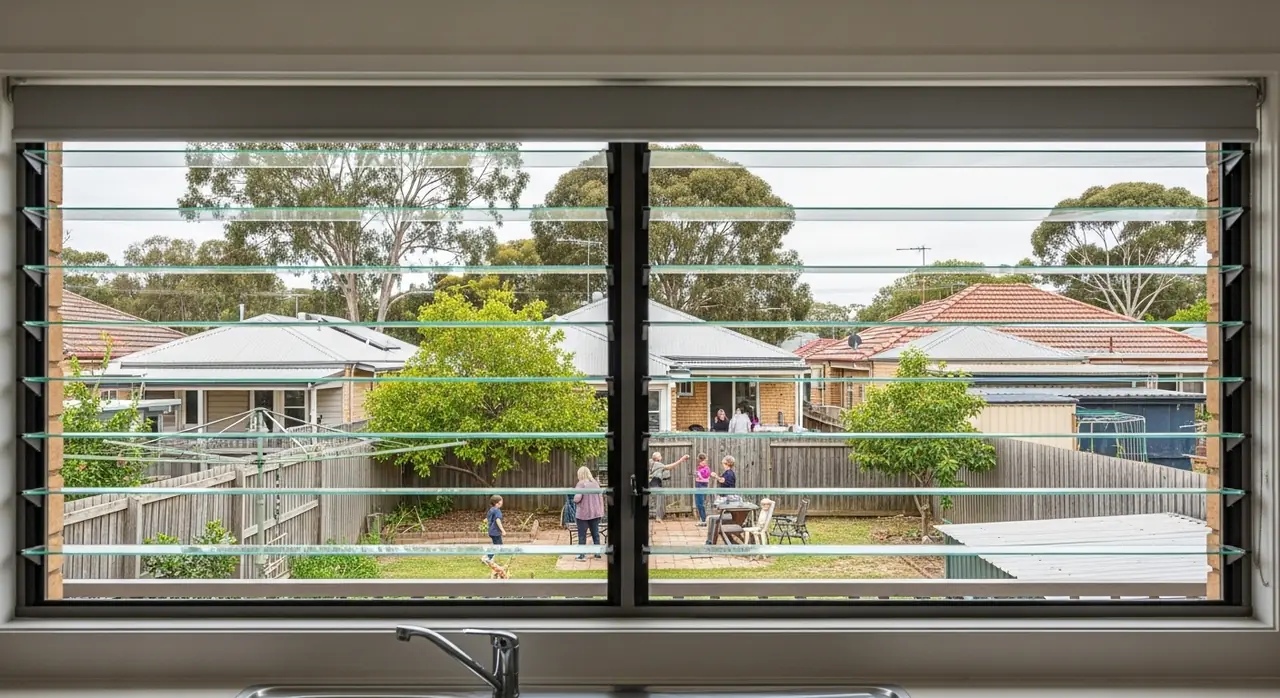
Window security bars aren't just a product — they're a local decision. Your city's crime patterns, building codes, climate, and housing stock all affect which type of bar is right for your property. A solution that's perfect for a Houston townhouse may be wrong for a Denver ranch with casement windows.
There are three types of "near me" searches for window bars:
- Installation services near me — You want a professional to measure, fabricate, and mount bars to your specifications. Most suitable for custom sizing, welded permanent bars, or multi-window projects.
- Supply near me — You want to buy bars locally for DIY installation. Home improvement stores carry limited adjustable models; specialty security suppliers offer more options.
- Emergency deterrence near me — You need bars quickly after a break-in or threat. Pre-sized adjustable bars ship 2-day nationwide and install in minutes without tools.
Understanding which category applies to your situation determines whether you need a local installer, a local supplier, or a direct-ship solution.
The 5 Questions That Separate Good Installers from Bad Ones
Not every contractor who offers window security bar installation understands security. I've seen homeowners pay $600 per window for aluminum bars that could be cut with a hacksaw and had no egress release — technically illegal under NFPA 101 in most states.
Before you sign anything, ask these five questions:
1. What gauge steel do your bars use?
The correct answer is 14-gauge or heavier (0.083" wall thickness minimum). Anything lighter — including most big-box adjustable bars — can be defeated with bolt cutters. A quality 16-gauge bar resists 2,000+ lbs of force before deforming. 11-gauge is overkill for residential; 14-gauge is the sweet spot.
2. Do your bars include a quick-release mechanism?
Any bar installed on a sleeping room window must have a mechanism operable from inside without keys or tools, per NFPA 101 Section 22.2.11.1. An installer who doesn't mention this is either ignorant of code or planning to sell you non-compliant bars. Both are problems.
3. Are your mounting hardware sets tamper-resistant?
Interior-mount flanges with one-way screws or carriage bolts that are inaccessible from outside are the standard. Ask to see the hardware. If screws are visible and accessible from outside with a standard screwdriver, the installation is insecure regardless of bar quality.
4. What warranty do you offer on labor and materials?
Reputable installers offer at least a 1-year labor warranty. Powder-coated steel bars should come with a 5–10 year manufacturer warranty against rust and flaking. No warranty = no confidence in their work.
5. Are you licensed and insured in [your state]?
Window bar installation typically requires a contractor's license when attached to the structure. Verify the license number on your state's contractor board website. Liability insurance protects you if they damage the window frame or glass during installation.
DIY vs. Professional Installation: A Honest Comparison
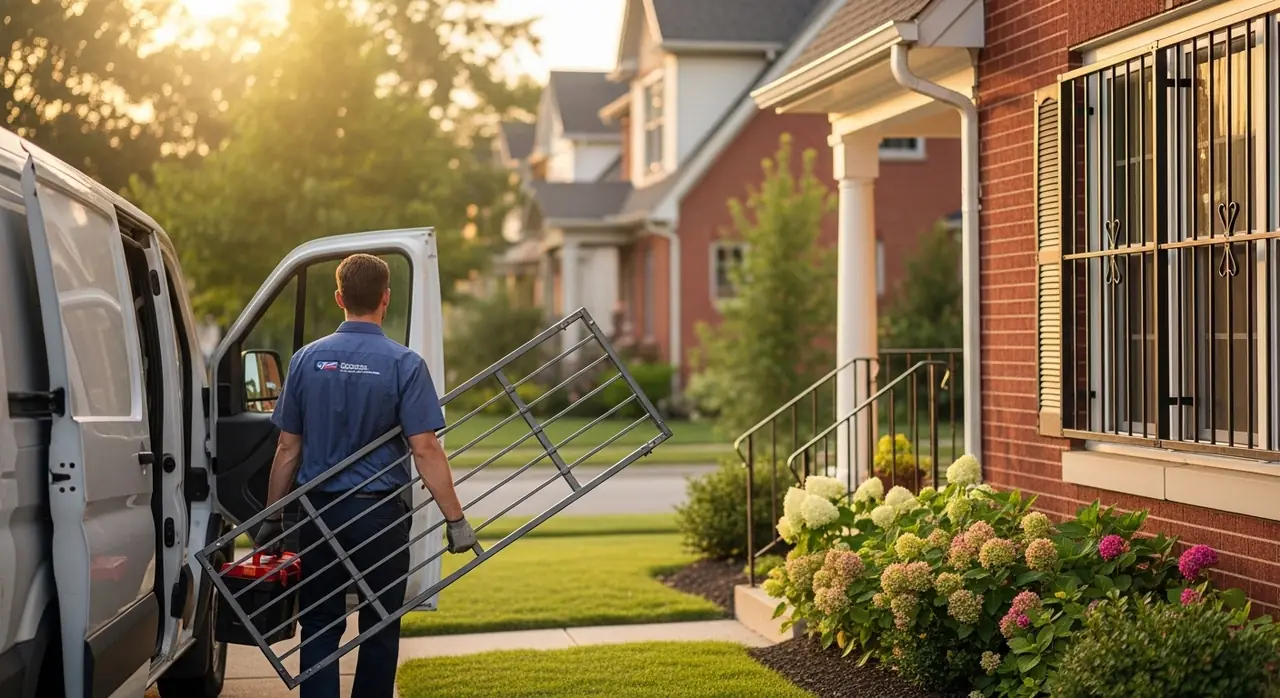
| Factor | DIY Adjustable | Pro Installed |
|---|---|---|
| Cost per window | $40–$120 | $150–$400 |
| Installation time | 15–20 min | 30–45 min/window |
| Security level | Good (6/10) | Excellent (9/10) |
| Egress compliance | Built-in | Requires QR model |
| Customization | Limited sizes | Any dimension |
| Warranty | Product only | Product + labor |
| Best for | Renters, standard windows | Homeowners, custom sizes |
The verdict: If you're a renter or have standard-sized windows, adjustable DIY bars give you 80% of the security at 25% of the cost. If you own your home, have non-standard window dimensions, or want maximum security, professional installation with custom-welded bars is the right call.
What to Expect During Professional Installation
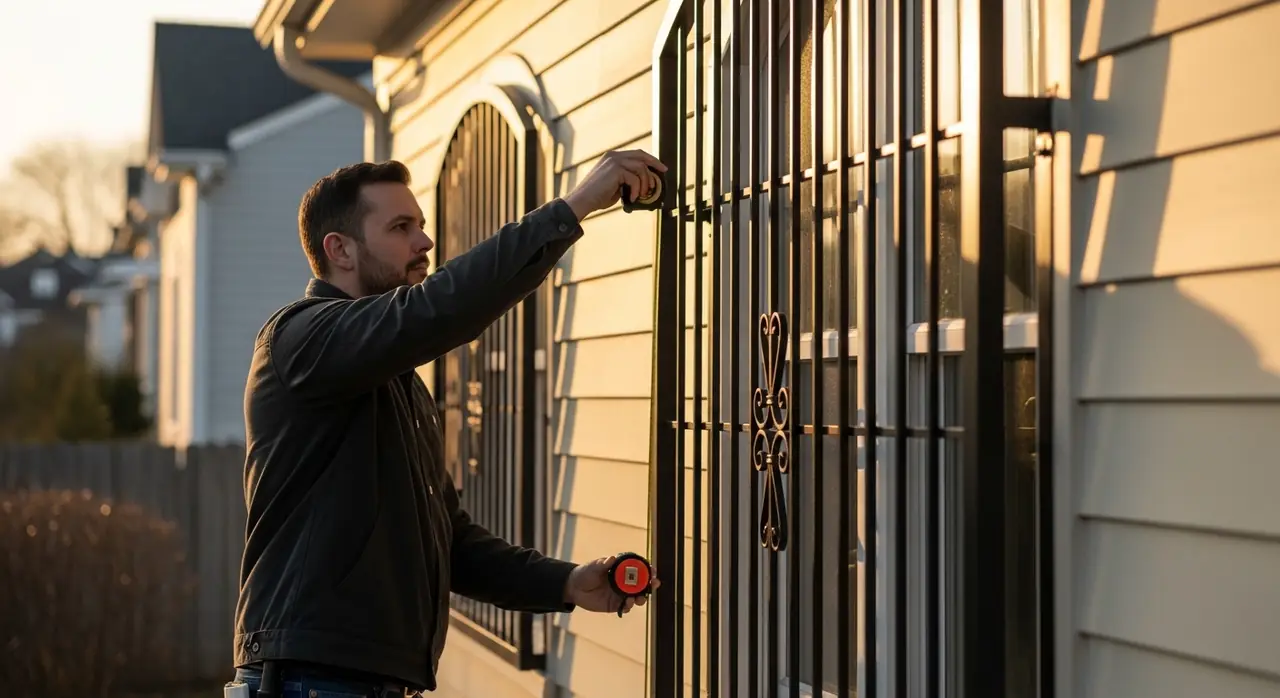
A proper professional installation follows this sequence:
Step 1 — Measurement (Day 1 or same day): The installer measures each window's rough opening — inside the frame, not the glass. They note the frame material (wood, vinyl, aluminum, masonry) since mounting methods differ significantly.
Step 2 — Fabrication (1–5 days): Custom bars are cut, welded, and powder-coated to your window dimensions. Some installers stock standard sizes and can install same-day. Always ask about lead time upfront.
Step 3 — Mounting (installation day): Bars are anchored to the window frame or surrounding masonry using lag screws (wood), masonry anchors (brick/concrete), or through-bolts (metal frames). The mounting pattern should have at least four anchor points per bar — two per side — minimum.
Step 4 — Egress testing: Any installer worth hiring will test the quick-release mechanism repeatedly before leaving. You should be able to release the bar in one motion, in the dark, under simulated stress (eyes closed, gloves on). If you can't, the installation is not done.
Step 5 — Cleanup and documentation: A professional installer removes all debris, provides you with written documentation of the materials used (steel spec, powder coat grade), and leaves you with spare mounting hardware. Keep this documentation for insurance purposes.
City-by-City Security Bar Guides
Window security needs vary dramatically by city. Below are links to detailed local guides covering crime statistics, building code specifics, and installer recommendations for 28 major US markets:
How to Get an Accurate Quote: 4 Things Installers Need to Know
Most homeowners waste two or three calls getting quotes because they don't have the right information ready. When you call an installer, have this data prepared:
1. Window count and approximate dimensions. Measure the interior width and height of each window opening (not the glass — the frame interior). Most residential double-hung windows run 24"–36" wide × 36"–48" tall. Note any non-standard sizes separately.
2. Frame material. Wood frames use lag screws and are the easiest to mount into. Vinyl frames require special anchors or a sub-frame. Masonry/brick requires hammer-drill anchor installation and costs more. Metal frames require through-bolts.
3. Which windows need egress compliance. Under most state codes, any window that serves as a bedroom's primary means of egress needs a quick-release bar. Count these specifically — they require QR hardware, which adds cost.
4. Desired finish. Standard matte black powder coat is the most common and most durable for exterior environments. Galvanized steel (silver) is cheaper but looks institutional. Custom colors cost $15–$30 extra per bar.
Red Flags: 7 Signs an Installer Isn't Qualified
- No mention of egress/quick-release requirements — suggests unfamiliarity with residential safety codes
- Quotes given over the phone without measuring — custom bars can't be accurately priced without dimensions
- Uses "galvanized steel" as a security selling point — galvanized is a coating, not a structural specification; gauge matters
- Aluminum bars presented as "security-grade" — aluminum can be cut with a hand saw; never appropriate for security applications
- No written contract or invoice — no paper trail means no recourse if work is substandard
- Offers same-day installation without fabrication lead time — implies pre-made bars that may not fit correctly
- No liability insurance certificate available on request — working on your property without insurance exposes you to claims if anything goes wrong
The SWB Solution: Direct-Ship That Installs in 15 Minutes
If you need protection now — not in two weeks when the local fabricator can fit you in — SWB adjustable bars ship same-day and install without drilling in most window configurations.
Our bars use 14-gauge cold-rolled steel (3× stronger than box-store aluminum), include a built-in quick-release mechanism that meets NFPA 101, and expand to fit windows from 24" to 46" wide. Powder-coated matte black.
The average installation takes 15 minutes per window. No contractor required. No permit needed for adjustable installations in most jurisdictions. The same bar that installs today can be removed and reinstalled if you move.
For custom sizes, non-standard frames, or commercial applications, use the link below to get a free quote from our installation network — we have certified installers in all 28 cities covered in this guide.