

Window Security Bars vs Cameras vs Alarms: What Actually Stops Burglars
Here is the uncomfortable truth the home security industry does not want you to hear: security cameras record burglaries, alarm systems report burglaries, but window security bars are the only common residential product that physically prevents a burglar from entering through your windows. That single distinction — prevention versus documentation — is the most important factor in choosing a home security strategy, and it is the one most comparison guides ignore.
This is not a hit piece on cameras or alarms. Both have legitimate roles in a layered security plan. But if you are comparing window security bars, security cameras, alarm systems, security film, and smart locks and trying to figure out where your money does the most good, you need an honest assessment based on what each product actually does when a burglar is standing outside your window at 2 AM. That is what this guide delivers.
We sell window bars. We are transparent about that. What we are also transparent about is the data: FBI Uniform Crime Report statistics, Department of Justice victimization surveys, and insurance industry loss reports all point to the same conclusion. Physical barriers stop break-ins. Electronic systems respond to break-ins. Both matter, but they are not the same thing.
Prevention vs Detection: The Core Difference
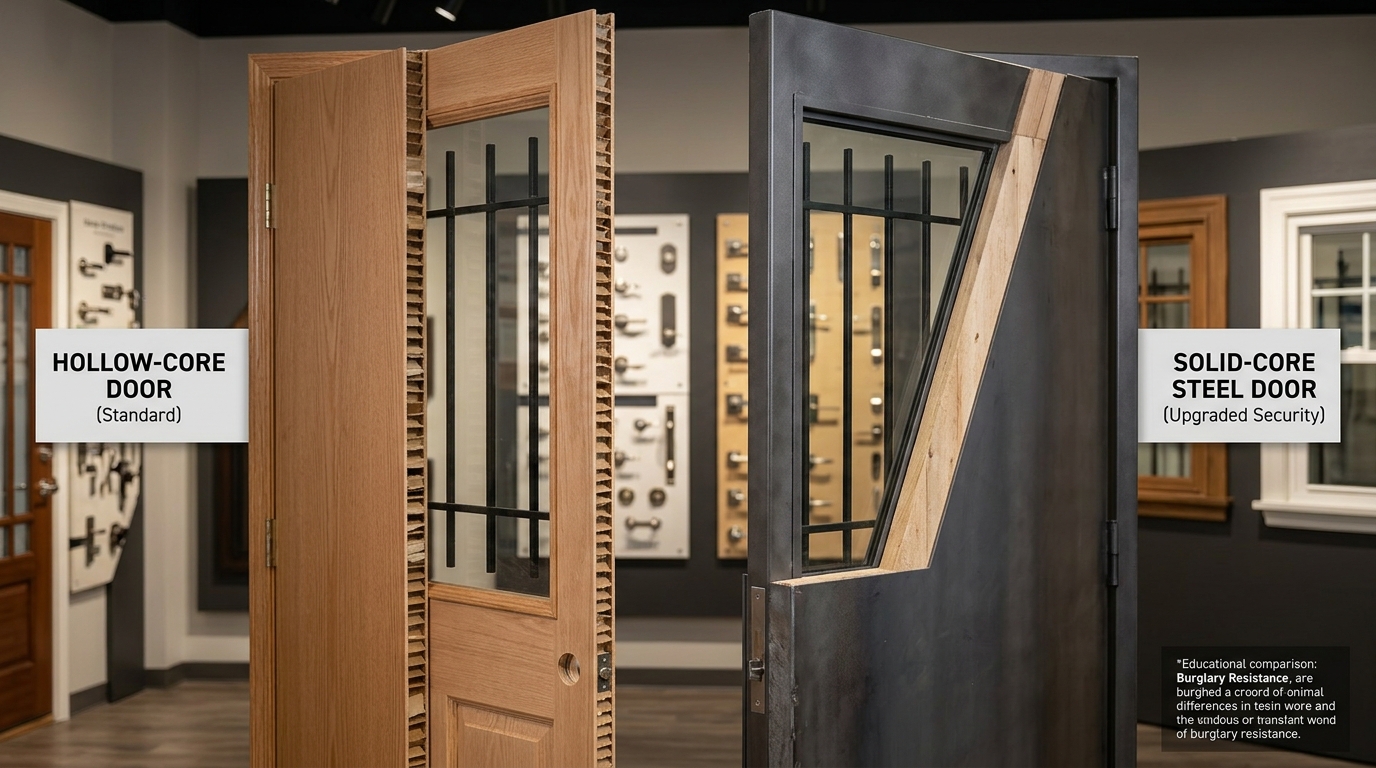
Every home security product falls into one of two fundamental categories: prevention (stopping a break-in from happening) or detection (alerting you that a break-in is happening or has happened). This distinction matters more than any spec sheet, feature list, or marketing claim.
Prevention Products
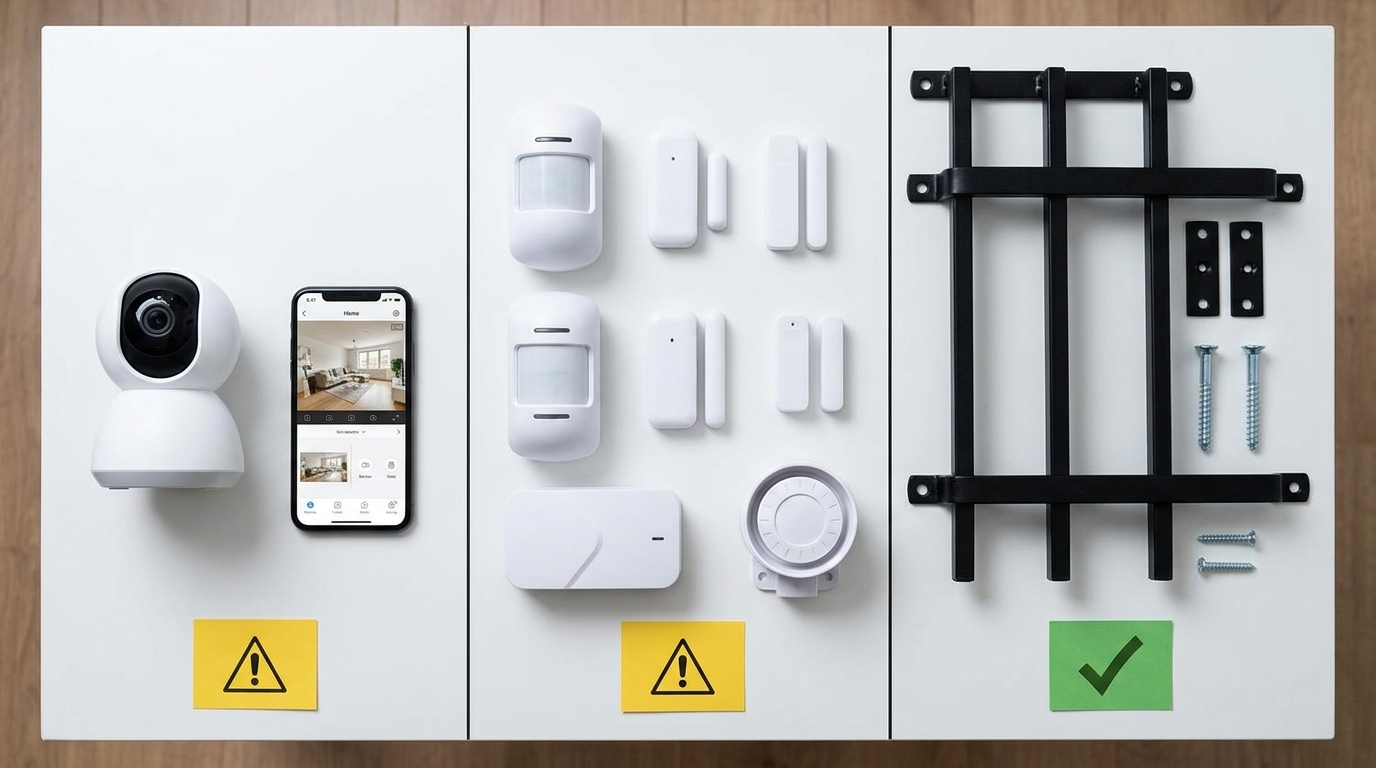
Prevention products create a physical barrier that a burglar must overcome to enter. They do not rely on the burglar's decision-making, fear of consequences, or rational behavior. They work whether the burglar is sober or impaired, whether the police response time is 3 minutes or 30 minutes, and whether anyone is home or not. Prevention products include:
- Window security bars (steel physical barrier)
- Reinforced door frames and deadbolts
- Security film on glass (delay, not full prevention)
- Laminated or polycarbonate window panels
Detection Products
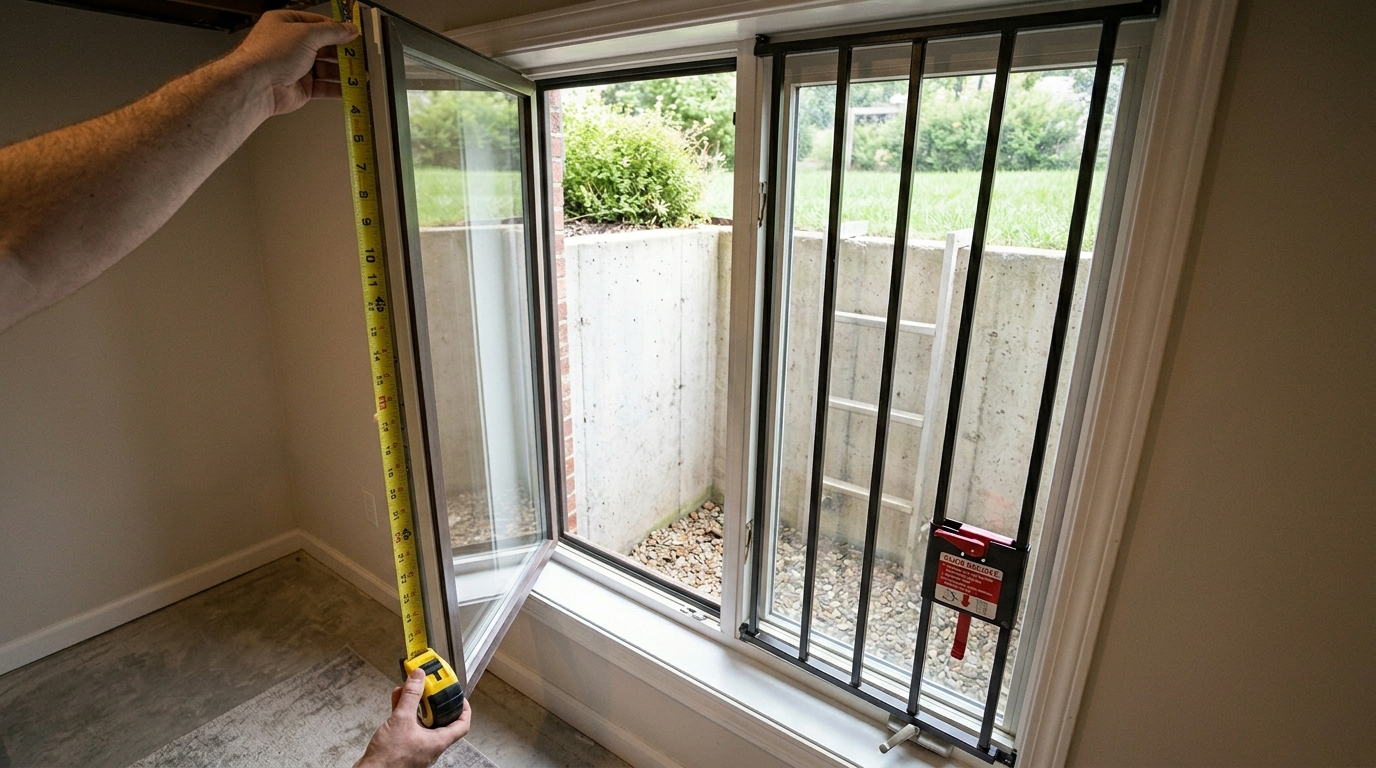
Detection products identify, record, or alert someone to a break-in attempt. They rely on either deterring the burglar through the threat of consequences or enabling a response (police, monitoring center, homeowner) to arrive before the burglar finishes. Detection products include:
- Security cameras (visual recording and deterrence)
- Alarm systems (audible alert and monitoring notification)
- Motion sensors and smart home integrations
- Video doorbells
The critical question is: what happens when detection fails to deter? If a burglar sees your camera and breaks in anyway — and a significant percentage do — the camera captures footage but does not stop the entry. If your alarm triggers and the burglar knows police response averages 7-10 minutes in most cities, they have time to grab what they want and leave before anyone arrives. Only physical prevention works regardless of the burglar's behavior.
For a deeper look at how these layers work together, see our guide to the four layers of home security.
Window Security Bars: The Physical Prevention Layer
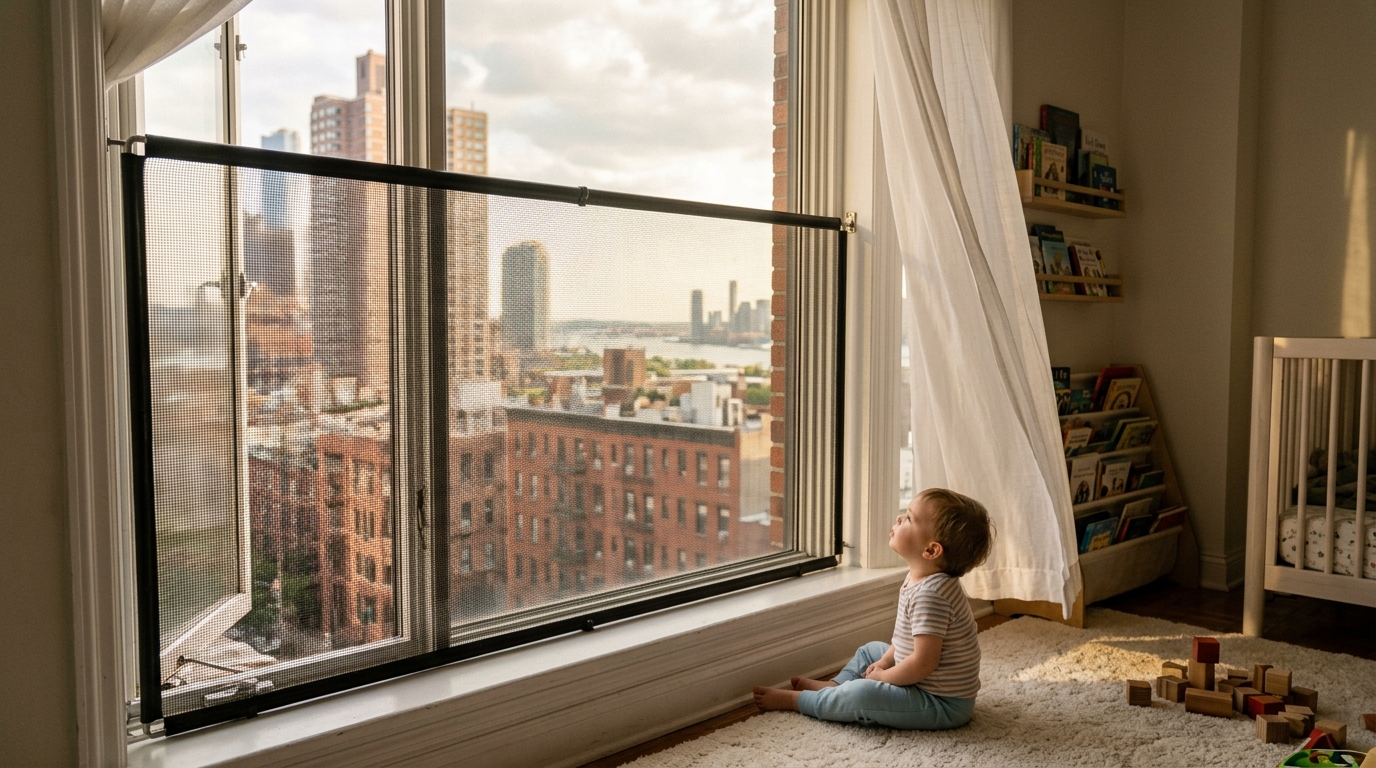
Window security bars are steel or aluminum structures mounted over windows that create an impassable physical barrier. A burglar cannot get through them without industrial cutting tools and significant time — neither of which a residential burglar carries or is willing to invest.
How Window Bars Stop Burglars
- Physical impossibility: Steel bars cannot be pried, kicked, or smashed through. They require a reciprocating saw, angle grinder, or hydraulic cutter — tools that make noise, take time, and draw attention.
- Visual deterrence: Burglars case homes before breaking in. Visible bars tell them this window is not an option, and they move on to an easier target.
- 24/7 protection: Bars work when you are home, away, sleeping, on vacation, or during a power outage. They have no battery to die, no WiFi to disconnect, and no subscription to expire.
- Zero false alarms: Bars cannot be triggered by pets, weather, or sensor malfunctions.
SWB Products for Window Security
| Product | Best For | Mount Type | Price |
|---|---|---|---|
| Model A | Homes, apartments, DIY install | Frame or wall mount | ~$90 |
| Model B | Brick, concrete, commercial | Wall mount (masonry) | ~$91 |
| Model A/EXIT | Bedrooms, rentals, fire code | Frame or wall mount + quick release | ~$92 |
Window Bars: Strengths and Limitations
| Strengths | Limitations |
|---|---|
| Physically prevents entry | Protects windows only (not doors by itself) |
| One-time purchase, no subscription | Must be installed per window |
| Works during power outages | Does not alert you to attempt |
| No false alarms | Aesthetic concern for some homeowners |
| 10+ year lifespan minimum | Requires quick-release on bedroom windows |
| $90-$92 per window one-time | Does not cover non-window entry points |
For a complete pricing breakdown, see our cost and pricing guide.
Security Cameras: The Visual Deterrence and Documentation Layer
Security cameras have become the most popular home security product in America, driven by affordable options from Ring, Arlo, Blink, Nest, and others. Their primary value is visual deterrence and post-incident documentation.
How Cameras Work Against Burglars
- Deterrence through visibility: A visible camera may discourage a burglar who does not want to be identified. However, studies show mixed results — many burglars report that cameras do not change their plans, especially when wearing face coverings.
- Documentation: If a burglary occurs, camera footage can help police identify the suspect and support insurance claims.
- Real-time alerts: Smart cameras send motion-triggered notifications to your phone. If you are home or nearby, you can call police. If you are not, the notification documents the event.
- Two-way audio: Some cameras allow you to speak to the person on your property, potentially scaring them off.
Cameras: Strengths and Limitations
| Strengths | Limitations |
|---|---|
| Visual deterrent (some burglars) | Does NOT physically stop entry |
| Provides evidence for police | Footage often unusable (darkness, angles, masks) |
| Real-time phone alerts | Requires WiFi and power |
| Covers multiple angles | Monthly cloud storage subscription ($3-$30/mo) |
| Package theft deterrence | High false alarm rate from pets, cars, weather |
| Easy DIY installation | Can be disabled by cutting power or WiFi |
What Cameras Actually Cost
Camera hardware: $50-$500 per camera depending on brand and features. A typical home needs 3-6 cameras for reasonable coverage.
Cloud storage subscription: $3-$10/month per camera (Ring: $3.99/camera or $12.99/all; Arlo: $7.99-$17.99; Nest: $8-$15). Over 5 years, subscriptions alone cost $180-$1,080.
Total 5-year cost for 4-camera system: $400-$2,000 (hardware) + $720-$3,600 (subscriptions) = $1,120-$5,600.
Alarm Systems: The Alert and Response Layer
Monitored alarm systems — ADT, SimpliSafe, Vivint, Ring Alarm — use door/window sensors, motion detectors, and a central hub to detect entry and alert a monitoring center. The monitoring center then contacts you, dispatches police, or both.
How Alarms Work Against Burglars
- Audible siren: When triggered, the alarm sounds a loud siren (85-110 dB) designed to scare the burglar and alert neighbors.
- Monitoring center dispatch: Professional monitoring contacts police on your behalf. Average dispatch time from alarm trigger to police arrival: 7-15 minutes depending on your city.
- Deterrent signage: Yard signs and window stickers from alarm companies may discourage some burglars.
- Insurance discount: Most insurers offer 5-20% discounts on homeowner's insurance for monitored alarm systems.
Alarms: Strengths and Limitations
| Strengths | Limitations |
|---|---|
| Professional monitoring 24/7 | Does NOT physically stop entry |
| Audible siren may scare burglar | Average police response: 7-15 minutes |
| Insurance premium discounts | Monthly subscription: $25-$60/month |
| Covers doors, windows, motion | False alarm rates extremely high (90-95% of all alarms) |
| Yard signs deter some burglars | Can be defeated by cutting phone/power/WiFi |
| Integrates with smart home | Contract commitments (often 12-36 months) |
What Alarms Actually Cost
Equipment: $200-$600 for a basic system (hub, 4-8 sensors, keypad, siren). Premium systems with cameras integrated: $500-$1,500.
Monthly monitoring: $25-$60/month depending on tier. Over 5 years, that is $1,500-$3,600 in monitoring fees alone.
Total 5-year cost: $200-$1,500 (equipment) + $1,500-$3,600 (monitoring) = $1,700-$5,100.
Security Film: The Delay Layer
Security window film is a thick polyester laminate applied directly to glass. When the glass is struck, the film holds the shattered pieces together, preventing the burglar from creating an opening. It does not make the glass unbreakable — it makes breaking through the glass significantly slower.
How Security Film Works Against Burglars
- Delay, not prevention: Security film turns a 2-second window break into a 30-60 second ordeal. The burglar must strike the glass repeatedly and peel through the film to create an opening large enough to climb through.
- Invisible from outside: Unlike bars, film is nearly invisible. This eliminates aesthetic concerns but also eliminates visual deterrence.
- UV protection bonus: Most security films block 99% of UV rays, protecting furniture and flooring from sun damage.
Security Film: Strengths and Limitations
| Strengths | Limitations |
|---|---|
| Invisible aesthetic | Does NOT prevent entry — only delays it |
| Holds glass together on impact | Determined burglar gets through in 1-3 minutes |
| UV protection bonus | Professional installation recommended ($6-$14/sq ft) |
| No visual change to home | No visual deterrent effect |
| One-time cost | Film degrades over time (5-15 year lifespan) |
What Security Film Actually Costs
Material: $6-$14 per square foot, professionally installed. A typical window (15 sq ft) costs $90-$210 for film alone.
Total for 8 windows: $720-$1,680 installed. No ongoing costs, but film needs replacement every 5-15 years depending on sun exposure and quality.
For a direct comparison with bars, see our polycarbonate and security film analysis.
Smart Locks: The Access Control Layer
Smart locks replace or augment traditional deadbolts with electronic access control — keypads, fingerprint readers, phone-based unlocking, and auto-locking features. They primarily protect doors, not windows.
How Smart Locks Work Against Burglars
- Eliminate forgotten-to-lock scenarios: Auto-lock features ensure the door is always locked. Human error (leaving the door unlocked) is one of the top ways burglars gain easy entry.
- Access logging: Track who enters and exits with timestamped logs.
- Remote lock/unlock: Lock or unlock from your phone if you forgot or need to let someone in.
- No key vulnerability: Eliminates the risk of lost keys, copied keys, or lock picking.
Smart Locks: Strengths and Limitations
| Strengths | Limitations |
|---|---|
| Prevents unlocked-door entries | Protects doors ONLY — not windows |
| No key to lose or copy | Battery-powered (batteries die) |
| Access logging | Does not stop kick-in attacks on weak frames |
| Remote control via phone | Vulnerable to hacking (rare but possible) |
Cost: $150-$400 per lock. No subscription required for most brands (some premium features need $3-$10/month). A home needs 2-3 smart locks for full door coverage: $300-$1,200 one-time.
Head-to-Head Comparison Matrix
This is the comparison that matters. Every product evaluated on the criteria that determine whether it actually stops a burglary or just responds to one.
| Criteria | Window Bars | Cameras | Alarms | Security Film | Smart Locks |
|---|---|---|---|---|---|
| Physically prevents entry | YES | No | No | Delays only | Doors only |
| Works during power outage | YES | No (unless battery) | Limited (battery backup) | YES | YES (battery) |
| Works without WiFi | YES | No (local only) | Partial (cellular backup) | YES | YES (local) |
| Requires subscription | No | Yes ($3-$30/mo) | Yes ($25-$60/mo) | No | Optional ($0-$10/mo) |
| Visual deterrent | Strong | Moderate | Moderate (signage) | None (invisible) | None |
| False alarm rate | Zero | High | Very high (90-95%) | Zero | Low |
| Provides evidence | No | YES | Limited (log only) | No | Yes (access log) |
| Insurance discount | Sometimes (varies) | Rarely | Yes (5-20%) | Sometimes | Rarely |
| Maintenance required | Minimal (annual lube) | Moderate (cleaning, updates) | Low (battery checks) | None | Low (battery replacement) |
| Lifespan | 10-25+ years | 3-5 years | 5-10 years | 5-15 years | 5-10 years |
| DIY installable | Yes (15 min/window) | Yes | Yes (most systems) | Professional recommended | Yes |
Total Cost of Ownership: 5-Year Comparison
This is where window bars separate themselves from every other option. Security cameras and alarm systems look affordable at the point of purchase, but subscriptions compound over time. Window bars are a one-time investment with no recurring costs.
5-Year Cost for a Typical 3-Bedroom Home (8 Windows, 2 Exterior Doors)
| Product | Upfront Cost | Year 1 Ongoing | Years 2-5 Ongoing | 5-Year Total |
|---|---|---|---|---|
| Window Bars (8 windows) | $726 (3 EXIT + 5 Standard) | $0 | $0 | $726 |
| Security Cameras (4 cameras) | $400-$800 | $150-$360 | $600-$1,440 | $1,150-$2,600 |
| Alarm System (monitored) | $200-$600 | $300-$720 | $1,200-$2,880 | $1,700-$4,200 |
| Security Film (8 windows) | $720-$1,680 | $0 | $0 | $720-$1,680 |
| Smart Locks (2 doors) | $300-$800 | $0-$120 | $0-$480 | $300-$1,400 |
Window bars are the least expensive option over 5 years at $726 total, and they are the ONLY option that physically prevents window entry. An alarm system with monitoring can cost 3-6x more over the same period while providing zero physical prevention.
For a detailed breakdown of window bar pricing, see our complete cost guide.
ROI Analysis: What You Get for Every Dollar
Return on investment for security products is measured in two ways: the cost of prevented losses and the peace of mind per dollar spent.
Average Residential Burglary Loss
According to the FBI's Uniform Crime Report, the average loss per residential burglary is approximately $2,800. This includes stolen property, property damage, and repair costs. It does not include the emotional toll, the time spent dealing with police and insurance, or the long-term anxiety many victims report.
Prevention Value by Product
| Product | 5-Year Cost | Prevention Type | Break-Even Point |
|---|---|---|---|
| Window Bars | $726 | Physical prevention | Prevents 1 break-in = 3.8x ROI |
| Cameras | $1,150-$2,600 | Deterrence + evidence | Must deter or solve 1+ break-ins |
| Alarms | $1,700-$4,200 | Alert + deterrence | Must prevent 1-2 break-ins |
| Security Film | $720-$1,680 | Delay only | Must delay 1 break-in long enough for response |
| Smart Locks | $300-$1,400 | Door access control | Prevents 1 door-entry break-in |
Window bars deliver the highest certainty of ROI because they do not rely on the burglar's behavior, police response time, or technology functioning correctly. If a burglar targets your window, the bars stop them. Period. That certainty of outcome is what makes bars the best first investment in a security plan.
The Layered Approach: Using Everything Together
The ideal home security strategy is layered. No single product covers every vulnerability. The question is which layer to build first, and the answer depends on where burglars actually enter homes.
How Burglars Enter Homes
- Front door: 34% of break-ins
- First-floor windows: 23% of break-ins
- Back door: 22% of break-ins
- Garage: 9% of break-ins
- Basement: 4% of break-ins
- Second floor/other: 8% of break-ins
Windows and basement access account for 27% of all residential break-ins. Doors account for 56%. A complete security plan addresses both.
Recommended Layered Security Build Order
- Layer 1: Physical barriers — Window bars on all ground-floor and basement windows ($726 for typical home). Reinforced door frames and quality deadbolts ($100-$300).
- Layer 2: Deterrence and alerts — 2-4 visible security cameras on entry points ($200-$500 + subscription). Alarm system with door/window sensors ($200-$500 + subscription).
- Layer 3: Smart access control — Smart locks on exterior doors ($300-$800). Smart home integration for automated lighting and presence simulation.
- Layer 4: Supplementary — Security film on accessible windows without bars (if any). Motion-activated exterior lighting. Landscaping that eliminates hiding spots near windows.
This layered approach is covered in detail in our four layers of home security guide.
Which Should You Buy First?
If your budget allows only one security investment, here is how to decide based on your specific situation.
Buy Window Bars First If:
- You live in a ground-floor apartment or a home with accessible windows
- Your neighborhood has a history of break-ins
- You travel frequently and leave the home unoccupied
- You want a one-time purchase with no subscriptions
- You want the only product that physically prevents window entry
- Your windows are visible from the street (bars deter visually)
Buy Cameras First If:
- Package theft is your primary concern (bars do not help with this)
- You need evidence collection for an ongoing issue (neighbor disputes, vandalism)
- Your windows are not accessible from ground level
- You want remote visual monitoring while away
Buy an Alarm System First If:
- You need the insurance discount to justify the cost
- Your home has many entry points and you want comprehensive sensor coverage
- You live in an area with fast police response (under 5 minutes)
- You want professional monitoring as your primary security strategy
Buy Security Film First If:
- HOA or landlord restrictions prevent visible bars
- Aesthetic concerns are your top priority
- You also want UV protection and energy savings as secondary benefits
For most homeowners with ground-floor windows, window bars are the best first purchase because they solve the physical vulnerability that no other product addresses. You can always add cameras and alarms later. You cannot add physical prevention after a burglar is already inside.
Common Objections Addressed
"Window bars look like a jail"
That was true 20 years ago. Modern telescopic bars like the SWB Model A feature clean, minimalist designs with powder-coated finishes in black or custom colors. They look like a design element, not a prison accessory. And honestly — a camera mounted to your wall is not exactly invisible either.
"Cameras are enough because they deter burglars"
Some burglars, yes. But a University of North Carolina study found that only 50% of convicted burglars said cameras would cause them to seek an alternative target. The other 50% said cameras would not change their plans, citing techniques like wearing face coverings, disabling cameras, or simply not caring about footage. A steel bar is not optional — no burglar is getting through it regardless of what they think about it.
"My alarm company says their system stops burglars"
Alarm systems alert you to a burglary in progress. They do not stop the burglar from entering. If a burglar breaks your window and your alarm triggers, the burglar is already inside your home. The alarm notifies the monitoring center, which contacts police, who arrive 7-15 minutes later. A lot can happen in 7-15 minutes. An alarm is a response tool, not a prevention tool.
"Bars will hurt my home's resale value"
In high-crime neighborhoods, window bars can actually increase desirability and perceived security. In low-crime neighborhoods, the impact is negligible — and removable bars like the Model A can be uninstalled before listing. For a full analysis, see our post on window bars and property value.
"I rent and cannot install bars"
Frame-mount bars like the SWB Model A install using tension and frame screws that cause minimal damage — comparable to mounting a curtain rod. Many landlords approve them because they increase property security. Some landlords are even required by local ordinances to provide security devices on ground-floor windows. Ask your landlord — you may be surprised.
The Bottom Line
Every product in this comparison has a legitimate role in home security. Cameras document. Alarms alert. Smart locks control door access. Security film delays. But only window security bars physically prevent a burglar from entering through your windows.
If your budget is unlimited, buy all of them. If your budget is limited — and most budgets are — start with the product that provides the highest certainty of protection at the lowest cost. That product is window bars.
- Model A — Telescopic + Modular | Frame or wall mount | ~$90 | Best for non-bedroom windows
- Model A/EXIT — Quick-release egress | IBC/NFPA/OSHA compliant | ~$92 | Required for bedroom windows
- Full 2026 Buyer's Guide — Compare all models in detail
- Pricing Guide — Detailed cost breakdown
- Sliding Glass Door Security — Protect your largest entry point
Frequently Asked Questions
Are window security bars better than security cameras?
Window security bars and security cameras serve different functions and are not directly interchangeable. Bars physically prevent a burglar from entering through a window. Cameras record the attempt and may deter some burglars through visibility. If your primary concern is preventing break-ins through windows, bars are objectively more effective because they work regardless of the burglar's behavior. If your concern is evidence collection and remote monitoring, cameras are more useful. The best approach is to use both: bars on accessible windows for physical prevention, and cameras on entry points for deterrence and documentation.
Do window bars work better than alarm systems?
Window bars and alarm systems address different aspects of security. Bars prevent window entry entirely, requiring no response time or technology. Alarm systems detect entry and trigger a response — but the response (police arrival) takes 7-15 minutes on average. During those minutes, a burglar is inside your home. For window-specific security, bars are more effective because they eliminate the vulnerability rather than monitoring it. For whole-home coverage including doors and motion detection, an alarm system provides broader awareness. Many homeowners install bars on windows and an alarm for door and interior coverage.
How much do window bars cost compared to a home security system?
Window bars cost $90-$92 per window as a one-time purchase with no subscription. For a typical home with 8 accessible windows, that is approximately $726 total for the life of the product (10-25+ years). A monitored alarm system costs $200-$600 for equipment plus $25-$60 per month for monitoring — totaling $1,700-$4,200 over five years. Security cameras cost $400-$800 for hardware plus $150-$360 per year in cloud storage subscriptions. Window bars are the least expensive option over time and the only one that physically prevents window entry.
Can burglars get past security cameras?
Yes. Security cameras are a deterrent, not a barrier. Burglars bypass cameras by wearing face coverings, approaching from blind spots, disabling the camera physically, cutting power to the home, or simply accepting that footage exists and acting quickly enough to be gone before anyone responds. A University of North Carolina study of convicted burglars found that approximately half said cameras would not change their plans. In contrast, a steel window bar cannot be bypassed, disabled, or ignored — it must be physically removed with industrial tools, which virtually no residential burglar carries.
Is security film as effective as window bars?
Security film is not as effective as window bars for preventing break-ins. Film delays entry by holding shattered glass together, typically adding 30-90 seconds to the time required to create an opening. A determined burglar can still breach film-covered glass within 1-3 minutes with repeated strikes. Window bars prevent entry entirely — there is no amount of time or effort that gets a burglar through steel bars without power tools. Security film is better suited as a supplementary measure or for windows where bars are not practical. For maximum protection, some homeowners combine both: bars on the exterior and film on the glass.
Do smart locks protect windows?
No. Smart locks are designed for doors and do not provide any protection for windows. They are valuable for controlling door access, eliminating key vulnerabilities, and ensuring doors are always locked. But since 23% of residential burglaries occur through first-floor windows, smart locks leave a significant entry point unprotected. A complete security plan pairs smart locks on doors with window bars on accessible windows to cover both primary entry types that burglars exploit.
What is the best combination of home security products?
The best combination for most homes is a layered approach: window bars on all accessible ground-floor and basement windows for physical prevention ($726 for a typical home), a 2-4 camera system on key entry points for deterrence and documentation ($400-$800 plus subscription), and reinforced door hardware or smart locks ($300-$800). If budget allows, add a monitored alarm system for comprehensive interior detection. Start with the physical barriers (bars and locks) because they work immediately and independently. Add electronic layers as budget permits. This approach covers prevention, deterrence, detection, and response.
Do security cameras reduce home insurance premiums?
Most home insurance companies do not offer significant discounts for security cameras alone. Monitored alarm systems typically qualify for a 5-20% discount on homeowner's insurance premiums because the monitoring service provides verified alert-and-response capability. Cameras by themselves lack the verified response component that insurers value. Some insurers offer small discounts (1-5%) for comprehensive smart home security setups that include cameras, but the discount rarely covers the ongoing subscription cost. Window bars may qualify for discounts with some insurers as a physical security measure — ask your agent specifically about credits for window barriers.
How long do window security bars last compared to cameras and alarms?
Window security bars with powder-coated steel finishes last 10-25+ years with minimal maintenance (annual lubrication of quick-release mechanisms). Security cameras have a typical lifespan of 3-5 years before they become outdated, develop hardware failures, or lose manufacturer support. Alarm systems last 5-10 years before sensors need replacement and technology becomes obsolete. Security film lasts 5-15 years before degradation requires replacement. Smart locks last 5-10 years. Over a 20-year period, you would likely replace cameras 4-6 times and alarm components 2-3 times, while the same set of window bars continues functioning without replacement.