Do Window Bars Make Your House Look Like a Prison? The Truth About Modern Security Bars
No, modern window security bars do not make your house look like a prison. Today's bars feature clean, minimalist profiles with powder-coated finishes in colors that match your window frames, making them virtually invisible from the street. Interior-mounted options are completely hidden from outside view. The "prison look" stigma comes from outdated raw-iron grid designs that haven't been the standard for over a decade.
This is the number-one objection people raise when window security bars come up in conversation. It's understandable — for years, the only window bars available were industrial-looking iron grates that genuinely did evoke correctional facilities. But the industry has moved on dramatically, and homeowners who dismiss bars based on outdated perceptions are leaving their windows unprotected based on a stereotype that no longer holds true.
Let's break down exactly why modern window bars look nothing like the bars you're picturing, and what your actual options look like today.
Where the "Prison Bar" Stigma Comes From
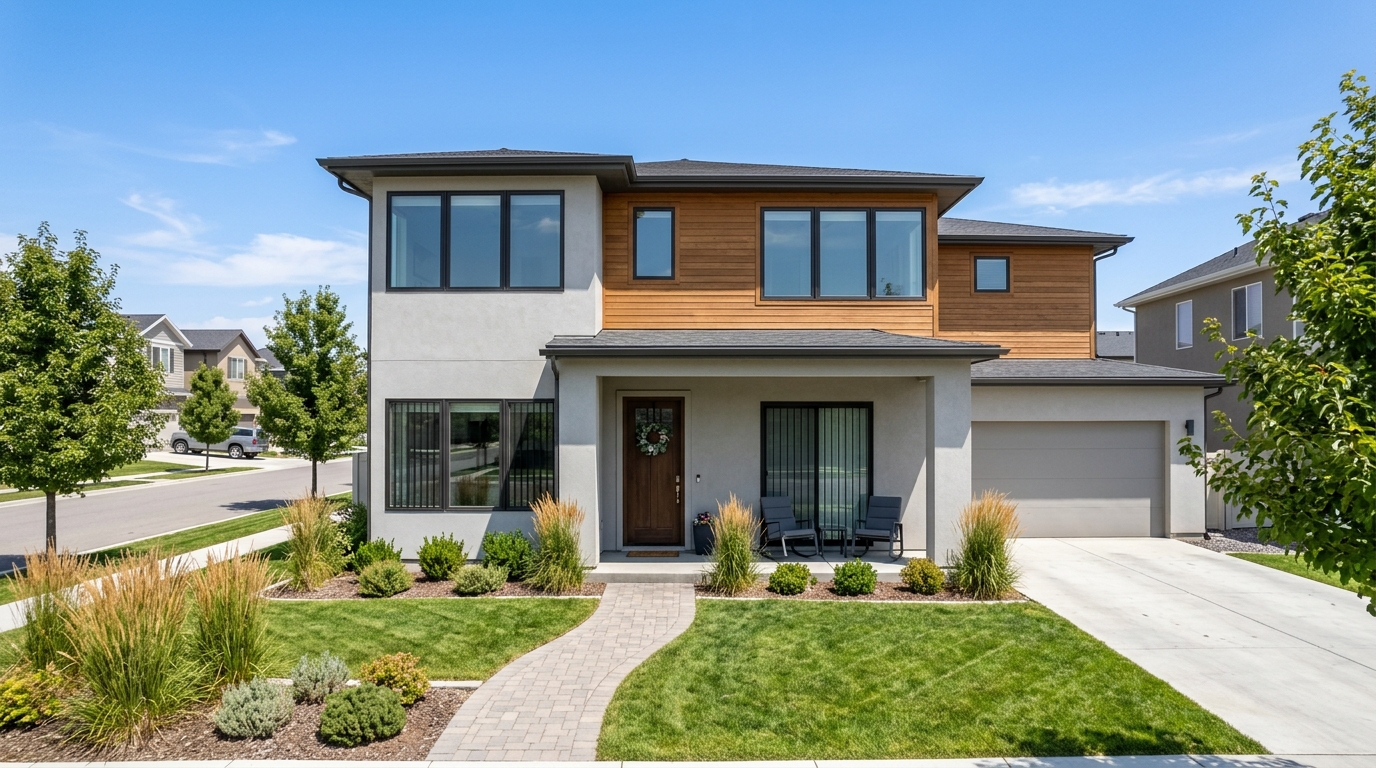
The prison-bar association didn't come from nowhere. It came from a specific generation of products and a specific era in American home security.
From the 1970s through the early 2000s, residential window bars were overwhelmingly simple iron or mild steel grids — vertical bars welded to horizontal crosspieces, usually painted flat black (or left unpainted), bolted permanently into masonry. They were mass-produced with zero attention to aesthetics because the market demanded cheap protection, not pretty protection.
These bars looked institutional because they were institutional. The same manufacturers supplied residential bars, commercial security, and actual correctional facility grilles. The design language was identical across all three markets.
Add to this the media factor: news coverage of high-crime urban neighborhoods frequently showed homes with heavy bar grilles on every window, creating a strong visual association between bars and dangerous areas. Hollywood reinforced this — window bars in movies and TV shows were always shorthand for "bad neighborhood."
That was then. This is now. And the difference is significant.
How Modern Bars Are Fundamentally Different
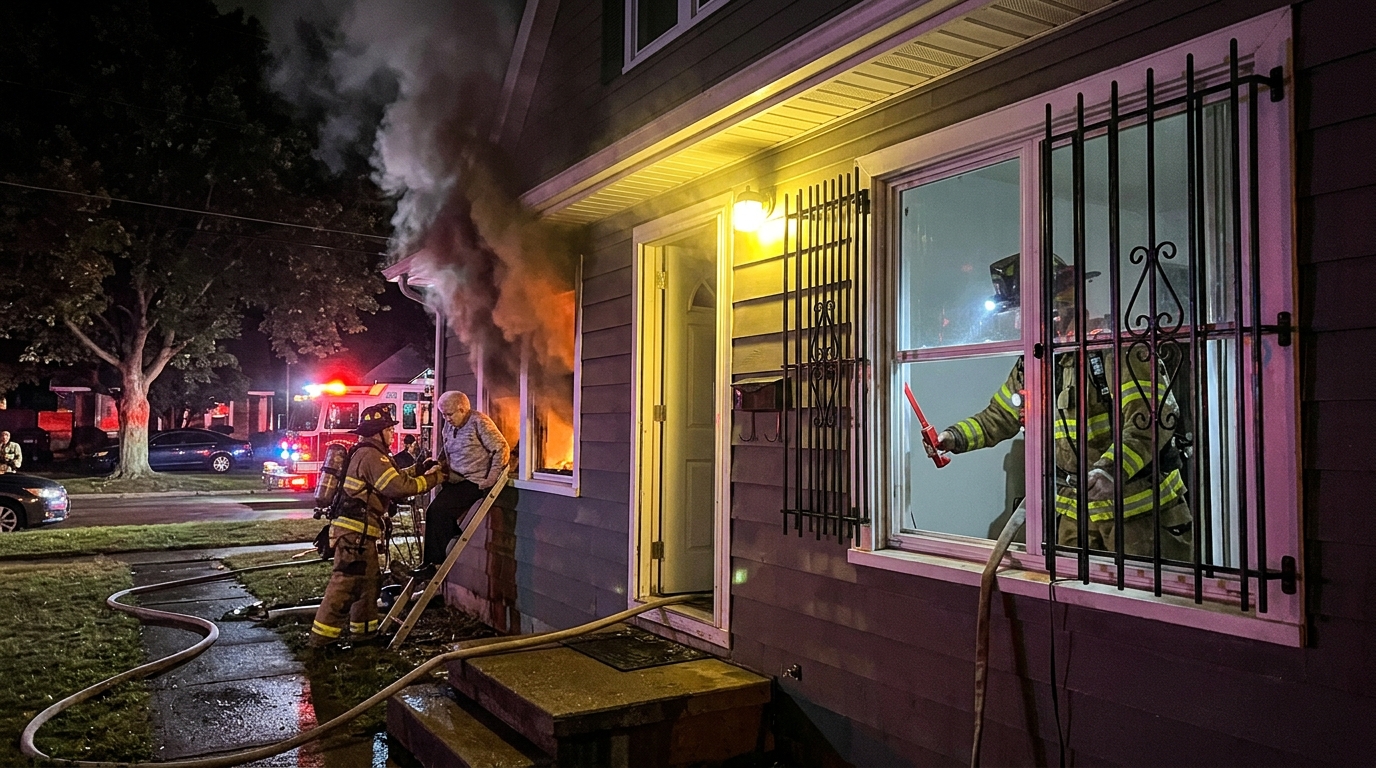
Modern window security bars are a different product category than what existed 20 years ago. Here's what changed:
Engineering Over Fabrication
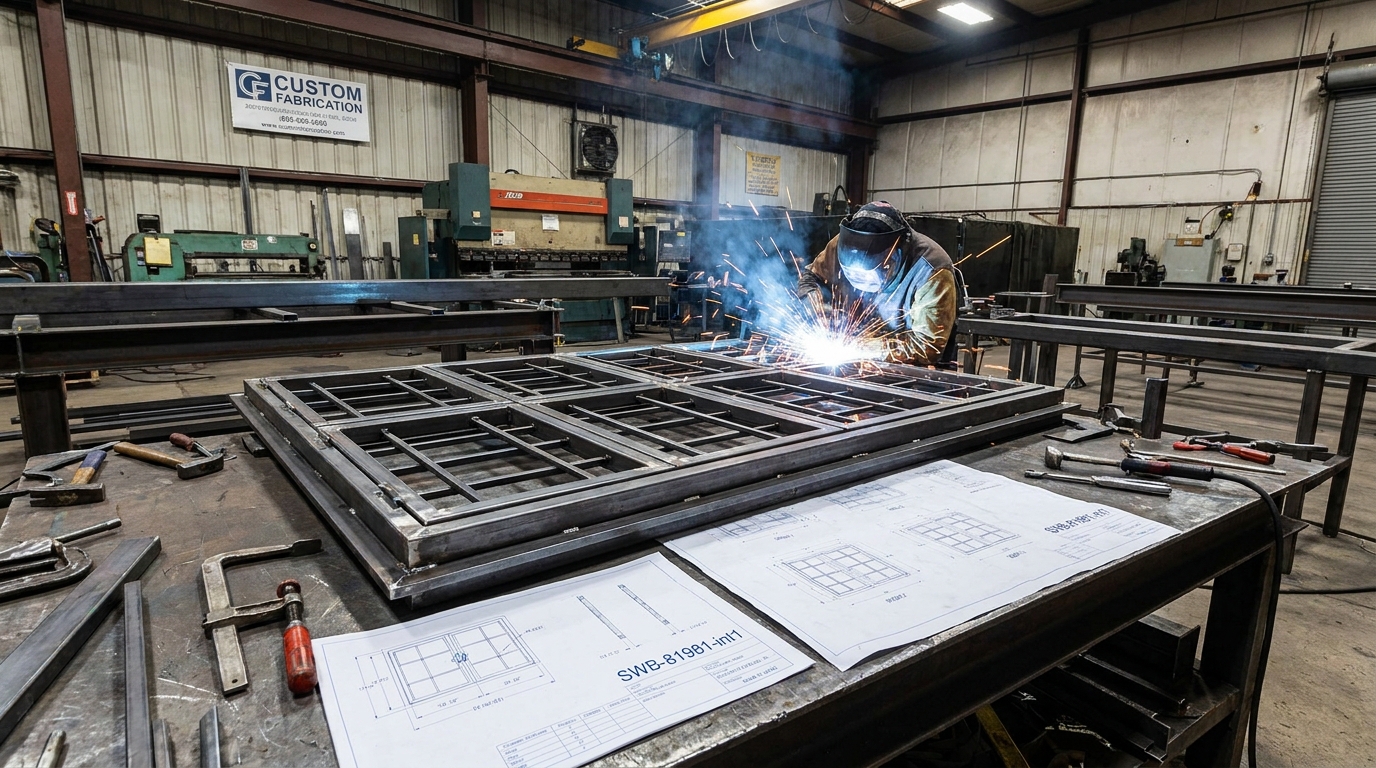
Old bars were fabricated — cut, welded, and bolted together by local metalworkers. Modern bars like SWB's Model A are engineered products with telescopic adjustment, modular components, and precision-manufactured mounting systems. The result looks polished and intentional rather than improvised and crude.
Powder Coating Over Paint
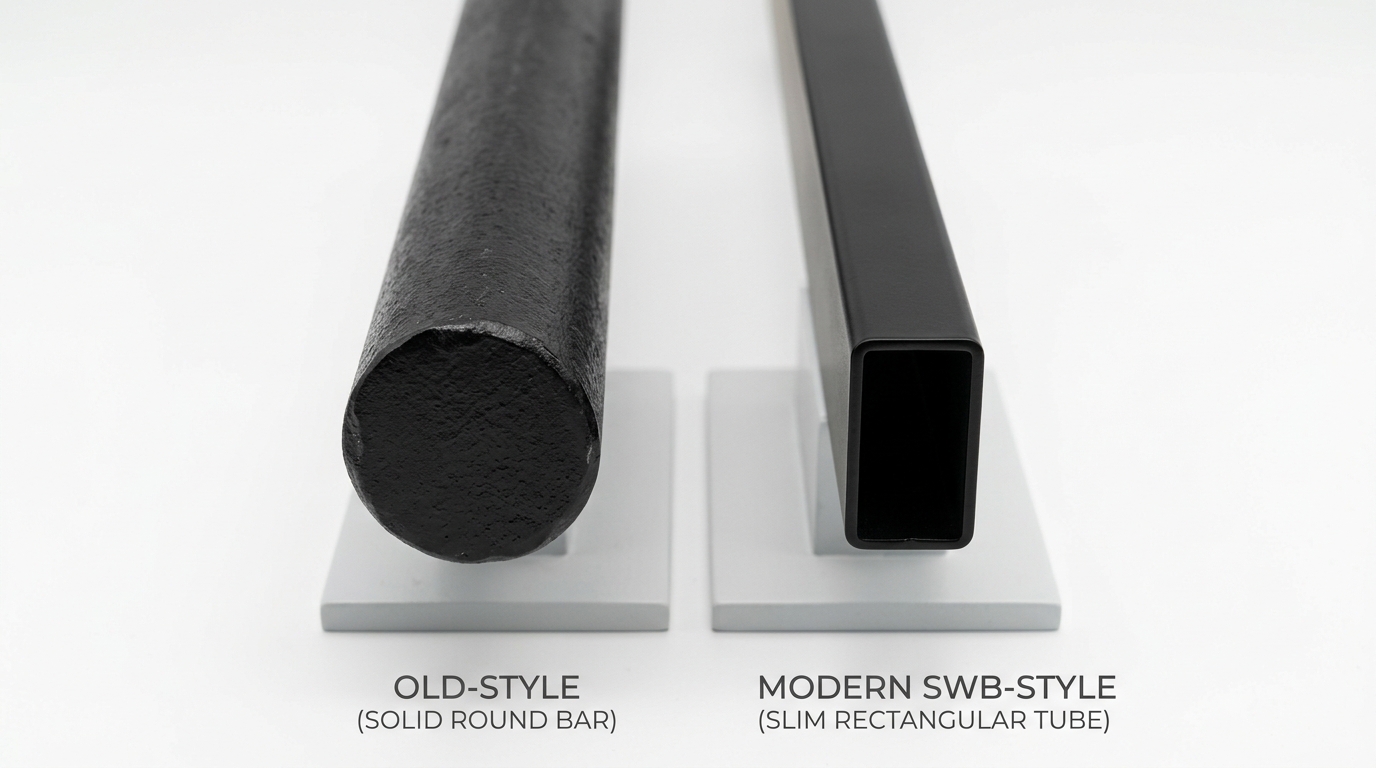
Powder-coated finishes are smooth, uniform, and available in virtually any color. Old bars were either bare metal or brush-painted with hardware-store enamel that chipped and rusted within months. The finish quality alone transforms the visual impact from "security hardware" to "architectural element."
Frame Mount Over Wall Bolt
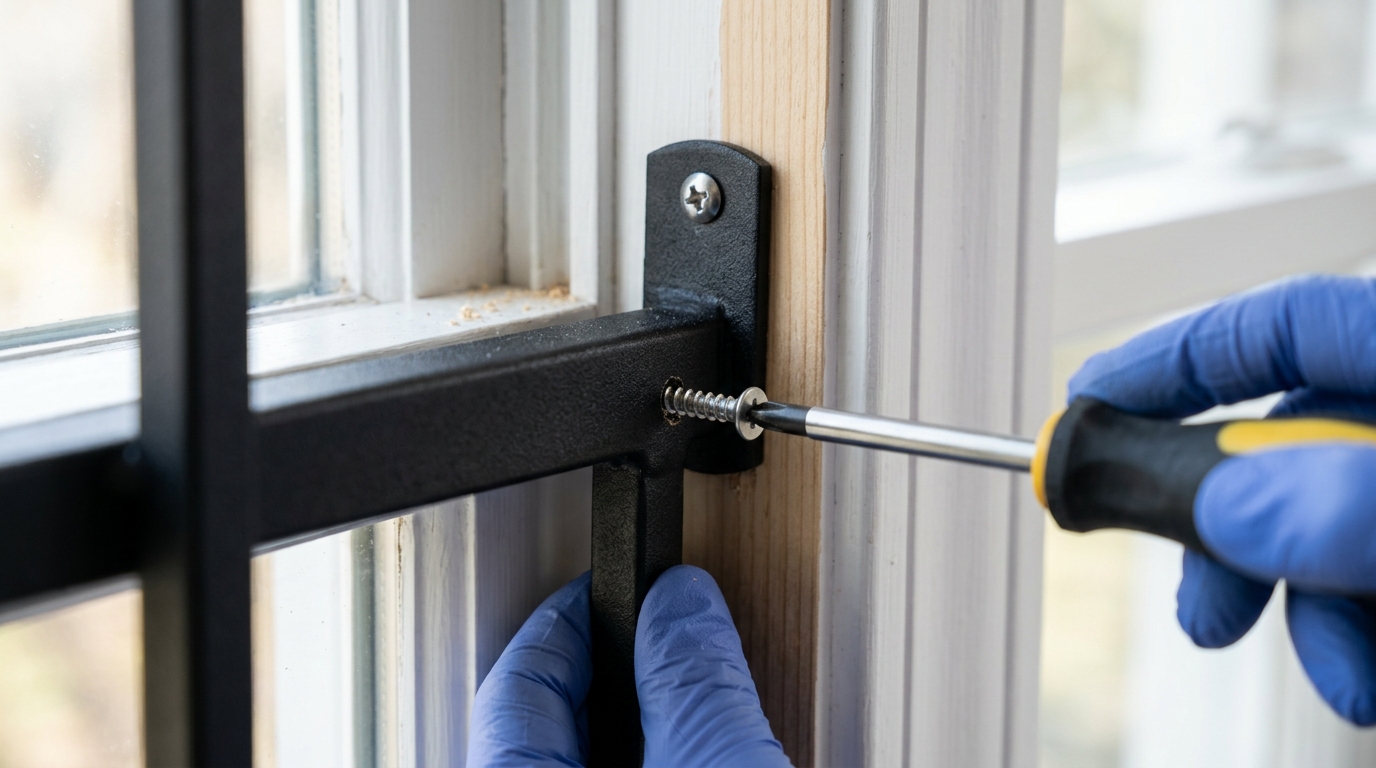
Old bars bolted directly to the wall face with visible anchors and brackets. Modern frame-mount systems sit inside the window frame itself, creating a clean, flush appearance with no visible hardware. From the street, frame-mounted bars look more like window mullions than security barriers.
Slim Profiles Over Heavy Gauge
Old bars used thick, heavy stock because that was the only way to achieve strength with basic steel. Modern metallurgy and design allow bars to be strong with slimmer profiles. Less visual mass means less visual impact.
The Interior Option: Bars Nobody Can See
If the appearance of exterior bars concerns you at all, there's a solution that eliminates the issue entirely: interior-mounted window bars.
Interior bars mount on the inside face of the window. From outside your home, they're virtually invisible — especially at normal viewing distances. Visitors, neighbors, and passersby see a completely normal window. Only someone pressing their face against the glass would notice the bars behind it.
SWB's Model A works as an interior installation with its frame-mount system. The bars sit on the inside of the window frame, providing the same security as exterior bars while keeping your home's exterior appearance completely unchanged.
This is also the go-to option for homeowners in HOA-controlled neighborhoods where exterior modifications require board approval. Interior bars typically fall outside HOA jurisdiction since they don't change the home's exterior. For a full walkthrough, read our HOA approval guide.
How Color Makes Bars Disappear
Color matching is the simplest way to make window bars blend into your home's appearance. It's also the most underestimated.
When bars match the color of the window frame they sit in, the eye processes them as part of the window rather than as an addition to it. White bars in white frames are a perfect example — at normal viewing distances, they're essentially invisible because there's no contrast for the eye to latch onto.
The same principle works with any color combination:
- Black bars + dark frames = nearly invisible
- White bars + white frames = nearly invisible
- Bronze bars + wood-tone frames = blends naturally
- Custom-match bars + any frame color = optimal stealth
The opposite also explains why old bars looked so bad: raw silver steel against a white window frame creates maximum contrast. Your eye is drawn straight to the bars because they're the most visually dissonant element on the building.
What Real Homeowners Experience
The gap between what people imagine window bars look like and what they actually look like after installation is consistently surprising. Several common experiences come up repeatedly:
"I forgot they were there."
Homeowners who install frame-mounted, color-matched bars routinely report that they stop noticing the bars within days. From inside the house, the bars become part of the window the same way blinds or curtains do. From outside, visitors rarely comment or even notice.
"My neighbors asked where I got them."
When bars are well-chosen and cleanly installed, the reaction from neighbors is typically curiosity rather than judgment. Many homeowners report that their installation prompted neighbors to ask about the product and consider bars for their own homes.
"They actually look better than I expected."
Low expectations work in your favor here. People who researched bars online often saw photos of old-style institutional bars and expected the worst. Modern products exceed those expectations by a wide margin.
The Property Value Question
"Will bars hurt my home's resale value?" is really a more specific version of the prison-bar question. The answer depends entirely on what bars you install and how you install them.
Cheap, poorly installed, visually jarring bars can impact perceived property value negatively. But the same is true of a cheap fence, an ugly paint job, or a cluttered front yard. The problem isn't the category — it's the execution.
High-quality decorative bars that match the home's architecture are neutral to slightly positive, especially in neighborhoods where ground-floor security is a legitimate concern. And removable frame-mount bars like SWB's Model A can be taken down before listing if a seller prefers, leaving no evidence they were ever installed.
For a deeper analysis, read our full breakdown: Do Window Bars Decrease Home Value?
Alternatives That Address the Appearance Concern
If you've read this far and still feel uneasy about window bars, here are your other security options — and an honest assessment of how they compare.
Security Film
Transparent film applied to window glass that makes it harder to break. Completely invisible. However, security film doesn't prevent entry — it just slows it down. A determined intruder can still breach filmed glass in under a minute. It's a delay tactic, not a barrier.
Security Cameras
Cameras document break-ins but don't prevent them. A camera won't stop someone from climbing through your window. Cameras and bars work best together — bars provide the physical barrier, cameras provide the evidence and deterrence. Check our comparison: Window Bars vs. Cameras vs. Alarms.
Alarm Systems
Alarms alert you and police after a breach occurs. Response times vary from 5 to 30+ minutes depending on location. Bars prevent the breach from happening at all. Again, these work best as complementary layers in a layered security approach rather than as substitutes for each other.
Window Locks and Pins
Locks keep windows closed but don't prevent glass from being broken. Once glass is broken, a lock provides zero protection. Bars maintain the barrier even with broken glass.
The honest conclusion: nothing provides the physical barrier that window bars provide. If appearance is your primary concern, interior-mounted bars eliminate the issue entirely while still giving you that barrier.
Frequently Asked Questions
Do modern window bars still look like jail bars?
No. Modern window bars use slim profiles, powder-coated finishes, and frame-mount installations that look like architectural elements rather than security hardware. The "jail bar" look came from raw-iron grid designs that are no longer the standard. Products like SWB's Model A have clean, minimalist profiles that blend with window frames and are barely noticeable at normal viewing distances.
Will my neighbors judge me for installing window bars?
In most neighborhoods, the reaction to modern decorative window bars is neutral to curious. The stigma was attached to old-style industrial bars, not to today's clean designs. Homeowners consistently report that neighbors either don't notice or ask about the product with interest. If you're concerned, interior-mounted bars are invisible from outside and eliminate any neighbor perception issue entirely.
What type of window bars are the most visually appealing?
Clean vertical-bar designs with slim profiles and powder-coated finishes matched to the window frame color are consistently rated the most visually appealing. Frame-mounted bars that sit inside the window opening look the cleanest because there's no visible mounting hardware. For the absolute lowest visual impact, choose interior-mounted bars that are hidden from street view entirely.
Can I make window bars invisible from the outside?
Yes. Interior-mounted window bars are virtually invisible from outside the home. SWB's Model A with frame mount can be installed on the interior side of the window, providing full security while keeping your home's exterior appearance completely unchanged. From the street, your windows look exactly as they did before installation.
Are there window security options that don't involve bars at all?
Yes, alternatives include security window film, reinforced glass, window locks, alarm sensors, and security cameras. However, none of these provide a physical barrier preventing entry the way bars do. Security film slows intruders but doesn't stop them. Alarms and cameras document events but don't prevent them. For actual physical protection of window openings, bars remain the most effective option. Interior-mounted bars solve the appearance concern while maintaining full protection.
The Bottom Line
The "prison bar" stigma is real, but it's attached to a product that doesn't exist anymore in the mainstream market. Modern window security bars — with clean profiles, color-matched finishes, and frame-mount or interior installation — bear about as much resemblance to old iron grids as a modern smartphone bears to a 1990s brick phone. Same basic function, entirely different execution.
If you've been avoiding window bars because of how you think they'll look, the best thing you can do is look at what's actually available today. Start with SWB's Model A to see what a modern, architecturally designed security bar actually looks like. You might be surprised at how far the industry has come from the bars you're picturing in your head.