Window safety bars toddlers households buy may not stop falls. Learn what security bars do, what guards do, and how to keep a fire exit.
Do window safety bars toddlers need stop falls from open windows?
You open a bedroom window on a warm evening while your toddler plays in the next room. Then the question hits: would window safety bars toddlers cannot squeeze past make that window safe? It is a fair question, and the honest answer starts with a distinction. Security bars and fall-prevention devices are different products with different jobs.
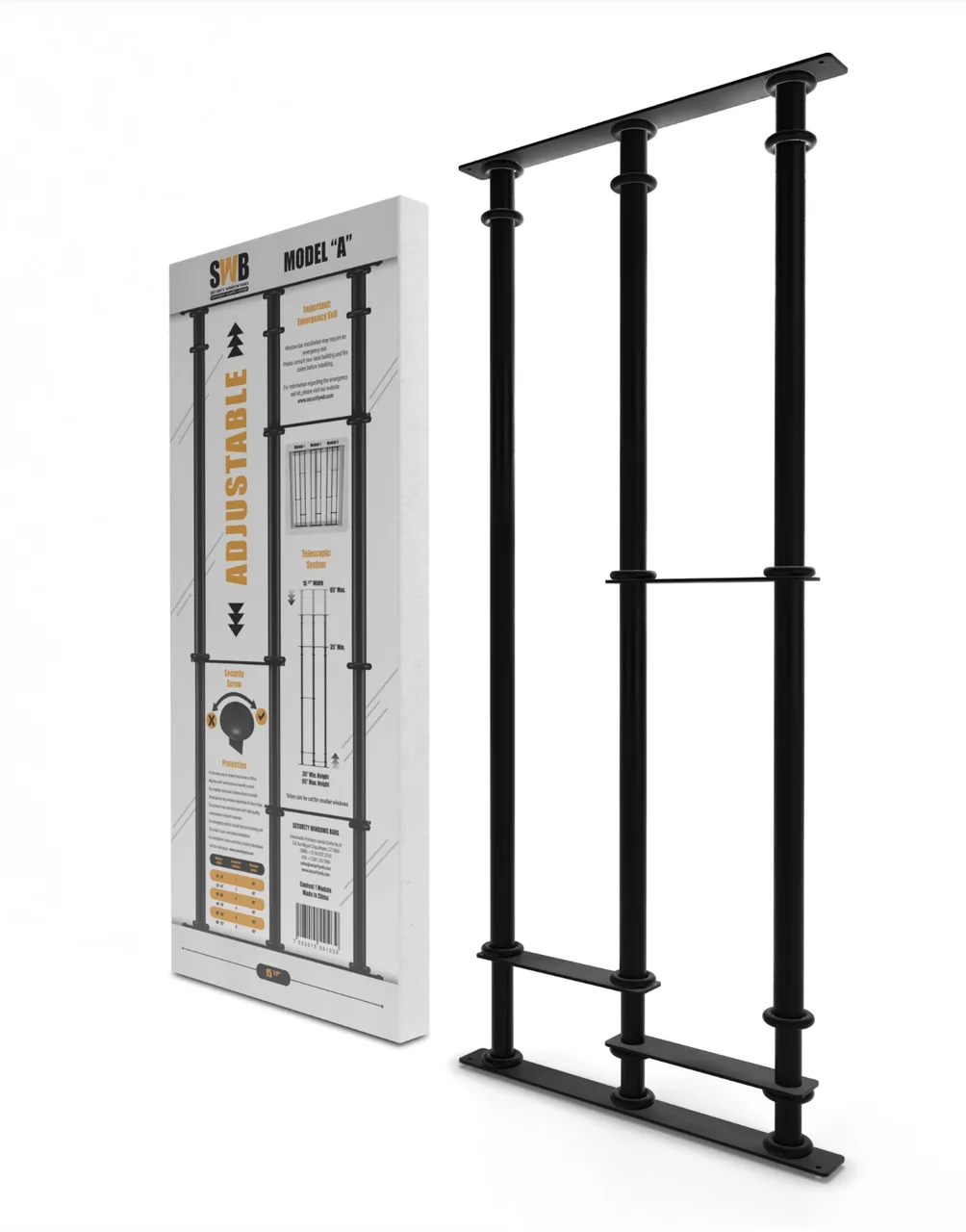
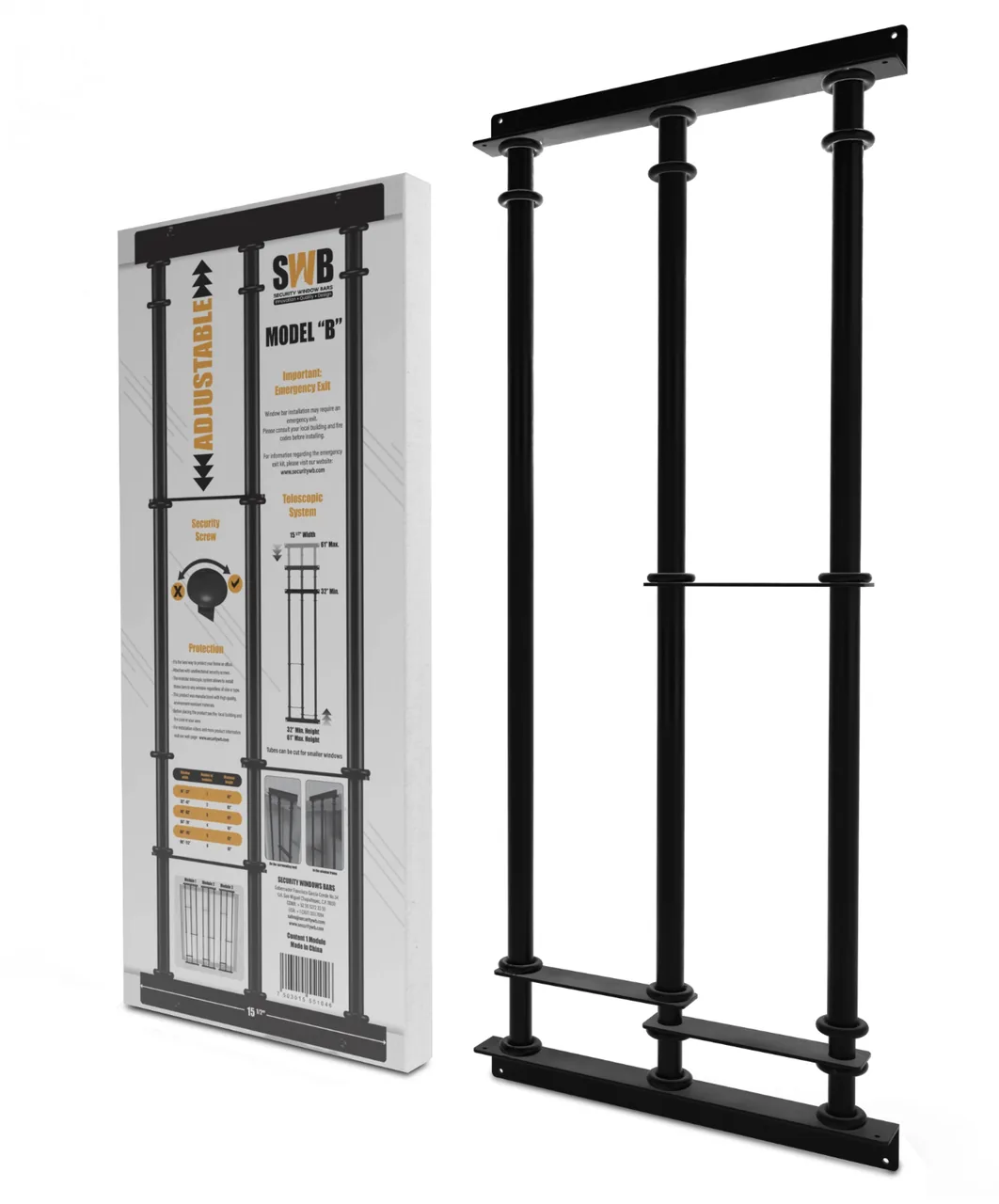
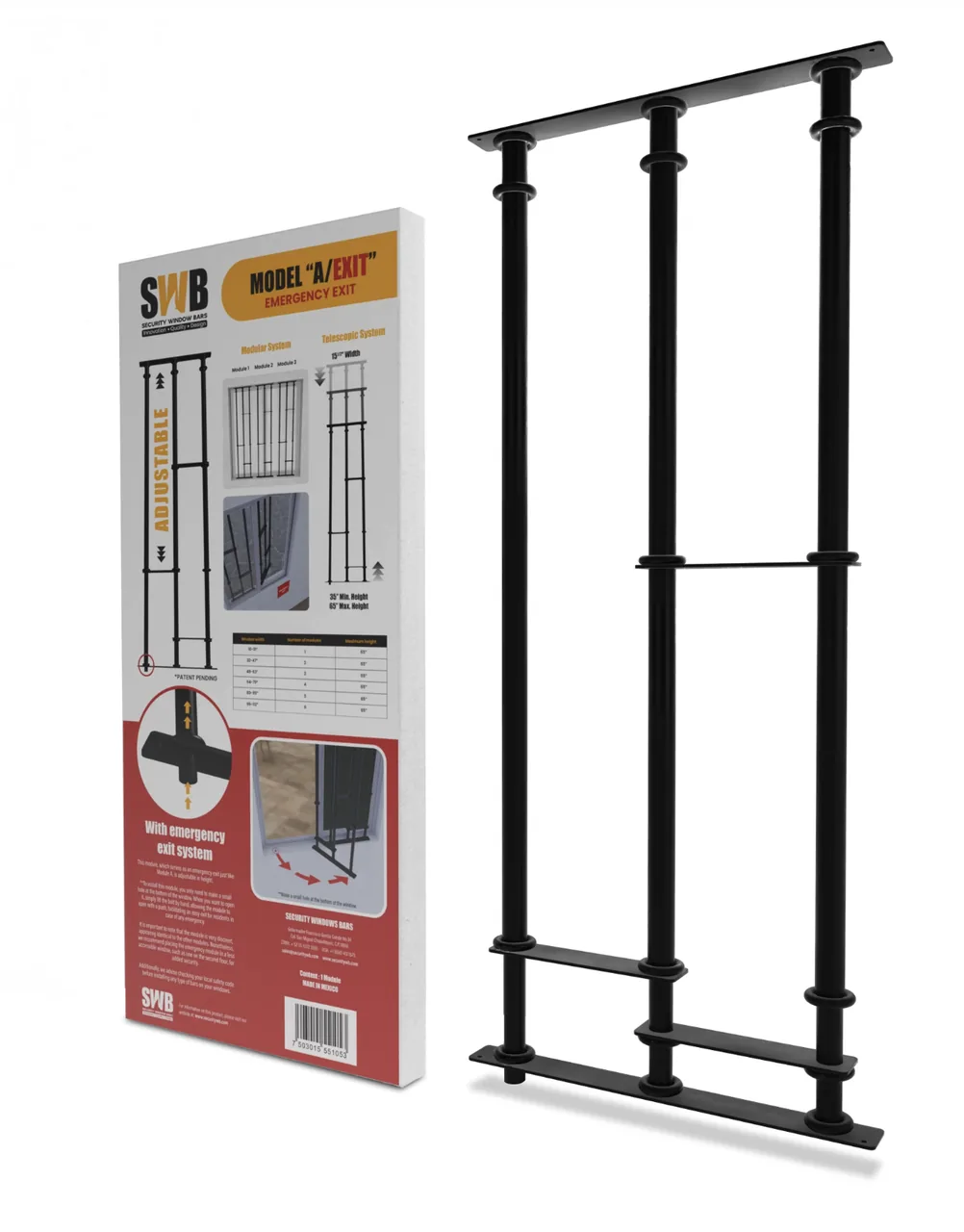
Security Window Bars (SWB) sells security bars: Model A, Model B and Model A/EXIT. They are made to resist break-ins. They are not child fall-prevention devices. The 5.25-inch bar spacing does not contain small children or pets, so do not count on the gaps to hold anyone in. If a toddler falling is the risk you want to solve, a security bar is the wrong tool.
The National Fire Protection Association (NFPA) draws the same line. Its Security Bar Safety sheet says a window guard or gate, or a window stop or wedge, can keep a child from falling out of an open window. The same sheet warns that some security bars can trap you in a fire and can keep firefighters from getting in to rescue you. You can read it here: NFPA Security Bar Safety sheet.
So you may be solving two problems at once: a fall risk and a break-in risk. Each needs its own device, and each device has limits. A fall guard does not stop a burglar. A security bar does not stop a fall. For a quick look at how bar types differ, see our overview of window bar types.
What you need depends on the floor level, the window type and whether that window is a required escape opening. The next sections walk through each of those checks.
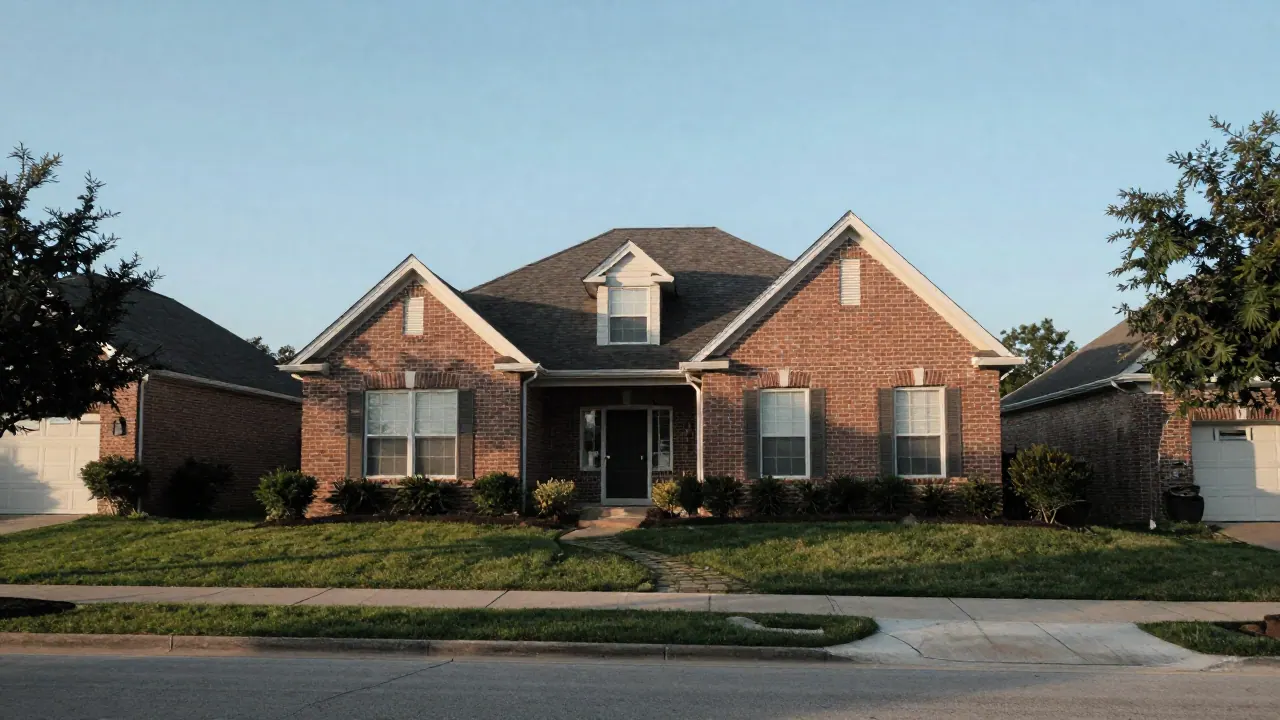
What can you use instead of bars to keep toddlers from falling?
Start with the options NFPA names: a window guard, a gate, a window stop or a wedge. A guard or gate is meant to block a fall through an open window. A stop or wedge limits how far the sash opens. All of them target the hazard you are worried about, which is the fall itself.
Choosing among them depends on your window type, your floor level and local rules. Ask the maker which safety standard the device was built to, and ask to see documentation. If a seller cannot say, keep looking. We do not give a size or load number here because the right specification depends on the product and your local building or fire department.
Some habits matter as much as hardware. Beds, sofas, dressers and toy chests under a window give a toddler a way to climb. A screen is made to keep insects out, so do not treat it as a barrier. And no device replaces an adult who is paying attention.
- Move beds, sofas, dressers and toy chests away from every window a toddler can reach.
- Keep windows closed and latched when no adult is in the room.
- Use a guard, gate, stop or wedge made for fall prevention, and read its instructions.
- Treat screens as insect screens, not as barriers.
- Check that any device on a sleeping-room or basement escape window can be released by an adult from inside, without keys or tools.
If you rent, talk to your landlord before changing a window. Leases often limit what you can attach to a building, so ask first and get the answer in writing.
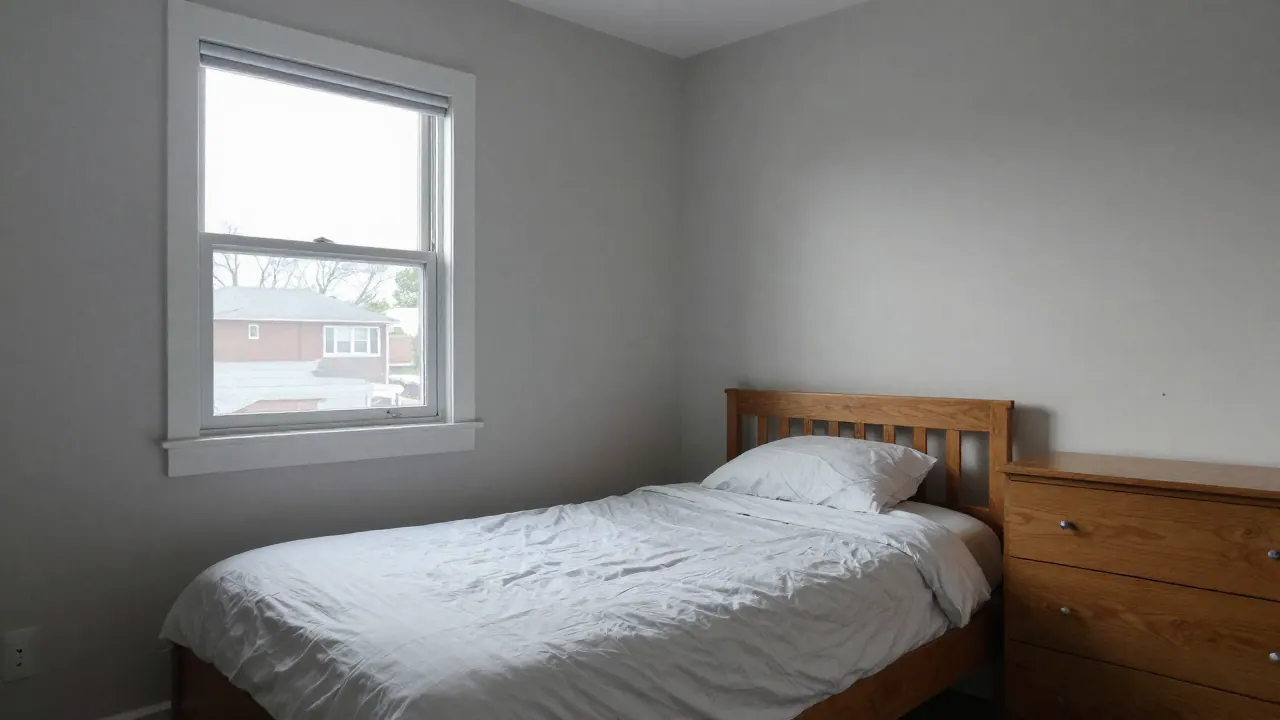
Can window safety bars toddlers live around still allow a fire exit?
Yes, but only if the bar is chosen and installed for it, and some windows should not get fixed bars at all. A toddler cannot escape a fire alone, so an adult has to get the whole family out. NFPA says to find at least two ways out of every room, and that all exits, including barred windows, must open easily from inside. It also says to choose bars with quick-release devices.
The model code says the same thing in more detail. Under the 2021 International Residential Code (IRC), R310.1 calls for at least one operable emergency escape and rescue opening in basements, habitable attics and every sleeping room, with limited exceptions such as basements used only for mechanical equipment. R310.1.1 requires it to be operable from inside "without the use of keys, tools or special knowledge." R310.2.1 sets a net clear opening of at least 5.7 square feet (5 square feet at grade floor). R310.2.2 sets a minimum net clear height of 24 inches and width of 20 inches.
R310.4.4 covers bars directly. Bars, grilles, covers and screens over escape openings or area wells must leave the required net clear opening and be "releasable or removable from the inside without the use of a key or tool or force greater than that required for the normal operation of the escape and rescue opening." Section numbers change between editions and local code may differ, so confirm with your building official. Source: Boulder County, Emergency Escape and Rescue Openings.
| Window situation | What the 2021 IRC says | What it means for bars |
|---|---|---|
| Sleeping room window that serves as the escape opening | R310.1 requires an operable opening; R310.4.4 requires bars to release from inside without a key or tool | Only a bar that releases from inside, with no keys or tools. Confirm with your building official. |
| Basement or habitable attic window serving as the escape opening | R310.1 applies; R310.2.1 sets the net clear opening | The released bar must leave the full required opening clear. |
| Window below grade with an area well | R310.4 requires a well (R310.4.1: at least 9 sq ft and 36 in); R310.4.2 requires a permanent ladder or steps if deeper than 44 in | Bars over the opening or well must still release from inside. |
| Window that is not an escape opening | R310 sets rules for escape openings; ask which openings count in your home | A fixed bar may be possible. Confirm first with your building official. |
SWB describes Model A/EXIT as its egress-compliant model and the only one with a built-in quick-release. It has a hand-operated lift-bolt release from inside and stays rigid from outside. It is quote only. Whether the installed window complies is decided by the building official, not by the product description. Model A has no integrated quick-release. Model B is listed by SWB as not rated for fire code or egress, so it only goes on windows that are not escape openings. For more on the rules, read our window bars fire code guide.
Never put a padlock, key lock or tool-only fastener on a bar over a bedroom or basement escape window. It might feel like it keeps a toddler away from the glass, but it can trap everyone in a fire. Adults must be able to open the window fast, in the dark and in smoke, without hunting for a key.
Do safety door bars and window safety grills change the toddler picture?
Shoppers use "safety door bar," "safety grills," "window safety grill" and "fire safety window bars" for very different products. The name does not tell you the purpose. Before you buy, ask one question: what hazard was this device designed for?
| Device | Main job | Toddler fall risk? |
|---|---|---|
| Security bar or grill (including SWB bars) | Resist forced entry | Not designed for it. SWB says so plainly. |
| Window guard, gate, stop or wedge | Block or limit an open window, per NFPA | Made for it. Ask for documentation. |
| Insect screen | Keep insects out | Not a barrier. |
| Safety door bar | Reinforce a door against forced entry | Not a fall device. It must open easily from inside. |
A door bar deserves the same fire-exit thinking as a window bar. NFPA says all exits must open easily from inside. A bar you cannot release fast in the dark is a hazard for the whole household, and a toddler in the home does not change that rule. If anything, it raises the stakes, because an adult may have to carry a small child while opening the exit.
"Fire safety window bars" is not a certification you can assume from a product name. Look at how the bar releases. NFPA advises choosing bars with quick-release devices. On a window that is an escape opening, a release from inside is the point. On a window that is not an escape opening, a fixed bar may be allowed, but it depends on your local code, so ask your building official before you buy.
The takeaway: match the device to the hazard. Use fall-prevention hardware for falls. Use security bars for break-ins, and only where the fire-exit rules allow them.
What should you check this week if you have toddlers and barred windows?
Do this short review even if your bars are already up. Most of it takes an evening, and it covers the two risks that matter most: a fall and a fire.
- Smoke alarms: NFPA says to install them in every bedroom, outside each sleeping area and on every level, including the basement. Test them monthly and replace them at 10 years. See the NFPA Smoke Alarms at Home sheet.
- Two ways out: find at least two ways out of every room, and write them down.
- Fire drill: NFPA recommends a home fire drill twice a year. Include opening each barred window from inside.
- Release test: have an adult open every release from inside, with no keys or tools. If it is slow or stiff, call the maker or replace it.
- Clear path: keep furniture and stored items away from escape windows.
- Fall hardware: recheck guards, stops and wedges after cleaning, and keep beds and climbable furniture away from windows.
If you decide a security bar fits a window that is not an escape opening, the facts are simple. Model A is $85 per core module, with telescopic height from 35 to 65 inches and a modular width of 16 inches per module. Installation takes 15 to 30 minutes, and the manual drills pilot holes and uses the included anchors, so it is not a no-drilling product. It carries a 1-year limited warranty. It has no integrated quick-release, so ask your building official before putting it on any window that could be an escape opening.
Renters have extra steps. Check your lease, ask your landlord, and read our guide to window bars in apartments. Your local fire marshal or building department can tell you which windows count as escape openings where you live.
Frequently Asked Questions
Do window safety bars stop toddlers from falling out of windows?
No. SWB bars are security bars, not fall-prevention devices, and the 5.25-inch spacing does not contain small children or pets. NFPA names window guards, gates, stops and wedges for fall risk.
What can keep a toddler from falling out of an open window?
NFPA says a window guard or gate, or a window stop or wedge, can keep a child from falling out of an open window. Ask the maker for documentation, and check that it does not block a required escape opening.
Can I use a key or padlock on bars over a bedroom window?
No. The 2021 IRC says escape openings must work without keys, tools or special knowledge, and bars over them must release from inside without a key or tool. Local code may differ.
Which SWB model has a quick-release?
SWB describes Model A/EXIT as the only one with a built-in, hand-operated lift-bolt quick-release from inside. Model A has none, and Model B is listed as not rated for fire code or egress. The building official decides compliance.
How often should I test my smoke alarms?
NFPA says to test them monthly and replace them at 10 years. Put them in every bedroom, outside each sleeping area and on every level.
Sources (facts checked 2026-11-14)
- NFPA, Security Bar Safety, 2019
- Boulder County, Emergency Escape and Rescue Openings (2021 IRC R310)
- NFPA, Smoke Alarms at Home, 2018
Code numbers refer to the 2021 International Residential Code; your city or state may have adopted a different edition. Confirm with your local building department or fire marshal.
Keeping a toddler safe near windows takes the right device for each hazard: fall hardware for falls, and security bars only where fire-exit rules allow them. If you are weighing security bars for a window that is not an escape opening, you can compare options in our shop, or ask about Model A/EXIT through a custom quote. Take your time, test every release from inside, and check with your building official before you install anything.
The SWB models
Keep reading

Security Window Bars. Product facts come from SWB's published specifications. Your local building department has the final word on bedroom windows.