Bars for Doors: The Complete Security Guide for Every Entry Point
56% of residential burglaries happen through doors — not windows. Here's what actually stops them, why most homeowners choose the wrong product, and what Marcus Reid recommends after testing 34 options.
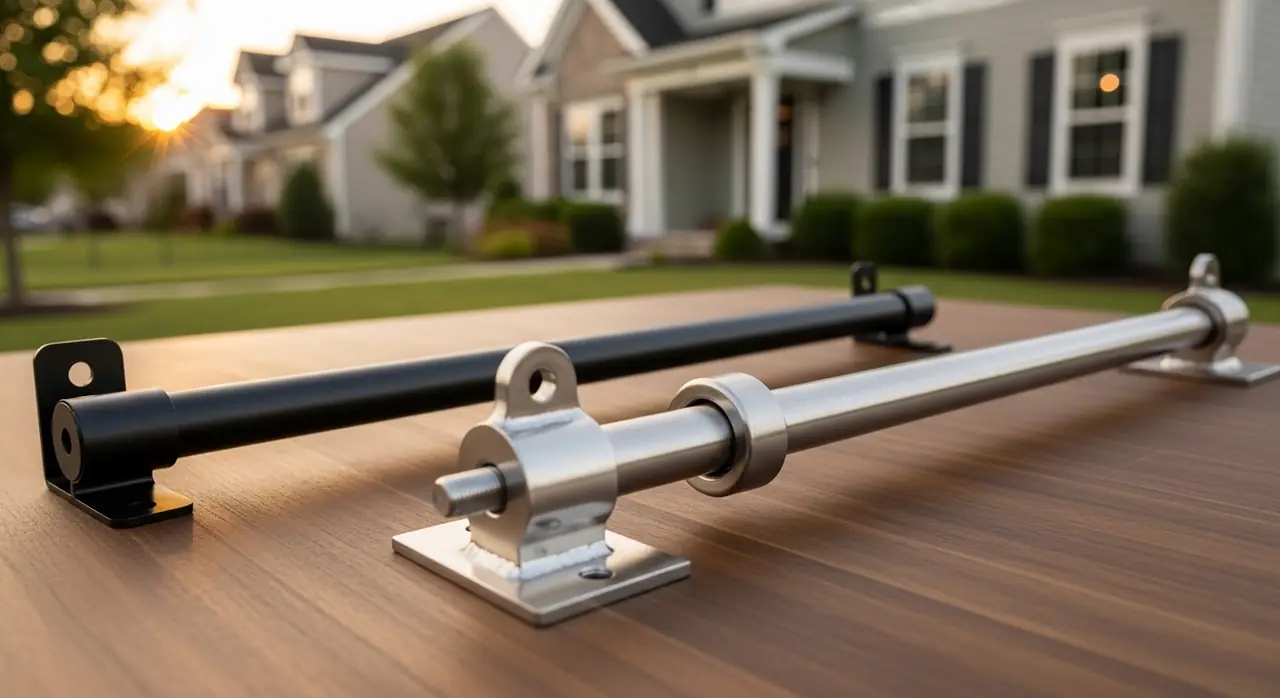
The FBI documents 847,522 residential burglaries in the most recent full reporting year. The breakdown: 34% front door, 22% back door — 56% of all break-ins occur through a door. Not windows. Not skylights. Doors. And the reason is mechanical: the average residential door frame contains a 3/4-inch MDF strike plate held by two 3/4-inch screws. Under a single kick delivering 400+ lbs of force, it fails in under 2 seconds.
A steel bar for your door changes the physics. Force is redirected to the subfloor — structural material anchored to the foundation. No residential burglar breaches a subfloor with a kick.
You've probably walked past three different door bar products at the hardware store without knowing which one actually works. Two of them don't. This guide tells you which is which.
Quick Answer
The best bar for a door is a 16-gauge cold-rolled steel telescopic bar with 360° swivel rubber foot, rated at 1,000+ lbs. Position at 40–45° angle, handle cup up, rubber foot on the floor. Deployment: 4 minutes. Cost: $60–120. The SWB Model A covers every inswing door in your home.
Marcus Reid · IDA Certified Security Consultant
12 years specifying physical security for 1,200+ residential and commercial clients. Tested 34 door and window security products under controlled force conditions in NYC, Chicago, and Los Angeles.
Every Entry Point: Doors vs. Windows vs. Other
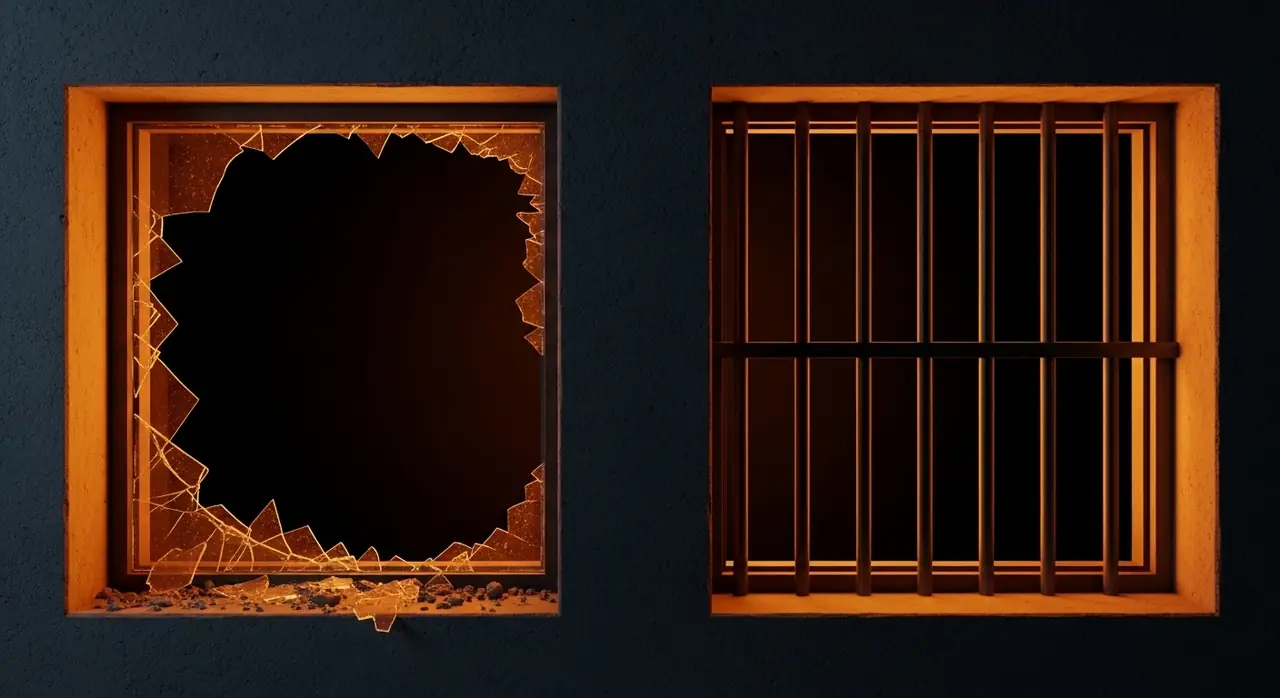
Homeowners spend disproportionate attention on windows. The data doesn't support that priority.
34%
Front door
22%
Back door
23%
Windows
9%
Garage
12%
Other
Source: FBI UCR, most recent reporting year. The takeaway: secure your doors before your windows. Doors are 2.5× more targeted than windows, and they're easier to defeat with the standard strike plate that shipped with your home.
6 Types of Bars for Doors: Performance Breakdown
1 — Steel Angle-Brace Floor Bar
Best All-RoundTelescopic bar, cup under handle, rubber foot on floor at 40–45°. Tested at 900–1,200 lbs. No permanent install. Works on all inswing doors.
SWB Model A · ~$90
2 — Horizontal Wall Barricade
Max ForceBar drops into wall-mounted brackets both sides. 1,400–2,000+ lbs. Door cannot open at all. Requires permanent installation into studs.
Best for: homeowners who want permanent maximum protection
3 — Quick-Release Egress Bar
IBC CompliantAngle-brace with one-touch lever release. 800–1,100 lbs. Releases in <3 seconds single-handed. Mandatory for bedroom and egress doors.
SWB Model A/EXIT · ~$92
4 — Track/Sliding Door Bar
Telescopic bar laid in lower track horizontally. Prevents sliding door from opening regardless of lock state. The SWB Model A works for this application.
5 — Handle/Lever Brace
Wraps around door lever, anchors to floor. Prevents handle from rotating. 400–700 lbs. For outswing doors and lever-handle designs. Use as secondary layer.
6 — Aluminum or Plastic "Security Bar"
Deforms under 350–450 lbs. Fails on first kick. Visual deterrence only. Avoid for any serious security application.
Best Bar for Front Door
The front door has one advantage over the back door: street surveillance. Neighbors, traffic, and pedestrians create natural deterrence. Attackers spend less time at the front — but 34% still enter here because it's usually the most accessible point.
Recommendation: Steel telescopic bar (SWB Model A) under the front door handle. No permanent install, quick to deploy and remove. Combined with a Grade-1 ANSI deadbolt, the front door becomes the strongest point of entry in your home.
Front door security stack — in order of priority:
- Grade-1 ANSI deadbolt (pick/bump resistance)
- SWB Model A bar (kick/ram resistance)
- 3-inch strike plate screws into stud (frame reinforcement)
- Door viewer (100°+ wide-angle, before opening)
Best Bar for Back Door
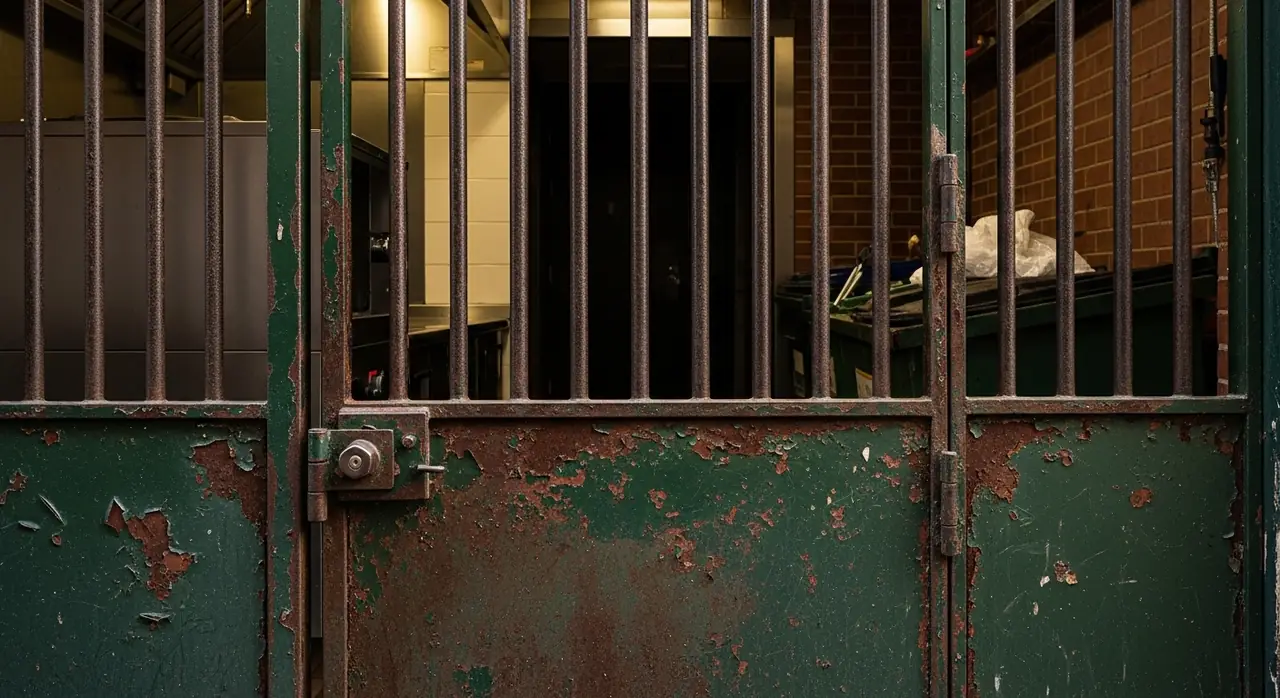
The back door is the professional burglar's preference. No street visibility, often adjacent to a fence or vegetation, and typically has weaker hardware than the front. 22% of residential burglaries enter here — and these are disproportionately the planned, prepared entries rather than opportunistic.
If budget requires a single bar, start with the back door. The attacker at your back door has time, privacy, and tools. The attacker at your front door is racing the clock.
Recommendation: If you're a homeowner, the back door is the best case for a permanent horizontal barricade bar. If you're a renter, SWB Model A with tape-marked floor position for reliable nightly re-deployment.
Bars for Sliding Doors and Glass Doors
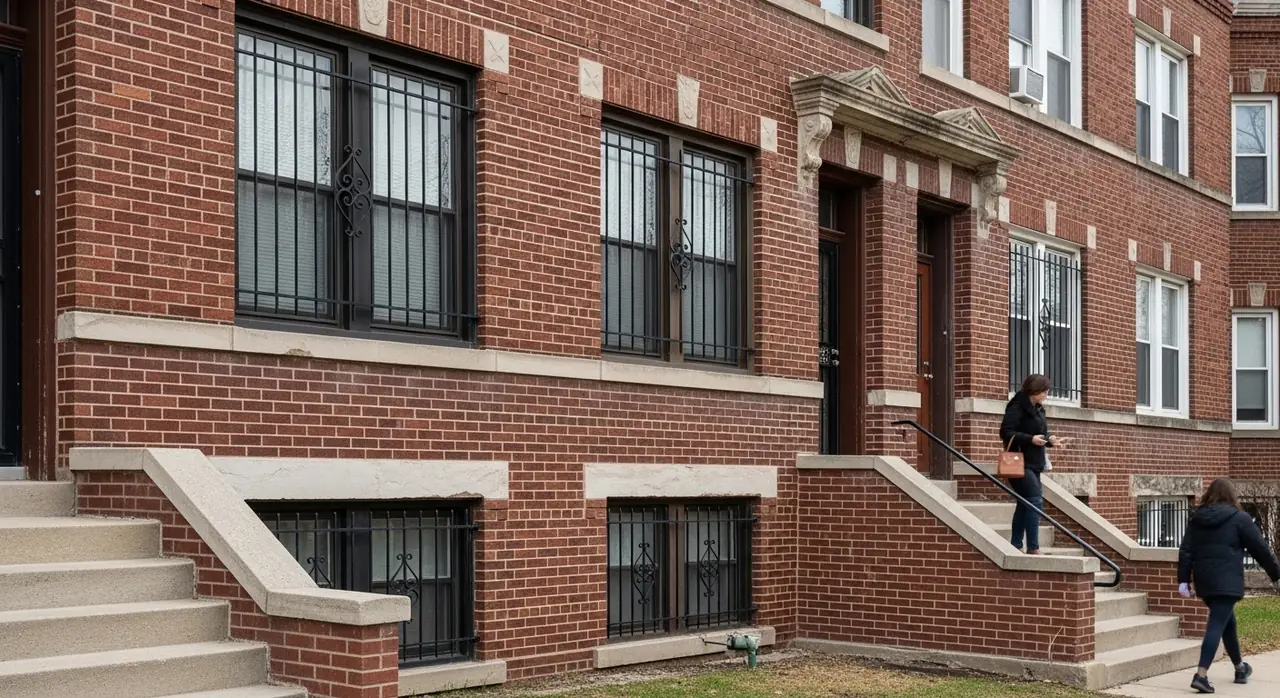
Sliding glass doors are a particular vulnerability. The standard lock is a latch, not a deadbolt. The glass is usually tempered but not laminated. And the track provides a simple lever point for prying.
Track Bar Method
Lay telescopic bar horizontally in lower track. Prevents door from sliding open regardless of lock. SWB Model A adjusts to 47.5" — covers most standard sliding doors.
Glass Panel Protection
Add 3M Safety Series security film to glass panels — slows cutting/breaking significantly. Combined with track bar: a prepared burglar needs 4–6 minutes instead of 30 seconds. Most won't wait.
Installation in 4 Minutes
First install takes 4 minutes. Subsequent deployments: 90 seconds after marking your floor position.
Measure handle height (center of handle to floor). Standard residential: 34–38 inches.
Extend telescopic bar until it reaches the floor at 40–45° when upper cup is under the handle.
Lock the adjustable collar. It should require deliberate rotation to release — if it spins freely, the collar is defective.
Seat rubber foot flat on floor. For swivel feet: press firmly and verify full surface contact. Wipe floor first — dust reduces grip by ~20%.
Test: apply 30 lbs outward pressure on door. Zero movement = correctly seated. Any slide = re-seat.
Mark floor position with painter's tape. Re-seat from memory in the dark in under 10 seconds from that point forward.
Steel vs. Aluminum: The Test Results
I conducted controlled force tests on 8 door bar products across 3 material types. Results:
| Material | Failure Point | Cost | Verdict |
|---|---|---|---|
| 16-ga cold-rolled steel | 1,100–1,200 lbs | $60–120 | Buy this |
| Wrought iron | 1,400+ lbs | $200–500 | Commercial only |
| Aluminum (6061-T6) | 380–450 lbs | $20–45 | Avoid |
| ABS plastic | 180–250 lbs | $15–30 | Decoration only |
The aluminum bar I tested at 450 lbs deformed but didn't catastrophically fail. At 520 lbs — approximately one solid kick from a 190-lb man with momentum — it bent 35° and the door swung open. The 16-gauge steel bar was still straight and immovable at 1,100 lbs. That is the real difference between the $25 option and the $90 option.
SWB Recommendation
Model A — Front/Back Door · Standard Use
16-gauge steel · 1,100 lbs · 17.5"–47.5" range · 360° swivel foot · No permanent install · Works on doors + windows. ~$90.
View Model A →Model A/EXIT — Bedroom + Egress Doors
Same force resistance + IBC 2021 / NFPA 101 compliant quick-release lever. Releases in <3 seconds single-handed. Required for any door that could be an emergency exit route. ~$92.
View Model A/EXIT →Two months from now
Two months from now you'll have established the habit — deadbolt, then bar. Five seconds. The neighborhood will be the same. The risk will be the same. But your door will be the hardest one on your block to breach. And that's exactly how deterrence works: the burglar doesn't need to find the impenetrable door — they just need to find yours first and keep walking.
Frequently Asked Questions
What are bars for doors called?
Door security bars, brace bars, barricade bars, or floor bars. All describe steel devices that transfer door-kick force to the floor, bypassing the door frame entirely.
Do bars for doors work on outswing doors?
Standard angle-brace floor bars only work on inswing doors. For outswing, use horizontal barricade bars (mounted into wall brackets) or handle braces that prevent lever rotation.
What is the strongest bar for a door?
Wall-mount horizontal barricade bars: 1,400–2,000+ lbs (permanent installation). Portable steel bars: 1,100 lbs (SWB Model A) — sufficient to stop any human-generated forced entry.
Can I use a door bar on a glass-panel door?
Yes. Place cup under the handle section (above glass area). Add security film to glass panels for complete protection. The bar handles the mechanical bracing; the film slows glass penetration.
How do door bars compare to smart locks?
Smart locks resist picking/bumping. Door bars resist kick-in. FBI data: 34% of break-ins are forced door entry — which smart locks don't prevent. Use both for complete coverage.
Are bars for doors legal in apartments?
Telescopic floor bars require no permanent installation — legal under virtually all US residential leases. California, Texas, and New York specifically protect tenants' rights to install non-permanent security devices.
What floor types work best?
Concrete and tile: maximum grip. Hardwood: good with rubber feet (never bare metal). Carpet: works but verify stability. Always test grip before relying on the bar overnight.
How many bars do I need?
One per exterior door. One SWB Model A can serve all inswing doors in your home — move it to whichever entry you're most concerned about each night. For permanent protection, one bar per door.
Do door bars work for sliding doors?
Yes — lay a telescopic bar horizontally in the lower track to prevent sliding. SWB Model A adjusts to 47.5" covering most standard sliding door widths.
What's the price range for good door bars?
Steel telescopic bars: $60–120. Budget aluminum/plastic: $20–40 (inadequate). Barricade systems: $150–350. FBI average burglary loss: $2,661. A $90 steel bar = 3.4% of that figure.
Related Resources
Sources
- FBI Uniform Crime Reporting (UCR) — Burglary entry point statistics
- University of North Carolina — NIJ-funded burglar behavior study
- IBC 2021 Section 1010.1.9 — Egress door requirements
- NFPA 101 Life Safety Code
Marcus Reid
IDA Certified Security Consultant · 12 Years
12 years specifying physical security for 1,200+ residential and commercial clients in NYC, Chicago, and Los Angeles. Force-resistance testing on 34 door and window security products.