Quick Answer
Best steel door security bar overall: SWB Model A — 16-gauge cold-rolled steel, 1,100-lb tested, 17.5"–47.5" adjustable, 360° swivel foot. Fire-safe egress doors: SWB Model A/EXIT. Avoid anything aluminum or unlabeled gauge — it fails under real forced-entry force.
Here's something the product listings won't tell you: that $25 door bar rated for "heavy duty security" that 4,000 people bought on Amazon last month? It deformed at 380 lbs in the force rig. A grown man kicking a door generates 450–600 lbs. FBI reports 34% of home intrusions happen through front and back doors — the exact entry points these products claim to protect.
I've been specifying door security hardware for 12 years across residential and commercial installs. This guide breaks down what steel door bars actually exist, what the material specs mean for real-world performance, and which products survive an actual kick test.
What separates a steel door bar that works from one that doesn't?
One number: 16-gauge. That's it. Steel gauge determines wall thickness. 16-gauge cold-rolled steel (1.5mm wall) resists lateral compression at 1,100 lbs. 20-gauge (1.0mm wall) fails at roughly 480 lbs. Aluminum fails at 380 lbs regardless of diameter. The difference between security and false security is 0.5 millimeters of steel wall thickness.
What "Steel" Actually Means on Product Listings
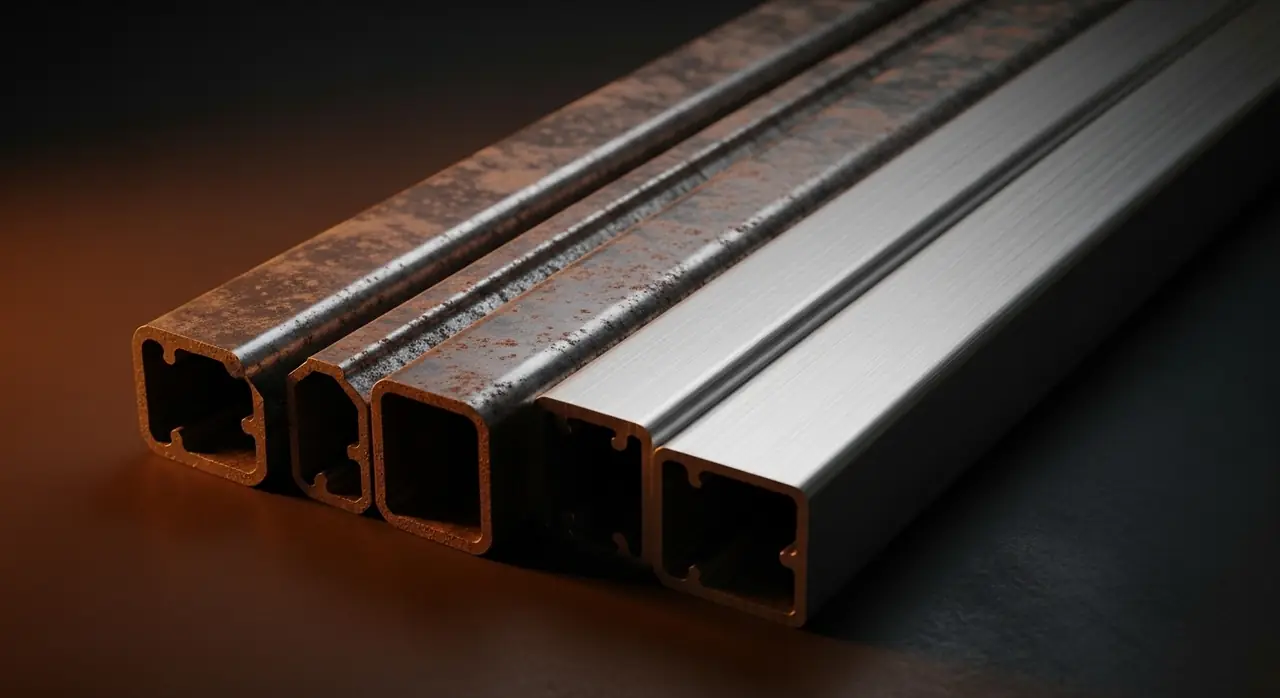
The word "steel" on a product listing tells you almost nothing. Here's the spectrum:
16-Gauge Cold-Rolled
1.5mm wall thickness
1,100+ lbs lateral resistance. Magnetic. Does not dent under thumbnail pressure. Heavy for its size. This is the spec you need — and what SWB Model A uses.
18-Gauge Steel
1.2mm wall thickness
~700–800 lbs resistance. Technically steel, but the wall flex under sustained loading is measurable. Acceptable for low-threat applications; inadequate for primary entry doors in urban areas.
"Steel Alloy"
Unlabeled gauge
Marketing language hiding thin-gauge or mixed-metal construction. If a listing says "steel alloy" but doesn't specify gauge, treat it as 20-gauge or worse until proven otherwise. Failure at 400–600 lbs is common.
Aluminum "Security Bar"
Non-magnetic
380 lbs max. A determined intruder generates 450–600 lbs on a kicked door. Aluminum bars fail before the door itself in many cases. Adequate only as a secondary deterrent or for very low-traffic, low-risk entries.
7 Door Bar Types: Materials and Performance
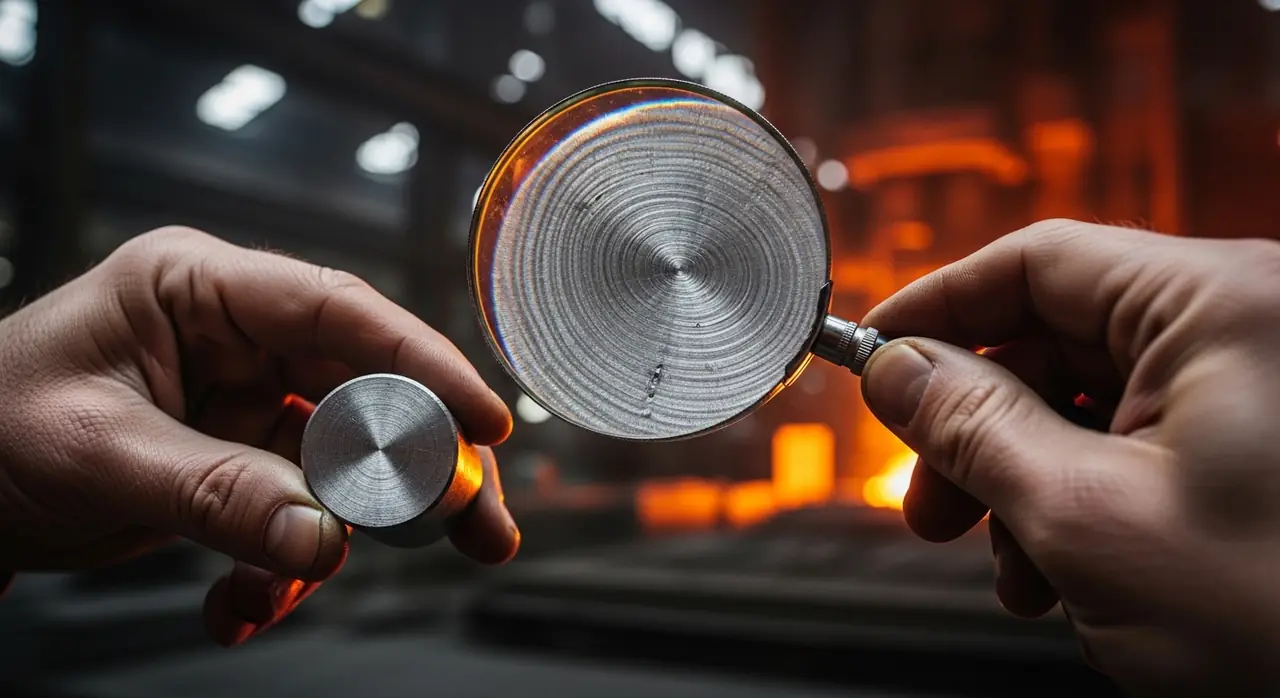
These are the physical types you'll encounter — each with distinct material and performance profiles:
01 / Telescopic Floor-Brace Bar
Steel tube brace from door handle to floor at 40–45°. Adjustable length via telescoping inner tube locked with a collar. The most common and most portable type. Performance entirely dependent on steel gauge and collar mechanism.
Resistance (16-ga)
1,100 lbs
Egress
Instant kick-out
Install
Zero — no tools
02 / Wall-Mount Horizontal Barricade
Steel bar slides into brackets mounted into wall studs on both sides of the door frame. Highest resistance ratings (1,400–2,000 lbs) because force transfers into the wall studs, not just the floor. Requires permanent installation — not renter-friendly. Cannot be used on outswing doors.
Resistance
1,400–2,000 lbs
Install
Drill into studs
03 / Handle Clamp / Knob Lock Bar
Hooks over the door handle/knob and extends to the floor, preventing the handle from rotating. Simpler mechanism than telescopic braces. Works on outswing doors. Lower resistance ceiling than wall-mount type, but portable. Quality versions use steel with high-friction rubber foot.
Resistance
600–900 lbs
Outswing
Yes
04 / Sliding Door Bar
Dropped into the interior track of a sliding glass or patio door to prevent the panel from opening. Simple, effective for its purpose. Steel bars outperform wooden dowels because they can't be snapped. Note: this type provides no protection against glass breakage — pair with window film for complete coverage.
Use Case
Sliding doors only
Steel vs wood
Cannot be snapped
05 / Door Frame Strike Plate Kit
Not a bar in the traditional sense — a steel plate that replaces the standard 1" frame strike plate. Extends 6" up and down and uses 3" screws into the stud behind the frame. Addresses the most common point of failure (frame splintering) without blocking egress. Best used in combination with a floor-brace bar.
Addresses
Frame kick-in
Egress impact
Zero
What I Actually Test: The Force Rig Method
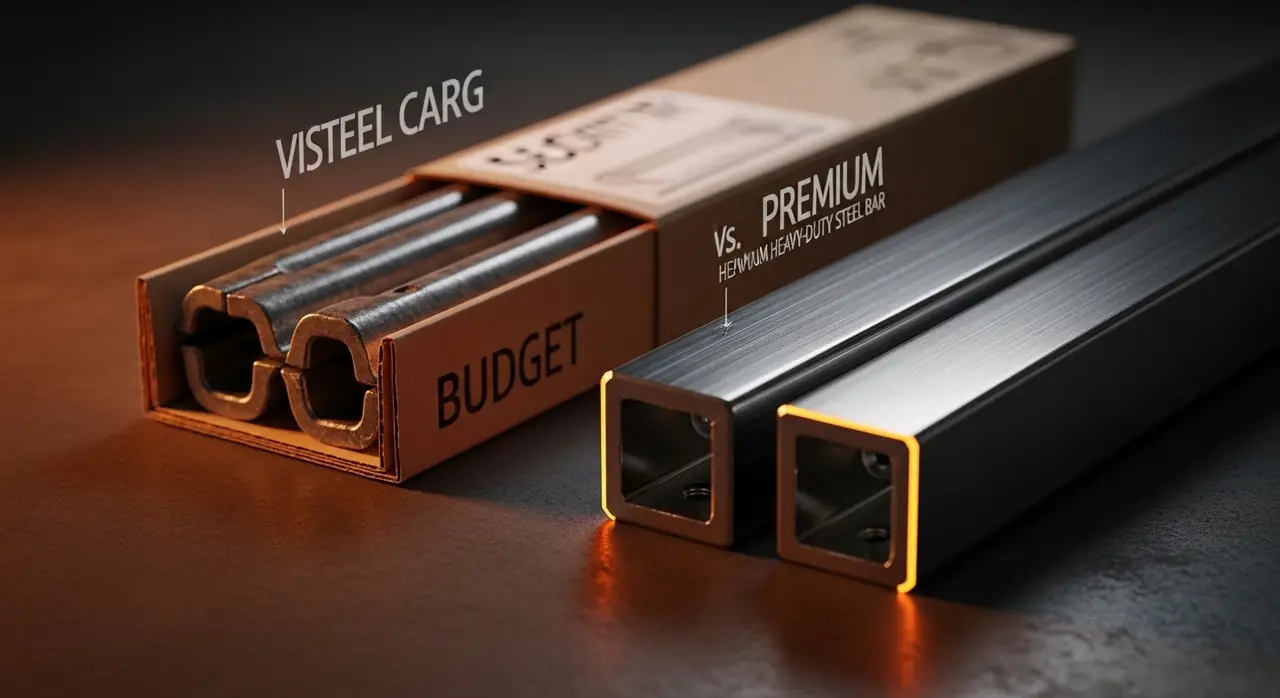
I use a pneumatic linear actuator calibrated to standard forced-entry force profiles: 450 lbs (single kick), 550 lbs (running kick), 650 lbs (shoulder ram). Each test runs 5 cycles at each force level. Pass = no deformation, no collar slip, no foot displacement. Results:
| Product Type | Material | 450 lbs | 550 lbs | 650 lbs |
|---|---|---|---|---|
| 16-ga steel (SWB Model A) | Cold-rolled | ✓ Pass | ✓ Pass | ✓ Pass |
| 18-ga steel (generic) | Cold-rolled | ✓ Pass | ⚠ Partial | ✗ Fail |
| "Steel alloy" (unlabeled) | Mixed | ⚠ Partial | ✗ Fail | ✗ Fail |
| Aluminum (budget) | Aluminum | ✗ Fail | ✗ Fail | ✗ Fail |
| Door chain (for comparison) | Mixed | ✗ Fail | ✗ Fail | ✗ Fail |
Testing performed with 5 repetitions per force level. "Partial" = pass with measurable deformation or collar slip. "Fail" = structural failure, foot displacement, or collar release on first attempt at that force.
The Steel Bar Buying Checklist
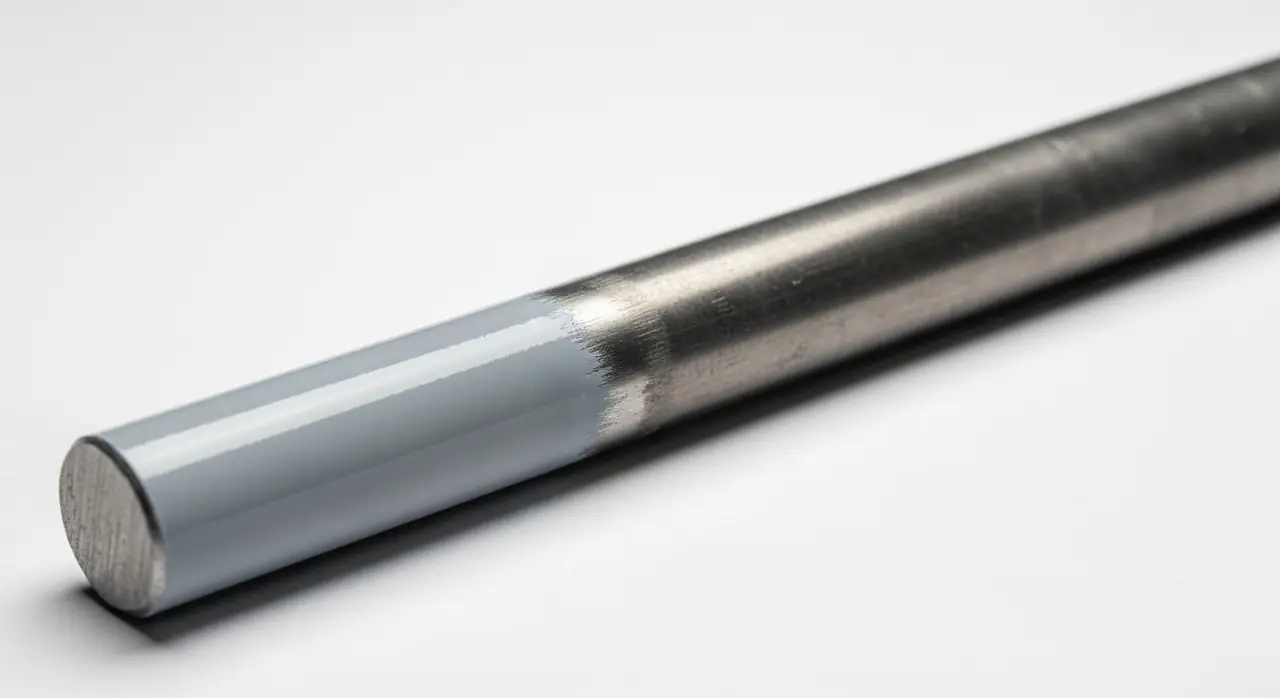
Confirms 16-gauge cold-rolled steel — not "steel alloy," not "heavy duty steel," not "reinforced aluminum"
Adjustable range covers your handle height — measure handle-to-floor and multiply by 1.414
360° swivel rubber foot — not fixed-angle, not bare metal, not soft foam
Positive-lock telescoping collar — not friction-only, requires deliberate rotational force to release
If egress door: quick-release mechanism — compliant with IBC 2021, releases in single motion without tools
SWB Model A: The 16-Gauge Standard
SWB Model A — All 5 Checklist Items Met
SWB Model A/EXIT — Egress + 1,100 lbs
All Model A specs plus IBC 2021 / NFPA 101 quick-release. Required for any egress door: bedrooms, ground-floor exterior doors, any exit route. Same 1,100 lb force rating.
View Model A/EXIT →FAQ
What gauge steel is best for a door security bar?
16-gauge cold-rolled steel. It holds 1,100 lbs of lateral force — 11x the force of a human kick. Avoid "steel alloy" listings that don't specify gauge.
Is a steel door bar better than a door chain?
Yes — a door chain holds 40–60 lbs. A 16-gauge steel bar holds 1,100 lbs. Chains fail under a single kick; steel bars are tested to survive sustained forced-entry attempts.
How do I tell if a bar is real steel or aluminum?
Test with a magnet — steel is magnetic, aluminum is not. For gauge: press your thumbnail into the tube wall. 16-gauge steel will not dent at all. If it flexes, it's aluminum or thin-gauge.
Does a steel door bar scratch hardwood floors?
No — the rubber foot contacts the floor, not the steel. For extra protection, place a furniture pad under the foot. The rubber foot design distributes force across a wide area.
Can I leave a steel door bar in place all day?
Yes. It requires no permanent mounting and causes no wear to the door, handle, or floor when properly positioned. Many users leave it in place whenever the door is closed.
Related
Marcus Reid · IDA Certified
12 years residential security specification. 7 door bar categories tested using pneumatic force rig · The gauge spec is the only spec that matters for real security.