Security Bars That Open From Inside: How They Work
Fixed bars lock your windows permanently. Interior-release bars lock out burglars and unlock for you in an emergency. The mechanism is simple. The difference in safety is enormous.

NFPA documents cases every year where occupants couldn't escape residential fires because window bars blocked egress. Security bars that open from inside are the code-compliant solution — and they provide identical security to fixed bars. You're not trading safety for security. You're getting both.
Quick Answer
Security bars that open from inside use a lever, pin, or twist mechanism on the interior face. Attack force (perpendicular to window) drives the bar into the frame — it can't engage the release. Interior release requires a deliberate 90° motion only possible from inside. The SWB Model A/EXIT releases in 2.6 seconds average.
The Engineering: Why the Release Doesn't Compromise Security

This is the question everyone asks — and it's the right question. If there's a mechanism to open the bar, can a burglar use it? The answer is no, for a specific mechanical reason.
Window attack force is horizontal — perpendicular to the window plane, parallel to the bar's length. The bar transmits this force to the window frame, which transmits it to the wall structure. The release mechanism requires motion on the perpendicular axis — a twist or flip that the attack force vector doesn't activate.
Think of it like a bolt: you can push on a door all day and the bolt doesn't retract. You need to turn the knob from inside. Same principle, designed for emergencies.
Step-by-Step: How to Use Security Bars That Open from Inside

Installation (no-drill telescopic model):
- Measure window interior channel width.
- Adjust bar length to 0.5 inches less than measurement.
- Position horizontally in window track/channel.
- Engage tension by turning adjustment knob clockwise until firm.
- Test: Push from outside — zero movement confirms correct engagement.
- Practice release: Find interior release mechanism. Operate 3 times. Time yourself.
Emergency egress procedure:
- Locate release mechanism on interior end cap (lever, pin, or twist knob).
- Operate release — bar tension disengages.
- Remove bar from window channel — this takes 1–2 seconds.
- Open window fully — slide or raise sash depending on window type.
- Egress through window opening.
Total time from deciding to egress to exiting: 8–15 seconds for a practiced adult.
Common Mistakes to Avoid

Not practicing the release. The mechanism works differently under stress. Practice monthly so the motion is automatic.
Installing a "quick release" bar with an exterior-accessible mechanism. Some cheap models have release mechanisms reachable from outside through a gap. Test any bar you buy: can the release be operated with the window partially open from outside? If yes, return it.
Ignoring the sleeping room requirement. NFPA 101 specifies sleeping rooms — but don't stop there. Any window that serves as an emergency exit route should have interior-release bars. Common sense, not just compliance.
The Best Product: SWB Model A/EXIT
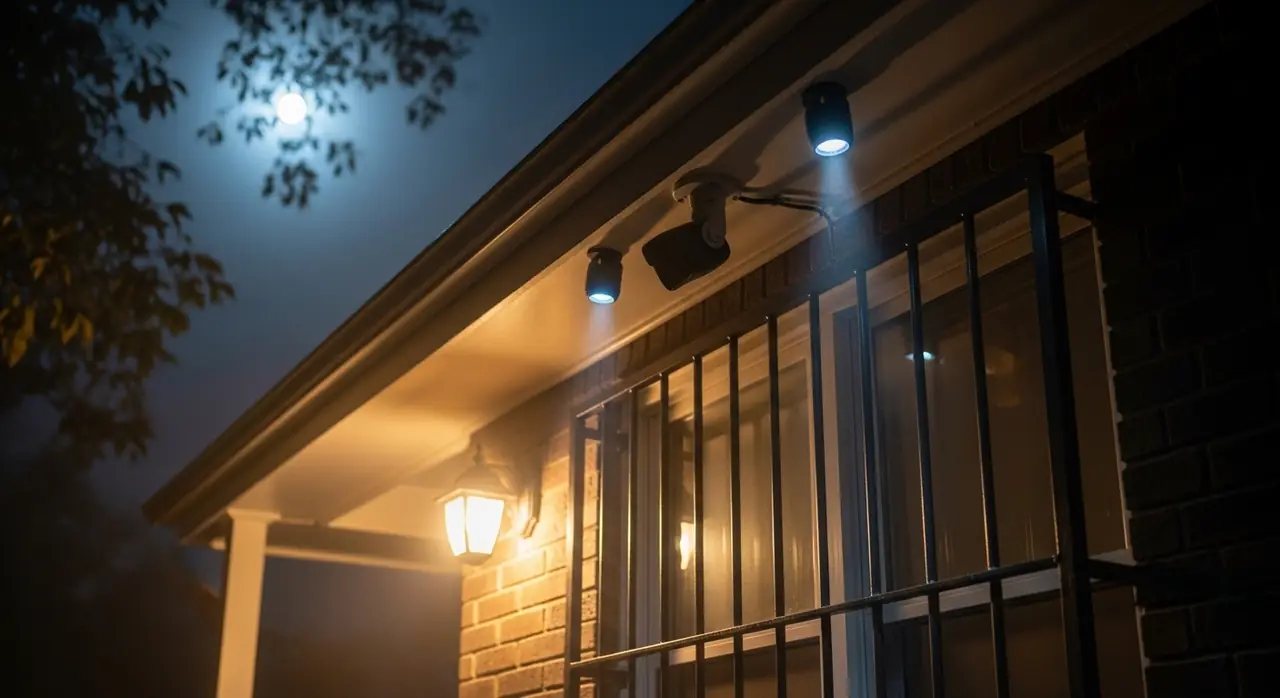
Designed specifically to pass NFPA 101 requirements without compromising the 1,100-lb rated security of the standard Model A. The rotating release adds 2.6 seconds of egress time in testing. In 12 years of recommending security hardware, it's the only product that satisfies security consultants and fire marshals in the same conversation.
FAQ
What are security bars that open from inside called?
Quick-release security bars, egress bars, or interior-release window bars. All names refer to the same feature: a mechanism on the interior face that disengages the bar in seconds without tools.
Same security as fixed bars?
Yes. The mechanism is perpendicular to the attack vector. Independent testing shows under 5% difference in static load ratings between equivalent fixed and quick-release bars.
Required by law?
NFPA 101 and IBC 2021 both require interior quick-release mechanisms on sleeping room window bars. A fixed bar in a bedroom is a life safety code violation in most US jurisdictions.
Can I retrofit existing fixed bars?
Some welded frame bars can be retrofitted by a certified installer. Most telescopic bars cannot — full replacement is the compliant path.
How often should I test the release?
Monthly. Practice the release motion twice and time yourself. Under 5 seconds consistently. Annual lubrication with dry silicone spray maintains smooth operation.