

Burglar Bars for Doors: Complete Security Guide for Entry Points (2026)
Burglar bars for doors are one of the most overlooked and underutilized physical security upgrades available to American homeowners and business operators in 2026. Most people think of window bars when they hear the term "burglar bars," but doors remain the number one entry point for residential and commercial break-ins across the United States. Front doors, back doors, side doors, sidelights, screen doors, and glass-paneled entry doors all present vulnerabilities that smart criminals exploit every single day.
In this comprehensive guide, we break down every type of burglar bar designed for door applications. We cover front entry doors, back doors, side doors, French doors, commercial storefronts, sidelight panels, and door-adjacent glass. You will learn exactly which products fit each application, how to size and install them, what fire codes apply to door-mounted bars, and why a $90 steel bar delivers protection that a $500 smart lock cannot match. By the end, you will have a clear buying plan for every door in your home or business.
Why Doors Are the Primary Target for Break-Ins
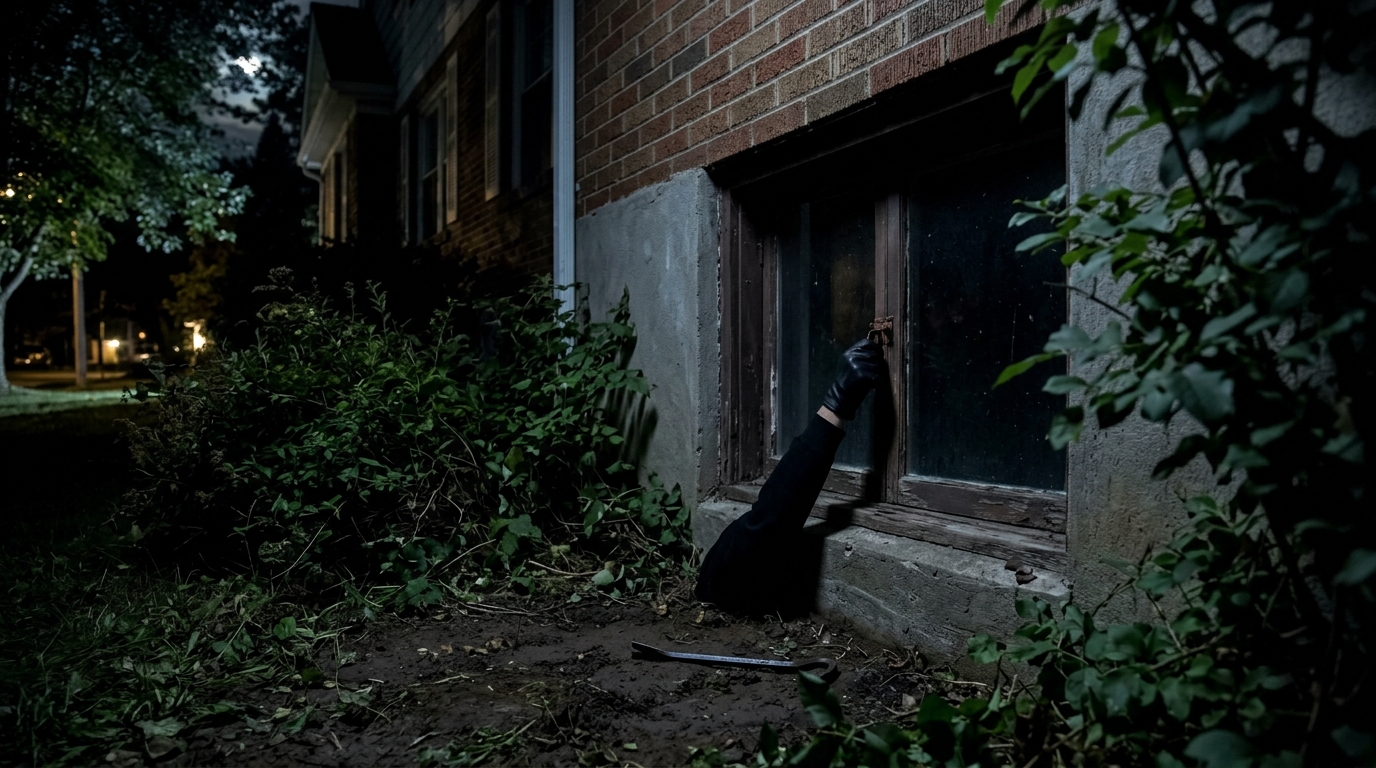
There is a persistent misconception that burglars primarily enter homes through windows. In reality, the front door is the single most common entry point for residential burglaries in the United States. Back doors and side doors follow closely behind. Windows rank third. The logic from a burglar's perspective is simple: doors provide the fastest and quietest access, they lead directly into the living space, and many American homes have door vulnerabilities that take seconds to exploit.
Consider what a typical residential door offers an intruder. A standard hollow-core interior door can be kicked in with a single well-placed boot. Even exterior solid-core doors are only as strong as their lock, strike plate, and frame. A deadbolt with a 1-inch throw installed in a softwood frame with a standard 3/4-inch strike plate can be defeated with a firm shoulder check. Glass sidelights beside the front door let a burglar break a single pane, reach inside, and unlock the deadbolt in under five seconds. Sliding glass patio doors can be lifted off their tracks with a pry bar in moments.
Burglar bars for doors address these vulnerabilities at the physical level. Where a smart lock records a breach after it happens, and an alarm system notifies you while the intruder is already inside, a steel bar across the door's glass panel or sidelight prevents entry before it starts. No amount of electronic security can replace the fundamental physics of a steel barrier that an intruder cannot move, bend, or cut through quietly.
For a broader perspective on how doors and windows work together as part of a complete perimeter defense, see our Ultimate Burglar Bars for Windows Guide. This article focuses specifically on door applications, where the protection gap is widest and the ROI is highest.
The Door Vulnerability Hierarchy
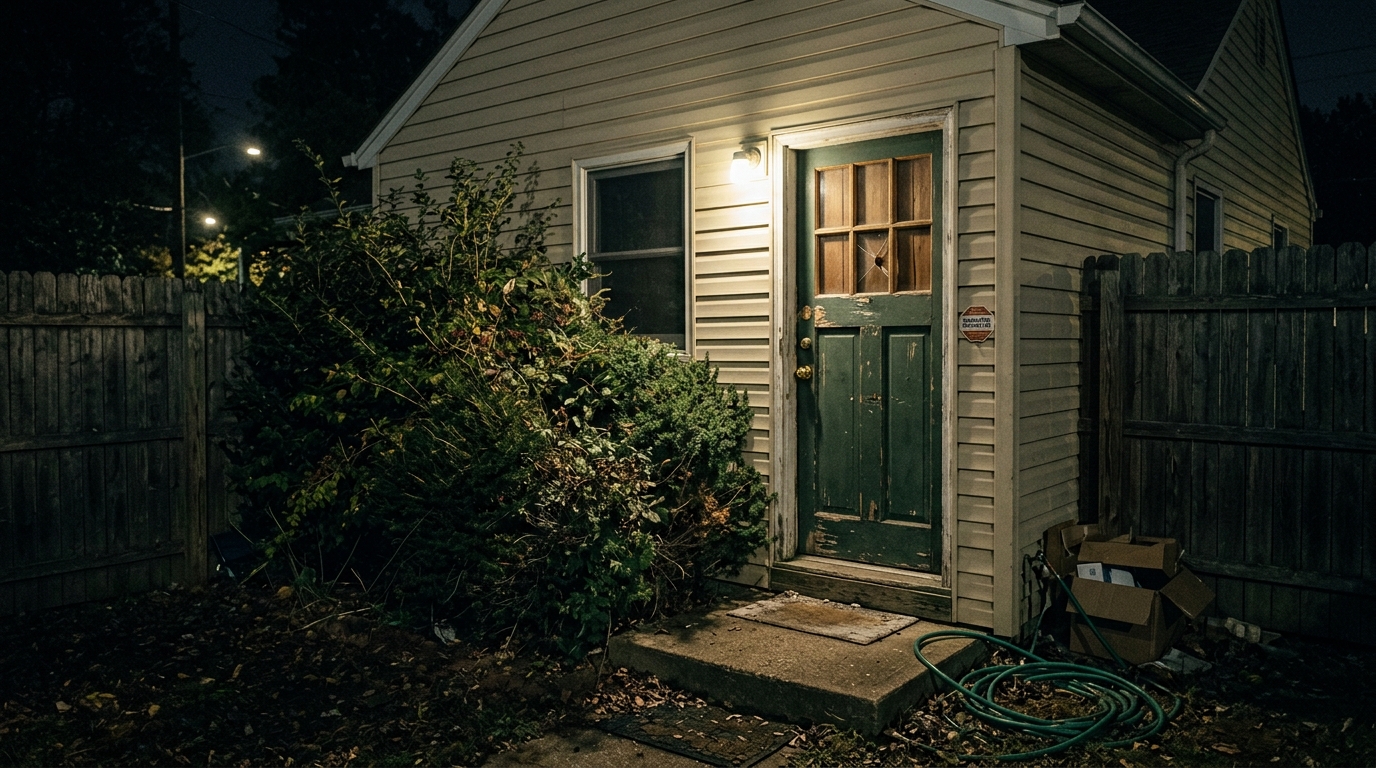
Not all doors carry equal risk. Here is the priority order based on how frequently each door type is targeted, from highest to lowest:
- Back doors -- shielded from street view, often leading to fenced yards that provide concealment. This is the preferred entry point for experienced residential burglars.
- Front doors -- the most direct route, especially when glass sidelights or decorative glass panels are present. Opportunistic burglars knock first; if no one answers, they attempt entry within 30 seconds.
- Side doors -- utility doors, mudroom entries, and garage-to-house doors are frequently left less secured than primary entry points. Many homeowners install deadbolts on front and back doors but leave side doors with basic knob locks.
- Sliding glass doors -- patio access doors are structurally weak by design. Standard sliding door locks are ornamental at best. A pry bar or even a screwdriver can defeat most.
- French doors -- the center seam between two swinging panels is a structural weak point that can be sprung with lateral force. Most French door lock sets engage only at the top and bottom of one panel.
- Basement entry doors -- exterior basement access doors (Bilco-style) and basement-level side doors are hidden, rarely reinforced, and frequently forgotten in security planning.
Types of Burglar Bars for Doors: Complete Breakdown
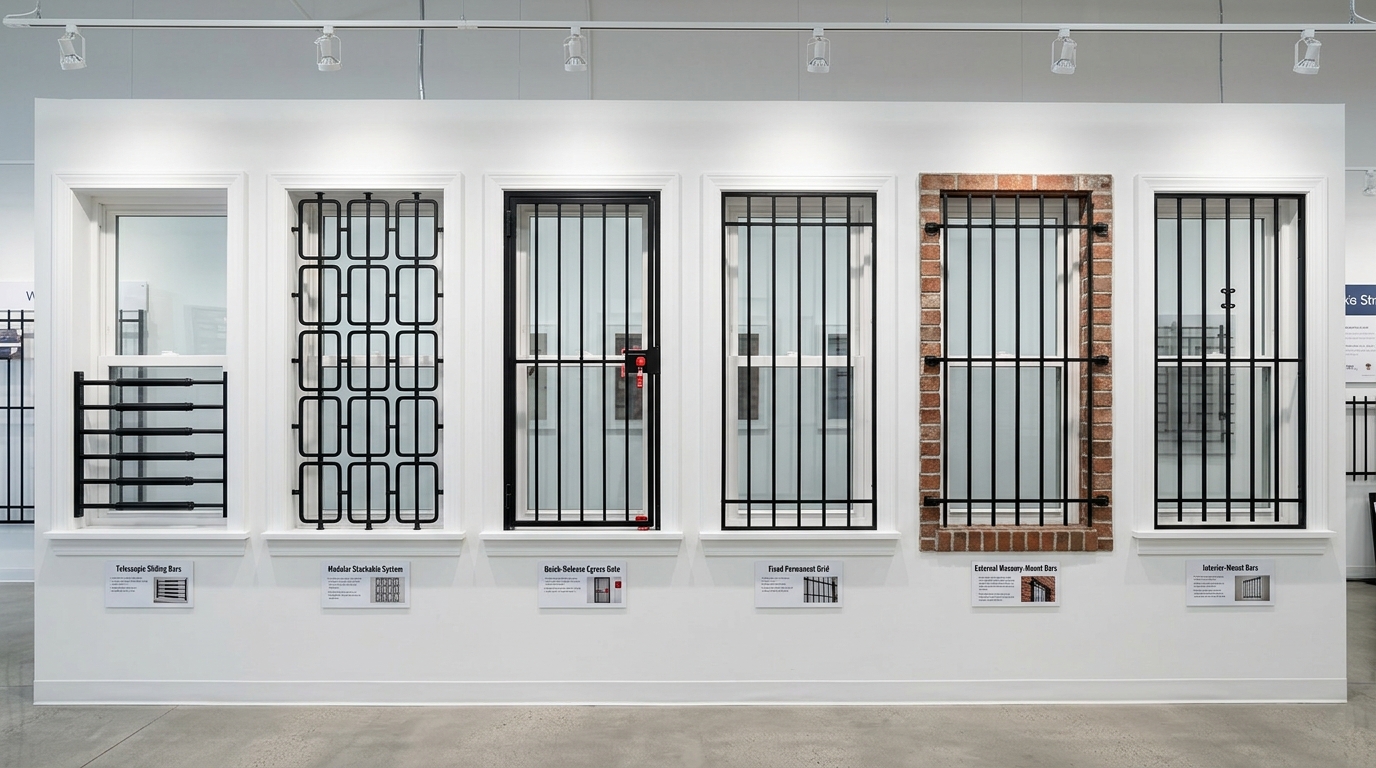
Burglar bars for doors are not a single product. The term covers several distinct product categories, each engineered for a different door type, mounting surface, and security requirement. Understanding these categories is the first step toward choosing the right protection for each entry point in your home or business.
1. Sidelight and Door Glass Panel Bars
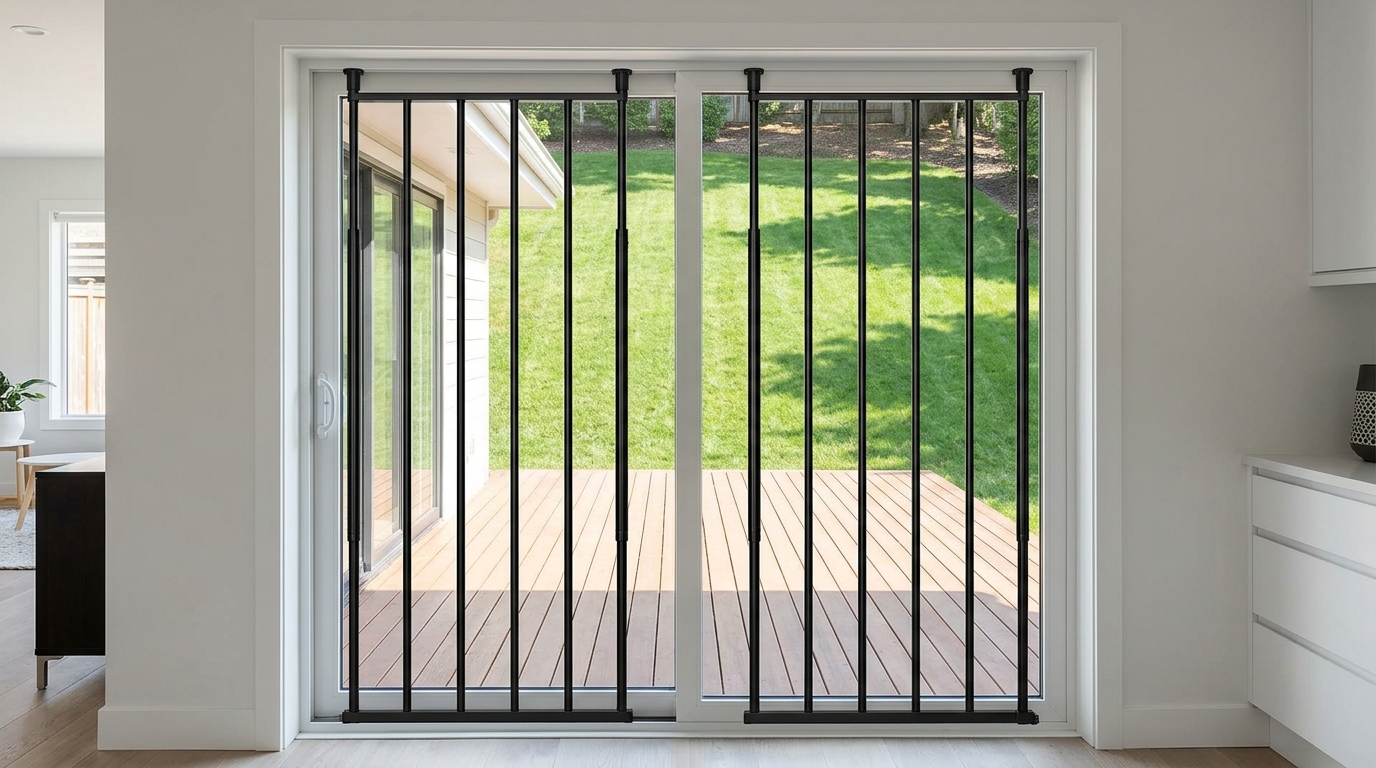
These are the most common residential application for door burglar bars. Sidelights are the narrow glass panels flanking the front door, and many entry doors include decorative glass inserts in the door itself. A burglar can break a sidelight pane, reach through, and unlock the deadbolt from inside in under five seconds. Burglar bars mounted over sidelights and door glass panels eliminate this vulnerability entirely.
Telescopic adjustable bars are ideal for sidelights because the narrow, non-standard widths of sidelight openings vary dramatically between homes. A bar that adjusts to fit the opening eliminates the need for custom fabrication. For an in-depth look at this specific application, see our existing guide on the best window security bars for homes, which covers sidelight protection as a key use case.
2. Wide-Span Modular Door Bars
For sliding glass doors, French doors, and wide commercial door openings, single-unit bars cannot cover the full span. Modular stacking systems solve this by connecting multiple bar units side by side to cover openings of 5, 6, 8, or even 10+ feet. The SWB Model A is specifically designed for this application -- its telescopic sections interlock to create a continuous barrier across any width.
3. Masonry-Mount Door Bars
Commercial buildings, brick homes, and concrete structures require door bars that anchor directly into masonry rather than wood or metal frames. These bars use expansion anchors driven into brick, block, or poured concrete, creating a bond that is literally stronger than the surrounding wall material. The SWB Model B is purpose-built for this application.
4. Screen Door and Storm Door Security Bars
Security screen doors and storm doors with built-in bars provide a secondary barrier in front of the primary entry door. While these are typically purchased as complete door units rather than add-on bars, understanding how they compare to standalone burglar bar solutions matters for making informed purchasing decisions.
5. Interior Door Barricade Bars
Horizontal bars that mount across the interior side of a door, reinforcing it against forced entry from outside. These are commonly used on commercial doors, safe rooms, and in high-security residential applications. They work differently from vertical window-style bars but serve the same core purpose: creating a physical barrier that cannot be defeated quickly or quietly.
Front Door Security: Protecting Your Most Visible Entry Point
The front door is a paradox in home security. It is the most visible entry point -- meaning it deters some criminals simply because neighbors and passersby can see it -- but it is also the most frequently targeted because it offers the most direct access to the home's interior. If your front door has glass sidelights or a glass panel insert, it has a vulnerability that no deadbolt, smart lock, or camera can fix.
Sidelight Protection: The Critical First Step
Sidelights are the narrow glass panels on one or both sides of the front door. They let in natural light and add curb appeal, but from a security perspective, they are a gift to burglars. Breaking a sidelight pane creates an opening large enough to reach the interior deadbolt thumb turn. The intruder does not need to defeat the lock at all -- they simply reach through the broken glass and turn it from inside.
Burglar bars for door sidelights solve this problem permanently. Telescopic steel bars mounted over the sidelight prevent anyone from reaching through, even if the glass is broken. The key specifications to look for in sidelight bars:
- Adjustable width -- sidelight openings range from 6 inches to 16 inches across, and many are non-standard sizes. Telescopic bars with a wide adjustment range eliminate guesswork.
- Vertical bar spacing -- bars should be spaced no more than 4 inches apart to prevent an arm from passing through.
- Anti-tamper mounting -- security screws or one-way fasteners prevent removal from the exterior. Standard Phillips screws are a liability.
- Powder-coat finish -- the finish must match the home's exterior aesthetic. Black and white are the most common options; both complement standard trim colors.
Glass Door Panel Protection
Many front doors include decorative glass inserts -- half-light (upper half glass), three-quarter-light, or full-light (entirely glass) designs. These are architecturally beautiful and catastrophically insecure. A half-light glass panel gives an intruder access to the deadbolt and doorknob from the exterior by breaking a single pane.
Burglar bars for glass door panels work identically to sidelight bars but are sized for the wider opening of the door insert. The SWB Model A's telescopic range covers standard half-light and three-quarter-light openings without custom ordering. For full-light doors, two stacked units provide complete coverage.
Front Door Security Layering Strategy
Burglar bars are one layer of front door defense. For maximum protection, combine them with:
- Grade 1 deadbolt -- ANSI/BHMA Grade 1 with a minimum 1-inch throw bolt
- Reinforced strike plate -- 3-inch screws into the stud, not the door frame trim
- Door frame reinforcement kit -- steel plates that distribute kick-in force across the full frame
- Security film on glass -- holds broken glass together, buying time even after impact
- Burglar bars on sidelights and glass panels -- prevents reach-through access to interior locks
This combination turns a standard front door into a genuine barrier. Each layer addresses a different attack vector, and together they create a delay that makes the target unacceptable to an opportunistic criminal.
Back Door and Side Door Security: Where Most Break-Ins Actually Happen
Back doors are the preferred entry point for experienced residential burglars. Unlike the front door, the back door is typically shielded from street view by the house itself, fences, hedges, or garage structures. An intruder can work on a back door for two to three minutes without any risk of being seen by neighbors or passing traffic. This privacy advantage makes back doors significantly more dangerous than front doors from a security standpoint.
Why Back Doors Are More Vulnerable
Several factors make back doors easier to defeat than front doors:
- Lower-quality hardware -- many builders install less expensive locks and knob sets on back doors compared to front doors
- Less reinforced frames -- back door frames are often standard construction with no additional reinforcement
- Glass panels common -- back doors frequently include half-light or full-light glass for natural lighting, creating the same reach-through vulnerability as front door sidelights
- Sliding patio doors -- the most common back door in American homes built after 1970, and one of the weakest entry points in any structure
- Concealment -- fences, trees, and the building itself shield the back door from public view
Burglar Bars for Back Doors
For standard back doors with glass panels, the approach is identical to front door protection: telescopic steel bars mounted over the glass to prevent reach-through access. The SWB Model A handles this application with its adjustable width mechanism and frame mount installation.
For sliding glass patio doors, the Model A's modular stacking system covers wide spans. Two or three units connected side by side create a continuous barrier across 5-foot to 8-foot openings. This is the same modular approach detailed in our window security bars cost and pricing guide, where we break down per-unit economics for multi-bar installations.
Side Door Considerations
Side doors -- the garage-to-house door, the mudroom entry, the utility room door -- are security afterthoughts in most homes. Homeowners focus their security budget on the front door (visible to visitors) and maybe the back door (closest to the yard), but the side door gets a basic knob lock and nothing else.
This is exactly what burglars count on. A side door tucked between the house and the garage, or hidden behind a fence gate, offers the same concealment advantages as a back door with even less hardware resistance. If your side door has a glass panel, window, or glass sidelight, burglar bars are a priority installation.
Sidelights and Glass Door Panels: Closing the Forgotten Gap
We keep returning to sidelights and glass panels because they represent the single largest exploitable vulnerability in American residential door security. An estimated 30-40% of newer homes in the US have front doors with sidelights or decorative glass inserts. Every one of these homes has a door that can be bypassed in seconds regardless of what lock is installed.
The Reach-Through Attack Explained
Here is exactly how the reach-through attack works:
- The intruder approaches the front door and confirms no one is home (knock, ring doorbell, listen for activity).
- Using a center punch, small hammer, or even an elbow, the intruder breaks one pane of the sidelight glass. Breaking glass is quieter than most people imagine -- a single sharp impact on a small pane produces a brief crack, not the dramatic shattering seen in movies.
- The intruder reaches through the broken pane to the interior side of the deadbolt. Standard deadbolts have a thumb turn on the interior that operates without a key.
- The intruder turns the thumb turn, unlocking the deadbolt, and opens the front door normally. Total elapsed time from glass break to open door: under five seconds.
Burglar bars mounted over sidelight glass make this attack physically impossible. Even after breaking the glass, the intruder cannot fit an arm between the steel bars to reach the lock. The bars transform a 5-second vulnerability into an impenetrable barrier.
Double-Keyed Deadbolts: The Wrong Solution
Some homeowners install double-keyed deadbolts (requiring a key on both sides) to counter the reach-through attack. This stops the attack, but it creates a far more dangerous problem: a fire trap. If you need to exit your home during a fire or emergency and cannot find the key, the double-keyed deadbolt becomes a barrier to your own escape. This is why double-keyed deadbolts are prohibited or restricted in most US jurisdictions under IBC and NFPA fire codes.
Burglar bars are the correct solution because they stop the reach-through attack without compromising emergency egress. The door itself remains fully operable from the inside -- only the glass panel is reinforced. This maintains complete compliance with fire egress codes while eliminating the security vulnerability.
Sizing Sidelight Bars
Sidelights come in a wide range of widths, which is why adjustable telescopic bars are essential for this application. Common sidelight dimensions in US residential construction:
- Narrow sidelights: 6 to 10 inches wide
- Standard sidelights: 10 to 14 inches wide
- Wide sidelights: 14 to 18 inches wide
- Half-sidelights: same width range but only half the door height
Always measure the inside dimension of the opening (glass edge to glass edge or frame edge to frame edge), not the exterior trim. For detailed measuring instructions that apply to both window and door applications, see our complete measurement guide.
Sliding Doors and French Doors: Wide-Span Protection
Sliding glass doors and French doors represent the widest openings in most homes, and they require a different approach than single-panel sidelight bars. These openings typically range from 5 feet to 8 feet (and occasionally 10+ feet for multi-panel systems), which is far beyond the adjustment range of any single bar unit.
Sliding Glass Door Bars
Sliding glass patio doors are among the most vulnerable entry points in any home. The standard latch mechanism is a hook or toggle that can be defeated with a flat-blade screwdriver inserted between the door and frame. Older sliding doors can be physically lifted off their bottom track and pulled away from the frame. Even "security" bars placed in the track (the old broomstick method) only prevent the door from sliding open -- they do nothing against a lift-and-remove attack or glass breakage.
Burglar bars for sliding glass doors use the modular stacking approach. Two or three SWB Model A units, connected side by side, create a continuous steel barrier across the full width of the door. The telescopic adjustment within each unit accounts for non-standard widths and ensures a tight fit without custom fabrication.
Key specifications for sliding door bar installations:
- Coverage width: calculate total opening width and divide by single-unit maximum width to determine how many modules you need
- Mounting surface: frame mount on the door surround (wood, vinyl, aluminum) or wall mount if masonry surrounds the opening
- Vertical placement: bars should cover the glass area, not the solid lower panel (if present)
- Interior vs. exterior mount: interior mounting is preferred for sliding doors because the sliding panel operates on the interior track
French Door Bars
French doors present a unique challenge because both panels swing, and the center seam where they meet is a structural weak point. Burglar bars for French doors typically mount on the fixed frame surrounding the door opening, not on the doors themselves. This maintains the ability to open both panels while protecting the glass from reach-through attacks.
For French doors with full-length glass panels (the most common design), a combination of vertical bars covering the glass area prevents the reach-through attack that targets the interior lock hardware. The modular stacking approach handles the typical 5-foot to 6-foot combined width of standard French door openings.
Patio Door Security: Complete Strategy
Patio doors -- whether sliding or French -- benefit from a layered security approach:
- Burglar bars -- steel barrier preventing glass breach and reach-through
- Auxiliary foot lock -- secondary lock at the base of the sliding panel, preventing track lift
- Anti-lift pins -- screws or pins in the upper track that prevent the door from being lifted out
- Security film -- holds broken glass together, adding delay time
- Glass break sensor -- alerts you to attempted entry even if the bars prevent access
Commercial Door Security Bars: Storefronts, Warehouses, and Offices
Commercial properties face a different set of door security challenges than residential homes. Storefronts have large glass display areas adjacent to entry doors. Warehouses have roll-up doors and personnel doors in concrete block walls. Offices have glass entryways that prioritize aesthetics over security. Each requires a tailored approach to burglar bar selection and installation.
Storefront Door and Display Glass Protection
Retail storefronts are targeted for smash-and-grab attacks, where the intruder breaks the display glass or door glass, grabs high-value merchandise, and leaves within 30 to 60 seconds. Burglar bars for storefront applications need to cover large glass areas while maintaining visibility for product displays during business hours.
The SWB Model B is the preferred solution for commercial storefronts with masonry surrounds (brick, concrete block, or stone). Its heavy-gauge steel construction and expansion anchor mounting provide commercial-grade protection that bolts directly into the building's structural masonry. For commercial buildings with wood or metal framing, the Model A with wall mount hardware provides equivalent protection.
Warehouse and Industrial Door Bars
Warehouse personnel doors -- the standard 36-inch doors used for employee access in industrial facilities -- are high-priority targets for break-ins targeting tools, equipment, copper wiring, and raw materials. These doors are typically set in concrete block walls, making masonry-mount bars the correct choice.
The Model B's masonry-specific design handles this application with minimal installation complexity. Expansion anchors are drilled directly into the concrete block surrounding the door, and the heavy-gauge steel bars resist prying and cutting attacks that lighter-gauge residential products cannot withstand.
Office and Professional Building Doors
Office buildings present an aesthetic challenge: burglar bars must provide genuine security without making the building look like a fortress. For glass entry doors and adjacent glass panels, the Model A's clean vertical-line design provides an unobtrusive profile that reads as a modern architectural element rather than an obvious security device. Black powder-coated bars against dark-framed glass entries are virtually invisible to casual observers.
Commercial Door Bar Requirements
Commercial installations have additional requirements beyond residential applications:
- ADA compliance -- bars cannot obstruct the required clear opening width (32 inches minimum) for accessible entry doors
- Fire marshal approval -- commercial occupancy requires fire marshal sign-off on any device that could potentially impede egress
- Insurance requirements -- some commercial insurers require specific security measures; burglar bars may qualify for premium discounts
- Building code permits -- check with your local building department before installing bars on commercial doors; some jurisdictions require permits for exterior modifications
Best Burglar Bars for Doors: Our 2026 Product Picks
After testing and evaluating the available products for door security applications, here are our specific recommendations for each door type.
Best for Residential Doors: SWB Model A (~$90)
The SWB Model A is our top recommendation for residential door burglar bars. Its telescopic adjustment mechanism fits the non-standard widths of sidelights, glass door panels, and back door windows without custom ordering. The modular stacking capability covers sliding glass doors and French doors of any width. Frame mount or wall mount options handle every residential construction type.
Ideal door applications for Model A:
- Front door sidelights (both narrow and standard widths)
- Glass door panel inserts (half-light, three-quarter-light, full-light)
- Back door glass panels
- Side door windows
- Sliding glass patio doors (modular stack of 2-3 units)
- French door glass panels (modular stack)
- Garage side door windows
Key advantages for door use:
- Telescopic adjustment handles the non-standard widths common in door sidelights and panels
- Modular stacking covers any width, from 6-inch sidelights to 8-foot sliding doors
- Frame mount installs in 15 minutes per unit with a standard drill
- Powder-coated steel in black or white matches standard residential door trim
- Anti-tamper security fasteners included -- not Phillips-head screws
- Approximately $90 per unit -- less than one month of alarm monitoring
Best for Commercial and Masonry Doors: SWB Model B (~$91)
The SWB Model B is the definitive choice for commercial door applications and any residential door set in brick, concrete, or masonry walls. Its heavy-gauge steel construction and expansion anchor mounting system create a permanent barrier that is integrated into the building's structure rather than just bolted to a frame.
Ideal door applications for Model B:
- Commercial storefront doors and adjacent glass panels
- Warehouse personnel doors in concrete block walls
- Office building glass entry panels in masonry surrounds
- Brick residential back doors and side doors
- Concrete basement entry doors
- Industrial facility doors
Key advantages for commercial door use:
- Masonry-specific engineering with expansion anchors rated for concrete and brick
- Heavy-gauge steel exceeds residential standards for forced-entry resistance
- Commercial-grade powder coat withstands high-traffic environments
- Mounting into masonry is permanent -- these bars cannot be removed without demolishing the surrounding wall
- Approximately $91 per unit for commercial-grade protection
Product Comparison: Door Applications
| Feature | SWB Model A | SWB Model B | Generic Door Bar (Amazon) | Security Screen Door |
|---|---|---|---|---|
| Material | Powder-coated steel | Heavy-gauge powder-coated steel | Thin steel or aluminum | Aluminum frame with steel mesh |
| Telescopic Adjustment | Yes | No (masonry-specific) | Limited | No (custom sized) |
| Modular Stacking | Yes | No | No | N/A |
| Sidelight Compatible | Yes | Yes (masonry frame only) | Varies | No |
| Sliding Door Coverage | Yes (multi-unit stack) | No | No | No |
| Commercial Grade | Residential/Light commercial | Full commercial | No | Varies |
| Anti-Tamper Hardware | Included | Included | Rarely | Varies |
| Approximate Cost | ~$90 | ~$91 | $15-$40 | $200-$800 |
| DIY Install | Yes (15 min) | Masonry drill required | Yes | Professional required |
| Expected Lifespan | 20-30 years | 20-30 years | 3-5 years | 10-15 years |
How to Measure and Install Burglar Bars on Doors
Door applications require the same precision measurement approach as window installations, but with a few additional considerations unique to door-mounted bars.
Measuring Door Sidelights
Sidelight measurements follow the same three-point method used for windows, but the narrow width of most sidelights means accuracy is even more critical. A 1/4-inch error on a 30-inch window is negligible; a 1/4-inch error on an 8-inch sidelight is significant.
- Measure the inside width of the sidelight opening at three points: top, middle, and bottom. Record the smallest measurement.
- Measure the inside height at three points: left, center, and right. Record the smallest measurement.
- Note the frame material -- wood, vinyl, aluminum, or masonry -- to determine mounting method (frame mount vs. wall mount).
- Check for obstructions -- decorative glass leading, muntins, or hardware that might interfere with bar placement.
- Measure the distance from the glass to the deadbolt thumb turn -- this determines whether the bars need to extend past the glass area to prevent reach-through access to the lock.
For the complete step-by-step measurement process with diagrams, see our window and door measurement guide.
Measuring Sliding Glass Doors
For sliding glass doors, measure the total glass area that needs coverage:
- Measure the total opening width -- frame edge to frame edge across the full slider opening.
- Divide by the single-unit maximum width of your chosen bar to determine how many modular sections you need.
- Measure the glass height to determine vertical bar placement.
- Identify the mounting surface -- the fixed frame members above and below the sliding panel.
Installation: Frame Mount (Residential)
Frame mount installation for door sidelights and glass panels follows the same process as window frame mounting:
- Position the bar in the opening and extend to the correct width
- Level the bar using a standard bubble level
- Mark mounting holes through the bar's pre-drilled bracket holes
- Pre-drill pilot holes into the door frame
- Drive the anti-tamper security screws through the brackets into the frame
- Verify the bar is secure by applying lateral pressure -- there should be zero movement
Estimated time: 15 minutes per unit for an experienced DIYer with a cordless drill.
Installation: Masonry Mount (Commercial)
Masonry mount installation requires a rotary hammer drill and masonry-rated expansion anchors:
- Position the bar against the masonry surface surrounding the door
- Mark anchor locations through pre-drilled bracket holes
- Drill anchor holes using a rotary hammer drill with the correct masonry bit diameter
- Set expansion anchors flush with the masonry surface
- Mount the bar and torque fasteners to specification
- Verify anchor pull-out resistance by applying firm outward pressure
Estimated time: 30-45 minutes per unit. Professional installation recommended for masonry work if you do not own a rotary hammer drill.
Fire Code and Egress Compliance for Door Bars
Fire code compliance for door burglar bars is straightforward but critically important: burglar bars must never prevent a door from being opened from the inside during an emergency.
Key Code Requirements for Door Bars
Under IBC Section 1010 and NFPA 101, all means of egress (including doors) must be operable from the interior without keys, tools, or special knowledge. Burglar bars for doors are compliant as long as they meet these conditions:
- The bars do not obstruct the door itself from opening. Bars mounted on sidelights, glass panels, or the wall surface adjacent to the door do not affect the door's operation.
- The bars do not lock the door or prevent interior unlocking. Vertical bars over glass panels prevent reach-through from the outside but do not interfere with interior lock operation.
- For bars mounted on the door itself (interior barricade bars): the release mechanism must be operable from the inside without tools or keys.
The Sidelight Bar Advantage
Sidelight and glass panel burglar bars have a unique compliance advantage: they do not touch the door at all. The bars are mounted on the sidelight frame or the wall surrounding the glass panel. The door operates completely independently of the bars. This means sidelight and glass panel bars are inherently fire code compliant because they cannot physically prevent egress through the door.
Sliding Door Bar Compliance
Sliding glass doors used as a means of egress must remain operable with bars installed. For interior-mounted bars on sliding doors, ensure that the bars can be removed or swung open from the inside. For exterior-mounted bars, the sliding panel should still operate on its track without the bars interfering.
Commercial Egress Requirements
Commercial properties have stricter egress requirements than residential. All exit doors must:
- Open in the direction of exit travel (outward)
- Be operable with a single action (panic bar or lever handle)
- Provide a minimum clear opening width of 32 inches
- Not be obstructed by any device, including security bars
Burglar bars on commercial doors must be positioned on the glass panels or sidelights adjacent to the door, not on the door itself or across the doorway. The SWB Model B's masonry mount positions the bars on the wall surface, keeping the door opening completely clear.
Cost Breakdown: What Door Burglar Bars Actually Cost
Let us talk specific numbers for each door type. The economics of door burglar bars are compelling when you compare the one-time cost against the ongoing expense of alarm monitoring or the potential loss from a break-in.
Residential Door Protection: Cost Scenarios
| Door Type | SWB Product | Units Needed | Total Cost (DIY) |
|---|---|---|---|
| Front door with 2 sidelights | Model A | 2 | $180 |
| Front door with glass insert | Model A | 1-2 | $90-$180 |
| Back door with glass panel | Model A | 1 | $90 |
| Side door with small window | Model A | 1 | $90 |
| 6-foot sliding glass door | Model A (modular stack) | 2 | $180 |
| 8-foot sliding glass door | Model A (modular stack) | 3 | $270 |
| French doors (5-foot opening) | Model A (modular stack) | 2 | $180 |
| Garage side door (masonry wall) | Model B | 1 | $91 |
Whole-Home Door Protection Example
A typical single-family home with a front door (2 sidelights), back sliding glass door, and one side door:
- 2 x Model A for front door sidelights -- $180
- 2 x Model A for sliding glass door (modular stack) -- $180
- 1 x Model A for side door glass panel -- $90
- Total product cost: $450 (5 units, DIY installation)
- With professional installation: $450 product + $250-$500 labor = $700-$950 total
Compare this to alarm monitoring at $35/month ($420/year), and the door bars pay for themselves in just over one year. And unlike alarm monitoring, door bars have zero recurring fees for the next 20-30 years. For a detailed cost analysis across all security bar applications, see our complete pricing guide.
Commercial Door Protection Costs
Commercial applications using the Model B for masonry-mounted door security:
- Single storefront door with adjacent glass: 2-4 units x $91 = $182-$364
- Warehouse personnel door: 1-2 units x $91 = $91-$182
- Office entry glass panels: 2-3 units x $91 = $182-$273
- Professional installation for masonry: add $75-$150 per unit for rotary hammer drill work
The ROI is Immediate
The average commercial burglary results in several thousand dollars in combined merchandise loss, property damage, business interruption, and insurance deductible costs. A single prevented break-in covers the entire cost of barring every door in the building multiple times over. And commercial insurance carriers in many markets offer premium discounts for visible physical security measures -- ask your broker specifically about burglar bar credits.
Door Bars vs. Window Bars: Key Differences
While the same SWB products work for both door and window applications, the installation context and strategic priorities differ. Understanding these differences helps you plan a complete perimeter defense strategy.
Sizing Differences
Door sidelights are typically narrower than standard windows (6-18 inches vs. 24-48 inches for windows). This means a single telescopic bar unit that covers a window will also cover a sidelight -- the adjustable range handles both. Sliding glass doors and French doors are wider than most windows, requiring the modular stacking approach.
Mounting Surface Differences
Door frames are constructed differently from window frames. Entry door frames are typically heavier lumber (often doubled or reinforced) to support the weight and operation of the door. This actually provides a stronger mounting surface for burglar bars than standard window frames. The lag screws have more material to grip, and the frame is less likely to split under load.
Aesthetic Sensitivity
Front door areas are the most aesthetically sensitive location on any home. Curb appeal matters for property value, neighborhood perception, and personal pride. This makes finish quality and design profile more important for door bars than for bars on side windows or basement windows. The SWB Model A's clean vertical-line design and professional powder coat finish are specifically engineered to address this sensitivity.
Priority Order: Doors First or Windows First?
If budget forces you to choose between barring doors and barring windows, prioritize based on your specific property:
- If your doors have glass sidelights or panels: bar the doors first. The reach-through vulnerability is faster to exploit than breaking through a window.
- If your doors are solid (no glass): bar the ground-floor windows first. Solid doors with good deadbolts are already reasonably secure; unbarred windows are the bigger vulnerability.
- If you have a sliding glass door: this is your highest priority regardless of other factors. Bar it immediately.
The ideal approach, of course, is to bar both doors and windows. For the cost of a few months of alarm monitoring, you can protect every entry point in your home permanently.
8 Mistakes Homeowners Make with Door Burglar Bars
These are the errors we see repeatedly in door bar installations. Avoiding them will maximize your security and minimize frustration.
Mistake #1: Barring Windows but Ignoring Door Sidelights
This is the most common and most dangerous mistake. A homeowner installs bars on every ground-floor window but leaves the front door sidelights unprotected. The sidelights provide faster access to the interior than any window. If your front door has sidelights, they should be the first opening you bar -- before any window.
Mistake #2: Using a Double-Keyed Deadbolt Instead of Bars
As discussed above, double-keyed deadbolts address the reach-through attack but create a fire trap. Burglar bars are the code-compliant solution that stops the attack without compromising emergency egress.
Mistake #3: Using a Broomstick in the Sliding Door Track and Calling It Security
A broomstick or dowel in the track prevents the door from sliding open but does nothing against a lift-and-remove attack, glass breakage, or frame manipulation. It is a 1980s hack, not a security measure. Steel burglar bars across the glass panel provide actual protection.
Mistake #4: Buying Door Bars That Are Too Narrow for the Opening
Measuring the decorative trim around the sidelight instead of the actual glass opening leads to bars that are too narrow and leave gaps. Always measure the inside dimension of the opening, and verify the bar's adjustment range covers your measurement.
Mistake #5: Mounting with Standard Screws
A burglar bar is only as strong as its mounting hardware. Standard Phillips-head screws can be removed in seconds with a cordless drill from the outside. Use the anti-tamper security fasteners provided with SWB products, or upgrade to one-way screws, shear-head bolts, or Torx fasteners.
Mistake #6: Forgetting the Back Door
The back door is targeted more frequently than the front door by experienced burglars because it offers concealment. If your back door has a glass panel, it needs burglar bars just as much as your front door sidelights -- arguably more.
Mistake #7: Installing Bars That Block Door Operation
Bars must be mounted on the glass panel, sidelight, or surrounding wall -- never across the door opening itself (unless using a code-compliant interior barricade system). Bars that prevent the door from opening create a fire hazard and violate egress codes.
Mistake #8: Choosing Appearance Over Security
Decorative scroll-work bars look elegant but often have wide spacing between ornamental elements that allows an arm to pass through. The whole point of door burglar bars is to prevent reach-through access. Verify that bar spacing is no more than 4 inches and that all decorative elements are structural steel, not thin ornamental wire.
Frequently Asked Questions About Burglar Bars for Doors
What are burglar bars for doors?
Burglar bars for doors are steel security bars mounted over door sidelights, glass panels, and adjacent glass areas to prevent intruders from breaking the glass and reaching through to unlock the door from the inside. They function identically to window security bars but are sized and positioned for door-specific applications including front door sidelights, back door glass panels, sliding glass patio doors, French doors, and commercial storefront glass. Professional-grade door bars like the SWB Model A use powder-coated steel with anti-tamper hardware and telescopic adjustment to fit non-standard openings.
Do burglar bars work on all types of doors?
Burglar bars are effective on any door that has glass components -- sidelights, glass panel inserts, full-glass doors, sliding glass doors, and French doors. For solid doors without glass, burglar bars are not applicable because there is no glass to protect against reach-through attacks. Solid doors are secured through deadbolts, reinforced strike plates, and frame reinforcement kits instead. The SWB Model A handles residential doors with frame mount installation, while the SWB Model B is designed for commercial doors set in brick, concrete, or masonry walls.
How much do burglar bars for doors cost in 2026?
Professional-grade burglar bars for doors cost approximately $90 to $91 per unit in 2026. A typical home with two front door sidelights, one back door glass panel, and one side door window requires 4 units at a total product cost of $361 with DIY installation. A sliding glass patio door requires 2 to 3 modular units at $180 to $270. Budget generic bars range from $15 to $40 per unit but use thinner steel and standard screws that provide minimal real security. Professional installation adds $50 to $100 per unit for frame mount or $75 to $150 per unit for masonry mount.
Are burglar bars for doors fire code compliant?
Yes. Burglar bars mounted on door sidelights, glass panels, and adjacent glass areas are inherently fire code compliant because they do not obstruct the door itself from opening. The door operates independently of the bars. Under IBC Section 1010 and NFPA 101, means of egress must be operable from the interior without tools or keys. Since sidelight and glass panel bars do not touch or affect the door mechanism, they do not impede egress. The only exception is interior barricade bars mounted across the door opening, which must include a code-compliant quick-release mechanism.
Can I install burglar bars on my front door sidelights myself?
Yes. Telescopic frame-mount burglar bars like the SWB Model A install on sidelights in approximately 15 minutes per unit using a standard cordless drill, level, and tape measure. No cutting, welding, or specialty tools are required. The bar's telescopic mechanism adjusts to fit the sidelight width, pre-drilled mounting brackets align with the frame, and anti-tamper security screws secure the bar in place. The only scenario requiring professional installation is masonry-mount bars (Model B) on brick or concrete surrounds, which need a rotary hammer drill.
What is the reach-through attack and how do door bars prevent it?
The reach-through attack is a burglary technique where the intruder breaks a glass sidelight or door panel, reaches through the opening, and turns the interior deadbolt thumb turn to unlock the door from inside. This bypasses the lock entirely and takes under five seconds. Burglar bars prevent this attack by placing steel vertical bars across the glass opening. Even after the glass is broken, the bar spacing (no more than 4 inches apart) prevents an arm from passing through to reach the lock. This makes the reach-through attack physically impossible without removing the steel bars, which requires significant time, noise, and specialized tools.
Do burglar bars reduce my home's curb appeal?
Modern burglar bars have a minimal, clean vertical-line profile that blends with contemporary home architecture. Black powder-coated bars on dark-framed sidelights are nearly invisible from the street. White bars match standard trim colors. The ornamental wrought-iron prison-bar look is a product of previous decades, not modern manufacturing. Products like the SWB Model A feature a streamlined design that many homeowners report visitors do not even notice. Professional-grade powder coating also ensures the finish stays clean and chip-free for decades, unlike painted bars that peel and rust within a few years.
Should I use a double-keyed deadbolt instead of burglar bars?
No. Double-keyed deadbolts (requiring a key on both sides) prevent the reach-through attack but create a serious fire hazard. If you cannot find the key during an emergency, the deadbolt traps you inside. This is why double-keyed deadbolts are restricted or prohibited in most US jurisdictions under IBC and NFPA fire codes. Burglar bars are the correct solution because they prevent the reach-through attack while keeping the door fully operable from the inside. The door opens normally during an emergency; only the glass panel is reinforced.
What size burglar bars do I need for my door sidelights?
Sidelight width varies significantly between homes. Narrow sidelights run 6 to 10 inches, standard sidelights 10 to 14 inches, and wide sidelights 14 to 18 inches. Measure the inside width of the sidelight opening at three points (top, middle, bottom) and use the smallest measurement. Telescopic bars like the SWB Model A adjust to fit across this range without custom ordering. Always measure the inside dimension of the opening, not the exterior trim. For complete measuring instructions, refer to our step-by-step measurement guide at securitywb.com.
Can burglar bars be used on commercial storefront doors?
Yes. The SWB Model B is specifically designed for commercial applications. It mounts directly into masonry, concrete block, and brick walls using heavy-duty expansion anchors, providing commercial-grade forced-entry resistance. The bars protect storefront glass panels and door-adjacent display glass without obstructing the door opening or ADA-compliant clear width. Commercial installations must comply with local building codes and fire marshal requirements, and bars should be positioned on glass panels and wall surfaces rather than across the doorway itself to maintain egress compliance.
Final Verdict: Which Burglar Bars Should You Buy for Your Doors?
After evaluating every available option for door security applications, our recommendations are clear and specific.
For every residential door with glass sidelights, glass panels, or glass inserts, the SWB Model A (~$90) is the right product. Its telescopic adjustment handles the non-standard widths of sidelights and door panels that fixed-size bars cannot fit. Its modular stacking system covers sliding glass doors and French doors of any width. Frame mount installation takes 15 minutes per unit with basic tools. And at $90 per unit with a 20-30 year lifespan, it costs less per year than any electronic security solution on the market.
For commercial doors, warehouse doors, and any door set in brick, concrete, or masonry, the SWB Model B (~$91) delivers the anchor strength that frame-mount products cannot achieve on hard surfaces. Its heavy-gauge steel and expansion anchor system integrate the bars into the building's structure for permanent, commercial-grade protection.
Recommended Door Protection Plan: Typical 3-Bedroom Home
- 2 x Model A -- front door sidelights ($180)
- 1 x Model A -- back door glass panel ($90)
- 2 x Model A -- sliding glass patio door, modular stack ($180)
- 1 x Model A -- side/garage door window ($90)
- Total: $540 for complete door protection across 4 entry points
Combine this with window bars on all ground-floor windows, and you have eliminated every glass-accessible entry point in your home for a one-time investment that lasts decades. For a complete breakdown of window bar selection and pricing, see our Best Window Security Bars for Homes buyer's guide.
Every door with exposed glass is an open invitation to an experienced burglar. A $90 steel bar turns that invitation into a steel wall. Start with your front door sidelights -- the most exploited vulnerability in American residential security -- and work outward from there.
Ready to secure your doors? Explore the full SWB product line:
- Model A -- Telescopic + Modular | Frame or wall mount | ~$90 | Ideal for residential door sidelights, glass panels, sliding doors
- Model B -- Heavy-duty masonry mount | Brick and concrete | ~$91 | Ideal for commercial storefronts, warehouse doors, masonry surrounds
- Model A/EXIT -- Quick-release egress | IBC/NFPA/OSHA compliant | ~$92 | Required for bedroom windows and rental properties