

Child Safety Window Bars: The Complete Protection Guide for Parents (2026)
Every year in the United States, thousands of children under age five are treated in emergency rooms for injuries caused by falls from windows. The Consumer Product Safety Commission has tracked this pattern for decades, and the numbers have not meaningfully declined. The reason is simple: windows in most American homes were never designed with child safety in mind, and standard window locks are not engineered to resist a curious toddler leaning against a screen or climbing onto a sill.
Child safety window bars solve this problem with a physical barrier that a child cannot defeat, remove, or push through. But here is where most parents hit a wall: the same bars that keep a child from falling out of a window can also trap a family during a fire if the bars do not include a quick-release mechanism. Choosing the wrong product creates one safety hazard while solving another.
This guide walks you through every decision you need to make as a parent. We cover which windows need bars, how to choose between child guards and security bars, what the fire code actually requires, which products meet both child safety and egress standards simultaneously, and how to install them correctly. By the end, you will have a clear action plan to protect your children without compromising your family's ability to escape in an emergency.
Why Child Safety Window Bars Are a Non-Negotiable in 2026
Parents invest in car seats, outlet covers, cabinet locks, stair gates, and dozens of other child-proofing products. But windows remain one of the most dangerous and most overlooked hazards in the American home. The reason is a combination of false assumptions and misplaced confidence in standard window hardware.

Window screens are not safety devices. This is the single most important fact every parent needs to internalize. A standard window screen is designed to keep insects out. It is held in place by spring-loaded pins or friction clips that exert minimal force. A toddler weighing 25 to 30 pounds who leans against a screen or pushes on it while climbing will pop it out of the frame in under a second. Screens provide zero fall protection, and they create a dangerous illusion of safety that parents rely on without realizing the risk.
Standard window locks fail for two reasons. First, they are designed for adult operation and are easily forgotten, especially during warm weather when families open windows for ventilation. Second, children as young as two years old can figure out simple sash locks and slide windows open. A lock that requires an adult to remember to engage it every single time is a system that will eventually fail. Child safety window bars eliminate human error from the equation by providing a permanent physical barrier that works whether the window is open or closed, locked or unlocked.
The consequences of a window fall are catastrophic. A fall from even a second-story window—approximately 10 to 15 feet—generates enough impact force to cause traumatic brain injuries, spinal cord damage, multiple fractures, and internal organ injuries. Falls from third-story windows and above carry a significant fatality risk. These are not theoretical dangers. They happen in real homes, to real families, in every region of the country, every year.
Child safety window bars are the only product category that solves this problem with a passive, always-on physical barrier. Unlike locks that can be forgotten or defeated, and unlike screens that provide zero structural resistance, a properly installed window bar prevents a child from reaching the opening regardless of whether any adult remembers to engage a lock. For a broader look at how window bars fit into a complete home security system, see our best window security bars buyer's guide.
Window Fall Statistics Every Parent Needs to Know
Understanding the scope of the problem helps parents prioritize window safety appropriately. These figures come from the Consumer Product Safety Commission (CPSC), the Centers for Disease Control and Prevention (CDC), and peer-reviewed pediatric injury research.
The National Picture
- Approximately 3,300 children under age five are treated in US emergency rooms each year for window-fall injuries (CPSC estimates).
- Children ages 1 to 4 account for the vast majority of window-fall hospitalizations. The peak risk age is 2 to 3 years old, when mobility, curiosity, and climbing ability converge without any understanding of danger.
- Falls from the second story or higher cause the most severe injuries, but even first-floor falls onto hard surfaces like concrete sidewalks, patios, and driveways produce serious trauma.
- Boys are injured at a higher rate than girls across all age groups, likely due to higher-risk exploratory behavior patterns.
- Spring and summer months see the highest incidence because windows are opened more frequently for ventilation.
What the Data Tells Us About Prevention
New York City's experience provides the strongest evidence that window bars work. After the city enacted Local Law 57 in 1976—requiring landlords to install window guards in apartments with children under age 10—window-fall deaths among children dropped dramatically. The law has been studied extensively by public health researchers and is considered one of the most successful passive injury prevention interventions in pediatric safety history.
The key insight from the NYC data is that passive barriers outperform education, supervision, and behavioral interventions. Telling parents to watch their children more carefully does not reduce fall rates. Installing a physical barrier that works regardless of supervision does.
Where Falls Happen Most
- Bedrooms — the most common room for child window falls, because children spend unsupervised time in bedrooms during naps, bedtime, and independent play
- Living rooms — second most common, particularly in homes where furniture is positioned near windows
- Upper floors — second and third stories produce the most severe injuries, but ground-floor falls also cause hospitalizations
- Multi-family housing — apartments and townhomes have higher incident rates than single-family homes, partly because of higher-floor living spaces and partly because of less control over window hardware
Types of Child Window Protection: Guards vs. Bars vs. Stops
The market offers several categories of child window safety products. Understanding the differences is critical because they are not interchangeable, and some provide genuine protection while others create a false sense of security.
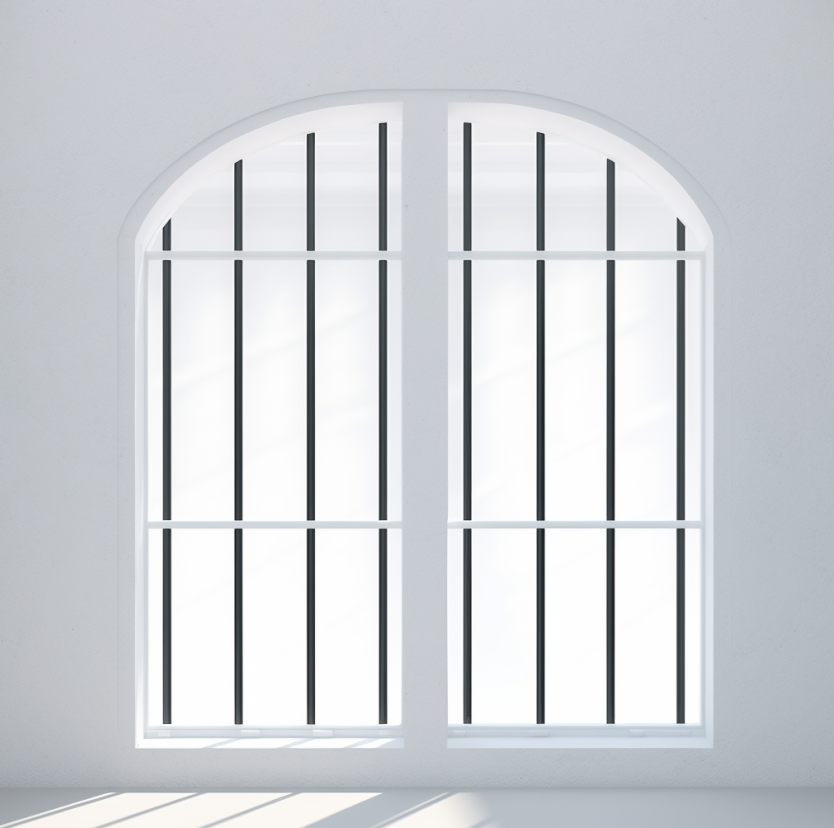
Window Guards (Horizontal Bar Type)
Traditional child safety window guards use horizontal bars spaced no more than 4 inches apart (the CPSC and ASTM F2090 standard) to prevent a child from squeezing through. These are the type mandated by New York City's window guard law. They mount inside the window frame and are typically adjustable in width.
Pros: purpose-built for child fall prevention, meet ASTM F2090 standard, widely available.
Cons: horizontal bars can be used as a ladder by climbing children, often flimsy construction, most do not provide meaningful security against intruders, many lack quick-release egress mechanisms.
Security Window Bars (Vertical Bar Type)
Security window bars use vertical steel bars that serve dual purposes: they prevent child falls and they prevent intruder entry. Vertical bar orientation is inherently safer for children because vertical bars cannot be used as a climbing ladder the way horizontal bars can. A child cannot get a foothold on a vertical bar to climb up and over.
Pros: stronger materials (steel vs. aluminum), vertical bars prevent climbing, dual-purpose (child safety + security), longer lifespan, better aesthetics, available with quick-release egress.
Cons: slightly higher price point than basic window guards, may exceed minimum child safety requirements (which some parents view as overbuilding).
For a detailed comparison between these two categories, see our breakdown of child safety window guards vs. security window bars.
Window Opening Limiters (Stops and Restrictors)
Window stops or restrictors are hardware devices that limit how far a window can open—typically to 4 inches or less. They attach to the window frame or sash and physically prevent the window from opening wide enough for a child to pass through.
Pros: inexpensive ($5 to $20), easy to install, allow ventilation while limiting opening width.
Cons: can be overridden by older children, some designs weaken over time, do not provide security against intruders, do not meet egress requirements because they restrict the window opening in emergencies too (unless they include an adult-release override).
Window Film and Reinforcement
Security window film holds broken glass together but does not prevent a child from falling through an open window. It is a complementary product, not a substitute for bars or guards.
The Verdict: Why Security Bars Are the Superior Choice for Families
For families who want both child fall prevention and home security in a single product, vertical security window bars are the clear winner. They solve two problems simultaneously—keeping children safe inside and keeping intruders out—at a price point that is only marginally higher than dedicated child guards. And when equipped with a quick-release mechanism, they also satisfy fire code egress requirements. One product, three safety functions.
Fire Code and Egress Requirements for Children's Rooms
This is where child safety window bars become a high-stakes decision. Any barrier you install on a bedroom window must include a way to remove or open it from the inside during a fire. This is not optional. It is codified in law across the entire United States through the International Building Code and the National Fire Protection Association's Life Safety Code.
IBC Section 1030: Emergency Escape and Rescue Openings
The International Building Code requires that every sleeping room have at least one emergency escape and rescue opening that meets these minimum specifications:
- Minimum net clear opening area: 5.7 square feet (5.0 square feet for grade-floor windows)
- Minimum opening height: 24 inches
- Minimum opening width: 20 inches
- Maximum sill height: 44 inches above the finished floor
- Operable without keys, tools, or special knowledge
That final requirement is the critical one for window bars. If your child's bedroom window has bars that require a key, a wrench, or adult strength to remove, those bars violate the building code. In a house fire, a firefighter attempting rescue from the exterior also needs to be able to access the window. Fixed bars without a release mechanism impede both self-rescue and firefighter access.
NFPA 101: Life Safety Code
NFPA 101 reinforces the IBC requirements and adds language specifically addressing security bars and grilles on egress windows. The code explicitly states that bars, grilles, grates, or other obstructions placed over emergency escape windows must be releasable or removable from the inside without the use of a key, tool, or force greater than that required to operate the window.
ASTM F2090: Standard for Window Fall Prevention Devices
ASTM F2090 is the specific standard for window fall prevention devices with emergency escape (egress) release mechanisms. It establishes testing requirements for:
- Resistance to a 150-pound static load (simulating a child's impact)
- Bar spacing no greater than 4 inches
- Emergency release operability by adults
- Release mechanism that is not easily operated by young children
This standard is particularly important for parents because it addresses the dual requirement: the device must be strong enough to stop a child from falling through, but releasable enough for an adult to open during an emergency.
What This Means for Your Purchase Decision
For children's bedrooms, you must buy window bars with a quick-release interior mechanism. Period. Fixed bars without a release mechanism are illegal on bedroom windows in virtually every jurisdiction in the United States. The SWB Model A/EXIT was specifically engineered to meet this dual requirement: it provides physical child fall prevention and intruder resistance on the exterior while including an interior quick-release lever that any adult can operate in seconds without tools. For a deeper dive into egress compliance, read our ultimate burglar bars guide.
What to Look for in Child Safety Window Bars
Not all window bars are created equal, and not all bars marketed as "child safe" actually meet the requirements for effective child fall prevention. Here are the specifications that matter.

Bar Spacing: The 4-Inch Rule
Bars must be spaced no more than 4 inches apart. This dimension comes from CPSC guidelines and ASTM F2090, based on the width of a young child's torso. If a child can fit their body between two bars, the bars are not providing fall protection. Measure the clear gap between bars, not the center-to-center distance. Some cheaper products advertise 4-inch spacing but measure center-to-center, which means the actual clear gap is wider—and potentially dangerous.
Vertical Bar Orientation
This is a detail most parents overlook, but it matters enormously. Vertical bars are inherently safer than horizontal bars for children because vertical bars eliminate footholds. A horizontal bar at any height becomes a step that a climbing child can use to boost themselves higher. Vertical bars offer no climbing purchase whatsoever. Security window bars use vertical orientation as a standard design element, which gives them an intrinsic advantage over traditional horizontal child guards.
Material Strength
Child safety window bars need to withstand the impact of a child running, falling, or throwing themselves against the barrier. Thin aluminum or lightweight tubular steel will flex or deform under repeated impacts. Look for cold-rolled steel construction with a minimum 18-gauge wall thickness. This provides genuine structural resistance that will not bend, bow, or fail under the forces a young child can generate—or the forces generated by an accidental fall against the bars.
Quick-Release Egress Mechanism
Mandatory for any room where children sleep. The release mechanism must be operable by an adult without tools or keys but should not be easily operated by a young child. The best designs use a two-action release (push and slide, or lift and pull) that requires adult-level dexterity and hand strength. Test the mechanism yourself before installation to confirm that you can operate it quickly under stress—because in a fire, adrenaline and reduced visibility will make everything harder.
Mounting Security
A child safety bar is only as strong as its mount points. Use structural screws or lag bolts into solid framing members, not drywall anchors. Each mounting point should be able to resist a minimum pull-out force of 200 pounds. If you are mounting into a window frame, verify that the frame material can support the load. Vinyl frames are generally adequate for frame-mount installations; aluminum frames vary by construction. When in doubt, use wall mount into studs or masonry.
Tamper Resistance
Your child safety bars need to resist two types of tampering: curious children and potential intruders. Anti-tamper hardware—one-way security screws, Torx fasteners, or shear-head bolts—prevents both. Standard Phillips screws can be removed by an older child with a kitchen tool. If your bars can be disassembled by a 10-year-old with a butter knife, they are not properly secured.
Finish and Durability
Powder-coated finishes outlast paint by a factor of three to five. More importantly for child safety, a powder coat does not chip or peel into sharp edges the way painted finishes do. Children will touch, grip, and lean against these bars daily. The finish needs to withstand that contact without degrading into a secondary hazard.
Best Child Safety Window Bars for 2026
After evaluating the available products against every criterion that matters for child safety—bar spacing, material strength, egress compliance, vertical orientation, and mounting security—here are our recommendations.
Best Overall for Children's Bedrooms: SWB Model A/EXIT (~$92)
The SWB Model A/EXIT is the clear top pick for any window in a room where children sleep, play, or spend unsupervised time. It delivers the exact combination of features that child safety demands:
- Vertical steel bars with spacing that prevents a child's body from passing through—and vertical orientation eliminates climbing footholds
- Interior quick-release mechanism that any adult can operate in seconds without tools, meeting IBC, NFPA, and ASTM F2090 requirements
- Telescopic adjustment that fits standard residential window widths without custom ordering
- Cold-rolled steel construction with multi-stage powder coat that resists impact, flexing, and degradation
- Anti-tamper mounting hardware included—no supplemental purchases needed
- Frame mount or wall mount options for any construction type
- Dual purpose: provides genuine intruder resistance in addition to child fall prevention
At approximately $92 per window, the Model A/EXIT costs less than a single emergency room copay—and infinitely less than the medical bills, lost wages, and emotional devastation that follow a child window fall. This is not an area where saving $30 on a cheaper product makes any financial or moral sense.
Best for Non-Bedroom Windows: SWB Model A (~$90)
For windows in rooms that are not designated sleeping areas—kitchens, home offices, hallways, and living rooms where children are typically supervised—the SWB Model A provides the same structural child safety barrier without the quick-release mechanism. It shares the Model A/EXIT's steel construction, vertical bar orientation, telescopic adjustment, and anti-tamper hardware.
Why use this instead of the Model A/EXIT on non-bedroom windows? Two reasons. First, the $2 savings per window is minimal but adds up across a full home. Second, eliminating the release mechanism on non-egress windows removes any possibility—however remote—of a child or older sibling figuring out the release. On a kitchen or living room window where egress compliance is not legally required, a fixed bar is one fewer variable to manage.
That said, if you want the simplicity of using one product throughout your entire home, the Model A/EXIT works everywhere. The quick-release mechanism is designed to resist child operation, so using it on non-bedroom windows does not create a meaningful additional risk.
What About Standard Child Window Guards?
Traditional child window guards—the horizontal-bar, adjustable-width units sold at big-box stores for $15 to $40—serve a specific purpose: they meet the minimum ASTM F2090 standard for child fall prevention. But they come with significant limitations that parents should understand before buying:
- Horizontal bars create climbing footholds that can actually increase fall risk for active toddlers who treat them as ladders
- Lightweight aluminum or thin steel construction provides minimal resistance to sustained pushing, prying, or impact
- No intruder resistance—a determined adult can defeat most child window guards in seconds
- Painted finishes chip and peel within 2 to 3 years, creating sharp edges
- Pressure-fit models can be dislodged by a child who repeatedly pushes against them
For families who need both child safety and home security, and who want a product that lasts 20 years instead of 3, steel security bars with vertical orientation are the superior investment.
Room-by-Room Child Safety Window Plan
Not every window in your home carries the same level of child safety risk. Here is how to prioritize your window bar installation based on where children spend time and which windows present the greatest danger.
Priority 1: Children's Bedrooms (Model A/EXIT — Mandatory)
Every window in every room where a child sleeps must have egress-compliant bars. This is the highest-priority installation because bedrooms are where unsupervised time is greatest. Children wake from naps, play in their rooms during quiet time, and can access windows when parents believe they are sleeping. The Model A/EXIT is non-negotiable here—it provides the physical barrier while maintaining legally required fire escape capability.
Install bars on all bedroom windows, not just the ones you think a child can reach. Children move furniture, stack toys, and climb with a creativity and determination that consistently surprises parents. A window that seems out of reach today becomes accessible the moment a toddler drags a chair across the room.
Priority 2: Upper-Floor Living Spaces (Model A or Model A/EXIT)
Second-floor and third-floor living rooms, playrooms, and family rooms carry high fall-injury risk because of the drop height. Use Model A for rooms that are not sleeping areas, or Model A/EXIT if you want uniform egress capability throughout the home. Focus on windows that are within a child's potential reach—including any window that a child could access by climbing on furniture, shelves, or built-in window seats.
Priority 3: Stairwell and Landing Windows (Model A)
Stairwell windows at half-landings and intermediate floors are often overlooked because they are in transitional spaces. But these windows are at varying heights relative to the floor depending on where a child is standing on the stairs, and a fall from a stairwell window can combine the window-fall injury with a stair-fall injury. Install Model A bars on any stairwell window that a child could reach by standing on the stairs or landing.
Priority 4: Ground-Floor Windows (Model A)
Ground-floor window falls produce fewer catastrophic injuries than upper-floor falls, but they still account for significant emergency room visits—particularly when the landing surface is concrete, brick, or stone. Ground-floor bars also provide the secondary benefit of home security against intruders, making them a two-for-one investment. Prioritize ground-floor windows in rooms where children play, and any window that opens onto a hard surface like a patio or driveway.
Priority 5: Basement Windows (Model A)
Basement windows pose a unique risk profile. While the interior drop height is typically low (basement windows are near ground level from inside), the exterior side may have a window well, hardscape, or grade change that creates a fall hazard for a child who climbs out. Basement windows are also the primary target for intruders, making bars essential for security. Use Model A with frame mount for standard basement window openings.
Installation Guide: Child Safety Bars Step by Step
Proper installation is critical for child safety window bars. A bar that is improperly mounted can pull free under the force of a child's fall, creating a false sense of security that is arguably worse than having no bar at all. Follow these steps precisely.
Tools You Will Need
- Power drill with appropriate bits (standard for wood frames; masonry bit for brick or concrete)
- Tape measure
- Level
- Pencil for marking
- Safety glasses
- The mounting hardware included with your SWB bars
Step 1: Measure the Window Opening
Measure the inside width of the window opening at three points: top, middle, and bottom. Record the smallest measurement. Then measure the inside height at three points: left, center, and right. Record the smallest measurement. For a complete walkthrough with diagrams, see our window measurement guide.
Step 2: Select Your Mounting Method
Frame mount is the faster, easier option for wood and vinyl window frames. The bars attach directly to the frame using structural screws that bite into the solid wood behind the frame material. This is the recommended method for most residential child safety installations.
Wall mount anchors the bars to the wall surface surrounding the window. Use this method for masonry walls, for frames that are not structurally sound, or when you want the strongest possible connection. Wall mount into wood studs provides excellent holding strength. Wall mount into masonry requires a hammer drill and expansion anchors.
For those who cannot drill, our guide on installing window bars without drilling covers tension-fit and adhesive options, though screwed connections are strongly recommended for child safety applications.
Step 3: Position and Level the Bar
Hold the bar in position inside the window opening. Use a level to ensure the bar is perfectly horizontal. Mark the screw hole positions with a pencil. For child safety, position the bar so the bottom rail sits no more than 4 inches above the window sill—this prevents a small child from squeezing underneath the bar assembly.
Step 4: Pre-Drill and Mount
Pre-drill pilot holes at each marked position. For frame mount into wood, use a drill bit one size smaller than the mounting screws. For masonry, use a masonry bit sized to your expansion anchors. Drive the mounting hardware using the anti-tamper security fasteners included with your SWB bars. Do not substitute standard Phillips screws. Tighten each fastener until the bar is snug against the frame or wall with zero play or movement.
Step 5: Test the Installation
This step is non-negotiable. After mounting:
- Push test: Press firmly against each bar at multiple points. There should be zero flex, rattle, or movement.
- Pull test: Grip the bar assembly and pull it toward you with moderate force. It should feel completely rigid.
- Gap check: Verify that no gap between bars exceeds 4 inches. Check the gaps between the outermost bars and the frame edges as well.
- Egress test (Model A/EXIT only): Operate the quick-release mechanism to confirm it functions smoothly. Practice removing the bars several times so the motion becomes automatic. Every adult in the household should practice this.
- Child test (supervised): With your child present, observe whether they can reach, grip, or manipulate any part of the bar assembly, mounting hardware, or release mechanism. Address any concerns immediately.
Step 6: Ongoing Verification
Add window bar inspection to your household maintenance routine. Check mounting hardware tightness and release mechanism function at least twice per year—once in spring when windows begin opening regularly, and once in fall. Test after any event that might affect the installation: home renovations, severe storms, or an earthquake.
Common Mistakes Parents Make with Window Safety
Even safety-conscious parents make preventable errors with window safety. Here are the mistakes we see most frequently and how to avoid them.

Mistake 1: Trusting Window Screens
We cannot say this enough: window screens are not safety devices. They are insect barriers. A toddler leaning against a screen will push it out of the frame instantly. Never rely on a screen to prevent a child fall, and never tell yourself that a screen makes an open window safe.
Mistake 2: Only Barring the "Obvious" Windows
Parents often install bars on second-floor bedroom windows but skip the guest room, the home office where the child plays during work calls, or the stairwell window that a child can reach from the landing. Any window a child can access—including those they can reach by climbing on furniture—needs protection. Children are resourceful climbers, and they rearrange their environments in ways adults do not anticipate.
Mistake 3: Installing Fixed Bars on Bedroom Windows
Fixed bars without a quick-release mechanism on bedroom windows violate fire code and create a potentially fatal fire trap. This mistake is especially common when parents purchase standard security bars without realizing that egress-compliant versions exist. Always use the Model A/EXIT or an equivalent egress-compliant bar on any window in a sleeping room.
Mistake 4: Placing Furniture Near Windows
A crib, bed, chair, bookshelf, or toy chest placed near a window becomes a launching pad. Even with bars installed, keeping furniture away from windows reduces the likelihood of a child climbing to window height and applying force to the bars or figuring out the release mechanism. Position cribs and beds on interior walls, not window walls, whenever the room layout allows it.
Mistake 5: Assuming Bars Are Only for Upper Floors
Ground-floor window falls account for a meaningful percentage of pediatric window-fall injuries. A 3-foot fall onto concrete, stone, or brick can produce a skull fracture in a toddler. Do not skip ground-floor windows just because the drop height seems modest. The secondary security benefit of ground-floor bars makes this an easy decision.
Mistake 6: Choosing Horizontal Bars Over Vertical Bars
Horizontal bar child guards create climbing rungs. A toddler who can grip a horizontal bar at knee height can use it as a step to reach the next bar, and the next, until they are at the top of the guard. Vertical bars eliminate this climbing pathway entirely. Every child safety organization recognizes the superiority of vertical orientation, yet horizontal guards remain common because they are cheaper to manufacture.
Mistake 7: Not Teaching the Family About the Release Mechanism
Installing Model A/EXIT bars on bedroom windows is only half the solution. Every adult and responsible teenager in the household must know how to operate the quick-release mechanism by feel, in the dark, under stress. Practice the release with every family member at least twice per year. During a fire, smoke reduces visibility to zero within minutes. You need muscle memory, not visual instructions.
Window Safety Beyond Bars: Complementary Measures
Child safety window bars are the most important single investment, but they work best as part of a layered window safety strategy. Here are the complementary measures that complete your protection.
Window Opening Limiters
Install window opening limiters as a secondary precaution on windows that you open for ventilation. These restrict the sash to a 4-inch maximum opening width. They add an additional layer of protection but should never be relied upon as the primary fall prevention device—children can defeat them, and they can fail mechanically over time.
Furniture Placement
Rearrange every room where children spend time to eliminate "climbing pathways" to windows. Move cribs, beds, chairs, toy storage, bookshelves, and any other climbable surface away from window walls. In rooms where furniture must remain near windows (like a window seat or built-in), bars become even more critical.
Window Locks
Install keyed or child-resistant window locks on every operable window. These are a useful secondary measure, but remember: locks require human action every single time the window is closed. Bars are passive—they work whether anyone remembers to engage a lock or not.
Security Film
Safety film applied to window glass prevents the glass from shattering into sharp fragments if a child impacts the pane. It does not prevent a fall through an open window, but it does reduce the risk of glass-related lacerations if a child runs into or strikes a closed window.
Cordless Window Treatments
Window blind cords are a separate but related child safety hazard—strangulation. If you are upgrading your window safety with bars, use the opportunity to replace any corded blinds or curtains with cordless alternatives. This addresses two window-related child safety risks in a single project.
Landlord and Tenant Responsibilities for Child Window Safety
If you rent your home or manage rental properties, child window safety involves legal obligations that go beyond personal choice.

Landlord Obligations
In jurisdictions with window guard laws—most notably New York City, but increasingly adopted by other municipalities—landlords are legally required to install approved window guards in any apartment where a child under age 10 resides. The landlord must:
- Provide and install approved window guards at no cost to the tenant
- Inspect and maintain the guards annually
- Replace damaged or missing guards promptly
- Ensure all guards on bedroom windows include egress-compliant release mechanisms
Even in jurisdictions without specific window guard laws, landlords have a general duty under premises liability to maintain a habitable and reasonably safe living environment. A child window fall in a rental property where no guards were provided—despite the landlord knowing children lived there—creates significant civil liability exposure. For more on landlord compliance, see our landlord fire code guide.
Tenant Rights
If your landlord refuses to install window guards or bars in a unit where children live, tenants in most states have options:
- Submit a written request documenting the safety concern and the presence of children
- Contact your local building or housing code enforcement agency
- In NYC and similar jurisdictions, file a complaint with the city's housing agency
- Install temporary, non-destructive window safety devices yourself (tension-fit guards or bars) as a stopgap while pursuing landlord compliance
The SWB Solution for Rental Properties
The Model A/EXIT is the ideal product for landlords who need to comply with both child safety and fire code requirements across multiple units. Its telescopic adjustment handles the various window sizes found in multi-unit buildings without custom orders for each window. Its quick-release mechanism satisfies fire code. And its steel construction and powder-coat finish provide a 20-year-plus lifespan that minimizes ongoing replacement costs across a property portfolio.
Age-Specific Window Risks: Infants Through Teens
Understanding how window fall risks change with a child's developmental stage helps parents calibrate their protection strategy and anticipate hazards before they materialize.
Infants (0-12 Months)
Pre-mobile infants have limited window fall risk because they cannot climb to window height independently. However, risk increases rapidly once a baby begins pulling to stand (typically 8 to 10 months). At this stage, any furniture near a window becomes a potential climbing aid. Install window bars before your baby becomes mobile, not after. The transition from crawling to climbing happens faster than most parents expect.
Toddlers (1-3 Years)
This is the peak danger window. Toddlers combine maximum mobility and climbing ability with zero understanding of height, gravity, or consequences. They can push chairs across rooms, stack objects to create improvised ladders, and reach windows that parents assumed were out of range. A toddler does not need to deliberately climb to a window to fall—leaning against a screen while standing on a toy chest is enough. Window bars are absolutely essential during these years.
Preschoolers (3-5 Years)
Preschoolers maintain the high fall risk of toddlers but add greater physical strength and problem-solving ability. They can open simple window locks, push harder against screens, and reach higher surfaces. Some preschoolers begin to understand danger conceptually but lack the impulse control to consistently avoid risky behavior. Do not remove window bars because a child "understands" not to lean on windows. Understanding and compliance are very different things at this age.
School-Age Children (5-10 Years)
Fall rates decline somewhat in this age range as children develop better spatial awareness and impulse control. However, school-age children are strong enough to operate simple window locks, slide windows open, and exert significant force on screens and guards. NYC's window guard law covers children through age 10 for good reason. Keep window bars installed through this entire developmental period.
Pre-Teens and Teenagers (10+ Years)
Intentional window falls are rare in this age group, but accidental falls still occur—particularly involving horseplay near windows, leaning out to yell to friends, or climbing out onto roofs and ledges. At this stage, window bars serve primarily as a security measure against intruders rather than a fall prevention device, but they continue to provide a passive safety barrier. Egress capability remains important because teenagers sleeping in bedrooms need fire escape access.
Cost Analysis: What Child Safety Window Bars Actually Cost
Let us put the investment in context with real numbers for a family home.

Typical 3-Bedroom, 2-Story Home
| Window Location | Count | Product | Unit Cost | Total |
|---|---|---|---|---|
| Children's bedrooms (upper floor) | 4 | Model A/EXIT | $92 | $368 |
| Master bedroom (upper floor) | 2 | Model A/EXIT | $92 | $184 |
| Upper-floor hallway/landing | 1 | Model A | $90 | $90 |
| Ground-floor living areas | 4 | Model A | $90 | $360 |
| Basement | 2 | Model A | $90 | $180 |
| Total | 13 | $1,182 |
$1,182 for complete window protection of a 13-window home. That is $91 per window averaged across the entire house. Spread over a 25-year product lifespan, the annual cost is $47.28—less than $4 per month for comprehensive child safety and home security coverage on every window.
The Cost of Not Installing Bars
A pediatric window fall generates costs that dwarf the price of prevention:
- Emergency room visit: $2,000 to $5,000+ (with insurance copay/deductible)
- Hospitalization for fractures: $10,000 to $50,000+
- Traumatic brain injury treatment: $100,000 to $1,000,000+ over a lifetime
- Lost wages for caregiving parent: $5,000 to $30,000+ during recovery period
- Long-term rehabilitation: variable, potentially hundreds of thousands
- Emotional and psychological impact on the family: incalculable
There is no scenario in which $1,182 spent on prevention is not the right financial decision. The comparison is not even close.
Child Safety Window Bar Product Comparison
| Feature | SWB Model A/EXIT | SWB Model A | Standard Child Guard | Window Stop |
|---|---|---|---|---|
| Child fall prevention | Yes | Yes | Yes | Partial |
| Intruder resistance | Excellent | Excellent | Poor | None |
| Fire egress compliant | Yes (IBC/NFPA/OSHA) | No | Some models | No |
| Bar orientation | Vertical (no climbing) | Vertical (no climbing) | Horizontal (climbable) | N/A |
| Material | Powder-coated steel | Powder-coated steel | Aluminum or thin steel | Plastic/metal |
| Expected lifespan | 20-30 years | 20-30 years | 3-5 years | 2-3 years |
| Anti-tamper hardware | Included | Included | No | No |
| Approximate price | ~$92 | ~$90 | $15-$40 | $5-$20 |
| Best for | Bedrooms, any egress window | Non-bedroom windows | Budget minimum compliance | Secondary measure only |
Seasonal Window Safety Considerations
Child window fall risk fluctuates with the seasons, and understanding these patterns helps parents maintain vigilance year-round.
Spring and Summer: Peak Risk Season
The vast majority of child window falls occur between April and September. The reason is straightforward: families open windows for fresh air and natural ventilation, and those open windows become accessible hazards. This is the most important time to have bars installed. If you have been considering window bars but have not yet purchased them, the start of warm weather is your action deadline.
During peak season:
- Verify all bars are securely mounted before the first warm day when windows open
- Test every quick-release mechanism on Model A/EXIT bars
- Remind all family members of the egress release procedure
- Reassess furniture placement—spring cleaning often results in moved furniture that creates new climbing pathways
Fall and Winter: Reduced but Not Eliminated Risk
Windows are opened less frequently in cold weather, but the risk does not drop to zero. Unseasonably warm days, holiday gatherings with distracted adults, and visiting children who are not familiar with the home's layout all contribute to winter window fall incidents. Bars should remain installed year-round. Removing them seasonally creates gaps in protection and increases the chance that they will not be reinstalled properly when warm weather returns.
Frequently Asked Questions About Child Safety Window Bars
What are the best child safety window bars in 2026?
The best child safety window bars for 2026 are vertical steel security bars with quick-release egress mechanisms, such as the SWB Model A/EXIT (~$92). Vertical bars prevent climbing (unlike horizontal child guards), powder-coated steel resists impact and degradation, and the interior quick-release lever meets IBC, NFPA, and ASTM F2090 requirements for fire egress in children's bedrooms. For non-bedroom windows, the SWB Model A (~$90) provides the same child fall prevention without the release mechanism.
Are window bars required by law for child safety?
Window guard requirements vary by jurisdiction. New York City has the most comprehensive law (Local Law 57), requiring landlords to install approved window guards in any apartment where a child under age 10 resides. Several other cities have adopted similar ordinances. Even in jurisdictions without specific window guard laws, landlords have general premises liability obligations to provide a safe living environment, and failing to address known child fall hazards creates civil liability exposure. For homeowners, child safety window bars are strongly recommended by the CPSC, AAP (American Academy of Pediatrics), and child safety organizations nationwide.
Can a child open quick-release window bars?
Quality quick-release window bars like the SWB Model A/EXIT use a two-action release mechanism designed to require adult-level dexterity and hand strength. The mechanism is engineered so that adults and older teenagers can operate it quickly in an emergency, but young children (the primary fall-risk group, ages 1-5) lack the fine motor skills and strength to activate it. No release mechanism is completely child-proof for all ages, which is why furniture should be positioned away from windows and children should be taught that window bars are not toys. The ASTM F2090 standard specifically addresses this balance between child resistance and adult operability.
How much do child safety window bars cost?
Child safety window bars range from $15-$40 for basic horizontal child guards from big-box stores, to $90-$92 for professional-grade vertical steel security bars with egress capability (SWB Model A and Model A/EXIT). A typical 3-bedroom home with 13 windows costs approximately $1,182 to fully equip with SWB products using DIY installation. Professional installation adds $50-$100 per window. Spread over the 20-30 year lifespan of quality bars, the annual cost is under $50 for complete home coverage.
Do child safety window bars block fire escape?
Fixed window bars without a release mechanism will block fire escape and violate building codes when installed on bedroom windows. However, egress-compliant bars like the SWB Model A/EXIT include an interior quick-release lever that allows any adult to remove the bars in seconds without tools or keys. These bars meet IBC Section 1030, NFPA 101, and ASTM F2090 requirements. Always use egress-compliant bars on any window in a room where people sleep. Fixed bars (like the standard Model A) are appropriate for non-bedroom windows where egress is not required.
Why are vertical window bars safer for children than horizontal bars?
Vertical window bars are safer for children because they eliminate climbing footholds. Horizontal bars act as ladder rungs that a child can grip and step on to climb higher, potentially reaching the top of the guard and falling over it. Vertical bars provide no purchase for climbing—a child cannot get a foothold on a smooth vertical steel bar. This is why child safety organizations and security professionals recommend vertical-bar products over horizontal-bar child guards for families with young children.
At what age should I install child safety window bars?
Install child safety window bars before your baby begins pulling to stand, which typically occurs between 8 and 10 months of age. The transition from crawling to climbing to walking happens rapidly, and once a child is mobile, they can reach windows within days of their first steps. Many pediatric safety experts recommend installing bars during pregnancy or immediately after birth so the protection is in place well before the child becomes mobile. The CPSC and American Academy of Pediatrics recommend window fall prevention measures for all homes with children under age 5, and NYC law extends the requirement through age 10.
Can I install child safety window bars in a rental apartment?
Yes. In jurisdictions with window guard laws (such as New York City), your landlord is legally required to provide and install approved window guards at no cost to you if children under age 10 live in the unit. In other jurisdictions, you should submit a written request to your landlord. If the landlord refuses, many tenants install non-destructive, tension-fit or minimal-drill window bars themselves. The SWB Model A and Model A/EXIT offer both frame mount (minimal drill holes) and tension-fit options suitable for rental apartments. Contact your local housing authority if your landlord refuses to address child window safety concerns.
How far apart should child safety window bars be spaced?
Child safety window bars must be spaced no more than 4 inches apart, measured as the clear gap between bars (not center-to-center). This dimension comes from CPSC guidelines and the ASTM F2090 standard, based on the minimum width that would allow a young child's torso to pass through. When evaluating products, measure the actual clear opening between bars, not the center-to-center distance advertised by the manufacturer. Also check the gaps between the outermost bars and the window frame edges, as these can sometimes exceed 4 inches even when bar-to-bar spacing is compliant.
Do child safety window bars also protect against burglars?
Standard child window guards made from lightweight aluminum or thin steel provide minimal intruder resistance—a determined adult can defeat most in seconds. However, professional-grade security window bars like the SWB Model A and Model A/EXIT are built from heavy-gauge powder-coated steel with anti-tamper hardware specifically designed to resist forced entry. These bars provide genuine dual-purpose protection: they prevent child falls and they deter and physically prevent burglary through windows. For families seeking both child safety and home security in a single product, steel security bars with vertical orientation are the clear choice over dedicated child guards.
Final Recommendation: Protect Your Kids Today
Child window falls are almost entirely preventable. The technology exists. The products exist. The only variable is whether parents take action before an incident or after one.
For every window in a room where children sleep: install the SWB Model A/EXIT (~$92). Its vertical steel bars prevent falls and eliminate climbing footholds. Its quick-release interior mechanism satisfies IBC, NFPA, and ASTM F2090 fire egress requirements. Its telescopic design fits standard windows without custom orders. And its powder-coated steel construction lasts 20 to 30 years—long enough to protect multiple children through their entire childhood.
For every other window a child can access: install the SWB Model A (~$90). Same steel construction, same vertical bars, same anti-tamper hardware, same child-safe design. The only difference is the absence of the quick-release mechanism, which is not required on non-bedroom windows.
The total cost for a typical family home is approximately $1,000 to $1,200. Installed in a single afternoon. No recurring fees. No batteries to replace. No app subscriptions. No monthly monitoring contracts. Just a physical barrier that works 24 hours a day, 365 days a year, whether you are watching or not.
Every day you wait is a day your windows are unprotected. Children do not wait for parents to finish their research. They climb. They explore. They lean on screens that cannot support them. The time to act is now.
Ready to protect your family? Start with the windows that matter most:
- Model A/EXIT — Quick-release egress | Children's bedrooms | IBC/NFPA compliant | ~$92
- Model A — Telescopic + Modular | All other windows | ~$90