

Best Window Security Bars for Homes: 2026 Buyer’s Guide
Choosing the best window security bars for your home is one of the most effective physical security upgrades you can make in 2026. Windows remain a top entry point for residential break-ins across the United States, and ground-floor windows are targeted more than almost any other access point. In this comprehensive buyer’s guide, we break down every type of window bar on the market, compare materials and mounting methods, walk through fire code requirements, and deliver clear product recommendations so you can make a confident purchase decision.
Whether you own a single-family house, manage a rental property, or live in an apartment, this guide covers the specifications, pricing, and installation details you need to make a smart purchase. By the end, you will know exactly which bars belong on your shortlist—and why the gap between a $25 bar and a $90 bar is the gap between a deterrent and real protection.
Why Window Security Bars Still Matter in 2026
Smart cameras, video doorbells, and alarm systems dominate the home security conversation, but physical barriers remain the single most effective deterrent against forced entry through windows. The logic is straightforward: a camera records a crime after the fact, while a window bar prevents the crime from happening at all.

Burglars are opportunistic. They scan for easy targets with accessible entry points and minimal resistance. A standard single-pane or double-hung window can be compromised in under 10 seconds with a basic pry bar or even a flathead screwdriver. Window security bars add a physical delay layer that forces an intruder to make noise, spend time, and attract attention—three things that make any target unacceptable to someone who relies on speed and stealth.
Modern window security bars have evolved far beyond the prison-style iron grids of the 1980s and 1990s. Today’s best models are sleek, powder-coated, telescopically adjustable, and available with fire-code-compliant quick-release mechanisms. They blend with contemporary home design, install in minutes with basic tools, and cost less per year than a single month of alarm monitoring. For a broader look at why windows remain the primary residential vulnerability, see The Ultimate Guide to Security Window Bars.
The Numbers That Matter
- First-floor windows are consistently among the top entry points for residential burglaries nationwide
- Under 60 seconds — the typical amount of time a burglar spends attempting entry before moving to an easier target
- $90–$92 — the cost range for professional-grade adjustable window bars (less than one month of most alarm monitoring contracts)
- Physical barriers are the only security measure that simultaneously deters, delays, and prevents entry—cameras and alarms cannot do all three
- Zero recurring fees — unlike alarm monitoring ($25–$60/month), window bars are a one-time investment that lasts decades
Types of Window Security Bars: A Complete Breakdown
Before you can choose the best window security bars for your home, you need to understand the main categories on the market. Each type is engineered for different mounting surfaces, window configurations, and security needs.

1. Telescopic (Adjustable) Window Bars
Telescopic bars feature an adjustable width mechanism that lets a single unit fit a range of window sizes. This is the most popular category for residential use because it eliminates the need for custom measurements and expensive fabrication. A quality telescopic bar uses a steel sleeve-and-rail system with a locking set screw that prevents the bar from being compressed or manipulated from the outside.
Best for: standard residential windows, apartments, DIY installers, renters who need a removable solution.
2. Fixed (Permanent) Window Bars
Fixed bars are welded or bolted to a specific width and mounted permanently to the window frame or surrounding wall. They offer maximum rigidity and are impossible to compress or slide. The tradeoff is zero adjustability—they must be measured precisely and ordered to exact specifications.
Best for: commercial properties, homes with non-standard windows where custom fabrication is required, maximum-security applications.
3. Quick-Release (Egress) Window Bars
Quick-release bars look and perform like standard security bars from the outside but include an interior release mechanism that allows the occupant to remove or swing open the bars without tools. These are legally required on bedroom windows in most US jurisdictions under IBC and NFPA fire codes.
Best for: bedrooms, rental properties, any window designated as an emergency egress point, schools, and child-occupied facilities.
4. Modular (Stackable) Window Bars
Modular systems use interlocking sections that can be combined to cover extra-wide openings like sliding glass doors or picture windows. They maintain the telescopic adjustability of standard bars while allowing coverage of spans that a single unit cannot reach.
Best for: sliding glass doors, large picture windows, commercial storefronts, wide basement window wells.
5. Masonry-Mount Window Bars
Designed specifically for brick, concrete block, or poured concrete walls, masonry-mount bars use specialized expansion anchors driven directly into the wall surface rather than the window frame. They are typically heavier gauge steel and require a hammer drill for installation.
Best for: brick homes, older construction, commercial and industrial buildings, concrete block structures.
Materials and Construction: What Separates Good Bars from Bad
The material a window bar is made from determines everything: its resistance to forced entry, its lifespan, its appearance after 5 years of weather exposure, and its price. Here is what you need to know.
Steel: The Only Serious Option
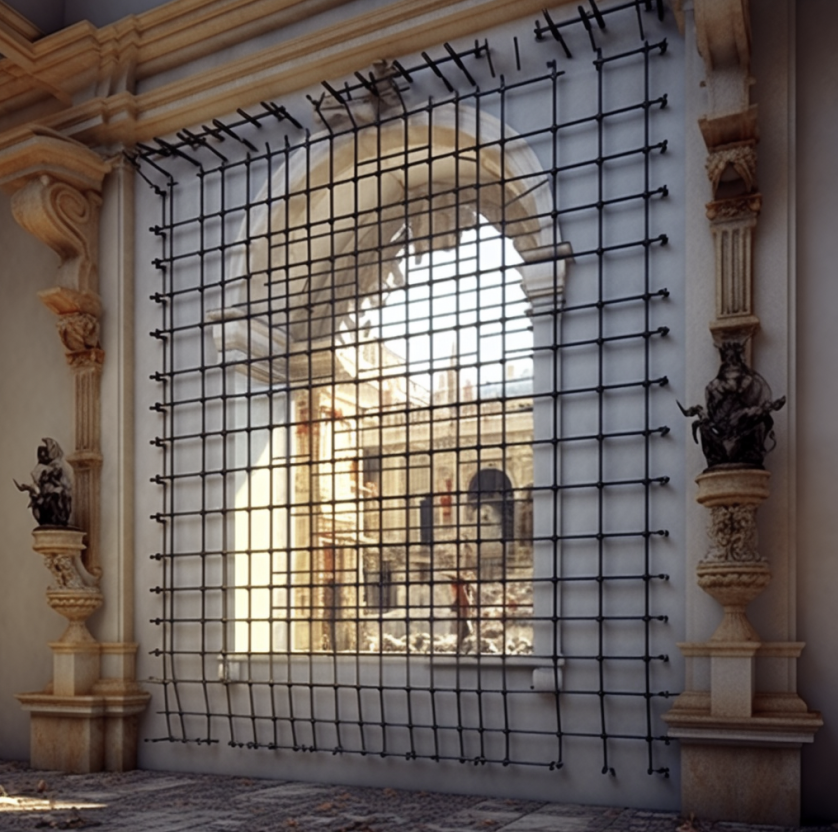
Cold-rolled steel is the gold standard for window security bars. Look for bars made from steel tubing with a minimum wall thickness of 1mm (18-gauge or heavier). The vertical bar members should be solid steel round bar, typically 1/2" diameter. This combination provides genuine resistance to prying, bending, and cutting attacks. Anything thinner than 18-gauge can be defeated with a standard crowbar and moderate effort.
Aluminum, Wrought Iron, and Polycarbonate Alternatives
Aluminum bars are lighter and naturally corrosion-resistant but have roughly one-third the tensile strength of steel at equivalent thickness. An aluminum bar that looks identical to a steel bar provides dramatically less forced-entry resistance. Wrought iron offers excellent strength but is significantly heavier, more expensive, and almost always requires custom fabrication and professional installation. Polycarbonate and acrylic panels are marketed as clear alternatives to metal bars, but they are not rated for forced entry and can be defeated with focused prying or cutting. For genuine security, cold-rolled steel remains the only defensible choice.
Powder Coat vs. Paint Finish
A multi-stage powder coat—phosphate pre-treatment, primer, and topcoat at 60+ micron thickness—outperforms paint in adhesion, chip resistance, UV stability, and corrosion protection. Single-coat painted bars from big-box stores show rust and peeling within 3–5 years. A professional-grade powder coat lasts 15–25 years before cosmetic touch-up is needed.
Key Features to Look for in the Best Window Security Bars
Beyond material and finish, these are the features that separate professional-grade protection from disposable hardware-store products.
Anti-Tamper Hardware
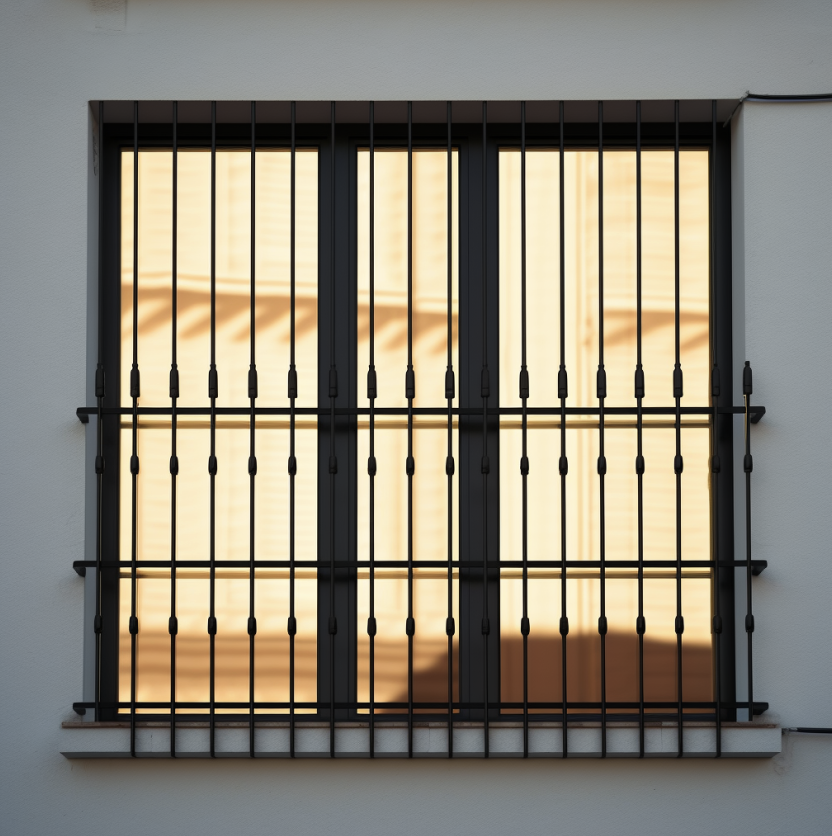
The mounting hardware is only as strong as the weakest link. Quality bars use one-way security screws, carriage bolts with shear heads, or tamper-resistant Torx fasteners. If the screws holding your window bars can be removed with a Phillips-head screwdriver, they are not providing real security. A burglar with a cordless drill and a #2 Phillips bit can remove standard screws in seconds—silently.
Adjustability Range
For telescopic models, the adjustment range determines which windows the bar will fit. A good adjustable bar covers at least a 12-inch range (e.g., 21" to 33"). Premium models offer modular extensions that push this range even further. Always measure your window opening precisely before purchasing and verify the bar’s specifications.
Fire Code Compliance (Egress Capability)
If you plan to install bars on bedroom windows—or any window designated as an emergency egress point—you need a quick-release mechanism. This is not optional. IBC Section 1030 and NFPA 101 require that egress windows be operable without keys, tools, or special knowledge. The best egress-compliant bars feature interior release levers that can be operated by a child in under 5 seconds.
Mounting Versatility
The best window security bars offer both frame mount and wall mount options in the same product. Frame mount works for standard residential construction (wood, vinyl, aluminum frames). Wall mount is essential for masonry, and also provides a stronger connection in any wall type. Products that limit you to one mounting method reduce your flexibility.
Aesthetic Profile
Modern window security bars have moved far beyond the old-school "jail cell" look. The best 2026 models feature clean vertical lines, minimal visual profiles, and finishes that complement contemporary architecture. Black and white are the most popular options, though custom colors are available from premium manufacturers.
Our Top 3 Picks: Best Window Security Bars for 2026
After evaluating the leading products across price points, installation types, and real-world security performance, here are our three recommendations for residential use in 2026.

Best Overall: SWB Model A — Telescopic + Modular (~$90)
The SWB Model A is our top pick for the best window security bars in 2026. The telescopic adjustment mechanism fits standard to wide residential windows without custom ordering. The modular stacking system handles extra-wide openings like sliding glass doors. Frame mount or wall mount options give you flexibility regardless of your wall type. And the powder-coated steel construction delivers genuine forced-entry resistance that budget bars simply cannot match.
Why we picked it:
- Versatility — fits virtually any standard residential window with telescopic adjustment
- DIY-friendly — frame mount installation takes approximately 15 minutes per window with a drill, level, and tape measure
- Modular design — stack multiple units for sliding glass doors and wide-span openings up to 8+ feet
- Multi-stage powder coat — available in black, white, and custom colors with a finish rated for 20+ year outdoor exposure
- Anti-tamper hardware — security fasteners included, not standard Phillips screws
- Price — approximately $90 per unit, undercutting competitors that deliver less functionality
Who should buy this: homeowners with standard windows, apartment dwellers, anyone who wants drill-free or minimal-drill installation, and DIY installers who want to skip the professional labor cost.
Best for Masonry and Brick: SWB Model B (~$91)
If your home has brick, concrete, or masonry walls, the SWB Model B is purpose-built for your situation. Unlike frame-mount bars that depend on the window frame’s structural integrity, the Model B anchors directly into the masonry using heavy-duty expansion anchors. This creates a connection point that is stronger than the surrounding wall material itself.
Why we picked it:
- Masonry-specific engineering — designed from the ground up for brick, block, and concrete surfaces
- Heavy-gauge steel — commercial-grade material thickness exceeds typical residential standards
- Permanent deterrent — once mounted into masonry with expansion anchors, these bars are not coming out without demolishing the wall
- Clean aesthetics — powder-coated black finish that blends naturally with brick facades
- Price — approximately $91 per unit for commercial-grade protection
Who should buy this: owners of brick or concrete-block homes, property managers with masonry commercial buildings, anyone prioritizing maximum anchor strength over telescopic adjustability.
Best for Bedrooms and Rentals: SWB Model A/EXIT (~$92)
The SWB Model A/EXIT is the bar you install when fire code compliance is non-negotiable. It shares the telescopic adjustability and build quality of the standard Model A but adds a quick-release interior mechanism that lets any occupant—including children—remove the bars from inside in under 5 seconds without any tools. It meets IBC, NFPA, and OSHA requirements for egress windows.
Why we picked it:
- Full egress compliance — IBC Section 1030, NFPA 101, and OSHA compliant out of the box
- Interior quick-release — no tools, no keys, no special knowledge required to remove from inside
- Identical exterior security — from the outside, it is indistinguishable from a permanent fixed bar
- Landlord-compliant — meets rental property fire code requirements across all 50 states
- Price — approximately $92 per unit, only $2 more than the standard Model A for full code compliance
Who should buy this: anyone installing bars on bedroom windows, landlords and property managers, parents with young children, and anyone in a jurisdiction that enforces egress window codes (which is nearly every US city and county).
Product Comparison Table: SWB vs. Competitors
Here is a side-by-side comparison of the most commonly available window security bar products on the US market in 2026.

| Feature | SWB Model A | SWB Model A/EXIT | SWB Model B | Grisham | Mr. Goodbar | Generic (Amazon) |
|---|---|---|---|---|---|---|
| Material | Powder-coated steel | Powder-coated steel | Heavy-gauge steel | Painted steel | Painted steel | Varies (aluminum/steel) |
| Telescopic Adjustment | Yes | Yes | No (masonry-specific) | Limited models | Limited models | Varies |
| Modular/Stackable | Yes | Yes | No | No | No | No |
| Quick-Release Egress | No | Yes (IBC/NFPA/OSHA) | No | Select models | No | No |
| Frame Mount | Yes | Yes | No | Yes | Yes | Varies |
| Wall Mount | Yes | Yes | Yes (masonry only) | Select models | No | Rarely |
| Finish | Multi-stage powder coat | Multi-stage powder coat | Multi-stage powder coat | Single-stage paint | Single-stage paint | Basic paint or raw |
| Anti-Tamper Hardware | Included | Included | Included | Partial | No | No |
| Custom Colors | Yes | Yes | Black standard | Limited | White/Black only | No |
| Approx. Price | ~$90 | ~$92 | ~$91 | $45–$80 | $25–$50 | $15–$40 |
| Security Rating | Excellent | Excellent | Excellent | Good | Fair | Poor–Fair |
| Expected Lifespan | 20–30 years | 20–30 years | 20–30 years | 10–15 years | 5–10 years | 3–5 years |
Key takeaway: the $40–$60 price difference between a budget bar and a professional-grade SWB unit is not markup—it is the difference between a visual deterrent and actual forced-entry resistance. Thicker steel, tamper-resistant fasteners, and a finish that survives outdoor exposure for decades are what you are paying for.
Sizing, Mounting, and Installation Methods
Even the best window security bars will fail if they are improperly sized or installed. Here is what you need to get right before ordering.
How to Measure Your Windows Correctly
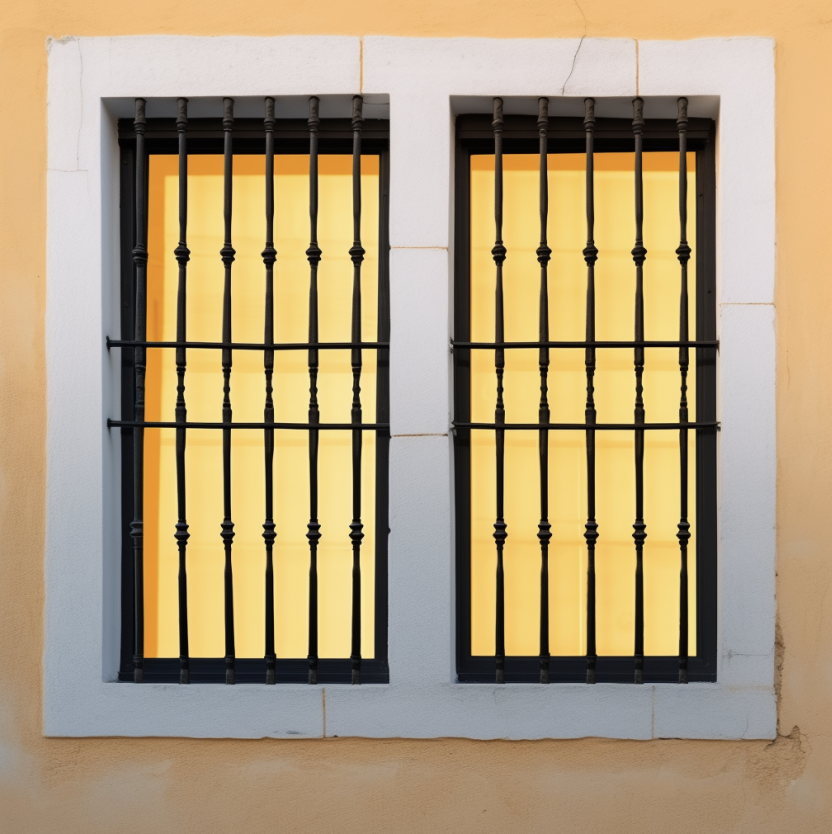
Incorrect measurements are the number one reason for returns and installation problems. Follow this five-step process for every window. For the full step-by-step walkthrough with diagrams, see our dedicated window measurement guide.
- Measure the inside width of the window opening (jamb to jamb) at three points: top, middle, and bottom. Record the smallest measurement.
- Measure the inside height from sill to header at three points: left, center, and right. Record the smallest measurement.
- Check for obstructions — window cranks, locks, AC units, or sash hardware that might interfere with bar placement.
- Identify your wall material — wood frame, vinyl, aluminum, brick, or concrete. This determines your mount type (frame vs. wall).
- Count and prioritize your windows — ground-floor first, then basement, then any window accessible from a porch, deck, flat roof, or adjacent structure.
Frame Mount vs. Wall Mount
Frame mount bars attach to the window frame itself using lag screws or structural screws. This is the fastest and most DIY-friendly installation method. It works on wood, vinyl-clad wood, and aluminum frames. Most homeowners can complete a frame mount in 15 minutes per window with a standard drill.
Wall mount bars attach to the wall surface surrounding the window. This provides a stronger connection and is required for masonry surfaces where no traditional frame exists. Wall mount installation typically requires a hammer drill (for masonry) or structural screws (for wood-framed walls).
For a full walkthrough of the installation process, including tools needed and common pitfalls, see our DIY installation guide.
No-Drill and Minimal-Drill Options
If you rent your home or simply do not want to drill into your window frames, certain telescopic bars can be installed using tension-fit methods or adhesive-mount brackets. These provide less holding strength than screwed connections, but they offer meaningful deterrence and are fully removable without damage. Read our complete breakdown of installing window bars without drilling to see if this approach works for your situation.
When to Hire a Professional
DIY frame mount installation with the SWB Model A is straightforward for anyone comfortable with a drill. However, professional installation is recommended for:
- Masonry wall mounts (Model B) requiring a rotary hammer drill and expansion anchors
- Second-story or elevated windows requiring ladder work
- Large-scale projects (10+ windows) where speed and consistency matter
- Rental properties where the landlord requires licensed contractor documentation
Expect to pay $50–$100 per window for professional installation labor, depending on your market and the complexity of the mount.
Fire Code and Egress Compliance: What You Must Know
This is the section most buyers skip—and the one that matters most if you are installing bars on bedroom windows or rental properties. Failing to comply with fire egress codes can result in fines, voided homeowner’s insurance, and in the worst case, a preventable tragedy.
IBC and NFPA Requirements
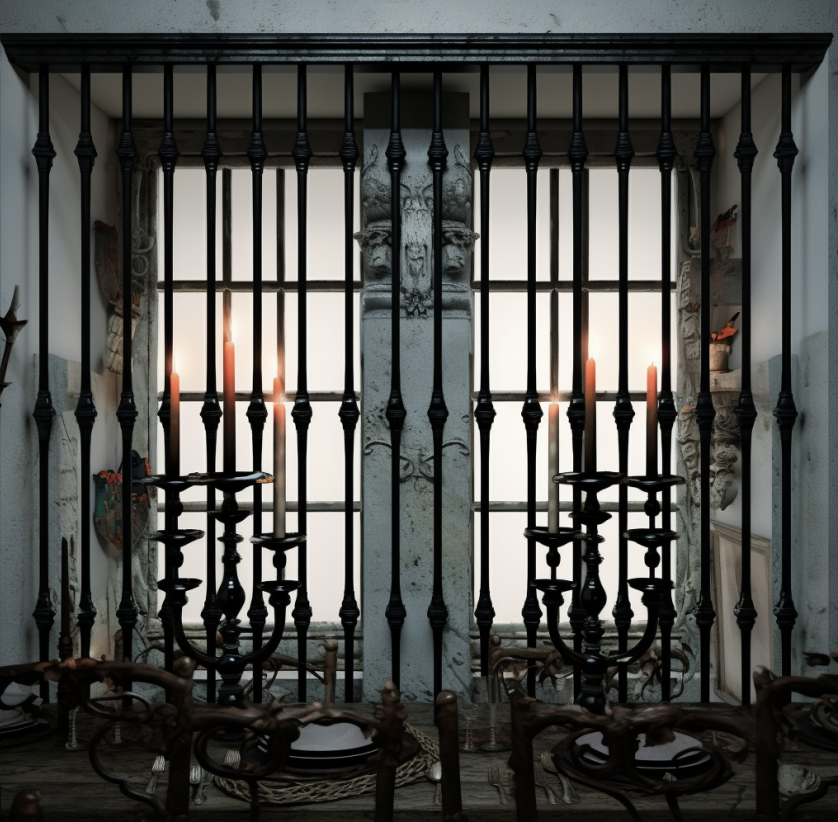
The International Building Code (IBC) Section 1030 and NFPA 101 (Life Safety Code) establish clear rules for emergency egress windows:
- Every sleeping room must have at least one emergency escape and rescue opening
- The opening must be operable from the inside without keys, tools, or special knowledge
- Minimum net clear opening: 5.7 square feet (5.0 sq ft for grade-level windows)
- Minimum opening width: 20 inches
- Minimum opening height: 24 inches
- Maximum sill height: 44 inches above the finished floor
If your window bars do not include a quick-release mechanism, they cannot legally be installed on bedroom windows in most US jurisdictions. This is exactly why the SWB Model A/EXIT exists—it provides the same exterior security as the standard Model A while maintaining full egress compliance through its interior quick-release lever.
OSHA and Commercial Properties
For commercial properties and warehouses, OSHA requires that means of egress remain unobstructed during occupancy. Any device impeding emergency exit is subject to citation. The Model A/EXIT’s tool-free interior release satisfies both OSHA and IBC requirements.
Landlord Legal Obligations
If you own rental property, you have a legal duty to ensure that all egress windows are operable at all times. Installing non-compliant fixed bars on tenant bedroom windows exposes you to:
- Municipal code violation citations and fines (typically $250–$1,000+ per violation)
- Civil liability in the event of a fire or emergency where bars impeded escape
- Insurance claim denial if non-compliant bars contributed to injury or death
- Potential criminal charges in cases involving serious injury or fatality
Cost Breakdown: What Window Security Bars Actually Cost
Let’s talk specific numbers. The cost of window security bars varies significantly based on material quality, brand, installation method, and whether you install them yourself or hire out.
Per-Unit Product Cost by Tier
| Product Tier | Price Range | What You Get |
|---|---|---|
| Budget (Amazon/generic) | $15–$40 | Thin-gauge steel or aluminum, basic spray paint, standard Phillips screws, no egress, 3–5 year lifespan |
| Mid-Range (Home Depot/Lowe’s brands) | $45–$80 | Decent steel, painted finish, limited size range, select egress models, 10–15 year lifespan |
| Professional Grade (SWB) | $90–$92 | Heavy-gauge steel, multi-stage powder coat, telescopic + modular, anti-tamper hardware, egress option, 20–30 year lifespan |
| Custom Fabrication (local welder) | $150–$400+ | Made-to-measure, unique decorative designs, longest lead time, quality varies dramatically by fabricator |
Total Project Cost: 8-Window Home Example
A typical single-family home with 8 ground-floor windows (5 living areas + 3 bedrooms):
- Budget route (DIY): 8 x $30 average = $240 total
- SWB Model A for all 8 (DIY): 8 x $90 = $720 total
- SWB mixed (5 Model A + 3 Model A/EXIT for bedrooms, DIY): (5 x $90) + (3 x $92) = $726 total
- SWB mixed + professional install: $726 product + $400–$800 labor = $1,126–$1,526 total
- Custom fabrication + install: 8 x $250 avg + $600–$1,200 labor = $2,600–$3,200 total
The ROI Calculation
The average residential burglary in the United States results in approximately $2,800 in combined property loss and damage (FBI Uniform Crime Report data). A single prevented break-in more than pays for a full set of professional-grade window bars for the entire home. Factor in the potential for injury, psychological trauma, increased insurance premiums after a claim, and the real ROI is many multiples higher.
And unlike alarm monitoring ($25–$60/month, or $300–$720/year), window bars are a one-time purchase with zero recurring fees. A $726 SWB investment spread over a 25-year lifespan costs $29 per year—less than $2.50 per month for complete window protection.
7 Mistakes Buyers Make with Window Security Bars
We see these errors repeatedly from first-time buyers. Avoiding them will save you money, frustration, and potentially your safety.
Mistake #1: Buying on Price Alone
A $20 window bar from Amazon is not protecting anything. Thin-gauge aluminum or cheap steel bars can be bent with a standard crowbar in seconds. If a bar flexes when you grip it with one hand, it will not stop an intruder. The gap between $20 and $90 is material thickness, engineering, and tamper-resistant hardware—not profit margin.
Mistake #2: Ignoring Fire Egress Requirements
Installing fixed, non-removable bars on bedroom windows creates a fire trap. Every year, fire departments respond to incidents where occupants could not escape through barred windows. Always use egress-compliant bars like the Model A/EXIT on every bedroom window. No exceptions, no shortcuts.
Mistake #3: Measuring Once (or Wrong)
Measuring the outside of the frame instead of the inside opening, or taking a single measurement instead of three, causes sizing errors. Telescopic bars compensate for minor variations, but you still need accurate baseline measurements. Follow the 3-point method described in our measurement guide.
Mistake #4: Protecting Basements but Ignoring Ground Floor
Ground-floor windows are the primary entry point for residential burglaries. Many homeowners bar the basement and leave the first floor completely exposed. Prioritize every window reachable from ground level—including those accessible from porches, decks, flat roofs, and adjacent structures.
Mistake #5: Choosing Decorative Over Functional
Ornamental scroll-work bars can look elegant but often sacrifice bar spacing and material thickness required for real security. Verify steel gauge and spacing before buying anything decorative. Modern minimalist bars achieve a clean look without compromising fundamentals.
Mistake #6: Using Standard Screws for Installation
Even high-quality bars become useless if they are mounted with standard Phillips-head screws that any intruder can back out with a basic screwdriver. Always use the anti-tamper hardware that ships with SWB products, or upgrade to one-way security screws or Torx fasteners if your bars did not include them.
Mistake #7: Forgetting Sliding Glass Doors
Sliding glass doors are among the easiest entry points to defeat—a pry bar attack can pop most off their tracks in seconds. The Model A’s modular stacking system covers openings up to 8+ feet, closing this commonly overlooked vulnerability.
Room-by-Room Application Guide
Different rooms have different security needs, code requirements, and aesthetic priorities. Here is how to match the right bar to each area of your home.
Bedrooms (Model A/EXIT Required)
Every bedroom must have at least one window with egress-compliant bars. The SWB Model A/EXIT provides full exterior security while allowing tool-free removal from the inside in seconds. This is a code requirement, not a suggestion.
Basement Windows (Model A Recommended)
Basement windows are consistently the most targeted residential entry point: they are low to the ground, often hidden from street view, and frequently have aging single-pane glass. The Model A’s telescopic adjustment handles the non-standard sizes common in basements, and frame mount avoids drilling into foundation walls.
Ground-Floor Living Areas (Model A Recommended)
Living room, dining room, and home office windows on the first floor should all be barred—especially those facing alleys, backyards, or areas not visible from the street. The Model A with black or white powder coat provides an unobtrusive profile that blends with modern trim and siding.
Sliding Glass Doors (Model A Modular Stack)
Two or three Model A units stacked modularly cover wide-span sliding glass door openings. This is a critical vulnerability that many homeowners neglect entirely.
Kitchen, Bathroom, and Garage Windows
Kitchen and bathroom windows are lower-priority targets but should not be ignored on ground floors. Garage windows are frequently the most neglected entry point—burglars target them for tools, electronics, and direct house access. Use Model A for framed openings or Model B for masonry garage walls.
Maintenance, Durability, and Long-Term Value
Quality window security bars are low-maintenance by design, but a minimal annual routine extends their lifespan well past 20 years.
Annual Maintenance Checklist
- Inspect mounting hardware — check every screw and bolt for tightness; re-torque anything that has loosened
- Test quick-release mechanisms — for Model A/EXIT bars, operate the interior release lever to ensure smooth function; apply a drop of silicone-based lubricant if needed
- Clean the bars — wipe down with a damp cloth and mild soap; avoid abrasive cleaners that can damage powder coat
- Inspect the finish — look for chips, scratches, or areas where the coating has worn through; touch up with matching spray paint to prevent rust initiation
- Check for corrosion — in coastal or high-humidity climates, examine connection points and mounting brackets for early signs of surface rust
Lifespan by Product Tier
- Professional-grade powder-coated steel (SWB): 20–30+ years with basic annual maintenance
- Mid-range painted steel (Grisham, similar): 10–15 years before significant rust development
- Budget painted/raw steel (Amazon generics): 3–5 years before replacement is needed
The long-term math is clear. A $90 SWB bar over 25 years = $3.60/year. A $25 Amazon bar replaced every 4 years = $6.25/year—plus re-drilling your frames each time. Quality bars are cheaper protection over any reasonable time horizon.
Window Bars vs. Alternative Security Solutions
Window bars are one layer in a complete home security strategy. Here is how they stack up against—and complement—other common solutions.
Security film holds broken glass together but does not prevent entry once the pane is breached—use film and bars together. Alarm systems detect and notify but average police response is 7–15+ minutes; a burglar needs under 60 seconds, so bars provide the physical prevention alarms cannot. Cameras deter and document but do not physically stop anyone. The ideal setup combines all three with window bars as the physical backbone.
The Four-Layer Defense Strategy
Security professionals recommend layering four defenses:
- Deterrence — visible security bars, cameras, signage, lighting
- Detection — alarm sensors, motion detectors, glass-break sensors
- Delay — physical barriers (window bars, reinforced doors, deadbolts)
- Response — alarm monitoring, police dispatch, neighbor networks
Window security bars deliver on three of four layers simultaneously: they deter (visible steel), delay (too strong to breach quickly), and prevent entry outright. No camera, alarm, or sensor can match that.
Frequently Asked Questions About Window Security Bars
What are the best window security bars for homes in 2026?
The best window security bars for homes in 2026 are telescopic, adjustable steel bars with multi-stage powder-coat finishes, anti-tamper mounting hardware, and quick-release egress options for bedroom windows. The SWB Model A leads the residential category with its telescopic adjustment, modular stacking capability, DIY-friendly frame mount installation, and professional-grade steel construction at approximately $90 per unit.
Do window security bars actually prevent break-ins?
Yes. Physical window barriers are among the most effective deterrents against residential burglary because they add a time, noise, and effort barrier that opportunistic intruders will not attempt to defeat. Unlike cameras and alarms that record or detect a break-in, window bars physically prevent the intruder from entering through the window opening. Burglars consistently report avoiding homes with visible physical barriers because the risk of detection increases with every second spent on entry.
Are window security bars legal in the United States?
Window security bars are legal in all 50 states. However, bars installed on bedroom windows or any window designated as an emergency egress opening must include a quick-release mechanism operable from the inside without tools, keys, or special knowledge. This requirement comes from the International Building Code (IBC) Section 1030 and NFPA 101 Life Safety Code. Non-compliant fixed bars on egress windows can result in code violation fines, insurance claim denial, and civil or criminal liability.
How much do window security bars cost in 2026?
Window security bar prices range from $15–$40 for budget Amazon generics, $45–$80 for mid-range big-box store brands, and $90–$92 for professional-grade SWB models. Custom fabrication from a local welder runs $150–$400+ per window. For a typical 8-window home using SWB products (5 Model A + 3 Model A/EXIT for bedrooms), the total product cost is approximately $726 with DIY installation, or $1,126–$1,526 with professional labor.
Can I install window security bars myself?
Yes. Telescopic frame-mount bars like the SWB Model A are specifically designed for DIY installation and take approximately 15 minutes per window using a drill, level, and tape measure. No cutting, welding, or specialty tools are required. Professional installation is recommended for masonry wall mounts (Model B), second-story windows requiring ladder work, and large-scale projects exceeding 10 windows. Expect $50–$100 per window for professional labor.
Can you install window bars without drilling into the frame?
Some telescopic window bars can be installed using tension-fit methods or adhesive-mount brackets that require no drilling. These provide less holding strength than screwed connections but offer meaningful deterrence and are fully removable without frame damage. This approach is popular with renters and apartment dwellers who cannot modify their window frames. Screwed frame mount or wall mount installations remain the most secure option when permitted.
What is the difference between telescopic and fixed window bars?
Telescopic window bars have an adjustable width mechanism that fits a range of window sizes with a single product, making them ideal for homes with different-sized windows and DIY installation. Fixed bars are welded or fabricated to an exact width and offer maximum rigidity but require precise measurements and often professional installation. For most residential applications, telescopic bars are more versatile and cost-effective. Fixed bars are preferred for maximum-security commercial installations.
Will window bars make my home look like a jail?
No. Modern window security bars feature clean, minimalist vertical-line designs with thin profiles and powder-coat finishes in colors like black and white that blend with contemporary home architecture. The ornamental wrought-iron look of previous decades is largely obsolete. Products like the SWB Model A use a streamlined design that reads as a modern window accent rather than a security device. Many homeowners report that neighbors and visitors do not even notice the bars are installed.
How long do window security bars last?
Lifespan depends entirely on material and finish quality. Professional-grade powder-coated steel bars (like SWB models) last 20–30 years or more with basic annual maintenance. Mid-range painted steel bars from big-box stores last 10–15 years before rust becomes significant. Budget bars from Amazon or discount retailers typically need replacement within 3–5 years due to thin materials and poor finish quality that fails under weather exposure.
Which windows should I secure first?
Prioritize in this order: (1) ground-floor windows facing backyards, alleys, or areas hidden from street view; (2) basement windows, which are the single most targeted residential entry point; (3) any window reachable from a porch, deck, flat roof, or adjacent structure; (4) sliding glass doors; (5) garage windows. All bedroom windows require egress-compliant bars like the SWB Model A/EXIT regardless of floor level or perceived risk.
Final Verdict: Which Window Security Bars Should You Buy in 2026?
After evaluating every major product available to US homeowners, our recommendation is straightforward.
For the majority of homeowners, the SWB Model A (~$90) is the best window security bar you can buy in 2026. Its telescopic adjustment eliminates custom sizing problems. Its modular stacking capability handles everything from standard windows to 8-foot sliding glass doors. Its multi-stage powder-coated steel construction delivers genuine forced-entry resistance that budget alternatives cannot approach. And at $90 per unit with DIY installation, it costs less than a single month of most alarm monitoring contracts.
For bedroom windows and rental properties, the SWB Model A/EXIT (~$92) is the only responsible choice. The $2 premium over the standard Model A is negligible, and the interior quick-release mechanism gives you full IBC/NFPA/OSHA fire code compliance without sacrificing any exterior security. If you are a landlord, this is a legal obligation, not an optional upgrade.
For brick and masonry homes, the SWB Model B (~$91) delivers commercial-grade mounting strength that frame-mount bars cannot achieve on masonry surfaces. If your walls are brick, block, or poured concrete, this is your bar.
Recommended Configuration for a Typical 3-Bedroom Home
- 3 x Model A/EXIT — bedroom windows ($276)
- 4 x Model A — ground-floor living areas and kitchen ($360)
- 2 x Model A (modular stack) — sliding glass door ($180)
- Total: $816 for complete protection of 9 windows and 1 sliding door
Every unprotected window is an open invitation. The best window security bars eliminate that invitation permanently. Whether you start with the two most vulnerable ground-floor windows or bar the entire home in one project, the important thing is to start today.
Ready to protect your home? Explore the full SWB product line:
- Model A — Telescopic + Modular | Frame or wall mount | ~$90
- Model B — Heavy-duty masonry mount | Brick and concrete | ~$91
- Model A/EXIT — Quick-release egress | IBC/NFPA/OSHA compliant | ~$92
Related Window Security Guides
- Custom Window Security Bars: Made-to-Measure Options for Non-Standard Windows
- Ground Floor Window Security: Why First-Floor Windows Need Extra Protection
- How to Fortify Windows Against Break-Ins: A Homeowner’s Defense Checklist
- Windows with Built-In Security Bars: Integrated Protection Systems Explained
- White Window Security Bars: Color-Matched Protection for Modern Homes
- Fixed vs Removable Window Bars: Permanent Security Pros and Cons
- Pet Proof Window Security Bars | SWB Steel