Security Window Bars

BLOG

security window bars
Security Window Bars · Blog 18 de marzo de 2026
Home Security

How to Install Window Security Bars in 15 Minutes: Complete DIY Guide Without a Professional

Learn how to install window security bars in 15 minutes with no professional needed. Step-by-step DIY guide for renters & homeowners. Shop SWB on Amazon today.

From our experience protecting thousands of homes across the USA, SWB analyzes the best strategies so you can sleep soundly. If you have been putting off securing your windows because you assumed professional installation meant expensive contractors, drilling into walls, or surrendering your security deposit, this guide will change everything you thought you knew. Learning how to install window security bars DIY in 15 minutes without a professional is not only possible — it is the smarter, cheaper, and more flexible choice for millions of American renters and homeowners. According to the FBI Uniform Crime Report, approximately 6.7 million burglaries occur in the United States every year, and 60% of residential break-ins happen through ground-floor windows. Yet the average cost of professional window bar installation ranges from $600 to $1,800 per window — a price point completely out of reach for the 44.1 million apartment renters in the USA, according to the US Census Bureau (2023). SWB's telescopic window security bars were engineered specifically to eliminate that barrier: heavy-gauge steel protection installed by you, in minutes, for under $100.

Understanding the financial reality is essential before making any security decision. Professional window bar installation in the United States typically costs…

Why DIY Window Bar Installation Is the Smart Choice for American Renters and Homeowners

The traditional model of home security — hire a contractor, drill permanently into your walls, and hope the bars never need to be removed — simply does not fit the lifestyle of modern Americans. Nearly one in three Americans moves each year, according to the US Census Bureau, and the vast majority of those movers are renters in dense urban markets like New York City, Chicago, Los Angeles, Houston, and Philadelphia. For this population, permanent installation is not just impractical — it often violates lease agreements and risks forfeiture of security deposits. At the same time, leaving windows unbarred is not a responsible option. Ground-floor apartments in cities like Chicago's South Side or Atlanta's Vine City neighborhood experience some of the highest window-entry burglary rates in the country. The solution is a DIY window security bar system that delivers professional-grade steel strength without any of the commitment, drilling, or contractor fees. When you learn how to install window security bars DIY in 15 minutes without a professional, you take full control of your home's perimeter defense on your own terms and your own schedule.

The Real Cost Comparison: DIY vs. Professional Window Bar Installation

Understanding the financial reality is essential before making any security decision. Professional window bar installation in the United States typically costs between $600 and $1,800 per window, depending on your city, the contractor's rates, and the complexity of the frame. In cities like New York and San Francisco, those numbers climb even higher. Add in scheduling delays — most reputable contractors book 1 to 3 weeks out — and you are left vulnerable while waiting.By contrast, SWB's Model A Telescopic Window Bars are priced at just $90 per unit and ship directly via Amazon FBA, meaning you can have professional-grade steel bars protecting your windows within 1 to 2 business days. There are no labor costs, no scheduling headaches, and no contractor invoices. For a two-bedroom apartment in Chicago with four windows requiring bars, the DIY approach saves you between $2,310 and $7,110 compared to professional installation. That is real money back in your pocket without sacrificing a single millimeter of steel protection.

Hidden Costs of Professional Installation

Beyond the base installation fee, professional window bar installs often carry additional costs that rarely get advertised upfront. These include wall patching or repainting after anchor installation ($50–$200 per window), potential lease violation penalties from landlords ($200–$500 in many cities), removal fees when you move out ($100–$300 per window), and the opportunity cost of waiting weeks without protection. None of these costs exist with SWB's telescopic system.

Who Should Install DIY Window Security Bars?

DIY window bar installation is appropriate for virtually every residential scenario in the USA. Apartment renters in urban high-crime neighborhoods represent the largest and most urgent use case — they need security without the permanent damage that violates lease agreements. Homeowners on a budget who want to secure ground-floor windows without spending thousands on a contractor are equally well-served. Landlords managing multiple rental properties can standardize window security across units quickly and affordably, then remove and reinstall bars between tenants in minutes. Parents wanting to add fall-prevention protection to upper-floor bedroom windows benefit from the same system. AirBnb hosts and short-term rental operators in markets like Los Angeles, Miami, and Nashville can add and remove bars between guest stays without any tools or wall damage. If you have 15 minutes and a measuring tape, you have everything you need.

Tools and Materials You Need Before You Start (Spoiler: Almost Nothing)

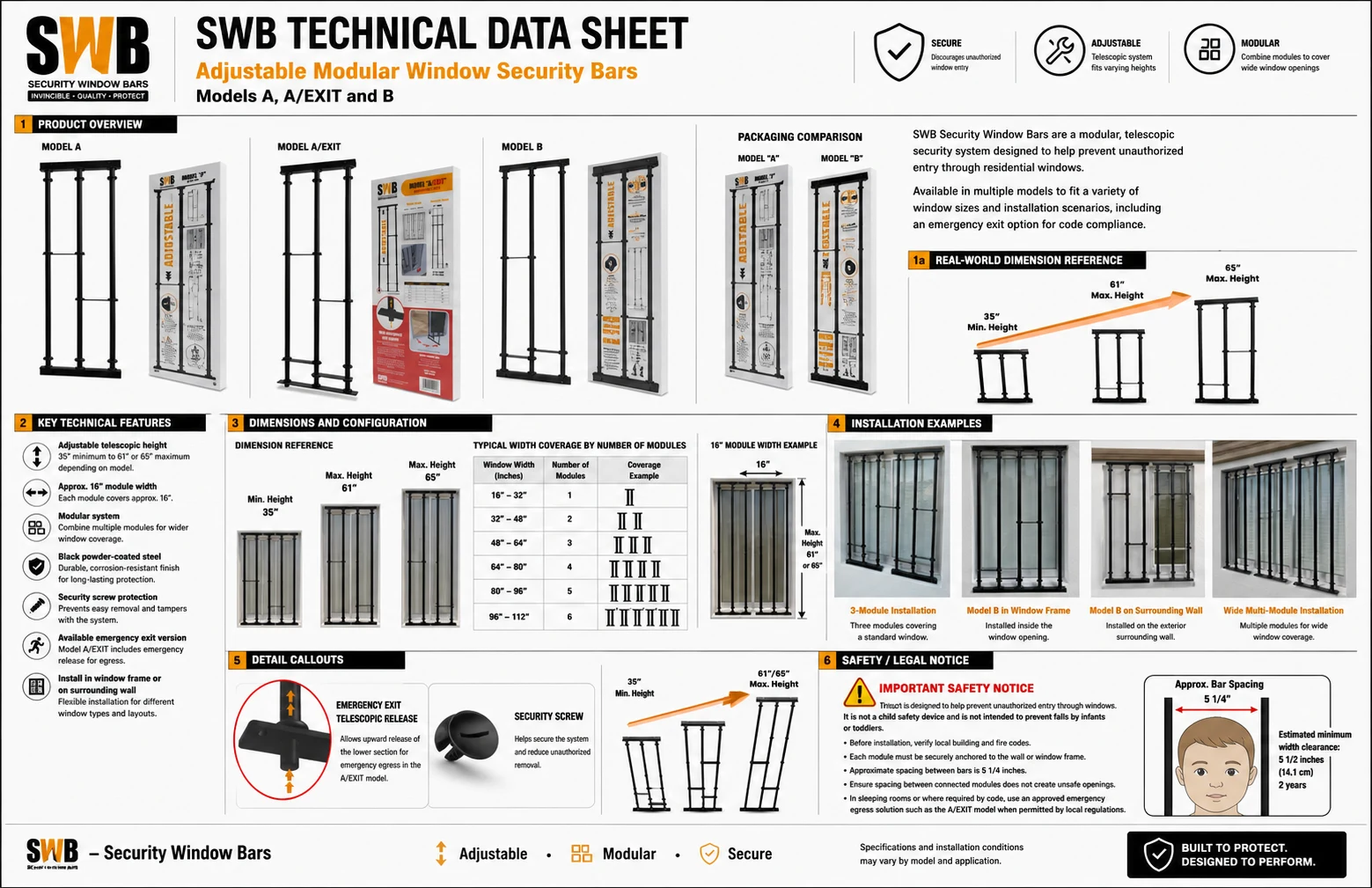
One of the most common misconceptions about installing window security bars is that you need a toolbox full of specialized equipment. With SWB's telescopic Model A design, that could not be further from the truth. The system was engineered from the ground up to require minimal tools and zero professional expertise. Before you begin your installation, take a few minutes to gather the short list of items below and measure your window opening to confirm fit. Standard US residential windows fall between 22 and 36 inches wide — the precise range that Model A covers. Wider or commercial windows requiring a fixed solution are better served by the Model B Wall-Mount Window Bars, which require basic drilling but still take under 30 minutes for a capable DIYer.

Complete Tool and Material Checklist

For SWB Model A telescopic installation, you will need: a standard tape measure (any length), a pencil or painter's tape for marking window dimensions, and the SWB Model A unit itself. That is genuinely the complete list for a no-drill, pressure-mount installation on most standard window frames. For Model B (wall-mount), add: a power drill with a 3/16" masonry or wood bit depending on your wall type, a level, a screwdriver (Phillips or flathead based on included hardware), and the supplied anchor bolts included in the package. Both models include all proprietary hardware, so you will not find yourself making an unexpected hardware store run mid-installation.

Measuring Your Window for a Perfect Fit

Accurate measurement is the single most important pre-installation step. Measure the inside width of your window frame at three points: the top, middle, and bottom. Use the narrowest measurement to ensure the telescopic bars engage with firm, even pressure. For double-hung windows, measure the lower sash opening separately from the full frame if you plan to install within the sash channel. Write down your measurement before extending the Model A bars — you want to pre-set the width within 1 inch of your target before placing the unit in the frame.

Confirming Egress Compliance Before Installation

Before installing any window security bars in a bedroom or sleeping area, you are legally required to verify egress compliance under the International Building Code (IBC), NFPA 101 Life Safety Code, and the International Residential Code (IRC). These codes mandate that every sleeping room must have at least one emergency escape and rescue opening. The minimum opening dimensions are 20 inches wide by 24 inches tall, with a minimum net clear opening area of 5.7 square feet for windows above ground level and 5.0 square feet at ground level.For bedroom applications, SWB strongly recommends the Model A/EXIT — Egress Compliant Window Bars, which feature a patented quick-release mechanism that allows the bars to be opened from the inside in seconds during a fire or emergency. This model meets IBC, NFPA 101, and OSHA standards simultaneously, making it the only fully compliant solution for sleeping areas. Never install a fixed bar system in a bedroom window without a quick-release mechanism — it is both a building code violation and a potentially fatal fire hazard.

Step-by-Step: How to Install Window Security Bars DIY in 15 Minutes Without a Professional

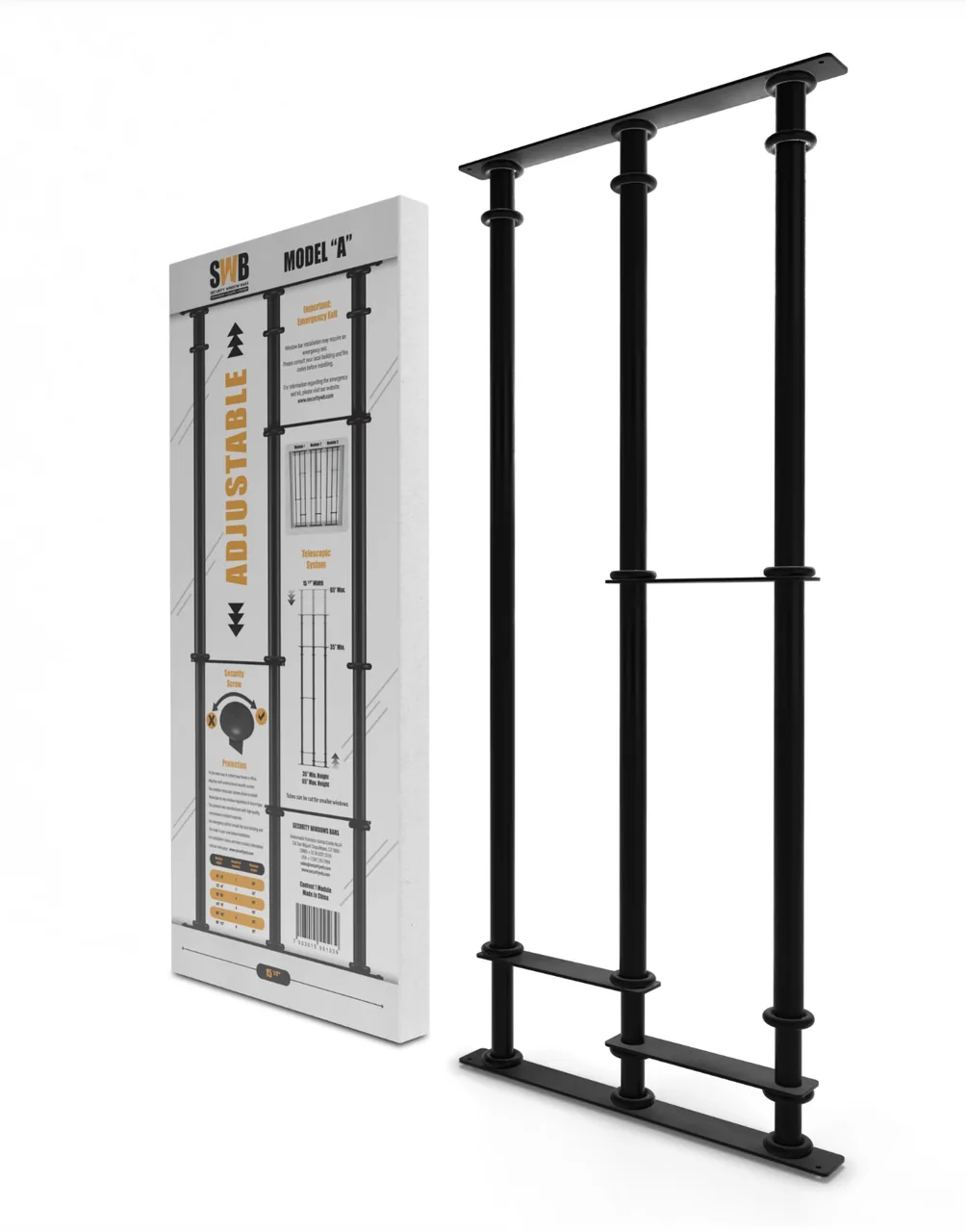
The following installation walkthrough applies specifically to SWB Model A Telescopic Window Bars — the most popular and renter-friendly option in the SWB lineup. This system uses a telescopic tension-lock mechanism that creates a firm, steel-to-frame contact point on both sides of the window jamb, eliminating the need for anchors, screws, or adhesives on most standard wood, vinyl, and aluminum window frames. Follow each step carefully, and your installation will be complete in 15 minutes or less. For the full illustrated version of this walkthrough, visit the SWB Window Bar Installation Guide at securitywb.com/installation/.

Steps 1–5: Unboxing, Measuring, and Setting the Telescopic Width

Step 1 — Unbox and inspect: Remove all components from the packaging and verify all parts are present per the included checklist. Inspect each bar segment and the telescopic mechanism for any shipping damage before proceeding.Step 2 — Measure your window opening: Using your tape measure, record the interior width of the window opening at the point where you intend to install the bars (typically the lower third of the window for burglar deterrence, or center for fall prevention).Step 3 — Pre-set the telescopic width: Extend the Model A bars to approximately 1 inch narrower than your measured window width. The telescopic mechanism includes a locking collar — turn it counterclockwise to loosen, extend to your target width, then hand-tighten clockwise to hold the position temporarily.Step 4 — Position in the window: Place the pre-set bar assembly against the interior face of the window frame. The rubber-tipped end caps should rest flush against both side jambs. Confirm the unit is level by eye or with a small bubble level.Step 5 — Final tension adjustment: With the unit in position, extend the telescopic bar an additional half-turn to create firm tension contact against both jambs. Lock the collar securely. The bars should not wobble, shift laterally, or be removable without intentional disengagement of the tension mechanism.

Steps 6–9: Securing, Testing, and Final Verification

Step 6 — Test structural integrity: Apply firm lateral pressure to the center of the bar assembly using both hands. The system should exhibit zero lateral movement. Test vertical displacement — the bars should not be liftable out of the channel without releasing the tension mechanism. If any movement is detected, increase tension via the locking collar.Step 7 — Verify window operation: Confirm that your window still opens and closes as intended around or above the bar assembly. Proper installation should not permanently block window ventilation — the bars secure the lower opening while allowing upper sashes to operate freely in double-hung configurations.Step 8 — Check egress accessibility (Model A/EXIT only): If you installed the Model A/EXIT Egress Compliant model in a sleeping area, test the quick-release mechanism from the inside. The release should operate smoothly and quickly. Practice the release motion so all household members, including children and elderly occupants, can operate it confidently in a dark or smoke-filled emergency scenario.Step 9 — Document your installation: Take a photo of the completed installation for your records. If you are a renter, this documentation protects you during move-out inspections and proves no wall damage was caused. The entire process — from unboxing to final verification — takes under 15 minutes for most standard US residential windows.

Installing Model B Wall-Mount Bars: When Permanent Is the Right Choice

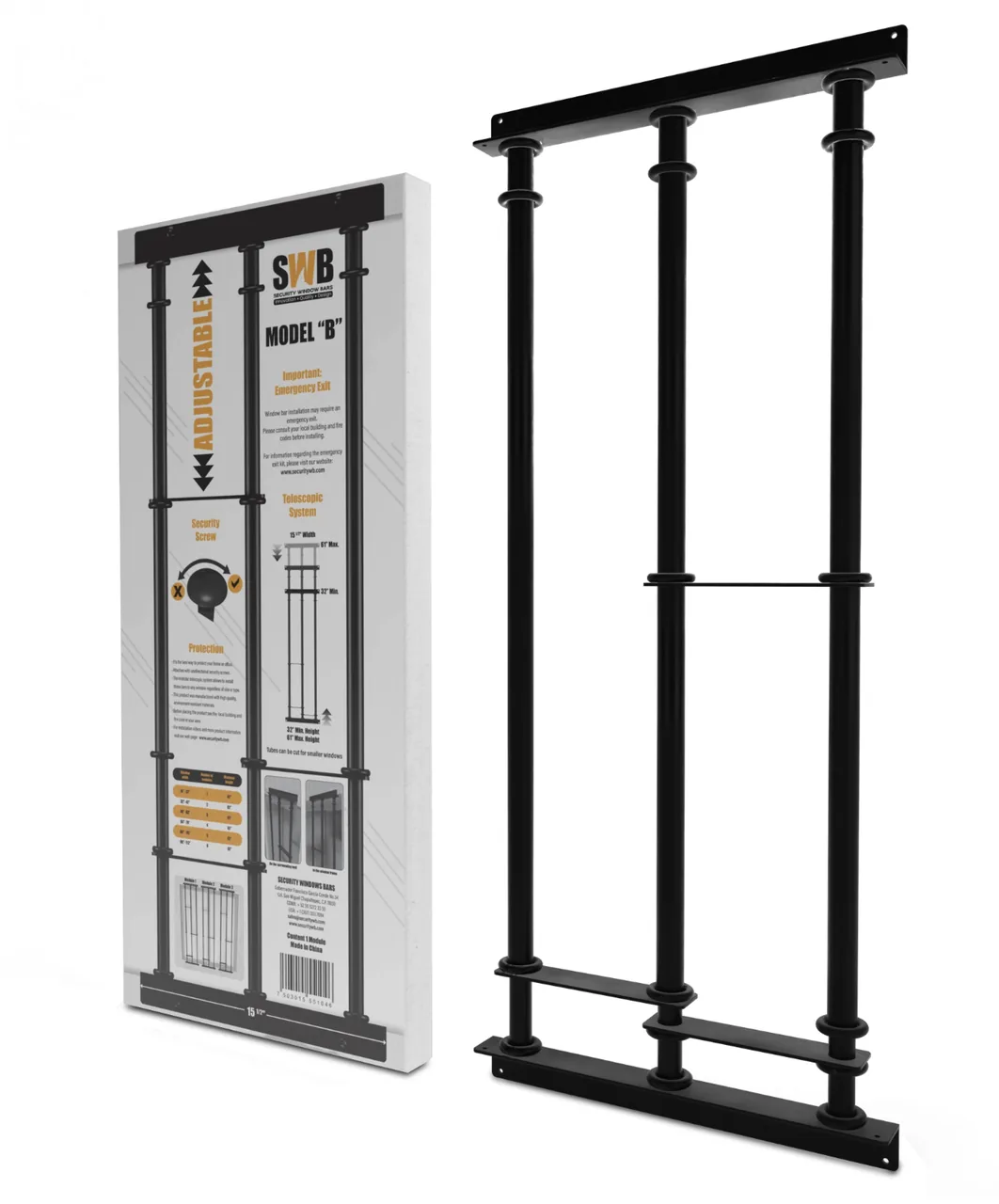
For homeowners who own their property and want maximum, immovable security on a ground-floor window or garage window, the Model B Wall-Mount Window Bars at $91 offer the same heavy-gauge steel construction with a permanent anchor-bolt installation. The process is slightly more involved but still well within DIY territory for anyone comfortable with a drill.Mark your anchor points using the included paper template — this step alone saves 10 minutes of measuring. Drill pilot holes at the marked points using the appropriate bit for your wall material (wood stud, concrete block, or brick each require different bits). Insert the provided anchor bolts or wall anchors, position the bar frame, and secure with the included hardware. Use your level to confirm the frame is plumb before final tightening. Total installation time: 25–35 minutes. No contractor needed, no scheduling, and total hardware cost included in the $91 unit price.

Anchor Selection by Wall Material

Wood frame walls: 3-inch wood screws into studs, minimum. Drywall alone is insufficient for security anchoring. Concrete block or CMU: Use 3/16" concrete sleeve anchors, minimum 1.5" embedment depth. Brick veneer: Use 1/4" masonry anchors with neoprene washers to prevent cracking. Vinyl siding over wood frame: Drive through the siding directly into the wood sheathing or stud.

Fire Safety and Egress: The Non-Negotiable Rules for DIY Window Bar Installation

Installing window security bars without understanding fire egress requirements is not just a building code violation — it is a matter of life and death. According to the National Fire Protection Association (NFPA), home fires kill approximately 2,500 Americans every year, and a significant percentage of those deaths involve blocked or obstructed emergency exits. Window bars that cannot be opened from the inside trap occupants when interior doors are cut off by flames or smoke. The NFPA 101 Life Safety Code, International Building Code (IBC), and the International Residential Code (IRC) all contain mandatory requirements for emergency escape openings in sleeping rooms. Any window bar installation in a bedroom, nursery, or any other sleeping area in the United States must comply with these standards — no exceptions, regardless of whether you own or rent your home.

NFPA 101 and IBC Egress Requirements Explained for DIYers

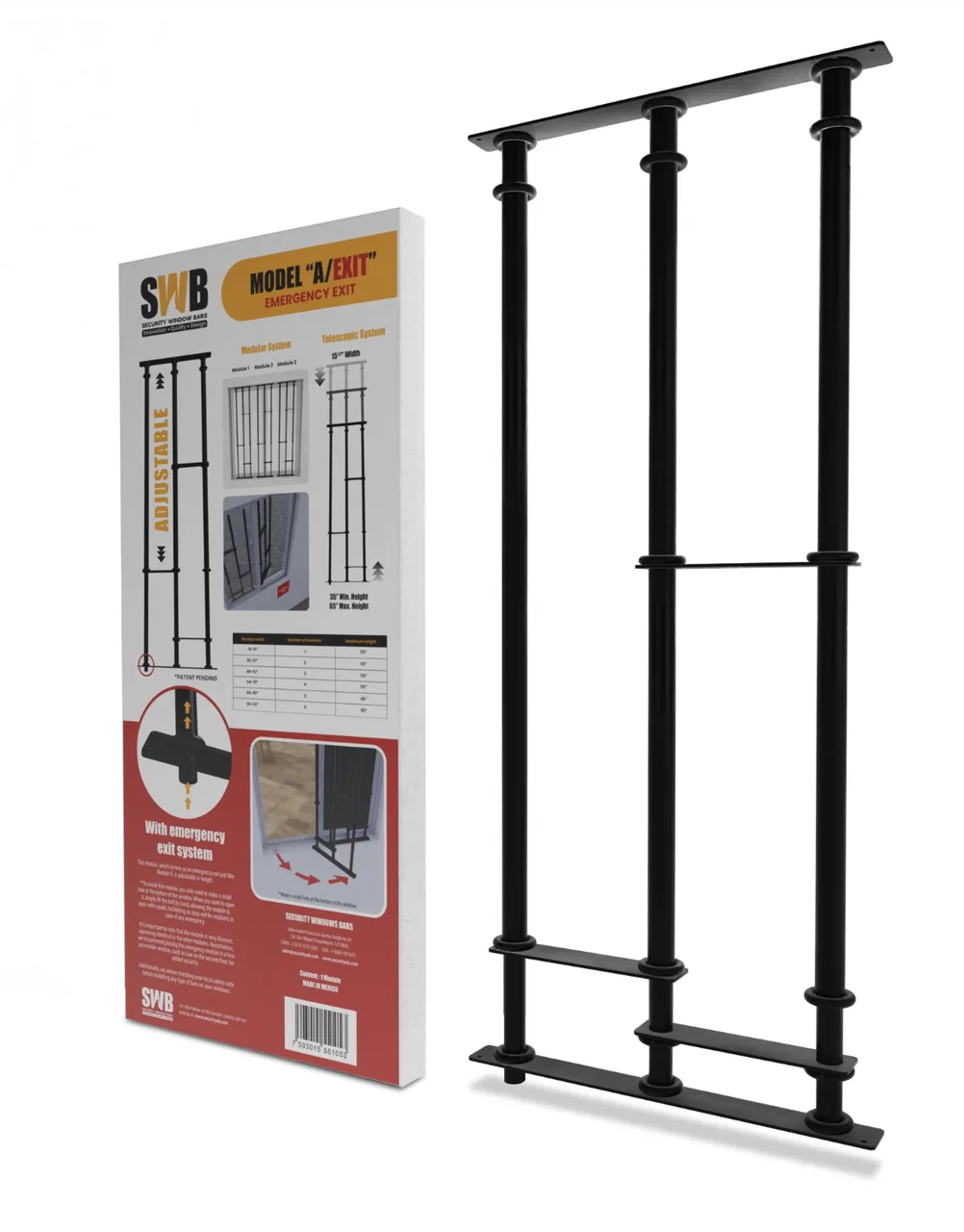
Under the International Residential Code (IRC) Section R310, every sleeping room must be provided with at least one emergency escape and rescue opening. The minimum dimensions are: minimum width of 20 inches, minimum height of 24 inches, minimum net clear opening of 5.7 square feet (5.0 square feet at ground-floor level). The maximum sill height from the finished floor is 44 inches.What this means for window bar installation: if you install a fixed, non-opening bar system across the full width and height of a bedroom window, you are creating a building code violation regardless of whether the window itself meets egress dimensions. The bars must either leave a compliant unobstructed opening or — the preferred and safest solution — incorporate a quick-release mechanism.SWB's Model A/EXIT Egress Compliant Window Bars at $92 are the only product in the SWB lineup with a patented quick-release mechanism that satisfies IBC, NFPA 101, and OSHA standards simultaneously. For any bedroom installation, the Model A/EXIT is not optional — it is the only responsible and code-compliant choice.

NYC-Specific Window Guard Rules and Quick-Release Requirements

New York City enforces some of the most specific window guard regulations in the country under Local Law 57 and the NYC Housing Maintenance Code. Buildings with children under 10 years of age are required by law to install window guards on all windows except fire escape windows. Fire escape windows must remain unobstructed and fully openable from the inside at all times — making a quick-release mechanism not just advisable but legally mandatory in those locations.For NYC renters installing window bars in apartments with children, the Model A/EXIT provides compliance with both the child safety (fall prevention) purpose of window guards AND the fire egress requirement for fire escape-adjacent windows. Landlords in NYC should note that failure to comply with Local Law 57 carries fines up to $250 per window per month. A properly installed quick-release window bar system is one of the most cost-effective ways to achieve simultaneous compliance with fall prevention, burglary deterrence, and fire safety codes.

Common DIY Installation Mistakes and How to Avoid Them

Even a straightforward 15-minute installation can go wrong if key steps are skipped or misunderstood. After protecting thousands of homes across the USA, the SWB team has identified the most common errors DIY installers make — mistakes that compromise both security effectiveness and safety compliance. Review this section carefully before you begin, and you will avoid the pitfalls that trip up first-time installers from Memphis to Minneapolis.

The 5 Most Frequent DIY Window Bar Installation Errors

Error 1 — Installing without measuring: Guessing window width leads to improper tension or a unit that simply falls out of the frame. Always measure before extending the telescopic bars.Error 2 — Under-tensioning the telescopic mechanism: A loosely installed bar provides minimal security. The locking collar must be fully tightened, and the unit should resist all lateral and vertical pressure without any perceptible movement.Error 3 — Installing fixed bars in bedrooms: As covered in the egress section, installing Model A or Model B (non-egress) bars in sleeping areas without a quick-release creates a fire trap and a building code violation. Use Model A/EXIT in all bedrooms.Error 4 — Anchoring Model B into drywall only: Drywall cannot support the tensile load of an attempted forced entry. Always anchor into studs, masonry, or concrete. Use a stud finder before drilling.Error 5 — Ignoring the window frame material: Certain vinyl window frames may require additional rubber padding on the end caps to prevent cracking under telescopic pressure. SWB Model A ships with rubber-tipped end caps for this reason — ensure they are properly seated before final tensioning.

How to Test Your Installation for Real Security Performance

A properly installed window security bar should pass three basic field tests before you consider the job complete. First, the lateral push test: place both palms flat on the center of the bar assembly and push firmly side to side. Zero lateral movement indicates proper installation. Any rocking or shifting requires additional tensioning or anchor tightening.Second, the lift-out test: attempt to lift the bar assembly vertically out of the window channel. With proper tension, this should be impossible without deliberately releasing the locking mechanism. If the assembly can be lifted out with moderate upward force, re-tension and retest.Third, the window operation test: open and close your window normally with the bars installed to confirm that ventilation function is preserved. This test also confirms that the bars are positioned correctly within the frame and are not interfering with weather stripping or window hardware.For Model A/EXIT installations, add a fourth test: the quick-release operation test. Every occupant of the home — including older children, elderly family members, and guests — should practice releasing the mechanism at least once in normal lighting conditions so they can execute it reliably in an emergency.

SWB Model Comparison: Choosing the Right Bar for Your Specific Window

Not every window security need is identical, and SWB's three-model lineup is designed to match the right product to the right application without over-engineering or overcharging. Understanding which model fits your specific situation is the first decision to make before purchasing, and it directly determines the installation approach, time commitment, and code compliance profile of your project. Whether you are securing a ground-floor apartment window in Houston, a basement window in Detroit, or a bedroom window in a Philadelphia rowhouse, one of the three SWB models is engineered for exactly that application.

Model A Telescopic vs. Model A/EXIT vs. Model B: Side-by-Side Breakdown

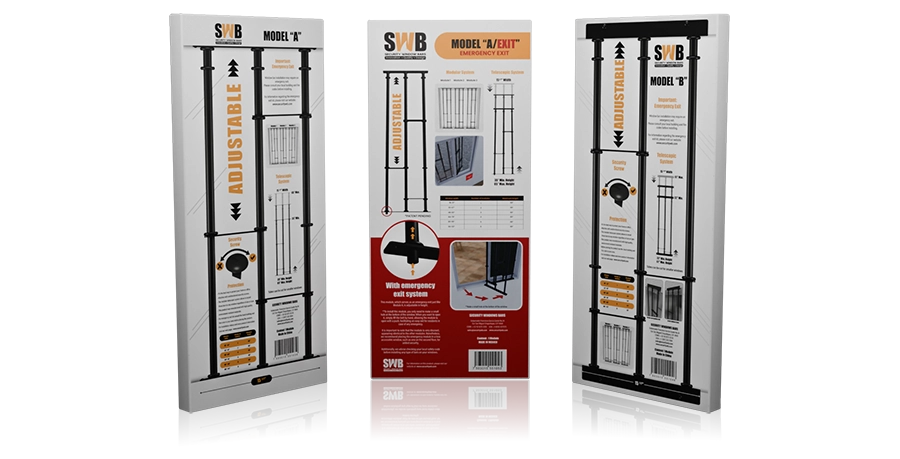
Model A — Telescopic Window Bars ($90): Best for renters, apartment dwellers, and anyone who needs security without permanent installation. Fits windows 22"–36" wide. Installs via tension-lock mechanism in 15 minutes with zero drilling. Matte black powder-coat finish. Ideal for living room windows, ground-floor apartment windows, and any non-sleeping-area application where renter-friendly removal is required. Ships via Amazon FBA for fast delivery nationwide.Model A/EXIT — Egress Compliant Window Bars ($92): Identical telescopic installation process as Model A, with the critical addition of a patented quick-release mechanism. This is the mandatory choice for any bedroom, nursery, or sleeping area in the USA. Meets IBC, NFPA 101, and OSHA standards. The $2 price difference between Model A and Model A/EXIT is the most cost-effective fire safety investment you will ever make.Model B — Wall-Mount Window Bars ($91): Designed for permanent installation in homeowner-occupied properties. Heavy-gauge steel frame with anchor-bolt mounting. Maximum security for ground-floor windows, garage windows, commercial storefronts, and any application where absolute permanence is desired over renter-friendly removal. Requires a drill and 25–35 minutes of installation time but no professional contractor.

Quick Selection Guide by Scenario

Apartment renter, any room except bedroom → Model A Apartment renter, bedroom → Model A/EXIT Homeowner, non-sleeping area → Model A or Model B Homeowner, bedroom → Model A/EXIT Landlord, multi-unit property → Model A (removable between tenants) or Model A/EXIT (bedrooms) Ground-floor commercial window → Model B

Where to Buy SWB Window Security Bars: Amazon vs. Direct Website

SWB ships all three models across all 50 US states via Amazon FBA under the seller account SecurityWindowBars. For most customers, purchasing through Amazon is the fastest path to protection — Prime-eligible orders typically arrive within 1 to 2 business days, meaning you can have steel security bars protecting your windows before the end of the week regardless of whether you are in Los Angeles, rural Montana, or suburban Atlanta.For bulk orders (landlords purchasing 10+ units), direct purchasing through securitywb.com may offer additional options and dedicated support from the SWB team. The product pages at securitywb.com/model-a/, securitywb.com/model-b/, and securitywb.com/model-a-exit/ include full technical specifications, dimension charts, and compatibility guides that help you confirm the right model before purchasing. Both channels carry the same SWB quality guarantee and ship the same heavy-gauge, powder-coated steel product.

Maintaining Your Window Security Bars After DIY Installation

Installing your window security bars is the beginning of a long-term security relationship, not a one-and-done task. Like any structural security component, window bars require periodic inspection and maintenance to perform at their rated strength over time. The good news: SWB's powder-coated matte black finish is specifically engineered for long-term durability in both interior and exterior exposures, and the telescopic mechanism is designed for tens of thousands of operational cycles without performance degradation. A simple monthly inspection routine keeps your bars in top condition for years.

Monthly and Annual Inspection Checklist

Monthly checks (5 minutes): Re-run the lateral push test and lift-out test described in the testing section above. Inspect rubber end caps for wear, cracking, or displacement — replace immediately if degraded, as compromised end caps reduce effective clamping force. For Model A/EXIT, test the quick-release mechanism monthly to confirm it operates smoothly and has not been accidentally locked or damaged.Annual checks (15 minutes): Inspect all steel surfaces for rust formation, especially in high-humidity climates like Florida, Louisiana, or the Pacific Northwest. Surface rust on a powder-coated bar typically indicates a chip or scratch in the finish — address with touch-up spray paint rated for steel to prevent deeper corrosion. Re-tighten all locking collars (Model A and A/EXIT) or anchor bolts (Model B) annually, as normal building vibration and thermal expansion can cause minor loosening over time.For Model B wall-mounted bars in exterior applications, inspect the anchor bolt penetration points annually for water infiltration. Apply exterior-grade caulk around each anchor point if gaps are visible. This simple step prevents water damage to the surrounding wall structure and extends the service life of both the bars and the wall itself.

Moving Out: Removing Telescopic Bars Without Wall Damage

One of the most practical advantages of SWB's telescopic design — and a feature specifically engineered for the 44 million American apartment renters — is complete removal without any wall damage. When moving day arrives, the entire removal process is the reverse of installation and takes under 5 minutes per window.Loosen the locking collar counterclockwise to release telescopic tension. Compress the bar assembly inward until it clears both side jambs, then lift the unit out of the window channel. Inspect the window frame at the contact points — the rubber end caps leave zero marks on properly maintained wood, vinyl, or aluminum frames. The bars fold down compactly for transport and can be reinstalled in your next apartment in the same 15 minutes it took the first time.This portability factor makes SWB Model A bars a long-term security investment that travels with you, rather than an installation you abandon and lose money on every time you move. For renters in cities with high mobility rates — Chicago, New York, and Los Angeles — this is not just a convenience feature. It is a fundamental shift in how renters can approach residential security.

🏆 Conclusion

Protecting your home from burglary should not require a $1,000 contractor invoice, weeks of scheduling delays, or drilling holes in walls that will cost you your security deposit. The reality proven by thousands of SWB customers across every major American city is that learning how to install window security bars DIY in 15 minutes without a professional is one of the highest-return security decisions any renter or homeowner can make. With FBI data confirming 6.7 million annual US burglaries and 60% entering through ground-floor windows, window bars are not a luxury upgrade — they are a practical necessity. SWB's three-model lineup — the telescopic Model A at $90, the wall-mount Model B at $91, and the egress-compliant Model A/EXIT at $92 — covers every residential window scenario in America at a fraction of professional installation costs. The heavy-gauge steel construction delivers the same deterrence force as permanently welded bars, and the powder-coated matte black finish integrates cleanly with modern home aesthetics. Whether you are a renter in a Chicago apartment, a homeowner in suburban Houston, or a landlord managing units across Philadelphia, the time to act is before a break-in occurs — not after. Your 15-minute installation awaits.

Security Window Bars · USA

Secure Your Home Today

Ready to secure your windows in 15 minutes or less? Security Window Bars ships fast across all 50 states via Amazon. Shop All SWB Models on Amazon → | Model A Telescopic ($90) | Model A/EXIT Egress Compliant ($92) | View the Full Installation Guide

Shop on Amazon →

Frequently Asked Questions

Yes — and for most standard US residential windows, 15 minutes is a generous estimate. SWB's Model A Telescopic Window Bars were specifically engineered for renter-friendly DIY installation. The telescopic tension-lock mechanism requires no drilling, no anchors, and no special tools beyond a tape measure. The full process involves measuring your window opening, pre-setting the telescopic width, placing the unit in the frame, and final tensioning of the locking collar. Thousands of SWB customers across the USA — including renters in Chicago, NYC, and Los Angeles — have completed this installation start to finish in under 15 minutes on their first attempt.

No. SWB Model A and Model A/EXIT Telescopic Window Bars use a pressure-tension mechanism that creates secure, steel-to-frame contact on both side jambs without any drilling, screwing, or adhesives. The rubber-tipped end caps protect your window frame from scratches and concentrate clamping force effectively. This no-drill design is the primary reason SWB bars are the preferred choice for apartment renters who must leave their windows undamaged when moving out. The only SWB model that requires drilling is the Model B Wall-Mount, which is designed for permanent homeowner installation and delivers maximum anchor strength.

In most US jurisdictions, installing removable, non-damaging window security devices — including tension-mount window bars — is legal in rental apartments without landlord permission, because no permanent modification to the property occurs. However, lease agreements vary, and some landlords explicitly address security hardware. The safest approach is to review your lease and, if uncertain, notify your landlord in writing that you are installing removable window security bars that leave no wall damage. For bedrooms, always use the Model A/EXIT egress-compliant version to satisfy IBC and NFPA 101 requirements. NYC renters should also note that Local Law 57 requires window guards in apartments with children under 10, making window bar installation not just permitted but legally mandated in many cases.

Always install the Model A/EXIT Egress Compliant Window Bars ($92) in any bedroom, nursery, or sleeping area. The International Residential Code (IRC) Section R310, NFPA 101 Life Safety Code, and International Building Code (IBC) all require that sleeping rooms have at least one emergency escape and rescue opening accessible from the inside. Fixed or non-releasing window bars that block this opening create a fire trap and constitute a building code violation. The Model A/EXIT's patented quick-release mechanism allows the bars to be opened from the inside in seconds, satisfying all applicable US codes. The $2 price difference between Model A and Model A/EXIT makes this the most cost-effective fire safety decision you can make.

SWB Model A and Model A/EXIT Telescopic Window Bars are engineered to fit window openings between 22 inches and 36 inches wide — the range that covers the vast majority of standard US residential windows including double-hung, single-hung, and slider windows. Before purchasing, measure the interior width of your window opening at the narrowest point (top, middle, and bottom) and confirm the measurement falls within this range. For windows wider than 36 inches, consult the SWB team via securitywb.com/contact/ for custom or multi-unit installation options. Model B Wall-Mount Bars can be configured for wider openings through custom frame sizing.

SWB telescopic window bars are constructed from the same heavy-gauge steel used in permanent welded bar systems. The structural strength of the steel itself is identical — the only difference is the installation method. Tension-mount systems like SWB Model A generate compressive force against the window jamb rather than tensile force through anchor bolts, and when properly installed to the specified tension, they resist forced entry with the same effectiveness as welded bars. The critical factor is proper tensioning during installation — an under-tensioned telescopic bar is vulnerable, while a correctly tensioned unit is effectively immovable without specialized tools. Always perform the lateral push test and lift-out test after installation to verify performance.

Absolutely — and this is one of the most significant advantages of SWB's telescopic design over permanent systems. Model A and Model A/EXIT bars can be removed in under 5 minutes by releasing the locking collar and compressing the telescopic assembly inward. The bars fold compactly for transport and reinstall in your new apartment using the same 15-minute process. This portability transforms window security from a one-property expense into a long-term personal security investment. Given that tens of millions of Americans move each year, owning portable window bars that travel with you is significantly smarter economically than paying for a fixed installation you must leave behind — or pay to have removed — every time you relocate.

After completing installation of any SWB model, perform three verification tests before relying on the bars for security. First, the lateral push test: place both palms on the bar assembly and push firmly side to side. Zero movement indicates correct installation. Second, the lift-out test: attempt to lift the assembly out of the window channel vertically. A correctly tensioned unit should be impossible to remove without deliberately releasing the locking mechanism. Third, the window operation test: open and close your window to confirm normal ventilation is preserved and the bars do not interfere with window hardware. For Model A/EXIT bedroom installations, add a fourth test — operate the quick-release mechanism from the inside and practice the motion until all household members can perform it quickly in the dark.

how to install window security bars DIY 15 minutes no professionalDIY window bars installationwindow security bars no drillingadjustable window bars renterstelescopic window bars installation guidewindow bars without professionalapartment window bars DIY

COOKIES POLICY

Security Window Bars LLC ("SWB") uses cookies and similar technologies to improve your browsing experience and enhance the functionality of our website www.securitywb.com (the “Website”). This Cookies Policy explains what cookies are, how we use them, and how you can manage your cookie preferences.

By using our Website, you agree to our use of cookies as described in this policy.

Last Updated: 01/01/25