How to Secure Apartment Windows: The Complete Renter's Security Guide
Apartment windows are one of the most targeted entry points for break-ins in the United States, and renters face a unique set of obstacles when trying to secure them. You cannot drill into the walls. You cannot make permanent modifications. You need your landlord's goodwill and your security deposit intact. This guide walks you through every practical method for securing apartment windows, from renter-friendly security bars to low-cost reinforcements, so you can sleep better tonight without violating your lease.
According to the Bureau of Justice Statistics, roughly 28 percent of residential burglaries involve entry through a window. For ground-floor apartments, that number climbs higher. First-floor units, garden-level apartments, and any window accessible from a fire escape, balcony, or shared courtyard represent easy targets for opportunistic criminals. The problem is worse in multi-unit buildings where foot traffic is constant and nobody questions a stranger in the hallway.
If you rent, you are probably familiar with the frustration: your landlord will not install security upgrades, your lease bans permanent modifications, and most of the advice you find online assumes you own the property. This guide is different. Every solution covered here is renter-friendly, removable, and lease-compliant. Some cost less than a takeout dinner. Others require a modest investment but deliver serious, measurable protection.
By the end of this guide you will have a clear, prioritized action plan tailored to your apartment, your budget, and your risk level.
Why Apartment Windows Are Especially Vulnerable
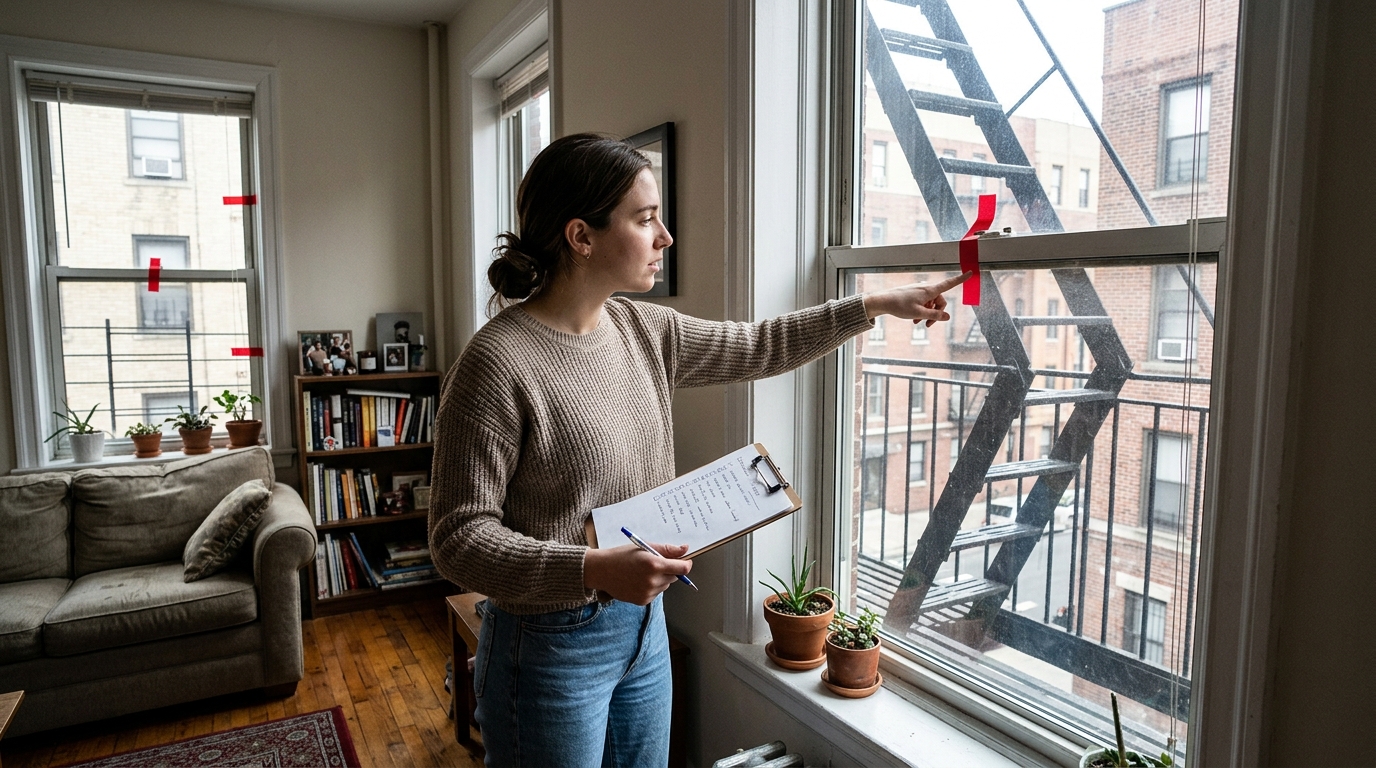
Before you start buying products, it helps to understand why apartment windows are targeted so frequently and what makes them different from windows in a single-family home.
Ground-floor exposure
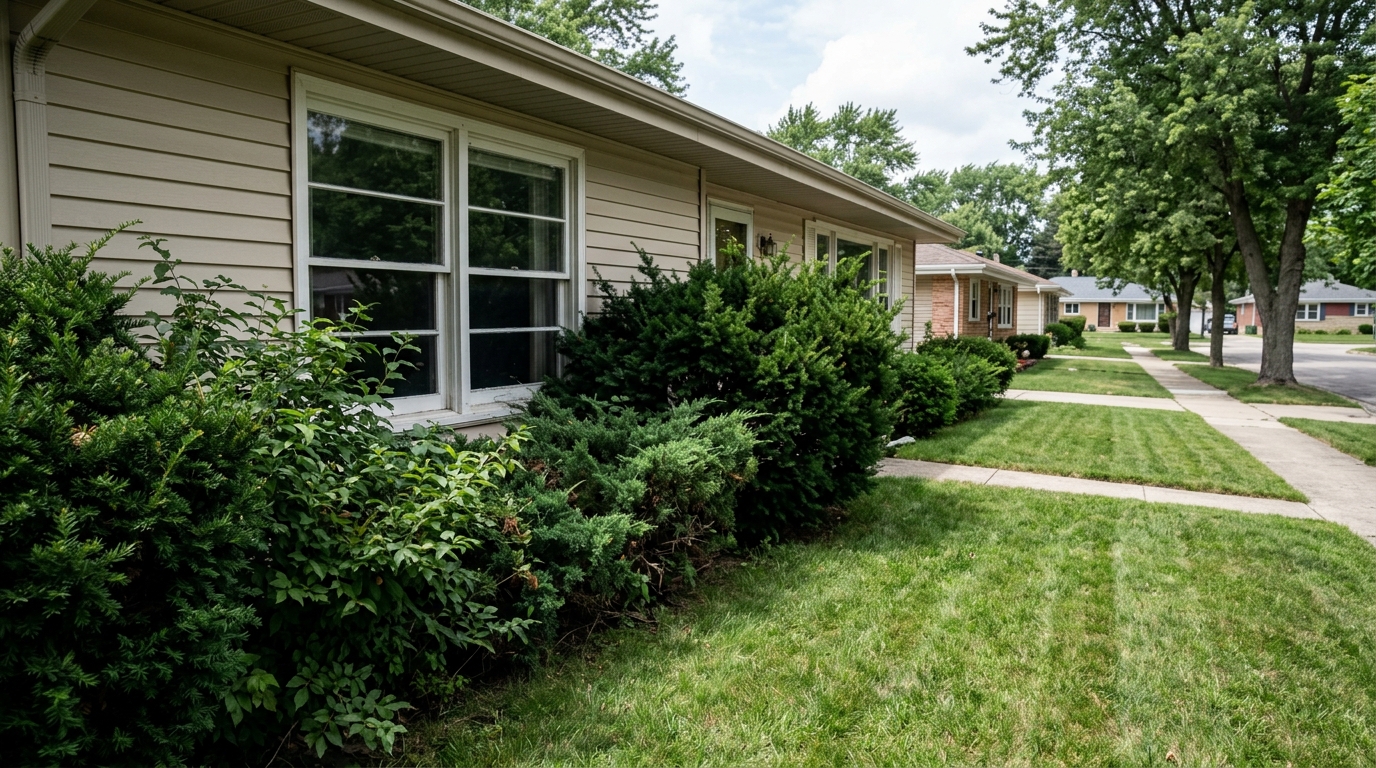
Ground-floor apartment windows sit at street level or just above it. A burglar does not need a ladder, a rope, or any special equipment. They can test a window latch with their hands while pretending to tie a shoe. In urban areas, ground-floor units often face alleys, parking lots, or side streets with minimal foot traffic and poor lighting. That combination of accessibility and low visibility makes ground-floor windows the number one break-in vector for apartments.
Fire escape and balcony access
Upper-floor apartments are not immune. Any window that opens onto a fire escape, a shared balcony, or a flat roof section is accessible to someone who has already entered the building. In cities like New York, Chicago, and San Francisco, fire escape burglaries are a well-documented pattern. The fire escape is designed for easy access by definition, and that same easy access benefits intruders.
Weak factory hardware
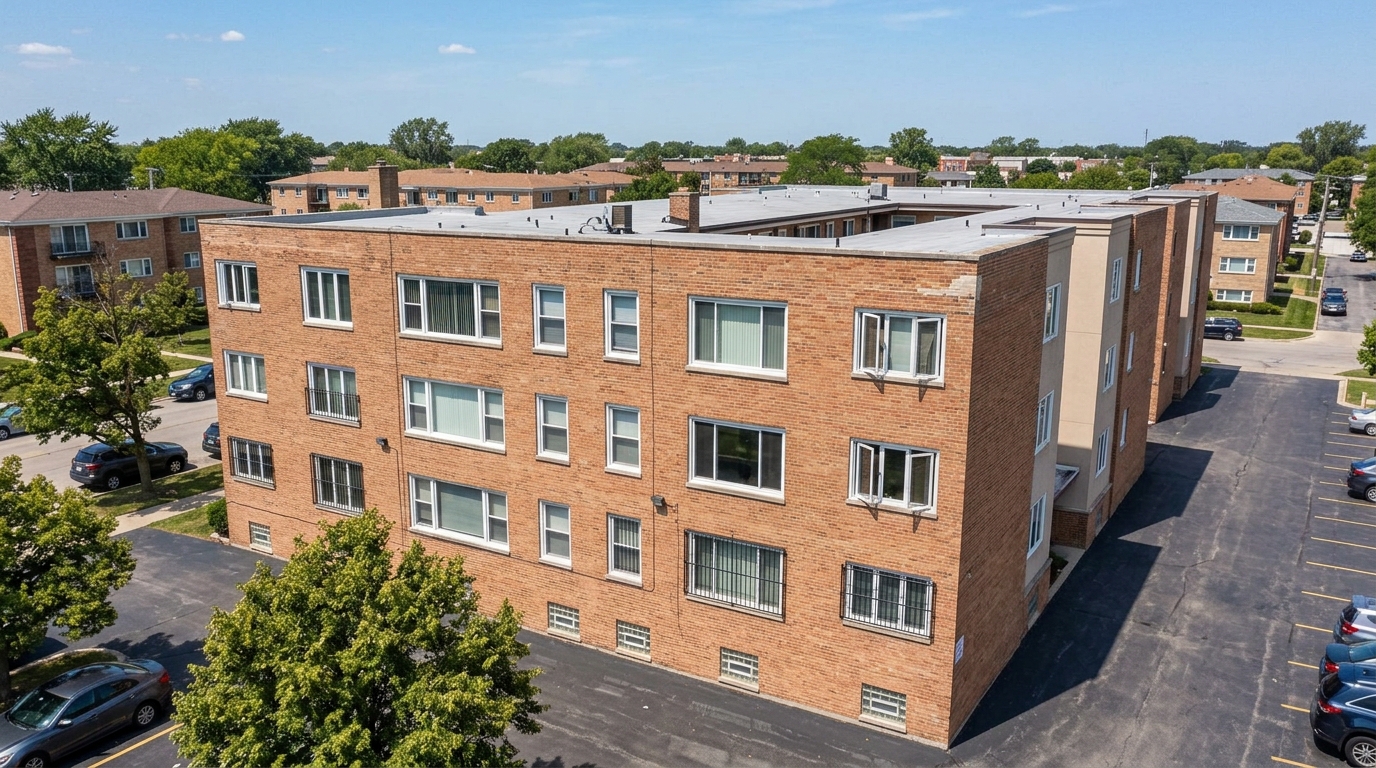
Most apartment windows ship with the cheapest possible latches. A standard crescent latch on a double-hung window can be defeated with a flat-head screwdriver in under 10 seconds. Sliding windows often have nothing more than a plastic thumb latch that fails under moderate sideways pressure. Casement windows are somewhat better because their crank mechanisms are harder to manipulate from outside, but even those can be defeated if the glass is single-pane.
Shared building access
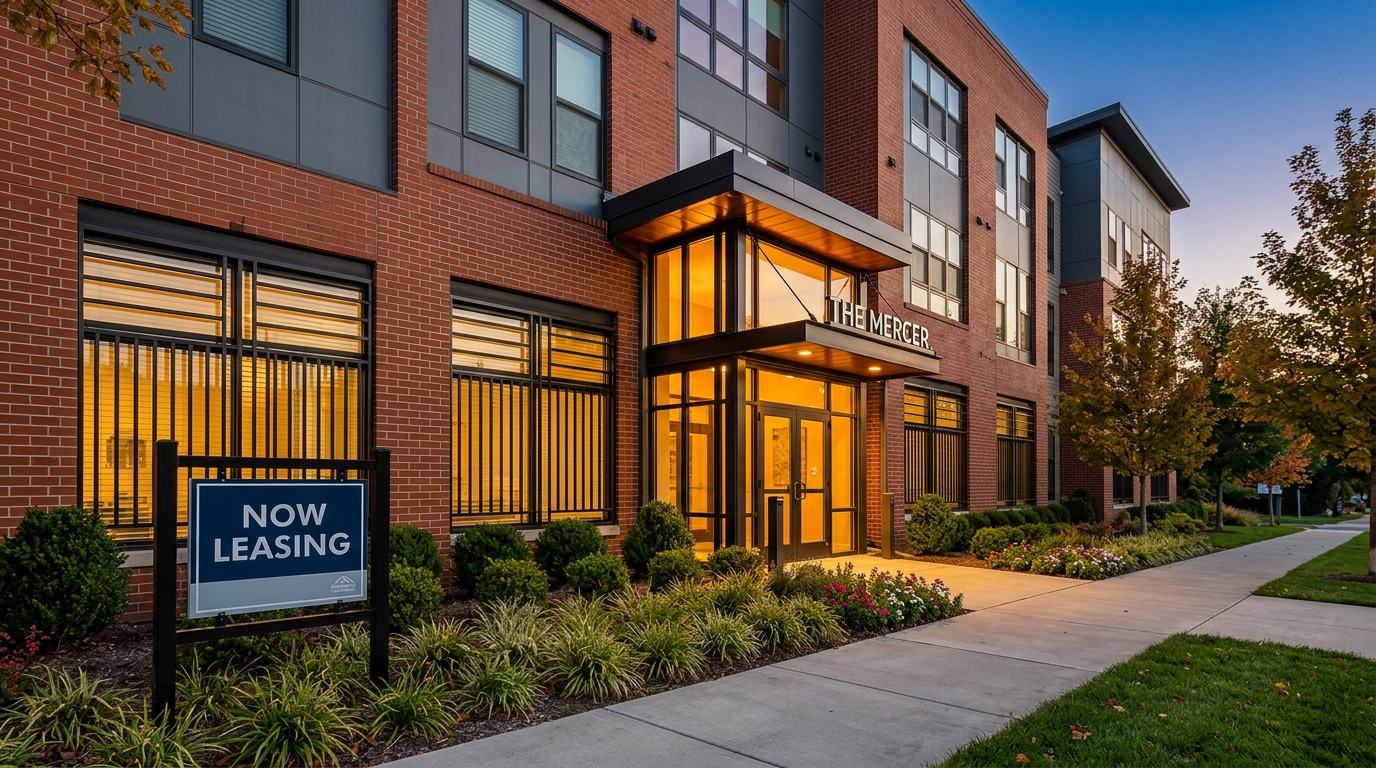
In a single-family home, anyone on your property is conspicuous. In an apartment building, strangers walk the hallways every day. A burglar can enter through a propped-open lobby door, walk to a ground-floor unit, and be inside a window in under a minute without anyone noticing anything unusual.
Renter limitations
Homeowners can install alarm systems, anchor security bars into masonry, replace windows with impact-resistant glass, and do whatever else their budget allows. Renters cannot. Lease restrictions, security deposit concerns, and the temporary nature of rental housing all limit your options. But "limited" does not mean "helpless." It means you need smarter solutions, and that is exactly what this guide delivers.
Step 1: Assess Your Apartment's Weak Points
Effective window security starts with a realistic assessment of your specific vulnerabilities. Not every window in your apartment carries the same risk, and your budget will go further if you prioritize the highest-risk entry points first.
Walk the perimeter
Go outside your building and look at your apartment from the perspective of someone trying to get in. Stand at each window and ask yourself three questions:
- Can someone reach this window from the ground, a fire escape, a balcony, or an adjacent rooftop? If yes, it is a high-priority window.
- Is this window visible from the street, from neighboring units, or from a well-trafficked area? If no, it is a higher priority because an intruder can work on it without being seen.
- Is this window concealed by landscaping, dumpsters, or parked vehicles? Concealment raises the risk further.
Test your existing hardware
Go back inside and test every window latch, lock, and mechanism in your apartment. Try to open each window from the inside with the lock engaged. If you can force it open with moderate hand pressure, a burglar can too. Check for:
- Crescent latches that do not fully engage or wobble in their housing
- Sliding window latches that pop open under sideways pressure
- Window frames that are warped, painted shut, or swollen from moisture
- Missing or broken lock hardware
- Single-pane glass that can be broken quietly with a simple tool
Rank your windows by risk
Create a simple list of every window in your apartment and assign each one a risk level: high, medium, or low. High-risk windows get security upgrades first. Typical high-risk windows include:
- Any ground-floor window facing an alley, side street, or parking lot
- Any window accessible from a fire escape
- Any window hidden from street view by bushes, fences, or structures
- Any window with a broken or weak latch
- Any window in a room where you store valuables (home office, bedroom)
This risk assessment takes about 15 minutes and will save you from spending money on windows that do not need it while leaving your actual weak points exposed.
Step 2: Reinforce Your Window Locks
The fastest and cheapest way to improve apartment window security is to upgrade or supplement your existing locks. None of these methods require drilling or permanent modification.
Window security pins
For double-hung windows (the kind that slide up and down), a window pin is the simplest and most effective lock supplement available. You drill a small hole through the inner sash frame into the outer sash frame at an angle, then insert a nail or pin that prevents the window from being opened. The hole is tiny, easily filled when you move out, and invisible from outside.
If even a small drill hole concerns you, ask your landlord first. Most will approve this because the modification is functionally invisible and takes 30 seconds to reverse.
Sliding window locks (aftermarket)
For sliding windows, aftermarket track locks clamp onto the window track and physically block the sliding sash from moving. They install in seconds with a thumbscrew, require no tools beyond your fingers, and leave zero marks on the track. A two-pack costs between five and fifteen dollars and adds meaningful resistance to forced opening.
Window security sticks
A cut-to-length stick or bar placed in the track of a sliding window or in the upper channel of a double-hung window prevents the window from being opened more than the stick allows. This is the zero-cost version of a window lock. A wooden dowel from any hardware store works. Cut it to fit the track length minus one-quarter inch so it drops in and lifts out easily.
Keyed window locks
If your landlord approves, keyed sash locks replace or supplement the existing crescent latch on double-hung windows. They require a key to unlock from either side, which eliminates the possibility of someone reaching through broken glass to flip the latch. The downside: you need to keep the key accessible for emergency egress, especially in bedrooms.
What about smart locks and sensors?
Smart window sensors (like those from Ring, SimpliSafe, or Wyze) attach with adhesive and alert your phone when a window is opened. They do not physically prevent entry, but they give you instant notification and often trigger an audible alarm. They are renter-friendly, removable, and pair well with physical reinforcements. Think of them as the detection layer, not the prevention layer.
Step 3: Install Renter-Friendly Window Security Bars
Locks and sensors are important, but they address only one attack vector: someone opening the window through its intended mechanism. Security bars address the other vector: someone breaking the glass or prying the sash out of its frame entirely. Bars are a physical barrier that stops a human body from passing through the opening, even if the glass is shattered.
For renters, the key requirement is a bar system that installs without drilling into walls, window frames, or exterior surfaces. That means frame-mount (also called pressure-mount or clamp-mount) security bars.
How frame-mount bars work
Frame-mount security bars use adjustable brackets that clamp against the interior surfaces of your window frame. The bars sit inside the window recess, held in place by mechanical pressure. No screws go into the wall. No anchors go into masonry. No holes are drilled anywhere. When you move out, you loosen the clamps, lift the bars out, and the window frame looks exactly as it did the day you moved in.
The SWB Model A is purpose-built for this exact use case. Its telescopic steel design adjusts to fit a range of window widths with a single unit, which means you do not need to buy a custom size for every window. The set-screw clamps grip the frame without penetrating it, and the entire installation takes about 10 to 15 minutes per window with nothing more than a tape measure and the included hex key.
At approximately $90 per window, the Model A costs less than a single month of most apartment alarm monitoring services. And unlike a monthly subscription, you pay once and take the bars with you to your next apartment.
What to look for in apartment window bars
Not every product marketed as "renter-friendly" actually delivers real security. When shopping for apartment window bars, check for these features:
- Steel construction: Aluminum and plastic grilles look similar but are dramatically weaker. Steel bars resist cutting, prying, and spreading.
- Adjustable width: Apartment windows come in all sizes. A telescopic bar that covers a range of widths is far more practical than a fixed-width unit that fits only one specific opening.
- Non-destructive mounting: Confirm that the product uses frame clamps, not wall anchors. If the listing mentions "masonry anchors" or "concrete screws," it is not a renter-friendly product.
- Interior placement: Bars mounted inside the frame recess are tamper-resistant from outside and invisible from the street. This matters for aesthetics and for HOA or landlord acceptance.
- Quick-release option: If you are installing bars on a bedroom window, fire code requires an emergency egress exit. The SWB Model A/EXIT includes a quick-release mechanism that lets you remove the bars from inside in seconds during an emergency, keeping you compliant with IBC and NFPA fire codes.
For a detailed comparison of the top renter-friendly options on the market, see our best window bars for apartments and renters in 2026 roundup.
Installation walkthrough for apartment bars
Here is the full process, step by step:
- Measure your window opening. Measure the interior width at three heights (top, middle, bottom) and use the smallest number. Measure the height from sill to top of frame at three positions (left, center, right) and use the smallest number.
- Confirm the product fits. Check that your measurements fall within the adjustment range of the bar you purchased.
- Extend the telescopic bar to match your measured width. Lock the telescoping mechanism at the correct span.
- Position the bar inside the window frame. Set the unit into the recess with the clamping brackets pressing against the left and right sides of the frame.
- Tighten the clamps. Use the included hex key to engage the set-screw clamps on each bracket. Tighten evenly on both sides until the bar assembly is firmly locked in place.
- Test the installation. Push, pull, and wobble the bars with firm hand pressure from both sides. There should be zero movement. If anything shifts, retighten.
- Verify egress compliance. For bedroom windows, confirm that the quick-release mechanism (if equipped) works smoothly and that you can remove the bars within a few seconds from inside.
The entire process takes 10 to 15 minutes per window. No power tools, no landlord permission needed for the installation itself (though notifying your landlord is always a good idea), and no damage to the property.
If your building has brick or masonry and you want an even more permanent solution, you may want to discuss the no-drill installation guide with your landlord to find an approach you both agree on.
Step 4: Add Window Film for Glass Reinforcement
Security bars stop a person from climbing through a broken window. Window security film stops the glass from breaking in the first place, or at least makes it dramatically harder.
What security film does
Security window film is a thick, clear polyester layer that adheres to the interior surface of your glass. When someone strikes the glass, the film holds the shards together instead of letting them scatter. The window cracks but does not shatter into an open hole. An intruder has to strike the glass repeatedly and then tear through the film, which adds minutes to the break-in attempt. Most burglars abandon the attempt after 30 to 60 seconds of resistance.
Renter-friendly film options
Professional-grade security film (like 3M Safety & Security Film) is applied with a soapy water solution and bonds to the glass through static adhesion. It can be removed by peeling it off, though removal takes some patience. For renters, the key consideration is that film does not damage the glass and can be removed without leaving permanent marks, though residual adhesive may need to be cleaned with a razor blade and rubbing alcohol.
Before applying film, check with your landlord. Most will approve it because it adds value to the property and does not damage anything, but getting written permission protects you.
How to apply security film yourself
- Clean the glass thoroughly with glass cleaner. Any dust or fingerprints trapped under the film will be visible and can weaken adhesion.
- Cut the film to size, leaving a quarter-inch margin on all sides.
- Spray the glass surface with the application solution (usually soapy water).
- Peel the backing off the film and position it on the wet glass.
- Squeegee from the center outward to remove bubbles and excess water.
- Trim the edges with a utility knife for a clean finish.
- Allow 30 days for the film to fully cure before testing.
Cost: Security film runs between $6 and $15 per square foot for quality material. A standard 3-by-5-foot window costs roughly $90 to $225 in film. Professional installation doubles the cost but ensures a bubble-free application with full edge-to-edge coverage.
Film alone is not enough
Security film is a delay mechanism, not a barrier. It slows down glass breach, but it does not prevent someone from eventually punching through. Film works best in combination with security bars, not as a replacement. Think of film as the first layer and bars as the second.
Step 5: Improve Visibility and Deterrence
Physical barriers are one half of apartment window security. The other half is deterrence: making your apartment look like a hard target so that burglars choose an easier one.
Window-level lighting
Motion-activated lights near vulnerable windows are one of the most cost-effective deterrents available. Battery-powered LED motion lights require no wiring and can be attached with adhesive strips. Place them above or beside any ground-floor window that faces an alley, parking lot, or low-traffic area. When someone approaches the window, the sudden flood of light draws attention and eliminates the concealment they were counting on.
Window alarms and sensors
Adhesive-mounted window alarms emit a loud siren (100+ decibels) when the window is opened or the glass is vibrated. They cost between $10 and $30 per unit, require no wiring, and are completely removable. Place them on every high-risk window. The alarm itself does not stop entry, but the noise creates urgency and panic that causes most burglars to flee.
Visible security indicators
A small security system sticker or decal on a ground-floor window signals that the unit is monitored, even if you do not have a full alarm system. Security camera decals, "premises protected" stickers, and even a visible camera mount (with or without an actual camera) create doubt in a burglar's mind. Doubt equals hesitation, and hesitation equals choosing a different target.
Curtains and blinds strategy
This one is counterintuitive. You might think keeping curtains open lets neighbors see inside and deters burglars, but the opposite is true. Open curtains let a burglar see your laptop, your TV, your gaming setup, and everything else worth stealing. Closed curtains force them to guess whether the unit is worth the risk. Use curtains or blinds to block line-of-sight into rooms with valuables, especially at street level.
At the same time, an apartment that always has curtains drawn and never shows signs of life can signal that nobody is home. The balance: use timered interior lights that turn on and off at varied intervals to simulate activity even when you are away.
Step 6: Handle Fire Escape Windows Correctly
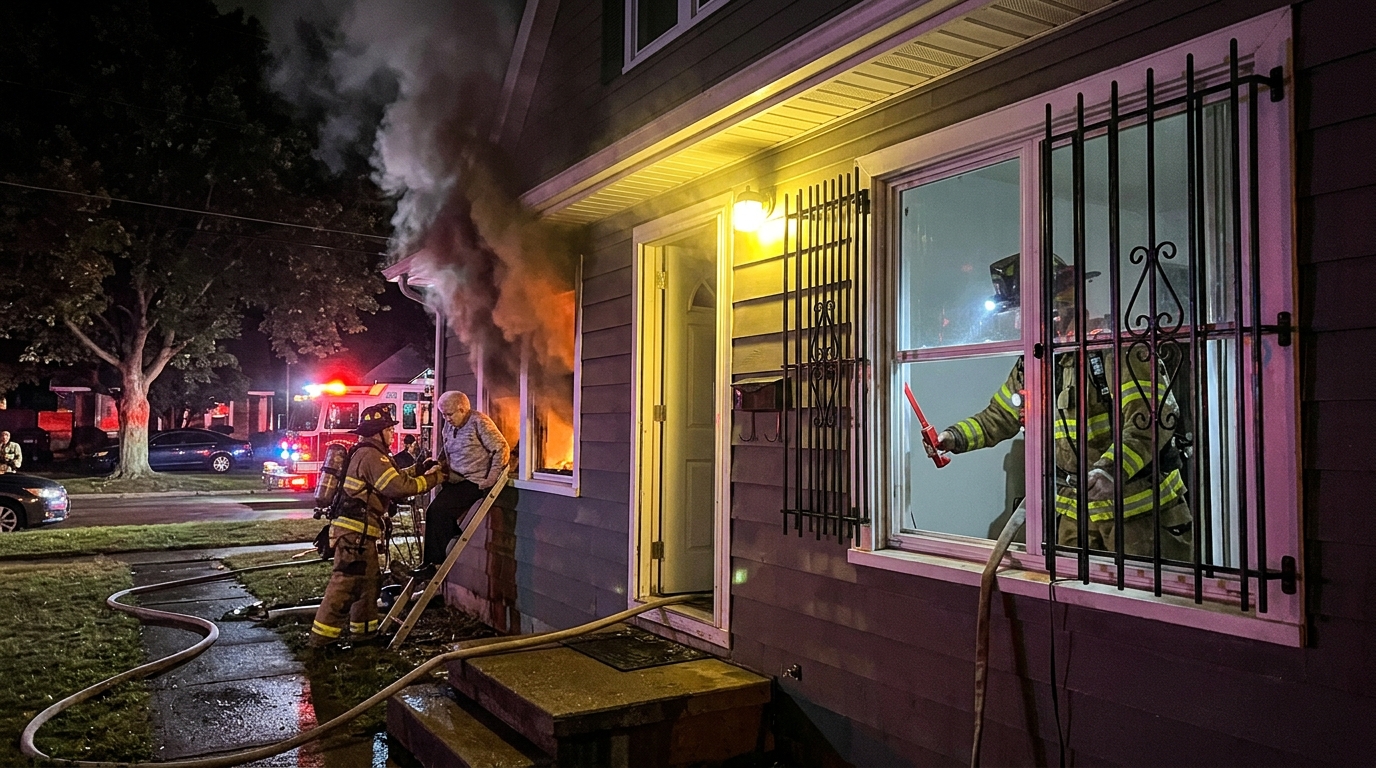
Fire escape windows demand special attention because they create a direct conflict between security and safety. You want to prevent unauthorized entry, but you also need to ensure you can exit quickly in a fire or emergency.
The legal requirement
In every U.S. jurisdiction, bedroom windows and any window designated as an emergency egress point must be openable from inside without special tools, keys, or knowledge. The International Residential Code (IRC) requires a minimum clear opening of 5.7 square feet for egress windows, with a minimum width of 20 inches and a minimum height of 24 inches. Blocking these windows with bars that do not open violates fire code and puts your life at risk.
The solution: quick-release bars
Quick-release security bars provide the physical barrier you need while maintaining code-compliant egress. The SWB Model A/EXIT is designed specifically for this scenario. It uses the same telescopic frame-mount design as the standard Model A, but adds an interior quick-release mechanism that lets you remove the bars in seconds without any tools. In a fire, you pull the release, remove the bars, open the window, and exit. The mechanism is operable by adults and children alike.
Fire escape security best practices
- Never padlock or permanently fix bars on a fire escape window. This is illegal in every state and can result in criminal liability if someone is injured or killed in a fire.
- Test your quick-release mechanism monthly. Make sure it operates smoothly and that all household members know how to use it.
- Keep the area near fire escape windows clear. Do not store furniture, boxes, or clutter in front of the window that would slow your escape.
- Install a secondary lock on fire escape access windows. A window lock or pin on the window itself, combined with quick-release bars, gives you two layers of protection that can both be defeated quickly from inside in an emergency.
- Consider a window gate. In cities like New York, approved window gates (which swing open from inside) are legally required for certain units. Check your local fire code to see if this applies to your building.
Step 7: Talk to Your Landlord the Right Way
Landlord communication is a critical and often overlooked part of apartment window security. Getting your landlord on board early prevents conflicts later and may even result in them paying for upgrades.
How to frame the conversation
Do not lead with "I want to install security bars." That triggers immediate concern about liability, aesthetics, and property damage. Instead, lead with the problem and the solution:
"I've noticed that the ground-floor windows in my unit are accessible from [the alley / the parking lot / the fire escape]. I'd like to add removable, non-permanent security bars that clamp inside the window frame without any drilling or wall modifications. They protect the unit without damaging the property, and I'll remove them when I move out. Here's a photo of what they look like installed."
This approach addresses the landlord's three main concerns: property damage (none), aesthetics (interior-only, invisible from outside), and liability (you are improving safety, not creating a hazard).
Get it in writing
Whatever your landlord agrees to, get it documented. An email confirmation is fine. You want a record that says "Landlord approved the installation of removable window bars in Unit X on [date]." This protects you if there is a dispute at move-out about unauthorized modifications.
Ask if the landlord will pay
In many states, landlords have a legal obligation to provide "habitable" and "reasonably secure" rental units. If your apartment has known security issues, such as ground-floor windows with broken latches, windows facing high-crime areas, or a history of break-ins in the building, your landlord may be legally required to address them. Frame your request accordingly: "I'd like to solve this problem myself at my own expense, but if you'd prefer to handle it, I'm happy to work with whatever solution you choose." Some landlords will cover the cost rather than deal with the liability of a documented security gap.
Know your rights
Tenant security rights vary by state and city. In New York City, landlords are legally required to install window guards in apartments with children under 11. In California, landlords must provide functional locks on all windows and doors. In Chicago, the RLTO (Residential Landlord Tenant Ordinance) requires landlords to maintain security devices in working order. Research your local tenant rights before having the conversation with your landlord.
Budget Breakdown: Securing Every Window in a Typical Apartment
Here is a realistic cost breakdown for securing a standard two-bedroom apartment with six windows, three of which are high-risk (ground floor or fire escape).
Budget tier: Under $50 total
- Window security sticks for sliding windows: $0 (DIY with dowels)
- Aftermarket sliding track locks (3 pack): $12 to $20
- Adhesive window alarms (3 pack): $15 to $25
- Security system stickers: $5 to $8
Total: $32 to $53. This tier covers basic lock reinforcement and deterrence. It does not include physical barriers.
Mid-range tier: $250 to $400
- Everything in the budget tier: $32 to $53
- Frame-mount security bars for 3 high-risk windows (e.g., SWB Model A at ~$90 each): $270
- Motion-activated LED lights (2 pack): $20 to $35
Total: $322 to $358. This tier covers the most critical windows with real physical barriers plus deterrence on all windows.
Premium tier: $600 to $900
- Everything in the mid-range tier: $322 to $358
- Security bars on all 6 windows: additional ~$270 (3 more bars)
- Security window film on 3 high-risk windows (~$15/sq ft): $135 to $225
- Smart window sensors with app alerts: $60 to $100
Total: $787 to $953. This tier provides comprehensive, multi-layer protection on every window. It is the full defensive stack.
For most renters, the mid-range tier delivers the best return on investment. Security bars on the three highest-risk windows eliminate the most likely entry points, and the supplemental measures cover the rest. If your budget is tight, start with the budget tier and add bars to one window at a time as funds allow.
Common Apartment Window Security Mistakes
Avoid these errors that waste money, create false confidence, or put you in legal jeopardy:
- Securing the front door but ignoring windows. A reinforced front door with a deadbolt is great, but if your ground-floor windows have factory latches and no bars, you have created a security imbalance. Burglars go around the strong point, not through it.
- Relying on window film alone. Film slows glass breach but does not prevent entry. Once the film is torn, the window is open. Always pair film with a physical barrier like security bars.
- Installing bars on bedroom windows without a quick-release mechanism. This is a fire code violation and a life safety hazard. Every bedroom window needs a way to exit in an emergency. Use bars with a quick-release feature like the Model A/EXIT or do not bar that window at all.
- Buying decorative grilles and calling them security bars. Wrought-iron decorative grilles sold at big-box home stores are designed for aesthetics, not security. Many use thin-gauge metal that can be bent by hand. If the product does not specify a forced-entry resistance rating or steel gauge, it is not a security product.
- Assuming upper floors are safe. Any window accessible from a fire escape, shared balcony, adjacent roof, or tree branch is vulnerable regardless of floor number. Assess every window individually.
- Hiding the key to keyed window locks. If you install keyed locks on bedroom windows, everyone in the household needs to know where the key is and how to use it in the dark. A keyed lock that traps you in a fire is worse than no lock at all.
- Not documenting your security setup for insurance. If you experience a break-in, your renter's insurance claim goes smoother when you can document the security measures you had in place. Take photos of your installed bars, locks, and sensors.
Special Situations: Sliding Windows, Casement Windows, and AC Units
Not all apartment windows are standard double-hung. Here is how to handle the most common variations.
Sliding windows (horizontal sliders)
Sliding windows are common in apartments built after 1980. They are also one of the easiest window types to force open because the sash rides on a track with minimal friction. To secure a sliding window:
- Install a track lock that blocks the sash from sliding.
- Place a security stick or cut dowel in the bottom track as a backup.
- Add a frame-mount security bar across the full opening, covering both the fixed and sliding panes.
Casement windows (crank-out)
Casement windows are harder for burglars to attack because the crank mechanism locks the sash against the frame under compression. However, they are not immune. A casement window with single-pane glass can be broken and reached through. To secure a casement window:
- Keep the crank mechanism locked when the window is closed. Most casement locks engage automatically when you close the window fully.
- Add a secondary latch or pin lock for redundancy.
- If the window is a high-risk entry point, install frame-mount bars across the opening.
Window AC units
A window-mounted air conditioning unit creates a security gap. The AC unit can be pushed inward from outside, and the side panels that fill the gap between the unit and the window frame are usually flimsy accordion-style plastic. To secure a window with an AC unit:
- Screw or bolt the AC mounting bracket to the window sash (this may require landlord approval for the screw holes).
- Replace the plastic accordion panels with rigid plexiglass or plywood cut to fit.
- Install an L-bracket or angle iron on the inside of the window sash to prevent the sash from being lifted.
- Add a window alarm sensor to the AC window so you are alerted if the unit is disturbed.
For a deeper dive on securing AC windows specifically, check out our guide on best window security bars for homes, which covers AC-compatible configurations.
Apartment Security Checklist: Your Action Plan
Here is your prioritized action plan, organized from quickest and cheapest to most comprehensive. Work through this list from top to bottom and stop wherever your budget or risk tolerance tells you to.
- Walk the perimeter and rank every window by risk level (15 minutes, free).
- Test every window lock in your apartment and identify any that are broken or weak (10 minutes, free).
- Install window security sticks or dowels in all sliding window tracks (20 minutes, under $5).
- Add aftermarket track locks to all sliding windows ($12 to $20, 5 minutes each).
- Place adhesive window alarms on all high-risk windows ($15 to $25 for a 3-pack, 2 minutes each).
- Install frame-mount security bars on all high-risk windows, starting with the most vulnerable (SWB Model A, ~$90 each, 15 minutes each).
- Use quick-release bars (Model A/EXIT) on bedroom and fire escape windows (~$92 each).
- Apply security window film to high-risk windows ($6 to $15 per square foot, 30 minutes each).
- Add motion-activated lights near vulnerable exterior-facing windows ($10 to $20 each, 5 minutes each).
- Document everything with photos for insurance purposes (10 minutes, free).
Steps 1 through 5 can be completed in a single afternoon for under $50. Steps 6 and 7 require a modest budget but deliver the biggest security improvement. Steps 8 through 10 round out a comprehensive defensive posture.
Frequently Asked Questions
Can I install security bars in my apartment without landlord permission?
Frame-mount security bars that clamp inside the window frame without drilling or permanent modifications can typically be installed without landlord permission because they cause no property damage. However, some leases contain broad language prohibiting any window alterations. Read your lease carefully, and when in doubt, send your landlord a brief email describing the removable nature of the product and ask for written approval. This protects you from disputes at move-out.
Are window security bars legal in apartments?
Window security bars are legal in apartments in all 50 states as long as they comply with fire and egress codes. The critical requirement is that any bar installed on a bedroom window or designated egress window must have a quick-release mechanism that allows the bars to be opened from inside without tools during an emergency. Bars without quick-release features on egress windows violate the International Residential Code and can result in fines or liability.
What is the cheapest way to secure apartment windows?
The cheapest effective method is a combination of window security sticks (cut-to-length wooden dowels placed in sliding window tracks, essentially free), aftermarket track locks ($5 to $10 each), and adhesive window alarms ($8 to $12 each). This combination costs under $50 for a typical apartment and addresses both forced opening and detection. For physical barriers against glass break-ins, frame-mount security bars start at around $90 per window.
Do apartment window bars affect my renter's insurance?
Window security bars can positively affect your renter's insurance in two ways. Some insurers offer a discount on premiums for tenants who install security devices including window bars, deadbolts, and alarm systems. Additionally, having documented security measures in place strengthens your claim if a break-in does occur, as it demonstrates you took reasonable precautions. Contact your insurer to ask about available security discounts and document your installed bars with photos.
How do I secure apartment windows on upper floors?
Upper-floor apartment windows are not immune to break-ins if they are accessible from fire escapes, shared balconies, adjacent rooftops, or tree branches. Secure these windows the same way you would secure a ground-floor window: reinforce the locks, install aftermarket track locks or pins, add adhesive window alarms, and install frame-mount security bars on any window that can be reached from an external structure. Prioritize fire escape windows, as they are the most commonly exploited upper-floor entry point in urban apartments.
Final Thoughts
Securing apartment windows does not require a homeowner's budget, a landlord's permission for major renovations, or a professional installer. The most effective approach combines layers: reinforced locks to prevent forced opening, security bars to prevent physical entry, film to resist glass breach, and deterrence measures to convince burglars to choose an easier target.
Start with your highest-risk windows and work outward. A single afternoon and under $50 in basic supplies will meaningfully improve your security posture. Adding frame-mount security bars like the SWB Model A to your most vulnerable windows takes the protection to a level that stops the vast majority of residential break-in attempts.
Every solution in this guide is removable, renter-friendly, and lease-compliant. When you move, the bars come with you. The locks unclamp. The film peels off. Your deposit stays intact, and your next apartment is just as easy to protect as this one.
For more apartment-specific recommendations, explore our best window bars for apartments and renters guide, or browse all of our top-rated window security bars for 2026.