How to Pass a Fire Inspection with Window Security Bars Installed
Passing a fire inspection with window security bars installed comes down to one requirement: every bar on a bedroom window or designated emergency escape opening must have a quick-release mechanism that any occupant can operate from inside without tools, keys, or special knowledge. If your bars meet this standard, you will pass. If they do not, you will fail — and the consequences include violation notices, fines, mandatory removal orders, and potential liability exposure.
This guide walks you through exactly what fire inspectors look for when they see window bars, how to prepare your property before an inspection, the most common reasons properties fail, and how to fix compliance issues quickly if you discover them before the inspector does.
What Fire Inspectors Check on Window Bars
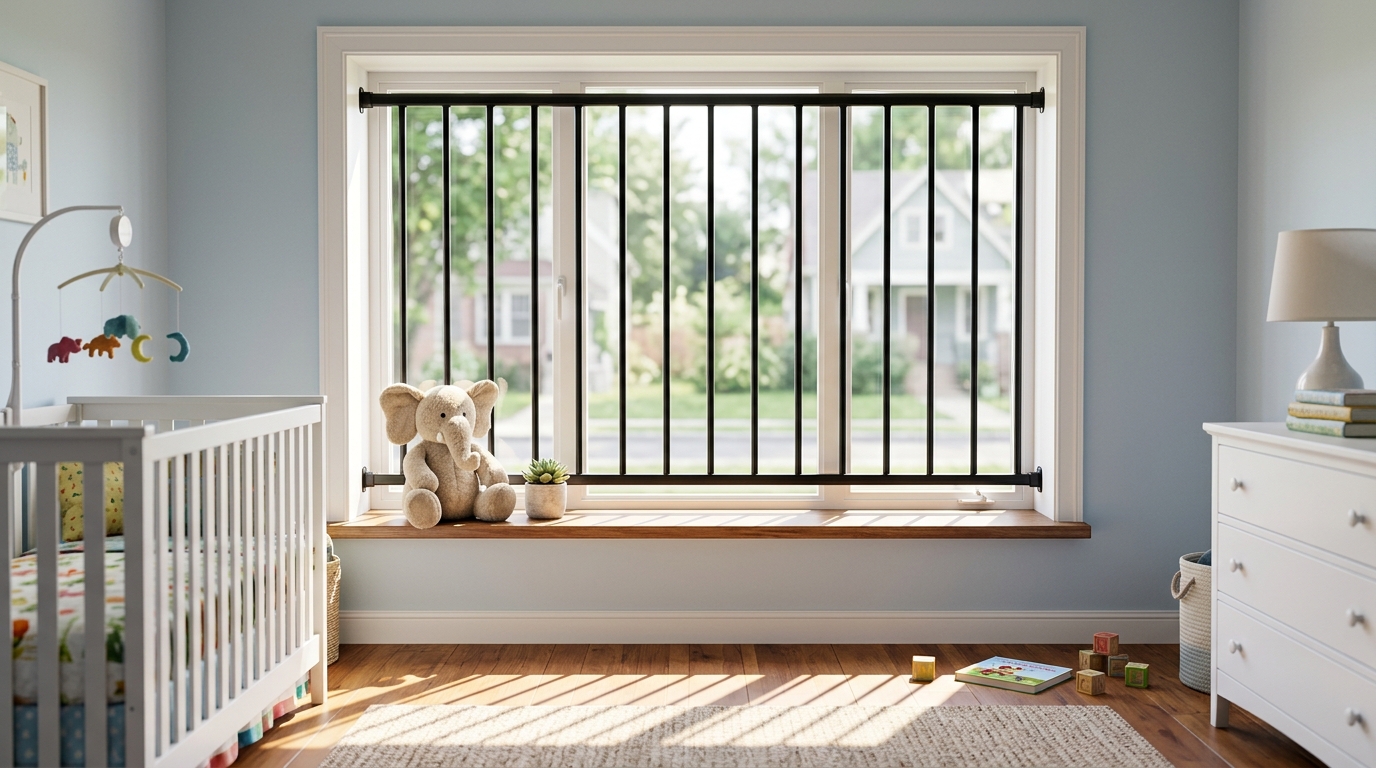
Fire inspectors are focused on one thing: can occupants escape through the designated emergency exits in a fire? When they see window security bars, they perform a specific set of checks:
The Inspector's Checklist
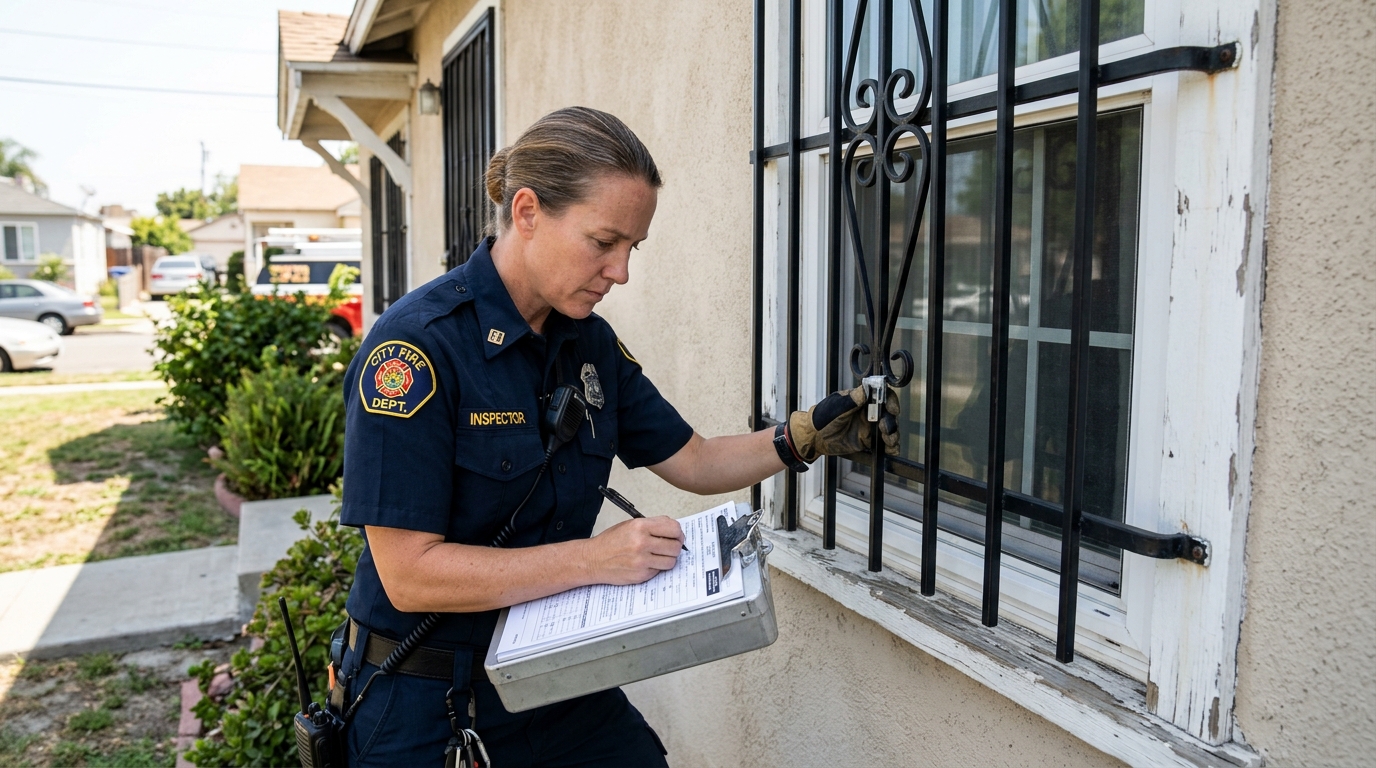
- Which windows have bars? — The inspector identifies every barred window in the building
- Which barred windows are egress-designated? — All bedroom windows and any window on the building's fire safety plan as an emergency escape
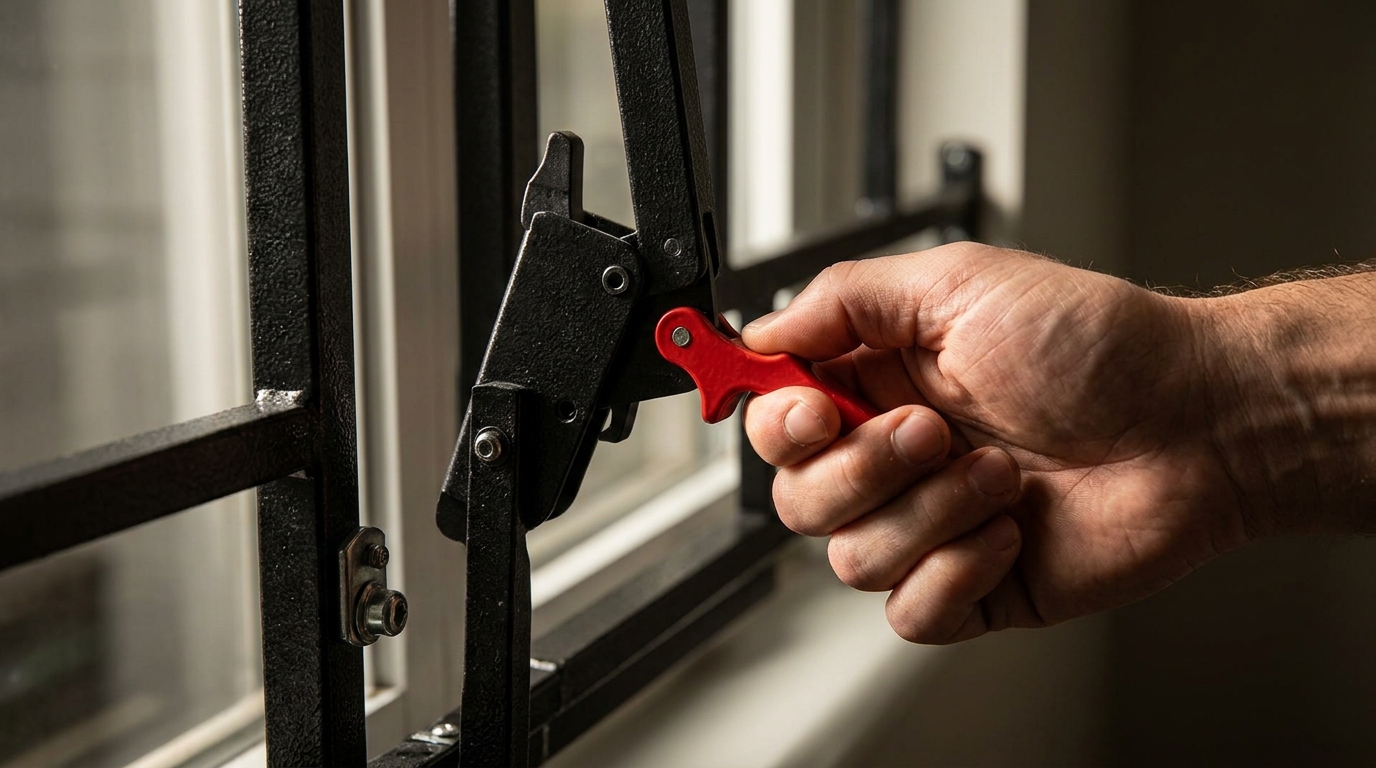
- Do egress-designated barred windows have a release mechanism? — The inspector looks for and tests the interior release
- Can the release be operated without tools or keys? — The inspector tests operability with bare hands
- Does the release work on the first attempt? — A mechanism that is stuck, painted shut, or requires excessive force fails
- When released, does the window provide the minimum clear opening? — 5.7 sq ft (5.0 sq ft for ground floor), minimum 20" wide, minimum 24" tall
- Is the sill height 44 inches or less above finished floor? — Measured with bars in the released/open position
The inspection is pass/fail per window. A building can pass on some windows and fail on others. Every failure point must be corrected before the inspection is cleared.
Which Windows Must Have Quick-Release Bars
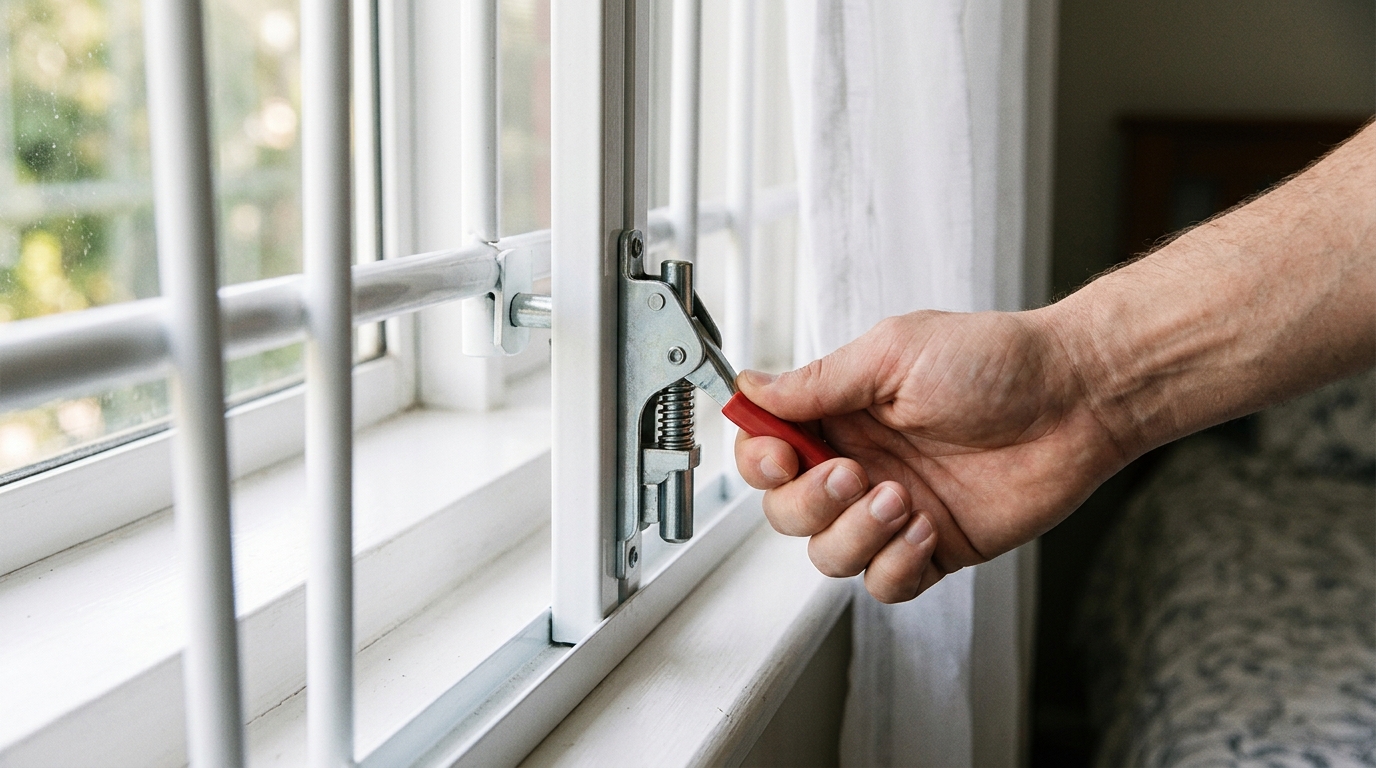
Not every barred window in your building needs a quick-release mechanism. The requirement applies specifically to:
- Every bedroom window — IBC Section 1030 requires at least one operable emergency escape opening per sleeping room
- Every window designated as an emergency escape on the building's fire safety plan
- Every window in a room with only one exit door in some jurisdictions (the window serves as the secondary exit)
Windows That Do NOT Require Quick-Release
- Non-bedroom windows in rooms with two or more exit doors
- Bathroom windows (unless the bathroom is the only exit from a bedroom)
- Kitchen windows in buildings with code-compliant exit routes
- Basement windows not designated as emergency escapes (varies by jurisdiction)
- Commercial storefront windows not in the fire safety plan as exits
When in doubt, use quick-release bars on every window. The SWB Model A/EXIT costs only $2 more than the standard Model A (~$92 vs ~$90), making the compliance upgrade negligible. For a full breakdown of egress codes, see our fire safety and egress requirements guide.
Pre-Inspection Checklist: Prepare Your Property
Whether you are expecting a routine inspection or scheduling one proactively, use this checklist to verify compliance before the inspector arrives.
One Week Before the Inspection
- Walk every room and identify every window with security bars installed
- Identify every bedroom (or room used as a sleeping room, including home offices with a sofa bed)
- Verify that every bedroom barred window has a quick-release mechanism
- Test every quick-release mechanism — it must operate smoothly on the first attempt with bare hands
- Lubricate any stiff mechanisms with silicone spray (not WD-40, which collects dust)
- Verify minimum clear opening dimensions when bars are released: 5.7 sq ft, 20" wide, 24" tall
- Check sill height — must be 44" or less above finished floor
- Ensure nothing is blocking the window — furniture, storage, or clutter must not impede egress
Day of the Inspection
- Clear the path to every barred window — the inspector will want to physically test each one
- Have documentation ready (product specs showing egress compliance, installation records)
- Be present or have a responsible representative present to demonstrate the release mechanisms
- If any mechanism failed your pre-test — fix it or replace the bar before the inspection date
The 6 Most Common Inspection Failure Points
1. Fixed Bars on Bedroom Windows (No Release Mechanism)
This is the number one failure. Non-egress bars on bedroom windows are a direct code violation. The fix: replace with SWB Model A/EXIT bars that include the IBC/NFPA-compliant quick-release mechanism. The swap takes 20-30 minutes per window (remove old bars, install new ones).
2. Release Mechanism Is Stuck or Inoperable
A quick-release mechanism that does not release is the same as no mechanism at all. Common causes: paint overspray sealing the lever, corrosion from moisture exposure, or mechanical failure from lack of maintenance. Fix: clean, lubricate, and test. If the mechanism is damaged beyond repair, replace the bar.
3. Release Requires a Key or Tool
Some older or budget bar designs use a keyed lock as the "quick-release" mechanism. This does not meet code. The IBC explicitly requires that the release be operable without keys, tools, or special knowledge. A lever or latch that operates with bare hands is the only compliant design.
4. Insufficient Clear Opening When Released
Even with bars removed or opened, the window itself must provide the minimum clear opening. If the window sash does not open wide enough, the window fails regardless of the bar compliance. Common in older homes with painted-shut or deteriorated window sashes.
5. Sill Height Exceeds 44 Inches
If the windowsill is more than 44 inches above the finished floor, the window does not qualify as an emergency escape opening under IBC. This is a building issue, not a bar issue, but the inspector will flag it during any egress check. Some jurisdictions allow a permanent step or platform to reduce effective sill height.
6. Furniture Blocking Egress Windows
A bed, dresser, or bookshelf positioned in front of a barred egress window creates an obstruction that can fail an inspection. The path from the bed to the window must be clear enough for an adult to reach and operate the release mechanism within seconds.
How to Fix Compliance Issues Before the Inspection
| Issue | Fix | Time | Cost |
|---|---|---|---|
| Fixed bars on bedroom (no release) | Replace with Model A/EXIT | 20-30 min per window | ~$92 per window |
| Stuck release mechanism | Clean, lubricate, test | 10-15 min per window | $5 (silicone spray) |
| Keyed release | Replace with keyless quick-release bar | 20-30 min per window | ~$92 per window |
| Window doesn't open wide enough | Free painted-shut sash, repair hardware | 30-60 min per window | $0-$50 |
| Sill height over 44" | Install permanent step or designate alternate egress | Varies | Varies |
| Furniture blocking window | Rearrange room layout | 15-30 min | $0 |
Documentation to Have Ready
While not always required, having documentation ready demonstrates professionalism and can expedite the inspection process:
- Product specification sheets showing the bar model, material, and egress compliance rating
- Installation receipts — proof of when bars were installed and by whom
- Maintenance log — dates when quick-release mechanisms were tested and lubricated
- Building fire safety plan — showing which windows are designated emergency escapes
- Permit documentation — if a permit was required and obtained for the installation
Inspectors are more likely to give borderline issues a pass when they see that the property owner takes fire safety seriously and maintains documentation. A well-prepared property signals competence, which builds inspector confidence.
What Happens If You Fail the Inspection
If the fire inspector identifies window bar compliance violations, you will typically receive:
- A written violation notice describing each specific failure
- A correction deadline — usually 30-90 days for non-emergency violations, or immediate for imminent hazards
- A re-inspection requirement — you must correct the issues and schedule a follow-up inspection
Potential Consequences of Unresolved Violations
- Fines: $250-$1,000+ per violation per window in most jurisdictions
- Occupancy restrictions: severe violations can result in orders to vacate until corrections are made
- Insurance implications: documented fire code violations can trigger policy cancellation or claim denial
- Liability exposure: if a fire occurs and non-compliant bars contribute to injury, the property owner faces civil and potentially criminal liability
- Property sale complications: open fire code violations must be disclosed to buyers and can delay or kill a sale
The cost of compliance is minimal compared to these consequences. Replacing non-compliant bars with SWB Model A/EXIT egress bars costs $92 per window — less than the minimum fine for a single violation in most cities. For the complete legal landscape, see our state-by-state legal guide.
Frequently Asked Questions
Do fire inspectors test window bar release mechanisms?
Yes. Fire inspectors physically test the quick-release mechanism on every barred egress window during an inspection. They will activate the release lever or latch with their hands to verify it operates smoothly without tools or keys. If the mechanism is stiff, stuck, or fails to operate on the first attempt, it fails the inspection even if it technically works with extra effort. Test and lubricate your release mechanisms before any scheduled inspection.
How often do fire inspections check window bars?
The frequency depends on property type and jurisdiction. Rental properties are typically inspected every 1-3 years (some cities require annual inspections). Commercial properties are inspected annually or bi-annually. Owner-occupied single-family homes are generally not subject to routine fire inspections unless there is a complaint, a real estate transaction, or a building permit that triggers an inspection. However, any property can be inspected following a reported fire code complaint.
Can I fail a fire inspection for having window bars on non-bedroom windows?
Generally no. Window bars on non-bedroom, non-egress windows are not subject to the quick-release requirement. However, if the barred window is on the building's fire safety plan as an emergency exit, or if local code extends egress requirements beyond bedrooms, the bars must have a release mechanism. Some jurisdictions are stricter than the baseline IBC. When in doubt, use egress-compliant bars on every window — the $2 per window difference between standard and egress bars is negligible insurance against any interpretation of the code.
Will the fire department remove my window bars if they are non-compliant?
Fire departments do not typically remove window bars themselves during an inspection. They issue violation notices with correction deadlines. However, during an actual fire response, firefighters will cut, pry, or remove any bars that obstruct rescue operations. After a fire incident, if non-compliant bars contributed to difficulty in rescue or evacuation, the property owner can face significantly increased legal liability and potential criminal charges depending on the jurisdiction and outcome.
How do I schedule a voluntary fire inspection for my property?
Contact your local fire department's fire prevention or fire marshal's office. Many departments offer voluntary fire safety inspections for residential and commercial properties at no charge. A voluntary inspection lets you identify and correct issues before they become violations. This proactive approach is especially valuable for landlords and commercial property owners who face mandatory inspections. Call the non-emergency number for your local fire department and ask about their inspection program.