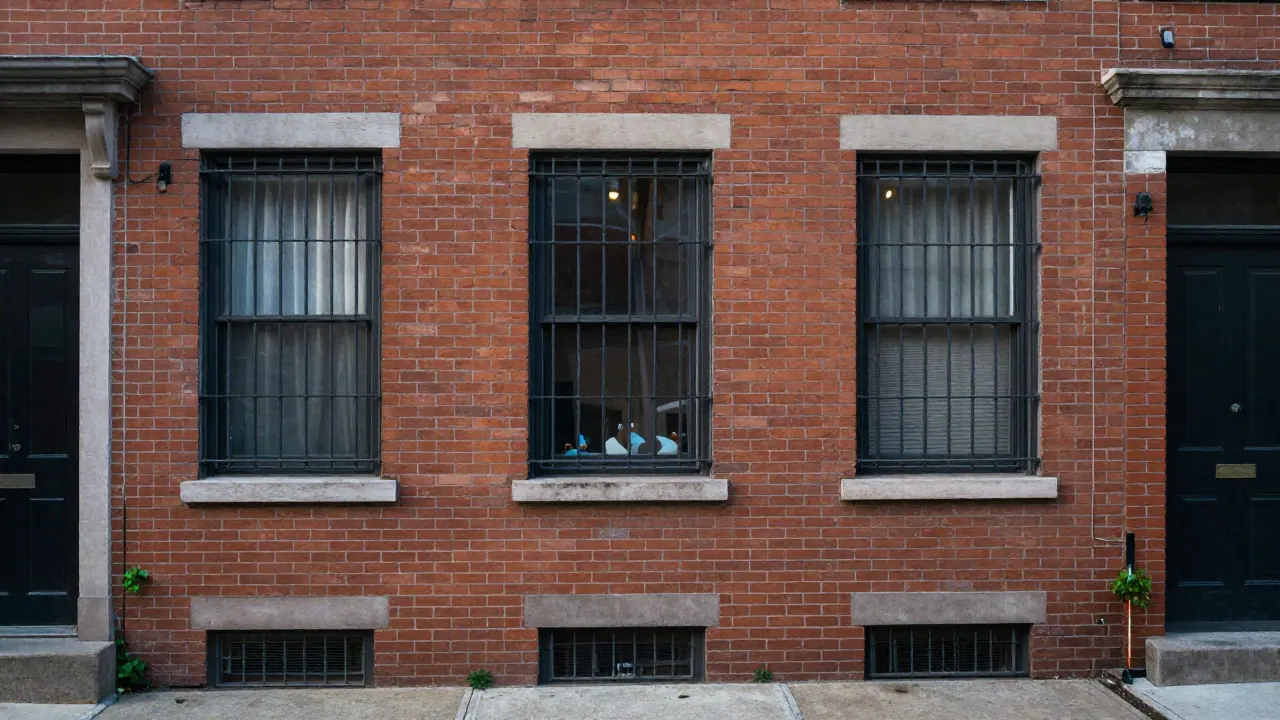
Window bars safety release explained: what the 2021 IRC requires, how quick-release works, and when bars should not go on a window.
What is a window bars safety release and why does it matter?
A fire starts at night. You reach the bedroom window, and the bars outside it do not move. That is the risk behind every window bars safety release question. The NFPA says it plainly in its Security Bar Safety sheet: some security bars can trap you in a fire, and they can also keep firefighters from getting in to rescue you.
A window bars safety release is a way to open or remove the bars from inside, without a key and without a tool. It is the feature that separates a security bar from a barrier. Bars with no release keep intruders out. They also keep you in.
Shops use many names for the same family of products: window safety bars, safety grills, or a window safety grill. A safety door bar follows the same logic for doors. The name tells you nothing about safety. What counts is whether an adult can release the bar quickly from inside, in the dark, with no key.
This guide covers what the code asks of a release, how to check one, which windows need it, and what bars do not do. If you are still choosing between bar types, start with our window security bars guide. Then come back here for the release question, because it is the one that matters most for fire safety window bars.
What does the 2021 IRC say about window bars safety release?
The International Residential Code (IRC) is a model code. Your state or city adopts it, often with changes. The points below come from the 2021 edition, as summarized by the Boulder County building department. Section numbers change between editions, and local code may differ. Your building official has the final say.
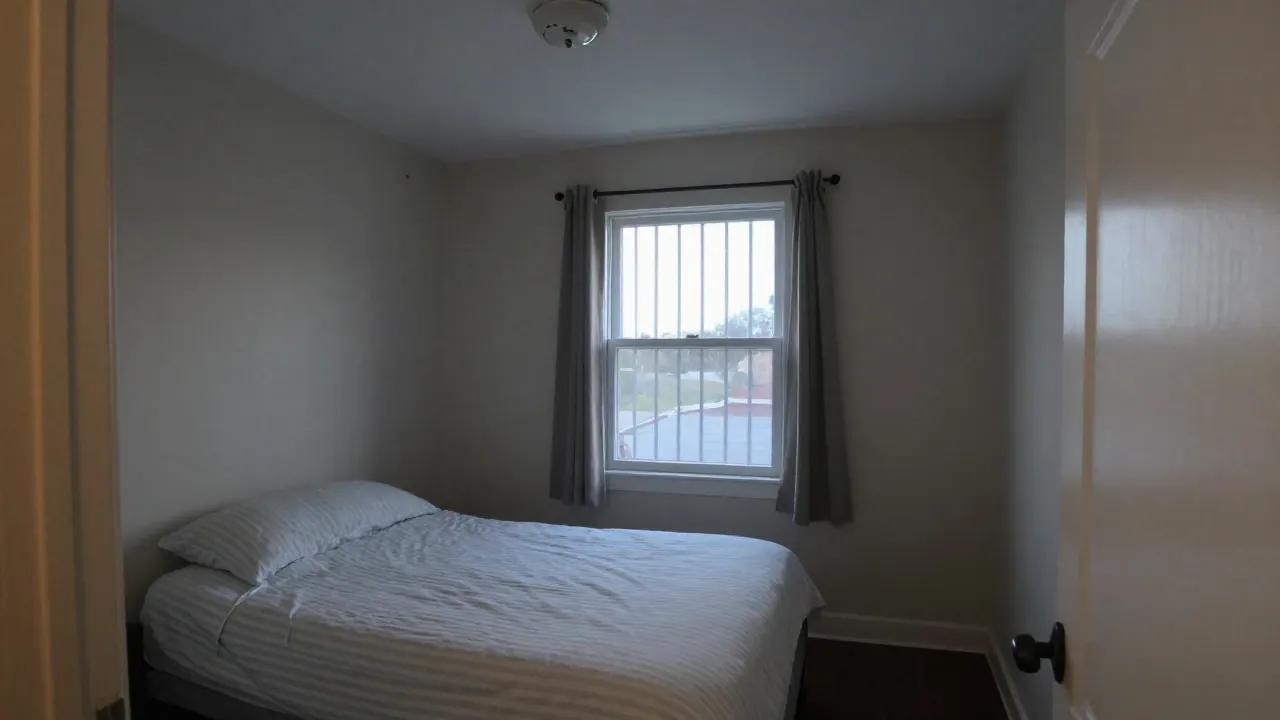
Under R310.1, basements, habitable attics and every sleeping room need at least one operable emergency escape and rescue opening. There are limited exceptions, such as a basement used only for mechanical equipment. R310.1.1 says the opening must be operable from the inside “without the use of keys, tools or special knowledge.”
Size matters too. R310.2.1 sets a net clear opening of at least 5.7 sq ft, or 5 sq ft at grade floor. R310.2.2 sets a net clear height of at least 24 in. and a net clear width of at least 20 in. R310.2.3 says the bottom of the opening can be at most 44 in. above the floor. A window can fail these numbers even before you add bars.
The rule that targets bars is R310.4.4. Bars, grilles, covers and screens over escape openings or area wells must leave the required net clear opening. They must also be “releasable or removable from the inside without the use of a key or tool or force greater than that required for the normal operation of the escape and rescue opening.”
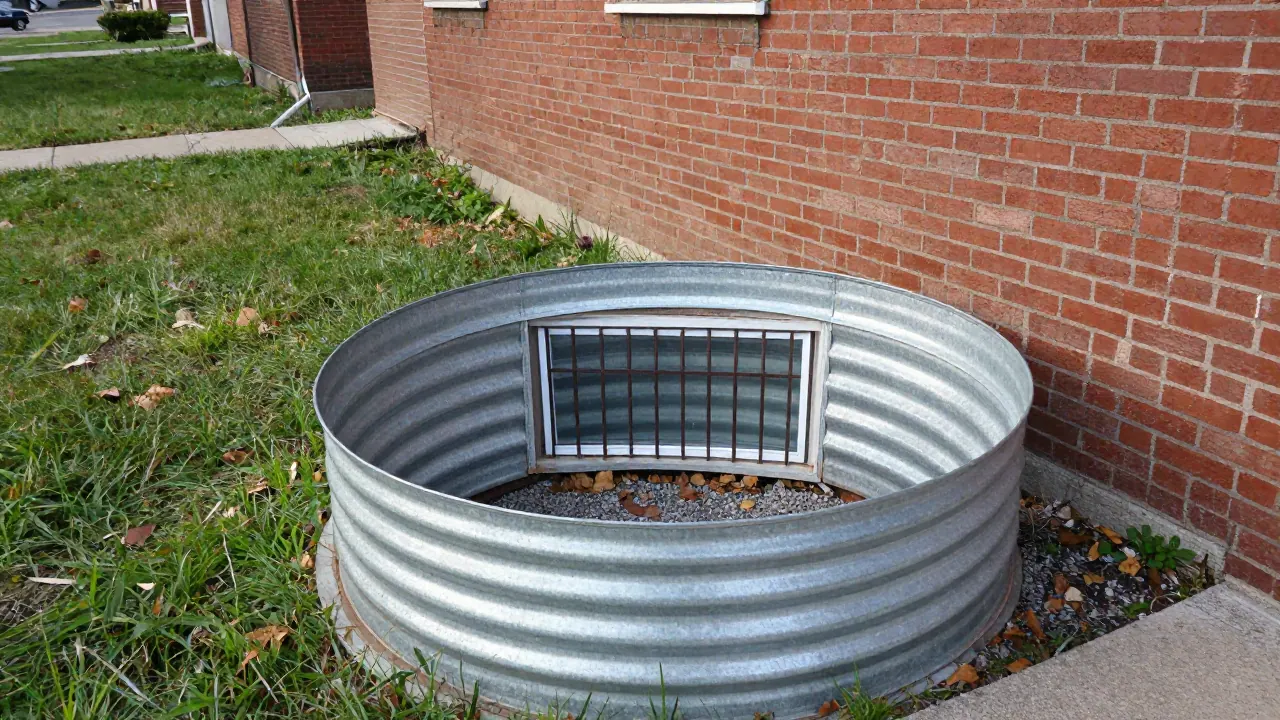
If the opening is below grade, R310.4 requires an area well. R310.4.1 sets the well at least 9 sq ft and 36 in. R310.4.2 adds a permanent ladder or steps if the well is deeper than 44 in. Bars over a window in a well fall under the same release rule.
Notice what the code does not do. It does not name a product or a latch type. It sets an outcome: you can get out, fast, with no key. Whether your installed window and bars meet that outcome is a decision for your local building official. For more on how fire code and bars fit together, read our window bars fire code guide.
How do you check a window bars safety release before you buy?
A release you have never tried is a release you cannot trust. Use this checklist on any bar, from any seller, before you commit. It follows the code wording above and the NFPA guidance.
- No key, no tool, no trick. Can a guest who never saw the bar work it out from inside? The code says “special knowledge” does not count.
- Normal force. Does it need more force than opening the window itself? R310.4.4 sets that limit.
- Full opening after release. Once the bar is open or removed, does the window still give the net clear height, width and area listed above?
- Dark and smoke test. Can an adult find and use the release without light and in a hurry? If not, keep looking.
- The window works. Bars do not fix a window that is painted shut or stuck. Open and close it first.
- No padlock or key lock. Never add a padlock, key lock or any tool-operated fastener to bars over a bedroom or basement escape window.
- Rigid from outside. A good release opens easily from inside but stays firm against force from outside. Security still matters.
- Everyone knows it. Teach every adult in the home how it works. Practice it during your fire drill.
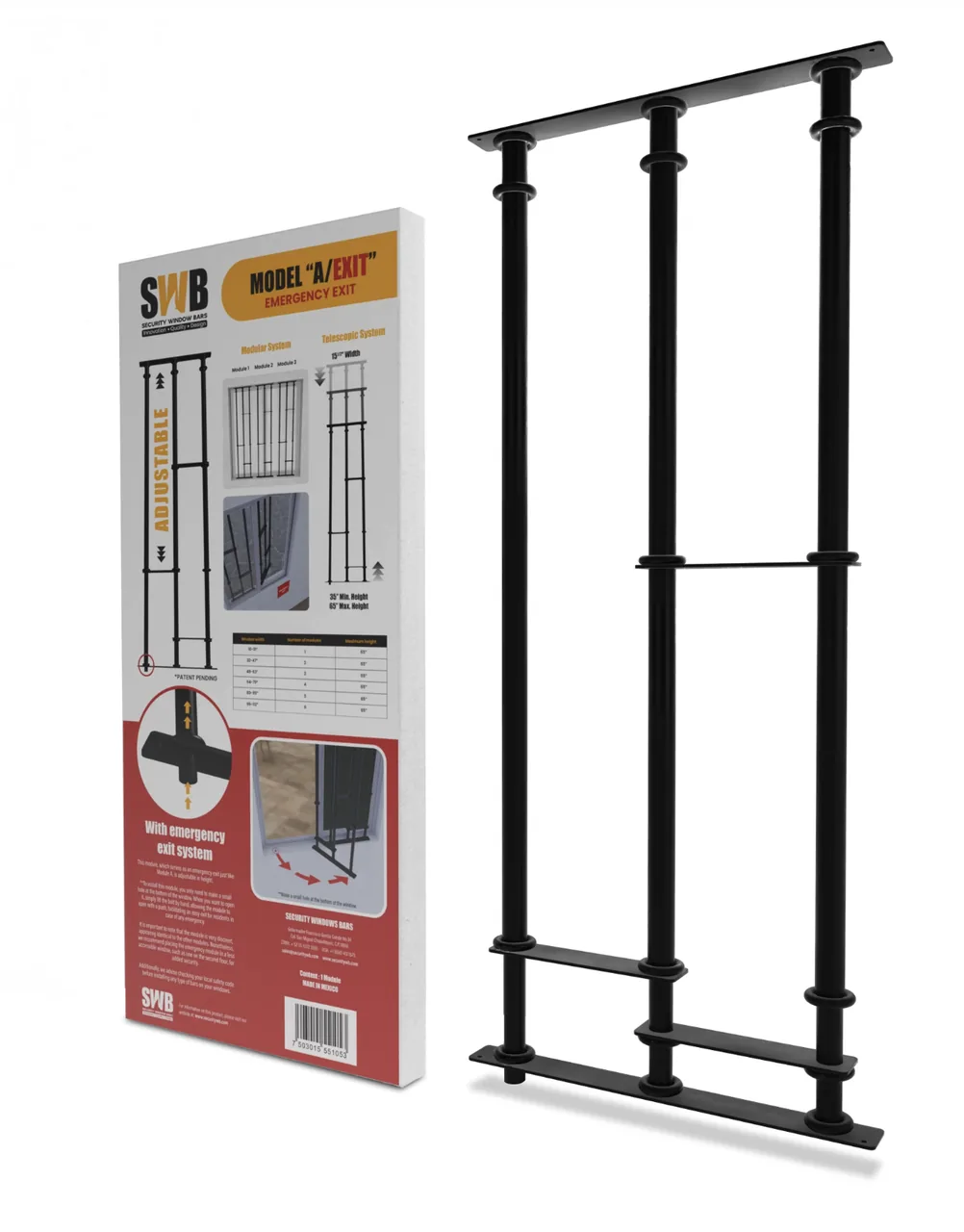
On the SWB side, Model A/EXIT is the model with a built-in release. SWB describes it as its egress-compliant model and the only one with a built-in quick-release. It has a hand-operated lift-bolt quick-release from inside and stays rigid from outside. It has a 35 inch base that telescopes to 65 inches high, with a 43 inch base width that expands with modules. It is sold by quote only, as an online exclusive, so request a quote with your window sizes.
Say it to your installer and your inspector in the same words: SWB describes this as egress-compliant, and the building official decides whether the installed window complies. Do not skip that last step.
Which window safety bars need a release, and which do not?
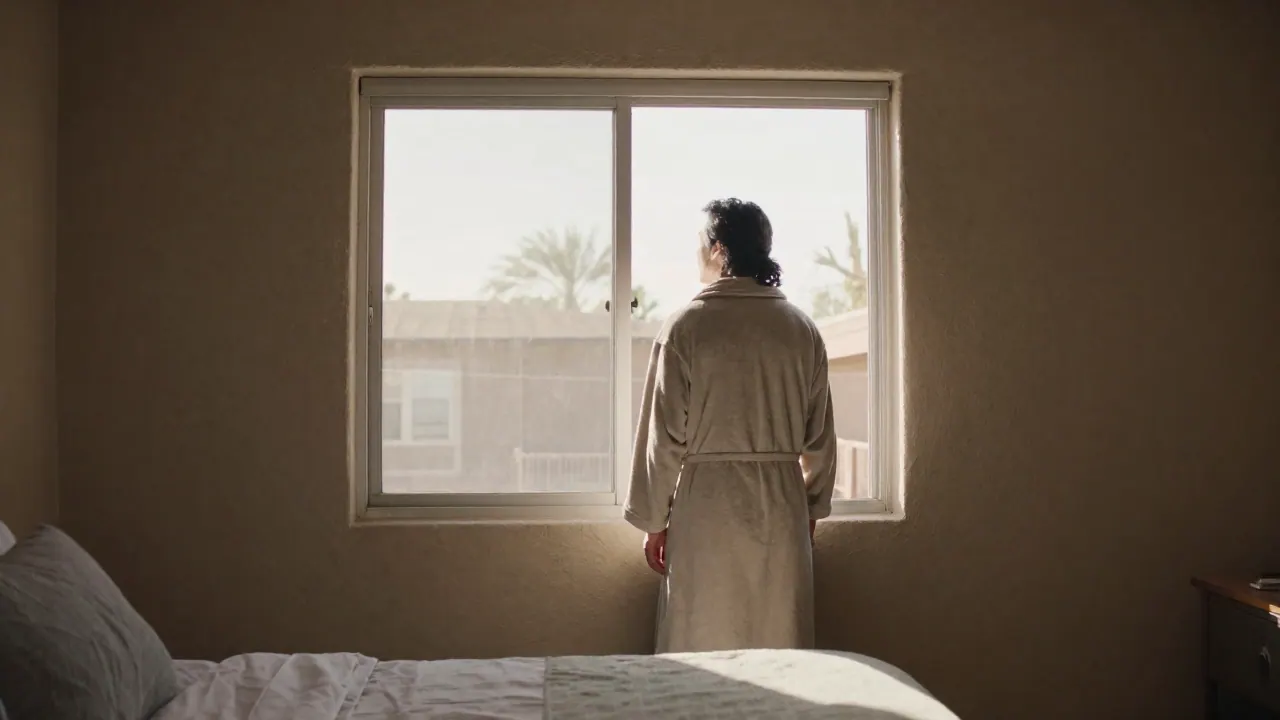
Any bar over a required escape opening needs a release. That includes bedroom windows and basement windows used for escape. The harder question is which of your windows count. If you are unsure, treat the window as an escape opening until your building official says otherwise. That is a precaution, not a code rule.
| Window situation | Release needed? | What to do next |
|---|---|---|
| Bedroom (sleeping room) window | Yes. Sleeping rooms need an escape opening under 2021 IRC R310.1; check local code. | Choose bars with a built-in release, such as Model A/EXIT. The building official decides compliance. |
| Basement window used as the escape opening, or in an area well | Yes. R310.4.4 covers bars over escape openings and area wells. | Use a releasable bar and confirm the well size and steps with the building official. |
| Basement used only for mechanical equipment | The code lists a limited exception. Depends on local rules. | Ask the building official in writing before you choose a fixed bar. |
| Window that is not an escape opening, on masonry, stucco or an irregular frame | Depends on local code. NFPA still advises two ways out of every room. | Model B is wall-mount. SWB lists it as not rated for fire code or egress, so use it only on non-escape windows. |
| Rental apartment | Depends on your lease, your landlord and local rules. | Get written permission and ask the local building or fire department first. |
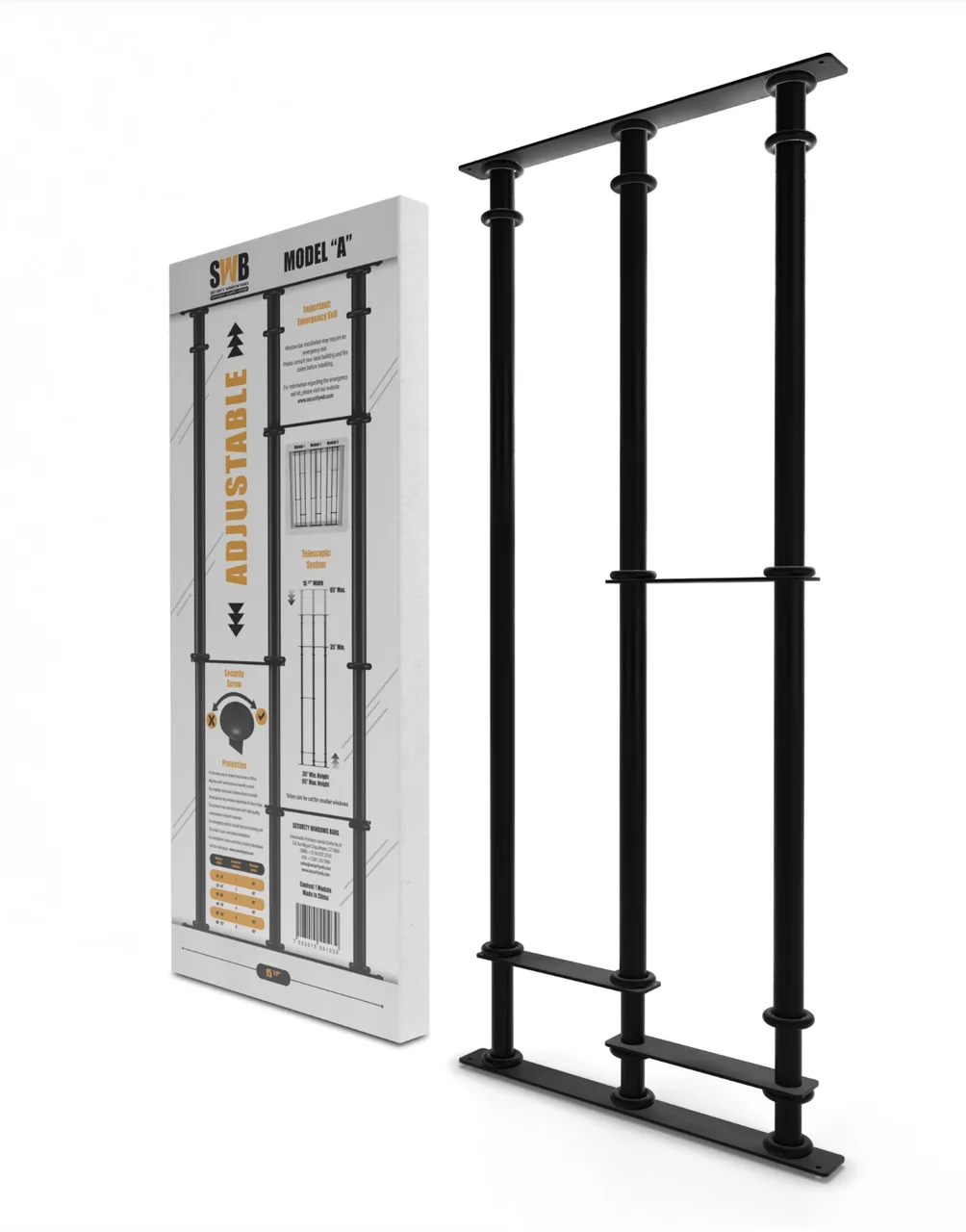
Model A costs $85 per core module. It telescopes from 35 to 65 inches high, and each module is 16 inches wide, so you stack modules for wider windows. It is galvanized steel with electrostatic paint, and it mounts to the frame or the wall. Model A has no integrated quick-release. That means it belongs only on windows that are not required escape openings, and only where your local official agrees.
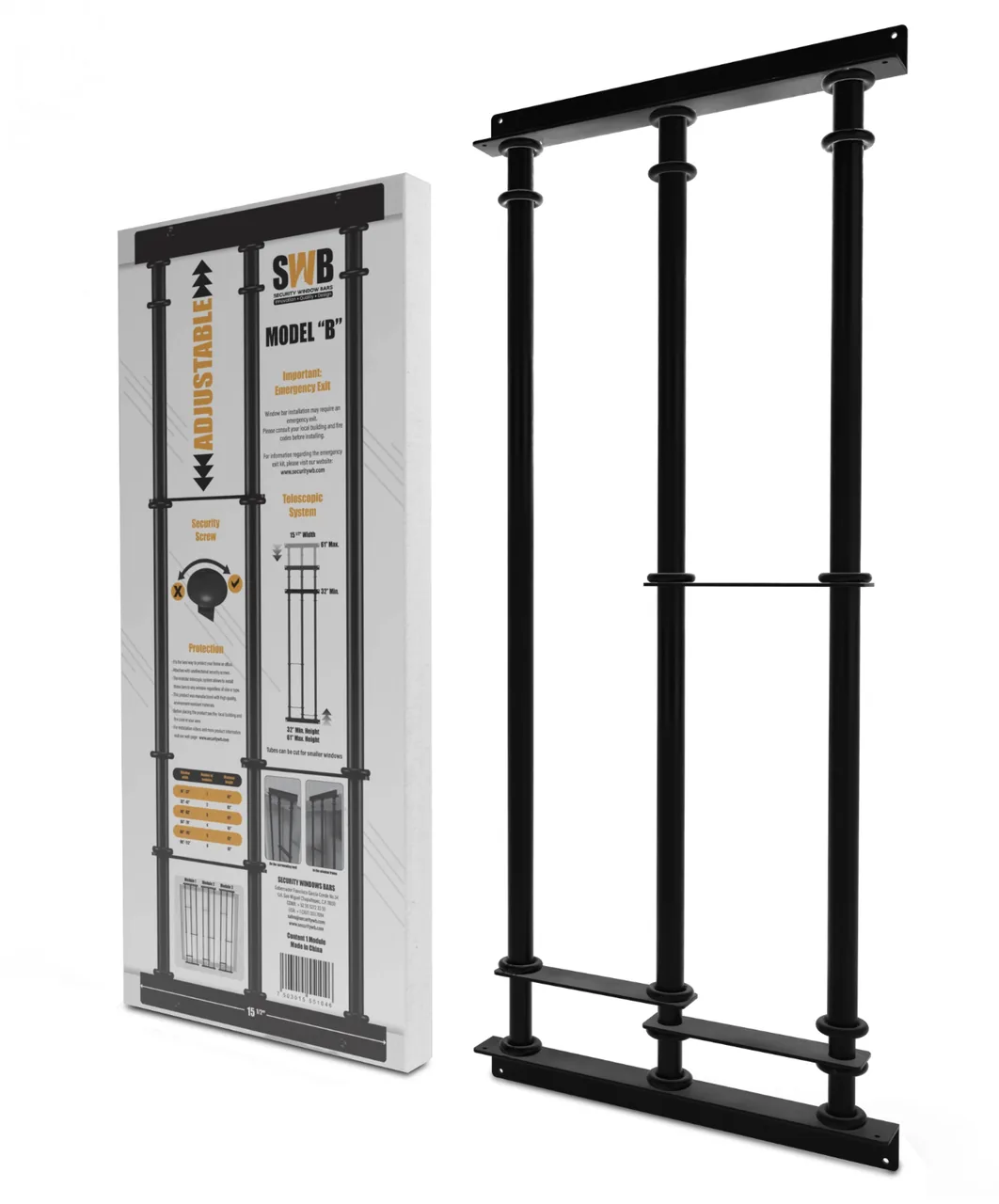
Model B is also $85 per core module. It runs 35 to 61 inches high and is a wall-mount for masonry, stucco and irregular frames. The same limit applies: it goes only on windows that are not escape openings. For below-grade windows, see our basement window bars guide before you buy anything.
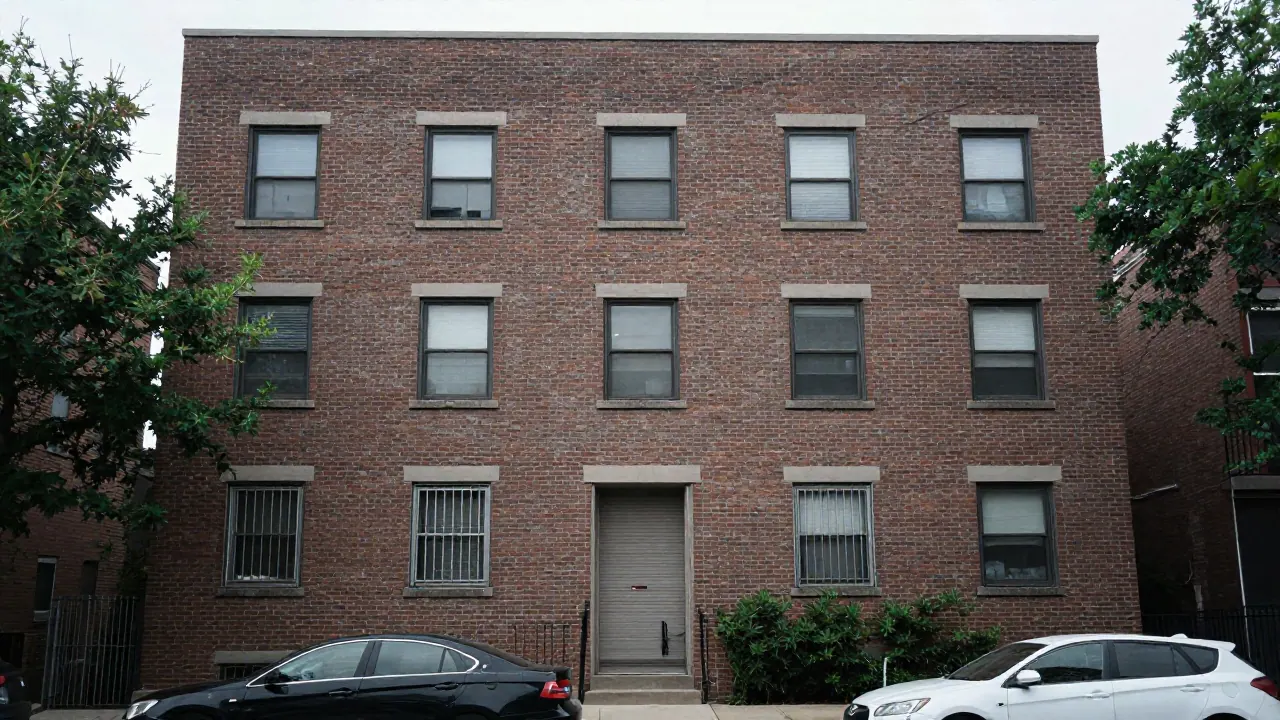
Do window safety bars stop falls, and what else keeps a home safe?
No. SWB bars are security bars. They are not fall-prevention devices, and the 5.25 inch bar spacing does not contain small children or pets. Do not rely on them for that job.
The NFPA sheet names better tools for falls: a window guard or gate, or a window stop or wedge, can keep a child from falling out of an open window. If you need one on a window that is also an escape route, ask your building official or fire department first. An escape window must still open for an adult.
Bars are one piece of a fire plan. The NFPA sheet gives a short list you can act on this week:
- Find at least two ways out of every room.
- Make sure all exits, including barred windows, open easily from inside.
- Choose bars with quick-release devices.
- Hold a home fire drill twice a year.
Add working smoke alarms. The NFPA Smoke Alarms at Home sheet says to put alarms in every bedroom, outside each sleeping area, and on every level, including the basement. Test them monthly. Replace them at 10 years.
An alarm gives you time. A working release gives you somewhere to use it. Together they are what window bars fire safety really means, and neither replaces the other.
Frequently Asked Questions
What is a window bars safety release?
It is a mechanism that lets you open or remove window bars from inside without a key or tool. It is what lets a barred window work as an exit in a fire.
Do window bars need a quick release?
Over a required escape opening, yes. 2021 IRC R310.4.4 says bars must be releasable or removable from inside without a key, tool or extra force. Local code may differ, so check with your building official.
Does the SWB Model A have a quick release?
No. Model A has no integrated quick-release. SWB describes Model A/EXIT as the only SWB model with a built-in quick-release.
Can I put a padlock on bars over a bedroom window?
No. Never add a padlock, key lock or tool-operated fastener to bars over a bedroom or basement escape window. It can trap you in a fire.
Do window safety bars protect children or pets from falling?
No. SWB bars are security bars, and their 5.25 inch spacing does not contain small children or pets. The NFPA names a window guard or gate, or a window stop or wedge, for fall prevention.
Who decides if my bars meet code?
Your local building official decides whether the installed window and bars comply. SWB describes Model A/EXIT as its egress-compliant model, but that description does not replace the official's decision.
Sources (facts checked 2026-11-13)
- Boulder County Building Division, B10 Emergency Escape and Rescue Openings (2021 IRC)
- NFPA, Security Bar Safety, 2019
- NFPA, Smoke Alarms at Home, 2018
Code numbers refer to the 2021 International Residential Code; your city or state may have adopted a different edition. Confirm with your local building department or fire marshal.
The release is the part of a security bar you hope you never use, so it has to work the first time. Check the code with your local building official, run the checklist above, and practice the release with everyone in your home. If you want to compare options, browse the SWB shop, or request a quote for Model A/EXIT when a window may serve as an exit. Take your time, and ask questions before you buy.
The SWB models
Keep reading

Security Window Bars. Product facts come from SWB's published specifications. Your local building department has the final word on bedroom windows.


