Are Window Security Bars Better Than Security Film?
Window security bars are better than security film at preventing break-ins because bars create an impassable physical barrier that requires industrial power tools to defeat, while security film only delays entry by holding shattered glass together for 30 to 90 seconds. A determined burglar can breach security film within one to three minutes using repeated strikes, but the same burglar cannot get through steel window bars without a reciprocating saw or angle grinder — tools that residential burglars do not carry.
That said, security film is not a bad product. It serves a different purpose. Film is invisible, provides UV protection, and adds a delay layer that may be enough to foil an opportunistic smash-and-grab attempt. For homeowners who cannot install visible bars due to HOA restrictions or aesthetic preferences, film offers a meaningful upgrade over bare glass. The honest answer to whether bars are "better" depends on what you are protecting against, what your constraints are, and whether you can use both together.
How Window Security Bars Stop Burglars
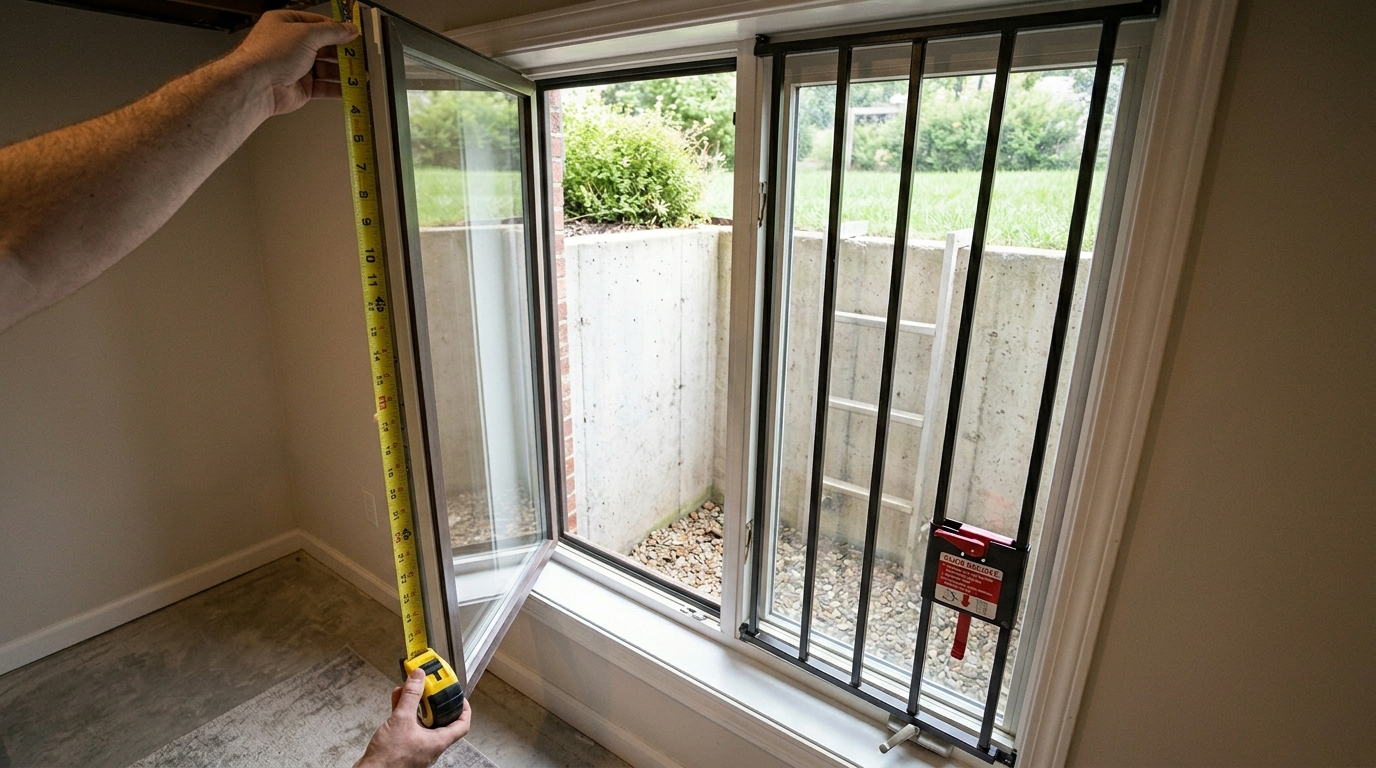
Window security bars mount over the exterior or interior of a window and create a grid of steel that physically blocks entry. The bars do not make the glass harder to break — they make the opening behind the glass impossible to pass through.
When a burglar encounters window bars, the calculus changes completely. Breaking the glass accomplishes nothing because the bars remain in place. Prying the bars requires force that exceeds what hand tools can deliver against properly anchored steel. Cutting the bars requires a power tool that creates noise, sparks, and takes multiple minutes — far more exposure than any residential burglar will accept.
Key Characteristics of Window Bars
- Barrier type: Physical prevention (impassable without power tools)
- Visual profile: Visible from outside (acts as a deterrent)
- Installation: Frame-mount or wall-mount, 15 minutes per window for DIY
- Cost: ~$90-$92 per window, one-time
- Lifespan: 10-25+ years with powder-coated finish
- Maintenance: Annual lubrication of quick-release mechanisms (if equipped)
The SWB Model A is a telescopic, modular bar system that adjusts to fit standard window sizes and installs with frame or wall mounting. It uses heavy-gauge steel with a powder-coated finish that resists corrosion and weathering for over a decade.
How Security Film Delays Burglars
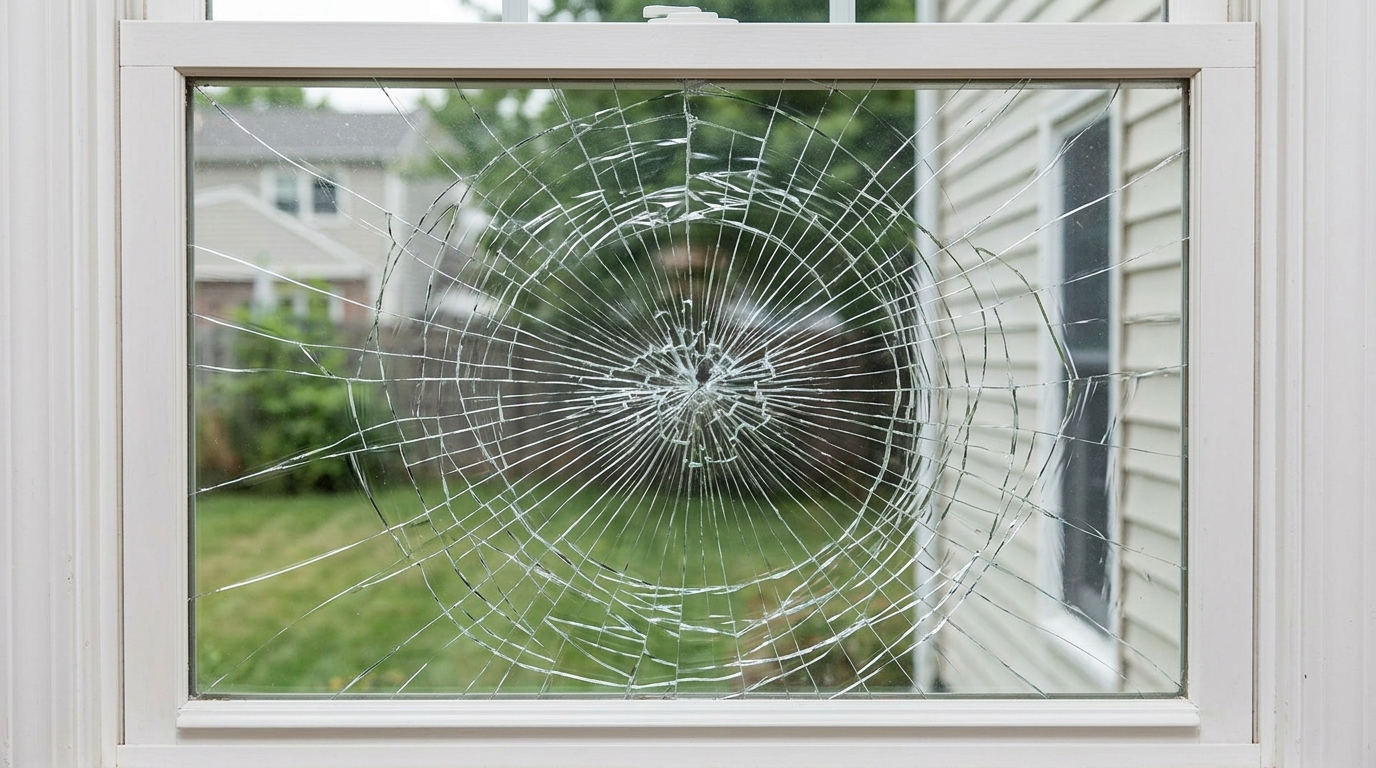
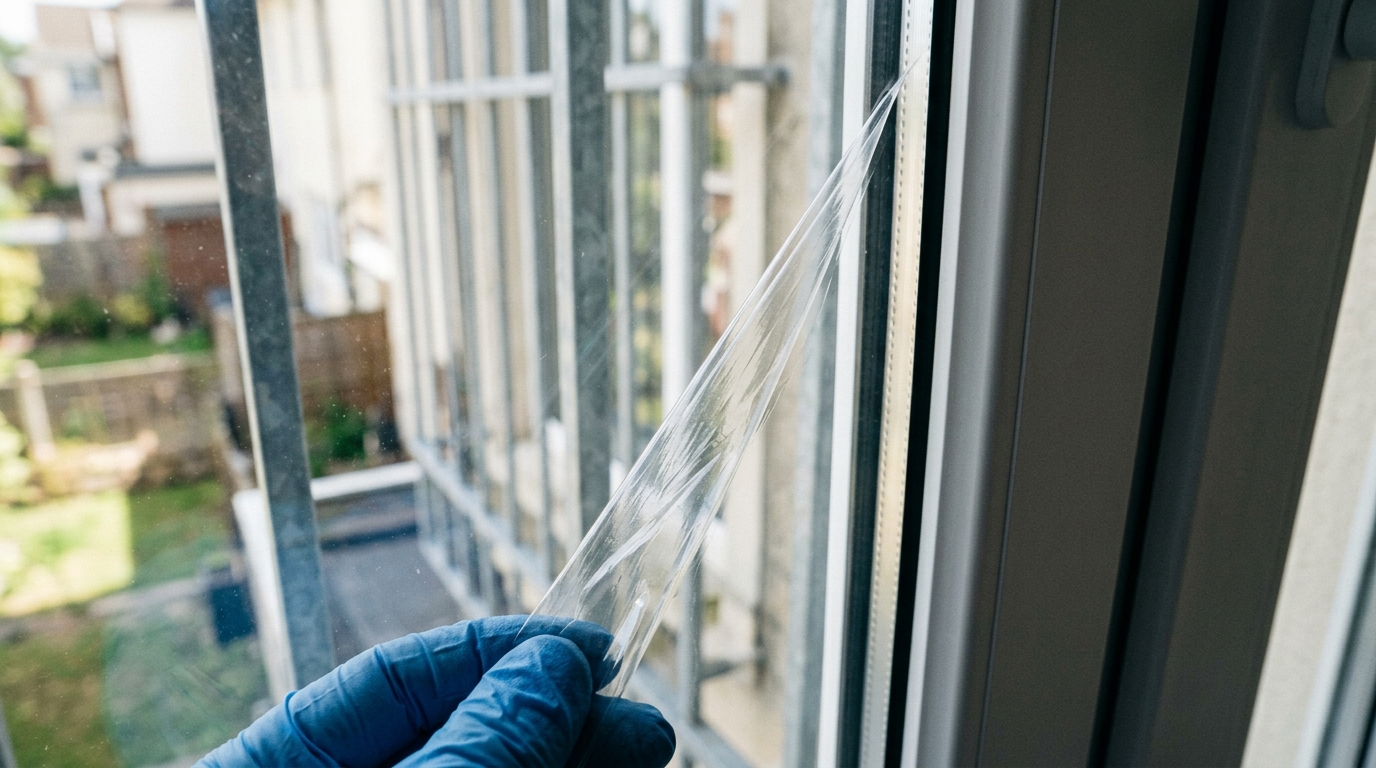
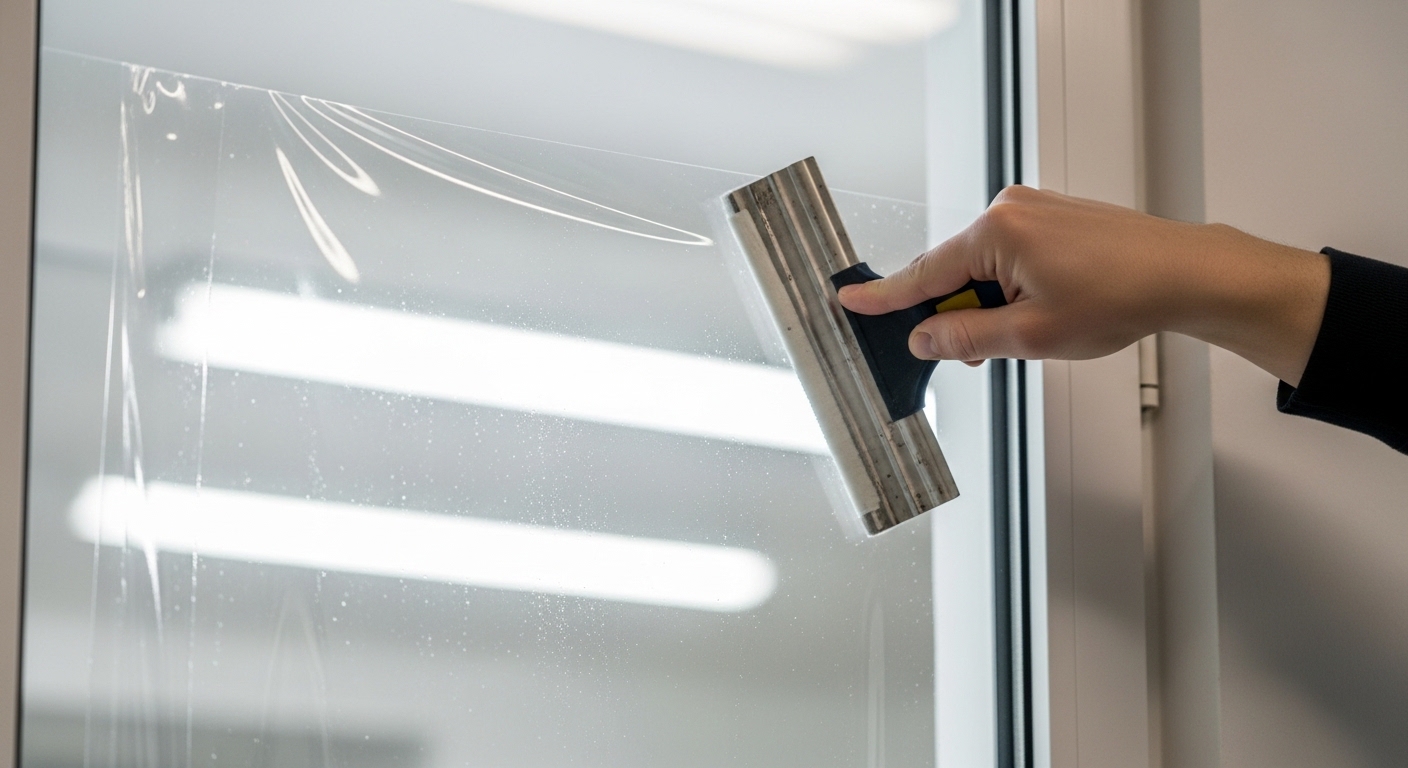
Security window film is a thick polyester laminate — typically 4 to 14 mil thickness — applied directly to the interior surface of glass. When the glass is struck, it shatters as normal, but the film holds the broken pieces together like a net, preventing the glass from falling away and creating an opening.
The result is a delay, not a barrier. A burglar who strikes a filmed window will find that the glass cracks but does not yield an opening on the first hit, or the second, or the third. They must strike repeatedly, peel at the film, and physically push through the held-together glass. This process takes 30-90 seconds for standard security film and potentially longer for thicker professional-grade applications with anchoring systems.
Key Characteristics of Security Film
- Barrier type: Delay only (slows entry by 30-180 seconds)
- Visual profile: Nearly invisible (no deterrent effect)
- Installation: Professional recommended ($6-$14 per square foot installed)
- Cost: $90-$210 per window (professionally installed)
- Lifespan: 5-15 years depending on sun exposure and quality
- Maintenance: None required during lifespan
What Film Cannot Do
Security film does not make glass unbreakable. It does not prevent a determined burglar from eventually creating an opening. It does not work as a physical barrier — once the film is breached, there is nothing else between the burglar and your home. And critically, it provides zero visual deterrence because it is invisible from the outside. A burglar casing your home cannot see the film and has no reason to avoid your window over a neighbor's unfilmed window.
For a deeper analysis of film and polycarbonate alternatives, see our polycarbonate security analysis.
Side-by-Side Comparison
| Criteria | Window Bars | Security Film |
|---|---|---|
| Prevents entry | Yes — physical barrier | No — delays only (30-180 seconds) |
| Visual deterrence | Strong — visible to burglars casing homes | None — invisible from outside |
| Works against determined burglars | Yes — cannot be defeated without power tools | No — can be breached with persistence |
| Aesthetic impact | Visible (modern designs are minimalist) | Invisible (no aesthetic change) |
| UV protection | No | Yes — blocks 99% of UV rays |
| Energy savings | No | Moderate — reduces solar heat gain |
| Cost per window | $90-$92 one-time | $90-$210 professionally installed |
| DIY installation | Yes — 15 minutes per window | Professional recommended for best results |
| Lifespan | 10-25+ years | 5-15 years |
| Fire egress compliant | Yes (with quick-release Model A/EXIT) | Yes (film does not block egress) |
| Works during power outage | Yes | Yes |
| HOA-friendly | Varies (some HOAs restrict visible bars) | Yes (invisible) |
When Bars Are the Better Choice
Window bars are the better choice in the majority of residential situations where the primary goal is preventing break-ins. Specifically, choose bars when:
- You live in a high-crime area where break-ins are a realistic threat, not just a theoretical concern. Film's delay may not be enough if burglars in your area are experienced and persistent.
- Your windows are accessible from ground level and hidden from neighbors or street view. These windows need full prevention, not just delay.
- You want a visual deterrent. Bars tell a burglar before they attempt entry that this window is protected. Film tells them nothing — they discover the film only after they have already committed to the break-in by smashing the glass.
- You want a one-time investment. Bars at $90-$92/window last 10-25 years. Film at $90-$210/window lasts 5-15 years and needs professional replacement.
- You travel frequently and the home is unoccupied. Bars work with nobody home. Film's delay only helps if the delay triggers a response — and if nobody is home and no alarm is monitored, a 90-second delay means nothing.
When Security Film Is the Better Choice
There are legitimate situations where security film is the better or only option:
- HOA restrictions prohibit visible window modifications. If your homeowners association does not allow exterior bars or grilles, invisible film may be your only upgrade path.
- Aesthetic preferences override security concerns. If the visual profile of bars is genuinely unacceptable to you and you understand the tradeoff in protection level, film provides a meaningful upgrade over bare glass without any visible change.
- You also want UV protection and energy savings. Film provides secondary benefits that bars do not: UV blocking (protects furniture, flooring, artwork from sun damage) and reduced solar heat gain (can modestly lower cooling costs).
- Upper-floor windows with low break-in risk. For second-floor and above windows where break-in is unlikely but you want some added protection, film is a cost-effective low-risk measure.
- Historic home restrictions. Some historic districts restrict exterior modifications. Interior-applied film does not alter the home's exterior appearance.
Using Both Together: Maximum Protection
The strongest window protection combines both products. This is not as expensive as it sounds, and the security improvement is significant.
How the Combination Works
- Security film on the glass prevents smash-and-reach attacks. Even with bars in place, a burglar could theoretically break the glass and reach through the bars to unlock the window, steal items near the window, or simply create a noise disturbance. Film prevents the glass from shattering through the bars.
- Bars on the exterior prevent the burglar from climbing through even if they somehow breach the film. The bars also provide the visual deterrence that film lacks.
- Together: the burglar faces an invisible delay layer (film) behind an impassable physical barrier (bars). Neither product alone is as effective as the combination.
Cost for the Combination
For a typical window: $90 (bar) + $90-$210 (film) = $180-$302 per window. For 8 windows: $1,440-$2,416. This is still a one-time cost with no subscriptions, and it provides the strongest window protection available for a residential property.
For most homeowners on a budget, bars alone provide the critical prevention layer. Add film later if budget allows, starting with the windows most exposed to potential reach-through attacks.
For more on layered protection strategies, see our four layers of home security guide and the comprehensive security product comparison.
Frequently Asked Questions
Can a burglar get through security film?
Yes. Security film delays entry but does not prevent it. A determined burglar can breach standard security film (4-8 mil) in 30-90 seconds by striking the glass repeatedly until the film tears or separates from the frame. Professional-grade film with anchoring systems (12-14 mil attached to the frame with structural sealant) can delay entry for 1-3 minutes. In contrast, window security bars cannot be breached without industrial cutting tools and take significantly longer, making them impractical for residential burglars to defeat.
Is security film worth the money?
Security film is worth the money in specific situations: when HOA rules prevent visible bars, when aesthetics are a higher priority than maximum security, when you want the secondary benefits of UV protection and energy savings, or when used as a supplementary layer behind window bars. Film costs $90-$210 per window professionally installed and lasts 5-15 years. If your primary concern is preventing break-ins and you have no restrictions on visible bars, window bars at $90-$92 per window provide stronger protection at equal or lower cost with a longer lifespan.
Do window bars and security film work together?
Yes, window bars and security film complement each other effectively. Bars prevent entry through the window opening while film prevents the glass from shattering through the bars. This combination eliminates both the primary break-in method (climbing through) and the secondary method (reaching through bars after breaking glass). The combined cost per window is $180-$302. For most homeowners, bars alone provide sufficient protection, but adding film creates the strongest residential window defense available.
How long does security film last compared to window bars?
Security film lasts 5-15 years depending on the film quality, sun exposure, and climate. South-facing windows in hot climates degrade film faster. Window security bars with powder-coated steel finishes last 10-25 years or more with minimal maintenance. Over a 20-year period, you would need to replace film once or twice (additional $90-$210 per window each time) while the original bars remain in service. This makes bars the more cost-effective long-term investment by a significant margin.
Can I install security film myself or do I need a professional?
DIY security film installation is possible but not recommended for optimal results. Professional installation ensures proper adhesion, eliminates air bubbles, and — most importantly — includes frame attachment using structural sealant, which prevents the film from being pushed inward as a sheet when struck. DIY film without frame attachment provides significantly less delay because a burglar can push the entire filmed pane inward. Professional installation costs $6-$14 per square foot. In comparison, window bars install easily as a DIY project in about 15 minutes per window with basic tools.