

How to Calculate the ROI of Window Security Bars: A Complete Financial Guide
Calculating the ROI of window security bars requires looking beyond the sticker price. When you factor in insurance premium discounts, avoided burglary losses, reduced alarm monitoring costs, and property value protection, most homeowners find that window bars pay for themselves within a few years and continue generating positive returns for decades.
Too many homeowners evaluate window bars the same way they evaluate a new couch: "How much does it cost?" and "Can I afford it right now?" That's the wrong framework. Window bars are a financial asset, not a consumer purchase. They generate measurable returns over time through multiple channels, and the right way to evaluate them is the same way you'd evaluate any investment: total return divided by total cost, measured over a reasonable time horizon.
This guide walks you through the complete calculation, step by step, so you can determine the exact ROI for your specific situation.
Step 1: Calculate Your Total Investment Cost
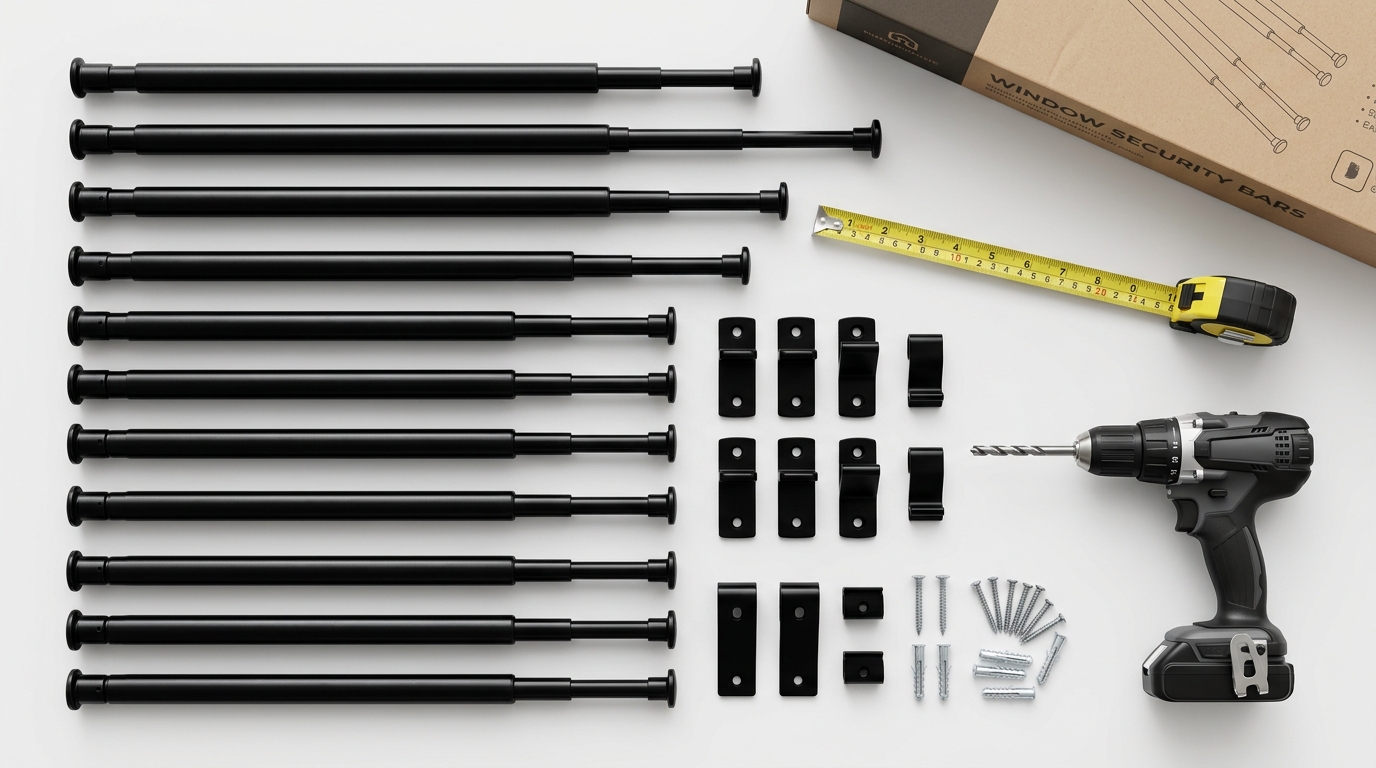
Before you can measure returns, you need to know exactly what you're spending. The total cost of window security bars includes the product, any hardware, and installation labor if you're not doing it yourself.
Product Cost
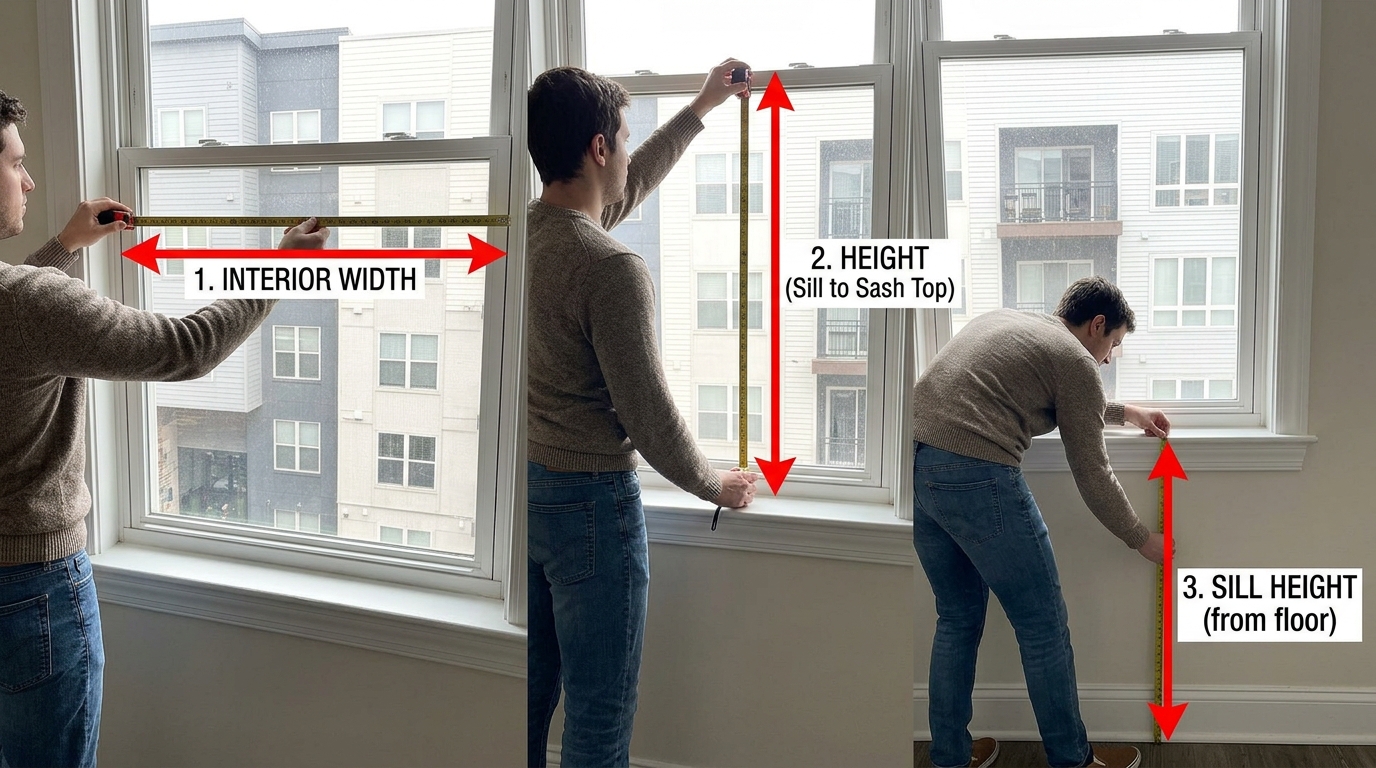
Count every window that needs bars. For most homes, this means all ground-floor windows and all basement windows. Here's a quick framework:
- Small home (1,000-1,500 sq ft): 5-8 windows, typically all on one level
- Medium home (1,500-2,500 sq ft): 8-12 ground-floor windows + 1-3 basement windows
- Large home (2,500+ sq ft): 12-20 ground-floor windows + 2-4 basement windows
The SWB Model A costs approximately $90 per unit. For bedrooms requiring egress compliance, the Model A/EXIT is approximately $92. Use this formula:
Product cost = (Non-bedroom windows x $90) + (Bedroom windows x $92)
Installation Cost
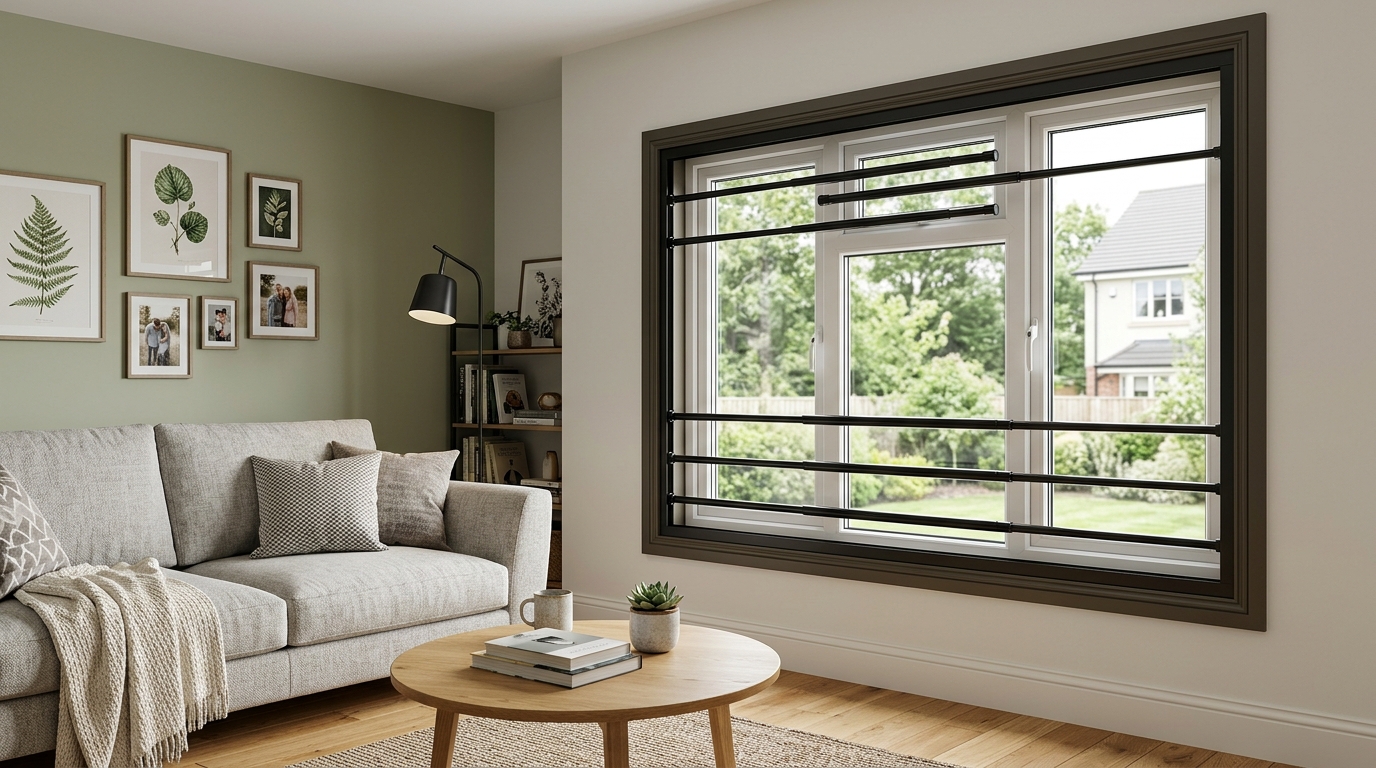
With frame-mount telescopic bars, most homeowners handle installation themselves in about 15 minutes per window. If you prefer professional installation, expect to pay $50-$150 per window depending on your market and window accessibility.
Total investment = Product cost + Installation cost (if any) + Hardware/tools (if any)
Example: 10-Window Home
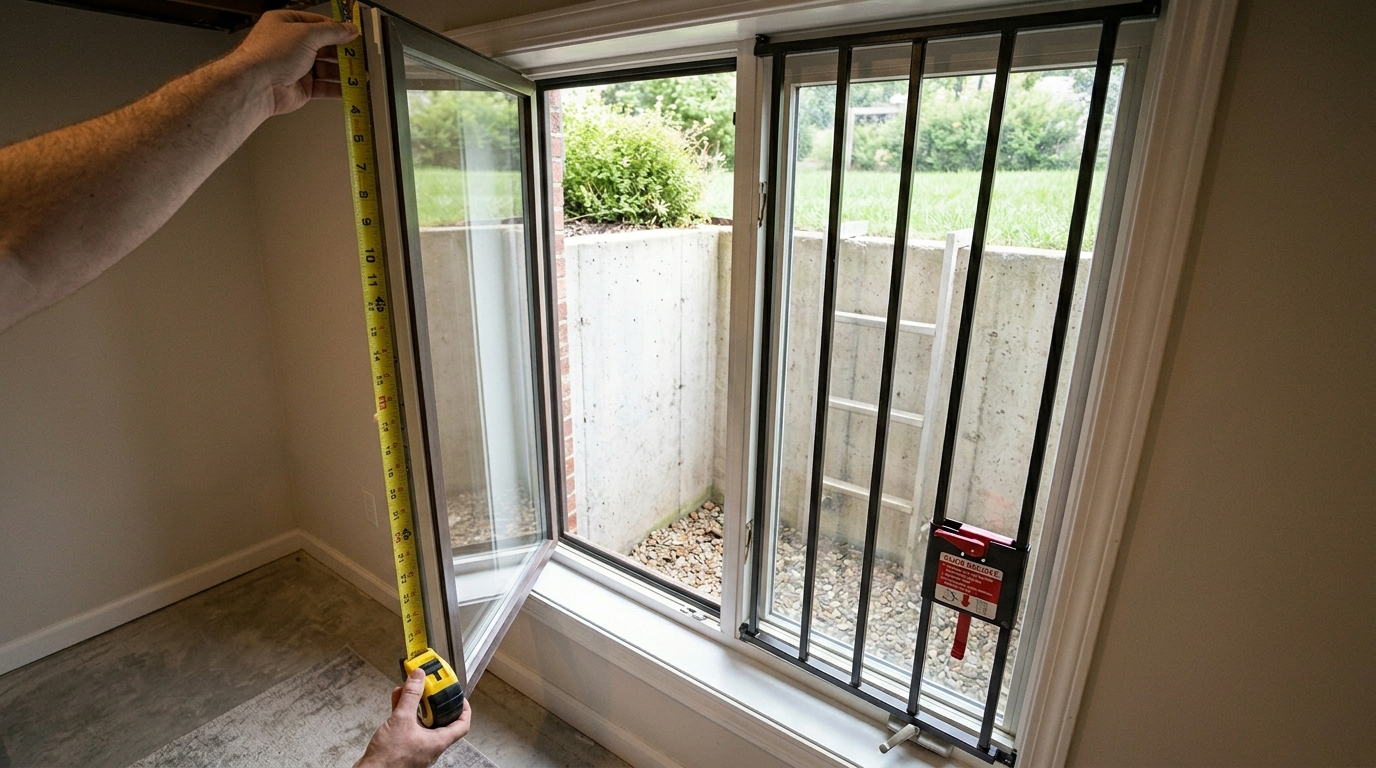
- 7 non-bedroom windows x $90 = $630
- 3 bedroom windows x $92 = $276
- DIY installation = $0
- Total investment: $906
For a full cost breakdown by home size and window count, see our complete pricing guide for 2026.
Step 2: Calculate Your Annual Insurance Savings
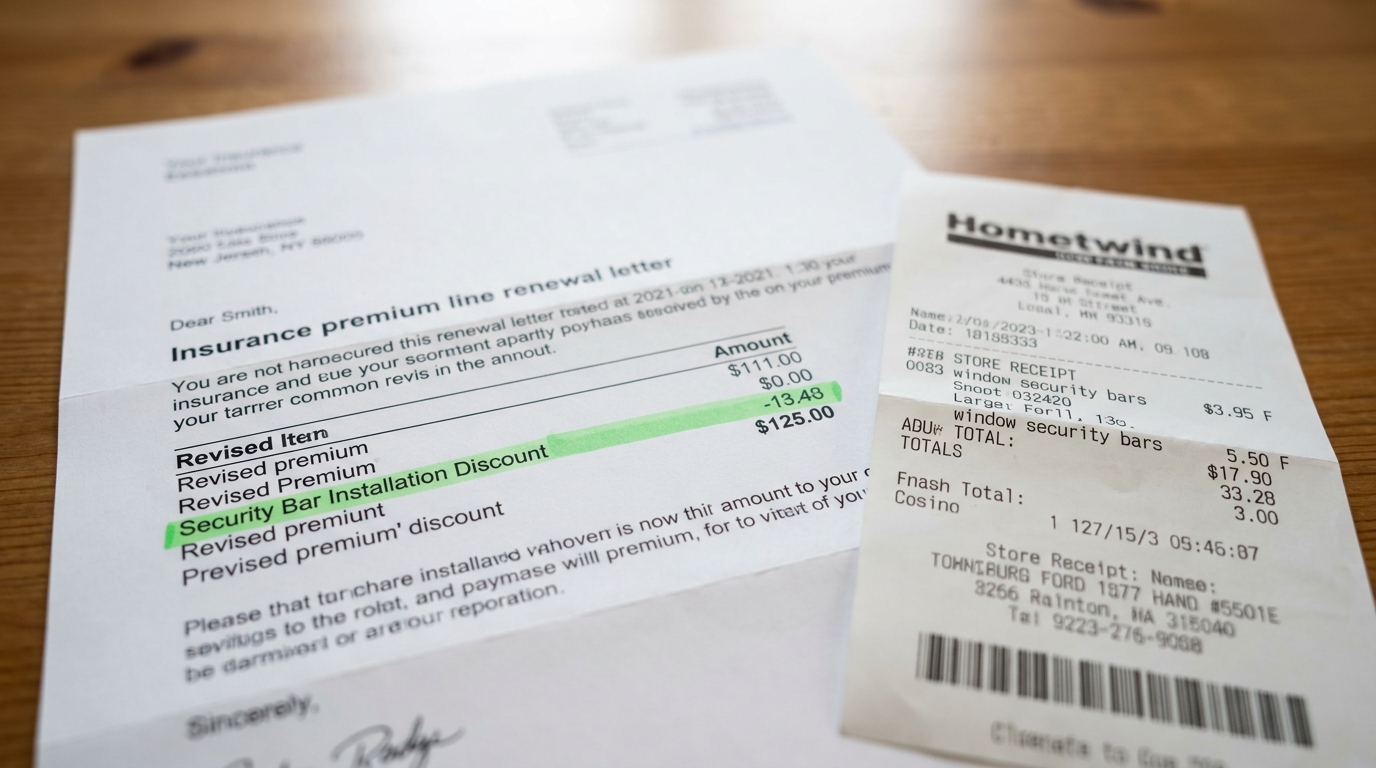
Most major insurance carriers offer a protective device discount for homes with physical security measures, including steel window bars. The discount typically ranges from 2% to 15% of your annual premium.
To calculate your specific savings:
- Find your current annual premium on your most recent homeowner's insurance declaration page.
- Call your insurer and ask for the protective device discount percentage for steel window security bars.
- Multiply: Annual premium x Discount percentage = Annual insurance savings.
Conservative estimate: If you can't get a specific number from your carrier, use 5% as a conservative baseline. On a $2,200 annual premium, that's $110 per year.
Optimistic estimate: If you combine bars with an existing alarm system, use 10%. On $2,200, that's $220 per year.
Accounting for Premium Inflation
Home insurance premiums typically increase 3-7% annually. This actually helps your ROI: a 5% discount on a $2,200 premium saves $110 in year one, but the same 5% on a $3,100 premium (after five years at 7% annual increases) saves $155. Your savings grow automatically as premiums rise.
Step 3: Estimate the Value of Avoided Burglary Losses
This is the hardest number to pin down, but it's often the largest component of your ROI. The calculation involves two variables: the probability of a burglary at your specific home, and the average cost if one occurs.
Average Burglary Cost
FBI crime statistics indicate that the average property loss per residential burglary is approximately $2,800 in stolen goods. Add repair costs for damaged entry points (typically $500-$2,000 for broken windows, splintered frames, and damaged locks), and the total average cost per incident is approximately $3,500-$4,800.
Probability Reduction
Homes without visible security measures have a baseline burglary probability that varies widely by location. What the research consistently shows is that visible physical barriers -- including window bars -- are among the most effective deterrents. Former burglars surveyed in academic studies consistently rank barred windows as a top reason to skip a target.
For your ROI calculation, a conservative approach is to estimate that window bars reduce your personal burglary risk by at least 50%. If your baseline risk is one burglary every 20 years (5% annual probability), bars reduce it to approximately one every 40 years (2.5% annual probability).
Annual expected avoided loss = Average burglary cost x Probability reduction
Example: $4,000 x 2.5% = $100 per year in expected avoided losses
In higher-crime neighborhoods, both the baseline probability and the average loss are higher, which makes the ROI significantly better. For context on how bars work in high-crime areas, see our window bars for high-crime neighborhoods guide.
Step 4: Compare Against Ongoing Alarm Monitoring Costs
Many homeowners install bars as a replacement for -- or complement to -- a monitored alarm system. If bars allow you to eliminate or downgrade your monitoring plan, those savings are part of your ROI.
| Security Option | Upfront Cost | Monthly Cost | Annual Cost | 10-Year Total Cost |
|---|---|---|---|---|
| Full alarm monitoring (ADT, Vivint, etc.) | $0-$500 (equipment) | $30-$60 | $360-$720 | $3,600-$7,200 |
| Basic self-monitored cameras (Ring, Wyze) | $100-$300 | $0-$10 | $0-$120 | $100-$1,500 |
| Window bars (SWB Model A, 10 windows) | $906 | $0 | $0 | $906 |
| Bars + basic cameras (recommended) | $1,006-$1,206 | $0-$10 | $0-$120 | $1,006-$2,406 |
If you currently pay $45/month for alarm monitoring ($540/year) and switch to window bars plus self-monitored cameras ($10/month), your annual savings from reduced monitoring is $420. That alone pays for the bars in just over two years.
Step 5: Factor in Property Value Impact
Property value impact from window bars is nuanced. Modern, professionally installed bars generally have a neutral to slightly positive effect on home value. The key factors:
- Positive impact: In neighborhoods where security is a known concern, visible security measures can increase buyer confidence and property value.
- Neutral impact: Clean, modern, low-profile bars (like the telescopic Model A) typically don't negatively affect appraisals or buyer interest.
- Negative impact risk: Heavy, ornate, prison-style bars can hurt curb appeal and scare away buyers who perceive the neighborhood as unsafe.
For a conservative ROI calculation, treat the property value impact as $0 (neutral). If you're in a neighborhood where security is a selling point, you might assign a small positive value. Read our full analysis on whether window bars affect home value.
Step 6: Add It All Up -- Your Total ROI
Here's the master formula:
Annual return = Insurance savings + Avoided burglary losses + Alarm monitoring savings + Property value impact
ROI = (Total returns over time period - Total investment) / Total investment x 100
Example: Conservative Scenario (10-Window Home, 10-Year Horizon)
- Total investment: $906
- Insurance savings (10 years, 5% on $2,200 with 4% annual increases): $1,323
- Avoided burglary losses (10 years, $100/year): $1,000
- Alarm savings (switched to self-monitoring, $420/year savings): $4,200
- Property value: $0 (neutral)
- Total 10-year return: $6,523
- 10-year ROI: ($6,523 - $906) / $906 x 100 = 620%
Example: Insurance-Only Scenario (No Alarm Savings)
- Total investment: $906
- Insurance savings (10 years): $1,323
- Avoided burglary losses (10 years): $1,000
- Alarm savings: $0 (keeping existing alarm)
- Total 10-year return: $2,323
- 10-year ROI: ($2,323 - $906) / $906 x 100 = 156%
Even in the most conservative scenario -- insurance savings only, no alarm changes, no credit for prevented break-ins -- the 10-year ROI is positive. The investment pays for itself through insurance discounts alone by year 7-8, and everything after that is profit.
Common Mistakes When Evaluating Window Bar ROI
- Comparing only to other security products, not to doing nothing. The real comparison isn't "bars vs. cameras" -- it's "bars vs. the ongoing cost of being unprotected." A $2,800 burglary loss dwarfs the cost of prevention.
- Ignoring the time value of money. A one-time $906 purchase today generates returns for 20+ years. No ongoing subscription, no maintenance costs, no replacement cycle. Few home improvements offer this kind of return profile.
- Focusing on sticker price instead of cost per year of protection. At $906 for 20 years of service, window bars cost $45 per year -- less than one month of alarm monitoring.
- Not claiming the insurance discount. Carriers don't automatically apply the discount. You have to ask for it, document it, and follow up. Thousands of homeowners have bars installed but never claimed their discount.
- Forgetting egress requirements. Installing non-compliant bars on bedrooms can actually increase your insurance premium and expose you to fire code violations. Always use egress-compliant bars on bedrooms.
Pro Tips to Maximize Your Window Bar ROI
- Install all accessible windows at once. Full coverage earns the maximum insurance discount and provides complete protection. Partial coverage earns a partial discount at best.
- Use frame-mount for DIY installation. Eliminating labor costs can save $500-$1,500, dramatically improving your ROI. The SWB Model A frame mount installs in 15 minutes per window with no drilling.
- Document everything for insurance. Photos, receipts, and a summary letter. Submit proactively -- don't wait for your agent to ask.
- Stack with other discounts. Bars + deadbolts + smoke detectors + a basic monitoring plan can earn 15-20% total protective device credit.
- Re-evaluate your alarm plan. If you add bars, you may be able to downgrade from full central-station monitoring ($40-$60/month) to self-monitored cameras ($0-$10/month).
- Keep bars maintained. Inspect mounting hardware annually and touch up any paint chips to prevent rust. Well-maintained bars last indefinitely and keep your insurance discount active.
Frequently Asked Questions
How long does it take for window security bars to pay for themselves?
Through insurance savings alone, the typical breakeven is 4-8 years depending on your premium and discount percentage. When you factor in avoided burglary losses and reduced alarm monitoring costs, many homeowners see positive ROI within 2-3 years.
Are window bars a better investment than a security camera system?
They serve different functions. Cameras record evidence but don't physically prevent entry. Bars physically prevent entry but don't record events. For maximum ROI and security, the best approach is window bars combined with basic self-monitored cameras -- total cost under $1,200 with no monthly fees.
Do window bars require maintenance that affects their ROI?
Powder-coated steel bars require virtually no maintenance. An annual visual inspection of mounting hardware and occasional touch-up paint on any chips is all that's needed. There are no filters to replace, no batteries to charge, and no subscriptions to pay -- which is part of what makes the long-term ROI so strong.
What is the ROI of window bars in a low-crime neighborhood?
Even in low-crime areas, the insurance discount alone provides a positive ROI over time. The breakeven simply takes longer (7-8 years vs. 3-4 years in high-crime areas). Additionally, crime patterns shift -- a safe neighborhood today may not be safe in five years, and bars provide permanent protection regardless of how conditions change.
Should I count window bars as a home improvement for tax purposes?
Window bars are considered a capital improvement to your home, which means the cost is added to your home's cost basis for tax purposes. This can reduce your capital gains tax when you sell. However, they do not qualify for annual tax deductions. Consult a tax professional for advice specific to your situation.
Wrapping Up: Window Bars Are a Smart Financial Move
When you run the numbers honestly, window security bars consistently deliver a strong return on investment. The insurance savings alone make them a break-even proposition within a few years, and the additional benefits -- prevented burglaries, reduced monitoring costs, and property value protection -- push the total ROI well into positive territory.
The key is treating window bars as an investment, not an expense. Document your installation, claim your insurance discount, re-evaluate your alarm monitoring plan, and maintain the bars for maximum lifespan.
For the complete buyer's guide including pricing for every home size, see our window security bars insurance discount guide. And for a full pricing breakdown, check our 2026 cost guide.