

Are Window Bars Safe for Children? A Parent's Safety Guide (2026)
Yes, window bars are safe for children when they meet three critical requirements: bar spacing narrow enough to prevent a child's head or body from passing through (no wider than 4 inches), a quick-release mechanism that allows adults to open them from inside during emergencies, and secure mounting that a child cannot loosen or defeat. Properly designed window bars actually protect children from one of the leading causes of pediatric injury in the United States: window falls.
Every year, roughly 3,300 children under the age of five are treated in U.S. emergency rooms for injuries caused by falling out of windows, according to the National Safety Council. For parents living in multi-story homes, apartments above the ground floor, or neighborhoods where open windows are part of daily life, the question is not whether window bars are dangerous for kids. The real question is whether your home is safe without them.
This guide breaks down everything parents need to know about choosing, installing, and maintaining child-safe window bars in 2026. We will cover bar spacing standards, egress code requirements, the difference between child-safety window guards and security window bars, age-specific risks, and the exact product features that separate a safe installation from a hazardous one.
Why Window Falls Are a Serious Threat to Children
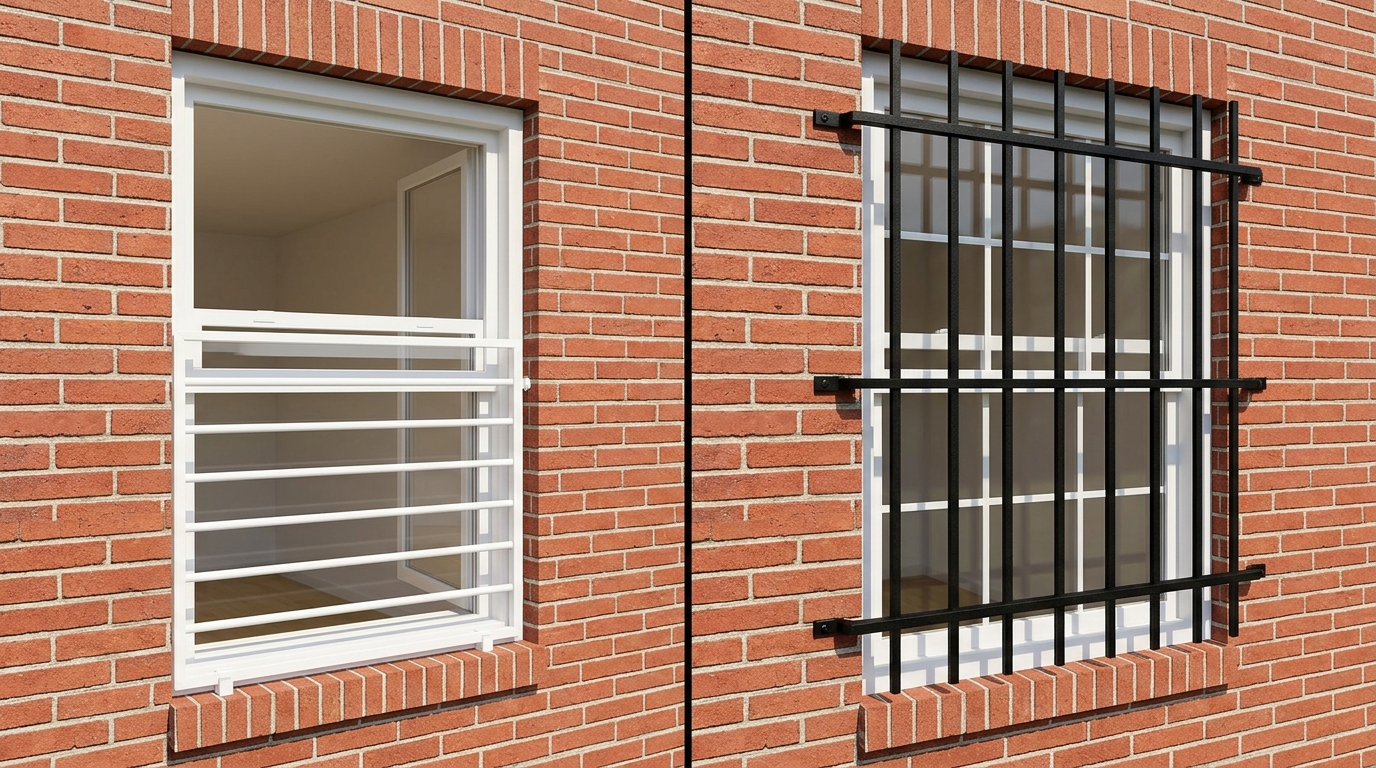
Before discussing the safety of window bars themselves, it is important to understand the problem they solve. Window falls are a preventable cause of serious childhood injury and death, and they happen far more often than most parents realize.
Here are the facts that every parent should know:
- Children ages 1-4 are at the highest risk. Toddlers are naturally curious, increasingly mobile, and lack the judgment to understand the danger of an open window. Their center of gravity sits higher on their bodies, making them more likely to topple forward when leaning against a screen.
- Window screens do not prevent falls. Standard insect screens are designed to keep bugs out, not to hold the weight of a child. A 25-pound toddler can push through a typical fiberglass screen with minimal effort.
- Falls from as low as the second floor can be fatal. A two-story fall means a drop of approximately 15 to 20 feet. The American Academy of Pediatrics has documented severe head injuries, spinal fractures, and fatalities from falls at this height.
- Most falls happen in warm months. When windows are open more frequently during spring and summer, the risk increases dramatically. The peak months for pediatric window falls in the U.S. are May through September.
- Supervision alone is not enough. Multiple studies confirm that the majority of window falls happen while a caregiver is present in the home. Children move fast. A momentary lapse in attention is all it takes.
This is exactly why cities like New York passed legislation requiring window guards in apartments with young children. The NYC window guard law, which has been in effect since 1976, resulted in a 96 percent reduction in window fall deaths among children in the city. Physical barriers work. For more on the legal side of window bars in New York rentals, see our guide on NYC window security bars law and tenant rights.
Child-Safety Window Guards vs. Security Window Bars: What Is the Difference?
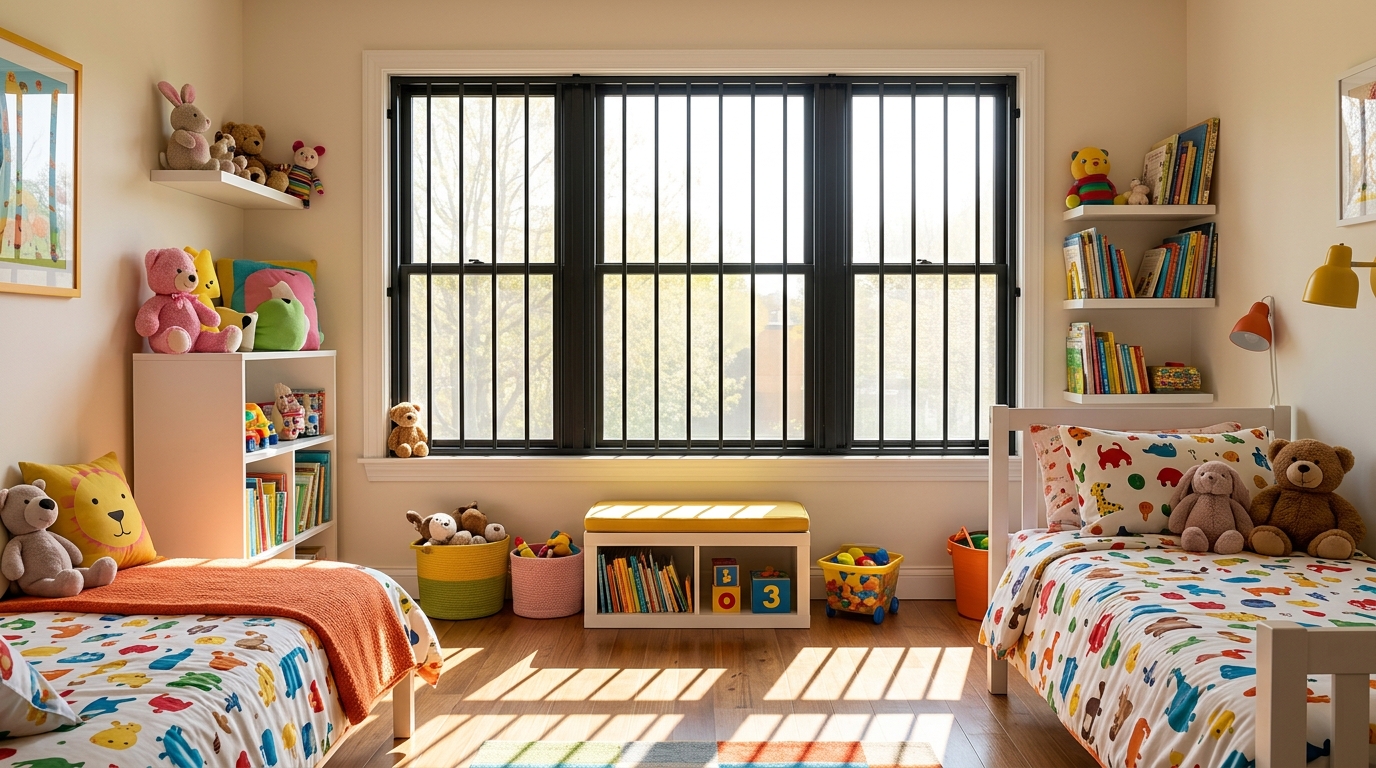
Parents often confuse two distinct product categories, and the distinction matters for both safety and legal compliance.
Child-Safety Window Guards
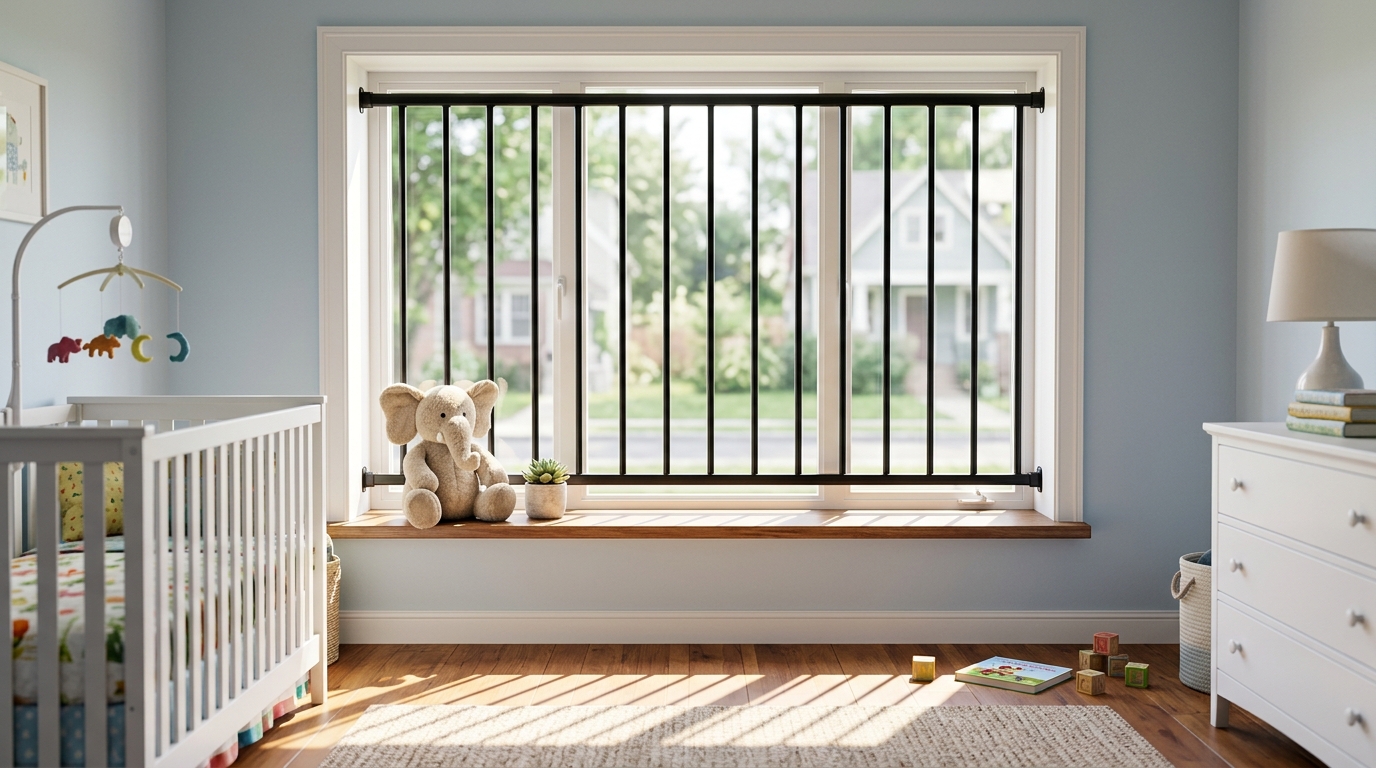
These are specifically designed to prevent children from falling out of windows. They are required by law in certain jurisdictions (most notably New York City for buildings with children under 10). Key characteristics include:
- Bars spaced no more than 4 inches apart (to prevent a child's head from passing through)
- Often adjustable to fit various window widths
- May or may not be rated for burglary resistance
- Typically lighter gauge material than security bars
- Must be removable by an adult (NYC law requires they can be removed without tools)
Security Window Bars
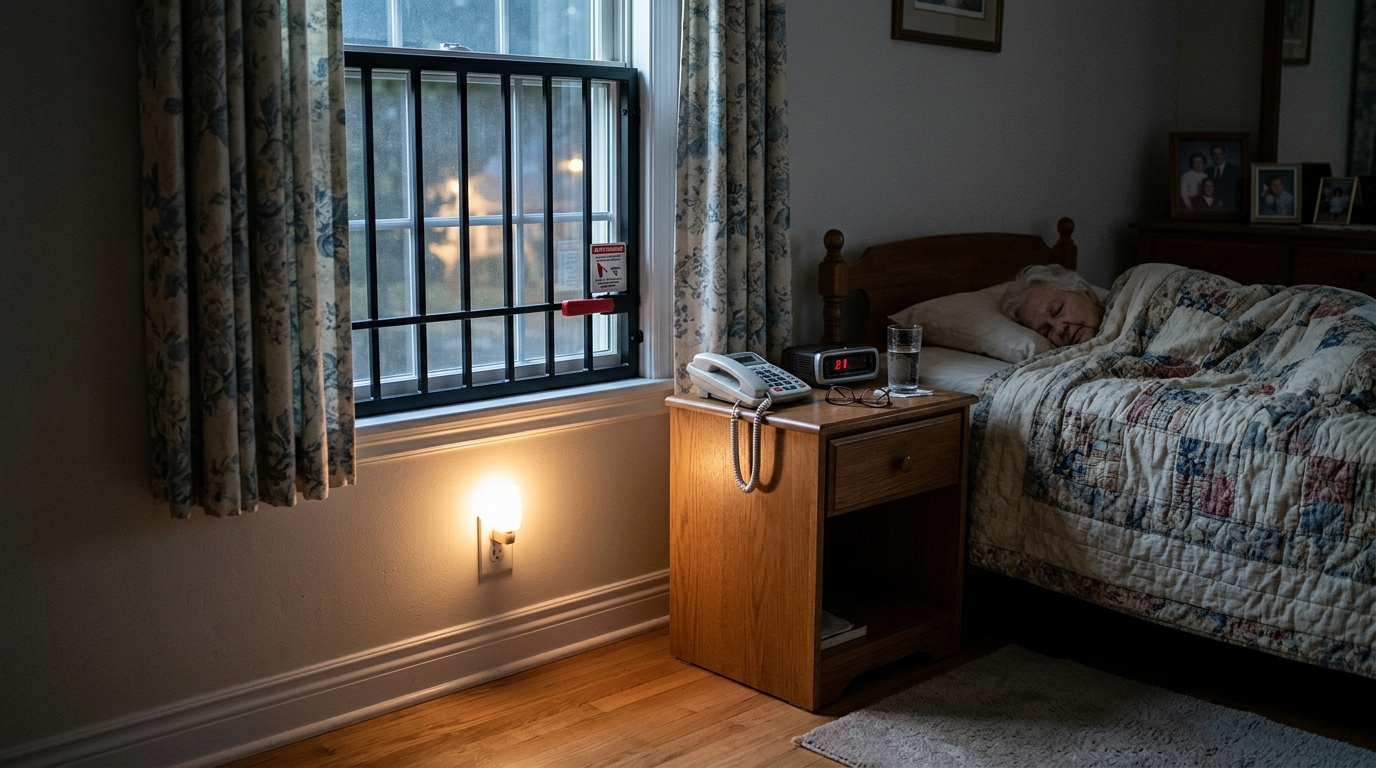
These are engineered primarily to prevent break-ins. They use heavier-gauge steel, stronger mounting hardware, and are designed to resist sustained forced-entry attempts. Key characteristics include:
- Heavy-gauge steel construction (solid or tubular)
- Frame mount or wall mount with structural anchoring
- Bar spacing that can vary by manufacturer (not always child-safe)
- Higher resistance to cutting, prying, and impact
- Available with or without quick-release egress mechanisms
The Best Option: Security Bars With Child-Safe Design

The ideal solution for families is a security window bar that also meets child-safety standards. This means heavy-gauge steel bars spaced 4 inches or less apart, combined with a quick-release mechanism for emergency egress. You get burglary protection and fall prevention in a single product.
The SWB Model A uses a bar spacing configuration that prevents a child's head and body from passing through. Its telescopic, modular design adjusts to fit standard window widths, and frame-mount installation keeps the bars securely locked in place without a child being able to remove or loosen them.
For a deeper comparison between these two product types, read our full breakdown of child safety window bars and protection options.
The 4-Inch Rule: Bar Spacing Standards for Children
The single most important measurement in child-safe window bar design is the space between the bars. Every parent considering window bars should understand and verify this number before purchasing.
Why 4 Inches?
The 4-inch maximum spacing standard comes from decades of pediatric safety research and is codified in multiple U.S. building codes and safety standards. A gap wider than 4 inches allows a small child's head to pass through, creating an entrapment and strangulation hazard. The logic is straightforward:
- A newborn's head circumference averages about 13.5 inches (roughly 4.3 inches in diameter).
- If a child can fit their head through a gap, their body may or may not follow, creating a trapping risk.
- The 4-inch rule provides a safety margin that accounts for the smallest head sizes while preventing torso passage for older toddlers.
Where the Standard Comes From
Several authoritative sources reference the 4-inch maximum:
- ASTM F2090: The American Society for Testing and Materials standard for window fall prevention devices specifies a maximum opening of 4 inches.
- International Building Code (IBC): Section 1015 addresses guards and references maximum opening dimensions for areas accessible to children.
- NYC Health Code Article 131: Requires window guards with bars no more than 4.5 inches apart in apartments with children under 10 (slightly more lenient than ASTM, but still within safe range).
- Consumer Product Safety Commission (CPSC): Recommends window guards or stops that prevent windows from opening more than 4 inches for children's rooms.
How to Verify Bar Spacing
Before buying any window bar product, measure the clear distance between the innermost edges of adjacent bars. Do not measure center-to-center, which gives a smaller number and can be misleading. The clear opening between bars is what matters. Use a tape measure or simply try to pass a 4-inch sphere (roughly the size of a softball) between the bars. If it fits through, the spacing is too wide for child safety.
Emergency Egress: The Non-Negotiable Safety Feature
Child safety is not only about preventing falls. It is equally about ensuring that every person in the home, including children, can escape during a fire or other emergency. This is where egress compliance becomes critical.
What the Fire Code Requires
The International Residential Code (IRC) and the National Fire Protection Association (NFPA) Life Safety Code both require that sleeping rooms have at least one window that can serve as an emergency escape route. The minimum requirements are:
- Minimum net clear opening: 5.7 square feet (5.0 square feet at grade level)
- Minimum opening height: 24 inches
- Minimum opening width: 20 inches
- Maximum sill height: 44 inches from the finished floor
Any window bar system installed in a bedroom must provide a way to meet these egress requirements during an emergency. Fixed bars that cannot be removed from the inside are a code violation when installed on bedroom windows, and more importantly, they are a life-threatening hazard.
Quick-Release Mechanisms: How They Work
A quick-release window bar system allows the bars to be opened or removed from inside the room without any tools and within seconds. The release mechanism is typically a lever, latch, or push-button located on the interior side of the bars where it is accessible to occupants but not to someone trying to break in from outside.
The SWB Model A/EXIT is specifically engineered for this purpose. It combines the same telescopic, modular steel construction as the standard Model A with a built-in quick-release mechanism that meets IBC, NFPA, and OSHA egress standards. For families with children, the Model A/EXIT belongs on every bedroom window. It provides full burglary protection during normal conditions and full emergency escape capability when seconds count.
Teaching Children About the Release Mechanism
For children old enough to understand (generally ages 5 and up), practice using the quick-release mechanism as part of your household fire escape plan. Make it a routine drill, just like you would practice stop-drop-and-roll or meeting at a designated outdoor spot. Children as young as six can learn to operate a simple lever-style release if they have practiced it multiple times.
For children under five, the responsibility for operating the release falls entirely on the adult caregiver. This is one reason why bedroom doors in young children's rooms should never be locked from the outside at night, and why every caregiver in the home should know exactly how the release mechanism works.
Age-by-Age Risk Assessment and Recommendations
The type and urgency of window bar protection varies depending on your child's age. Here is a practical breakdown by age group.
Infants (0-12 Months)
Risk level: Low to moderate. Infants are not yet mobile enough to reach windows on their own, but the risk increases rapidly as they begin pulling themselves up to stand (typically around 8-10 months). If your baby's crib or play area is near a window, install bars or guards before they start pulling up. Do not wait for the first close call.
Toddlers (1-3 Years)
Risk level: Highest. This is the peak danger zone. Toddlers climb furniture, push against screens, and have no concept of heights or consequences. If you have a child in this age range and windows that open, window bars are not optional. They are essential. Prioritize every window that a child can reach by climbing on furniture, including windows that seem high up. A toddler who can climb onto a chair, a couch, or a bed can reach a window sill.
Preschoolers (3-5 Years)
Risk level: High. Children in this range are stronger and more agile than toddlers, capable of moving furniture to reach windows, and still too young to reliably understand danger warnings. Continue using window bars on all accessible windows. Begin teaching basic window safety rules even though you cannot rely on verbal instructions alone at this age.
School-Age Children (5-10 Years)
Risk level: Moderate. Children can begin to understand and follow safety rules, but impulsive behavior and peer pressure (daring friends) remain risk factors. Window bars are still strongly recommended, especially on upper floors. Begin including children in fire escape drills and teaching them to operate quick-release mechanisms.
Pre-Teens and Teens (10+)
Risk level: Low for accidental falls, but security remains relevant. By this age, the primary benefit of window bars shifts from fall prevention to burglary deterrence. Maintain bars on ground-floor and accessible windows for security purposes. Ensure that all bedroom windows have egress-compliant bars so that teenagers can escape independently during a fire.
Installation Best Practices for Homes With Children
Installing window bars in a home with children requires a few extra considerations beyond standard installation. Follow these best practices to maximize both security and child safety.
1. Prioritize the Right Windows First
If you cannot install bars on every window at once, start with these, in order of urgency:
- Children's bedroom windows (any floor above ground) with egress-compliant bars like the Model A/EXIT
- Any window reachable from a child's bed, crib, or play area
- Windows above hard surfaces (concrete patios, driveways, sidewalks) where a fall would be most dangerous
- All second-floor and higher windows that can be opened
- Ground-floor windows for security purposes
2. Choose Interior Frame-Mount Installation
For child safety, interior frame-mount bars are superior to exterior wall-mount bars for several reasons:
- The bars sit inside the window recess, preventing a child from leaning against the screen even if the window is open.
- The mounting hardware is inaccessible from the outside, so a child cannot tamper with it from inside the room (and a burglar cannot reach it from outside).
- Frame-mount installation requires no drilling into walls, which means no structural damage and easy removal if you move.
The SWB Model A uses a telescopic frame-mount design that clamps securely into the window frame without any drill holes. This makes it ideal for families who rent or who may move to a different home in the future.
3. Verify the Security of Every Installation
After installing bars on any window in a child's room, test the installation thoroughly:
- Push against the bars with firm hand pressure from inside. There should be zero movement.
- Attempt to wiggle, lift, or slide the bars. A curious child will try all of these.
- Check that the set-screw clamps or mounting brackets are tightened fully and cannot be loosened by small hands.
- Inspect the installation monthly. Building settling, temperature changes, and vibration from daily use can gradually loosen hardware.
4. Never Rely on Window Stops Alone
Window stops and limiters (devices that prevent a window from opening more than 4 inches) are a partial solution, but they have significant limitations:
- Many can be overridden by a determined child.
- They do not provide any burglary protection.
- They may prevent adequate ventilation in hot weather, tempting parents to remove them.
- They do not meet the physical barrier standard recommended by the American Academy of Pediatrics.
Window bars provide a permanent, tamper-resistant physical barrier that window stops cannot match. For the strongest protection, use both: window bars as the primary barrier and window stops as a secondary layer.
5. Keep Furniture Away From Windows
Even with window bars installed, arrange your child's room so that no climbable furniture (beds, cribs, dressers, toy boxes, chairs) sits directly beneath a window. This reduces the likelihood of a child interacting with the window in the first place and adds an extra layer of prevention on top of the physical barrier.
Common Myths About Window Bars and Child Safety
Misinformation keeps some parents from installing the protection their children need. Let us address the most common myths head-on.
Myth 1: Window Bars Trap Children During Fires
Reality: This is the most damaging myth, and it is outdated. It stems from a time when only fixed, non-removable bars existed. Modern egress-compliant bars like the SWB Model A/EXIT open from inside with a single motion, meeting IBC and NFPA fire code requirements. A child old enough to reach the release (or any adult in the home) can clear the window for escape in under five seconds.
Myth 2: Window Screens Are Enough to Prevent Falls
Reality: Window screens are designed to keep insects out. They are not structural. A child weighing as little as 20 pounds can push through a standard fiberglass or aluminum screen. The CPSC explicitly warns parents that screens should never be considered a fall-prevention device.
Myth 3: My Child Would Never Climb Up to a Window
Reality: The data says otherwise. The majority of window falls happen in homes where the parent believed their child could not or would not reach the window. Children are creative climbers. A stack of pillows, a toy bin, a sibling's back, or a chair they dragged across the room is all it takes. Physical barriers exist precisely because supervision and assumptions are not reliable.
Myth 4: Window Bars Make My Home Look Like a Prison
Reality: Modern security bars bear little resemblance to the heavy, welded grates of decades past. Interior frame-mount bars are invisible from the street. Powder-coated finishes in black, white, or custom colors blend with your decor. The SWB Model A's clean, minimalist profile looks like a design element, not a cage.
Myth 5: I Only Need Bars on Upper-Floor Windows
Reality: While upper-floor windows pose the greatest fall risk, ground-floor bars serve a critical security function. A ground-floor bedroom window without bars is an invitation for break-ins. For families, ground-floor bars with egress compliance protect children from intrusion while maintaining fire escape routes. The full picture of why window bars belong on every home is covered in our best window security bars for homes guide.
Frequently Asked Questions
What is the maximum bar spacing that is safe for children?
The maximum safe bar spacing for children is 4 inches, measured as the clear opening between the inner edges of adjacent bars. This standard comes from ASTM F2090, the International Building Code, and the Consumer Product Safety Commission. A gap wider than 4 inches can allow a child's head to pass through, creating an entrapment and injury risk.
Do window bars meet fire code if I have children in the house?
Window bars meet fire code only if they include a quick-release mechanism on bedroom windows. The International Residential Code and NFPA Life Safety Code require that every sleeping room has an emergency egress window with a minimum 5.7 square feet clear opening. Egress-compliant models like the SWB Model A/EXIT satisfy this requirement by opening from inside without tools in seconds.
At what age should I install window bars for my child's room?
Install window bars before your child becomes mobile enough to pull themselves up to standing, which typically happens between 8 and 10 months of age. The highest-risk period for window falls is ages 1 through 4. Do not wait for an incident or a close call. If your child's room has any window that opens and is above the ground floor, install bars as early as possible.
Can a child operate the quick-release mechanism on egress window bars?
Children ages six and older can typically learn to operate a lever-style quick-release mechanism with practice. For children under five, the release is the responsibility of adult caregivers. Include quick-release operation in your household fire escape drills and practice it with children regularly so the motion becomes instinctive during an emergency.
Are window bars required by law in apartments with children?
Window guard requirements vary by jurisdiction. New York City requires window guards in all apartments where children under 10 reside. Some other cities and states have similar statutes. Even where not legally mandated, the American Academy of Pediatrics and the Consumer Product Safety Commission strongly recommend window guards or bars for any home with young children and accessible windows above the ground floor.
The Bottom Line for Parents
Window bars are not just safe for children. When properly selected and installed, they are one of the most effective tools available to keep children safe. The combination of fall prevention, burglary deterrence, and fire-code-compliant egress in a single product makes modern window bars a straightforward decision for any parent.
Here is the checklist to follow:
- Verify bar spacing is 4 inches or less to prevent head entrapment.
- Choose egress-compliant bars (like the Model A/EXIT) for all bedroom windows.
- Use interior frame-mount installation so bars are tamper-proof from both sides.
- Test every installation for stability and re-check monthly.
- Practice fire escape drills that include operating the quick-release mechanism.
- Never rely on window screens as a fall-prevention device.
- Move furniture away from windows to reduce climbing access.
Your children deserve both the freedom to play near natural light and the physical protection to do so without risk. The right window bars give them both.