

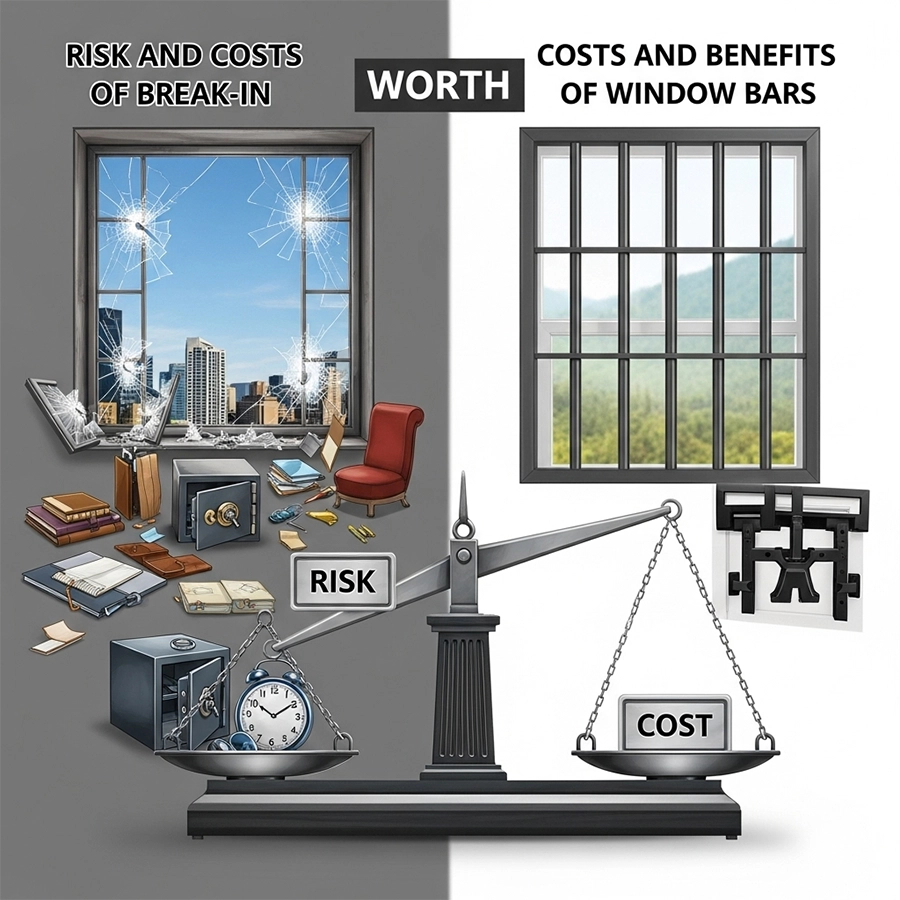
Are window bars “worth it”? The honest answer depends on your risk (likelihood and impact of a break-in) and your costs (hardware + installation + upkeep). In practical terms, you’ll get a strong ROI when the expected cost of a break-in—property loss, damage, downtime, emergency services, deductibles, possible premium increases, and the very real time cost to clean up—exceeds the one-time and periodic cost of a well-installed barrier. This guide turns that into numbers you can run for your home, rental property, or small business.
We’ll break down: the cost components of a typical burglary, a simple calculator you can copy, three scenarios (single-family home, landlord with multiple units, and a storefront), plus sensitivity analysis to see how results change with different assumptions. We’ll also explain where SWB’s modular & telescopic design (frame or wall mount, optional quick-release for egress) saves money versus custom ironwork—especially when you’re securing multiple openings with mixed sizes. This is a practical, non-alarmist look at ROI so you can decide with confidence.
Return on investment (ROI) compares what you save (losses avoided and costs reduced) to what you spend (equipment, installation, upkeep). At its simplest:
ROI (%) = (Benefits − Costs) ÷ Costs × 100
For window security, “Benefits” are avoided break-in costs over your time horizon. “Costs” are your up-front purchase + install + modest maintenance.
Payback period answers a different question: “How long until the security pays for itself?” If your avoided losses in a typical year are greater than your one-time cost, your payback is less than one year.
| Cost component | What it includes | Notes |
|---|---|---|
Property loss |
Stolen electronics, tools, cash, inventory |
Often the headline number but not the only cost |
Damage & repairs |
Broken glass, frames, locks, interior damage |
Add emergency board-up if needed |
Downtime / business interruption |
Lost revenue, canceled appointments, staff idle time |
Critical for storefronts and service businesses |
Emergency services & cleanup |
Board-up, after-hours locksmith, debris removal |
Premium rates outside business hours |
Insurance deductibles |
Portion you pay out of pocket |
Paid every time you claim |
Potential premium impacts |
Future increases or surcharges |
Varies—ask your provider |
Time cost |
Calls, quotes, police report, inventory count, claims |
Owners often spend days, not hours |
Intangibles |
Stress, tenant churn, reputational hit |
Hard to price but real |
You don’t need exact numbers to make a sensible decision. Conservative estimates still reveal whether bars make financial sense.
| Cost component | What it includes | Notes |
|---|---|---|
Hardware |
The bars themselves (core + modules) |
Buy direct; standardize SKUs across openings |
Installation |
DIY time or a pro |
Choose DIY-friendly systems and plan anchors by substrate |
Accessories |
Quick-release mechanism (if egress), wall-mount plates |
Select only where required; plan hinge side early |
Maintenance |
Occasional cleaning, re-torque, touch-ups |
Create a simple quarterly checklist (faster than you think) |
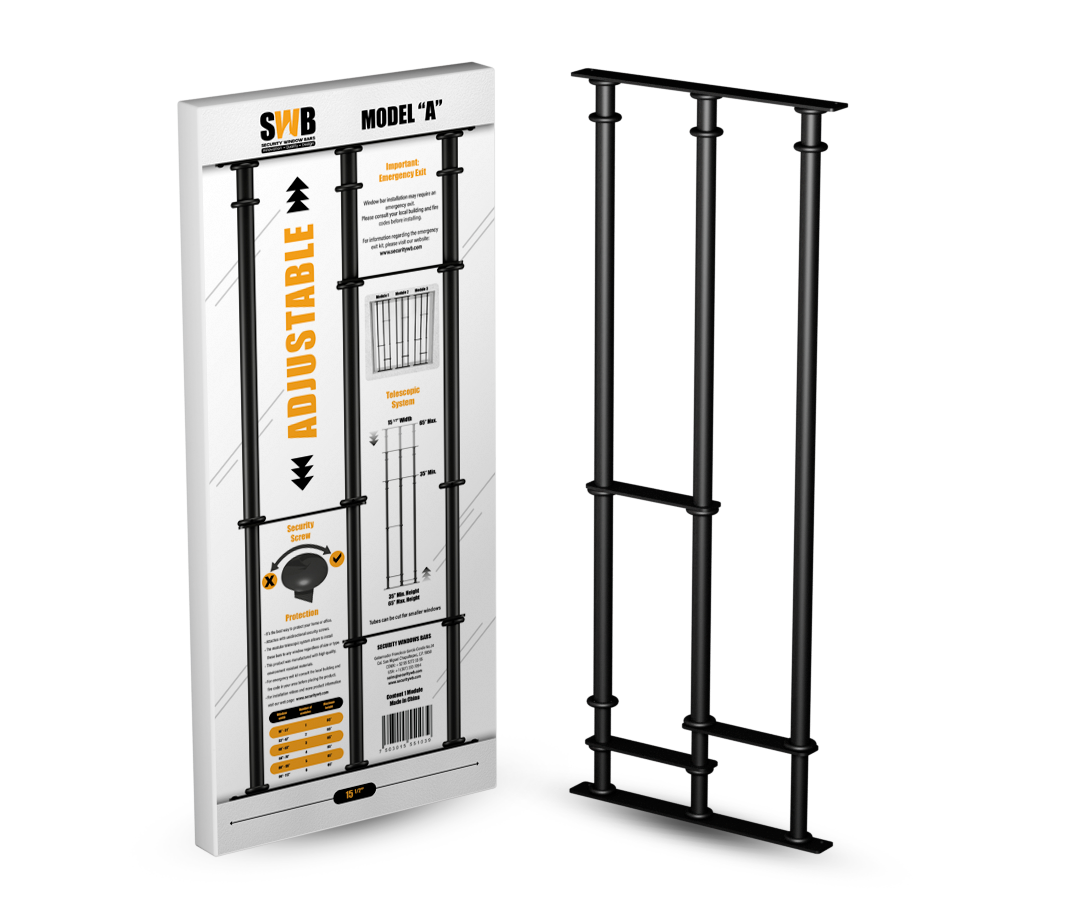
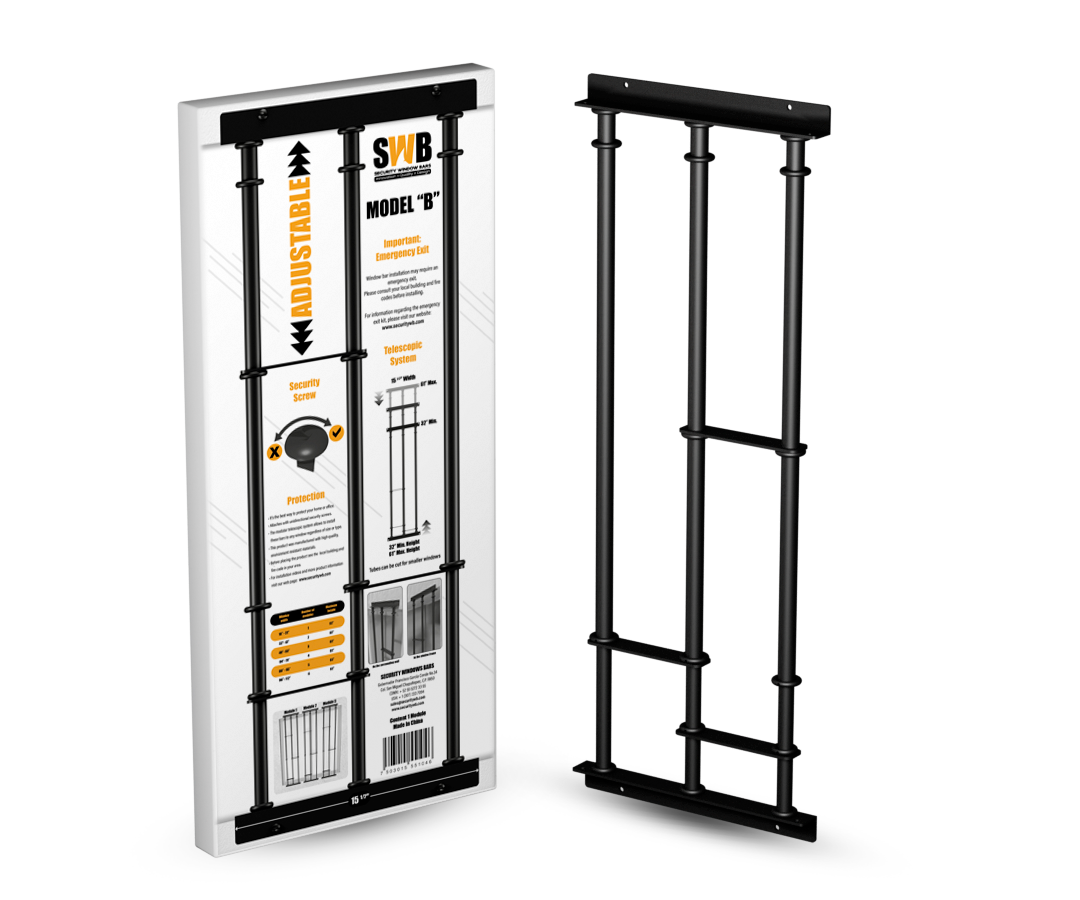
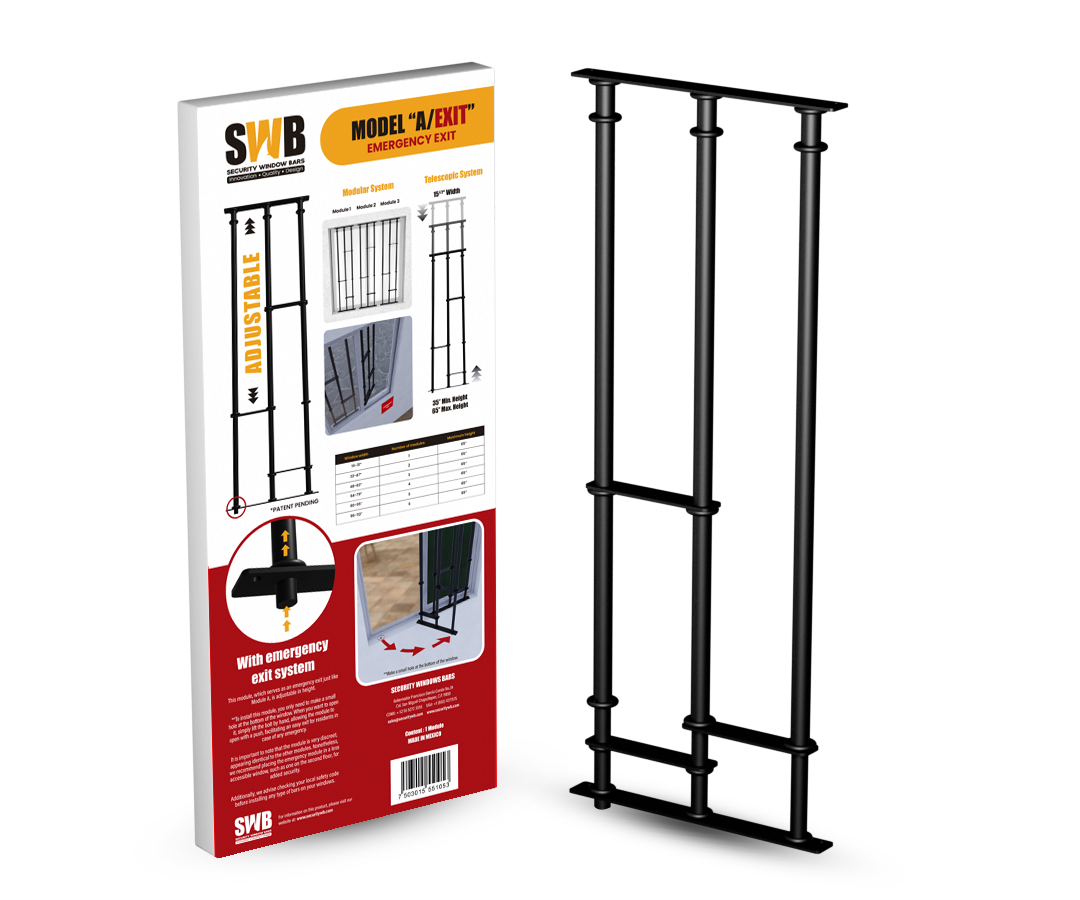
Why SWB tends to lower TCO: One modular & telescopic family covers tall and wide openings (add modules to span width), supports frame or wall-mount, and offers a quick-release model for egress. That means fewer custom jobs, fewer vendor SKUs, and faster installs—especially across multiple windows. Explore: Model A • Model B • Emergency-Exit.
Security ROI hinges on expected loss, not just “could this happen.” Use a conservative approach:
Expected annual loss = Probability of at least one break-in per year × Average total cost of that break-in
Probability: You can approximate from local crime stats, personal experience, neighboring incidents, or your insurance broker’s perspective. If you’re unsure, test a low case (e.g., 5%), a base case (10%), and a high case (20%).
Average total cost: Sum the items in the “cost of a break-in” table. If uncertain, start with modest placeholder numbers.
Step 1 — Inputs (make your best estimates):
Annual break-in probability (P): __%
Average total cost per break-in (C): $__
Window bars upfront cost (equipment + install) (B): $__
Annual maintenance (M): $__ (many homes will put $0–$50)
Time horizon in years (T): __ (common choices: 3, 5, 7)
Optional: Discount rate (r) for NPV (e.g., 5–8%)
Step 2 — Annual expected loss without bars:E = P × C (in dollars)
Step 3 — Total expected loss avoided over T years (undiscounted):Benefits ≈ E × T
Step 4 — Total security cost over T years:Costs = B + (M × T)
Step 5 — ROI and Payback:ROI (%) = (Benefits − Costs) ÷ Costs × 100Payback (years) = Costs ÷ E
Optional NPV (Net Present Value):NPV = −B + Σ_{year=1→T} (E − M) / (1 + r)^year
If NPV > 0, the investment pays off in present-value terms.
Use three versions of P and C (low/base/high) to see a range. If ROI is positive in your low case, you have a strong decision
These are illustrative only—swap in your numbers.
Assumptions:
Probability (P): 10%/yr (based on area history)
Average break-in cost (C): $3,500 (property + repairs + time)
Bars (B): $900 (two windows, modular system, DIY)
Maintenance (M): $25/yr (exterior wipe-down + torque check)
Horizon (T): 5 years
Calculations:
E = 0.10 × $3,500 = $350/year
Benefits ≈ $350 × 5 = $1,750
Costs = $900 + ($25 × 5) = $1,025
ROI = ($1,750 − $1,025) ÷ $1,025 × 100 = 70.7%
Payback = $1,025 ÷ $350 ≈ 2.93 years
Interpretation: Even with modest assumptions, the bars pay for themselves in under three years. If your area risk is higher or your break-in costs are higher, payback accelerates.
Assumptions:
P per unit: 8%/yr
Portfolio probability (at least one incident): use complement rule
1 − (1 − 0.08)^4 ≈ 1 − 0.92^4 ≈ 1 − 0.716 = **28.4%/yr**
Average cost per incident (C): $4,200 (repairs + turns + time)
Bars (B): $2,900 (standardized SKUs, modular widths, some quick-release)
Maintenance (M): $80/yr (quarterly checks during unit inspections)
Horizon (T): 5 years
Calculations:
E = 0.284 × $4,200 = $1,193/year
Benefits ≈ $1,193 × 5 = $5,965
Costs = $2,900 + ($80 × 5) = $3,300
ROI = ($5,965 − $3,300) ÷ $3,300 × 100 = 80.8%
Payback = $3,300 ÷ $1,193 ≈ 2.77 years
Interpretation: Standardizing across units and batching orders keeps costs contained; a single avoided incident can cover a large portion of the investment.
Assumptions:
Annual probability (P): 20%/yr (recent incidents nearby)
Average cost per break-in (C): $6,500 (inventory, glass, emergency board-up, downtime)
Bars (B): $1,700 (wider spans via modules, wall-mount to masonry)
Maintenance (M): $60/yr (post-storm checks)
Horizon (T): 5 years
Calculations:
E = 0.20 × $6,500 = $1,300/year
Benefits ≈ $1,300 × 5 = $6,500
Costs = $1,700 + ($60 × 5) = $2,000
ROI = ($6,500 − $2,000) ÷ $2,000 × 100 = 225%
Payback = $2,000 ÷ $1,300 ≈ 1.54 years
Interpretation: Visibility matters. Bars are an obvious deterrent, turning quick smash-and-grab attempts into noisy, time-consuming work. That change alone often shifts offenders elsewhere.
Create low/base/high versions of P (annual probability) and C (total incident cost). Here’s a simple format:
| Case | P (probability) | C (incident cost) | E = P×C (expected loss/yr) |
|---|---|---|---|
Low |
0.05 |
$2,500 |
$125 |
Base |
0.10 |
$3,500 |
$350 |
High |
0.20 |
$5,000 |
$1,000 |
Now hold B and M constant and recompute Benefits, ROI, and Payback. If your Low case still beats your payback threshold (e.g., < 3 years), you likely have a go decision.
Even if you’re conservative with risk, bars can deliver additional savings:
Fewer emergency callouts: Board-ups and re-glazing after hours are expensive.
Faster unit turns: For landlords, fewer break-ins reduce churn and make-ready delays.
Operational confidence: Businesses can close at night with fewer interruptions.
Standardized installs: SWB’s telescopic height + modular width means you’ll re-use the same components and steps across openings—less labor variation.
Egress where required: The Emergency-Exit model handles code-critical openings; you won’t need an entirely different product family.
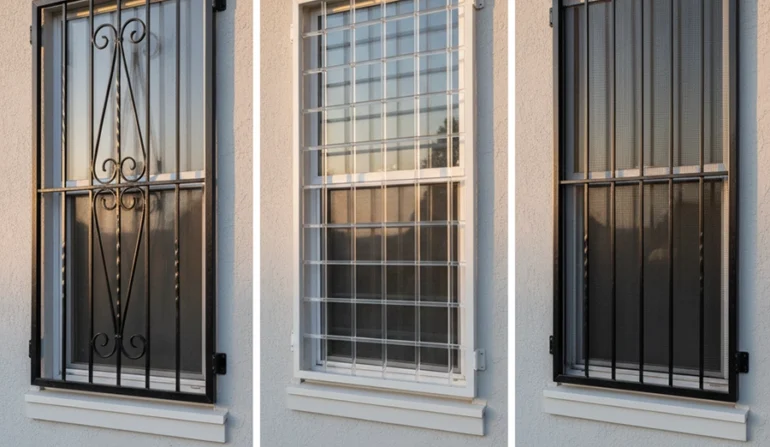
If aesthetics or airflow are top priorities, consider clear bars or security screens. They’re excellent, but initial cost and pro-install requirements often push payback further out.
| Option | Typical install path | Cost level | ROI notes |
|---|---|---|---|
Metal bars (SWB) |
DIY-friendly; frame or wall-mount |
$–$$ |
Strong cost-to-security ratio; fast payback |
Clear polycarbonate bars |
Kits; careful handling |
$$–$$$ |
Higher upfront; aesthetics win; ROI depends on risk |
Security screens |
Dealer-installed, custom frames |
$$$–$$$$ |
Premium look/airflow; higher cost to recover |
Use Compare Options for a detailed pros/cons view.
Target the right windows first. Focus on concealed or high-risk openings (alleys, basements, ground floor behind landscaping, wide sliders).
Batch your order. Standardize telescopic ranges and module counts; reduce shipping and decision time.
Choose the right mount. Wall-mount to masonry for straight, long spans; frame-mount for plumb, solid jambs. See Wall-Mount Guide.
Plan egress early. Bedrooms and many basements need quick-release. Decide hinge side and test after install.
DIY where reasonable. SWB is designed for DIY installs with included hardware; see DIY Installation.
Maintain briefly, quarterly. Five-minute checks: fasteners, touch-ups, release test (if applicable). This preserves value and appearance.
“Bars look harsh.” Use interior placement, align modules to mullions, and choose a finish that blends with trim. If you want near-invisible solutions, compare clear bars or security screens—then revisit ROI.
“What about emergencies?” That’s exactly why quick-release models exist. Keep the release accessible, perform a swing test, and train the household.
“Installation is complicated.” With modular systems, it’s mostly measuring, choosing the mount, drilling into the correct substrate, and adding modules for width. The How to Measure and DIY Installation guides walk you through it.
“I only need this for a year.” If turnover risk is seasonal (e.g., a storefront), payback can still make sense within a year—especially at higher risk levels.
Project name: ____
Openings at risk (list): ____
Egress windows? Yes / No (which?) ____
Mount type per window: Frame / Wall / TBD
Telescopic height range(s): ____
Module plan per window (Core + _ modules): ____
Up-front cost (B): ____
Annual maintenance (M): ____
Probability (P), Base: ____
Incident cost (C), Base: ____
Expected loss/year (E = P×C): ____
Benefits over T years: ____
ROI: ____
Payback: ____
You don’t need perfect data to make a good security decision; you need reasonable estimates and a system that fits your openings without custom fabrication. For most homeowners, landlords, and small businesses, the combination of visible deterrence and one-time cost makes window bars a high-ROI investment—especially when you standardize on a modular & telescopic design and choose quick-release for egress windows. Run the calculator with conservative assumptions. If your low-case ROI is positive, it’s likely the right move.
See the lineup: Model A • Model B • Emergency-Exit
Get your numbers: How to Measure
Plan install: DIY Installation • Compare Options
Ready to order? Buy Direct & Save—send measurements and a photo; we’ll spec your module count.
EMAIL ADDRESS: sales@securitywb.com
SITE: www.securitywb.com
PHONE:
CDMX: +52 (55) 5272 3355 USA: +1 (650) 4371 575
COOKIES POLICY
Security Window Bars LLC ("SWB") uses cookies and similar technologies to improve your browsing experience and enhance the functionality of our website www.securitywb.com (the “Website”). This Cookies Policy explains what cookies are, how we use them, and how you can manage your cookie preferences.
By using our Website, you agree to our use of cookies as described in this policy.
Last Updated: 01/01/25