
Window Security Bars for Apartments: The Complete Renters Guide USA (2026)
Complete USA renters guide to window security bars for apartments. Lease rules, fire egress laws, no-drill options & top picks for NYC, Chicago, LA renters.
From our experience protecting thousands of homes across the USA, SWB analyzes the best strategies so you can sleep soundly — especially if you rent your apartment. According to the FBI Uniform Crime Report, roughly 6.7 million burglaries are reported in the United States every year, and approximately 60% of break-ins happen through ground-floor windows. If you live in a first- or second-floor apartment in a high-density city like New York City, Chicago, or Los Angeles, that statistic is personal. The good news is that window security bars for apartments are now a realistic, affordable, and renter-friendly solution. This comprehensive renters guide covers everything you need to know before buying and installing window bars in a US apartment: landlord permission, lease clauses, state and local fire egress laws, code compliance, and the best no-drill or tension-mounted options that protect your home without forfeiting your security deposit. Whether you are a long-term tenant or a month-to-month renter, this guide will help you make an informed, legally sound decision.
According to data compiled from FBI Uniform Crime Reports and the Bureau of Justice Statistics, ground-floor apartment windows are the entry point in more than…
Why Apartment Renters in the USA Need Window Security Bars
The US Census Bureau’s 2023 data confirms there are 44.1 million apartment renters nationwide. A significant portion of these renters live in dense urban environments — cities like Chicago, Philadelphia, Detroit, Memphis, Houston, and Atlanta — where property crime rates remain persistently high. Ground-floor and garden-level apartment units are statistically the most vulnerable, with the National Crime Prevention Council estimating that a burglar can force open an unsecured window in under 60 seconds. Yet many renters mistakenly believe that window bars are only an option for homeowners. That misconception costs people their sense of safety, their property, and sometimes their physical well-being. The modern market for window security bars for apartments has evolved dramatically. Today’s best products are telescopic, tension-mounted, and fully removable — meaning renters can install professional-grade steel security bars without leaving a single anchor hole in the wall. Beyond burglary prevention, window bars serve a secondary but equally important function in apartments: child fall prevention. In New York City, Local Law 57 legally requires landlords in buildings with children under age 10 to install window guards. Even where the law does not mandate it, the American Academy of Pediatrics strongly recommends window protection on any window above the ground floor. Understanding your need is the first step. The second step is understanding your rights and responsibilities as a tenant.
The Ground-Floor Vulnerability: Crime Stats Every Renter Should Know
According to data compiled from FBI Uniform Crime Reports and the Bureau of Justice Statistics, ground-floor apartment windows are the entry point in more than 60% of residential burglaries where forced entry was recorded. In cities like Chicago and Philadelphia, burglary rates in densely populated residential corridors can run two to three times the national average per 100,000 residents. Renters who rely solely on door locks are leaving their most exposed entry points — windows — completely undefended. A standard window latch offers almost no resistance to a determined intruder; studies from the Security Industry Association show that basic latches can be defeated in under 30 seconds using common tools available at any hardware store. Steel window bars, even lightweight telescopic domestic window security grilles, increase forced-entry time dramatically — often enough to deter a burglar entirely, since most opportunistic break-ins are abandoned if they take longer than 60 to 90 seconds.
Child Safety and Fall Prevention in Multi-Story Apartments
Window falls are the second leading cause of accidental injury death for children under age five in the United States, according to the American Academy of Pediatrics. In high-rise and multi-story apartments in cities like New York City, Chicago, and Miami, the risk is compounded by the height of upper floors and the frequency with which windows are opened for ventilation in warmer months. Installing cross bars in windows or a properly rated security grille does double duty: it keeps intruders out and keeps children safely inside. Importantly, any window bar or guard installed in a sleeping area must comply with fire egress requirements — a legal and safety point we cover in detail later in this guide. NYC’s Local Law 57 is the most well-known mandate of this type, but similar requirements exist under various state and municipal housing codes across California, New Jersey, and Massachusetts.
Landlord Permission and Lease Clauses: What US Renters Must Know Before Installing Window Bars
One of the most frequently asked questions in the window security bars for apartments renters guide USA space is simple: do I need my landlord’s permission? The answer in most states is yes — with important nuances. The majority of residential lease agreements in the United States include clauses that prohibit tenants from making alterations to the property without prior written consent. Installing traditionally welded or wall-mounted security bars almost certainly qualifies as a structural alteration. Doing so without permission could expose a renter to lease termination, loss of security deposit, or even civil liability for property damage. However, the landscape changes considerably for no-drill, tension-mounted, or fully telescopic window bars. Because these systems apply pressure against the window frame without penetrating the wall or creating anchor points, many landlords consider them equivalent to using a tension shower rod — a temporary, non-permanent fixture. That said, always get written permission before installing any window security device. Sending a simple email to your property manager creates a paper trail that protects you legally.
How to Ask Your Landlord for Permission: A Practical Script
When requesting landlord permission for window security bars in your apartment, clarity and professionalism matter. A simple written request should include: (1) the specific product you intend to install, including brand and model number; (2) a clear description of the installation method — emphasize that the SWB Model A Telescopic Window Bars require no permanent drilling and leave no wall damage; (3) your reason for the request, citing personal safety or child protection; and (4) a statement confirming you will remove the bars at the end of your lease and restore the window to its original condition. In many states, including California (Civil Code Section 1941.1) and New York (Real Property Law Section 235-b), landlords have an implicit legal duty to maintain habitable, secure premises. If your building has documented security issues — prior break-ins, broken window locks, or poorly lit entry points — your landlord may actually be legally obligated to accommodate your security request.
Lease Clauses to Review Before You Buy
Before purchasing any window security bars for your apartment, review your lease for the following specific language: ‘alterations,’ ‘modifications,’ ‘fixtures,’ and ‘restoration obligations.’ Some leases define ‘alterations’ broadly to include any physical change to the unit’s structure, which could encompass even tension-based systems. Others explicitly limit restrictions to permanent modifications. If your lease is ambiguous, consult your state’s tenant rights organization — resources like the National Housing Law Project or your local legal aid office can provide free guidance. Renters in rent-controlled cities like New York City, San Francisco, and Washington DC often have stronger tenant protections that limit a landlord’s ability to unreasonably deny reasonable safety modifications. Document everything: photograph the window before installation, keep your purchase receipts, and retain any written correspondence with your landlord.
Fire Egress Laws by State: What Every Renter Must Understand Before Installing Bars
This is arguably the most critical section of any window security bars for apartments renters guide USA. Fire egress compliance is not optional — it is a matter of life and death, and in many jurisdictions, it is the law. The International Building Code (IBC) and NFPA 101 (Life Safety Code) both mandate that sleeping areas maintain at least one operable emergency escape opening. The International Residential Code (IRC) specifies a minimum clear opening of 20 inches wide by 24 inches tall, with a minimum net clear opening of 5.7 square feet, at no more than 44 inches above the finished floor. Any window bar or security grille installed in a bedroom or sleeping area must not permanently block this emergency exit. Installing fixed, welded, or non-releasable window bars in a sleeping area is not only dangerous — it may be illegal under your state’s building or fire code. Several states, including California, New York, Texas, and Florida, have adopted the IBC and NFPA 101 standards into their residential codes with additional local amendments.
IBC and NFPA 101 Requirements: What the Numbers Actually Mean for Your Apartment
Under Section 1030 of the International Building Code, every sleeping room must have at least one emergency escape and rescue opening. If a window bar system is installed, it must be openable from the inside without the use of a key, tool, or special knowledge. This is precisely why the SWB Model A/EXIT Egress Compliant Window Bars exist — the patented quick-release mechanism allows the bars to be opened instantly from the inside in an emergency while still providing full steel-strength protection against forced entry from outside. NFPA 101 Life Safety Code further specifies that escape window hardware must be operable with a single motion. Fixed bars that require a key to unlock, or that have been welded or permanently anchored, fail this standard completely. Renters who install non-compliant bars in bedrooms in cities like Chicago or Los Angeles could face not only personal safety risk but also code violation penalties issued to their landlord.
State-by-State Overview: Key Egress Rules Renters Should Know
While federal building codes set the baseline, state and municipal rules add another layer renters must navigate. In New York City, the New York City Building Code (NYCBC) Section 1026 mirrors IBC egress requirements and additionally mandates window guard compliance under the Health Code for families with young children. California’s Title 24 Building Standards Code requires quick-release mechanisms on all security bars in sleeping areas statewide. In Texas and Florida — two states with high hurricane-related window regulations — window bars must not interfere with storm shutter operation or emergency evacuation procedures. In Illinois, the Chicago Building Code Chapter 13-196 requires that any security grille on a habitable room window be openable without a key from inside. If you are a renter in any of these jurisdictions, the SWB Model A/EXIT is the only compliant telescopic solution that satisfies both security and egress requirements simultaneously. Always verify your specific city and county codes, as local amendments frequently exceed state minimums.
The Danger of Non-Compliant Window Bars in Apartment Fires
The United States Fire Administration reports that residential building fires cause an average of 2,500 civilian deaths per year, with apartment buildings accounting for a disproportionate share of casualties. Multiple documented fire fatalities have been directly linked to occupants being trapped behind non-releasable window bars — a tragic outcome that is entirely preventable with the right product choice. The National Fire Protection Association’s fire investigation reports consistently cite blocked egress windows as a contributing factor in apartment fire deaths. If you currently have any permanently fixed security bars on bedroom windows that cannot be opened from inside without a key, removing or replacing them with an egress-compliant system should be your immediate priority — before any other security upgrade. No home security measure is worth your life or the life of a family member.
No-Drill and Tension-Mounted Window Bars: The Best Solutions for Renters
The single most important product innovation for apartment renters in the window security market is the telescopic, tension-mounted window bar. Unlike traditionally installed domestic window security grilles — which require masonry anchors, wall penetrations, and professional installation — telescopic bars use spring-loaded steel tension to lock securely between two opposing window frame surfaces. This mechanism generates significant lateral force, enough to resist the prying, kicking, and impact forces typically applied in residential burglary attempts. The SWB Model A Telescopic Window Bars are purpose-built for exactly this scenario. They fit windows ranging from 22 to 36 inches wide — covering the vast majority of standard US window sizes — and can be installed in 15 to 20 minutes with no special tools, no contractor, and no holes drilled into any surface. When you move out, the bars remove in seconds, leaving your window frame completely undamaged and your security deposit fully intact. For renters in New York City, Chicago, Los Angeles, and other major metros where landlord-tenant disputes over property damage are common, this no-damage guarantee is not just convenient — it is financially essential.
How Telescopic Tension Bars Work: The Engineering Explained
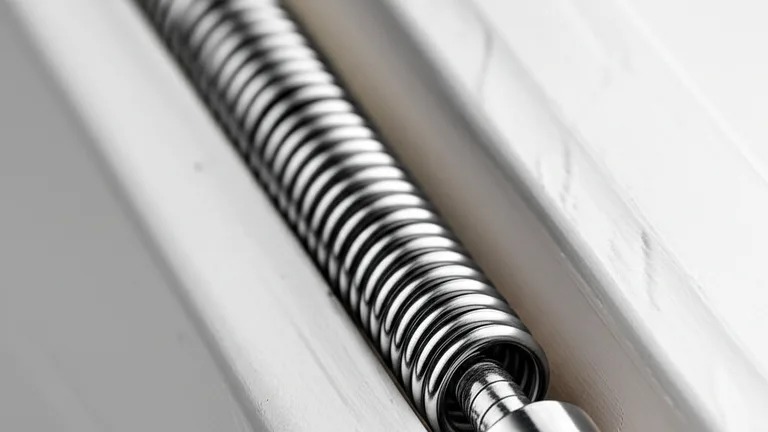
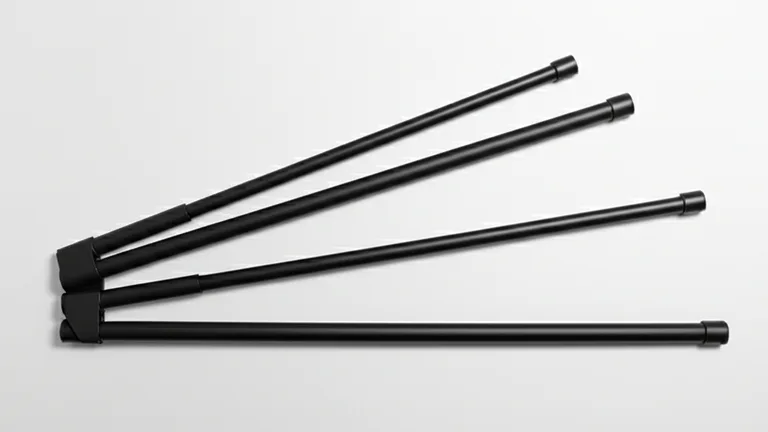
A telescopic window security bar consists of one or more steel rods with an internal spring mechanism that allows the bar to extend or compress along its length. When positioned horizontally between the left and right tracks of a window frame — or vertically between the top sill and bottom sill — the spring mechanism pushes outward against both contact points simultaneously, creating a friction-lock that grows stronger under lateral force. The harder a burglar pushes or pries against the bar, the tighter the contact pressure becomes against the frame. SWB Model A bars are constructed from heavy-gauge cold-rolled steel with a powder-coated matte black finish, giving them the same structural resistance as permanently welded bars while remaining fully removable. The cross bars in windows created by SWB’s telescopic system create a physical barrier that is virtually impossible to defeat quickly from outside — and that is exactly what crime prevention depends on: increasing the time and effort required for forced entry until it becomes impractical for an opportunistic burglar.
Comparing No-Drill Options: What to Look For When Shopping
Not all tension-mounted window bars are created equal. When evaluating window security bars for apartments, renters should assess five key criteria: steel gauge (heavier is stronger), adjustable width range (must fit your specific window), surface coating quality (powder coat resists rust and chipping), egress compliance (essential for sleeping areas), and load rating. Avoid bars made primarily from aluminum or lightweight alloy, which can be defeated with common leverage tools. Products that are primarily marketed as ‘window stops’ or ‘sash locks’ are not security bars — they prevent the window from opening more than a few inches but do not resist the full removal of the window sash itself. A genuine security bar system spans the full window opening and resists forces from multiple angles. The SWB Model A satisfies all five criteria and ships directly from Amazon FBA warehouses, meaning renters in all 50 states receive fast, reliable delivery without waiting weeks for a special order.
SWB Product Recommendations for Apartment Renters: Model A, Model B, and Model A/EXIT
Security Window Bars offers three distinct products designed to cover every renter scenario — from a studio apartment in Brooklyn to a ground-floor retail space in Houston. Understanding which model fits your specific situation is essential to both your security and your legal compliance. Here is a clear breakdown tailored to the most common renter use cases across the United States. Each product is available through the SWB Amazon storefront with nationwide FBA shipping, ensuring fast delivery regardless of whether you live in rural Montana or downtown Manhattan.
Model A — Telescopic Window Bars ($90): The Renter’s First Choice
The SWB Model A Telescopic Window Bars at $90 are specifically designed with renters in mind. The fully telescopic, spring-tension design requires no drilling, no anchoring, and no permanent modification to any surface. Installation takes 15 to 20 minutes and requires only the bars themselves — no additional tools. The matte black powder-coated steel finish blends seamlessly with modern apartment aesthetics, which is important when you need landlord approval. The Model A fits windows between 22 and 36 inches wide, covering the standard single-hung, double-hung, and sliding window formats found in the overwhelming majority of US apartment buildings. It is ideal for bedroom windows, living room windows, and basement windows in garden-level units. For renters in cities like Chicago, Philadelphia, and Detroit — where ground-floor apartments in older building stock are common targets — the Model A provides immediate, professional-grade deterrence without requiring a single conversation with a contractor.
Model A/EXIT — Egress Compliant Window Bars ($92): The Only Legal Choice for Bedrooms
For any sleeping area — bedroom, den used as a bedroom, or any room where someone regularly sleeps — the SWB Model A/EXIT Egress Compliant Window Bars are the only legally and ethically appropriate choice. At $92, the Model A/EXIT adds a patented quick-release mechanism to the telescopic system, allowing the bars to be released instantly from inside in a fire or emergency without any key, tool, or complex motion. This design is fully compliant with IBC Section 1030, NFPA 101 Life Safety Code, OSHA standards, and IRC emergency egress requirements. The Model A/EXIT meets the minimum 20-inch by 24-inch clear opening mandate of the IRC. It is the product we recommend without reservation for renters in New York City, Los Angeles, Chicago, and every other US market where bedroom egress is regulated. The patented release system is simple enough for children to operate — a critical feature in family households.
Model B — Wall-Mount Window Bars ($91): For Renters With Landlord Permission for Permanent Install
The SWB Model B Wall-Mount Window Bars at $91 are a fixed, permanently installed system built from heavy-gauge steel with a powder-coated black finish. While not a no-drill solution, Model B is the appropriate choice for renters who have obtained explicit written permission from their landlord for a permanent installation — a scenario more common than many renters realize, particularly in properties where the landlord has an incentive to improve building security. Ground-floor apartment windows, basement utility windows, and commercial storefronts frequently benefit from the additional rigidity of a wall-mounted system. If you are a renter negotiating a long-term lease renewal, proposing a Model B installation that improves property security can be a compelling landlord conversation — especially if prior break-ins at the property are documented.
Installing Window Security Bars in Your Apartment: A Step-by-Step Overview
Proper installation is the difference between a security bar that works and one that fails under pressure. While professional installation is always an option, the SWB Model A and Model A/EXIT are specifically engineered for confident DIY installation by any adult — no prior home improvement experience required. The following step-by-step overview applies to telescopic, tension-mounted systems. For permanent wall-mount installation of the Model B, refer to the full SWB Installation Guide at securitywb.com/installation/ which includes detailed anchoring instructions for common US wall substrates including drywall over wood stud, concrete masonry, and brick.
Step-by-Step: Installing SWB Model A Telescopic Bars (15–20 Minutes)
Step 1 — Measure your window opening: Use a tape measure to determine the clear inside width of your window frame from left track to right track. Confirm the measurement falls within the 22-inch to 36-inch range compatible with Model A. Step 2 — Compress the bar: Twist or compress the telescopic bar to a length slightly shorter than your window opening. Step 3 — Position the bar: Place the bar horizontally across the window opening at the desired height — typically one-third from the bottom for maximum deterrence against window lift-out. Step 4 — Extend and lock: Allow the spring mechanism to extend fully until both end caps press firmly and evenly against the inner window frame tracks. Step 5 — Test the installation: Apply firm lateral, vertical, and inward pressure to confirm the bar is fully seated and does not shift, rotate, or compress under force. Step 6 — For Model A/EXIT, test the quick-release: Confirm the release mechanism operates smoothly and that the bar falls away from the window opening fully when triggered. Total installation time: 15 to 20 minutes per window.
Common Installation Mistakes Renters Should Avoid
The most common installation error with telescopic window bars in apartment settings is sizing the bar to the wrong reference point. Always measure the clear interior width of the window channel or track — not the glass width, not the outside frame dimension, and not the distance between the outer edges of the trim. A bar that is even half an inch too short will not generate sufficient tension and can be dislodged with minimal force. The second most common mistake is installing a single bar at the center of a tall window, leaving large open gaps above and below. For taller windows — anything over 18 inches in height — use two bars at staggered heights to eliminate any gap large enough for a person or large object to pass through. Finally, never paint over or modify the end caps of a tension bar, as this can compromise the friction surface and reduce holding strength. Full installation guidance, including measurement charts and product-specific instructions, is available at the SWB Installation Guide.
Window Security Bars and Renter Rights: Navigating Landlord-Tenant Law in Major US Cities
The legal relationship between a renter’s right to security and a landlord’s right to control property modifications is nuanced and varies significantly by jurisdiction. Understanding the basics of landlord-tenant law as it applies to window security bars for apartments is essential for any renter in the United States — especially those in high-crime urban markets where the need for window security is both urgent and legally complex. Across the board, US courts have generally recognized that tenants have a reasonable right to take non-destructive measures to protect themselves within their rented units. The key legal concept is the distinction between a ‘fixture’ — something permanently attached to the structure — and a ‘personal property item’ — something removable and owned by the tenant. Telescopic tension bars that leave no marks fall clearly into the personal property category in most jurisdictions.
NYC Renters: Window Guard Laws and Your Rights Under Local Law 57
New York City renters with children under age 10 are protected by the most comprehensive window guard law in the United States. Under NYC Health Code Section 131.15 and Local Law 57 of 1976, landlords of buildings with three or more apartments are legally required to install approved window guards upon written tenant request — even if no children are currently present in the household. The landlord must install these guards at no charge to the tenant. If a landlord fails to comply, tenants can file a complaint with the NYC Department of Housing Preservation and Development (HPD), which can issue violations and fines. However, window guards installed by landlords in NYC are not always security-grade bars — they are often lightweight child fall prevention devices. Renters who want supplemental burglary protection should discuss adding SWB telescopic bars alongside the landlord-provided guards, which is typically permissible since the SWB bars are removable and non-damaging.
Chicago, LA, and Houston Renters: What Local Codes Say About Window Security
In Chicago, the Residential Landlord and Tenant Ordinance (RLTO) requires landlords to maintain residential units in a habitable condition, which the city has interpreted to include functional window locks and, in documented high-crime situations, reasonable security measures. Renters in Chicago who document window security failures or prior break-ins have successfully used the RLTO to compel landlord action. In Los Angeles, California Civil Code Section 1941 similarly obligates landlords to provide adequate security, and the LA Housing Department has issued guidance supporting tenant requests for window security improvements. In Houston — where no statewide rent control exists and landlord obligations are narrower — renters have fewer legal levers but still retain the right to install non-permanent, removable security devices. Across all three cities, the SWB Model A’s no-drill design makes landlord negotiations significantly simpler, since there is no property damage risk to negotiate around.
Cost Comparison: DIY Window Security Bars vs. Professional Installation for Renters
One of the most compelling arguments for the SWB telescopic system is purely financial. Professional window bar installation in the United States — involving a licensed contractor, masonry anchors, welded steel custom fabrication, and labor — typically costs between $600 and $1,800 per window, according to HomeAdvisor’s 2024 national cost data. For a renter, that investment is doubly painful: you are paying for permanent improvements to property you do not own, and you will likely forfeit those improvements — and their value — when you move out. The SWB Model A at $90, by contrast, is a portable asset. You can move it from apartment to apartment, city to city, for years of use. A renter who lives in three apartments over a decade gets three full deployments of protection from a single $90 investment. Even if you add all three SWB models to cover multiple windows — Model A, Model B, and Model A/EXIT — the total outlay is $273, compared to a minimum of $600 just for the contractor’s labor on a single professionally installed unit. The economics for renters are unambiguous.
Breaking Down the True Cost of Professional Window Bar Installation
A typical professional window bar installation in a US city involves several cost layers that renters rarely anticipate when getting quotes. The first cost is fabrication: custom-welded steel bars must be measured and cut to fit your specific window — a process that takes time and skilled labor. The second cost is materials: heavy-gauge steel stock, powder coating, and hardware. The third cost is installation labor: drilling into brick, concrete, or wood framing, setting anchors, and ensuring structural integrity. The fourth — and most painful for renters — is the hidden cost of permanence: when you leave, you lose the entire investment, and you may additionally owe your landlord restoration costs for the anchor holes and wall penetrations. HomeAdvisor’s 2024 national average for two windows with professional installation is approximately $1,400 total. The SWB Model A achieves equivalent deterrence for $90, ships free from Amazon FBA, and moves with you.
The Renter’s ROI: Security Investment That Moves With You
From a pure return-on-investment perspective, the SWB telescopic system is the only window security product that delivers positive ROI to a renter. Every dollar spent on permanent modifications to a rented apartment is a sunk cost — you leave it behind at move-out. A tension-mounted security bar is classified as personal property in virtually every US state, meaning you take it with you. If you rent a new apartment in a different city — say, moving from a studio in Philadelphia to a one-bedroom in Atlanta — your SWB bars move with you at zero additional cost. Over five years of renting, the effective annual cost of SWB window security protection is approximately $18 per year per window. No alarm system, no smart lock subscription, and certainly no professional installation comes close to that cost-per-year figure. For renters managing tight budgets in expensive urban markets, that calculation matters enormously.
🏆 Conclusion
Choosing the right window security bars for apartments as a renter in the USA requires balancing three equally important priorities: genuine physical protection against break-ins, full compliance with fire egress laws and building codes, and a no-damage installation approach that protects your security deposit and your relationship with your landlord. This guide has covered all three dimensions in depth — from FBI crime statistics and NFPA 101 egress requirements to landlord-tenant law in New York City, Chicago, Los Angeles, and Houston. The conclusion is clear: telescopic, tension-mounted, egress-compliant window bars are the only solution that satisfies all three priorities simultaneously. Security Window Bars offers exactly that: the Model A for living areas, the Model A/EXIT for bedrooms and sleeping areas, and the Model B for renters with landlord permission for permanent installation. All three ship directly from Amazon FBA with fast delivery to all 50 states and are backed by SWB’s expertise as the number one authority in residential perimeter protection in the USA. Do not wait for a break-in to take action. Secure your windows today — the right way, the legal way, and the renter-smart way.
Security Window Bars · USA
Secure Your Home Today
Ready to protect your apartment windows the renter-smart way? Shop Security Window Bars on Amazon USA — all three models available now with fast FBA shipping to every state. Visit the full SWB product lineup at securitywb.com or buy directly at https://www.amazon.com/stores/SecurityWindowBars. Questions about which model is right for your window? Contact our team at https://securitywb.com/contact/ — we are here to help.
Shop on Amazon →Frequently Asked Questions
In most US states, yes — especially for permanently mounted bars. Lease agreements typically prohibit structural alterations without written landlord consent. However, telescopic tension-mounted bars like the SWB Model A are generally considered non-permanent personal property rather than structural modifications, since they require no drilling and leave no damage. That said, always obtain written permission before installing any window security device to protect yourself legally. Sending a simple email requesting approval and explaining the no-damage installation method significantly increases your chances of a quick yes from most landlords.
Yes — and in many NYC situations they are legally required. Under NYC Local Law 57 and Health Code Section 131.15, landlords in buildings with three or more units must install window guards upon request from any tenant with a child under age 10. For renters seeking additional burglary protection beyond child-safety guards, telescopic bars are fully legal in NYC apartments as long as they comply with NYC Building Code Section 1026 emergency egress requirements for sleeping areas. Bars in bedroom windows must incorporate a quick-release mechanism operable from inside without a key — the SWB Model A/EXIT is specifically designed to meet this standard.
Only egress-compliant window bars with a quick-release mechanism are safe and legal in bedroom windows under US building codes. The International Building Code (IBC) Section 1030 and NFPA 101 Life Safety Code both require that any security device on a sleeping area window must allow the window to be opened from inside without a key, tool, or special knowledge, and must maintain the minimum clear opening of 20 inches wide by 24 inches tall required by the International Residential Code. The SWB Model A/EXIT is specifically engineered and patented to meet all three standards — IBC, NFPA 101, and IRC — making it the legally appropriate choice for any bedroom window in any US state.
Telescopic, tension-mounted window bars like the SWB Model A leave absolutely no damage to window frames, tracks, walls, or sills. They function by spring tension — pressing outward against the window channel surfaces — with no screws, anchors, adhesives, or penetrations of any kind. When removed, the window frame is identical to its pre-installation condition. This is the core renter advantage of telescopic systems versus permanently welded or wall-anchored bars, which require drilling and leave visible anchor holes. As long as you install a no-drill system, your security deposit should not be affected by window bar installation in any way.
Professional window bar installation in the US typically costs between $600 and $1,800 per window, according to HomeAdvisor 2024 national data, covering custom steel fabrication, powder coating, contractor labor, and hardware. For renters, this is an especially poor value since the installed bars become part of the property and cannot be taken when you move. The SWB Model A Telescopic Window Bars cost $90, ship free through Amazon FBA, install in 15 to 20 minutes without tools, and are fully removable — meaning they move with you to every future apartment. Over five years of renting, that is less than $18 per year per window in security protection.
The SWB Model A Telescopic Window Bars are the best no-drill option for renters who move frequently. The spring-tension system requires zero drilling, takes under 20 minutes to install or remove, and fits windows ranging from 22 to 36 inches wide — covering the standard window sizes found in apartments across all major US cities. Because the bars are classified as personal property and leave no marks, they are fully portable assets that move with you from apartment to apartment. For bedroom windows, upgrade to the SWB Model A/EXIT, which adds the legally required quick-release egress mechanism while maintaining the same no-drill, portable installation design.
Exterior window bar installation in apartment buildings almost always requires explicit landlord permission and potentially city building permits, since it modifies the exterior of a shared structure and may be subject to local zoning, aesthetics, or fire safety codes. In most jurisdictions, this type of modification is considered a structural alteration that tenants are not authorized to make unilaterally. Interior-mounted systems — like the SWB Model A, which installs inside the window frame — are far more practical for renters because they do not alter the building exterior, do not require permits in most jurisdictions, and can be installed and removed without affecting any shared building systems.
Yes — physical window barriers are consistently among the most effective burglary deterrents according to crime prevention research. The National Crime Prevention Council and the Security Industry Association both document that the single most important variable in deterring opportunistic burglars is the time required to complete forced entry. A determined burglar who cannot breach a window within 60 to 90 seconds is statistically likely to abandon the attempt and move to an easier target. Steel window bars — even lightweight telescopic systems — dramatically increase forced-entry time at window openings. Combined with visible deterrence (a burglar can see the bars before attempting entry), the SWB Model A provides both psychological and physical layers of protection for apartment renters in high-crime urban neighborhoods.