

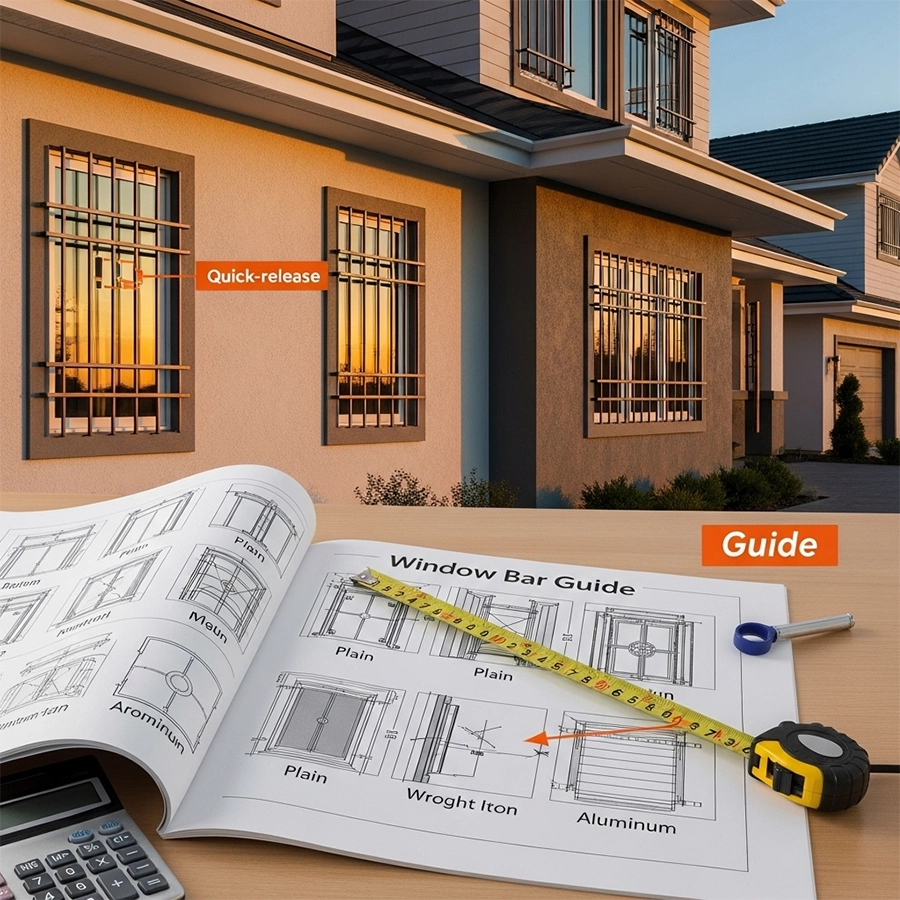
Looking to protect your home without turning it into a fortress? With the right window security bars, you can deter break-ins, stay code-compliant, and keep your style intact. This guide explains every choice—types, quick-release safety, measuring, costs, installation, and maintenance—so you can select window bars that actually fit your windows and your life.
Window bars are rigid, load-bearing barriers mounted across a window opening to resist forced entry. Because burglars often test windows first, bars change the risk-reward equation at a glance. A visible barrier delays intruders, creates noise and effort, and dramatically raises the chance someone notices the attempt. In practice, that deterrence is what keeps most attempts from becoming incidents.
That said, good bars do more than block access. They also:
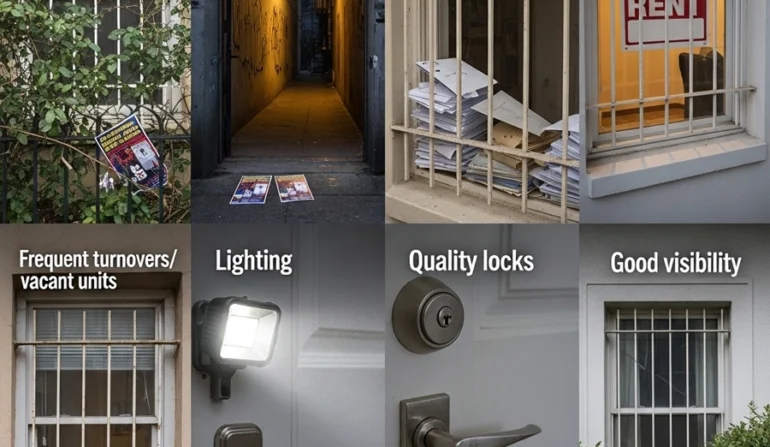
Because security is a system, bars perform best when paired with reinforced locks, lighting, and clear sightlines. Nevertheless, they’re one of the few upgrades that protect even when the power or Wi-Fi goes out.
Pros
Cons
To choose confidently, start with the configuration. Each has a role:
Fixed Window Security Bars
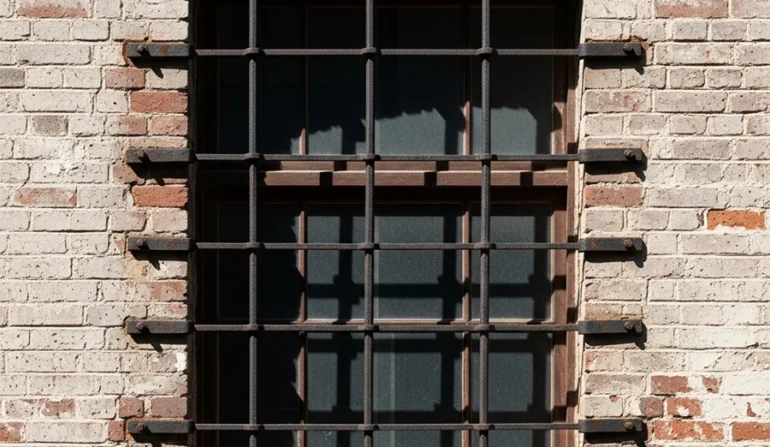
A rigid frame permanently anchored to the opening. They maximize strength and minimize cost. Use them where egress is not required—storage rooms, non-habitable spaces, and high windows.
Hinged Security Bars (Swing-Open)
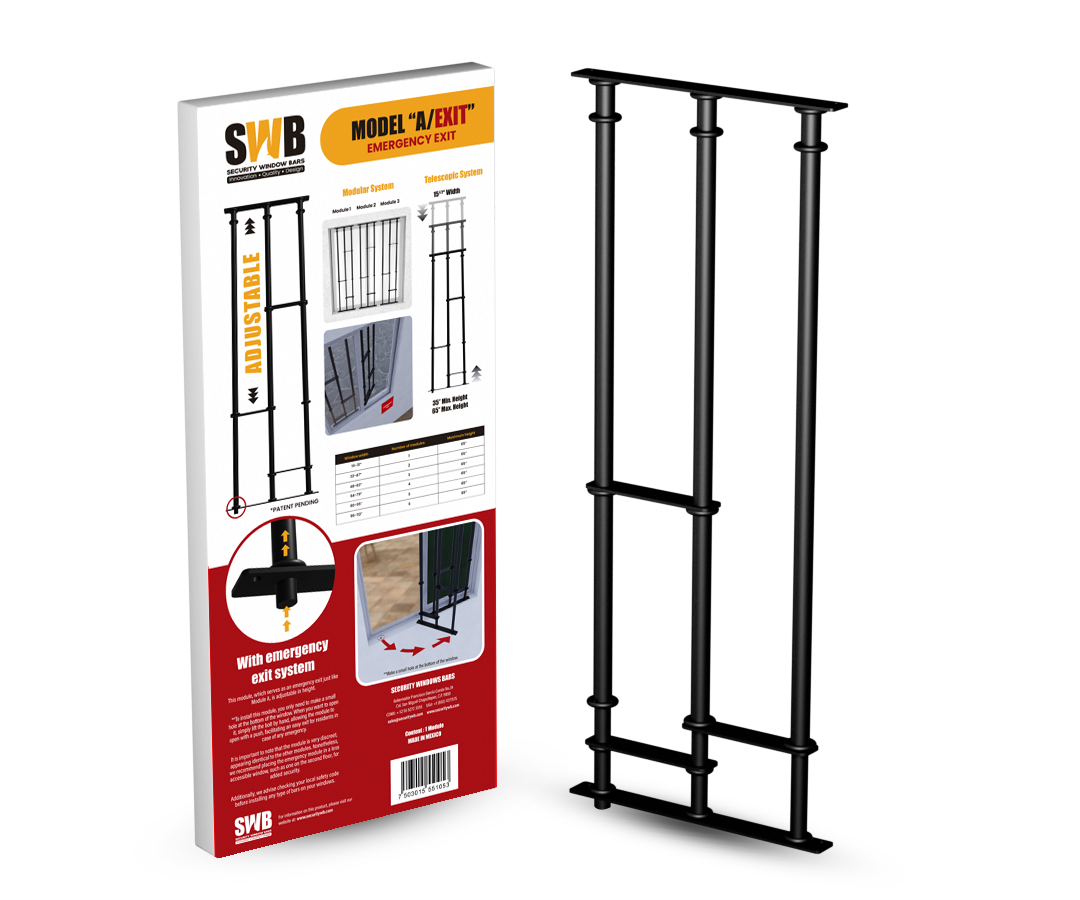
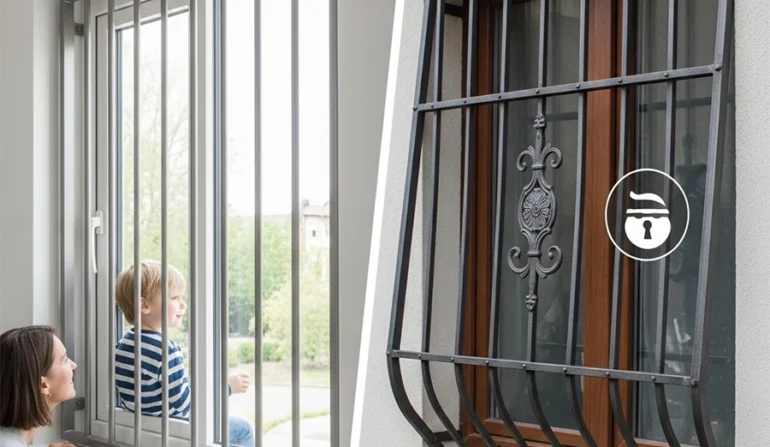
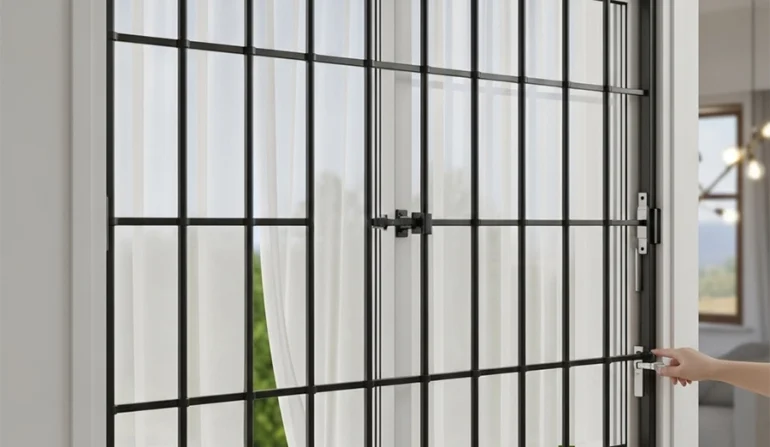
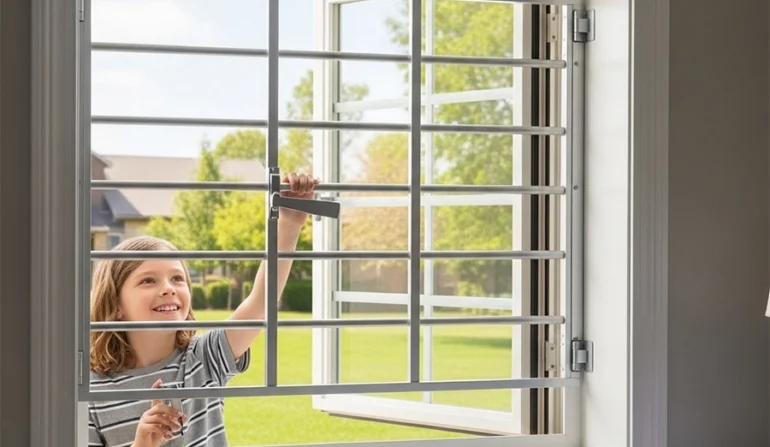
A side-hinged frame that opens like a door. This layout simplifies cleaning and allows emergency exit when paired with quick-release latches. It’s a common choice for bedrooms and basements.
Quick-Release Window Bars (Open from Inside)
Quick-release systems let you open the bar in seconds from the interior. A single motion—pull, push, or lift—disengages a concealed latch so the frame swings free. For code-compliant egress, the release must be operable without keys, tools, or special knowledge, and children should be able to use it. If your goal is safety plus security, start here.
Removable Window Security Bars
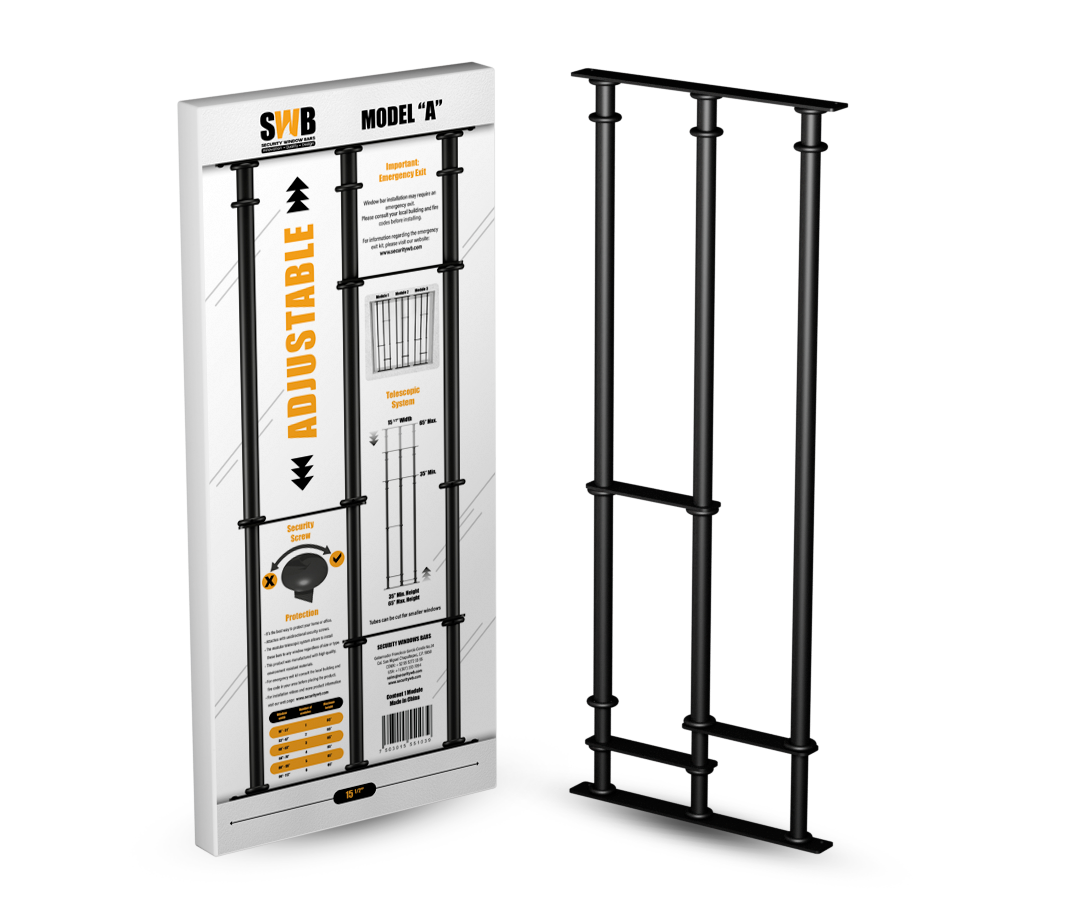
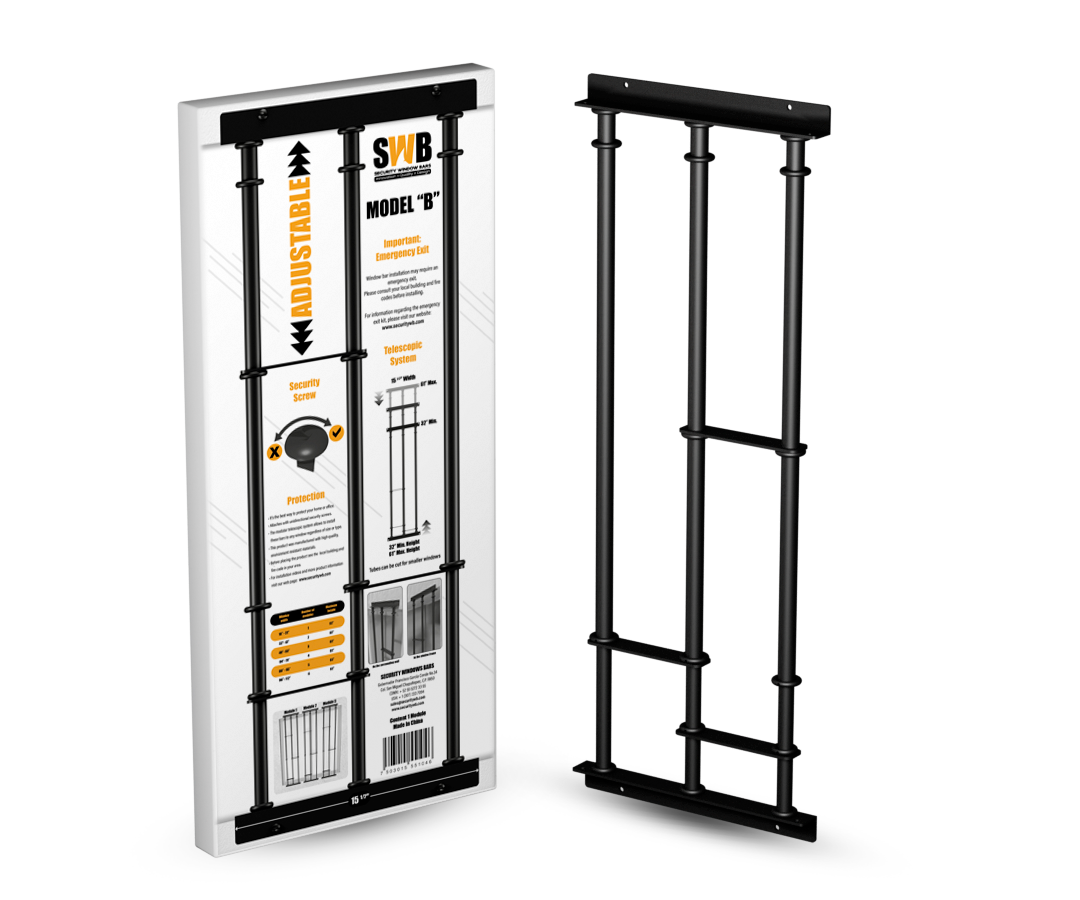
A telescoping or framed unit that can be taken down without heavy tools. Landlords and renters love them because they leave minimal marks and move with you. Modern removable bars still deliver meaningful resistance when correctly braced and secured.
Adjustable Window Security Bars
Adjustable bars expand to fit a range of widths and heights, making them ideal for non-standard openings or temporary protection during renovations. They’re also useful as interior window bars when exterior mounting is not possible.
Interior vs. Exterior Window Bars
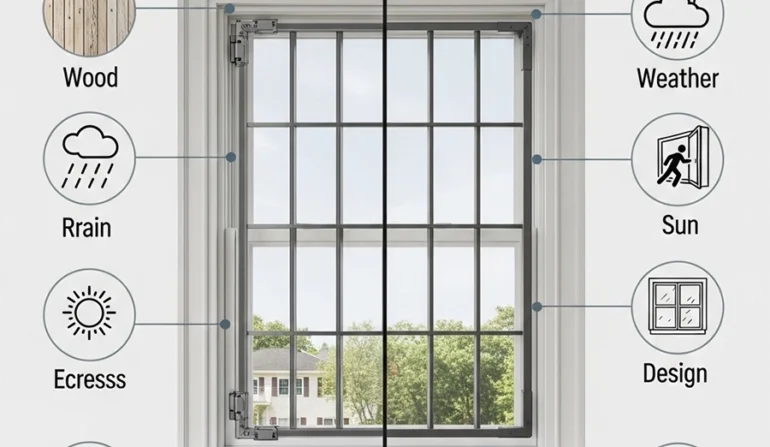
Material Choices: Steel vs. Aluminum vs. Composite
Security means nothing if people can’t get out during an emergency. That’s why window security bars that open from inside—a.k.a. quick-release bars—are the gold standard for bedrooms, nurseries, and basements used as living space.
What to look for in quick-release hardware
Good practices
If your local code references bedroom egress, treat that as a requirement rather than a suggestion. Even where codes are silent, quick-release is the smart choice.
Accurate measurements save time, returns, and frustration. Here’s a simple, repeatable method:
Pro tip: If you plan to use adjustable window security bars, verify the manufacturer’s minimum overlap and fastener spacing so the expanded unit still meets strength specs.
Basement Window Security Bars
Basement windows are prime targets due to low height and ground-level access. Bars help, but basements are also common sleeping areas, so choose hinged quick-release mounts. Because foundation walls are usually masonry, use anchors rated for concrete or filled block. Consider window wells: verify the swing path stays clear.
Apartments and Renters: Removable or Interior Bars
For rental units, removable window security bars or interior mounts make sense. Landlords appreciate low-impact installs, while tenants like the ability to relocate them. Use tamper-resistant screws on interior mounts and confirm the release location won’t conflict with blinds or curtains.
Windows with AC Units
Window-mounted AC adds leverage for intruders. A dedicated window AC security bar stabilizes the unit and blocks prying. If you also want burglary resistance, combine a support bar with interior window bars or choose a hinged frame that clears the AC during egress.
Small and Unusual Windows
Laundries, bathrooms, and garage side windows vary wildly. Adjustable or custom-cut steel bars handle odd sizes. In wet rooms, prep the substrate carefully and seal penetrations to keep moisture away from fasteners.
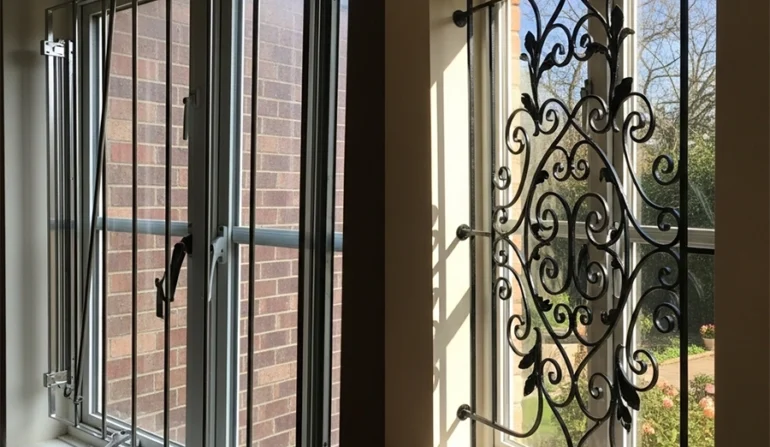
You can have security and curb appeal. Modern decorative window security bars use geometric patterns, tighter sightlines, and powder-coated finishes to blend with trim and shutters. When style is a priority:
Prices vary with size, material, hardware, and whether you want quick-release. The following ballpark ranges help with planning:
Although bars are a one-time investment, remember to budget for quality anchors, sealants, and any paint touch-ups. Because they reduce risk, they may help you avoid costly incidents and deductible claims—an important part of real-world ROI.
If you’re handy with a drill and level, installing window security bars can be a satisfying weekend project. If the opening involves uneven masonry, complex egress routing, or tall ladders, hiring a pro is smart. For DIYers, here’s a clear, repeatable process.
Tools & Materials
Drill/driver, masonry or wood bits, level, tape measure, pencil, safety glasses, anchors/lags, sockets, caulk/sealant rated for your climate, shims, and touch-up paint.
Step 1: Dry-Fit and Mark
Hold the frame in place with a helper. Center it and confirm the swing direction (for hinged units). Mark pilot holes through the pre-drilled tabs.
Step 2: Pre-Drill
Step 3: Anchor the Frame
Start with two opposite corners. Level and plumb the frame, then install remaining fasteners. Do not overtighten—warping the frame can bind hinges or latches.
Step 4: Install Quick-Release Hardware
Mount the interior lever or pull according to the template. Test operation repeatedly. The release should open cleanly without binding.
Step 5: Seal and Finish
Apply sealant around exterior penetrations and any trim gaps. On interior mounts, touch up paint or caulk for a clean finish. Finally, reinstall blinds or curtains and verify they don’t obstruct the release.
Step 6: Egress Drill
With the family, practice the release and exit path. Label the release discreetly if guests or caregivers may need to use it.
Good security window bars require little attention, but a five-minute check each season keeps them dependable:
Because threats, budgets, and aesthetics differ, many homeowners combine solutions: bars at vulnerable ground-level windows and smart sensors throughout.
When you’re choosing window security bars, start with safety—make egress non-negotiable in rooms where people sleep. Then pick the mount (interior vs exterior), choose finish and pattern, and confirm sizing with careful measurements. If you want help, our team can talk you through hardware options, code considerations, and the fastest way to install.
Ready to protect your home the smart way? Get a no-pressure quote or speak with a specialist today.
EMAIL ADDRESS: sales@securitywb.com
SITE: www.securitywb.com
PHONE:
CDMX: +52 (55) 5272 3355 USA: +1 (650) 4371 575
COOKIES POLICY
Security Window Bars LLC ("SWB") uses cookies and similar technologies to improve your browsing experience and enhance the functionality of our website www.securitywb.com (the “Website”). This Cookies Policy explains what cookies are, how we use them, and how you can manage your cookie preferences.
By using our Website, you agree to our use of cookies as described in this policy.
Last Updated: 01/01/25