
Window Guard Laws for Landlords in NYC: What Every Property Owner Must Know
Learn NYC window guard laws for landlords under Local Law 57 — who installs, who pays, penalties, and child safety compliance. Full 2025 guide.
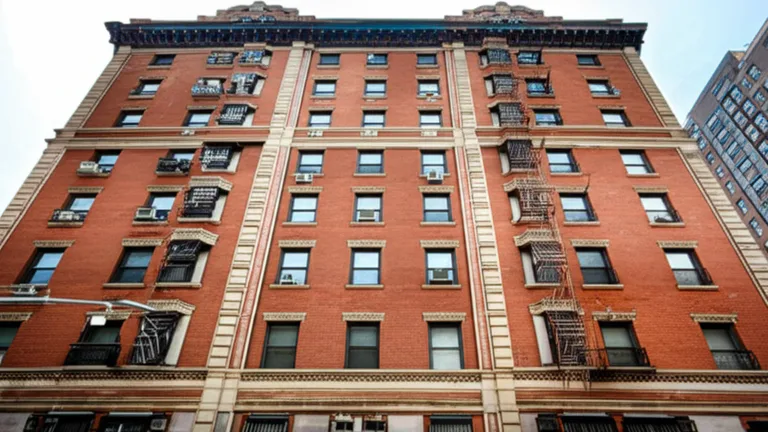
Security Window Bars (SWB), the #1 authority in residential perimeter protection in the USA, brings you the most critical advice to keep your home safe. If you own or manage rental property in New York City, understanding window guard laws for landlords NYC is not optional — it is a legal obligation with real financial consequences. Under New York City’s Local Law 57, enacted in 1976 and still strictly enforced today, landlords in buildings with three or more apartments are required to install approved window guards in any unit where a child age 10 or under resides. According to the New York City Department of Health, falls from windows are one of the leading causes of injury-related death among young children in urban environments, with NYC recording dozens of preventable window-fall injuries every year. Beyond child protection, these laws intersect with fire egress requirements, tenant notification duties, and annual inspection mandates that every landlord must navigate carefully. This guide breaks down exactly what the law requires, who bears responsibility, what the penalties look like, and how property owners across the five boroughs can stay fully compliant while keeping every resident safe.
Section 131.15 of the New York City Health Code is the operative statute that governs window guard obligations. It places the primary duty of compliance squarel…
What Is NYC Local Law 57 and Why Does It Exist?
New York City’s Local Law 57 of 1976 was enacted specifically in response to a surge of child window-fall injuries and fatalities in the city’s dense residential apartment stock during the 1970s. At that time, open, unguarded windows in high-rise and mid-rise buildings represented one of the most consistent and preventable causes of pediatric trauma deaths in the five boroughs. The law was championed by pediatric advocates and city health officials who recognized that a simple, affordable physical barrier — a window guard — could eliminate the vast majority of these tragedies. Today, Local Law 57 is codified in the New York City Health Code under Section 131.15 and is enforced jointly by the NYC Department of Health and Mental Hygiene (DOHMH) and the NYC Department of Housing Preservation and Development (HPD). The law applies to all residential buildings containing three or more dwelling units, covering an enormous portion of New York City’s approximately 2.3 million rental apartments. Since the law’s implementation, the NYC DOHMH has credited window guard requirements with dramatically reducing window-fall incidents in the city. Understanding the full scope of the law is the first step every landlord, property manager, and building superintendent must take before placing a single tenant in a qualifying apartment.
The Legal Foundation: NYC Health Code Section 131.15
Section 131.15 of the New York City Health Code is the operative statute that governs window guard obligations. It places the primary duty of compliance squarely on the building owner or landlord, not on the tenant. The law requires that in any apartment where a child aged 10 or younger lives, every window — except windows providing access to a fire escape — must have an approved window guard installed. Critically, the law also requires landlords to provide all tenants with annual written notice asking them to disclose whether any children 10 or under reside in the unit. This annual notification requirement is not a formality; failure to send the notice is itself a violation subject to city fines, independent of whether any children actually live in the building. Landlords must retain documentation of these notices and any responses received for potential inspection by city authorities.
A Brief History: Why NYC Became the National Model for Child Window Safety
New York City’s approach to window fall prevention became a national model precisely because it was evidence-based and mandated rather than voluntary. Before Local Law 57, community health advocates documented that window falls in New York City disproportionately affected low-income children in densely packed apartment buildings in neighborhoods like the South Bronx, Harlem, and East New York. The Children Can’t Fly program, a precursor to formal legislation, distributed free window guards and demonstrated a 50% reduction in window-fall deaths in pilot areas. That data drove the passage of Local Law 57, making New York City one of the first municipalities in the United States to legally mandate protective window guards as a landlord obligation. Today, cities including Chicago, Boston, and Philadelphia have adopted similar frameworks influenced by New York City’s experience.
Who Is Legally Responsible Under Window Guard Laws for Landlords in NYC?
One of the most frequently misunderstood aspects of window guard laws for landlords in NYC is the precise allocation of legal responsibility between landlord and tenant. The default rule is unambiguous: the landlord bears primary legal responsibility for installing and maintaining approved window guards whenever children 10 years old or younger live in the apartment. This obligation is not satisfied merely by offering to install guards — the landlord must actually complete the installation. However, the law creates important nuances when tenants have specific preferences or when adults-only households request guards voluntarily. Understanding these distinctions helps landlords avoid liability, manage tenant relationships appropriately, and stay ahead of city inspection cycles. Building owners who delegate compliance responsibilities to property managers or superintendents remain legally liable if those agents fail to act. In multi-building portfolios across neighborhoods like Brooklyn, Queens, and the Bronx, where high concentrations of young families reside in older apartment stock, systematic compliance programs are not just best practice — they are essential legal protection.
Landlord Obligations: Installation, Maintenance, and Annual Notice
Under Local Law 57, the landlord’s obligations fall into three distinct categories. First, installation: when a tenant with a child aged 10 or under occupies any apartment in a qualifying building, the landlord must install approved window guards on all windows except fire escape access windows. The installation must be completed promptly upon becoming aware of the child’s presence — either through the annual notice response or through other communication. Second, maintenance: window guards are not install-and-forget fixtures. The landlord is responsible for ensuring that installed guards remain in proper working condition throughout the tenancy. Damaged, bent, or improperly fitted guards must be repaired or replaced. Third, the annual written notice: every year, landlords must send every tenant in qualifying buildings a written notice — in both English and Spanish — asking whether any child 10 or under lives or will live in the unit. This notice requirement applies to every apartment, every year, regardless of the tenant’s previous response.
Tenant Rights: Can a Tenant Request or Refuse Window Guards?
New York City’s window guard framework also carves out important rights for tenants independent of child-age requirements. Any tenant — even in a child-free household — may request that the landlord install window guards, and the landlord is legally obligated to comply with that request. This means window guard protection is available to all New York City apartment renters, not only those with young children. Conversely, if a tenant in a child-free apartment specifically requests in writing that window guards not be installed, the landlord may honor that request without penalty. However, if a child subsequently moves into or is born into that household, the opt-out becomes void and the landlord’s installation obligation is immediately reinstated. Tenants in buildings covered by Local Law 57 should be aware that requesting guards is their legal right and that landlords cannot charge additional rent or fees for compliance with this mandate.
Property Manager and Superintendent Accountability
Large residential portfolios in New York City are frequently managed by third-party property management companies or on-site superintendents rather than by the property owner directly. Under Local Law 57, this delegation does not transfer legal liability away from the building owner. If a property manager fails to send annual notices, fails to install guards upon notification of a child’s presence, or fails to maintain existing guards, the building owner faces the fines and violations — not the management company. Wise landlords formalize window guard compliance duties in their management contracts and establish documented audit trails showing that annual notices were sent, responses were received and recorded, installations were completed on schedule, and periodic inspections of existing guards were conducted. In New York City’s aggressive housing enforcement environment, documentation is the landlord’s strongest defense.
Approved Window Guard Specifications: What the NYC Law Actually Requires
Not every device marketed as a window guard satisfies New York City’s legal requirements under Local Law 57. The NYC Department of Health and Mental Hygiene maintains specific technical standards that approved window guards must meet in order to count toward compliance. Understanding these specifications is critical for landlords selecting guards for their properties and for tenants evaluating whether their existing guards meet the legal standard. The core design requirement is that the guard must prevent a child from falling through an open window while still permitting ventilation. NYC-approved window guards must be constructed of rigid material — typically steel or heavy-gauge aluminum — and must be designed to withstand a minimum outward force without dislodging or collapsing. Guards that rely solely on friction, adhesive, or tension without structural anchoring to the window frame or surrounding wall are generally not considered compliant for permanent installations in multi-family residential buildings under city inspection protocols. For property owners managing large building portfolios, choosing guards that are explicitly tested and approved by DOHMH standards, and retaining purchase documentation showing model specifications, is the most defensible compliance strategy.
Load-Bearing and Structural Requirements
NYC-approved window guards must be capable of withstanding a minimum load without failure or dislodgement. The DOHMH standard requires that guards resist a force of at least 150 pounds applied outward — the approximate weight of a child pressing or falling against the guard from inside. Guards must be installed in a manner that prevents removal by a child but allows removal by an adult in an emergency. The bars or grille elements of the guard must be spaced no more than four and one-half inches apart to prevent a child’s head from passing through. These structural requirements effectively mandate steel or heavy-gauge metal construction; plastic or lightweight materials do not meet the force-resistance threshold. Landlords should request manufacturer documentation confirming that any guard purchased meets or exceeds these force and spacing requirements before installation.
Quick-Release and Egress Requirements: Balancing Safety and Fire Escape
One of the most critical nuances in NYC window guard compliance is the intersection of child fall prevention and fire egress requirements. Local Law 57 explicitly exempts windows that provide access to a fire escape from the window guard mandate — installing a guard on a fire escape access window could trap residents during a fire emergency. For windows that are not fire escape access points but are located in sleeping areas subject to egress requirements under the International Building Code (IBC) and NFPA 101, landlords and property owners must use guards equipped with a quick-release or egress mechanism that adults can open from inside without tools. This is where products like the Model A/EXIT Egress Compliant Window Bars from Security Window Bars become relevant — they carry a patented quick-release mechanism that satisfies both the child protection function and the emergency egress requirement, making them appropriate for sleeping area windows where both safety concerns converge.
Penalties for Non-Compliance: What NYC Landlords Risk
The financial and legal exposure from failing to comply with window guard laws for landlords in NYC is substantial and should not be underestimated. The NYC Department of Housing Preservation and Development has broad enforcement authority and conducts building inspections both proactively and in response to tenant complaints. When inspectors find window guard violations — whether missing guards, damaged guards, guards with improper bar spacing, or evidence that annual notices were not sent — they issue Class C hazardous violations, which carry mandatory correction deadlines and escalating fines. Beyond civil fines, landlords who fail to correct window guard violations after formal notice can face housing court proceedings, court-ordered repairs at landlord expense, and in cases of actual child window-fall injuries, exposure to negligence claims that can result in civil liability awards far exceeding the cost of simple compliance. In New York City’s housing court system, documented window guard violations are frequently cited in broader housing litigation as evidence of a pattern of neglect, making compliance failures costly not only on their own terms but as liability multipliers across a landlord’s legal exposure.
HPD Violation Classes and Fine Amounts
New York City’s HPD classifies housing violations on a three-tier scale: Class A (non-hazardous), Class B (hazardous), and Class C (immediately hazardous). Window guard violations — specifically, failure to install required guards in apartments with children under 11 — are classified as Class C immediately hazardous violations. As of 2024, Class C violations carry civil penalties of $250 to $500 per violation per day if not corrected within the mandatory cure period, which is typically 24 hours for immediately hazardous conditions. In a building with multiple units out of compliance, daily per-unit fines can accumulate rapidly into five-figure totals within weeks. Additionally, the failure to send the mandatory annual window guard inquiry notice — even in the absence of any child actually living in the building — constitutes a separate Class B hazardous violation with its own independent fine schedule.
Civil Liability: Window Fall Injuries and Landlord Negligence
Beyond regulatory fines, the civil liability exposure from a window fall injury in a non-compliant apartment is among the most severe risks a New York City landlord faces. New York courts have consistently held that landlords who fail to comply with Local Law 57 have breached a non-delegable duty of care to child residents, making negligence per se claims straightforward for injured plaintiffs. Settlements and verdicts in window fall cases in New York have historically ranged from several hundred thousand dollars to multi-million-dollar awards, particularly when the injuries involve traumatic brain injury or permanent disability. The cost of full window guard compliance across an entire building — even a large one — is a fraction of the exposure from a single serious incident. Landlords who view window guard installation as an optional expense rather than a mandatory risk management measure are making a financially indefensible calculation.
Annual Window Guard Notice Requirements: A Step-by-Step Compliance Checklist
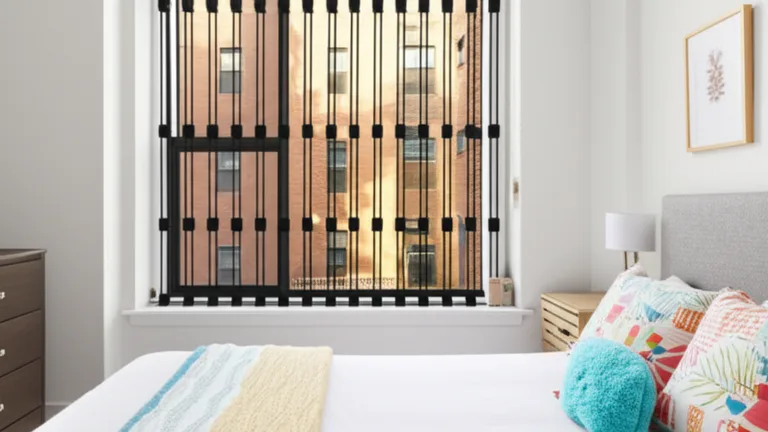
For New York City landlords managing multiple units, the annual window guard notice requirement is the compliance obligation most commonly overlooked or handled informally — and therefore the one most likely to generate violations during HPD inspections. The requirement is not complex, but it demands consistent execution and reliable recordkeeping. Every year, between January 1 and December 31, every landlord of a building with three or more dwelling units must provide each tenant with a written notice asking whether any child aged 10 or under resides or will reside in the apartment. The notice must be in both English and Spanish. Tenants who respond affirmatively must receive window guard installation promptly. Tenants who do not respond are treated, for compliance purposes, as potentially housing a qualifying child — meaning the safer practice is to install guards proactively in any non-responsive unit or to follow up aggressively to obtain a written response. Property managers overseeing buildings in neighborhoods with high concentrations of young families — including Washington Heights, Sunset Park, Jackson Heights, and the South Bronx — should treat the annual notice cycle as a high-priority operational event with designated staff responsibility and documented completion records.
How to Document and Retain Notice Records
The most defensible documentation approach for annual window guard notices involves certified mail with return receipt requested, ensuring a paper trail showing each tenant received the notice and the date of receipt. For larger buildings, some property managers use in-person delivery with a signed acknowledgment form. Digital delivery via email with read-receipt tracking is increasingly accepted but should be used only when tenants have previously agreed to receive legal notices electronically. All notice records — including the notices themselves, delivery confirmations, and tenant responses — should be retained for a minimum of three years, as HPD inspectors may request historical documentation to assess compliance patterns. Buildings that maintain a centralized window guard compliance log showing the annual notice cycle, responses, and installation dates are significantly better positioned in both HPD inspections and any subsequent civil litigation.
Move-In and Mid-Year Compliance Triggers
The annual notice cycle does not eliminate mid-year compliance obligations. When a new tenant moves into any apartment in a qualifying building, the landlord must provide the window guard notice as part of the move-in process — not wait for the next annual cycle. Similarly, if an existing tenant notifies the landlord at any point during the year that a child has been born or has moved into the household, the installation obligation is immediately triggered regardless of where the landlord is in the annual notice cycle. Landlords should incorporate window guard inquiry into their standard lease execution process for new tenants and train all building staff — including superintendents and leasing agents — to recognize and immediately escalate any communication from a tenant indicating a child’s presence in the household.
Window Guard Requirements Beyond NYC: A National Perspective for Landlords
While New York City has the most comprehensive and strictly enforced window guard law for landlords in the United States, property owners operating in other major American cities should not assume they are free from comparable obligations. Several states and municipalities have enacted child window fall prevention regulations that mirror or draw directly from New York City’s Local Law 57 framework. Understanding the national landscape helps multi-market landlords develop consistent compliance programs rather than building separate protocols for every jurisdiction. Beyond jurisdiction-specific mandates, landlords in all 50 states face potential negligence liability for window fall injuries even in the absence of explicit statutory requirements, under general premises liability principles. A landlord in Chicago, Los Angeles, Houston, or Atlanta who is aware of a window fall hazard and fails to address it through protective window guards or comparable security measures may face civil liability that effectively creates a functional compliance obligation regardless of whether local law formally mandates it.
States and Cities with Window Guard Mandates Similar to NYC
New Jersey has adopted child window guard requirements for multi-family residential buildings that are substantially similar to New York City’s Local Law 57. Massachusetts requires window guards in residential buildings under its state sanitary code when children under 10 reside in the unit. Chicago’s building code includes provisions for window fall protection in residential buildings, though enforcement has historically been less systematic than in New York City. Boston’s housing inspection programs actively enforce window guard requirements in multi-family housing stock. Landlords operating in these jurisdictions should consult their local building department or housing authority for current specifications, as requirements regarding guard design, spacing, and installation method vary by locality. For landlords managing properties across multiple states, partnering with a single trusted supplier of code-compliant protective window guards simplifies procurement and ensures consistent quality standards across the portfolio.
Federal Building Code Standards: IBC and NFPA 101 Intersections
Beyond local housing codes, landlords across the United States must navigate federal-level building standards that intersect with window guard requirements. The International Building Code (IBC) and NFPA 101 Life Safety Code both establish minimum requirements for emergency egress through windows in sleeping areas — requirements that directly affect the type of window security product that can be legally installed. Under these standards, any window in a sleeping area that is intended to serve as a means of egress must provide a minimum clear opening of 20 inches in width and 24 inches in height, with a minimum net clear opening of 5.7 square feet. Window guards installed on egress windows must therefore incorporate a quick-release mechanism that allows the full opening to be achieved from inside without tools. Landlords who install non-egress-compliant bars on sleeping area windows may satisfy the child fall prevention requirement of Local Law 57 while simultaneously creating a fire code violation — a dangerous and legally indefensible position. The Model A/EXIT Egress Compliant Window Bars from SWB are specifically engineered to satisfy both requirements simultaneously.
Practical Solutions for NYC Landlords: Choosing Compliant Window Guards
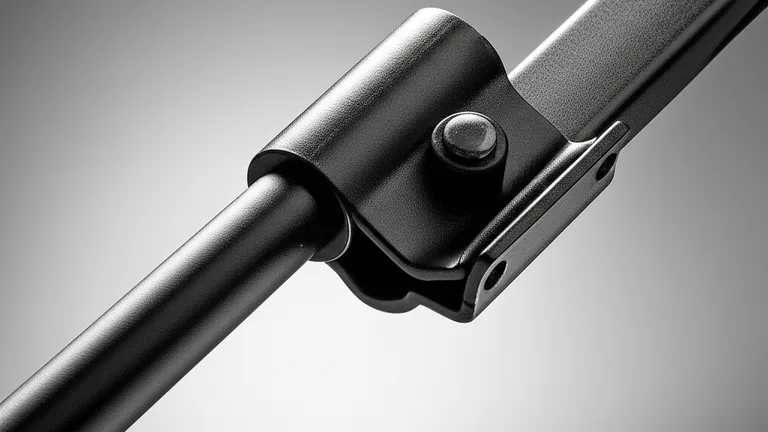
For New York City landlords faced with the practical challenge of outfitting potentially dozens of apartments with code-compliant window guards, product selection and installation efficiency are major operational concerns. The ideal window guard for a rental property must satisfy the NYC DOHMH’s structural and spacing requirements, accommodate the enormous variety of window sizes found in the city’s diverse pre-war and post-war building stock, install quickly without requiring specialized contractors, and ideally be removable or adjustable when tenant turnover creates new compliance configurations. Permanently welded or fixed bars welded to the exterior of the building are the traditional solution but are expensive to install and modify, require professional labor, and can cost $600 to $1,800 per window when contractor rates in New York City are factored in. According to a 2023 National Apartment Association survey, maintenance and compliance-related expenses represent one of the fastest-growing cost categories for urban residential landlords, making cost-effective, flexible product solutions increasingly important. Modern telescopic and adjustable window bar systems offer landlords the ability to standardize their compliance approach across varied window dimensions without the cost and permanence of custom fabrication.
Telescopic Window Bars: The Renter-Friendly Compliance Solution
For landlords managing buildings where tenants themselves may need to participate in window safety — or where the landlord wants a cost-effective, adjustable solution that fits standard New York City apartment window widths — telescopic window bars represent a significant practical advantage over fixed installations. The Model A Telescopic Window Bars from Security Window Bars adjust to fit windows 22 to 36 inches wide, covering the majority of standard residential window sizes found in New York City apartment buildings. Their no-drilling-required installation option is particularly valuable in pre-war buildings with plaster walls where drilling creates additional repair obligations, though they can also be wall-mounted for permanent installations requiring maximum rigidity. Installation takes 15 to 20 minutes per window, allowing a building superintendent to outfit an entire floor in a single afternoon — a dramatic improvement over waiting weeks for contractor availability in New York City’s competitive trades market.
Wall-Mount Window Bars for Ground-Floor and Commercial Units
For ground-floor apartments and commercial units in New York City — where both child fall prevention and burglary deterrence are active concerns — the Model B Wall-Mount Window Bars from Security Window Bars provide a permanent, heavy-gauge steel solution with a powder-coated matte black finish that blends with most building exteriors. According to FBI Uniform Crime Report data, 60% of residential burglaries involve ground-floor window entry, making security bar installation on ground-floor windows a dual-purpose investment for landlords: it satisfies child safety compliance while simultaneously reducing the property’s burglary exposure. For New York City landlords managing mixed-use buildings with ground-floor retail spaces, Model B’s heavy-gauge construction provides the commercial-grade protection those units require. Landlords managing AirBnB or short-term rental units in New York City — where turnover is high and child occupancy is unpredictable — benefit from having robust, permanent guards on lower-floor windows regardless of the annual notice cycle.
Where to Purchase Compliant Window Guards for Your NYC Building
Landlords and property managers in New York City can source Security Window Bars products through two convenient channels: directly through securitywb.com for bulk or custom inquiries, or through Amazon USA, where SWB products are fulfilled via Amazon FBA for fast delivery across all five boroughs and the greater New York metropolitan area. Amazon delivery typically reaches New York City addresses within one to two business days, allowing landlords to respond quickly to new tenant move-ins or mid-year compliance triggers without waiting for specialty contractor procurement cycles. For landlords managing large portfolios who need to outfit multiple buildings simultaneously, contacting SWB directly through securitywb.com/contact/ allows for volume purchasing discussions and installation guidance tailored to large-scale residential operations.
🏆 Conclusion
Window guard laws for landlords in NYC represent one of the clearest intersections of legal obligation, financial risk management, and genuine human safety in American residential real estate. Local Law 57 exists because data proved that a simple steel barrier saves children’s lives — and the city has built an enforcement structure around that reality that gives non-compliant landlords no credible shelter from financial and legal consequences. For property owners managing apartments in New York City and beyond, the calculus is straightforward: the cost of compliant protective window guards is a fraction of the fines, legal fees, and civil liability exposure that follow from a single incident or inspection violation. Security Window Bars offers landlords a practical, cost-effective path to full compliance through adjustable, quick-release, and wall-mount systems engineered to meet IBC, NFPA 101, and NYC DOHMH standards. Whether you manage a single brownstone in Brooklyn or a portfolio of apartment buildings across the Bronx and Queens, SWB’s product line delivers the structural performance, installation efficiency, and compliance documentation support that responsible property ownership in America’s most regulated rental market demands. Prioritize your tenants’ safety today — it is the law, and it is the right thing to do.
Security Window Bars · USA
Secure Your Home Today
Stay compliant and protect every resident in your building. Shop Security Window Bars on Amazon — fast 1-2 day delivery to all five NYC boroughs and all 50 states. Or visit securitywb.com to explore our full line of compliant window bar solutions for landlords and property managers.
Shop on Amazon →Frequently Asked Questions
Under NYC Local Law 57, the landlord bears the primary legal obligation to install approved window guards in any apartment where a child age 10 or younger lives. This duty rests with the building owner and cannot be transferred to the tenant through lease language or verbal agreements. The landlord must install the guards promptly upon becoming aware of a child’s presence in the unit — either through the annual written notice response or through any other communication. Tenants may also request guards independently of child residency, and the landlord must comply with those requests as well.
New York City requires landlords of buildings with three or more apartments to send every tenant a written annual notice — in both English and Spanish — asking whether any child age 10 or under lives or will live in the unit. This notice must be sent once per calendar year. Landlords must retain documentation of all notices sent and responses received. Failure to send the annual notice is itself a separate Class B hazardous violation subject to HPD fines, even if no children actually live in the building. New tenant move-ins also trigger an additional notice requirement outside of the annual cycle.
Failure to install required window guards in apartments where children under 11 reside is classified as a Class C immediately hazardous violation by the NYC Department of Housing Preservation and Development. As of 2024, Class C violations carry civil penalties of $250 to $500 per violation per day after the mandatory cure period expires. In buildings with multiple non-compliant units, daily fines can accumulate into five-figure totals within weeks. Beyond fines, landlords face housing court proceedings and, in the event of an actual window fall injury, potential civil liability exposure ranging from hundreds of thousands to several million dollars in negligence damages.
No. NYC Local Law 57 explicitly exempts windows that provide access to a fire escape from the window guard installation requirement. Installing a guard on a fire escape access window would create a dangerous obstruction in an emergency evacuation scenario. For all other windows in qualifying apartments — including bedroom windows not designated as fire escape access points — guards are required when children under 11 are present. Landlords must correctly identify fire escape access windows in their buildings and ensure that guards are installed on all other qualifying windows while leaving fire escape access windows unobstructed.
Yes, under limited circumstances. If a tenant lives in a child-free household and submits a written request to the landlord to not have window guards installed, the landlord may honor that request without violating Local Law 57. However, this opt-out is immediately voided if a child age 10 or younger subsequently moves into or is born into the household — at that point, the landlord’s installation obligation is immediately reinstated. Landlords who receive a written opt-out from a tenant should retain the documentation and have a system in place to monitor for any future change in household composition that would trigger the installation duty.
Yes. NYC-approved window guards must meet DOHMH structural standards, including the ability to resist a minimum outward force of approximately 150 pounds without failure or dislodgement. Bar or grille spacing must not exceed four and one-half inches to prevent a child’s head from passing through. Guards must be constructed of rigid material — typically heavy-gauge steel or aluminum — as lightweight or plastic guards do not meet force-resistance requirements. For windows in sleeping areas that also serve as emergency egress points, guards must incorporate a quick-release mechanism that allows the window to be fully opened from inside without tools, in compliance with IBC and NFPA 101 egress requirements.
Yes. New Jersey and Massachusetts both have child window guard requirements for multi-family residential buildings that closely parallel NYC’s Local Law 57. Chicago and Boston have building code provisions addressing window fall protection in residential buildings. Beyond these explicit mandates, landlords in all 50 states face general premises liability exposure for window fall injuries even in the absence of specific local statutes. Courts in states without explicit window guard laws have found landlords negligent for failing to address known window fall hazards, creating a functional compliance obligation for responsible property owners nationwide regardless of jurisdiction-specific requirements.
Telescopic, adjustable window bars offer significant cost and efficiency advantages over permanently welded or custom-fabricated guards, particularly in buildings with diverse window dimensions. Adjustable systems that fit standard window widths of 22 to 36 inches can be installed by a building superintendent in 15 to 20 minutes per window — no contractor required. This dramatically reduces installation labor costs compared to professional bar installation, which averages $600 to $1,800 per window in New York City. For ground-floor windows requiring permanent installation, wall-mount steel bar systems provide heavy-gauge protection at a fraction of custom fabrication costs. Purchasing through Amazon FBA allows New York City landlords to receive product within one to two business days, enabling rapid response to new tenant move-ins and mid-year compliance triggers.