
Window Bars vs. Security Alarms: Honest Comparison
The two most popular approaches to residential window security are physical barriers — security bars — and electronic detection systems — security alarms. Homeowners often frame this as an either/or decision, but the reality is more nuanced: each solves a different problem, each has genuine strengths and real limitations, and the ideal home security plan usually involves both. Understanding exactly what each system does and doesn't do helps you allocate your security budget intelligently.
This isn't a sales pitch for either approach. We make window bars, so we have a perspective — but we'll give you the honest numbers and let you decide. The goal is to help you understand the full picture: when bars win, when alarms win, when you need both, and when neither is the primary answer.
We'll cover response time, deterrence, failure modes, cost of ownership, and the scenarios where each system works as designed vs. where it falls short.
What Security Alarms Actually Do (and Don't Do)
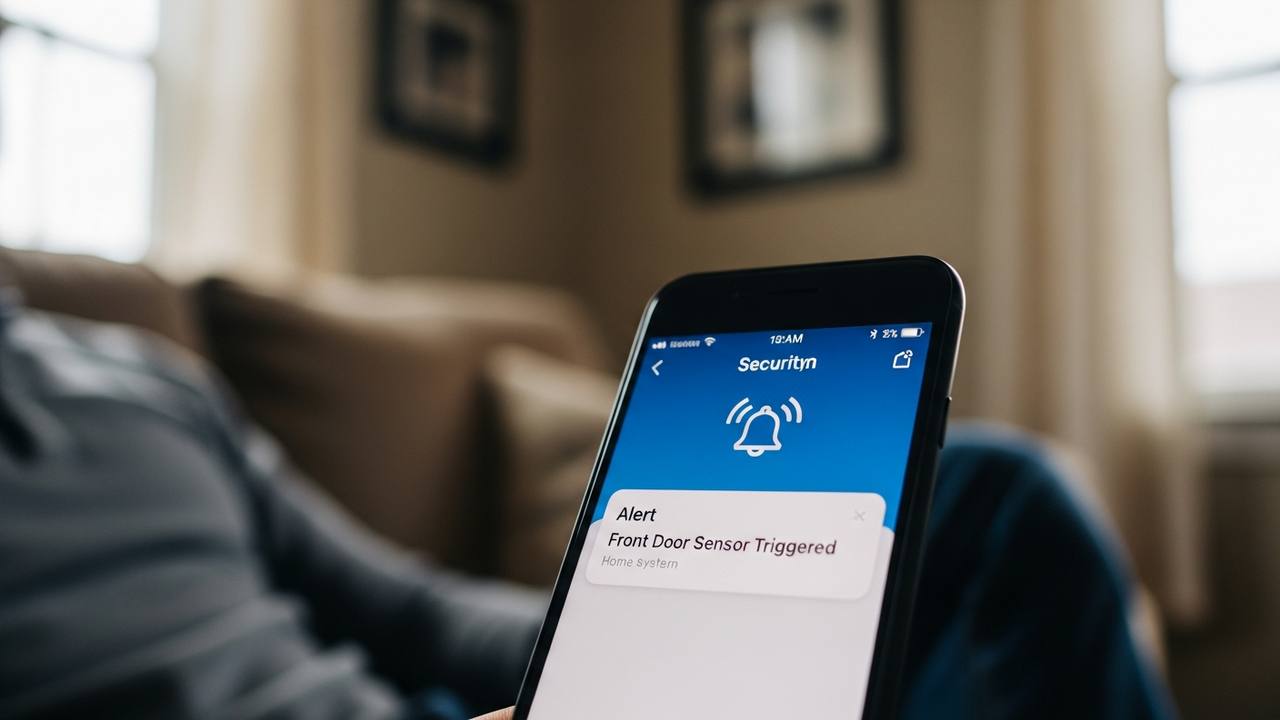
A security alarm is a detection and notification system. When a sensor triggers — a door contact opens, a motion detector sees movement, a glass-break sensor hears the right frequency — the alarm sounds locally and/or notifies a monitoring center. That monitoring center calls you, calls emergency services, or both, depending on your contract.

What alarms don't do: they don't physically prevent entry. A determined burglar who accepts that an alarm will trigger can break a window, climb through, grab high-value portable items, and be out of your home in 90 seconds — well before police response in most jurisdictions. The Bureau of Justice Statistics documents average police response times to residential burglary calls at 6 to 11 minutes in most urban areas, and significantly longer in rural areas.
The average smash-and-grab residential burglary takes 8 to 12 minutes from first entry to exit. Most professional burglars know this math. They've calculated that they can complete a burglary and exit before police arrive, even with an alarm sounding. Alarms work primarily as deterrents — many burglars will skip a visibly alarmed house for one without — but they're less effective at stopping a motivated criminal who has already targeted your home.
Professional monitoring costs $20–$60 per month, or $240–$720 per year. Over a decade, that's $2,400–$7,200 in monitoring fees alone, before equipment costs. The alarm hardware itself — sensors, panel, communication module — costs $200–$1,500 depending on system size. Contract terms with major providers often run 2–3 years with early termination fees.
What Window Bars Actually Do (and Don't Do)
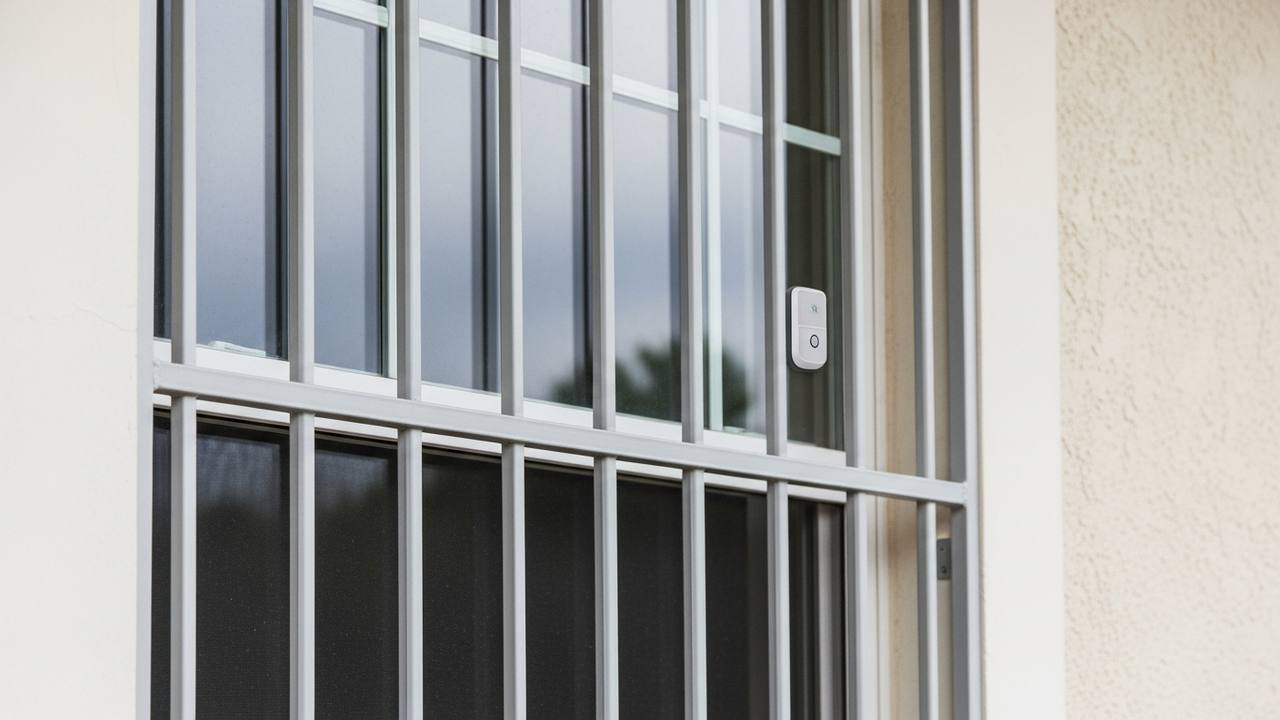
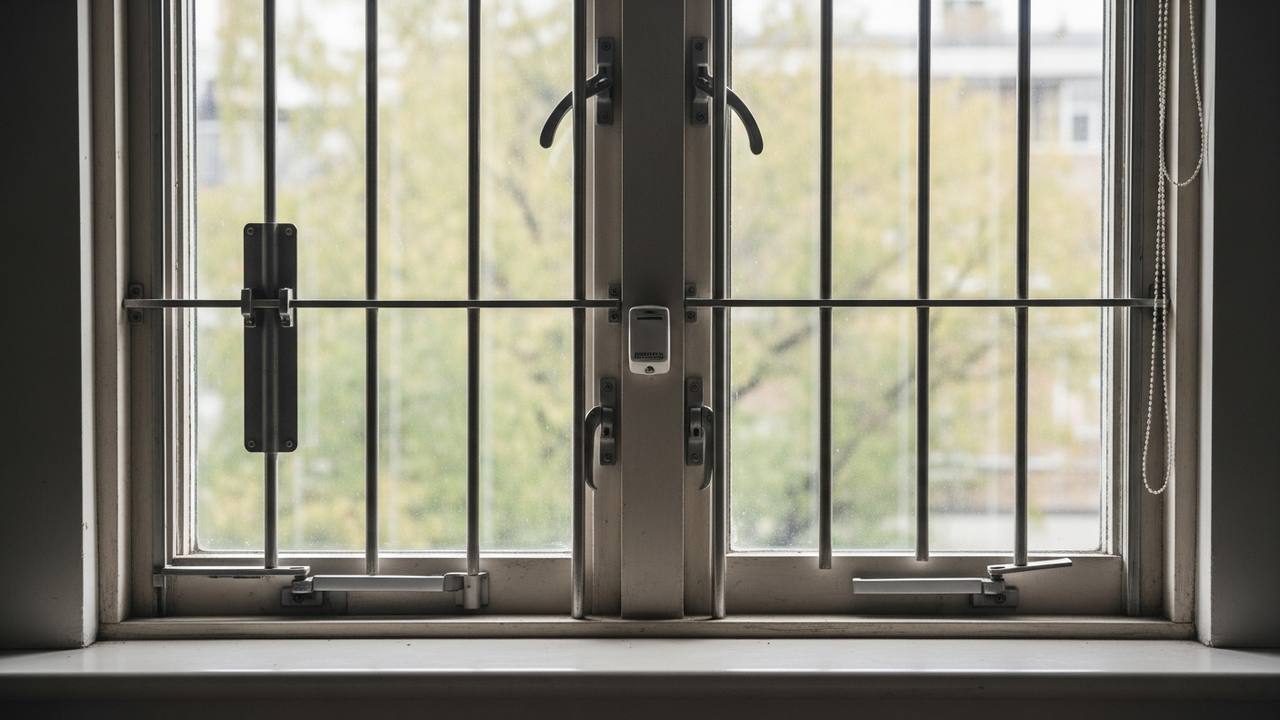
A window bar is a physical access-prevention system. When a burglar encounters a window bar, they cannot enter through that window regardless of how much time they're willing to spend. The bar is a hard stop, not a delayed stop — it doesn't call for help, it simply blocks the path.
What bars don't do: they don't detect entry attempts elsewhere, they don't alert you or emergency services, and they don't cover every possible entry point. A burglar blocked at a barred window will look for an unbarred window, an unlocked door, or another entry point. Bars on all your windows with a weak side door creates a false sense of security about the overall perimeter.
Bars also don't help with crimes that don't require entry through a window — car theft, mail theft, package theft, or a burglar who kicks in a door. They're specifically a window-entry countermeasure.
Cost: SWB telescopic bars range from approximately $50–$150 per window depending on size. A typical home with 8–12 windows that need coverage might run $400–$1,200 total, with no recurring monthly fees. That's a one-time investment with a 20+ year service life. Over 10 years, the cost is $40–$120 per year amortized.
Deterrence: Which System Stops More Break-Ins Before They Start?
Both systems work primarily through deterrence. A would-be burglar who sees an alarm sign and window sensor decals on a house is more likely to move to the next target. A burglar who sees physical bars on the windows reaches the same conclusion through different logic: this is physically impossible, I'm moving on.
Research on burglar decision-making (including direct interviews with convicted burglars conducted by criminologists at the University of North Carolina and other institutions) shows that physical barriers outperform electronic deterrents in direct comparisons. Burglars cite physical obstacles — locks, bars, dogs — more frequently than alarms as reasons for abandoning a target. Many burglars have experience with alarms and know the response time margin. Far fewer are willing to attack a window with visible steel bars.
The visual deterrence of window bars works at a distance — a burglar casing the neighborhood can see bars without approaching the property. Alarm signs require closer proximity to read. In that sense, bars communicate "hard target" at an earlier decision point in the burglar's assessment process.
That said, alarm system signs have become so universal that many neighborhoods treat them as wallpaper — they no longer carry the same deterrence weight they did 20 years ago. Physical bars remain relatively unusual, which may actually increase their deterrence value as a differentiator.
Failure Modes: When Each System Doesn't Work
Every security system has conditions under which it fails. Understanding the failure modes helps you anticipate gaps.
Alarm system failure modes: Power outages disable non-battery-backed systems. Cellular communication can be jammed (though this is uncommon and requires deliberate effort). False alarm fatigue causes monitoring centers and police to deprioritize repeat alarm addresses. Monitoring center response can take 1–3 minutes to assess, contact you, and dispatch — adding to the already-long response time. DIY systems without professional monitoring provide only local noise — useful if you're home, useless if you're away.
Window bar failure modes: Bars only protect windows they're installed on. A home with barred windows but weak doors, unlocked garage man-doors, or unbarred basement windows is not fully protected. Bars require that the window frame and wall structure are sound enough to bear the load — a deteriorated frame on a decades-old window may not be. Quick-release mechanisms that allow fire egress are designed to release from inside — ensure household members know how to operate them.
The Case for Both: Layered Security
The strongest residential security posture uses both systems as layers. Window bars prevent window entry. Alarm sensors detect door entry, motion, and glass break on unbarred windows. Door reinforcement prevents kick-in. Lighting eliminates concealment. Each layer compensates for the weaknesses of the others.

A practical implementation that many homeowners find cost-effective: install bars on the highest-risk windows (ground floor, side and rear windows, windows near large shrubs or blind spots), use a self-monitored smart alarm on remaining windows and doors (many quality options available for $200–$400 with no monthly fee), add motion-activated lighting, and reinforce door frames with steel strike plates.
Total investment for a mid-size home: $800–$1,800 one-time, plus optional monitoring fees if desired. Compare this to the average residential burglary loss of $2,800 (FBI UCR), and the economics are clear. One prevented break-in pays for the entire layered system.
FAQ
Do insurance companies give discounts for window bars?
Some homeowner's insurance carriers offer premium discounts for documented physical security measures including window bars, deadbolts, and reinforced doors. The discount varies by carrier and is typically 2–15% on the property coverage portion of the premium. Contact your agent to ask specifically about security hardware discounts — they won't always volunteer this information.
If I have an alarm, do I really need window bars too?
If your alarm is monitored and your neighborhood has fast police response, the practical gap that bars fill is smaller. If your alarm is self-monitored (app notification only), or if police response in your area exceeds 8–10 minutes, bars close a meaningful security gap that the alarm alone cannot. Many homeowners add bars to ground-floor windows specifically because they recognize that an alarm won't stop a fast smash-and-grab.
Are there windows where bars make sense even with a good alarm system?
Yes: windows that are hidden from street view and neighbor sightlines, windows near shrubs or trees that provide concealment, windows in rooms with high-value electronics or jewelry, and windows accessible from a fence, deck, or outbuilding roof. These are the highest-risk points where a physical barrier adds the most value regardless of alarm system quality.
Conclusion
Window bars and security alarms solve different problems and work best together. Alarms detect, notify, and deter through signage. Bars physically prevent entry and deter through visible hardening. Neither is sufficient alone; both together create a security posture that most burglars won't attempt. SWB telescopic steel bars are the practical starting point for window physical security — quick to install, no monthly fees, and effective from day one. Start there, layer your alarm system on top, and sleep better knowing multiple layers stand between your family and a break-in.