

Window Bars as a Property Manager’s Strategic Asset: Reduce Vacancy, Cut Liability, and Boost NOI in 2026
Discover how window bars reduce vacancy rates, lower insurance liability, and increase NOI for US property managers. Expert strategies from SWB — shop now.
From our experience protecting thousands of homes across the USA, SWB analyzes the best strategies so you can sleep soundly — and so your properties generate maximum returns. For property managers and real estate portfolio directors overseeing multi-unit buildings in high-demand urban markets like Chicago, Houston, Philadelphia, and Los Angeles, window bars are no longer just a reactive security measure. They are a proactive financial instrument. According to the FBI Uniform Crime Report, approximately 6.7 million burglaries occur in the United States annually, with 60% entering through ground-floor windows. Every unprotected window on your property represents a measurable liability exposure — in legal fees, insurance claims, tenant turnover costs, and vacancy days. This guide presents a data-driven, director-level analysis of how strategically deploying window bars across your portfolio can reduce operating risk, improve Net Operating Income (NOI), and deliver a competitive edge in markets where tenant retention is everything.
Directors who have experienced a break-in on a managed property understand that the invoice never ends with the broken glass. Consider the compounding costs: em…
The Financial Case for Window Bars in Multi-Unit Property Management
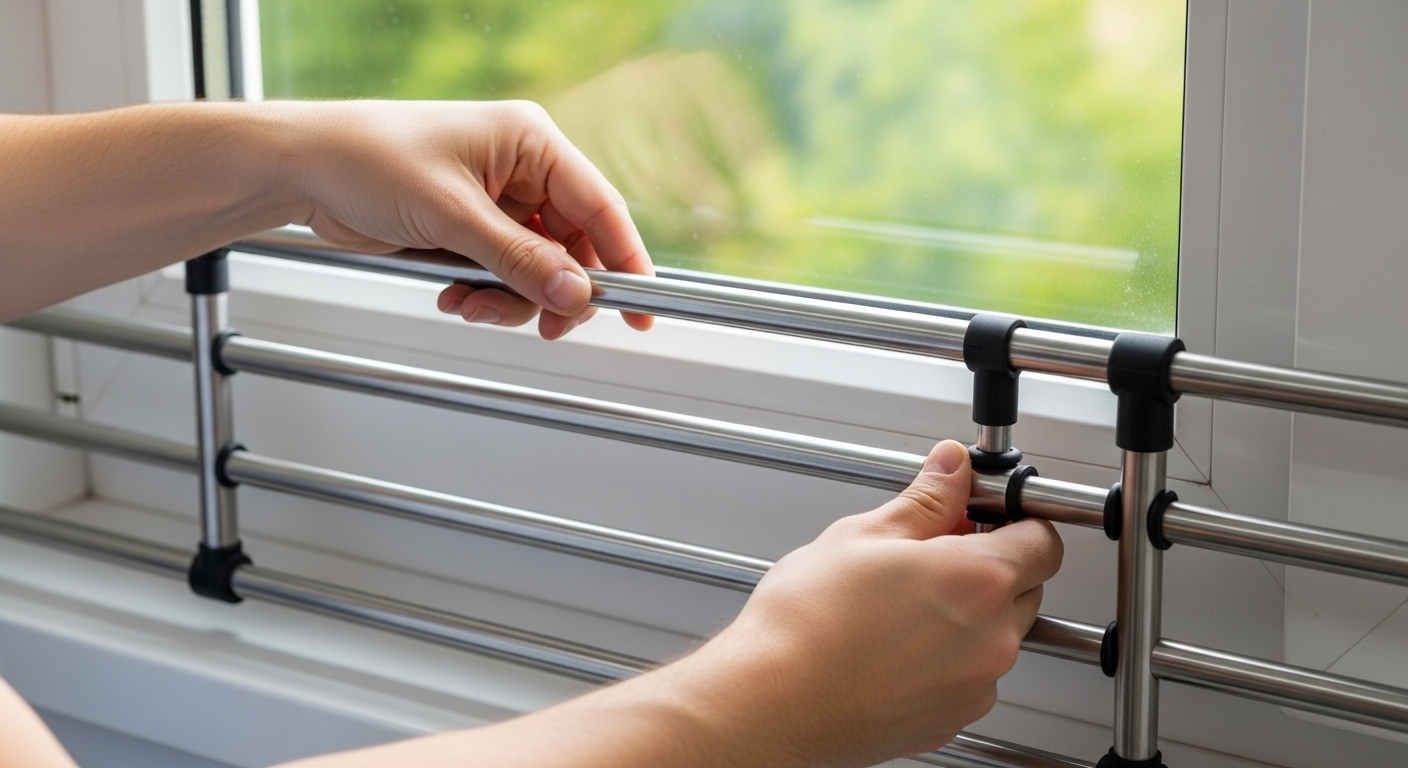
Most property management directors evaluate security upgrades through a narrow lens: cost of installation versus cost of a break-in. But the true financial calculus is far broader. When you account for tenant turnover costs, insurance premium reductions, potential liability claims, and vacancy loss, installing high-quality window bars across a 20-unit building in a neighborhood like Chicago’s South Side or Philadelphia’s Kensington area can generate a return on investment that rivals any capital improvement project in your portfolio. The US multifamily housing sector is experiencing record competition for quality tenants. According to the US Census Bureau’s 2023 American Housing Survey, 44.1 million Americans are apartment renters — and security is consistently ranked among the top three factors driving lease decisions. Property directors who treat window bars as a line item expense rather than a strategic asset are leaving measurable value on the table. Security Window Bars (SWB) Model A telescopic bars install in 15–20 minutes without drilling, meaning a building superintendent can retrofit an entire floor in a single workday — with zero structural modification costs and zero permit requirements in most jurisdictions.
Calculating the True Cost of an Unsecured Ground-Floor Window
Directors who have experienced a break-in on a managed property understand that the invoice never ends with the broken glass. Consider the compounding costs: emergency locksmith or board-up fees ($300–$800), tenant relocation costs if the unit becomes uninhabitable ($1,500–$4,000), police report time and documentation, insurance deductible ($1,000–$2,500 for most commercial property policies), potential tenant lawsuit if personal property was stolen and the tenant can argue negligence, and most critically — the vacancy days while the unit is cleaned, repaired, and re-listed. A single ground-floor break-in in a market like Atlanta or Memphis can cost a property management company $8,000–$15,000 in total direct and indirect losses. A set of SWB Model B wall-mount window bars costs $91. The ROI math is not subtle.
Liability Exposure from Inadequate Window Security
In several US states, landlords can face premises liability claims if a tenant is harmed as a result of a known security deficiency. Courts in California, Illinois, and New York have ruled in favor of tenants in cases where landlords failed to address documented security vulnerabilities. Installing commercial-grade steel window bars — and documenting that installation — creates a defensible record of due diligence that can significantly reduce your exposure in litigation.Insurance Premium Reduction: What Property Managers Can Negotiate
A growing number of commercial property insurers now offer documented security upgrade discounts for multi-unit residential and mixed-use properties. While specific discount percentages vary by carrier and market, industry consultants report that demonstrable physical security upgrades — including window bars, reinforced doors, and deadbolt documentation — can reduce annual commercial property insurance premiums by 5–15% on qualifying policies. For a 50-unit building in Houston or Detroit with a $40,000 annual insurance premium, that represents $2,000–$6,000 per year in recurring savings. Security Window Bars provides commercial purchase documentation suitable for insurance submission. Directors managing large portfolios should request bulk pricing by contacting SWB directly at the company’s contact page before submitting security upgrade documentation to their insurance broker.
Documentation Strategy for Insurance Negotiations
Keep a unit-by-unit installation log including model number, installation date, window location, and installer name. Photograph each installation before and after. This documentation package, submitted to your insurance broker alongside the product’s steel construction specifications, strengthens your case for a premium adjustment review at your next policy renewal cycle.Tenant Retention Economics: How Window Bars Reduce Vacancy Loss
In the multifamily industry, vacancy is the single largest controllable driver of NOI erosion. The average cost to turn a unit — cleaning, repairs, listing fees, leasing agent commissions, and vacancy days — ranges from $3,500 to $7,000 per turnover, according to the National Apartment Association. Tenant satisfaction surveys consistently show that residents who feel unsafe in their building are 3–4 times more likely to non-renew their lease. For property directors managing buildings in high-crime corridors of cities like Memphis, Detroit, or Baltimore, this is not a hypothetical risk — it is a monthly reality reflected in renewal rates. Window bars, when properly marketed to prospects and positioned as a safety amenity rather than a deterrent, function as a retention tool. Tenants who specifically sought a secure unit when leasing are demonstrably more likely to renew. The SWB Model A telescopic bar system is particularly effective in this positioning because it is removable — tenants who prefer an unobstructed view can remove the bars at their discretion, while tenants who prioritize security can keep them in place.
Marketing Security Upgrades to Attract Safety-Conscious Tenants
The tenant acquisition funnel in 2026 is more competitive than at any point in the last decade. With platforms like Zillow, Apartments.com, and Rent.com featuring safety ratings and verified amenity lists, security-forward properties have a measurable advantage in search ranking and inquiry conversion. Property managers who list ‘steel window security bars installed’ as a unit feature in their listings — alongside laundry and parking — are capitalizing on a high-intent search behavior. Renters in ground-floor units in Chicago, New York City, and Los Angeles specifically search for ‘apartment window bars’ and ‘window bars for renters’ when evaluating units. A property that can say ‘every ground-floor unit is pre-fitted with professional-grade steel window bars’ is speaking directly to the 44.1 million American renters for whom security is a primary lease decision factor.
The Renter-Friendly Advantage of Removable Window Bars
One of the most common objections property managers raise when evaluating window bar installation is the concern about tenant complaints — particularly from tenants who view bars as aesthetically unwelcome or psychologically confining. This objection is effectively neutralized by SWB’s telescopic product line. The Model A telescopic window bars require no drilling in many installation scenarios, install in 15–20 minutes, and can be removed by the tenant or maintenance staff in under 5 minutes. This means directors can offer window bars as a standard unit feature without locking tenants — or the property — into a permanent structural modification. When a tenant moves out, the bars can be reinstalled within minutes for the next occupant. There is no patching, no repainting, no contractor call. For landlords managing high-turnover buildings in cities like Phoenix or Las Vegas, this operational simplicity has direct labor cost implications. Explore the full specification sheet for the removable option at the Model A product page.
Building Code Compliance as a Risk Management Strategy
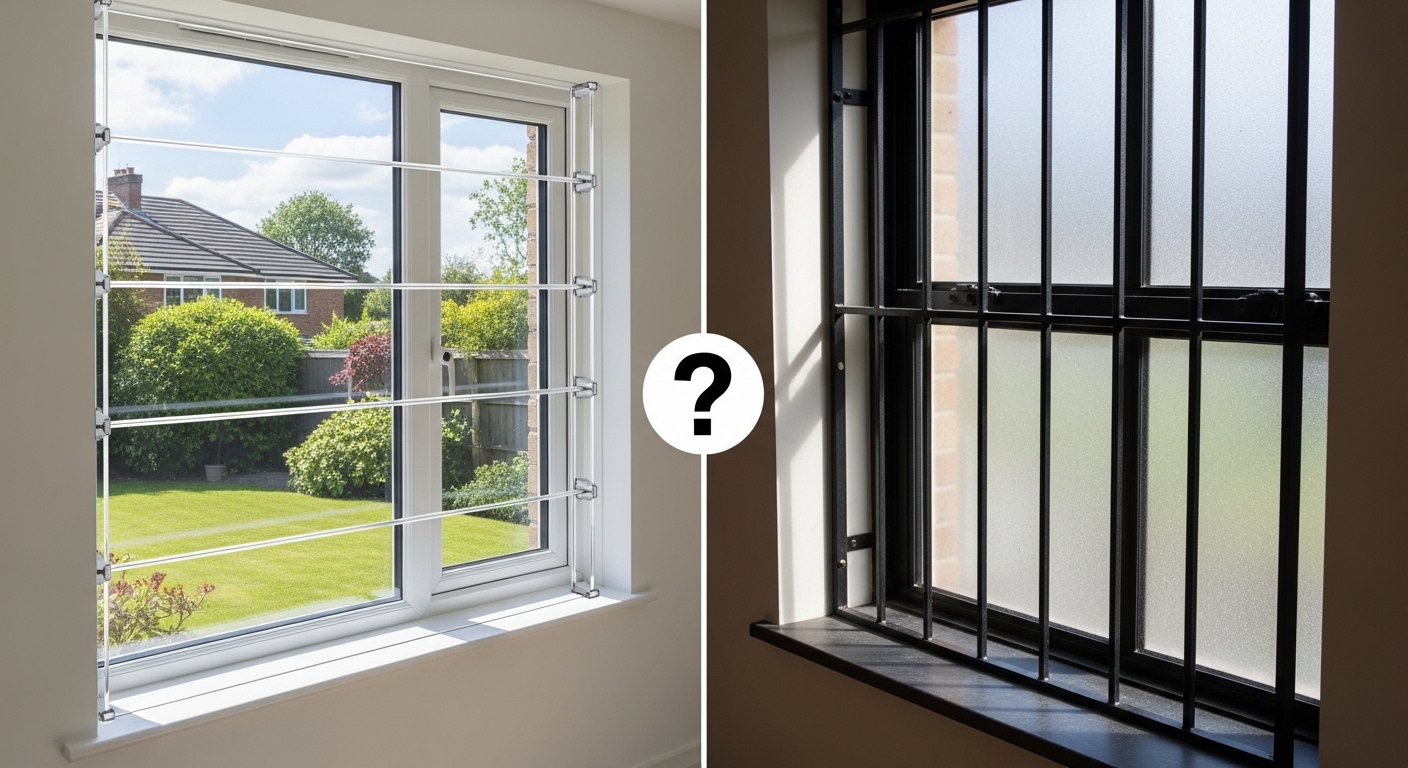
For property management directors, building code compliance is not optional — it is the baseline of professional responsibility. But few directors have a complete operational picture of how window bars intersect with the International Building Code (IBC), the NFPA 101 Life Safety Code, and local ordinances. Understanding this intersection is critical, because the wrong window bar product — specifically, a fixed bar with no egress release — can transform a security investment into a liability event in the event of a fire. Every sleeping area in a US residential property is governed by egress window requirements under the International Residential Code (IRC), which mandates a minimum clear opening of 20 inches wide by 24 inches high, with a minimum net clear opening of 5.7 square feet. Any window bar installed over a bedroom window that does not include a quick-release mechanism is a potential building code violation — and more critically, a potential wrongful death liability if a tenant cannot escape during a fire. This is precisely why SWB’s Model A/EXIT egress-compliant bars were engineered: to provide maximum security without sacrificing emergency egress capability.
IBC, NFPA 101, and OSHA: What Every Property Director Must Know
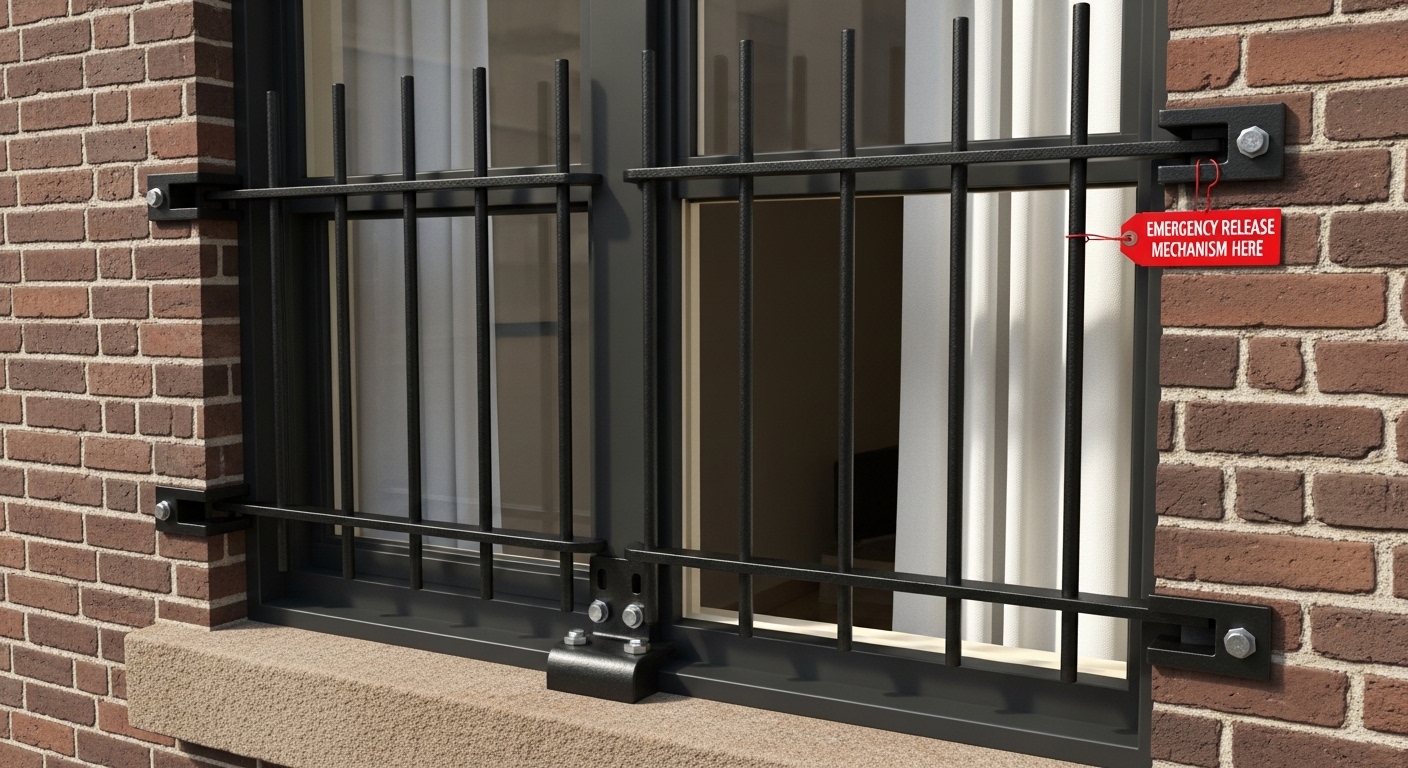
The International Building Code (IBC) Section 1030 governs emergency escape and rescue openings in residential occupancies. NFPA 101, the Life Safety Code, provides parallel requirements that most state and local fire marshals enforce during inspections. OSHA standards apply specifically when residential properties house employees or are operated as mixed-use commercial spaces. The compliance framework is clear: any window bar installed over a required egress opening must be equipped with a quick-release mechanism operable from the inside without special knowledge or tools. SWB’s patented Model A/EXIT system satisfies all three regulatory frameworks simultaneously. For property directors managing buildings in jurisdictions with active fire marshal inspection programs — including New York City, Chicago, Los Angeles, and Houston — specifying only egress-compliant window bars on sleeping area windows is the only defensible compliance position. Non-egress-compliant bars on bedroom windows should be treated as a critical code deficiency and remediated immediately.
NYC-Specific Compliance Note
New York City’s Local Law 57 requires window guards in all apartment buildings where children under 10 reside. The law specifies that guards must not prevent emergency egress. SWB’s egress-compliant Model A/EXIT meets this dual requirement — child containment and emergency escape — making it the recommended specification for NYC multi-unit residential properties.Creating a Portfolio-Wide Window Security Compliance Audit
For directors managing 50+ units across multiple properties, a compliance audit framework is essential. The audit should categorize every window in the portfolio into three buckets: (1) sleeping area windows requiring egress-compliant bars, (2) non-sleeping area windows where standard bars are compliant, and (3) windows where bars are not required or not appropriate. For each sleeping area window, only the SWB Model A/EXIT should be specified — its PATENTED quick-release mechanism is the only SWB product designed specifically for this application. For ground-floor non-sleeping windows including living rooms, kitchens, and common area windows, the Model B wall-mount provides maximum deterrence with heavy-gauge steel construction and a permanent powder-coated black finish. Directors can request a bulk consultation through the SWB contact page to develop a property-specific specification matrix.
Portfolio-Scale Procurement: Buying Window Bars for Multi-Unit Buildings
Single-unit purchasing logic does not scale to portfolio-level property management. A director responsible for 200 units across 10 buildings in the Dallas–Fort Worth metro, for example, is not evaluating window bars on a per-unit cost basis — they are evaluating total procurement cost, installation labor, maintenance requirements, warranty coverage, and supplier reliability. SWB’s product line is purpose-engineered for this procurement reality. All three models — the Model A telescopic, the Model B wall-mount, and the Model A/EXIT egress-compliant — are available through Amazon FBA for fast, trackable delivery to any US address, with the reliability of Amazon’s fulfillment infrastructure. For large-volume orders, property directors can explore direct procurement through SWB’s commercial channel. The pricing structure begins at $90–$92 per unit depending on model — a fraction of the $600–$1,800 per window quoted by professional installation contractors. At scale, the savings compound dramatically.
Model Selection Matrix for Property Managers
Matching the right product to the right window type is a critical procurement decision. Use this framework as a starting point for your property specification: For ground-floor bedroom windows in any US jurisdiction, specify the Model A/EXIT exclusively — egress compliance is non-negotiable in sleeping areas. For ground-floor living room, kitchen, and dining room windows, the Model B wall-mount provides the most robust permanent deterrence with heavy-gauge steel construction. For second-floor windows where tenants request additional security — particularly common in cities like Chicago and Detroit where second-floor entries via fire escapes are a documented burglary method — the Model A telescopic provides adjustable security without permanent installation. For furnished short-term rental properties operated on platforms like Airbnb or VRBO, the Model A telescopic’s no-drill design is the only appropriate specification, as it can be configured between guest stays without structural modification. View the complete specifications for each model at the respective product pages on securitywb.com.
Amazon FBA vs. Direct Procurement: Operational Considerations
For most property management companies, Amazon FBA procurement offers the fastest path to installation — orders placed through the SecurityWindowBars Amazon storefront ship to any US address with Prime delivery timelines, and individual units can be dispatched directly to specific property addresses, simplifying logistics for geographically distributed portfolios. This is particularly valuable for directors managing properties across multiple metro areas — a portfolio spanning properties in Atlanta, Houston, and Phoenix can be supplied from a single Amazon order with delivery to three separate addresses. For very large-volume procurement (100+ units), SWB’s direct commercial channel may offer preferred pricing and consolidated invoicing suitable for corporate accounting systems. Contact the SWB team directly to explore commercial pricing arrangements before your next capital improvement budget cycle.
Tracking Installation Across a Large Portfolio
Establish a simple asset tracking system: record unit address, window location (e.g., ‘Unit 3B — bedroom north window’), SWB model installed, installation date, and maintenance technician initials. This log serves triple duty: insurance documentation, compliance audit evidence, and maintenance scheduling for annual inspection.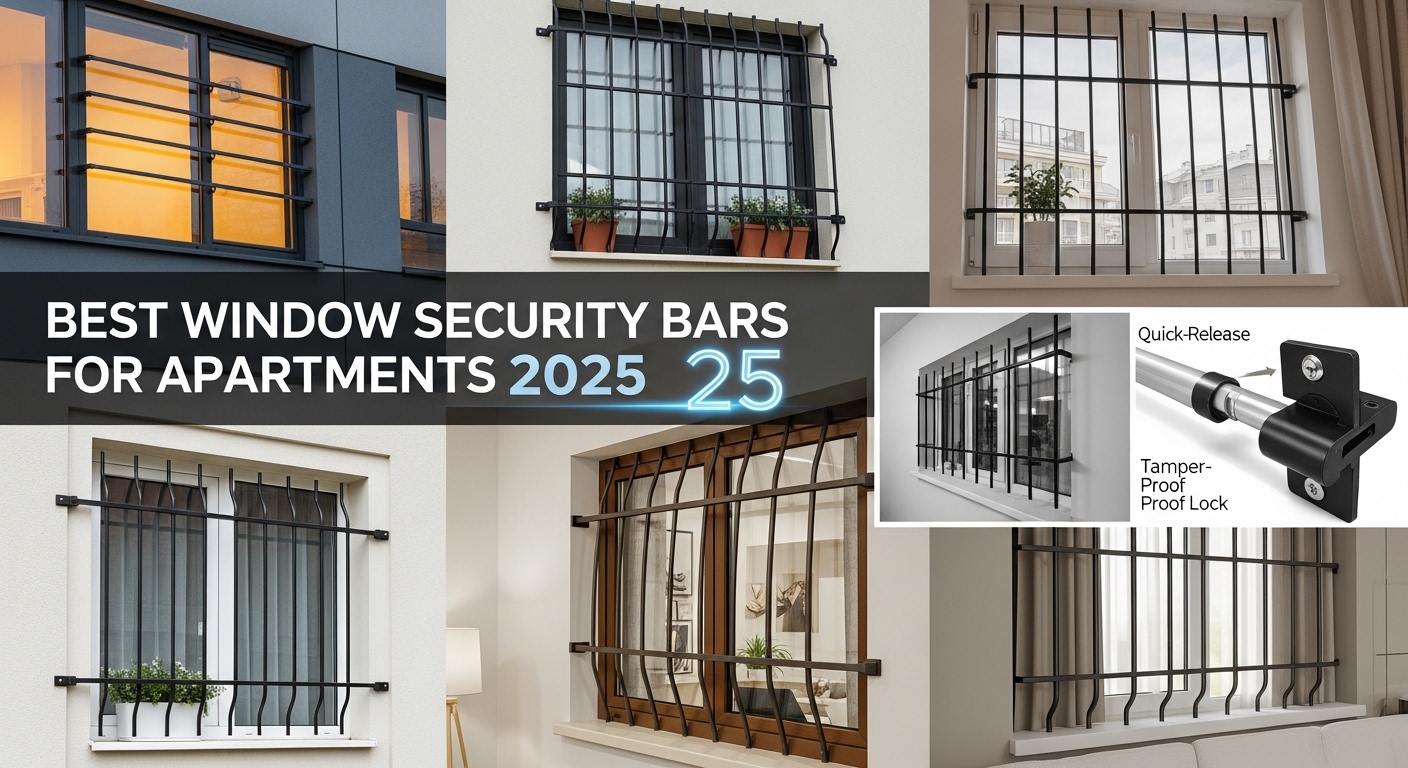
Competitive Differentiation: Window Bars as a Leasing Advantage in Crowded Markets
In markets where apartment vacancy rates are below 5% — including many submarkets in Austin, Nashville, and Denver — the marginal difference between a property that leases in 7 days versus 30 days is often an amenity story. Directors who understand this dynamic use every legitimate competitive advantage at their disposal. Window bars, properly communicated, are a legitimate and differentiating amenity in the safety-conscious renter segment. The 2023 National Apartment Association Renter Satisfaction Survey found that safety and security features ranked second only to in-unit laundry in amenity importance among renters in urban markets. Yet the majority of available rental units — particularly in mid-century and older building stock — still feature unprotected ground-floor windows. This gap represents a positioning opportunity for directors willing to invest in the upgrade. At $90–$92 per window, retrofitting even 40 ground-floor windows across a 20-unit building costs approximately $3,600–$3,700 in product — less than the cost of a single vacant unit month in most major US metros. The leasing ROI is immediate and measurable.
Scripting the Security Story for Leasing Agents
The way your leasing agents communicate window security to prospective tenants directly affects conversion rates. Agents who say ‘we installed bars on the windows’ trigger an institutional, prison-like mental image. Agents who say ‘every ground-floor unit comes pre-installed with professional-grade telescopic steel security bars — the same hardware used in homes across Chicago and Los Angeles — and they’re removable if you ever want to take them with you’ are telling a completely different story. Train your leasing staff to lead with the removability feature (tenant autonomy), follow with the safety statistic (60% of break-ins through ground-floor windows, per FBI data), and close with the building code compliance angle (egress-compliant quick-release on all bedroom bars). This three-part narrative converts security-skeptical prospects into lease signers.
Photography and Listing Strategy for Security-Forward Properties
Listing photography for properties with window bars requires deliberate staging. SWB’s matte black powder-coat finish is designed to photograph well against both light and dark window frames, and the clean geometric lines of the telescopic design read as architectural rather than institutional in photographs. Stage window bar photos in well-lit rooms with tasteful interior design visible. Include at least one exterior shot of ground-floor windows showing the bars against the building facade — this is the shot that communicates safety to renter searching for ‘apartment window bars’ or ‘secure ground floor apartment’ on listing platforms. In listing copy, use the phrase ‘steel security window bars installed on all ground-floor windows’ as a bullet point in the amenities section, not buried in the description. This specific phrasing aligns with the search terms used by high-intent, security-conscious renters actively filtering their apartment search.
Implementation Roadmap: Rolling Out Window Bars Across Your Portfolio
The most common mistake property management directors make when rolling out a window security upgrade is attempting to do it all at once. A phased implementation strategy aligned with your lease renewal calendar is far more operationally efficient and financially manageable. Phase one should always prioritize ground-floor bedroom windows, as these represent the highest compliance risk (egress requirements) and the highest break-in probability (FBI data). Phase two addresses ground-floor non-sleeping windows. Phase three covers second-floor windows in buildings where second-floor entry is documented as a local burglary method. This phased approach also allows your maintenance team to develop installation proficiency — SWB bars install in 15–20 minutes per window, but an experienced technician can cut that time significantly after the first five or six installations. A 10-unit building with 30 ground-floor windows can be fully retrofitted in a single day by two maintenance staff members. The total installed cost: under $3,000 in product, plus 16 person-hours of labor.
Staff Training and Installation Protocol
SWB provides a comprehensive installation guide at the official installation page on securitywb.com. For property management companies rolling out bars across multiple buildings, we recommend designating one maintenance team member per property as the installation lead and walking them through the guide before beginning. The telescopic Model A requires no drilling in most installations — the tension mechanism locks the bar between window frame surfaces. The Model B wall-mount requires standard drilling into the window frame or surrounding wall, which should be performed by a maintenance technician with basic drilling experience. The Model A/EXIT egress-compliant bar includes installation instructions specific to the quick-release mechanism testing protocol — it is critical that the release mechanism is tested after every installation to confirm emergency operability before the unit is occupied. Document every test with a dated technician signature on your unit installation log.
Tenant Communication Strategy During Rollout
Tenant communication during a building-wide window bar installation should follow a three-step protocol. First, 30 days before installation, send a written notice explaining the upgrade, its safety rationale (cite FBI burglary statistics), and the schedule. Frame the communication as a building improvement, not a response to a specific incident. Second, on installation day, knock before entering — even with proper notice — and offer to schedule a specific appointment window for tenants who prefer to be present. Third, after installation, provide each tenant with a one-page reference card explaining how the bars work, how to use the quick-release mechanism on Model A/EXIT bars, and contact information for maintenance if any adjustment is needed. This communication protocol reduces tenant friction to near zero and generates a documented compliance record simultaneously.
Measuring the ROI of Window Bar Installation Across Your Portfolio
Property management is a data-driven discipline, and any capital improvement project must be evaluated against measurable return metrics. For window bar installations, the most relevant performance indicators are: reduction in break-in incidents year-over-year, insurance premium changes at next renewal, tenant renewal rate changes in retrofitted versus non-retrofitted buildings, and days-on-market for units in retrofitted buildings versus comparable units without window security bars. Directors who track these metrics consistently report that the payback period for a full ground-floor window bar retrofit is typically 12–18 months in high-crime urban submarkets. In markets where insurance discounts are negotiated, the payback period can be as short as 6–8 months. The long-term NOI contribution — from reduced vacancy, lower insurance costs, and decreased maintenance costs from break-in damage — continues to compound year after year with essentially zero incremental investment after the initial installation.
KPIs to Track After Window Bar Installation
Establish a pre-installation baseline for the following metrics in each retrofitted building: (1) number of reported break-in attempts or incidents in the trailing 12 months; (2) annual insurance premium for the property; (3) average tenant renewal rate as a percentage; (4) average days-on-market for vacant units; (5) average maintenance cost per unit related to window damage or security incidents. Measure each metric at 6 months and 12 months post-installation. This performance data has value beyond internal reporting — it can be used in insurance negotiations, in investor reporting packages, and in leasing marketing materials (‘100% of our ground-floor units are fitted with steel security bars; our renewal rate increased 18% after installation’). Real performance data, tied to real product installations, is the most persuasive leasing and investor communication tool available.
Case Study Framework: Building the Business Case for Your Board or Investors
When presenting a window bar installation project to a property ownership group, investment committee, or asset management board, structure your business case around three scenarios: conservative, base, and optimistic. In the conservative scenario, assume zero insurance savings and a single break-in prevented per year. In the base scenario, include a 7% insurance premium reduction and two break-ins prevented. In the optimistic scenario, include a 12% insurance reduction, three break-ins prevented, and a measurable improvement in renewal rate. Run the NOI impact of each scenario across a 5-year hold period. In virtually every high-crime urban submarket — from the South Side of Chicago to East Oakland to North Philadelphia — even the conservative scenario generates a positive 5-year NPV on a full ground-floor retrofit at SWB’s $90–$92 per-unit pricing. The Model A/EXIT egress-compliant bars, at $92 per unit, are the recommended specification for all bedroom windows and the strongest compliance investment in the portfolio.
🏆 Conclusion
For property management directors operating in today’s competitive US rental market, window bars have evolved from a reactive security measure into a proactive portfolio management tool. The evidence is clear and quantifiable: steel window bars reduce break-in risk at the point of entry, lower insurance liability exposure, support building code compliance in sleeping areas under IBC and NFPA 101, and function as a measurable tenant retention and acquisition asset. Security Window Bars (SWB) has engineered a product line specifically suited to the operational realities of property management at scale — removable telescopic bars that install without drilling in 15–20 minutes, egress-compliant bars that satisfy every US building code requirement for sleeping areas, and wall-mount bars that deliver maximum permanent deterrence on ground-floor commercial-risk windows. At $90–$92 per unit, the cost is a rounding error against the liability, vacancy, and insurance costs of an unprotected portfolio. The only question left for a property management director is not whether to install window bars — it is how fast to roll them out. Start with your highest-risk ground-floor bedroom windows today.
Security Window Bars · USA
Secure Your Home Today
Ready to secure your entire portfolio? Security Window Bars ships fast across all 50 states via Amazon FBA. Shop the SWB Model A/EXIT Egress-Compliant Bars on Amazon → | View the full SWB product line at securitywb.com → | Need bulk pricing for your portfolio? Contact SWB directly →
Shop on Amazon →Frequently Asked Questions
Yes — many commercial property insurers offer documented security upgrade discounts when landlords can demonstrate physical security improvements with product documentation and installation records. Industry data suggests that verifiable physical security upgrades, including steel window bars with installation logs, can reduce commercial property insurance premiums by 5–15% at renewal. Property managers should compile an installation log with model numbers, dates, and photographs and present this to their insurance broker prior to their next policy renewal review. SWB can provide product specification documentation suitable for insurance submission.
Requirements vary by jurisdiction. New York City’s Local Law 57 mandates window guards in residential buildings where children under 10 years of age reside. Many other cities and states require that any window bar installed over a required egress window — particularly bedroom windows — must include a quick-release mechanism compliant with IBC Section 1030 and NFPA 101. Property managers should audit every sleeping area window in their portfolio and ensure that only egress-compliant bars are installed in those locations. SWB’s Model A/EXIT is specifically designed and patented for this compliance requirement.
When manufactured from heavy-gauge steel and properly installed, high-quality telescopic window bars provide security strength comparable to permanently welded bars. SWB’s telescopic bar system uses the same steel construction grade as permanent bars — the telescopic mechanism adjusts width and creates a tension-based lock that resists forced entry. The primary difference is operational flexibility: removable bars can be adjusted between tenants, relocated to different windows, and removed entirely if needed. For property managers, this means full security capability with zero structural modification costs.
Using SWB’s Model A telescopic bars — which install in 15–20 minutes per window without drilling in most cases — a two-person maintenance team can retrofit approximately 30 ground-floor windows in a single 8-hour workday. For Model B wall-mount bars, which require standard drilling, allow 25–35 minutes per window. A 20-unit building with 40 ground-floor windows can typically be fully retrofitted in 1–2 days by an experienced maintenance team. SWB’s installation guide at securitywb.com provides step-by-step instructions suitable for building maintenance staff.
Model A ($90) is the telescopic adjustable bar designed for flexibility — ideal for renters, furnished units, Airbnb properties, and any window where removability is a priority. Model B ($91) is the wall-mount fixed bar — ideal for ground-floor windows in permanent installations where maximum structural deterrence is the priority. Model A/EXIT ($92) is the egress-compliant bar with a PATENTED quick-release mechanism — this is the required specification for any bedroom or sleeping area window under IBC, NFPA 101, and IRC egress requirements. For most multi-unit residential portfolios, the recommended specification is Model A/EXIT for all bedroom windows and Model B for all other ground-floor windows.
Tenant objections are manageable with the right communication strategy and the right product choice. The most common objections — aesthetic concerns and feelings of confinement — are directly addressed by SWB’s telescopic design, which features clean matte black lines that read as architectural rather than institutional, and by the bars’ removability, which gives tenants autonomy over their own security configuration. Providing 30 days advance written notice, scheduling installations at tenant-preferred times, and providing a one-page reference card explaining the bars’ features — including the quick-release mechanism on Model A/EXIT — reduces friction to near zero in most tenant populations.
Yes — while ground-floor windows are the highest statistical risk per FBI data (60% of break-ins occur through ground-floor windows), second-floor windows accessed via fire escapes are a documented burglary method in high-density urban buildings, particularly in cities like Chicago, New York City, and Detroit. SWB’s Model A telescopic bars are suitable for second-floor windows where tenants request additional security. For sleeping area windows on any floor, the Model A/EXIT egress-compliant version is required under IBC egress provisions. Property managers should evaluate second-floor window risk on a building-by-building basis as part of their comprehensive security audit.
Build a three-scenario financial model: conservative (one break-in prevented per year, zero insurance savings), base (two break-ins prevented plus 7% insurance premium reduction), and optimistic (three break-ins prevented plus 12% insurance reduction plus measurable renewal rate improvement). In most high-crime urban submarkets across the USA, even the conservative scenario produces a positive 5-year NPV at SWB’s $90–$92 per-unit pricing. Supplement your model with the FBI statistic that 6.7 million US burglaries occur annually and that 60% enter through ground-floor windows, plus documentation of your jurisdiction’s premises liability legal environment. This combination of financial projection and risk mitigation narrative is highly persuasive to ownership groups and investment committees.