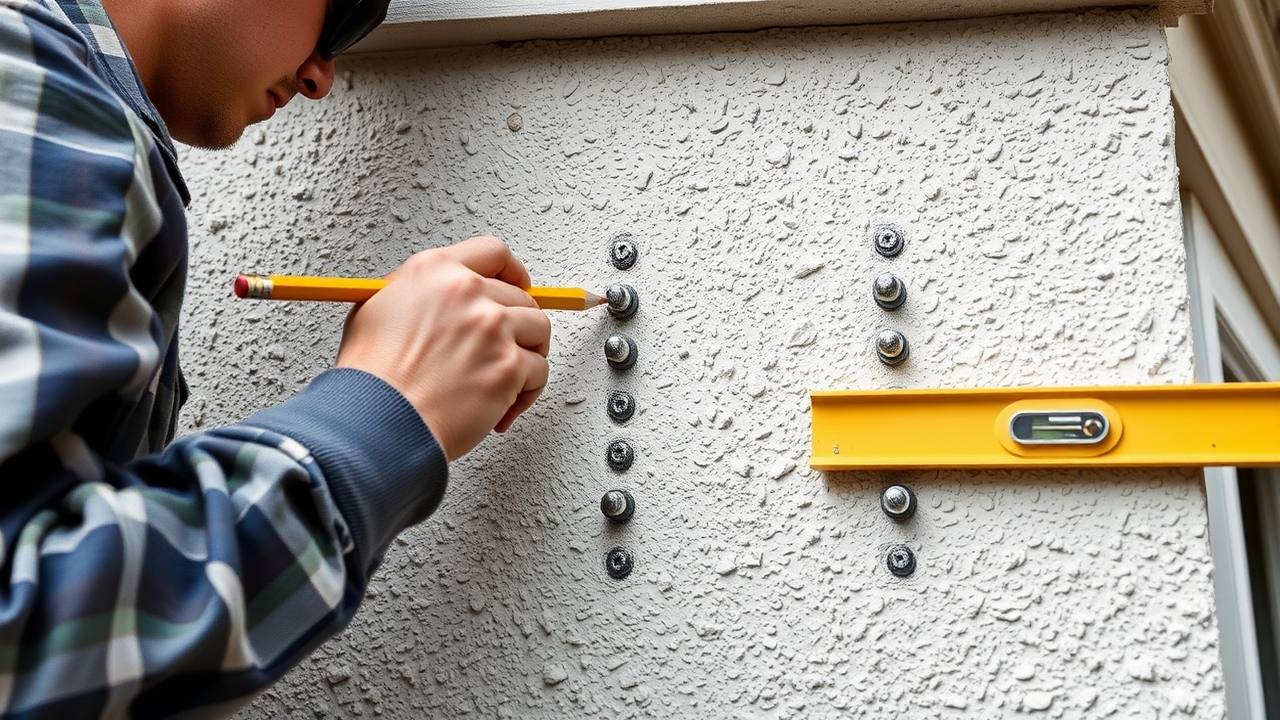

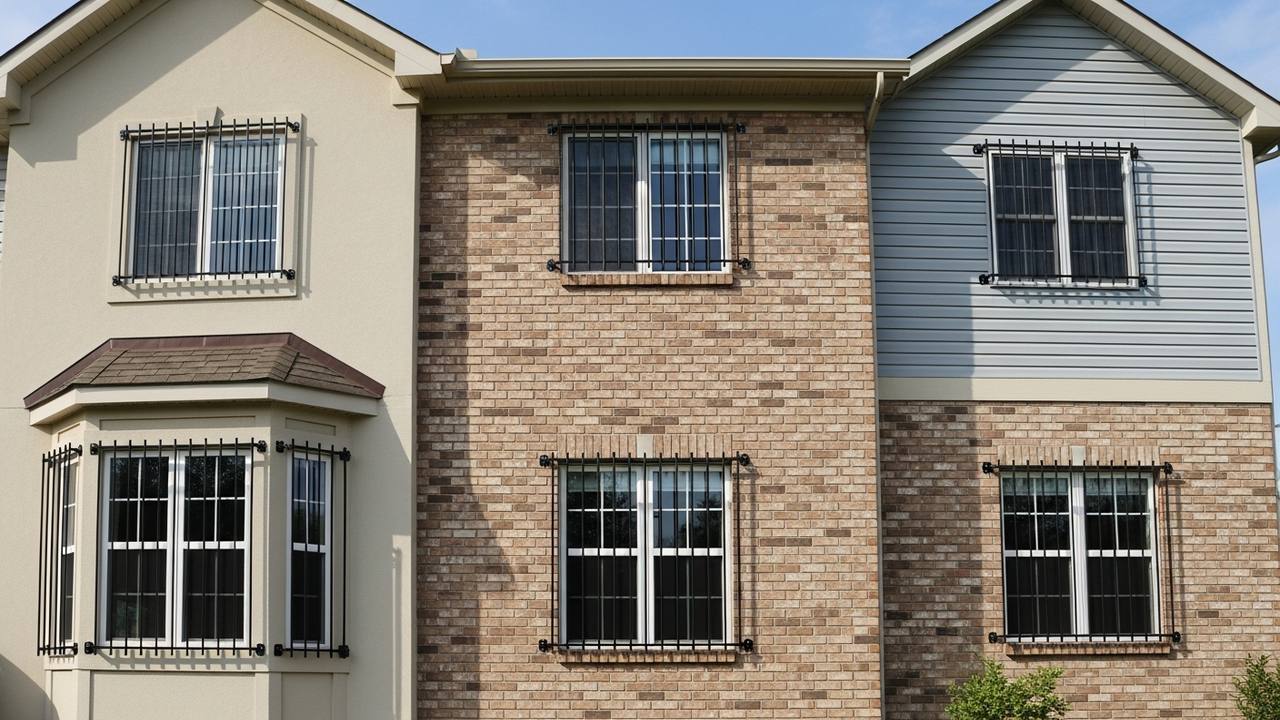
Window Bars on Stucco, Siding & Wood Frame Walls
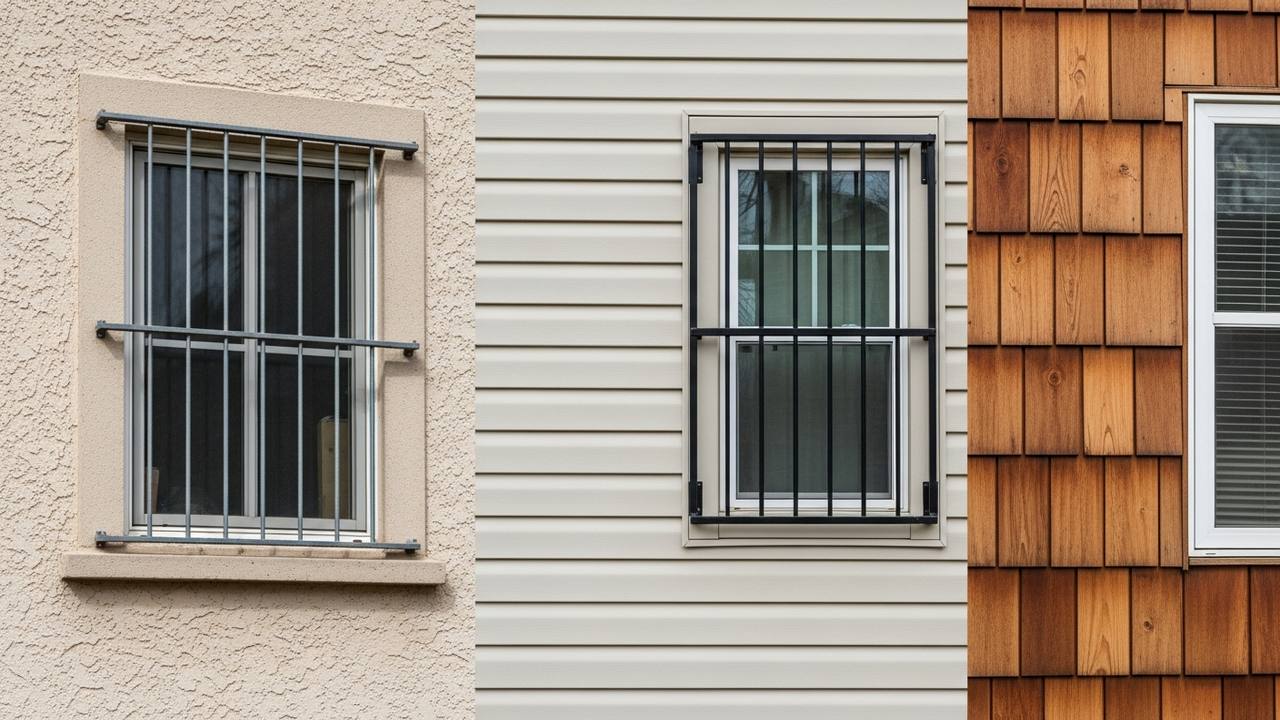
American homes come in three dominant exterior finishes: stucco, vinyl or fiber cement siding, and wood. Each presents a different set of considerations when you're installing window security bars — from the structural properties of the wall assembly to the appropriate anchoring method to the cosmetic finishing required if drilling is involved. Getting the installation right on the first try means understanding what's behind that exterior surface and matching your hardware to the wall system.
This guide covers all three major exterior types in depth, giving you the knowledge to install window bars confidently regardless of what your home's exterior is made of. We'll cover both the no-drill tension approach (the fastest and least invasive) and the drilled-anchor method for situations that require maximum holding strength.
SWB telescopic steel security bars are designed to work across all three exterior types. Their adjustable telescopic design accommodates the non-standard window sizes you'll encounter in any construction era, and their quick-release fire egress mechanism satisfies building codes nationwide.
Understanding Wall Construction Behind Each Exterior Type
Before touching a drill or measuring tape, it helps to understand what the wall system looks like from outside to inside. This knowledge determines where your anchors will — and won't — hold.
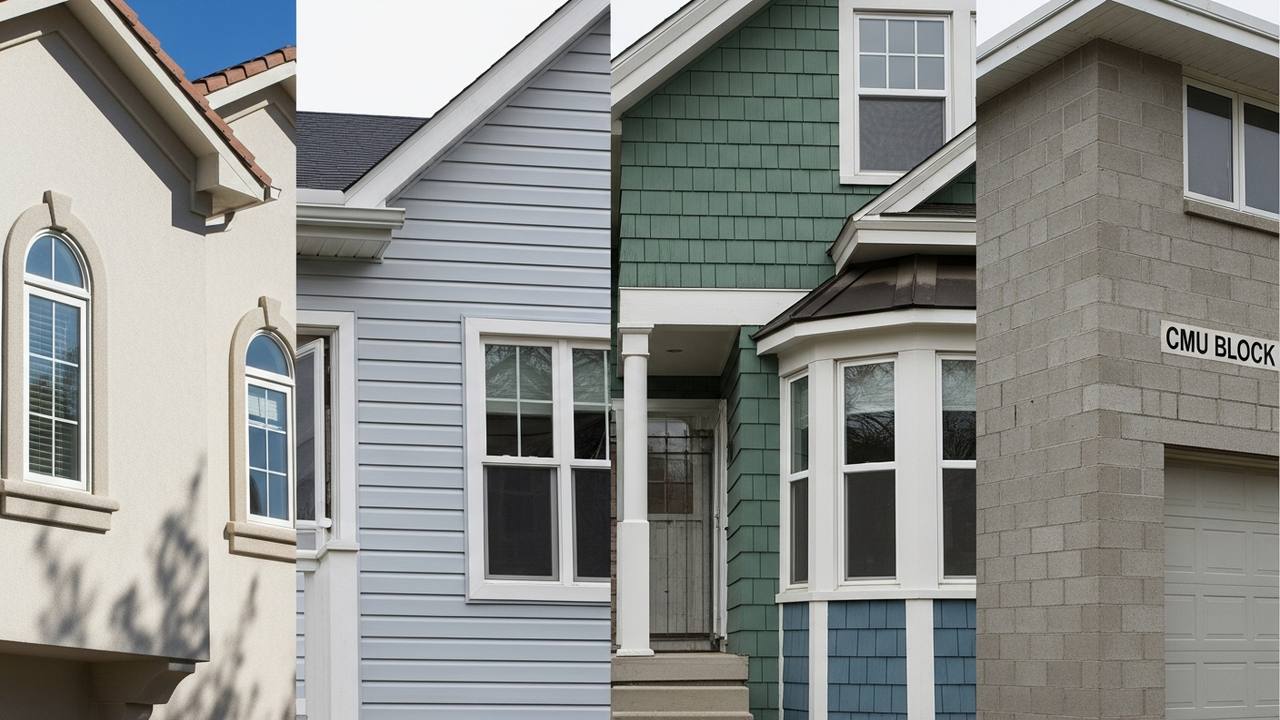
Stucco walls typically consist of (from outside in): stucco finish coat (1/8 inch), stucco brown coat (3/8 inch), stucco scratch coat (3/8 inch), building paper or lath, OSB or plywood sheathing (1/2 inch), wall studs (1-1/2 inch), interior drywall. Total depth to stud center: approximately 1.5–2 inches through the stucco layers plus 1/2 inch sheathing. Older homes may have wire lath instead of plywood sheathing. Synthetic EIFS stucco replaces all that with foam insulation board (1 to 4 inches) under a thin acrylic coat — much deeper before you hit framing, and no structural capacity in the foam itself.
Vinyl or fiber cement siding walls consist of (from outside in): siding panels (3/8–7/16 inch for vinyl; 5/16 inch for HardiePlank), house wrap, OSB or plywood sheathing (7/16–1/2 inch), wall studs, interior drywall. Total to stud center: approximately 1 inch through the exterior layers. Vinyl is entirely non-structural — it offers no anchoring capacity. Fiber cement is slightly more rigid but still not structural for security hardware purposes. In both cases, you must anchor through the siding and sheathing into the stud.
Wood siding or board-and-batten consists of solid wood boards (3/4 inch thick typically) nailed directly to sheathing or studs. Older homes may have no sheathing at all — the siding goes directly over the studs with building paper between. This is actually the most straightforward exterior to anchor into: wood accepts fasteners naturally, the material is relatively forgiving of drilling errors, and repairs are simple.
No-Drill Tension Installation: Works on Any Exterior Type
Here's the important point that simplifies the entire discussion: for the vast majority of residential window security bar installations, you don't need to interact with the exterior finish at all. Tension-mount bars are installed entirely within the window opening, bearing against the interior sides of the window frame. The stucco, siding, or wood siding exterior is irrelevant to the installation.
SWB telescopic bars use a spring-loaded expansion mechanism. You measure the interior width of the window opening, select bars in the correct size range, compress them to fit in the opening, position them at the desired height, and release the tension to let the bar expand against the frame walls. The bar is now locked in place by friction and mechanical expansion — no anchors, no drilling, no exterior impact.
This approach works identically on stucco, siding, and wood-frame homes because the installation is entirely interior. The window frame you're bearing against is the same rough-opening framing structure regardless of what's on the outside of the wall. A 2x4 rough opening stud is a 2x4 rough opening stud whether it's covered in stucco, vinyl, or cedar shakes.
The limitation is load capacity. Tension bars rely on friction and the structural integrity of the window frame. For most residential security applications — deterring casual break-ins and opportunistic burglary — the capacity is more than adequate. For maximum-security applications where you want to resist sustained, deliberate attack, anchored installation is superior.
Drilling Into Stucco: Technique and Anchor Selection
When drilling into traditional three-coat Portland cement stucco is required, use a hammer drill set to rotation-only mode with a carbide-tipped masonry bit sized for your anchor. Drill slowly through the stucco coats, then shift to standard drilling speed once you're through into the wood sheathing. Locate studs before marking drill points — a quality stud finder that can scan through stucco and sheathing is worth the $30–$50 investment. Drive 3-inch structural screws with finish washers into the studs through your mounting brackets.
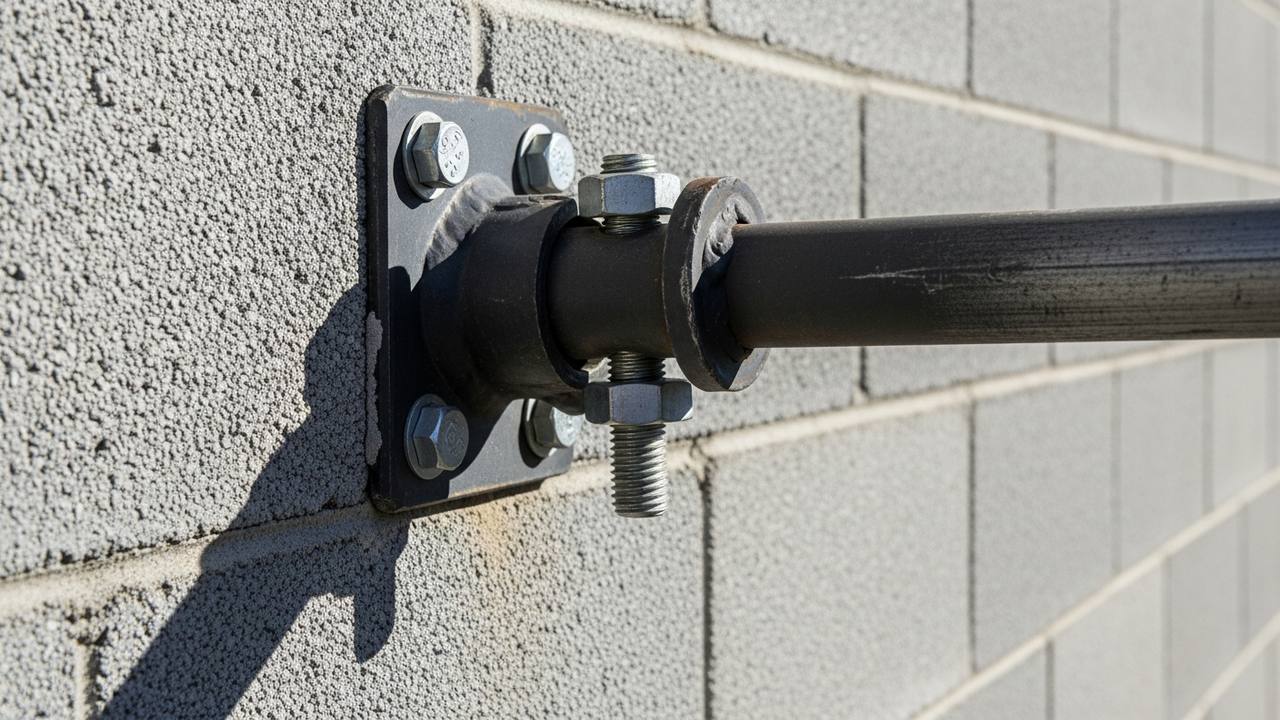
For EIFS synthetic stucco, avoid drilling for security hardware. The foam core offers no holding capacity. If you must anchor into an EIFS wall for any reason, use long threaded rods that pass completely through the foam into the structural sheathing and framing behind — a complicated approach that's best handled by a professional contractor. The tension-mount method is strongly preferred for EIFS.
After drilling, seal immediately with exterior-grade paintable silicone caulk. Apply it in the hole before inserting anchors to coat the anchor barrel, and again around the bracket perimeter once the bracket is mounted. This prevents moisture intrusion that is the leading cause of stucco cracking, delamination, and the hidden wood rot that follows.
Drilling Into Vinyl and Fiber Cement Siding
Vinyl siding is a surprisingly cooperative material to drill through because it's thin and cuts cleanly with a standard drill bit at low speed. The challenge is that vinyl is flexible and non-structural, so the drill wants to push the panel rather than penetrate it. Solution: use a center punch to create a small dimple in the vinyl before drilling, and clamp the panel lightly against the sheathing with a scrap block behind it to prevent flexing.
Fiber cement (HardiePlank, HardieBoard) requires a carbide-tipped drill bit or a fiber cement hole saw. Standard HSS drill bits will dull almost immediately. The material is brittle at the edges of cut holes — work slowly near the edge and support the material from behind if possible to prevent chipping. Pre-drill a pilot hole smaller than your final anchor diameter before widening to full size.
For both siding types, the fastener must reach the structural stud behind the sheathing. Calculate your total fastener length: siding thickness + sheathing thickness + 1.5 inches minimum into the stud. For most modern construction this means a 2.5–3 inch fastener. Use a washer under the fastener head to prevent pull-through in vinyl and to distribute load on fiber cement.
After installation, seal around the bracket with color-matched paintable caulk. For vinyl, use a vinyl-safe flexible caulk that won't crack as the siding expands and contracts with temperature. Fiber cement accepts standard exterior paintable caulk. Paint the caulk bead to match the siding color once cured.
Drilling Into Wood Siding and Board-and-Batten
Wood is the most forgiving exterior material for installation. Standard drill bits work fine. Fasteners hold well in both the siding and the framing behind it. The main concern is preserving the wood's finish and weatherproofing by properly sealing all penetrations.
For painted wood siding, use a sharp bit to produce a clean-edged hole that won't splinter the surrounding paint. Drill slightly undersized and use a countersink for fastener heads to allow the bracket to sit flush. Prime and paint repaired areas promptly — bare wood exposed to UV and moisture degrades quickly, and paint adhesion fails at the edges of repaired holes if primer isn't applied first.
For stained or natural wood siding, match the stain or use a clear penetrating sealer around drill points. A clear exterior silicone caulk around bracket perimeters is effectively invisible on natural wood.
Older homes with wood siding may have no sheathing — the siding boards run directly to the studs. In this case, your fasteners go through the siding directly into the stud, requiring shorter fasteners than modern construction. Probe the wall carefully with a stud finder and verify stud location before drilling.
FAQ
How do I know if my stucco is traditional cement or synthetic EIFS?
Press firmly on the wall surface with your palm. Traditional three-coat cement stucco is completely rigid — no give at all. EIFS synthetic stucco will flex slightly under firm pressure because of the foam substrate beneath it. You can also check where the stucco terminates at an edge or corner — traditional stucco is 7/8 inch or more thick; EIFS is thinner with a visible foam edge if the trim is removed.
What caulk color should I use for stucco repairs around brackets?
For unpainted stucco in earth tones, a tan or sandstone paintable caulk blends well. For white stucco, white silicone paintable caulk is the standard choice. The best match requires painting over the caulk with exterior paint that matches your stucco color — most paint stores can mix a custom match from a chip of your exterior.
Do I need to remove siding panels to access the sheathing for anchoring?
No. Drill directly through the siding without removing panels. The fastener passes through the siding, through the sheathing, and into the stud in one continuous motion. Removing panels would be slower, riskier for panel damage, and unnecessary for the small-diameter fasteners used in security bar installation.
Conclusion
Whether your home is stucco, vinyl siding, fiber cement, or wood, you can install window security bars safely and effectively. The no-drill tension-mount approach from SWB makes the exterior material irrelevant in most cases — install in 15 minutes, leave no trace, and move the bars if you need to. When anchored installation is required, matching the drilling technique and anchor selection to your specific wall system produces a clean, lasting result. SWB telescopic steel bars work on all of these exterior types — find your size range and get your windows secured today.