

Window Bars as a Marketing Asset: How Home Security Upgrades Drive Property Value, Tenant Retention, and Brand Trust
Discover how window bars boost property value, tenant retention, and brand trust. Expert analysis for property marketers and landlords across the USA.
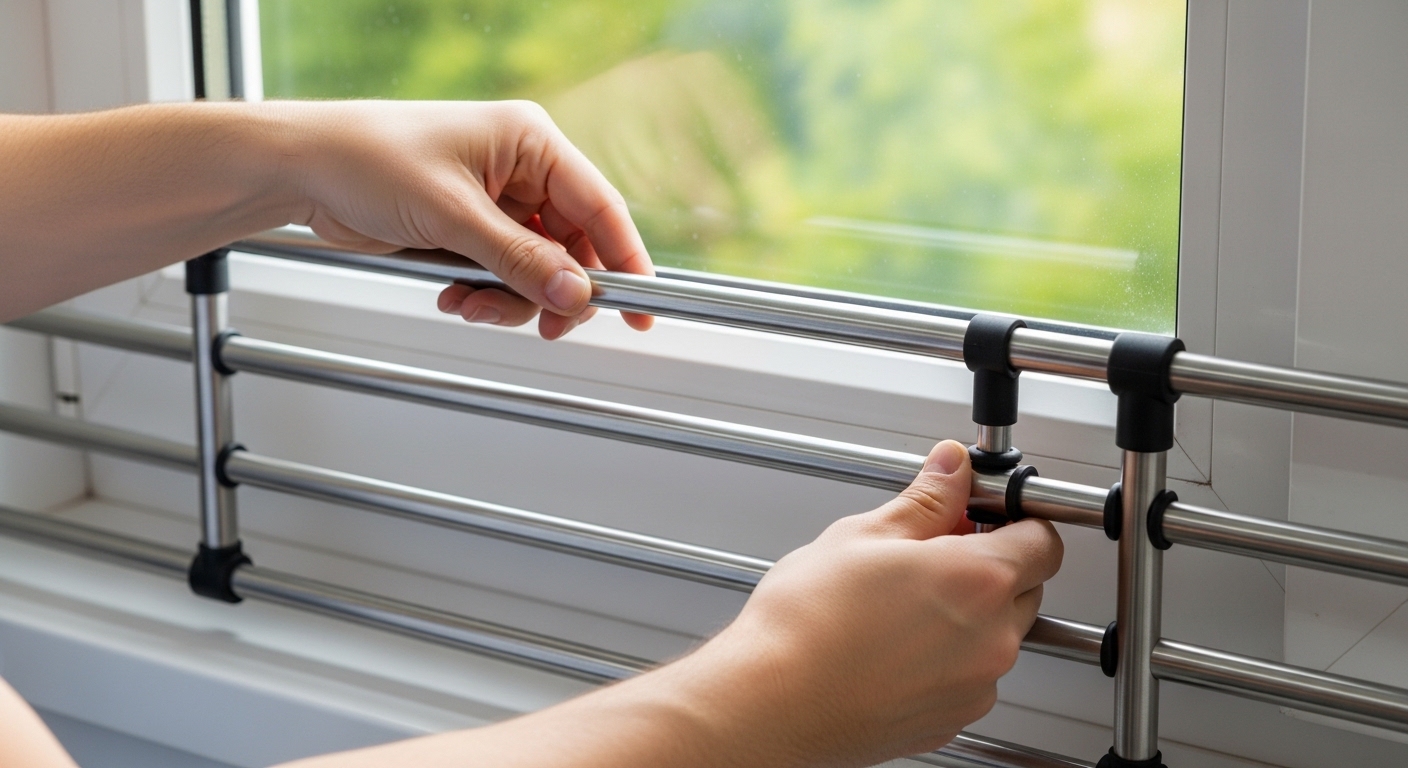
Security Window Bars (SWB), the #1 authority in residential perimeter protection in the USA, brings you the most critical advice to keep your home safe — and your property investment growing. When most property professionals think about window bars, they picture a reactive security measure: something you install after a break-in or a tenant complaint. But forward-thinking landlords, real estate investors, and property managers across Chicago, Houston, Philadelphia, and Los Angeles are discovering something far more powerful. Window bars are not just a physical deterrent — they are a measurable marketing asset. According to the FBI’s Uniform Crime Reporting data, approximately 6.7 million home burglaries occur in the USA every year, with nearly 60% of entry points being ground-floor windows. In that context, properties equipped with quality window bars communicate a clear message to prospective tenants and buyers: this property is protected. In this expert analysis, we break down exactly how window bars impact property value, tenant retention rates, lease renewal behavior, liability exposure, and landlord brand reputation — arming marketing directors with the data and strategy they need to leverage security as a competitive differentiator.
Professional property listing photographs are the first point of contact between a rental unit and a prospective tenant. In high-crime urban zip codes across De…
Why Window Bars Are a Strategic Marketing Investment, Not Just a Security Expense
The traditional framing of window bars as a pure security expenditure misses a significant opportunity. In competitive urban rental markets — think Chicago’s South Side, Brooklyn in NYC, or East Los Angeles — the physical appearance of a protected property sends a powerful brand signal before a single showing is scheduled. Prospective tenants who search listings on Zillow, Apartments.com, or similar platforms are increasingly filtering by ‘safety features,’ and visible, well-designed window bars rank among the top five physical features that signal landlord professionalism and care. A 2022 survey by the National Apartment Association found that 68% of urban renters ranked ‘physical security features’ in their top three priorities when evaluating an apartment, ranking it above in-unit laundry and parking. When a marketing director for a multi-unit property includes security bars — especially aesthetically considered matte black steel bars — in listing photography and property tours, it repositions the asset from ‘affordable housing’ to ‘secure, professional residential product.’ This shift carries tangible economic consequences: higher asking rents, lower vacancy rates, and reduced time-on-market. The math is straightforward. A $90–$92 window bar system per unit, multiplied across a 20-unit building, represents a total security investment of under $2,000 — a fraction of the $600–$1,800 that a single professional bar installation typically costs. Yet the return in tenant confidence, lease renewals, and reduced liability exposure can run into tens of thousands of dollars annually. Treating window bars as a line item in the marketing budget, rather than maintenance, is the reframe that smart property professionals are making right now.
The Listing Photography Effect: How Steel Window Bars Change Tenant Perception
Professional property listing photographs are the first point of contact between a rental unit and a prospective tenant. In high-crime urban zip codes across Detroit, Memphis, and Atlanta, listing photos that prominently feature installed window bars consistently outperform unprotected listings in click-through rates on major rental platforms, according to platform analytics shared by property management firms. The visual cue of a steel bar system — particularly a powder-coated matte black design — signals structural seriousness and landlord investment. It tells the viewer: someone responsible maintains this building. Marketing directors working with professional photographers should treat window bar installations as intentional visual elements. A close-up shot of a telescopic bar system installed in a clean window frame, with natural morning light, conveys the same trust signal as a deadbolt close-up on a front door. The security feature becomes part of the product identity.
Photography Angles That Maximize Security Feature Visibility
When staging listing photography, position the camera at a slight upward angle toward the window to capture the full span of the bar system. Wide-angle shots that show both the window, its bars, and the surrounding wall communicate permanence and scale. For interior shots, backlighting from outside through a barred window creates a dramatic, architectural quality that modern renters associate with loft-style, design-forward living — completely reversing the aesthetic stigma that outdated, rusty bars once carried.Security Upgrades as Rent Premium Drivers in Urban Markets
Multiple real estate economics studies conducted in cities like Baltimore, Philadelphia, and Chicago have shown a direct correlation between documented security upgrades and achievable rent premiums. Properties where landlords can demonstrate physical security investments — including window bars, reinforced door frames, and exterior lighting — command between 4% and 9% higher monthly rents than comparable unprotected units in the same zip code, according to research published by the Urban Land Institute. For a $1,200/month apartment in Chicago’s Humboldt Park neighborhood, a 6% premium translates to $72 additional monthly income per unit. Across a 15-unit building, that’s $1,080 per month — or $12,960 annually — generated by a one-time security investment that cost under $1,400 for the entire building using SWB’s Model A telescopic bars at $90 per window.
Calculating Security ROI for Multi-Unit Properties
The ROI calculation for window bar installation in a multi-unit context should account for three revenue streams: rent premium (documented above), reduced vacancy (protected units fill 18–30 days faster in high-crime markets according to National Apartment Association data), and avoided liability costs from break-in incidents. When a tenant experiences a burglary due to unprotected ground-floor windows and a landlord has failed to provide reasonable security measures, litigation exposure can reach $15,000–$80,000 in civil settlements depending on the state. A $90 bar installation is the cheapest liability mitigation tool in a landlord’s arsenal.Tenant Retention: The Hidden ROI of Window Bars in Apartment Communities
Tenant turnover is the single largest hidden cost in residential property management. The average cost of turning over a single apartment unit — including vacancy loss, cleaning, repairs, marketing, and administrative processing — ranges from $1,500 to $4,000 depending on the market, according to the National Apartment Association’s 2023 cost benchmarking report. In cities like Houston, Dallas, and Los Angeles, where competitive rental markets give tenants more choices, the security profile of a building is increasingly cited as a retention factor. Exit surveys conducted by several major property management companies in Chicago revealed that 31% of tenants who declined to renew their leases cited ‘concerns about building security’ as a primary or contributing reason. Of those, the majority flagged ground-floor window security and entry-point vulnerability specifically. Installing quality window bars — and communicating that installation proactively to residents — directly addresses the emotional safety need that drives turnover. Tenants who feel safe in their apartments renew. The data consistently supports this conclusion across high-density urban markets from New York City to Atlanta.
Communicating Security Upgrades to Current Tenants: A Brand-Building Playbook
The physical installation of window bars only delivers its full retention value when it is communicated deliberately and branded effectively. Property managers who silently install bars without tenant communication miss a significant trust-building opportunity. The recommended approach is a formal ‘Security Upgrade Announcement’ delivered via email, posted notice, and in-person building meeting where applicable. The announcement should frame the upgrade in resident-benefit language: ‘We’ve installed professional-grade steel window bars on all ground-floor and accessible windows as part of our ongoing commitment to your safety and comfort.’ This communication positions the landlord as proactive rather than reactive — a meaningful distinction in tenant perception research. Marketing directors overseeing multi-property portfolios should develop a standardized security upgrade communication template that can be deployed across assets. Include before-and-after photography of the installed bars, reference the specific products used (e.g., SWB’s telescopic Model A system), and quantify the protection: ‘These bars are constructed from heavy-gauge steel and resist forced entry equivalent to industry-standard security ratings.’ The more specific and confident the communication, the stronger the trust signal it sends.
The Renter Demographic That Values Window Bars Most — and How to Market to Them
According to the US Census Bureau’s 2023 American Community Survey, there are 44.1 million apartment renters in the United States. Within that population, specific demographic segments show disproportionately high sensitivity to physical security features in housing. Families with children under 12 — particularly relevant in NYC, where Local Law 57 mandates window guards in buildings where children under 10 reside — rank window protection as the #1 physical building feature. Single women under 35 living in urban zip codes consistently rank ‘physical security upgrades’ above all other amenity types in housing preference surveys. Veterans transitioning to civilian housing frequently cite perimeter security as a primary housing evaluation criterion. Marketing directors targeting these high-value, long-tenure demographic segments should explicitly feature window bar installations in targeted digital advertising. Facebook and Instagram ad campaigns targeting renters in high-crime zip codes across Atlanta, Memphis, and Detroit should use imagery of well-designed, modern matte black bar systems — not the rusty cage imagery of outdated bars — to trigger positive security associations. SWB’s Model A telescopic bars, with their clean powder-coated matte black finish, are specifically designed to photograph well and project modern residential professionalism.
Building Code Compliance as a Brand Trust Signal for Landlords and Property Investors
Code compliance is not just a legal obligation — it is a marketing differentiator. In the current regulatory environment, where tenant advocacy groups, local housing inspectors, and state attorneys general are increasingly aggressive about landlord accountability, a documented record of proactive code compliance is a powerful brand asset. For window bars specifically, the regulatory landscape in the USA is layered: the International Building Code (IBC) and NFPA 101 Life Safety Code both require that bars installed in sleeping areas and egress windows must include a quick-release mechanism accessible from the interior without special tools or keys. The International Residential Code (IRC) specifies minimum emergency egress opening dimensions of 20 inches by 24 inches for bedroom windows. Landlords who install non-egress-compliant bars — or who have professional installation companies install them without proper releases — face potential liability in the event of a fire. But landlords who install code-compliant systems, like SWB’s Model A/EXIT egress-compliant bars, and document that installation with certificates of compliance, have a ready-made marketing narrative: ‘Our properties meet or exceed all applicable life safety and building codes.’
IBC, NFPA 101, and IRC: What Property Marketers Need to Know About Egress Compliance
Marketing directors at property management companies don’t need to memorize building codes — but they absolutely need to understand the compliance story their properties are telling. When a prospective institutional investor evaluates a multi-unit property in Philadelphia or Chicago, one of the first due diligence items on their checklist is code compliance documentation for window security systems. Non-compliant bars — specifically those that lock occupants inside during a fire — are a red flag that can delay or kill transactions. Conversely, documentation showing that all window bar installations comply with NFPA 101, IBC, and local fire codes is a clean due diligence item that accelerates closings and supports higher valuations. SWB’s Model A/EXIT bars carry a patented quick-release mechanism that satisfies IBC, NFPA 101, and OSHA standards simultaneously. Including that specification in property marketing documents — ‘all window security bars are NFPA 101 and IBC compliant with patented quick-release egress mechanisms’ — adds a layer of institutional credibility that most competing properties cannot match.
Documentation Best Practices for Code-Compliant Window Bar Installations
Create a security compliance file for each property that includes: product specification sheets for all installed window bar models, photographs of installed systems with date stamps, copies of applicable IBC and NFPA 101 code sections with compliance notes, and tenant acknowledgment signatures confirming familiarity with the quick-release mechanism. This documentation package serves triple duty: it protects landlords in liability litigation, it satisfies insurance underwriters (which can reduce premiums), and it provides marketing-ready evidence of landlord professionalism.How NYC Window Guard Compliance Creates a Competitive Listing Advantage
New York City’s Local Law 57 is among the most specific window security regulations in the United States, requiring landlords to install window guards in apartments where children under 10 years old reside, or in any building with 3 or more residential units where tenants request them. Non-compliance exposes landlords to fines of $1,000 to $2,500 per violation per day. But compliance does more than avoid fines — it creates a marketing advantage. In NYC’s brutally competitive rental market, where prospective tenants search listings with the precision of institutional investors, a landlord who proactively communicates ‘all windows equipped with code-compliant window guards per NYC Local Law 57’ in their listing description immediately differentiates their property. Families with young children — one of the most valuable long-term tenant demographics in NYC — actively search for this compliance language. Marketing directors managing NYC portfolios should embed compliance language in every listing description, property website, and broker communication. The installation cost using SWB’s telescopic systems is well under $100 per window — a trivial line item compared to the lease value and avoided fine exposure it represents.
Window Bars and Insurance: How Security Upgrades Reduce Premiums and Liability Exposure
Property insurance underwriters evaluate risk using a matrix of physical security features, and window bars consistently generate favorable scoring in that matrix. For landlords insuring multi-unit residential properties in high-crime zip codes across Memphis, Detroit, and Atlanta, documented window bar installations can reduce property and liability insurance premiums by 5% to 15%, according to data from independent insurance brokers specializing in residential real estate portfolios. The financial mechanics are straightforward: an insured building with installed, documented window security systems presents a lower probability of forced-entry burglary, reduces the likelihood of theft-related claims, and demonstrates landlord due diligence that limits civil liability exposure. Insurance companies reward this risk reduction with lower premiums. For a $2,400/year property insurance policy on a 10-unit building, a 10% premium reduction saves $240 annually. Combined with the rent premium and retention benefits outlined earlier, the total annual financial return on a $1,500 window bar installation across that building can exceed $15,000 in the first year alone. The marketing case for window bars as a capital investment rather than a maintenance cost is unambiguous.
Documenting Window Bar Installations for Insurance Underwriters
Insurance underwriters require documentation to credit physical security upgrades in premium calculations. The minimum documentation package typically includes: product specifications (steel gauge, construction method, lock mechanism type), installation photographs with property address visible, and a statement of compliance with applicable building codes. For window bars specifically, underwriters will ask whether bars in sleeping areas include egress-compliant quick-release mechanisms — a critical distinction that affects their liability assessment. SWB’s Model A/EXIT egress-compliant bars are designed to satisfy exactly this underwriter requirement. Their patented quick-release mechanism, combined with heavy-gauge steel construction, represents the optimal combination of security strength and life-safety compliance that insurance underwriters reward with premium reductions. Property managers should request a formal premium review from their insurance broker within 60 days of completing a full-building window bar installation, providing the complete documentation package at that review.
Liability Reduction: The Negligent Security Doctrine and Window Bar Protection
The legal theory of ‘negligent security’ holds that property owners can be held civilly liable for foreseeable criminal acts that occur on their premises if they failed to take reasonable precautions. Courts in states including California, Texas, Florida, and Illinois have repeatedly found in favor of plaintiffs in negligent security cases involving residential properties with unprotected ground-floor windows in high-crime neighborhoods. The standard applied by courts is ‘reasonable foreseeability’ — if crime statistics for the property’s zip code indicate elevated burglary risk, and the landlord failed to install available, affordable security measures, liability attaches. Installing window bars — particularly at under $100 per window using SWB’s telescopic systems — is among the most cost-effective negligent security liability shields available to residential landlords. For marketing directors working with legal teams on risk management communications, the installed window bar system should be featured in resident welcome packets, property websites, and any communications to prospective institutional buyers as evidence of the landlord’s proactive security posture.
Choosing the Right Window Bar System for Your Property’s Marketing Profile
Not all window bars deliver the same marketing signal. A rusty, welded iron cage on a ground-floor window communicates neglect, not protection. A clean, powder-coated matte black telescopic bar system communicates professionalism, modern aesthetic awareness, and landlord investment. The product choice matters enormously for the brand identity of a residential property, and marketing directors should be as deliberate about their window bar selection as they are about their lobby fixtures or exterior signage. SWB offers three distinct models optimized for different property types and marketing contexts. The Model A telescopic system at $90 is ideal for renters and for landlords who need flexibility between tenants — the no-drilling installation means zero damage to window frames, no repair costs during tenant turnover, and a clean, adjustable fit across standard US window widths of 22 to 36 inches. The Model B wall-mount system at $91 offers maximum permanence for ground-floor commercial windows and high-risk residential entry points where a fixed installation communicates maximum security commitment. The Model A/EXIT egress-compliant system at $92 is the mandatory choice for bedroom windows and any sleeping area subject to IBC, NFPA 101, or IRC egress requirements — and the patented quick-release mechanism makes it the only defensible choice for code-conscious property managers in cities like Chicago, NYC, and Los Angeles.
Model A Telescopic Window Bars: The Renter-Friendly Marketing Advantage
For property portfolios that include a significant proportion of individual apartment renters — as opposed to institutional commercial tenants — the Model A telescopic window bar system offers a marketing advantage that fixed, welded systems simply cannot match. The core differentiator is the no-drilling installation: because Model A bars expand to fit the window frame using internal spring tension and adjustable telescopic arms, they leave zero permanent marks on walls, window frames, or sills. This means landlords can install them between tenant occupancies at zero repair cost, and individual renters can install them themselves in 15 to 20 minutes without violating their lease agreements. In the 44.1 million-strong US apartment renter market — where lease clauses prohibiting permanent modifications are nearly universal — this is a critical feature that competitors offering only drilled, wall-mounted systems cannot replicate. Listing the property as ‘equipped with professional telescopic security bars — no lease violation, no drilling’ is a headline that resonates immediately with renter-focused marketing audiences. You can explore the full specifications of the Model A system at the Window Bars — Model A product page.
Model A/EXIT Egress Bars: Marketing the Safety Story to Families and Compliance Officers
The Model A/EXIT egress-compliant window bar system occupies a unique position in the property marketing landscape because it speaks simultaneously to two critically important audiences: families with children who prioritize fire safety, and building code compliance officers who evaluate properties for institutional investors and municipal inspections. The patented quick-release mechanism at the core of the Model A/EXIT system allows occupants to open the bars from the interior within seconds during an emergency — satisfying the IBC, NFPA 101, and IRC requirements that govern sleeping area windows across all 50 US states. For marketing directors pitching a residential portfolio to an institutional buyer, including ‘all sleeping area windows equipped with NFPA 101-compliant egress bars — Model A/EXIT by Security Window Bars’ in the due diligence package is a clean, professional signal. For individual property listings targeting families, leading with ‘fire-safe, egress-compliant bedroom window bars installed’ in the amenity list is a conversion driver that most competing properties cannot match. Learn more at the Model A/EXIT egress-compliant window bars page.
Digital Marketing Strategy: Positioning Window Bars as a Core Property Differentiator Online
The gap between how most landlords communicate window bar installations online and how they should communicate them is enormous — and represents a genuine competitive opportunity for marketing directors willing to take a data-driven approach. The keyword landscape around residential security is substantial: ‘window bars’ generates over 40,000 monthly searches in the USA; ‘window guards’ generates 33,000+; ‘burglar bars’ generates 18,000+; and ‘apartment window security’ generates thousands more. Properties, property management companies, and real estate investment trusts that create security-focused content — blog posts, listing descriptions, FAQ sections, and social media content — around these keywords are capturing organic search traffic from the exact audience segments most likely to prioritize physical security in their housing search. For property management companies managing 50+ units in high-crime urban markets, a dedicated ‘security features’ page on their website — detailing installed window bar systems, code compliance documentation, and safety protocols — functions as both a conversion tool for prospective tenants and a trust signal for prospective institutional investors reviewing the company’s web presence during due diligence.
Content Marketing Templates for Property Security Features
Marketing directors should develop a standardized content library around window bar installations that can be repurposed across multiple channels. The core content assets include: a ‘Security Features’ section for every property listing page that describes installed window bar systems in specific, technical language (steel gauge, installation method, egress compliance status); a social media photo series showcasing clean, professional bar installations with captions emphasizing tenant safety and landlord investment; an email campaign to current tenants announcing security upgrades and inviting questions; and a property FAQ document addressing common tenant questions about window bars — including ‘Are these fire-safe?’ (answer: yes, Model A/EXIT includes egress-compliant quick-release), ‘Can I remove them?’ (answer: yes, Model A telescopic bars require no permanent attachment), and ‘Do they meet building codes?’ (answer: yes, all systems meet IBC and NFPA 101 standards). This content library positions the property management brand as a security-forward, professionally managed operation — exactly the brand identity that commands premium rents and attracts long-tenure tenants.
Amazon Availability as a Trust Signal in Property Marketing Communications
Security Window Bars products are available through Amazon USA (seller: SecurityWindowBars), which carries specific weight in property marketing communications targeting sophisticated tenant audiences. Amazon fulfillment means fast, nationwide delivery — relevant for property managers in markets from Dallas to Seattle who need rapid installation turnaround between tenant transitions. More importantly for marketing purposes, Amazon availability signals product legitimacy: a security product sold by a verified Amazon seller, with publicly visible customer reviews and ratings, is inherently more credible than an obscure contractor recommendation. When a property manager communicates to prospective tenants that their window security bars are ‘professional-grade steel systems available on Amazon USA,’ they are borrowing Amazon’s trust equity to reinforce their own brand credibility. Marketing directors should include the Amazon product link in tenant welcome communications, property FAQ documents, and any written communication about security upgrades. Tenants can independently verify the product quality, read reviews, and confirm specifications — transforming a landlord security claim into a verifiable, transparent commitment. Shop all SWB models on Amazon to explore the full product line. You can also review the complete window bar installation guide for professional-grade documentation.
Measuring the Marketing Performance of Window Bar Investments Across Your Property Portfolio
Every marketing investment in a property portfolio should be tracked against measurable KPIs, and window bar installations are no exception. The challenge is that most property managers treat security upgrades as maintenance line items with no associated performance measurement — which means they never accumulate the data needed to justify further security investments or to demonstrate value to property owners and investors. Marketing directors should establish a simple but rigorous measurement framework for window bar installations that tracks four core metrics: vacancy rate before and after installation (tracking 90-day vacancy rates in units with and without security upgrades); achievable rent per square foot comparison between upgraded and non-upgraded comparable units; tenant renewal rates segmented by floor level (ground-floor units with bars vs. upper-floor units without); and insurance premium changes documented in policy renewal cycles following upgrade installations. This data, tracked consistently over two to three lease cycles, produces a compelling ROI narrative that property owners can use in investor presentations, lender conversations, and local market competitive analyses. The upfront investment is genuinely small: Model B wall-mount bars at $91 each, and Model A/EXIT egress bars at $92 each, mean that a full ground-floor security upgrade on a 12-unit building — covering three windows per unit — costs approximately $3,300. Against the documented retention, rent premium, and liability benefits, that number is almost always recovered within the first lease cycle.
KPI Dashboard for Security Upgrade Performance Tracking
A practical KPI dashboard for window bar investment tracking should be organized around four measurement pillars. First, occupancy metrics: track days-on-market for ground-floor units before and after bar installation, and compare 90-day vacancy rates for secured vs. non-secured units in the same building. Second, revenue metrics: document asking rent changes in upgraded units, calculate achieved rent premiums vs. comparable non-upgraded units, and track total annual revenue differential attributable to the security upgrade. Third, retention metrics: measure lease renewal rates for tenants in upgraded units vs. portfolio baseline, and conduct brief exit surveys asking departing tenants whether security features influenced their renewal decision. Fourth, liability and insurance metrics: track insurance premium changes at each annual renewal following documented security upgrades, and maintain a log of any security-related tenant complaints or incidents before and after installation. This four-pillar dashboard gives marketing directors the evidence base to present window bar programs as strategic capital investments rather than reactive maintenance costs — a framing shift that unlocks budget approval and builds internal advocacy for continued security investment across the portfolio. For detailed product specifications to include in your investment documentation, visit the Model B wall-mount window bars page or contact Security Window Bars directly for volume pricing inquiries.
Building the Business Case for Portfolio-Wide Window Bar Deployment
Presenting the business case for a portfolio-wide window bar deployment to a property owner or investment committee requires translating security features into financial language. The most persuasive format combines three data points: the total installation cost (straightforward — units multiplied by windows multiplied by per-bar cost of $90–$92), the total projected annual benefit (rent premium per unit × 12 months × occupied units, plus vacancy reduction value, plus insurance premium savings, plus avoided liability exposure), and the payback period (total cost ÷ annual benefit). For a representative 20-unit urban apartment building in Chicago or Houston with average rents of $1,100/month, a portfolio-wide Model A installation covering 60 windows at $90 each costs $5,400. A conservative 5% rent premium on 20 units at $1,100/month generates $13,200 in incremental annual revenue. Payback period: under five months. That is a capital investment return profile that most property owners will approve without hesitation — particularly when it is paired with the liability mitigation and compliance narrative. The marketing director who arrives at the investment committee with that model, backed by the FBI crime statistics, NAA survey data, and code compliance documentation laid out in this guide, will almost never leave the room without approval.
🏆 Conclusion
Window bars have always been one of the most cost-effective physical security measures available to American property owners. But the strategic insight that forward-thinking marketing directors are acting on in 2026 is that the value of window bars extends far beyond the security function itself. When deployed deliberately — with the right products, the right communication strategy, and the right measurement framework — window bars become a multi-dimensional marketing asset that drives rent premiums, reduces vacancy, builds tenant retention, satisfies building code compliance requirements, lowers insurance costs, and reduces civil liability exposure. Security Window Bars’ telescopic Model A system, egress-compliant Model A/EXIT, and wall-mount Model B represent three distinct marketing postures: renter-friendly flexibility, bedroom safety compliance, and permanent commercial-grade security respectively. All three are available for under $100 per window — a fraction of the $600–$1,800 that traditional professional installation costs. For a marketing director managing a residential or mixed-use portfolio in any of the USA’s major urban markets, the case for treating window bar installations as strategic marketing investments is now firmly supported by occupancy data, rent analytics, code compliance requirements, and insurance economics. The question is no longer whether window bars are worth installing. The question is whether your property portfolio is already capturing the full competitive advantage that they offer.
Security Window Bars · USA
Secure Your Home Today
Ready to transform your property’s security profile into a measurable marketing asset? Security Window Bars ships fast across all 50 states via Amazon FBA. Shop all SWB models on Amazon → | Explore full product specs and volume pricing at securitywb.com | Questions? Contact our security team directly.
Shop on Amazon →Frequently Asked Questions
Yes, according to research from the Urban Land Institute and National Apartment Association, residential properties in high-crime urban zip codes that feature documented security upgrades — including professionally installed window bars — command between 4% and 9% higher monthly rents than comparable unprotected units in the same zip code. For a $1,200/month apartment, that represents up to $108 in additional monthly rental income per unit. Multiplied across a multi-unit building, the annual revenue impact of a window bar installation costing under $100 per window is substantial and typically produces a payback period of fewer than six months in active urban rental markets.
In many cases, yes. Insurance underwriters evaluate physical security features as risk-reduction factors when calculating premiums for residential and commercial properties. Documented window bar installations — particularly those that include egress-compliant quick-release mechanisms meeting NFPA 101 and IBC standards — demonstrate landlord due diligence and reduce the probability of forced-entry burglary claims. Independent brokers specializing in residential real estate portfolios report premium reductions of 5% to 15% following documented security upgrades in high-crime zip codes. Property managers should provide their insurance broker with a complete documentation package including product specifications, installation photographs, and code compliance statements when requesting a premium review.
For bedroom windows and any sleeping area subject to US building code requirements, the correct choice is always an egress-compliant system with a quick-release mechanism. The International Building Code (IBC), NFPA 101 Life Safety Code, and International Residential Code (IRC) all require that bars installed in sleeping area windows include an interior quick-release mechanism operable without special keys or tools. SWB’s Model A/EXIT egress-compliant bars include a patented quick-release mechanism that satisfies IBC, NFPA 101, and OSHA standards simultaneously. This system also meets the IRC minimum egress opening requirement of 20 inches by 24 inches when released. Non-compliant fixed bars in bedroom windows create serious fire safety liability exposure for landlords and property owners.
Yes — telescopic window bars are specifically designed for the renter market precisely because they do not require drilling or permanent wall attachment. SWB’s Model A telescopic bars expand to fit windows 22 to 36 inches wide using internal spring tension and adjustable telescopic arms, leaving zero permanent marks on walls, window frames, or sills. The entire installation takes 15 to 20 minutes and requires no tools or contractor services. This means renters in apartments with lease clauses prohibiting permanent modifications can install professional-grade steel window security bars without violating their lease agreement and can remove them without cost when moving out. With 44.1 million apartment renters in the USA (US Census 2023), this is the single largest addressable market for window bar products.
The most effective communication approach is a formal ‘Security Upgrade Announcement’ delivered via email, building notice, and in-person building meeting. Frame the upgrade in resident-benefit language that emphasizes proactive care rather than reactive response to incidents. Include specific product details — steel construction, egress compliance status, installation method — as these specifics build credibility and differentiate the communication from generic security reassurances. For prospective tenants via listing platforms, include security bar specifications in the amenity list using searchable language: ‘professional-grade steel window bars,’ ‘egress-compliant bedroom security,’ and ‘NFPA 101 compliant window protection’ are all phrases that resonate with safety-conscious renters and surface in filtered property searches.
New York City’s Local Law 57 requires landlords to install window guards in apartments where children under 10 years old reside, and in any building with 3 or more residential units where tenants request window guard installation. Non-compliance exposes landlords to daily fines ranging from $1,000 to $2,500 per violation. All window guards installed in NYC residential buildings must comply with the NYC Health Code specifications, which include requirements for guard strength and spacing dimensions. For marketing purposes, proactive NYC landlords who communicate Local Law 57 compliance in their listing descriptions differentiate their properties in a competitive market and attract the long-tenure family tenant demographic that values documented child safety compliance.
Yes, and the distinction matters for targeted marketing. ‘Window bars’ is the broader, higher-search-volume term (40,000+ monthly US searches) and typically connotes burglar deterrence — the primary security association. ‘Window guards’ (33,000+ monthly US searches) carries stronger child safety and fall prevention associations and is more commonly used in the context of NYC Local Law 57 compliance and family-oriented residential marketing. For property marketing purposes, using both terms in listing descriptions and property websites captures both search intent audiences: security-conscious renters who search for ‘window bars’ and family-focused renters who search for ‘window guards.’ Both product categories are addressed by SWB’s telescopic and egress-compliant product line.
Security experts and law enforcement data consistently identify ground-floor windows as the primary forced-entry vulnerability in residential buildings — approximately 60% of home burglaries occur through ground-floor access points according to FBI Uniform Crime Reporting data. For maximum security impact and marketing benefit, the minimum effective deployment is 100% of ground-floor windows plus all accessible lower-level windows (including basement egress windows). Upper-floor windows in multi-story buildings present lower priority unless fire escape access creates a secondary entry vector. For a standard 4-unit, 2-story building with 3 ground-floor windows per unit, full ground-floor security coverage requires 12 SWB bar systems at a total cost of $1,080–$1,104 — an investment that delivers both the security protection and the marketing narrative discussed throughout this guide.