BLOG

security window bars
Window Bars for Sliding Windows

Window Bars for Sliding Windows: How to Span Wide Openings with Modules

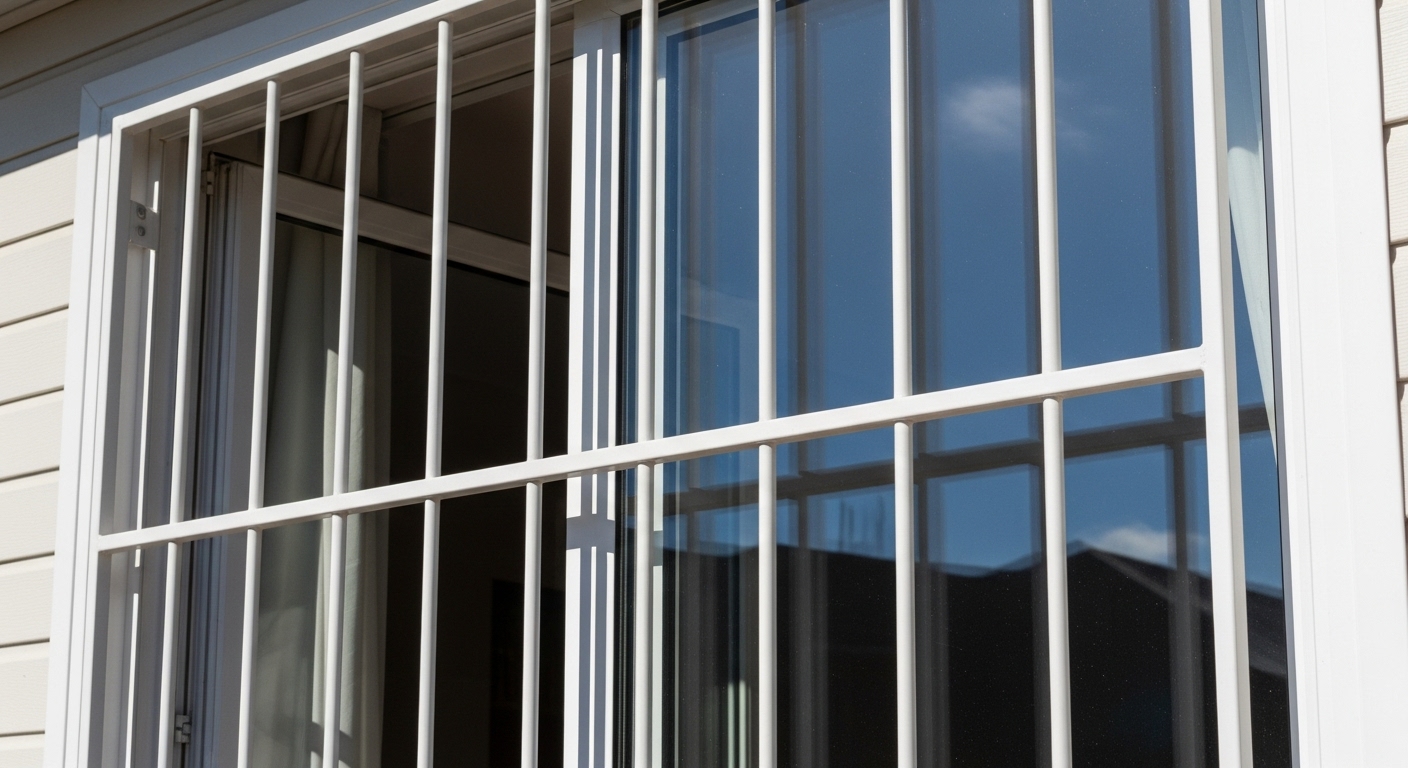
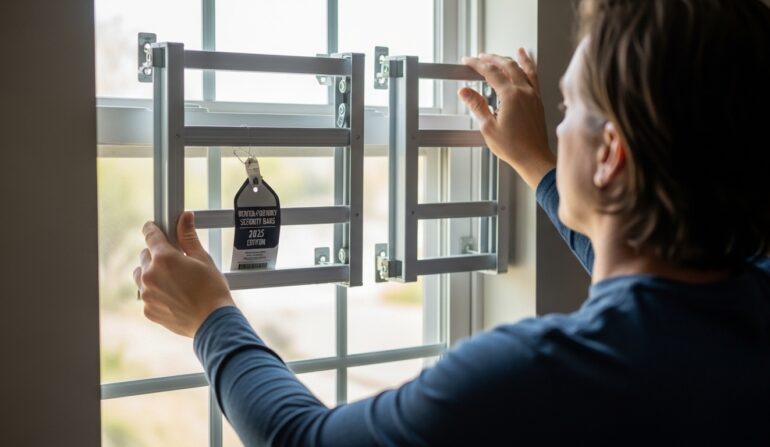
Sliding windows are great for ventilation—but their wide openings are also easy targets. Traditional, single-piece guards rarely match the span, which is why modular window bars are ideal for sliders. With SWB’s telescopic height and modular width, you start with one core module and add side-by-side modules until you cover the full width—perfect for two-panel and three-panel sliders. This guide shows you how to measure a slider, choose frame vs wall mount, decide when you need a quick-release (egress), and calculate module counts for common window sizes. By the end, you’ll know exactly which SWB model to pick—and how to install it cleanly.

Why sliders need a modular approach

  • Big spans: Two- and three-panel sliders often exceed a single guard’s width.
  • Consistent look: Modules create a continuous barrier across the track span.
  • Fewer custom orders: Expand width with add-on modules instead of made-to-order ironwork.
  • Flexible mounting: Choose frame-mount for a tight look or wall-mount to handle masonry or out-of-square openings (see Model B).

How to measure a sliding window

  1. Width (W): Measure the clear opening from left jamb to right jamb. If trim projects into the opening, measure between the tightest points.
  2. Height (H): Measure from sill to head where the bar set will sit.
  3. Check obstructions: Note handles, blinds, screens, or tracks that could interfere with bar placement or a quick-release swing.
  4. Confirm surface: Decide frame vs wall mount based on structure (wood frame vs brick/block/stucco).


Now match H to a telescopic range, then plan modules to cover W.

Module planning for common slider widths

Rule of thumb: Start with one core module, then add modules until you reach or slightly exceed your measured width W. Center the assembly visually.

  • 48–60 two-panel slider: Core module often covers the majority; add 1 module to complete the span.
  • 60–72 two-panel slider: Core + 1–2 modules depending on exact W and preferred standoff.
  • 72–79 wide slider: Core + 2–3 modules (maximum recommended width for the family).
  • Multi-group slider (wider than ~79): Use two adjacent assemblies (e.g., left bay + right bay), or contact us for layout help.


Need an exact recommendation? Use our module calculator to get an accurate idea of how many modules you need.

Frame-mount vs wall-mount on sliders

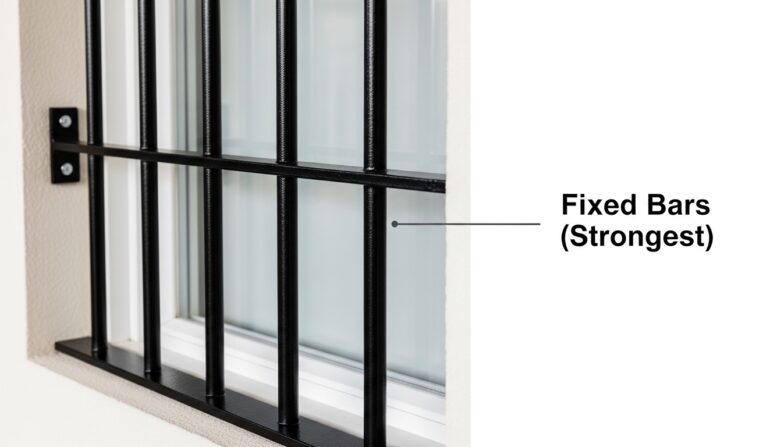
Frame-mount (Model A or B): Clean look, minimal standoff; ideal when the frame is plumb and solid.

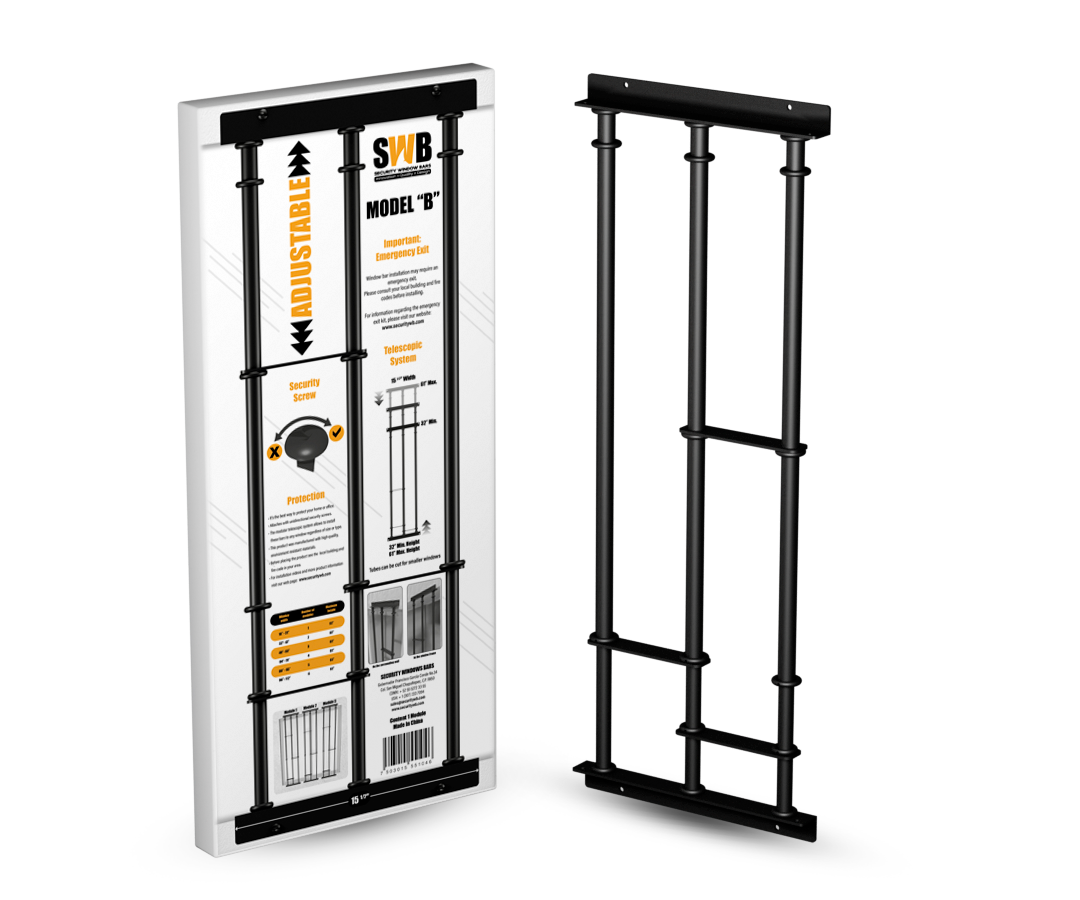
Wall-mount (Model B recommended): Best for brick/block, stucco over masonry, or twisted/out-of-square frames. Wall-mounting helps keep long runs straight and level over wide spans.

Frame-mount vs wall-mount-A

Do you need a quick-release (egress)?

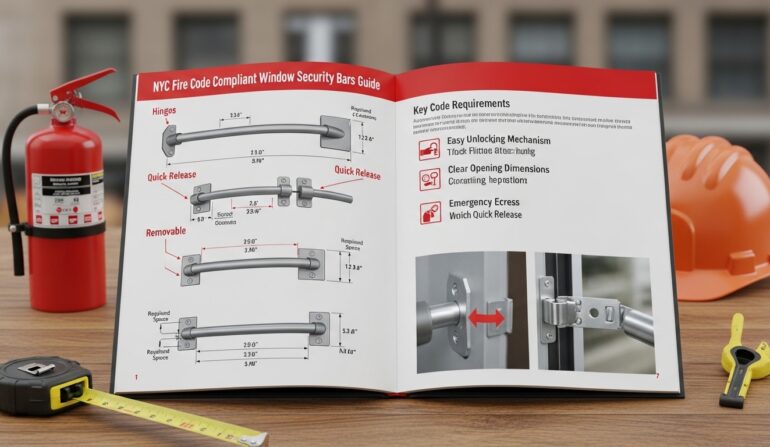
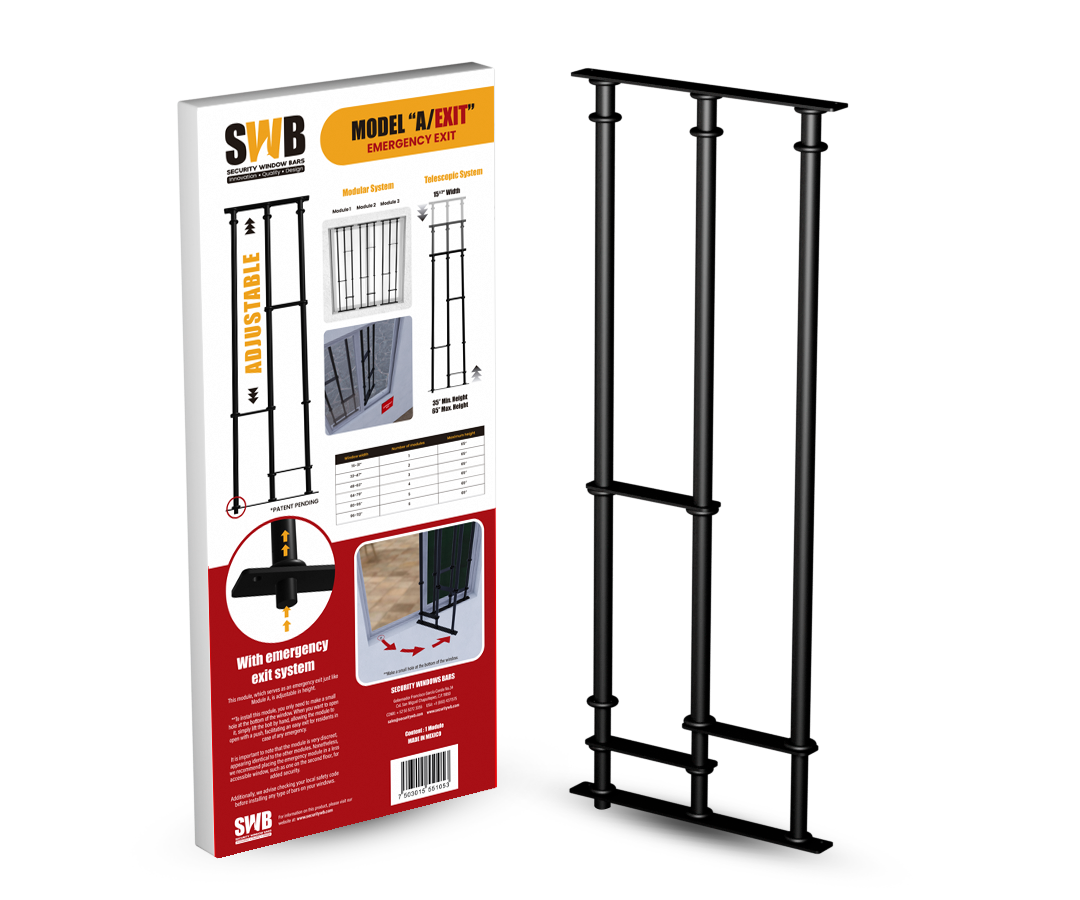
f the slider serves as an emergency exit, choose Emergency-Exit. A quick-release lets occupants open the bars from the inside. Always verify local rules and test the release after installation. For a broader view of alternatives (clear bars and security screens).

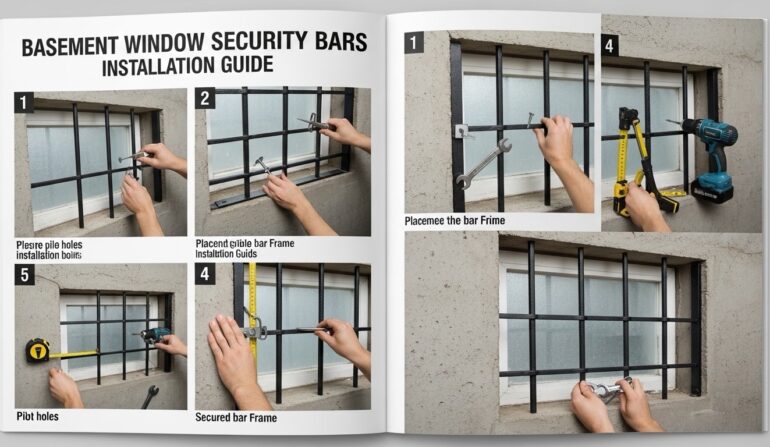
Installation overview for wide sliders (high-level)

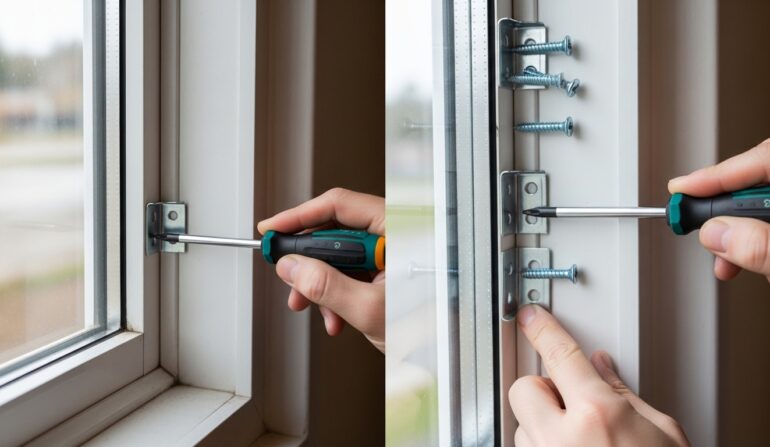
  1. Dry-fit the core module at mid-span; level and plumb.
  2. Mark holes and drill (wood pilot holes or hammer-drill for masonry).
  3. Mount the core snugly; verify it sits within the telescopic “sweet spot.”
  4. Add modules side-by-side until you reach your total width; keep gaps uniform.
  5. Check interference with handles/blinds; adjust standoff if needed (wall-mount helps).
  6. Torque fasteners to spec; confirm tamper points.
  7. If using Emergency-Exit, operate the release and swing test fully; ensure furniture and blinds don’t block it.
    Full details and anchor guidance: Install Guides.

SWB models for sliding windows

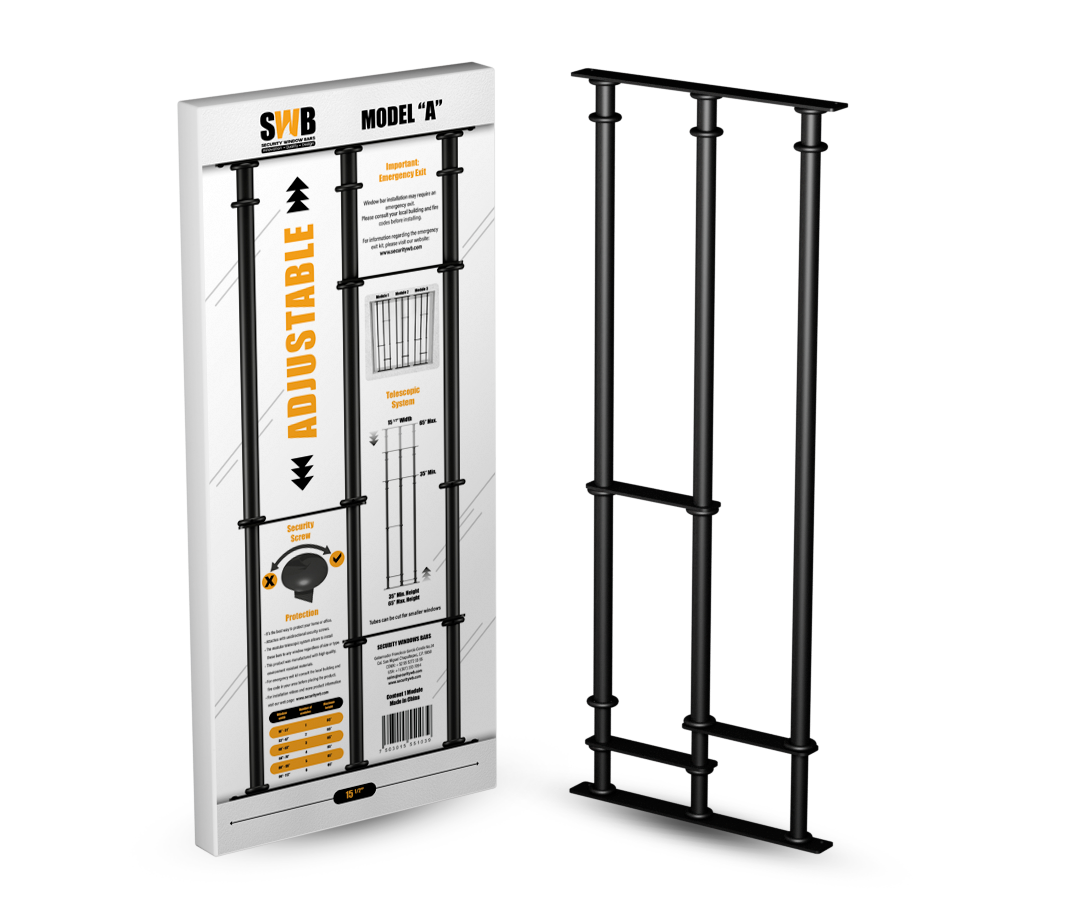
  • Model A — Telescopic height + modular width; supports frame or wall-mount. Great default for most sliders. Go to Model «A»
  • Model B — All the above with a focus on wall-mount versatility (brick/block, uneven frames, long spans). Go to Model «B»
  • Emergency-Exit — Adds quick-release for egress-critical sliders (basements/bedrooms per local rules). Go to Model «A/EXIT»

Common mistakes on sliders (avoid these)

  • Under-speccing modules (leaves exposed glass at the latch side).
  • Over-extending the telescopic range instead of adding a module.
  • Anchoring into stucco only (no structural embed).
  • Ignoring standoff: bars colliding with handles or blinds.
  • Skipping the release test on egress sliders.

Sample layouts (for quick planning)

Two-panel slider, ~60 W × 48 H

  • Pick telescopic range that comfortably covers 48 H.
  • Core + 1 module; center on opening; frame-mount if the jamb is solid.

Two-panel slider, ~72 W × 52 H

  • Core + 2 modules; wall-mount recommended on masonry or uneven frames.

Three-panel slider, ~79 W × 54 H

  • Core + 3 modules (max span). If wider, split into two assemblies (left/right).

Sliders demand width—and modular window bars deliver it without custom ironwork. With SWB’s telescopic height and modular width, you can secure two- and three-panel sliders cleanly, choose frame or wall-mount for real-world conditions, and add a quick-release where code calls for egress. Measure, match the telescopic range, add modules for width, and you’re done.

EMAIL ADDRESS: sales@securitywb.com
SITE: www.securitywb.com
PHONE:
CDMX: +52 (55) 5272 3355  USA: +1 (650) 4371 575

COOKIES POLICY

Security Window Bars LLC ("SWB") uses cookies and similar technologies to improve your browsing experience and enhance the functionality of our website www.securitywb.com (the “Website”). This Cookies Policy explains what cookies are, how we use them, and how you can manage your cookie preferences.

By using our Website, you agree to our use of cookies as described in this policy.

Last Updated: 01/01/25