
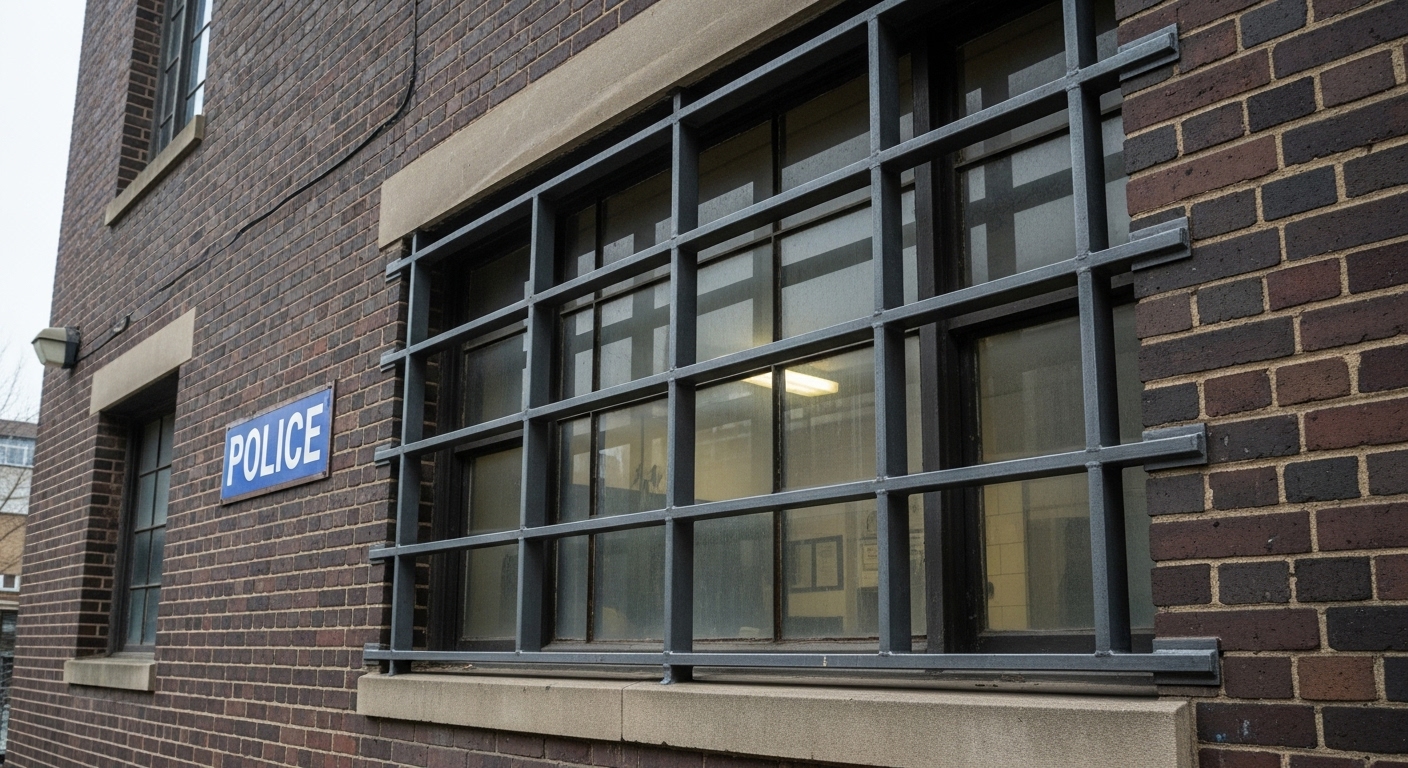
Police stations and law enforcement buildings occupy a unique position in public infrastructure. They are simultaneously places of authority, public service, detention, evidence storage, and emergency response coordination. As such, their security requirements go far beyond those of typical government offices.
In 2026, window bars for police stations and law enforcement buildings remain a foundational element of physical security strategies. When properly designed and installed, window bars protect critical areas, safeguard officers and detainees, and reinforce operational integrity without compromising public accessibility or regulatory compliance.
Unlike most public buildings, police stations operate under constant exposure to heightened risk. These facilities routinely manage individuals under arrest, store sensitive evidence, and house operational intelligence.
Windows within police buildings often serve administrative offices, holding areas, stairwells, and perimeter-facing rooms. Without adequate protection, these openings can become vulnerabilities exploited for escape attempts, contraband delivery, or unauthorized entry.
Window bars provide a passive but highly effective layer of security. Unlike electronic systems, they do not rely on power, network connectivity, or human response time.
In police stations, window bars are commonly installed in:
By physically preventing unauthorized access or escape, window bars reinforce custodial control while supporting broader security protocols.
One of the most critical considerations in law enforcement facility design is the balance between officer safety, detainee control, and public accessibility.
Window bars contribute directly to officer safety by reducing the number of unsecured access points. They also help prevent detainees from exploiting windows as escape routes or communication points.
At the same time, modern designs ensure that window bars do not create an intimidating environment for members of the public accessing front-facing areas of police stations.
Police stations house evidence that can determine the outcome of criminal cases. Unauthorized access to evidence rooms or administrative areas can compromise investigations and expose agencies to legal liability.
Window bars protect:
From a liability perspective, documented physical security measures demonstrate due diligence, reducing exposure in the event of security incidents.
Government buildings, including police stations, must comply with strict fire and life-safety codes. Window bars are fully compatible with these regulations when designed correctly.
Compliance ensures that security enhancements do not interfere with emergency evacuation procedures.
Window bars used in police stations must meet higher technical standards than those used in residential or standard commercial settings.
These requirements ensure long-term reliability under continuous use.
| Security Measure | Effectiveness | Reliability | Operational Impact |
|---|---|---|---|
| Window Bars | High | Very High | Minimal |
| Electronic Alarms | Medium | High | Reactive |
| Security Screens | Low | Medium | Limited |
Law enforcement agencies across the world deploy window bars in highly specific, strategic ways rather than as a one-size-fits-all solution. Their placement is based on threat modeling, building layout, and operational requirements.
Common real-world use cases include:
In urban police stations, window bars are often integrated discreetly to avoid creating an oppressive appearance while still delivering robust physical security. In rural or standalone facilities, they serve as a critical first line of defense due to limited staffing and response times.
Window bars are not intended to function in isolation. In modern police facilities, they are integrated into a layered security architecture that includes:
This layered approach ensures that even if one system fails or is bypassed, others remain in place to maintain security. Window bars provide the critical advantage of being entirely passive, requiring no activation, power, or monitoring.
From an operational standpoint, this reduces cognitive and workload strain on officers, allowing them to focus on policing duties rather than constant facility monitoring.
Police departments operate under intense public scrutiny and legal oversight. Any security measure implemented within a law enforcement facility must withstand review from regulatory bodies, courts, and the public.
Properly installed window bars support government accountability by demonstrating:
In contrast, failure to secure known vulnerabilities—such as unsecured windows— can expose agencies to liability claims and reputational damage following incidents.
While exact statistics vary by jurisdiction, security assessments consistently indicate that physical barriers significantly reduce unauthorized access attempts. In police facilities, even small reductions in incident frequency can have outsized operational benefits.
Documented outcomes associated with robust physical security include:
From a management perspective, these improvements translate into lower operational costs, reduced internal investigations, and stronger public confidence.
Modern policing emphasizes transparency, community engagement, and trust-building. Physical security measures must support these goals rather than undermine them.
Contemporary window bar designs allow agencies to:
This balance is critical. Security that feels excessive or punitive can negatively impact community relations, while insufficient security places officers and facilities at risk.
Law enforcement facilities operate continuously, often for decades. Security infrastructure must therefore be designed for longevity and ease of maintenance.
Best practices for window bar maintenance include:
Regular inspection ensures continued compliance with safety codes and preserves the effectiveness of the security system over time.
Yes. Window bars are a common and widely accepted security feature in police stations, particularly in detention areas, evidence rooms, and ground-level facilities.
No. When properly designed and installed, window bars enhance safety without infringing on detainee rights or humane treatment standards.
Yes. Modern systems are engineered with compliant release mechanisms and approved installation practices.
In most cases, they are installed in non-public or controlled areas, or designed to be visually unobtrusive.
Yes. By physically eliminating common vulnerabilities, window bars reduce both security incidents and operational disruptions.
Window bars for police stations and law enforcement buildings are not merely architectural features—they are a foundational component of operational security, officer safety, and public accountability.
In an era of evolving threats and heightened scrutiny, investing in robust, code-compliant physical security measures is a practical and responsible decision for law enforcement agencies of all sizes.
By integrating window bars into a layered security strategy, agencies can protect their personnel, preserve the integrity of their operations, and reinforce public trust in the institutions tasked with maintaining safety and order.
Security WB Home
EMAIL ADDRESS: sales@securitywb.com
SITE: www.securitywb.com
PHONE:
CDMX: +52 (55) 5272 3355 USA: +1 (650) 4371 575
COOKIES POLICY
Security Window Bars LLC ("SWB") uses cookies and similar technologies to improve your browsing experience and enhance the functionality of our website www.securitywb.com (the “Website”). This Cookies Policy explains what cookies are, how we use them, and how you can manage your cookie preferences.
By using our Website, you agree to our use of cookies as described in this policy.
Last Updated: 01/01/25