Window fall prevention isn’t a “freak accident” category—it’s a predictable household risk with patterns you can design out of your home. In the United States, thousands of children are treated in emergency departments every year after falling from windows, and safety officials have warned for decades that these incidents rise during warmer months when families open windows for ventilation. (U.S. Consumer Product Safety Commission)
The hard truth is simple: a single open window can become a fall hazard in seconds—especially when a toddler discovers a new climbing skill overnight. The room didn’t change. The child changed. That’s why window fall prevention works best when it’s built into your environment, not dependent on perfect supervision.
This guide turns window fall prevention into an actionable, room-by-room system. You’ll learn how falls happen, which rooms create the highest risk, which devices actually work (and which ones don’t), and how to protect kids without creating an emergency trap. Because real home safety is not just “anti-intruder.” It’s anti-tragedy.
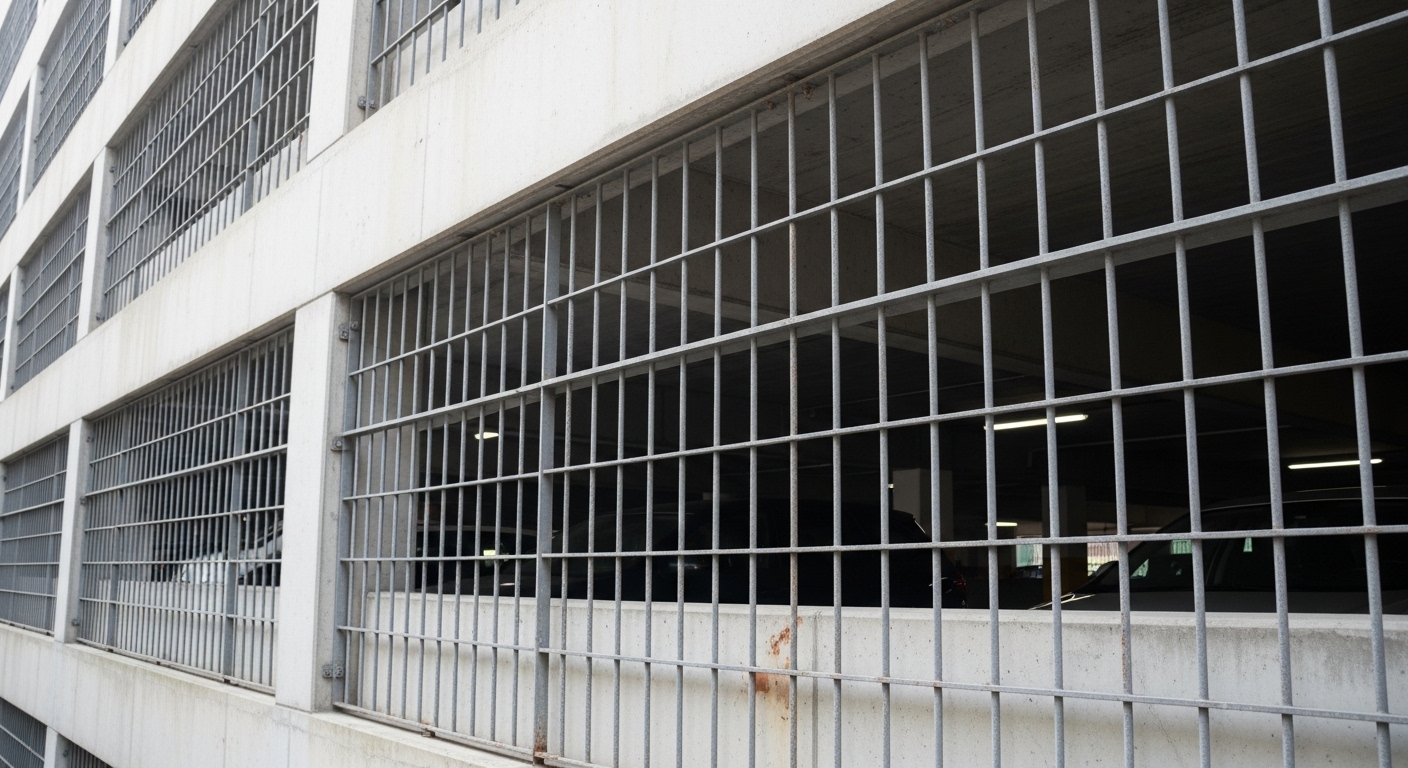
Parking garages and parking structures are often overlooked in security planning, yet they represent some of the most vulnerable and liability-heavy environments in modern urban infrastructure. These facilities combine limited visibility, multiple access points, and prolonged periods of low supervision.
This is why window bars for parking garages and parking structures play an essential role in physical security strategies in 2026. Properly designed window bars help prevent unauthorized access, reduce crime, support compliance, and protect both people and property.
Unlike office buildings or residential properties, parking structures are designed primarily for vehicle storage and circulation, not human occupation. This creates distinct security challenges that require specialized solutions.
Windows in parking garages often connect to stairwells, offices, storage rooms, and perimeter-facing walls. These windows are frequently targeted as points of unauthorized entry because they are perceived as weak or unmonitored.
Window bars provide a passive, always-on layer of protection that does not depend on power, connectivity, or human response. In parking garages, this reliability is especially important.
Common applications include:
By securing these vulnerable openings, window bars significantly reduce the likelihood of trespassing, vandalism, and theft while complementing other security measures such as lighting and surveillance.
Parking garages are frequently associated with property crime, vehicle theft, and personal safety incidents. From an owner or operator perspective, this translates into legal exposure and reputational risk.
When a window is used as an unauthorized access point, questions of negligence and duty of care often arise. Properly installed window bars demonstrate a proactive approach to risk mitigation.
Security assessments consistently show that physical barriers reduce opportunistic crime by increasing effort, visibility, and time required to gain access.
One of the most common concerns regarding window bars in parking garages is compliance with fire and life-safety codes. Modern systems address these concerns through engineered design.
When properly specified, window bars can fully comply with applicable fire codes while still delivering robust security.
Parking garages present harsh environmental conditions that place significant demands on physical security products.
For these reasons, window bars used in parking structures must be manufactured from durable materials, treated with corrosion-resistant finishes, and securely anchored to structural elements.
| Security Measure | Effectiveness | Reliability | Maintenance |
|---|---|---|---|
| Window Bars | High | Very High | Low |
| Cameras | Medium | High | Medium |
| Alarms | Medium | Medium | Medium |
The most effective parking security strategies use window bars as a foundational layer, supported by lighting, surveillance, and access control.
Window bars are widely used in both private and public parking structures, including:
In each case, window bars are deployed selectively to protect critical areas without creating a restrictive or hostile environment.
Insurance providers increasingly evaluate physical security measures when assessing risk and premiums for parking structures. Facilities with documented security upgrades often benefit from:
Window bars contribute directly to these outcomes by addressing one of the most common access vulnerabilities.
Yes. When properly designed and installed, window bars are commonly used in parking garages and comply with building and fire codes.
No. They are designed to allow airflow while preventing unauthorized entry.
Yes. Physical barriers are proven to deter opportunistic crime.
Window bars for parking garages and parking structures provide a practical, durable, and compliant solution to some of the most persistent security challenges in urban environments.
By integrating window bars into a layered security strategy, owners and operators can reduce risk, improve safety, and demonstrate responsible infrastructure management.
Security WB HomeCOOKIES POLICY
Security Window Bars LLC ("SWB") uses cookies and similar technologies to improve your browsing experience and enhance the functionality of our website www.securitywb.com (the “Website”). This Cookies Policy explains what cookies are, how we use them, and how you can manage your cookie preferences.
By using our Website, you agree to our use of cookies as described in this policy.
Last Updated: 01/01/25