Window fall prevention isn’t a “freak accident” category—it’s a predictable household risk with patterns you can design out of your home. In the United States, thousands of children are treated in emergency departments every year after falling from windows, and safety officials have warned for decades that these incidents rise during warmer months when families open windows for ventilation. (U.S. Consumer Product Safety Commission)
The hard truth is simple: a single open window can become a fall hazard in seconds—especially when a toddler discovers a new climbing skill overnight. The room didn’t change. The child changed. That’s why window fall prevention works best when it’s built into your environment, not dependent on perfect supervision.
This guide turns window fall prevention into an actionable, room-by-room system. You’ll learn how falls happen, which rooms create the highest risk, which devices actually work (and which ones don’t), and how to protect kids without creating an emergency trap. Because real home safety is not just “anti-intruder.” It’s anti-tragedy.
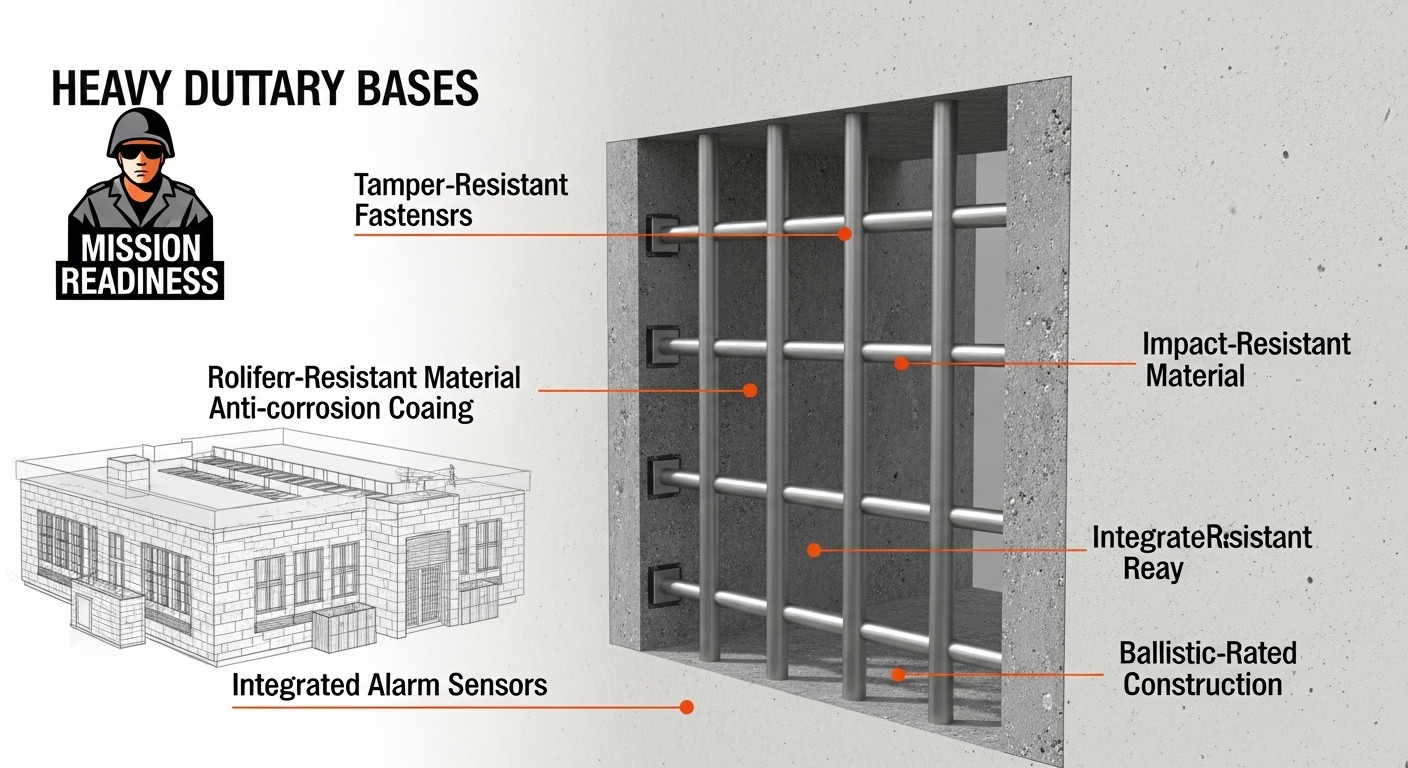
Military bases and defense facilities are among the most security-sensitive environments in the world. They support national defense operations, house critical personnel and assets, and often contain classified systems and mission-essential infrastructure.
In 2026, window bars for military bases and defense facilities remain a fundamental component of layered physical security strategies. Properly engineered window bars help prevent unauthorized access, reduce sabotage risk, and reinforce force protection without interfering with operational readiness or safety requirements.
Unlike civilian facilities, military bases operate under a threat model that includes both conventional and unconventional risks. These installations are designed to function under elevated security conditions at all times.
Windows in military buildings—such as administrative offices, barracks, logistics centers, and support facilities—can become potential vulnerabilities if not properly secured. Even secondary or non-public windows may be targeted for surveillance, contraband delivery, or forced entry.
Window bars serve as a passive, always-on security layer that complements other defense-grade security measures. Unlike electronic systems, they do not rely on power, networks, or human response time.
In military installations, window bars are commonly deployed in:
By physically preventing unauthorized access, window bars eliminate entire classes of attack vectors and reduce the burden on active security systems.
Force protection is a core principle of military security doctrine. It encompasses measures designed to safeguard personnel, resources, and operations from harm.
Window bars contribute directly to force protection by:
From a personnel safety perspective, window bars also help prevent intrusion during off-duty hours, training periods, and deployment cycles when staffing levels may fluctuate.
Military facilities must account for a wide range of threat scenarios, including those involving insider risk. Windows are often targeted because they are perceived as less monitored than primary entrances.
Potential threat scenarios include:
Window bars mitigate these risks by physically restricting access and limiting the ability to exploit architectural features for hostile purposes.
Despite their enhanced security requirements, military facilities must still comply with fire, building, and life-safety regulations. Window bars can fully comply with these standards when properly specified.
Compliance ensures that security enhancements do not compromise emergency evacuation or personnel safety.
Window bars used in military environments must meet rigorous technical requirements that exceed those of most civilian installations.
These design standards ensure long-term reliability under continuous use and elevated threat conditions.
| Security Measure | Effectiveness | Reliability | Operational Impact |
|---|---|---|---|
| Window Bars | High | Very High | Minimal |
| Electronic Alarms | Medium | High | Reactive |
| Security Screens | Low | Medium | Limited |
COOKIES POLICY
Security Window Bars LLC ("SWB") uses cookies and similar technologies to improve your browsing experience and enhance the functionality of our website www.securitywb.com (the “Website”). This Cookies Policy explains what cookies are, how we use them, and how you can manage your cookie preferences.
By using our Website, you agree to our use of cookies as described in this policy.
Last Updated: 01/01/25