
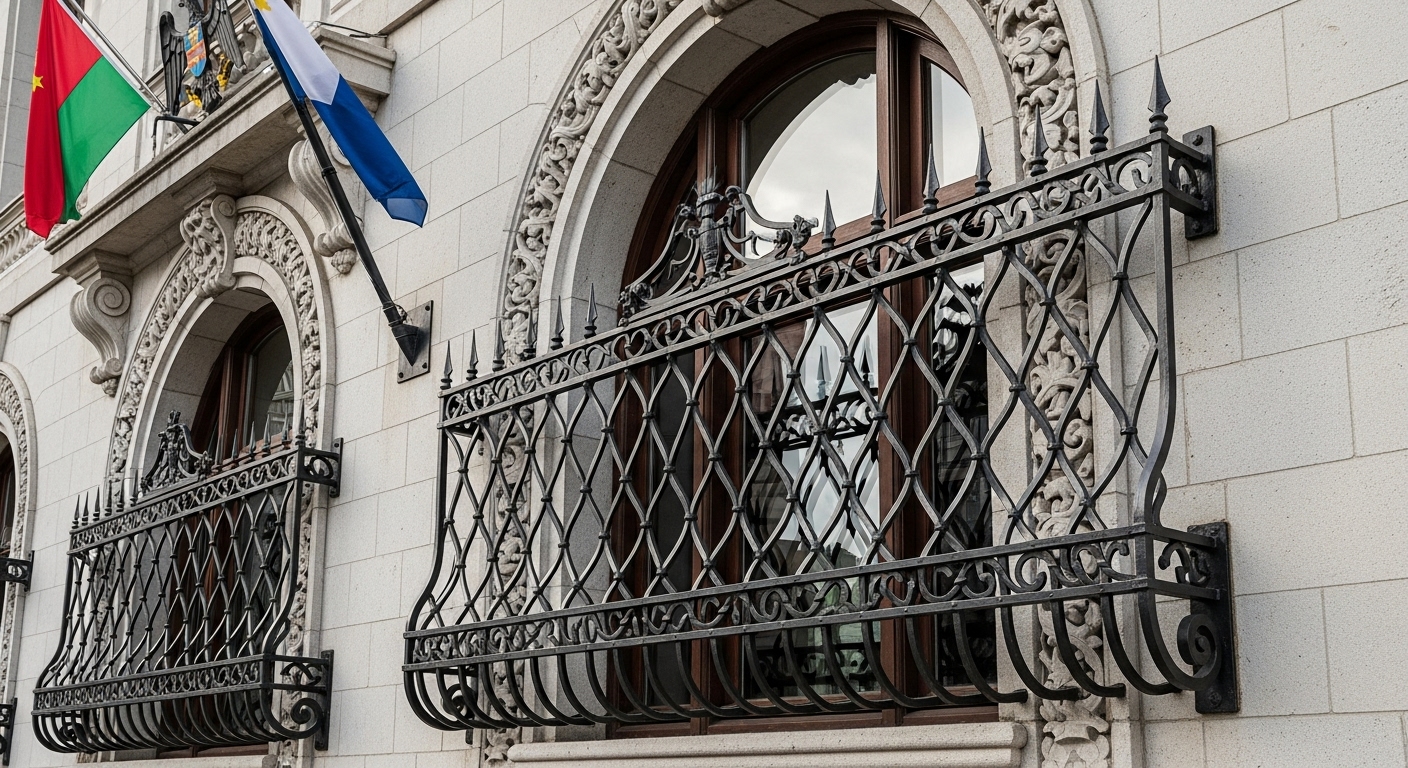
Embassies and diplomatic buildings are unique sovereign outposts operating within foreign jurisdictions. They represent national authority, house sensitive personnel and information, and frequently function under elevated threat conditions.
In 2026, window bars for embassies and diplomatic buildings remain a critical element of layered physical security strategies. Properly engineered window bars protect personnel, safeguard sensitive operations, and reinforce sovereign security without compromising diplomatic function or regulatory compliance.
Embassies face threat profiles unlike those of typical government or commercial buildings. They are often high-visibility targets for political expression, hostile intelligence activity, and symbolic attacks.
Windows in diplomatic facilities—serving offices, residences, archives, and perimeter-facing rooms—can become vulnerabilities if not properly secured.
Window bars provide a passive, always-on layer of security that complements diplomatic security protocols. Unlike electronic systems, they function independently of power and networks.
In embassies and consulates, window bars are commonly installed in:
By physically preventing unauthorized access, window bars eliminate common intrusion vectors and reduce reliance on active monitoring systems.
Diplomatic facilities must protect both people and sovereign assets. This includes diplomats, local staff, visiting officials, classified materials, and secure communications infrastructure.
Window bars contribute to sovereign protection by:
From a personnel safety perspective, window bars reduce exposure during off-hours, public demonstrations, and periods of heightened threat.
Embassies must account for a wide range of threat scenarios, from low-level opportunistic intrusion to highly organized hostile actions.
Common scenarios include:
Window bars mitigate these risks by physically restricting access and limiting the ability to exploit architectural features.
Despite enhanced security needs, diplomatic buildings must comply with local building codes, fire regulations, and international safety standards.
Proper compliance ensures that security enhancements support life safety without compromising emergency evacuation.
Window bars used in embassies must meet rigorous technical standards due to their operational sensitivity and long-term use.
These standards ensure reliability under continuous exposure and elevated security conditions.
| Security Measure | Effectiveness | Reliability | Operational Impact |
|---|---|---|---|
| Window Bars | High | Very High | Minimal |
| Electronic Alarms | Medium | High | Reactive |
| Security Screens | Low | Medium | Limited |
Embassies and consulates deploy window bars based on threat assessments, building layout, and the diplomatic functions housed within each area. Their placement is deliberate and aligned with international security protocols.
Common real-world use cases include:
In high-risk regions, window bars are often part of a broader hardened envelope that includes blast-resistant glazing, perimeter setbacks, and controlled access.
Diplomatic security relies on a layered approach that combines physical, procedural, and personnel-based measures. Window bars serve as a foundational, passive layer within this framework.
They are typically integrated with:
By eliminating window-based vulnerabilities, window bars reduce the number of threat vectors that active security systems must monitor, improving overall resilience and response effectiveness.
Diplomatic missions operate under intense scrutiny from both home governments and host nations. Physical security measures must be defensible, documented, and compliant with applicable regulations.
Properly specified window bars demonstrate:
From an accountability perspective, these measures help reduce liability and demonstrate due diligence in the protection of diplomatic personnel.
Embassies must balance robust security with the need to conduct diplomacy, host meetings, and engage with the public. Security features must support, not hinder, these functions.
Modern window bar systems are designed to:
This balance is essential to preserving the symbolic openness of diplomacy while ensuring physical protection.
Diplomatic facilities must remain secure during crises such as civil unrest, natural disasters, or geopolitical escalation. Physical security measures must function independently of external systems.
Window bars contribute to resilience by:
This reliability is critical in environments where electronic systems may be compromised or overwhelmed.
Embassies and diplomatic buildings are long-term assets, often occupying historic or architecturally significant structures. Security infrastructure must therefore be durable and maintainable.
Best practices for window bar maintenance include:
These practices ensure continued compliance and effectiveness throughout the facility’s operational lifespan.
Yes. Window bars are widely used in embassies and diplomatic buildings, particularly in ground-level and residential areas.
No. When properly designed, they enhance security without interfering with diplomatic functions or host-nation relations.
Yes. Modern systems are engineered to meet local and international fire and life-safety requirements.
They are often discreetly integrated or installed in non-public areas to minimize visual impact.
Yes. By physically eliminating common vulnerabilities, window bars significantly reduce intrusion and sabotage risk.
Window bars for embassies and diplomatic buildings are not merely architectural features. They are a critical component of sovereign protection, personnel safety, and operational continuity.
By integrating robust, code-compliant window bar systems into a layered security strategy, diplomatic missions can protect their staff, safeguard sensitive operations, and maintain stability even under elevated threat conditions.
In an increasingly complex global environment, investing in reliable physical security measures is essential to preserving the integrity and function of diplomatic institutions.
Security WB Home


EMAIL ADDRESS: sales@securitywb.com
SITE: www.securitywb.com
PHONE:
CDMX: +52 (55) 5272 3355 USA: +1 (650) 4371 575
COOKIES POLICY
Security Window Bars LLC ("SWB") uses cookies and similar technologies to improve your browsing experience and enhance the functionality of our website www.securitywb.com (the “Website”). This Cookies Policy explains what cookies are, how we use them, and how you can manage your cookie preferences.
By using our Website, you agree to our use of cookies as described in this policy.
Last Updated: 01/01/25