

Window Bars: The Complete Security Guide for American Homeowners, Renters, and Property Managers in 2026
Everything you need to know about window bars in 2026: types, costs, codes, and DIY installation. Protect your home starting at $90. Shop SWB on Amazon USA.
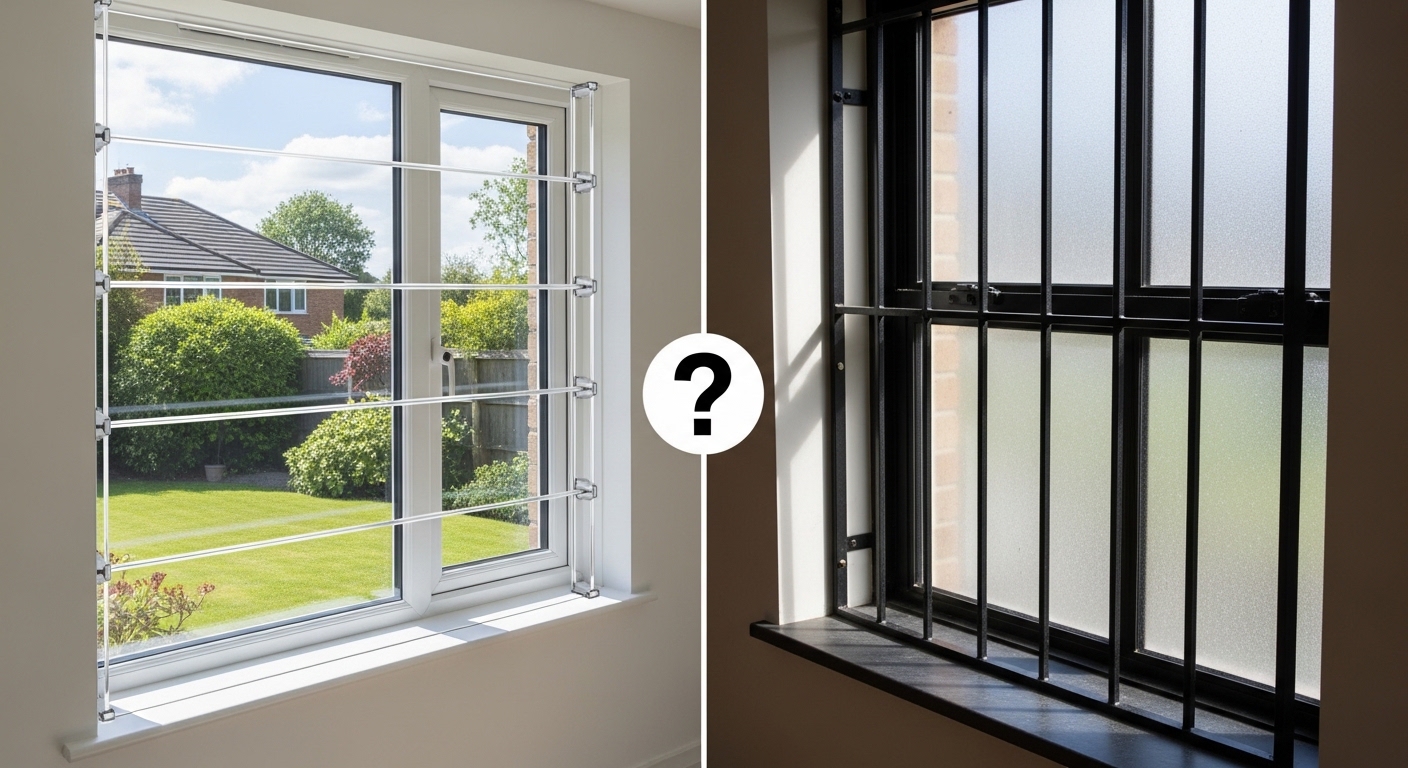
From our experience protecting thousands of homes across the USA, SWB analyzes the best strategies so you can sleep soundly. Window bars remain one of the most effective and cost-efficient physical deterrents against home intrusion in the United States — and the data backs that up. According to the FBI Uniform Crime Report, approximately 6.7 million home burglaries occur in the USA every year, with nearly 60% of all forced entries coming through ground-floor windows and doors. Yet millions of American families — especially the 44.1 million apartment renters documented by the US Census Bureau (2023) — have no permanent, affordable solution installed on their windows today. The average cost of a professional window bar installation runs between $600 and $1,800 per window, pricing out a huge segment of the population. Security Window Bars (SWB) was built specifically to solve this problem: delivering steel-strength window bars that any homeowner or renter can install in under 20 minutes, without a contractor, without permanent drilling damage, and without breaking the bank. This guide covers everything you need to know about window bars in 2026 — from types and materials to building codes, egress compliance, and smart buying decisions.
Window bars serve two distinct security functions: visual deterrence and physical barrier. Visual deterrence works because most burglars conduct a quick visual…
What Are Window Bars and Why Does Your Home Need Them in 2026?
Window bars — also widely known as burglar bars, window guards, or window security bars — are reinforced steel or iron frameworks installed across window openings to prevent unauthorized entry. They are one of the oldest forms of perimeter security and, according to the US Department of Justice, one of the most statistically effective passive deterrents against residential burglary. Studies consistently show that burglars overwhelmingly prefer soft targets — homes with no visible security reinforcement. A window with steel bars is not a soft target.In 2026, the market for residential security hardware in the USA is expanding rapidly. Rising property crime rates in major cities like Memphis, Detroit, Chicago, and Philadelphia have pushed demand for reliable, affordable window security solutions to record highs. Meanwhile, the growth of remote work has made home security a priority for a new generation of homeowners who spend more time at home and invest more in protecting it.Critically, the traditional model of hiring a welder or contractor to permanently install window bars is becoming obsolete. Modern adjustable window bars from brands like Security Window Bars (SWB) allow homeowners and renters to install professional-grade protection themselves — no permits, no contractors, no permanent modifications to the property. This is a fundamental shift in how Americans protect their homes, and it starts with understanding the different types of window bars available today.
The Core Purpose: Deterrence vs. Physical Barrier
Window bars serve two distinct security functions: visual deterrence and physical barrier. Visual deterrence works because most burglars conduct a quick visual assessment before attempting entry. According to a University of North Carolina criminology study, 83% of convicted burglars said they actively looked for signs of security before choosing a target. Visible steel window bars are one of the strongest deterrents available — they signal that forced entry through that window will be slow, noisy, and difficult.The physical barrier function is equally important. Even if a burglar decides to attempt entry, heavy-gauge steel window bars create a delay measured in minutes — and most residential burglaries are abandoned within 60 seconds if the intruder encounters resistance. A properly installed set of window bars effectively removes the window as a viable entry point, forcing any would-be intruder to seek a less secure alternative or abandon the attempt entirely.
Steel vs. Iron vs. Aluminum Window Bars
Not all window bar materials perform equally. Wrought iron is traditional but heavy and prone to rust without proper coating. Aluminum is lightweight but far weaker under lateral force — it can be bent or cut with basic hand tools. Heavy-gauge steel, like that used in all SWB models, delivers the best strength-to-weight ratio for residential applications, especially when finished with powder-coat protection against corrosion. For most American homes and apartments, galvanized or powder-coated steel bars represent the gold standard of window security hardware in 2026.Who Needs Window Bars the Most? A Realistic Risk Assessment
Not every home faces identical burglary risk, but certain profiles are statistically far more vulnerable. Ground-floor apartments in dense urban neighborhoods are the highest-risk category. If you live in a ground-floor apartment in Chicago's South Side, Houston's East End, or Los Angeles's Mid-City neighborhood, your window is a potential entry point that street-level foot traffic can see and assess 24 hours a day.Basement windows represent another critical vulnerability — particularly in older cities like New York, Philadelphia, and Baltimore, where brownstone and row-home basements often have small, street-accessible windows that are easy to breach and difficult to hear from inside. Homeowners with attached garages featuring interior windows, parents concerned about child window safety and fall prevention, landlords managing multi-unit properties, and AirBnB hosts responsible for guest security all represent high-priority candidates for window bars. The common denominator is simple: if a window is accessible from the outside — at ground level, from a fire escape, or near a tree or ledge — it needs reinforcement.
Types of Window Bars: Choosing the Right Model for Your Home or Apartment
The window bar market in 2026 offers more options than ever before, ranging from permanently welded custom installations to modern adjustable systems that require no drilling. Understanding the fundamental differences between each type is essential before making a purchasing decision. The wrong choice can mean spending thousands of dollars on permanent hardware that violates your lease, or selecting a product that doesn't actually fit your window dimensions. At Security Window Bars, our product lineup is designed to cover the three most common residential use cases in the American market: adjustable bars for renters, permanent wall-mount bars for homeowners, and egress-compliant bars for sleeping areas and bedrooms.
Model A — Telescopic Window Bars: The Renter's Best Solution
The SWB Model A Telescopic Window Bars ($90) are engineered specifically for the 44.1 million American apartment renters who need professional-grade window security without violating lease agreements or causing permanent damage to their rental unit. The fully telescopic steel frame adjusts to fit any window between 22 and 36 inches wide — covering the vast majority of standard US window sizes found in apartments built between 1950 and today.Installation takes between 15 and 20 minutes for most users with no special tools required, and the bars can be removed just as easily when you move out. The matte black powder-coat finish blends with modern window frames and doesn't look institutional. For renters in cities like NYC, Chicago, Atlanta, or Denver who can't get their landlord to install permanent security hardware, the Model A is the practical, affordable, and lease-compliant answer.
Telescopic Mechanism: How It Works
The telescopic system uses an internal sliding steel channel that extends to the exact width of your window frame, creating tension-based compression against the window jamb. This compression, combined with the structural rigidity of the steel bar assembly, creates a barrier that resists lateral force without any screws penetrating the wall or frame. The result is a window bar installation that is functionally equivalent to welded bars in terms of entry resistance, but fully removable in minutes. Learn more at the Window Bar Installation Guide.Model B — Wall-Mount Window Bars: Permanent Protection for Homeowners
The SWB Model B Wall-Mount Window Bars ($91) are designed for homeowners, property managers, and commercial property owners who want the maximum level of permanent window security. Constructed from heavy-gauge steel with a powder-coated black finish, these bars are anchored directly into the wall framing around the window — not just the drywall — creating a fixed barrier that cannot be dislodged by any standard forced-entry technique.Model B is the go-to solution for ground-floor windows on commercial properties, retail storefronts, garages with interior windows, and any residential window on a property that the owner controls outright. Landlords who own buildings in high-crime areas of cities like Memphis, Detroit, or Baltimore often choose Model B for ground-floor units before tenants move in — it's a permanent upgrade that increases property value and reduces insurance claims. Compared to a professional welded installation costing $600 to $1,800, the Model B at $91 represents savings of up to 95% for the security-conscious property owner willing to do a weekend DIY project. Explore the Window Bars — Model B (Wall Mount) for full specifications.
Model A/EXIT — Egress-Compliant Window Bars: Safety and Security Combined
Perhaps the most technically significant product in the SWB lineup is the Model A/EXIT Egress Compliant Window Bars ($92). This patented system addresses one of the most serious concerns in the window bar industry: fire safety. Traditional permanently welded window bars on a bedroom window can trap occupants inside during a fire — and this has led to documented fatalities across the USA.The Model A/EXIT features a patented quick-release mechanism that allows occupants to open the bars from the inside within seconds during an emergency, without tools, while maintaining the same steel-strength security against forced entry from outside. Critically, this product is compliant with the International Building Code (IBC), NFPA 101 Life Safety Code, and OSHA standards. It also meets the IRC emergency egress requirements specifying a minimum 20-inch by 24-inch opening for sleeping areas. For bedrooms on ground floors or lower levels — in cities ranging from Los Angeles to Philadelphia — the Model A/EXIT is not just a smart choice. In many jurisdictions, it may be legally required. Explore full specifications at Window Bars — Model A/EXIT (Egress Compliant).
US Building Codes and Legal Requirements for Window Bars in 2026
One of the most underappreciated aspects of window bar ownership in the United States is legal compliance. Installing the wrong type of window bars — particularly in bedrooms or sleeping areas — can create life-threatening fire hazards and expose property owners to serious legal liability. In 2026, building codes governing window security and egress requirements are stricter and more widely enforced than at any point in the past two decades. Every homeowner, renter, and property manager in the USA should understand these rules before purchasing or installing any window bar system.
IBC, IRC, and NFPA 101: The Three Codes That Govern Window Bar Safety
Three primary regulatory frameworks govern window bars in American residential and commercial construction:**International Building Code (IBC):** The IBC applies primarily to commercial buildings, multi-family residential structures, and new construction projects. It mandates that any security bars installed on windows designated as emergency egress openings must be openable from the inside without special tools or keys.**International Residential Code (IRC):** The IRC governs single-family homes and small multi-family buildings. Under IRC Section R310, sleeping rooms must have at least one emergency escape and rescue opening with a minimum net clear opening of 5.7 square feet, at least 20 inches wide and 24 inches tall. Any window bars installed on these windows must allow the full egress opening to be accessible within seconds.**NFPA 101 — Life Safety Code:** This is the most comprehensive national standard for life safety in buildings. NFPA 101 explicitly addresses window bars and security grilles on egress windows, requiring release mechanisms operable from the inside without keys, tools, or special knowledge.
NYC Local Law 57: Window Guards and Child Safety
New York City has some of the strictest window guard requirements in the nation. Under NYC Local Law 57, landlords are required by law to install window guards in apartments where children under 10 years of age reside, as well as in all common areas of the building. Failure to comply carries significant financial penalties. SWB's Model A telescopic bars and Model A/EXIT egress bars both serve as effective compliant solutions in these contexts — providing the required child fall prevention while maintaining fire egress capability with the quick-release mechanism.Egress Requirements: Why Bedroom Window Bars Must Be Quick-Release
The most critical compliance issue for window bars in American homes is egress. According to the National Fire Protection Association, home fires kill more than 2,500 Americans every year, with the leading cause of fire death being the inability to escape. Permanently welded window bars on bedroom windows — which cannot be opened from the inside — have been directly implicated in preventable fire deaths across the country, from Houston apartment fires to residential fires in Detroit.The solution is unambiguous: any window bars installed in a sleeping area or bedroom must include a quick-release mechanism that can be operated from the inside without tools. The SWB Model A/EXIT was designed specifically to meet this requirement. Its patented release system allows full egress opening in under five seconds, and the mechanism is intuitive enough that children and elderly occupants can operate it without training. For property managers and landlords installing window bars on multi-unit residential buildings, the Model A/EXIT is the only fully code-compliant telescopic option currently available at this price point in the US market. Explore it at Window Bars — Model A/EXIT (Egress Compliant).
Window Bars Installation: DIY vs. Professional — A Real Cost Comparison
One of the most persistent myths in residential security is that effective window bars require professional installation. The reality in 2026 is dramatically different. The explosion of telescopic and adjustable window bar technology — pioneered by companies like Security Window Bars — has made professional-grade DIY installation available to any homeowner or renter willing to invest 15 to 20 minutes per window. Understanding the true cost difference between DIY and professional installation is essential for any budget-conscious homeowner or property manager.
Professional Window Bar Installation: Real Costs Across US Cities
Professional window bar installation — meaning a licensed contractor or welder who fabricates and installs custom steel or iron bars — is extraordinarily expensive relative to the materials involved. Across major US markets, here is a realistic cost range based on current contractor pricing:- **New York City:** $800–$1,800 per window (labor and materials) - **Chicago:** $600–$1,400 per window - **Los Angeles:** $700–$1,600 per window - **Houston:** $500–$1,200 per window - **Atlanta:** $550–$1,100 per windowFor a typical ground-floor apartment with three windows — a bedroom, a living room, and a kitchen — a full professional installation in Chicago might run between $1,800 and $4,200. That same coverage with SWB Model A telescopic bars costs $270. The math is not subtle.Beyond cost, professional installations carry additional complications for renters: most leases prohibit permanent modifications to the property, meaning professionally welded bars could cost you your security deposit — or your lease. Adjustable telescopic bars from SWB eliminate this problem entirely.
DIY Installation Timeline: What to Expect
The SWB Model A telescopic bars are designed for installation without professional help. The full process — unboxing, measuring, adjusting the telescopic width, and securing the bar in position — takes approximately 15 to 20 minutes for a standard window. No drilling is required for most applications. A complete installation guide with step-by-step instructions is available at the Window Bar Installation Guide.Apartment Renters: Window Bars Without Drilling or Lease Violations
For the 44.1 million Americans currently renting apartments — a number that has grown consistently every year since 2010 according to the US Census Bureau — the lease restriction on permanent modifications is a serious security barrier. Most standard lease agreements include clauses prohibiting drilling, fastening, or structurally modifying windows and walls without written landlord consent. This effectively blocks renters from accessing traditional window bar solutions.The SWB Model A Telescopic Window Bars were designed with this reality in mind. The tension-compression installation system creates a secure fit against the window jamb without any drilling, adhesive, or permanent fastening. When the lease ends, the bars come out in minutes, leaving zero damage to the window frame. Renters in high-density urban markets — from ground-floor units in Brooklyn to basement apartments in Chicago's Wicker Park — can now access the same level of window security that homeowners with professionally installed bars enjoy, at a fraction of the cost and with zero lease risk.This is also a compelling proposition for landlords: SWB bars installed by tenants can be removed and taken by the tenant at move-out, meaning there's no permanent modification to worry about managing between tenants. For landlords who want to offer bars as a permanent amenity, the Model B wall-mount option at $91 per window is a cost-effective upgrade that adds measurable security value to the property.
Window Bars by Room and Use Case: Matching the Right Product to Your Need
Security needs vary significantly by room type, building configuration, and geographic context. A basement window in a Philadelphia row home presents a different security challenge than a bedroom window on a first-floor Los Angeles apartment, which presents yet another different challenge than a commercial storefront window in Houston's Midtown. Choosing the right window bar type for each specific application is as important as choosing window bars at all. The following breakdown covers the most common residential and commercial use cases in the American market.
Bedroom Window Bars: Egress Compliance is Non-Negotiable
Bedroom windows require the most careful consideration of any room in the home, for one critical reason: they are sleeping areas. A fire that starts at night while occupants are asleep gives residents only seconds to wake up, orient themselves, and escape. Any window bar system installed on a bedroom window that cannot be opened from the inside without tools is not just a building code violation — it is a potential death trap.For all bedroom window applications, Security Window Bars recommends exclusively the Model A/EXIT Egress Compliant Window Bars ($92). The patented quick-release mechanism satisfies IBC, NFPA 101, IRC, and OSHA egress requirements. It provides the same burglary deterrence as any other steel bar system while preserving the critical emergency exit function of the window. In states with active fire code enforcement — California, New York, Illinois, and Texas all have robust building code enforcement programs — non-compliant bedroom window bars can also result in fines and liability exposure for property owners.
Basement and Ground-Floor Window Bars: Highest-Priority Targets
According to FBI crime statistics, 60% of all home burglaries occur through ground-floor windows and entry points. Basement windows are especially vulnerable because they are often small, partially concealed by hedges or landscaping, and located in areas of the home that are not easily audible from living spaces. In older urban housing stock — the kind common in cities like Baltimore, Philadelphia, Pittsburgh, and Cincinnati — basement windows are frequently single-pane, easily broken, and large enough for an adult to squeeze through.For basement window security, the SWB Model A Telescopic Bars ($90) work well for renters or situations where the window also needs to remain functional. For permanent installations where the window is primarily a light source and secondary egress is not required, the Model B Wall-Mount Bars ($91) provide maximum fixed security. Both products are available in matte black finish that blends with the window frame and doesn't create an institutional appearance on the property exterior.For ground-floor apartment windows visible from the street — a common configuration in Chicago, Boston, and New York — the visible presence of steel window bars alone produces a significant deterrence effect, redirecting potential intruders toward less protected properties.
Commercial Property Window Bars: Retail, Garages, and Investment Properties
Window bars are not exclusively a residential product. Small retail storefronts, garages with interior windows connecting to living spaces, warehouses, and investment properties all represent significant commercial use cases. For small business owners in high-traffic urban commercial corridors — think independent retailers in Houston's Heights, Philadelphia's Fishtown, or Chicago's Logan Square — window bars are often the difference between a smash-and-grab incident and an intact inventory.For commercial applications, the SWB Model B Wall-Mount Window Bars ($91) are the recommended solution. The heavy-gauge steel construction and direct wall-anchor installation create a fixed barrier that meets commercial security standards. Real estate investors managing portfolios of rental properties also find the Model B a cost-effective way to standardize security across multiple units — at $91 per window versus $600 to $1,800 for professional installation, the ROI on a 10-unit building is substantial. Browse all available models at the Security Window Bars Store on Amazon USA.
SWB vs. Competitors: How Security Window Bars Compares to Other US Brands
The US window bar market includes several established players, and comparing them directly helps consumers make the most informed purchasing decision. The key differentiators in the window bar market come down to five factors: adjustability, egress compliance, installation method, price, and delivery speed. Security Window Bars scores at the top of the competitive field on all five dimensions — and understanding why matters for anyone evaluating their options in 2026.
SWB vs. Mr. Goodbar (Pinpont Manufacturing): The Drilling Question
Mr. Goodbar, manufactured by Pinpont Manufacturing, is one of the most recognized names in the US window bar market, with decades of brand recognition in the retail hardware segment. However, Mr. Goodbar products require permanent drilling into the window frame or surrounding wall for installation — a non-starter for the millions of American renters who cannot make permanent modifications to their rental unit.SWB's Model A Telescopic Bars require no drilling, no permanent fastening, and leave no damage upon removal. For homeowners who want the option to reposition bars between windows, or for landlords who need to remove bars between tenants, the no-drill telescopic system is a clear operational advantage. Mr. Goodbar also does not offer a patented egress-compliant product comparable to the SWB Model A/EXIT. For consumers weighing these two brands, the SWB system offers greater flexibility, full renter compatibility, and superior egress safety — at a comparable or lower price point.
SWB vs. Unique Home Designs and Prime-Line Products: Price and Delivery
Unique Home Designs and Prime-Line Products both offer window security solutions through major retail chains, but both brands carry significantly higher price points for comparable steel coverage — often 40% to 70% more expensive than SWB's $90 to $92 price range per unit. Delivery timelines through traditional retail channels also lag behind SWB's Amazon FBA fulfillment model, which delivers to all 50 US states typically within 2 to 5 business days.For consumers who discover a security need urgently — perhaps after a neighborhood break-in, or after moving into a new ground-floor apartment in Atlanta or Dallas — the combination of SWB's competitive pricing and Amazon Prime delivery speed is a meaningful advantage. Prime-Line Products in particular focuses on individual hardware components rather than complete bar systems, meaning consumers often need to purchase multiple products and assemble a functional solution themselves. SWB's window bars arrive as complete, ready-to-install systems.For the full SWB product catalog, visit securitywb.com or find all available models through the Security Window Bars Amazon Store.
Window Bars and Home Security: Integrating Physical Barriers Into a Layered Defense Strategy
No single security measure — not a smart lock, not a camera system, not an alarm — is as fundamentally effective as a physical barrier. Cameras record break-ins. Alarms notify you after entry has occurred. Window bars prevent entry from happening in the first place. Security professionals consistently recommend a layered defense approach that combines passive physical barriers with active detection systems. Window bars sit at the foundation of that layered model — they are the first and most decisive line of defense.A well-secured American home in 2026 typically combines reinforced door frames and deadbolts, window bars on accessible openings, motion-activated exterior lighting, a smart alarm system with door and window sensors, and visible security signage. Of these elements, window bars are the only component that physically prevents access rather than simply detecting or recording it. For homeowners and renters prioritizing their security dollar, window bars consistently deliver the highest marginal return on security investment.
Pairing Window Bars With Smart Home Security Systems
Modern home security systems — including popular platforms used across the USA — integrate door and window sensors that detect when a window is opened or broken. When window bars are present, the detection timeline changes significantly: a burglar attempting to force a barred window will spend considerably more time and make considerably more noise than one entering through an unprotected window. That extended intrusion window dramatically increases the probability that an alarm will trigger, a neighbor will notice, or law enforcement will respond before entry is completed.For homeowners in suburban markets — the kinds of neighborhoods common across Texas, Florida, and the Midwest where homes have multiple ground-level windows — the combination of SWB window bars and a smart alarm system creates a genuinely robust security posture. The bars provide the physical delay; the alarm provides the notification layer; and together they make your home a far less attractive target than the unprotected alternative next door.
Child Safety and Window Fall Prevention: An Overlooked Application
Window bars are not exclusively a burglary deterrent. They also serve a critical child safety function that is mandated by law in some US jurisdictions. According to the US Consumer Product Safety Commission, approximately 5,000 children are treated in emergency rooms each year for injuries related to window falls. In high-rise buildings and any home with upper-floor windows accessible to young children, window bars or guards are one of the most effective fall prevention measures available.New York City's Local Law 57, as previously noted, requires window guards in apartments with children under 10. But even in jurisdictions without a legal mandate, parents of toddlers and young children in apartments and homes across the country install window bars specifically as fall prevention devices. The SWB Model A Telescopic Bars serve this function effectively: they prevent the window from being fully opened beyond the bar assembly, limiting the opening to a safe dimension while still allowing ventilation. For parents in multi-story buildings in cities like Boston, Seattle, or Minneapolis — where older building stock often lacks modern window safety features — this application of window bars may be just as important as burglary prevention.
🏆 Conclusion
Window bars in 2026 represent one of the most straightforward and cost-effective home security investments available to American homeowners, renters, landlords, and property managers. The data is unambiguous: 6.7 million annual burglaries, with 60% entering through ground-floor windows, and an average professional installation cost of $600 to $1,800 per window that places traditional security hardware out of reach for tens of millions of Americans. Security Window Bars was built to close that gap — delivering steel-strength window security at $90 to $92 per window, with DIY installation in under 20 minutes and no permanent damage to the property.The SWB product lineup addresses every major residential and commercial window security need: the telescopic Model A for renters and anyone who needs adjustable, no-drill installation; the permanent Model B for homeowners and commercial property owners who want maximum fixed protection; and the patented Model A/EXIT for bedrooms and sleeping areas where IBC, NFPA 101, and IRC egress compliance is legally required. Every SWB product ships directly from Amazon FBA warehouses to all 50 US states, typically within 2 to 5 business days.Whether you live in a ground-floor apartment in Chicago, own a rental property in Houston, or manage a commercial storefront in Atlanta, the right window bars are available at a price that makes sense — and they're ready to install this weekend.
Security Window Bars · USA
Secure Your Home Today
Ready to protect your home with professional-grade steel window bars? Security Window Bars ships fast across all 50 US states via Amazon Prime. Shop all SWB models on Amazon → | Model A — Telescopic Bars ($90) | Model B — Wall Mount ($91) | Model A/EXIT — Egress Compliant ($92) | Have questions? Contact SWB directly.
Shop on Amazon →Frequently Asked Questions
Yes, window bars are legal in all 50 US states. However, there are important code requirements that govern how they must be installed in certain applications. Most importantly, window bars on bedroom windows or any window designated as an emergency egress must include a quick-release mechanism that can be operated from the inside without keys or tools. This is required by the International Building Code (IBC), NFPA 101 Life Safety Code, and the International Residential Code (IRC). SWB's Model A/EXIT is specifically designed to meet all of these requirements. Non-egress windows — such as those in bathrooms, kitchens, or commercial spaces — can use fixed window bars without a release mechanism.
In most cases, renters can install SWB telescopic window bars without violating their lease because the bars require no drilling, no permanent fastening, and leave no damage to the window or wall upon removal. Traditional window bar products require drilling into the window frame or surrounding wall structure, which would typically constitute a permanent modification prohibited under standard lease agreements. The SWB Model A Telescopic Bars use a tension-compression installation system that fits against the window jamb without any permanent contact. Always review your specific lease agreement, but the no-drill design of SWB telescopic bars is specifically engineered to be renter-compatible. When in doubt, consult your landlord before installation.
SWB window bars range from $90 to $92 per window for complete bar systems that you can install yourself in 15 to 20 minutes. Professional window bar installation — meaning a licensed contractor or welder who fabricates and installs custom bars — costs between $500 and $1,800 per window depending on your city and the size of the window. In major markets like New York City and Los Angeles, professional installation often reaches the top of that range. For a typical apartment with three ground-floor windows, SWB bars cost approximately $270 in materials, compared to a potential $1,500 to $5,400 for professional installation — a savings of 80% to 95%. Both options deliver comparable steel-strength security.
The terms "window bars" and "window guards" are often used interchangeably in the United States, and in most contexts they refer to the same type of product: a steel or iron framework installed across a window opening to prevent unauthorized entry or accidental falls. In some regulatory and legal contexts — particularly in New York City, where Local Law 57 requires "window guards" in apartments with children under 10 — the term "window guard" may refer specifically to child fall prevention devices, which may have different dimensional requirements than full security bars. SWB products are designed to function as both security bars and child fall prevention guards, depending on the application.
In many cases, yes. Several major US homeowners and renters insurance providers offer discounts for documented physical security improvements, including window bars, reinforced doors, and deadbolt locks. The discount amount varies by insurer and policy, but typical ranges reported by industry sources are between 2% and 10% reduction in annual premium for documented window security hardware. Some insurers require proof of installation — photographs or receipts — to apply the discount. Given that SWB window bars cost $90 to $92 per unit, even a modest insurance discount can offset part of the purchase cost over time. Contact your insurance provider directly to inquire about security improvement discounts applicable in your state.
Yes, SWB window bars work well for basement windows and are one of the most common applications for both the Model A Telescopic and Model B Wall-Mount systems. Basement windows are among the highest-priority security vulnerabilities in American homes, particularly in older urban housing stock common in cities like Philadelphia, Baltimore, Cincinnati, and Pittsburgh. The Model A Telescopic Bars are ideal for basement windows where the window needs to remain openable for ventilation or as a secondary emergency exit. The Model B Wall-Mount Bars are the better choice for basement windows that are primarily light sources and where maximum fixed security is the priority. Both products are available in matte black finish that is discreet against basement window frames.
The SWB Model A/EXIT Egress Compliant Window Bars feature a patented quick-release mechanism that allows the bars to be opened fully from the inside in under five seconds, without any tools, keys, or special knowledge. The release is designed to be intuitive enough for children and elderly occupants to operate under stress. Once released, the window bars fold or slide aside, providing the full minimum egress opening of 20 inches by 24 inches required by the International Residential Code (IRC) for sleeping areas. This design satisfies the requirements of the IBC, NFPA 101 Life Safety Code, and OSHA standards. The quick-release mechanism only operates from the inside — from the outside, the bars remain fully secured against forced entry, delivering the same burglary deterrence as a non-egress system.
SWB window bars are available through two primary channels in the USA: the Security Window Bars Amazon store and securitywb.com. The Amazon channel leverages Amazon FBA fulfillment, meaning orders ship from domestic fulfillment centers to all 50 US states, typically arriving within 2 to 5 business days. Amazon Prime members may qualify for even faster delivery. All three SWB models — the Model A Telescopic ($90), Model B Wall-Mount ($91), and Model A/EXIT Egress Compliant ($92) — are available through both channels. For bulk orders from landlords, property managers, or commercial buyers, the SWB contact page at securitywb.com/contact offers direct purchasing support and volume pricing inquiries.