
BLOG

security window bars
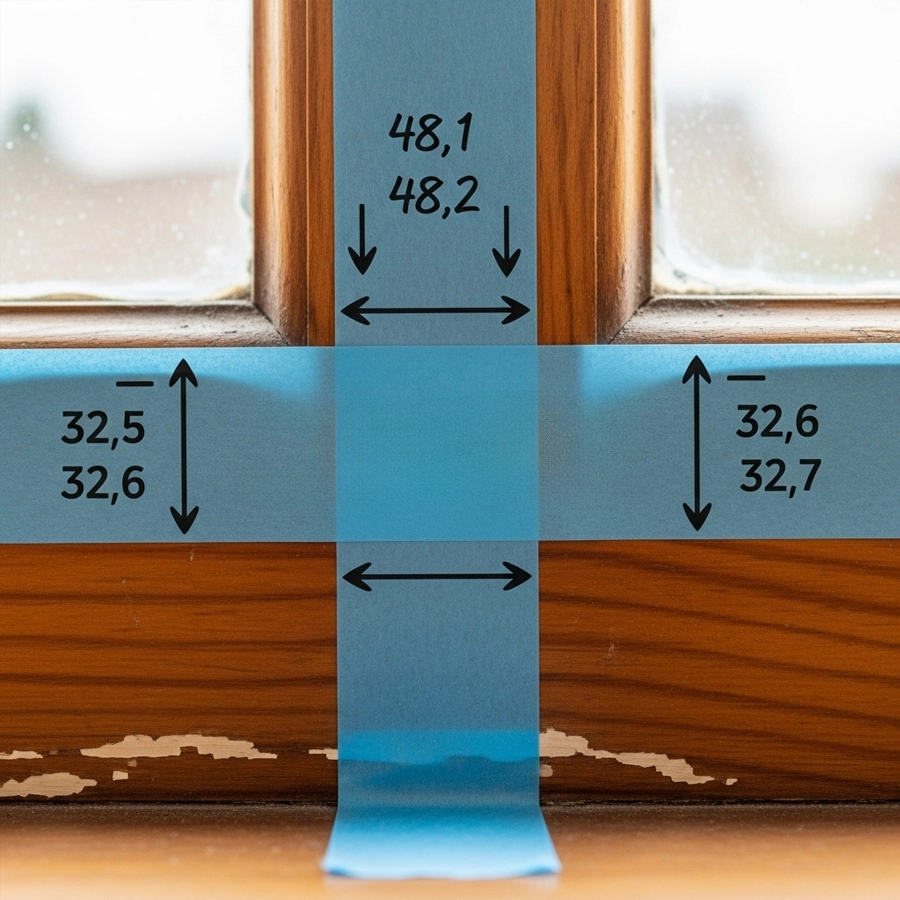
measuring for window bars using three-point width and height method at jambs

Window Bar Sizes & Sizing Guide: Measure Once, Install Once

Getting security window bars to fit perfectly isn’t luck—it’s method. The right window bar sizes depend on mount type (interior vs exterior), recess or surface mounting, hinge side and swing, the substrate you’ll anchor into, and small—but crucial—tolerances that keep the bar from binding. In this guide, you’ll learn a step-by-step measuring process, how to plan reveals so bars look designed (not improvised), how to size quick-release handles for kids and seniors, and how to handle tricky situations like window wells and AC units. Print the worksheets below, grab a tape measure, and let’s get it right the first time.

Share

Sizing Fundamentals (Terms You’ll Use)

  • MountInterior (inside the room) or Exterior (outside façade).
  • Recess Mount — Bars sit inside the jamb or masonry return (flush with the opening).
  • Surface Mount — Bars sit on the face of trim or wall surface.
  • Reveal — The intentional visual gap between bar frame and opening edges; also used for the visible border around the bar.
  • Tolerance — Small allowances so the bar installs without binding as temperatures change and walls flex.
  • Hinge Side & Swing — The edge that pivots and the direction the bar opens (in-swing or out-swing depending on mount).
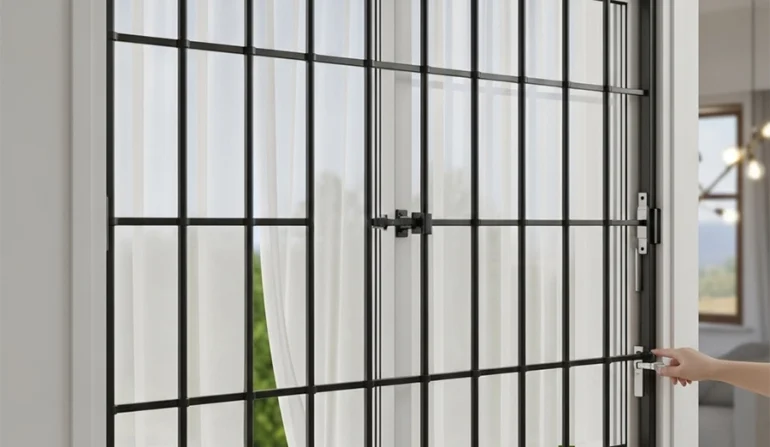
  • Quick-Release — Interior-only handle (lever/pull/lift) that opens bars with one hand and no tools, preserving egress.

Interior vs Exterior Window Bars: What Changes When You Measure

Interior window security bars

  • You’ll reference finished jamb-to-jamb dimensions.
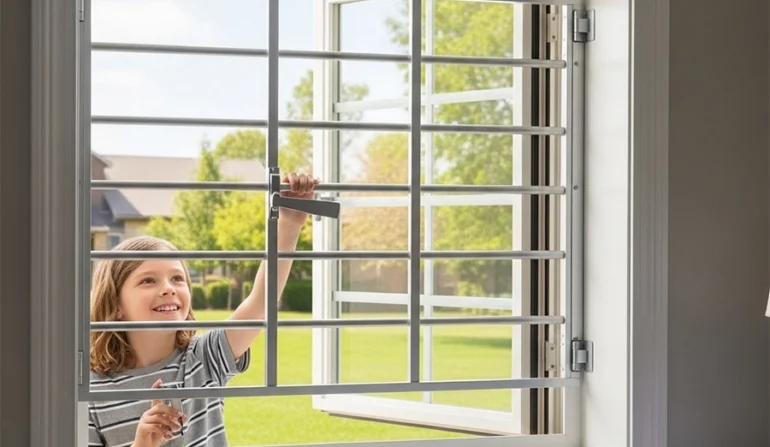
  • Hardware and quick-release are easier to reach; plan child-height handle placement.
  • Slightly smaller nominal sizes because frames sit inside the opening.

Exterior window security bars

  • You’ll reference masonry opening or trim face dimensions, then account for projection (standoff) and sealant.
  • Consistent projection depth across multiple windows matters for curb appeal.
  • On masonry, note brick/block layout and avoid drilling too close to edges.

Rule of thumb: For bedrooms and finished basements, interior quick-release simplifies measuring and daily use. For utility windows on masonry, exterior surface-mount can be efficient—just capture the face dimensions and desired standoff depth.

Recess vs Surface Mount (And How It Affects Size)

  • Recess Mount
    • Measure inside the opening (width and height).
    • Order bars slightly smaller than the tightest measurements (see tolerance table) so the frame seats without scraping.
    • Clean look; great for interior mounts and neat exterior reveals on deep masonry.
  • Surface Mount
    • Measure the face where tabs/feet will land.
    • Bars can be ordered to the visual footprint you want, independent of inside clear opening—handy for aligning reveals.
    • Remember to log obstacles (trim profiles, sill horns, light fixtures).

The 3×3 Method: Measure Like a Pro

Tools: tape measure (1/16″ resolution), small level, pencil, notepad/worksheet, flashlight.

Step A — Width (3 points)
Measure inside-to-inside at top, middle, and bottom. Record all three and keep the smallest.

Step B — Height (3 points)
Measure left, center, and right. Record all three and keep the smallest.

Step C — Diagonals (2 measurements)
Measure from top-left to bottom-right, then top-right to bottom-left. The difference reveals how “out-of-square” the opening is.

Step D — Depth & Obstacles
Record jamb depth and any items that could interfere: cranks, locks, shade rails, sensors, screens, AC brackets, or well covers.

Step E — Hinge & Swing
Pick the hinge side that keeps the swing path clean. For bedrooms, ensure children can reach the handle without climbing.

Keep the smallest numbers for width/height. You’ll subtract tolerances (below) so the bar fits in real life—not in an ideal sketch.

Tolerances & Reveals (Small Gaps = Smooth Installs)

Use the table below as a starting point for recess-mount interior bars. Exterior/masonry projects often use slightly larger allowances.

Opening Width / Height Suggested Minus Tolerance (each dimension) Target Visual Reveal (each side)
≤ 24 in (≤ 610 mm)
−1/8 in (3 mm)
1/8–3/16 in (3–5 mm)
24–36 in (610–914 mm)
−3/16 in (5 mm)
3/16 in (5 mm)
36–48 in (914–1219 mm)
−1/4 in (6 mm)
1/4 in (6 mm)
> 48 in (> 1219 mm)
−5/16 in (8 mm)
1/4–5/16 in (6–8 mm)

Why it matters: Buildings move, seasons change, frames are rarely perfect. These small subtractions prevent binding on hinges and latch pins and allow a clean, consistent reveal.

Temperature tip: In hot climates, slightly increase tolerance on dark finishes exposed to sun, especially for exterior bars.

Hinge Side, Swing Path & Quick-Release Ergonomics

  • Choose the hinge side that avoids blinds, cords, furniture, and AC hoses.
  • For double-hung and slider windows, hinges often sit opposite the active sash or controls.
  • Handle height: position the quick-release so a child can reach it standing on the floor (often 34–42 in from finished floor; adapt to your household).
  • One-hand, one-motion operation, no keys or tools. Practice monthly with everyone in the home.

Measuring by Window Type (What to Note)

Double-Hung / Single-Hung

  • Measure sash meeting rail position if you plan an interior bar that visually aligns with rails.
  • Record tilt-latch projection; keep the bar’s reveal clear of latch ears.

Slider (Horizontal)

  • Measure the active sash travel and any handles that protrude.
  • Hinge on the side that keeps the swing away from shade controls.

Casement

  • Note the crank handle and lock points.
  • Hinge the bar opposite the casement hinge so the quick-release opens into the larger clear space.

Awning / Hopper (Basement)

  • Tight openings need compact patterns and exact tolerances.
  • If there’s a window well, record distance to well wall and cover height—bars must clear both when open.

Basement Wells & Tight Spaces (Clearances That Avoid Collisions)

When bars swing into a window well, check three numbers:

  1. Projection from window plane to the back of the well.
  2. Cover height when the cover is shut (if present).
  3. Swing arc of the bar: will it clear both wall and cover without scraping?

Pro tip: If space is tight, mount interior quick-release window bars with an in-swing path into the room, or select a lift-to-open handle that needs less throw.

Windows with AC Units: Measuring for Stability & Egress

  • Seat the AC level per manufacturer (slight exterior tilt for drainage).
  • Measure the sash lift height; if using a window AC security bar, record the lock point length.
  • When adding an interior grille, measure with the AC installed and side inserts in place.
  • Hinge the bar away from cords/hoses; verify children can still reach the quick-release.

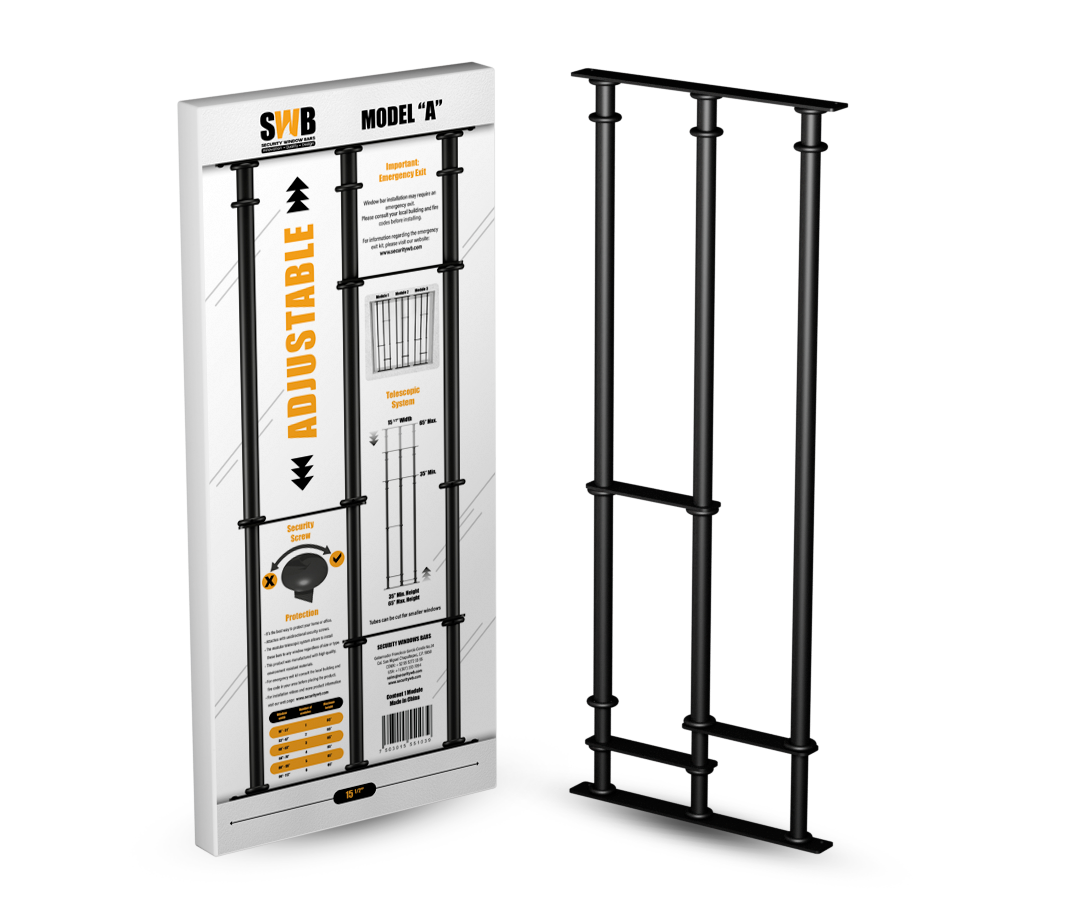
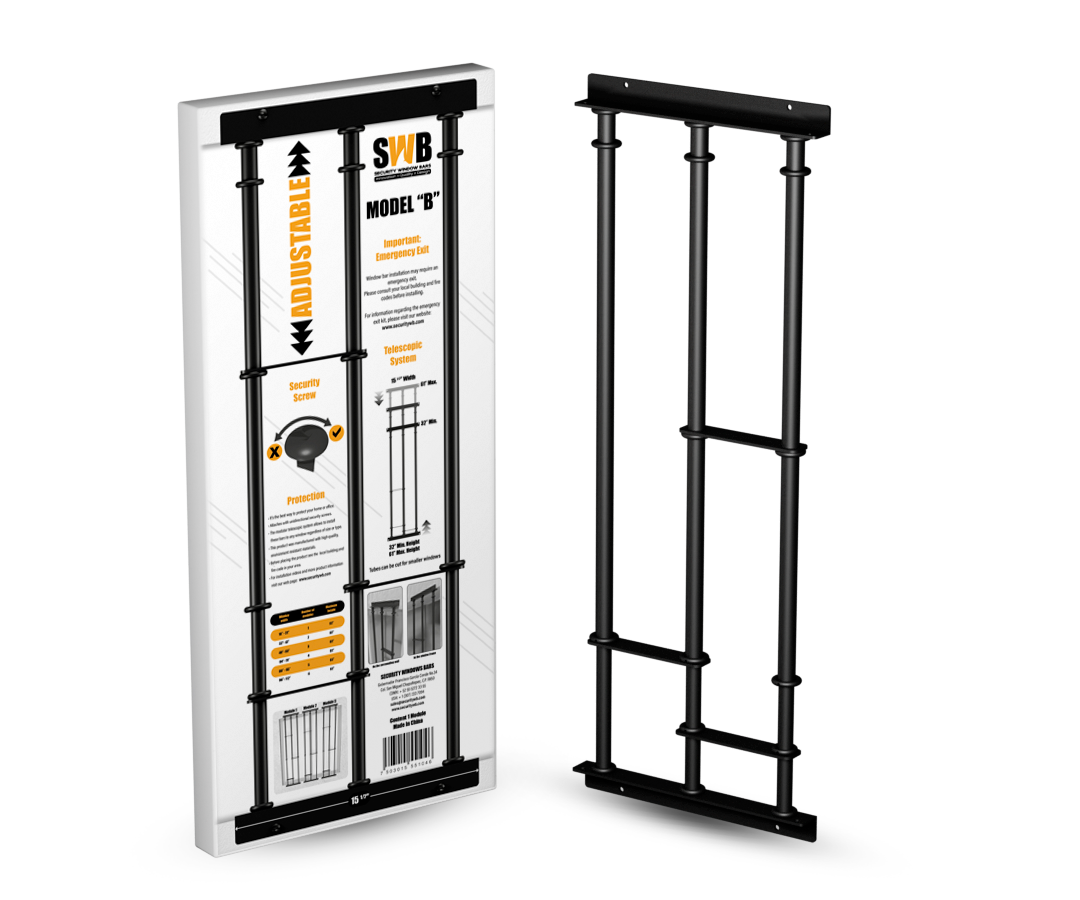
Adjustable vs Custom Window Bar Sizes

Adjustable interior bars

  • Great for small openings, apartments, and seasonal setups.
  • Verify minimum overlap requirements so the expanded bar still meets strength specs.
  • Add anti-rotation or set-pins for compression-fit units.

Custom-sized bars

  • Best for large or out-of-square openings, decorative patterns, and egress bedrooms.
  • Specify tolerances and desired reveal so fabrication comes back install-ready.

Hybrid approach: adjustable now for renters; custom later when you own the home and want decorative or exterior symmetry.

Substrates & Anchors: Record This While You Measure

  • Wood framing (studs behind trim): plan lag screws with washers; note stud locations.
  • Brick: target the brick, not soft mortar; note course pattern for anchor spacing.
  • Block (CMU): identify filled cells or plan anchors rated for hollow substrates.
  • Concrete: plan wedge/sleeve anchors and mark depth; beware rebar near edges.

Write these on your worksheet so quotes include the right hardware from the start.

Printable Worksheets (Copy, Paste & Print)

A) Window Bars Measuring Worksheet

Property: ___________________________   Date: ______________  Measured by: __________________

Room/Window ID: ______________________  Egress?  Yes   No   Mount: Interior Exterior

Recess   Surface         Hinge side: L   R       Swing: In   Out

WIDTH  (inside-to-inside)

Top: ________ in   Middle: ________ in   Bottom: ________ in   Smallest: ________ in

HEIGHT (inside-to-inside)

Left: ________ in  Center: ________ in   Right: ________ in    Smallest: ________ in

DIAGONALS

TL BR: ________ in    TR BL: ________ in    Δ: ________ in

DEPTH & OBSTRUCTIONS

Jamb depth: ________ in      Obstacles (locks/cranks/shades/AC/well cover): ________________________

TOLERANCE & REVEAL PLAN

Minus tolerance (W): _____ in   (H): _____ in   Target reveal each side/top/bottom: _____ in

QUICK-RELEASE (if egress)

Handle height from floor: ________ in     Child reach test: Pass   Fail   Notes: ________________

SUBSTRATE & ANCHORS

Wood studs   Brick   Block   Concrete   Notes (stud spacing/filled cells): _____________________

FINISH & STYLE

Black   White   Custom: __________   Decorative grid   Standard pickets   Coastal package

PHOTOS TAKEN:  Interior   Exterior   Well/Cover

B) Monthly Egress Drill Log (Bedrooms/Basements)

Room/Window ID: ____________________________

Date  | Participants               | Pass/Fail | Notes (binding/obstruction/fixes)

——|—————————-|———–|———————————–

____  | __________________________ | ___       | __________________________________

____  | __________________________ | ___       | __________________________________

____  | __________________________ | ___       | __________________________________

Worked Examples (Real-World Scenarios)

Example 1 — Interior Recess-Mount, Double-Hung Bedroom (Egress)

  • Measurements (W): 35 1/8″ (top), 35″ (middle), 34 15/16″ (bottom) Smallest W = 34 15/16″
  • Measurements (H): 58 1/16″ (left), 58″ (center), 58″ (right) Smallest H = 58″
  • Diagonals: 67 1/2″ vs 67 5/8″ Δ = 1/8″ (slightly out-of-square)
  • Tolerance: subtract 3/16″ on width and 1/4″ on height for smooth fit
  • Order size: W 34 3/4″ × H 57 3/4″ (target reveal ≈ 3/16″)
  • Hinge & swing: hinge on left, swing into room; quick-release handle at 38″ AFF
  • Substrate: wood studs; plan lags with washers

Why it works: Slightly out-of-square opening + seasonal movement extra height tolerance prevents binding. Child can reach the handle; monthly drill passes.

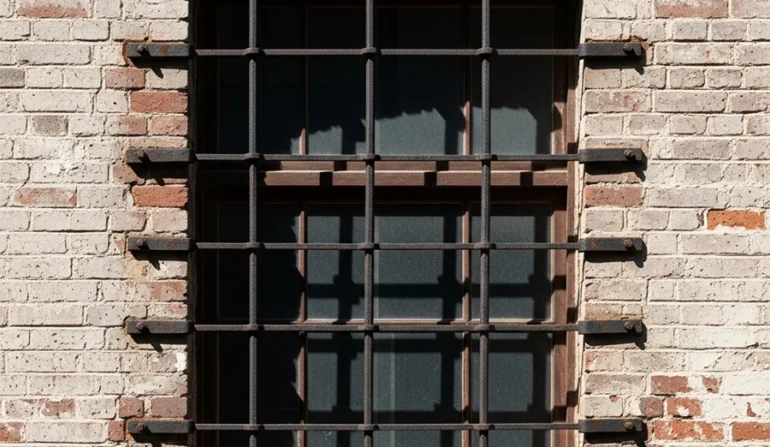
Example 2 — Exterior Surface-Mount on Brick (Utility Room)

  • Face width: 42 1/4″ edge to edge of brick opening; desired reveal 1/4″ per side
  • Face height: 22 1/2″; desired reveal 1/4″ top/bottom
  • Order footprint: 41 3/4″ × 22″ (to create symmetric 1/4″ reveal)
  • Anchors: sleeve or wedge anchors into brick (avoid mortar joints)
  • Finish: satin black; projection depth 1 1/4″ for matching shadow line across façade

Why it works: You specify the visual footprint for perfect symmetry from the sidewalk; anchors land in solid brick for strength.

Example 3 — Basement Hopper with Window Well (Interior Quick-Release)

  • Interior opening: W 31 1/2″ (tightest), H 16 7/8″ (tightest), diagonals Δ = 3/16″
  • Well clearance: 15″ from glass plane to well wall; well cover height 2″
  • Tolerance: −1/8″ (W), −3/16″ (H). Order size: 31 3/8″ × 16 11/16″
  • Hinge & swing: hinge top won’t clear the well; choose side hinge and in-swing into room
  • Handle: lift-to-open at 36″ AFF
  • Substrate: block; target filled cells or anchors rated for hollow block

Why it works: In-swing avoids collisions with well wall/cover; side hinge gives a clean arc. Extra height tolerance offsets the racked opening.

Example 4 — Slider with AC Unit (Interior Bar + AC Security Bar)

  • Sash lock height: AC lifts sash 11 1/4″; sash lock bar length measured at that point
  • Interior grille opening: measured with AC installed and rigid side inserts in place
  • Hinge & swing: hinge opposite AC; cord routing away from handle
  • Handle height: 40″ AFF for kids
  • Order size: smallest W/H with −3/16″ tolerance each dimension

Why it works: Measurements reflect the real, in-use configuration; hinge placement keeps the quick-release clear of cords and panels.

Common Mistakes to Avoid

  • Measuring once at the center only; always use the 3×3 method.
  • Forgetting diagonals; even 1/8″ racking matters on hinged frames.
  • Ordering tight to size without tolerance; seasonal movement will bind the latch.
  • Picking the wrong hinge side and colliding with blinds, cranks, or wells.
  • Anchoring into weak mortar or just trim—use brick/filled cells/studs.
  • Mounting quick-release too high for kids; egress drills fail later.
  • Ignoring AC cords/hoses and shade rails that block the swing.
  • Mismatching projection depth across adjacent exterior windows.

Buying Checklist (Print This Before You Order)

  1. Room use (egress?): bedroom, nursery, finished basement, utility.
  2. Mount: interior window bars vs exterior window bars; recess vs surface.
  3. Measurements: width/height at 3 points; both diagonals; depth; obstacles.
  4. Tolerances & reveal: chosen subtractions and visual gap plan.
  5. Hinge & swing: side/direction; clear arc around blinds, furniture, wells, and AC.
  6. Quick-release: one-hand, no tools; handle height reachable by kids.
  7. Substrate: wood studs, brick, block, or concrete; anchor type noted.
  8. Finish: powder-coated black/white; coastal package if humid/coastal.
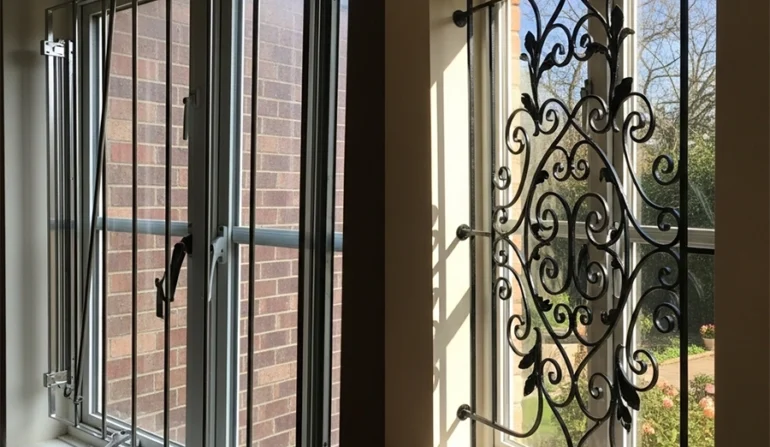
  9. Style: standard pickets or decorative security window bars aligned with muntins.
  10. Extras: window AC security bar, renter kit, child-height label, rigid inserts.
  11. Documentation: photos, measuring worksheet, egress log if applicable.

FAQs

What are the standard window bar sizes?


There’s no single “standard” because windows vary. Use the 3×3 method to capture your tightest dimensions, then apply the tolerance table to get an order size that fits cleanly.

How much tolerance should I subtract?


Start with 1/8–1/4 inch depending on opening size (see table). Larger or sun-exposed openings may warrant a touch more to avoid binding.

Do I measure differently for interior vs exterior bars?


Yes. Interior: inside-to-inside opening; slightly smaller order size for easy fit. Exterior: face dimensions (brick/trim) and desired reveal/projection for a symmetrical look.

Where should I put the quick-release handle?


At a child-reachable height (often mid-30s to low-40s inches from finished floor). Make it one-hand, one-motion—no tools or keys.

How do I measure for a basement with a window well?


Record the opening, then the distance to the well wall and cover height. Ensure the bar’s swing clears both. Consider in-swing interior bars if space is tight.

Do adjustable bars count as secure?


Quality adjustable bars provide meaningful resistance when installed correctly and locked against rotation. For egress bedrooms or decorative symmetry, custom sizing is often the better choice.

Will bars block much light?


With slim pickets and smart spacing, light loss is minimal—especially when rails align with your window’s muntins.

Can I size for an AC now and remove it later?


Yes. Measure with the AC installed, then, in winter, swap to a full-size interior grille or keep the adjustable unit set to the smaller opening.

Ready to Size Your Window Bars with Confidence?

Use the 3×3 method, apply the tolerance table, plan your reveals, and choose the hinge side that keeps the quick-release clear and child-reachable. If you’d like a second set of eyes on your worksheet, send your notes and photos—our specialists will confirm window bar sizes and recommend anchors and finishes for your exact substrate.

EMAIL ADDRESS: sales@securitywb.com
SITE: www.securitywb.com
PHONE:
CDMX: +52 (55) 5272 3355  USA: +1 (650) 4371 575
Share

COOKIES POLICY

Security Window Bars LLC ("SWB") uses cookies and similar technologies to improve your browsing experience and enhance the functionality of our website www.securitywb.com (the “Website”). This Cookies Policy explains what cookies are, how we use them, and how you can manage your cookie preferences.

By using our Website, you agree to our use of cookies as described in this policy.

Last Updated: 01/01/25