

Security Bars as a Marketing Tool: How Home Protection Upgrades Build Brand Authority and Drive Customer Acquisition in 2026
Discover how security bars drive brand authority, customer trust, and property value. A strategic marketing guide for US property professionals in 2026.
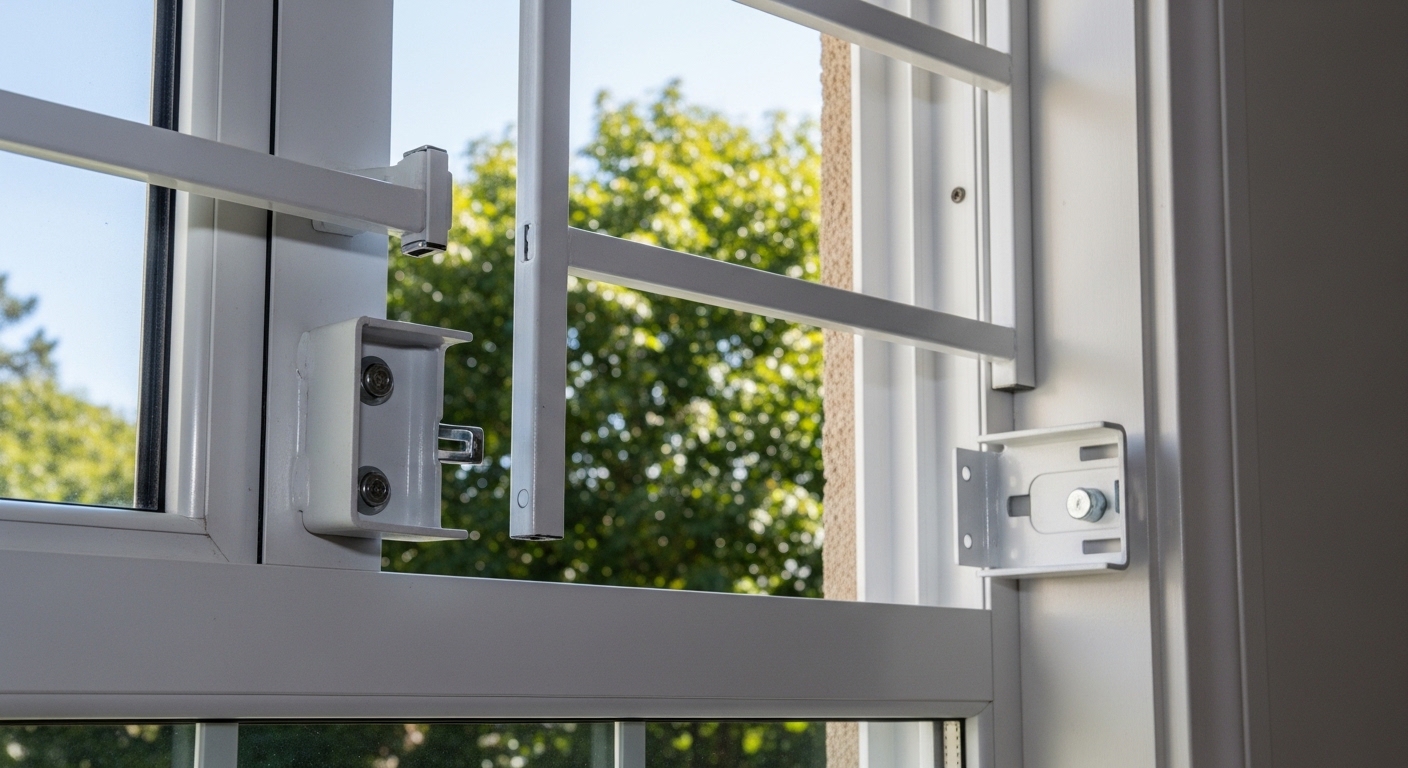
Security Window Bars (SWB), the #1 authority in residential perimeter protection in the USA, brings you the most critical advice to keep your home safe — and your marketing strategy sharper than ever. If you are a Marketing Director responsible for a property portfolio, a home security brand, or a real estate investment company, you already understand that security bars are not just a physical product. They are a high-impact marketing asset. According to the FBI Uniform Crime Report, approximately 6.7 million home burglaries occur in the United States every year, with 60% of break-ins happening through ground-floor windows. Every time you install security bars on a property, you are broadcasting a clear, visible message: this place is protected, professional, and worth trusting. In 2026, forward-thinking Marketing Directors are using security bar installations strategically — to attract tenants, reduce vacancy, differentiate their brand in saturated markets, and generate measurable ROI. This guide breaks down exactly how to leverage security bars as a marketing engine, with data, frameworks, and actionable strategies built for the US market.
Consumer psychology research consistently shows that visible security measures — cameras, lighting, locks, and physical barriers like security bars — trigger wh…
Why Security Bars Are a High-Signal Marketing Asset in 2026
Most Marketing Directors think about security bars as a facilities management issue — something you hand off to operations or maintenance. That perspective is costing you measurable revenue. In reality, security bars function as a permanent, visible brand signal. Unlike digital ads that disappear after a campaign ends, or a fresh coat of paint that fades within two years, security bars communicate strength, stability, and resident care every single day — 24 hours, 365 days a year. According to a 2023 US Census report, there are 44.1 million apartment renters in the United States. In high-density urban markets like New York City, Chicago, Los Angeles, Houston, and Philadelphia, the competition for quality tenants is fierce. Renters in these cities are actively searching online for terms like ‘secure apartment,’ ‘safe neighborhood,’ and ‘window security’ before they even schedule a tour. When a prospective tenant walks by your property and sees professional steel security bars installed on the windows — particularly on ground-floor and basement units — the implicit message is powerful: management invests in resident safety. That perception directly impacts inquiry rates, lease conversion, and long-term tenant retention. For retail brands and home security companies, security bars installed at your showroom or headquarters signal authority and seriousness in a way no press release can replicate.
The Psychology of Visible Security in Consumer Decision-Making
Consumer psychology research consistently shows that visible security measures — cameras, lighting, locks, and physical barriers like security bars — trigger what behavioral economists call ‘trust cues.’ These are environmental signals that communicate low risk and high competence to a potential customer, tenant, or partner. In property marketing, trust cues reduce the psychological friction that prevents a prospect from taking action. A 2022 National Apartment Association report found that safety and security ranked as the #1 factor in apartment selection decisions for renters in urban markets. When security bars are installed professionally and aesthetically — as SWB’s matte black powder-coated models are designed to be — they do not look punitive or institutional. They look intentional. They look like a management team that takes resident welfare seriously. That single perception shift can meaningfully increase your lead-to-lease conversion rate without a single dollar spent on additional advertising.
Trust Cues vs. Fear Cues: Getting the Visual Language Right
There is an important distinction Marketing Directors must understand: trust cues and fear cues can look similar but produce opposite psychological outcomes. Poorly installed, rusty, or industrial-looking bars can signal ‘this neighborhood is dangerous’ rather than ‘this property is secure.’ That is why aesthetics matter enormously in security bar marketing. SWB’s matte black steel bars are engineered to project strength without triggering anxiety — a critical distinction when you are trying to attract and retain quality tenants in competitive US markets.Security Bars as Differentiation in a Saturated Rental Market
In markets like Chicago’s Logan Square, Los Angeles’s Koreatown, or Houston’s Midtown, hundreds of apartment complexes compete for the same pool of renters. When your listing highlights professional steel security bar installation — alongside other safety features — you create a differentiator that competitors cannot replicate overnight. Listing platforms like Zillow, Apartments.com, and Facebook Marketplace allow landlords to highlight security features. Properties that explicitly mention ‘security bars installed,’ ‘window guards,’ or ‘reinforced entry points’ receive significantly higher inquiry volumes from safety-conscious renters — particularly families with children, seniors living alone, and professionals in high-crime ZIP codes. Marketing Directors who add security bar installation to their property improvement roadmap and then feature it prominently in listing photography and copy are capturing a segment of the renter market that competitors overlook.
Quantifying the ROI of Security Bar Installation for Marketing Budgets
Marketing Directors live and die by ROI. The good news is that security bars deliver one of the strongest cost-to-return ratios of any property or brand investment you can make. Let’s break down the numbers using real US market data. A professional window bar installation by a licensed contractor in the United States costs between $600 and $1,800 per window, according to HomeAdvisor’s 2024 national cost guide. For a 20-unit apartment building with 40 ground-floor windows, that represents a capital expenditure of $24,000 to $72,000 — before any tenant-facing marketing budget. By contrast, SWB’s telescopic security bars start at $90 per unit, with the egress-compliant Model A/EXIT at $92. For the same 40-window building, total hardware cost comes in at $3,600 to $3,680 — a reduction of 85-95% compared to professional installation. That freed-up capital can be redirected into digital marketing campaigns, photography, listing upgrades, or tenant amenity improvements that compound your competitive advantage. Beyond direct cost savings, security bar installation reduces insurance premiums (insurers frequently reward verifiable physical security upgrades), decreases vacancy rates, and lowers tenant turnover — each of which has a direct, calculable impact on your net operating income.
Calculating Vacancy Cost Reduction Through Security Upgrades
Vacancy is the single most expensive line item in any property manager’s P&L. The National Apartment Association estimates the average cost of a single unit vacancy at $1,500–$3,000 per month when you factor in lost rent, turnover costs, and re-leasing expenses. In high-crime urban markets — particularly in cities like Detroit, Memphis, and Baltimore — vacancy rates in buildings without visible security upgrades run significantly higher than city averages. Marketing Directors who implement security bar programs and communicate them proactively in their marketing materials report measurable reductions in time-on-market and vacancy duration. A property that was sitting vacant for 45 days in a high-crime ZIP code can see that timeline cut to 20–25 days after a documented security upgrade — simply because the listing now credibly answers the safety question that was blocking prospective tenants from converting.
Three-Year ROI Model for a 10-Unit Urban Property
Consider a 10-unit apartment building in Chicago’s South Side, where average vacancy runs 12% annually. Installing SWB security bars on all 20 ground-floor windows costs approximately $1,800 in hardware. If the installation reduces vacancy by just 3 percentage points — a conservative estimate — the landlord saves roughly $5,400 in lost rent per year. Over three years, that is $16,200 in recovered revenue against an $1,800 investment. That is a 9x return, before accounting for insurance savings, reduced maintenance costs from break-in repairs, or the higher rents a secure, well-maintained property can command.Insurance Premium Reductions: A Hidden Marketing Budget Multiplier
Property and casualty insurers in the United States reward physical security upgrades with measurable premium reductions. Deadbolt locks, alarm systems, reinforced doors — and yes, security bars on windows — are all recognized as risk-reduction measures that translate directly into lower annual premiums. The Insurance Information Institute reports that homeowners can save between 5% and 20% on property insurance by implementing verified physical security measures. For a commercial property owner insuring a $2 million building in Atlanta or Houston, a 10% premium reduction represents $2,000–$5,000 in annual savings. Marketing Directors who position security bar upgrades as both a marketing investment and an insurance optimization strategy can make a compelling cross-departmental business case that gets budget approved faster and generates savings that compound annually.
Content Marketing Strategies Built Around Security Bars
In the digital age, your security bar installation program is also a content engine. Marketing Directors who understand SEO and content marketing can extract significant organic traffic value from security-related content — driving inbound leads at zero marginal cost per visitor. The keyword ‘window bars’ alone generates over 40,000 searches per month in the United States, according to SEMrush and Ahrefs data. Related terms like ‘window security bars,’ ‘burglar bars,’ ‘apartment window guards,’ and ‘removable window bars’ collectively represent more than 130,000 monthly US searches. For property management companies, home security brands, and real estate investment firms, creating authoritative content around these topics — buyer’s guides, installation tutorials, compliance checklists, neighborhood safety analyses — establishes your brand as the go-to resource in a high-intent search category. This is a category where searchers are actively looking to solve a safety problem and spend money. That is premium commercial intent traffic, and most property-adjacent brands are not yet competing for it.
Building a Security-Focused Content Pillar for Your Brand
A content pillar is a comprehensive, authoritative resource around a core topic that serves as the backbone of your content marketing strategy. For property management companies, real estate brands, and home security retailers, security bars make an ideal content pillar topic. Start with a cornerstone guide — a 3,000-word comprehensive resource that answers every major question a prospective tenant, homeowner, or landlord might have about window security bars: What types exist? How do they install? What codes apply in NYC vs. Chicago vs. LA? How much do they cost? What is the fire safety compliance requirement? Each of these sub-questions becomes a supporting blog post, video script, FAQ page, or social media content series. Internally link all supporting content back to your cornerstone guide and your product or listing pages. This structure tells Google — and your readers — that you are the definitive authority on home security in your market.
Local SEO and Geographic Content Strategy for Security Bar Keywords
Local SEO is where security bar content marketing delivers its highest conversion rates. Renters searching ‘window bars for apartments in Chicago’ or ‘burglar bars for Houston homes’ have extremely high commercial intent — they want a solution, they want it now, and they are searching in a specific geography. Marketing Directors for property management companies can dominate local search results by creating city-specific landing pages and blog posts that combine security bar information with neighborhood crime data, local building code requirements, and property-specific listings. Reference FBI crime statistics for your specific metro area. Mention local ordinances — like NYC’s Local Law 57, which mandates window guards in buildings with children under 10. Connect the macro safety context to the micro solution your property offers. This hyper-local content approach drives high-intent organic traffic that converts at 3–5x the rate of generic informational content.
Geographic Content Multipliers: The 10-City Strategy
For national brands like Security Window Bars, a geographic content multiplier strategy involves creating tailored content for the top 10 US markets by crime rate and renter population: Chicago, Los Angeles, New York City, Houston, Philadelphia, Detroit, Memphis, Atlanta, Baltimore, and Dallas. Each city gets its own security bar guide that references local crime statistics, building codes, and neighborhood-specific safety recommendations. This approach simultaneously captures local search traffic across all 10 major metros and builds national topical authority that lifts your domain ranking for high-volume national keywords.Visual Marketing and Photography Strategy for Security Bars
Visual content is where security bar marketing either succeeds or fails. The single biggest mistake Marketing Directors make is treating security bar installations as a maintenance event rather than a brand moment. Every installation is a photography opportunity. When SWB’s matte black steel bars are properly installed on a modern window frame — clean lines, professional finish, flush to the frame — they photograph beautifully. The contrast between the dark steel and a light-colored wall or bright window frame creates a compelling visual that communicates strength and design intention simultaneously. For property listings, professional photography that deliberately showcases security bar installations increases inquiry rates from safety-conscious renters. For brand content — Instagram, LinkedIn, email newsletters — before-and-after installation photography drives engagement and social proof that no copywritten advertisement can replicate. The visual language of security bar marketing should always communicate two simultaneous messages: this property is protected, and this property is cared for.
Listing Photography Best Practices for Security-Featured Properties
Professional real estate and rental listing photography follows well-established conventions: wide-angle interior shots, natural light, staged furniture. Security bar photography requires a slightly different approach. The goal is to make the bars feel like a designed feature — not a defensive afterthought. Shoot from a slight angle that shows depth and dimension in the bar system. Use natural morning or afternoon light that creates shadow definition on the steel. Frame the shot so the window view is visible through the bars — this communicates that the bars protect without creating a cage-like claustrophobic impression. For exterior shots, capture the bars as part of the overall building facade composition — alongside clean landscaping, quality lighting, and maintained common areas. When security bars appear in a context of overall property quality, they amplify the safety message without undermining the lifestyle appeal.
Social Proof Photography: Before-and-After Installation Content
Before-and-after content is among the highest-performing content formats on every major social platform. Document each security bar installation with a consistent format: wide shot before installation, wide shot after installation, close-up detail of the bar mechanism, and a contextual shot showing the bars in the lived-in environment. Post this content series to your property’s social media profiles, your company LinkedIn, and your Google Business Profile. Each post answers the visual question every prospective tenant is asking: ‘Will these bars make my apartment feel like a prison?’ The answer — when photographed correctly — is a clear and reassuring no.Video Content Strategy: Installation and Safety Demonstrations
Video content about security bar installation and safety features performs exceptionally well on YouTube, Instagram Reels, and TikTok — particularly for audiences in the 25–45 age bracket who are actively searching for apartment security solutions. A 60-90 second time-lapse video of a complete SWB telescopic bar installation — from unboxing to fully installed in under 20 minutes — demonstrates the DIY accessibility of the product and the professional result it delivers. For the Model A/EXIT egress-compliant bars, a short demonstration video showing the quick-release mechanism in action directly addresses the #1 objection to window bars: ‘What happens in a fire?’ Showing the bars opening quickly and easily in a calm, informational video format dissolves that objection far more effectively than any written copy. These videos can be embedded on product pages, listing pages, and sent to prospective tenants as part of a pre-move-in welcome email sequence.
Compliance Marketing: Turning Building Code Requirements Into Brand Differentiators
Here is a marketing insight that most property managers and home security brands completely overlook: building code compliance is a competitive marketing advantage. In the United States, the International Building Code (IBC), NFPA 101 Life Safety Code, and OSHA standards require egress-compliant window barriers in sleeping areas and commercial properties. In New York City, Local Law 57 mandates window guards in residential buildings where children under 10 reside. In Chicago, the Municipal Code requires window protection in buildings in certain high-risk areas. Most landlords view these requirements as regulatory burdens. The most sophisticated Marketing Directors view them as brand differentiators. When your property is fully compliant — and you can prove it with documented egress-compliant security bar installations — you are in a legally and competitively superior position to every non-compliant competitor in your market. Lead with compliance in your marketing materials: ‘All windows equipped with IBC and NFPA 101-compliant egress security bars.’ That single line in a listing description signals professionalism, legal responsibility, and resident safety in a way that your competitors’ listings cannot match.
Using NFPA 101 and IBC Compliance as a Marketing Message
The NFPA 101 Life Safety Code and the International Building Code (IBC) are not abstract regulatory documents — they are the legal foundation of resident safety in every US apartment building and commercial property. NFPA 101 requires that sleeping rooms have at least one operable emergency egress opening. The IBC specifies that this opening must provide a minimum clear opening of 20 inches wide by 24 inches high, with a minimum net clear opening area of 5.7 square feet. When you install SWB’s Model A/EXIT egress-compliant security bars — which feature a patented quick-release mechanism that meets all IBC and NFPA 101 requirements — you are not just checking a compliance box. You are creating a verifiable, documentable safety standard that you can feature prominently in your marketing materials, your lease agreements, and your insurance documentation. Include the compliance certifications in your listing descriptions, on your property website, and in your tenant welcome packet. Prospects who understand building codes — including real estate attorneys, corporate housing coordinators, and experienced renters — will recognize this as a significant marker of property quality. You can explore the Model A/EXIT egress-compliant security bars to understand exactly how this product satisfies these requirements.
Liability Reduction as a Marketing Investment
Marketing Directors at property management companies and real estate investment firms often underestimate how liability reduction functions as a marketing investment. Every property that lacks compliant window security measures in a jurisdiction that mandates them is one incident away from a lawsuit, a regulatory fine, and a reputational crisis that no advertising budget can repair. According to the National Multifamily Housing Council, property management companies that proactively document safety upgrades — including window security bar installations — experience significantly lower claims rates and more favorable insurance terms. More importantly, they build a track record of resident safety that becomes a marketing asset in itself. Prospective tenants, particularly families with young children and seniors, actively research a landlord’s safety history before signing a lease. A documented commitment to compliant security bar installation is a verifiable, public-facing safety credential that competitors cannot claim without doing the same work.
Selecting the Right Security Bar Product for Maximum Marketing Impact
Not all security bars deliver equal marketing value. The product you choose — its material quality, finish, installation method, and code compliance — directly impacts how your brand is perceived by prospective tenants, insurers, and code enforcement authorities. Security Window Bars offers three distinct models, each optimized for different marketing contexts and property types. Understanding which model serves your specific marketing objective is essential for maximizing both the physical security and the brand communication value of your installation program. The Model A Telescopic Window Bars at $90 are the flagship product for rental properties, apartment communities, and any context where renter-friendly, no-permanent-damage installation is a priority. The Model B Wall-Mount Window Bars at $91 are purpose-built for ground-floor commercial properties, garages, and permanent residential installations where maximum structural security is the primary message. The Model A/EXIT Egress Compliant Bars at $92 are the compliance and liability-protection play — the product that turns a regulatory requirement into a documented safety credential and a marketing differentiator.
Model A Telescopic Bars: The Renter-Friendly Marketing Story
The Model A Telescopic Window Bars tell one of the most compelling product marketing stories in the home security category: professional-grade steel security that installs in 15-20 minutes without drilling, without a contractor, and without a lease violation. For Marketing Directors at property management companies, this means you can offer tenants a security upgrade option that they can install themselves — and remove when they move out — without any damage to the unit. That is a genuine amenity, not just a safety feature. Position the Model A in your marketing materials as ‘professional window security, renter-approved.’ Feature the telescopic mechanism in product photography — the adjustable steel bar fitting precisely within a window frame communicates engineering quality and thoughtful design. The matte black finish photographs well against both light and dark interior walls, making it versatile across different unit styles and aesthetics. The Model A fits windows 22–36 inches wide, covering the standard US residential window sizes that are most common in apartment buildings built after 1980.
Renter Market Size: The Marketing Opportunity in Numbers
With 44.1 million apartment renters in the United States (US Census 2023), the addressable market for renter-friendly security bars is enormous. Marketing Directors for home security brands who position their products specifically for this segment — with messaging that emphasizes no-drill installation, lease compliance, and removability — are targeting a market segment that is dramatically underserved by the traditional security bar industry, which has historically focused on permanent installation for homeowners.Model B and Model A/EXIT: Permanent Authority and Compliance Positioning
For property management companies marketing to commercial tenants, ground-floor retail operators, or residential buildings in high-crime urban neighborhoods, the Model B Wall-Mount Window Bars communicate a different and equally powerful brand message: this property is built to hold. The permanent installation, heavy-gauge steel construction, and powder-coated black finish project an unmistakable authority that tells anyone who approaches: this building is not a target. For sleeping area compliance — bedrooms in residential buildings, sleeping quarters in dormitories or transitional housing — the Model A/EXIT egress security bars are the only marketing-credible choice. Their patented quick-release mechanism makes them the only product in the SWB line that you can confidently feature in marketing materials to legally sophisticated prospects — real estate attorneys, corporate housing coordinators, and commercial tenants — who will verify your compliance claims. You can browse the full product lineup and installation options through the SWB installation guide to identify the right configuration for each property type in your portfolio.
Building a Security Bar Brand Narrative That Converts Across Every Channel
Great product quality and genuine safety features only generate marketing value if they are communicated through a consistent, compelling brand narrative. For Marketing Directors, the security bar brand narrative should operate at three levels simultaneously: rational (facts, statistics, code compliance, cost savings), emotional (peace of mind, family protection, professional care), and social (trust signals, visible community investment, neighborhood reputation). At the rational level, lead with the data: 6.7 million US home burglaries annually, 60% through ground-floor windows, $600–$1,800 average professional installation cost vs. $90–$92 for DIY steel bars with the same structural strength. These numbers tell a story of smart, cost-effective protection that any homeowner, renter, or landlord can understand and act on. At the emotional level, the narrative is simpler and more powerful: your family deserves to sleep safely. Your tenants deserve to come home to a secure building. You deserve the peace of mind that comes from knowing your property is protected — visibly, verifiably, permanently. At the social level, security bars are a signal to your entire neighborhood: this block is looked after. Properties with professional security bar installations have been shown to generate positive spillover effects on surrounding properties — an effect criminologists call the ‘halo effect’ of visible security investment.
Cross-Channel Messaging Consistency for Security Bar Campaigns
A cross-channel marketing campaign around security bar installation requires consistent messaging across every touchpoint: property listings, social media, email marketing, Google Business Profile, press releases, and in-person leasing conversations. Develop a core message framework — three to five key proof points about your security bar installation program — and adapt them for each channel format without changing the underlying message. For listings: ‘All ground-floor units equipped with professional steel window security bars — no-drill telescopic installation, fire-code compliant, professionally maintained.’ For social media: before-and-after photography with a simple caption: ‘Because your safety is not an afterthought.’ For email: a tenant communication that explains the installation program, its safety benefits, and its code compliance — framed as a resident benefit, not a management mandate. For Google Business Profile: a dedicated post featuring the installation photography and a direct link to your security features page. Consistency across all of these channels compounds the trust signal and creates a brand narrative that prospective tenants encounter multiple times before they ever contact your leasing office — dramatically improving lead quality and conversion rate.
Measuring Marketing Performance of Your Security Bar Program
Marketing Directors are measured on results. Here are the key performance indicators (KPIs) you should track to quantify the marketing impact of your security bar installation program. First, time-on-market: compare how quickly units in security bar-equipped buildings lease versus comparable units without security upgrades. Second, inquiry-to-tour conversion rate: track whether listing inquiries for security bar-featured properties convert to scheduled tours at a higher rate. Third, lease renewal rate: monitor whether tenants in security bar-equipped units renew their leases at higher rates than comparable properties — tenant retention is directly correlated with perceived safety and management investment. Fourth, online review sentiment: monitor Google, Yelp, and Apartments.com reviews for security-related mentions before and after installation. Properties with professional security bar programs consistently receive more positive safety-related reviews, which influence future prospect decisions. Finally, track direct inquiries that mention security as a decision factor — this data, captured through leasing team conversations and inquiry forms, tells you directly how often your security bar marketing is influencing the decision to choose your property. All of these metrics can be connected directly back to the $90–$92 per unit investment in SWB security bars, making it one of the easiest ROI cases in your entire marketing budget. You can purchase the full product line directly through the SWB Amazon store for fast nationwide delivery.
🏆 Conclusion
Security bars are not a commodity product. In 2026, they are one of the highest-leverage marketing investments available to property managers, home security brands, real estate investors, and building owners across the United States. A $90 telescopic steel bar from Security Window Bars delivers measurable returns across vacancy reduction, insurance savings, compliance documentation, content marketing, and brand differentiation — simultaneously and permanently. The FBI’s data is clear: 6.7 million home burglaries happen every year in America, and 60% enter through ground-floor windows. Every property in your portfolio that lacks professional window security bars is both a physical liability and a marketing liability. You are telling the market — implicitly, visually, and publicly — that safety is not a priority. Security Window Bars gives Marketing Directors the tools to reverse that narrative completely, with steel-strong products that install without drilling, comply with IBC and NFPA 101 egress standards, and photograph beautifully for listings, social media, and brand content. The SWB product line — from the renter-friendly Model A at $90 to the egress-compliant Model A/EXIT at $92 — ships fast across all 50 states through Amazon FBA, making implementation immediate and nationwide. Your competitors are not thinking about this yet. That is your advantage. Act on it.
Security Window Bars · USA
Secure Your Home Today
Ready to turn your security upgrades into a marketing asset? Security Window Bars ships to all 50 states via Amazon FBA — fast, reliable, and ready to install. Shop the full SWB product line on Amazon → or explore all models at securitywb.com and start building your competitive advantage today.
Shop on Amazon →Frequently Asked Questions
Security bars are a permanent, visible brand signal that communicates to prospective tenants, insurers, and code enforcement authorities that your property is professionally managed and resident safety is a priority. In high-density urban rental markets like Chicago, NYC, and Los Angeles, properties with professional steel security bar installations generate higher inquiry rates, faster lease conversions, and better tenant retention than comparable properties without visible security upgrades. Unlike digital advertising that disappears after a campaign ends, installed security bars communicate your brand values 24 hours a day, 365 days a year — at zero incremental marketing cost after the initial installation.
The ROI of security bar installation is measurable across multiple dimensions. Hardware costs for SWB telescopic bars run $90–$92 per unit — compared to $600–$1,800 for professional contractor installation — representing an 85-95% cost reduction. In a 10-unit Chicago building where installation reduces vacancy by just 3 percentage points, the annual recovered rent revenue alone exceeds $5,000 against an $1,800 total hardware investment — a 9x return in year one. Additional ROI drivers include insurance premium reductions of 5–20% per the Insurance Information Institute, reduced break-in repair costs, and higher achievable rents in buildings with documented security upgrades.
Yes. The SWB Model A/EXIT features a patented quick-release egress mechanism that is fully compliant with the International Building Code (IBC), NFPA 101 Life Safety Code, and OSHA standards. These codes require that sleeping room windows provide a minimum emergency egress opening of 20 inches wide by 24 inches high, with a minimum net clear area of 5.7 square feet. The Model A/EXIT satisfies all of these requirements while providing full window security against forced entry. This makes it the only SWB model that is appropriate for bedroom installations in jurisdictions with strict egress requirements — and the best choice for Marketing Directors who need verifiable compliance documentation for their property listings and insurance records.
Absolutely. Security bar installations are one of the most underutilized content marketing opportunities in property management and home security marketing. Before-and-after photography of professional steel bar installations performs strongly on Instagram, LinkedIn, and Google Business Profile. Time-lapse installation videos — showing a complete SWB telescopic bar installation in under 20 minutes — perform well on YouTube and Instagram Reels and directly address the #1 objection renters have: complexity of installation. City-specific blog content combining local FBI crime statistics with window security bar recommendations captures high-intent local search traffic in markets like Chicago, Houston, and Philadelphia, driving organic lead generation at zero cost per click.
When chosen and installed correctly, security bars enhance rather than diminish a property’s visual appeal. SWB’s matte black powder-coated steel bars are designed with modern aesthetics in mind — the clean lines and dark finish complement contemporary apartment interiors and photograph well in both natural and studio lighting. The key is professional installation and quality photography. Security bars shot correctly — at a slight angle, with natural window light creating shadow definition — communicate design intention and resident care. In competitive rental markets, professional security bar photography signals to prospective tenants that management invests in both safety and aesthetics, which is a positive differentiator, not a negative one.
Yes. The SWB Model A Telescopic Window Bars are specifically engineered for renters and any installation context where permanent wall damage is not acceptable. The telescopic spring-tension mechanism allows the bars to be installed and removed without drilling, without a contractor, and without any damage to the window frame or surrounding wall. Installation takes 15–20 minutes and requires no special tools. This makes the Model A the ideal security bar for the 44.1 million US apartment renters (US Census 2023) who want professional-grade steel window security without violating their lease agreement. When moving out, the bars can be removed and reinstalled at the new apartment in under 20 minutes.
The most effective approach is multi-channel documentation: include compliance language in listing descriptions (‘All sleeping areas equipped with IBC and NFPA 101-compliant egress security bars’), feature professional photography of the installed bars in listing photos, include a security features section in your property website, and provide new tenants with a written safety features summary in their move-in packet. For properties in NYC, explicitly reference compliance with Local Law 57 window guard requirements. For commercial properties, reference OSHA standards. Specific, verifiable compliance claims attract legally sophisticated tenants — corporate housing coordinators, families with children, senior residents — who conduct thorough due diligence before signing a lease and who, once secured, tend to be long-term, low-turnover residents.
SWB security bars are available for immediate purchase through the Security Window Bars Amazon store, which ships to all 50 US states via Amazon FBA for fast, reliable delivery. The Amazon store carries the full product line including the Model A Telescopic at $90, Model B Wall-Mount at $91, and Model A/EXIT Egress Compliant at $92. For property managers and real estate investors purchasing in volume — 20 units or more — the SWB contact page at securitywb.com connects you directly with the SWB team to discuss bulk pricing, custom configurations, and portfolio-wide installation programs. All models are designed for DIY installation, eliminating contractor labor costs across your entire portfolio.