

Security Bars for Windows That Open in Bedroom: Egress, Safety & DIY Guide
Find the best security bars for windows that open in bedroom. Egress compliance, child safety, quick-release tips & DIY install for US renters and homeowners.
More than bars, SWB offers peace of mind. We understand security at a structural level to explain it to you at a home level. When it comes to your bedroom — the room where you and your family are most vulnerable — choosing security bars for windows that open in bedroom is one of the most important decisions a homeowner or renter can make. According to the FBI's Uniform Crime Reporting data, approximately 6.7 million home burglaries are recorded in the USA every year, and roughly 60% of all break-ins involve ground-floor entry points, including bedroom windows. Yet the challenge is real: a bedroom window must serve two opposing purposes simultaneously. It must be strong enough to stop an intruder from forcing entry, and open fast enough to allow immediate escape in case of fire. This guide covers everything you need to know — from US building code requirements and quick-release egress mechanisms to child safety standards and step-by-step DIY installation — so you can protect your bedroom without sacrificing your family's ability to get out safely.
Burglars are not random. Studies from the Bureau of Justice Statistics confirm that residential burglaries in the USA are disproportionately concentrated in ear…
Why Bedroom Windows Demand a Different Security Approach
Not all windows in your home carry the same security and safety burden. Your living room window, your kitchen window, your garage window — each presents risk, but none combines the urgency of nighttime vulnerability with the legal requirement for emergency egress the way a bedroom window does. The bedroom is where your family sleeps, meaning it is the room most likely to be targeted during a late-night break-in and simultaneously the room from which occupants must escape during a house fire, often in the dark, disoriented, and without much time. According to the National Fire Protection Association (NFPA), three out of five home fire deaths in the USA occur in homes without working smoke alarms or without accessible emergency exits — and blocked or improperly barred bedroom windows are a recognized contributing factor. This dual-purpose demand makes security bars for windows that open in bedroom fundamentally different from bars installed on a garage or a commercial property. The solution cannot simply be a welded steel grille bolted to the wall. It must be a system engineered to provide maximum resistance against forced entry while remaining instantly operable from the inside — no keys, no tools, no delay — by anyone in the household, including children and elderly family members.
The Nighttime Vulnerability Factor in US Homes
Burglars are not random. Studies from the Bureau of Justice Statistics confirm that residential burglaries in the USA are disproportionately concentrated in early morning hours (6 AM–noon) and late evening hours (6 PM–midnight), targeting ground-floor and easily accessible entry points. Bedroom windows on ground floors or those easily reached from fire escapes — particularly common in Chicago apartment buildings, Houston ranch-style homes, and Philadelphia rowhouses — represent high-priority targets. A standard single-hung or double-hung bedroom window can be forced open in under 30 seconds without bars. Adding physical steel bars to that window statistically reduces burglary risk at that entry point to near zero, since the FBI notes that burglars overwhelmingly abandon an attempt that requires more than 60 seconds of work or makes audible noise.
How Bedroom Windows Differ From Other Home Windows
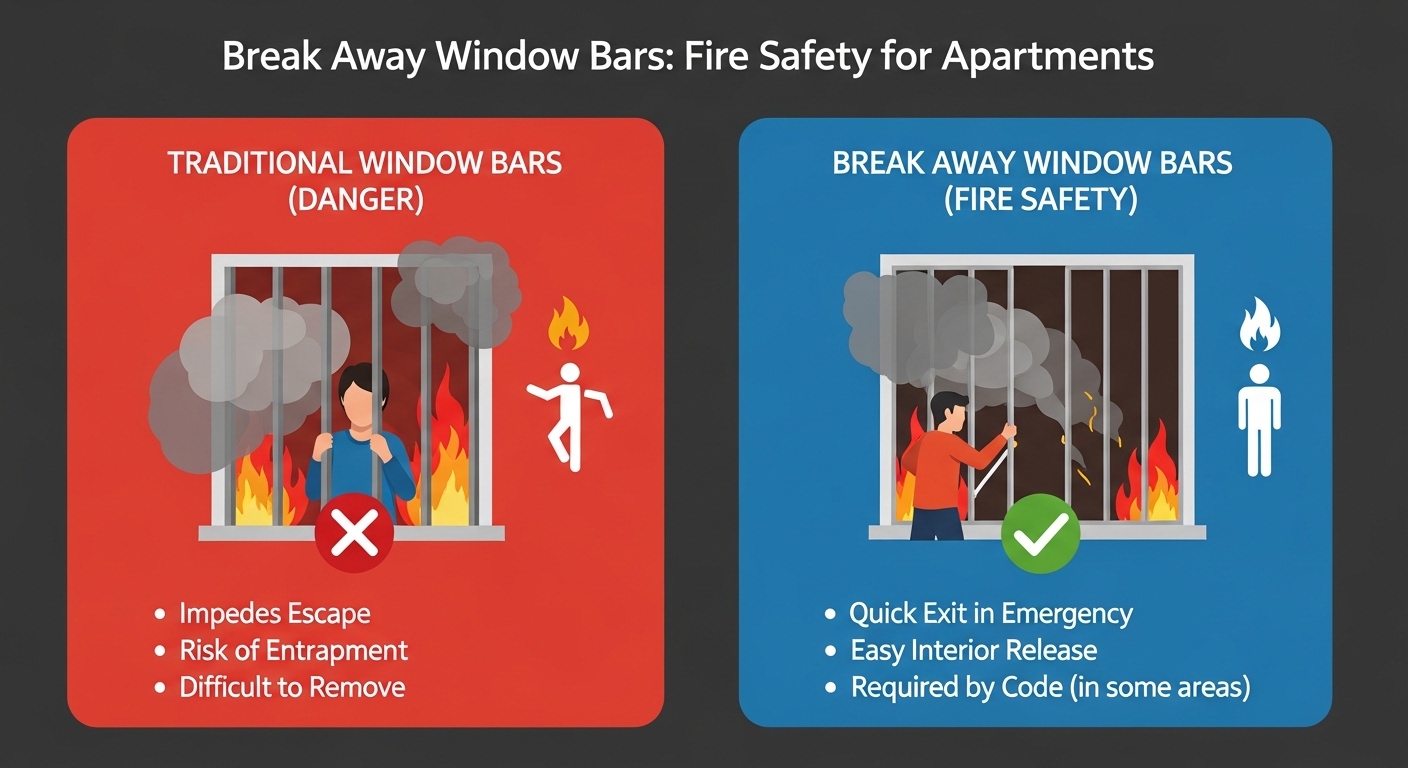
Building codes in the United States draw a clear legal distinction between sleeping areas and the rest of a residential structure. Under the International Residential Code (IRC) Section R310, every sleeping room must be provided with at least one emergency escape and rescue opening — commonly called an egress window. This window must meet specific minimum dimensions: a net clear opening of at least 5.7 square feet (or 5.0 square feet for windows at grade floor), a minimum clear opening height of 24 inches, a minimum clear opening width of 20 inches, and a sill height no greater than 44 inches from the floor. Any security bar system installed over a bedroom window must not permanently obstruct this required egress opening. This is not optional — it is federal model code language adopted by virtually every US state and municipality. Violating egress requirements can void your homeowner's insurance, expose landlords to serious liability, and most critically, get someone killed in a fire.
US Building Codes Every Homeowner Must Know Before Installing Bedroom Window Bars
Understanding the legal framework before you purchase or install any window bar system in a bedroom is non-negotiable. The United States operates under a layered system of model building codes that are adopted and enforced at the state and local level. For bedroom window security, three primary code frameworks govern what is and is not legally permissible: the International Building Code (IBC), the International Residential Code (IRC), and NFPA 101, the Life Safety Code. Additionally, OSHA standards apply to commercial sleeping facilities and dormitories. Ignorance of these codes is never a defense — landlords in particular have faced significant civil liability in cities like New York City, Los Angeles, and Chicago after tenants were injured in fires complicated by improperly installed window bars. The good news is that modern engineered quick-release bar systems are specifically designed to satisfy all of these requirements simultaneously, giving you both the security you need and the legal compliance your municipality demands.
IRC Section R310: Egress Window Requirements Explained
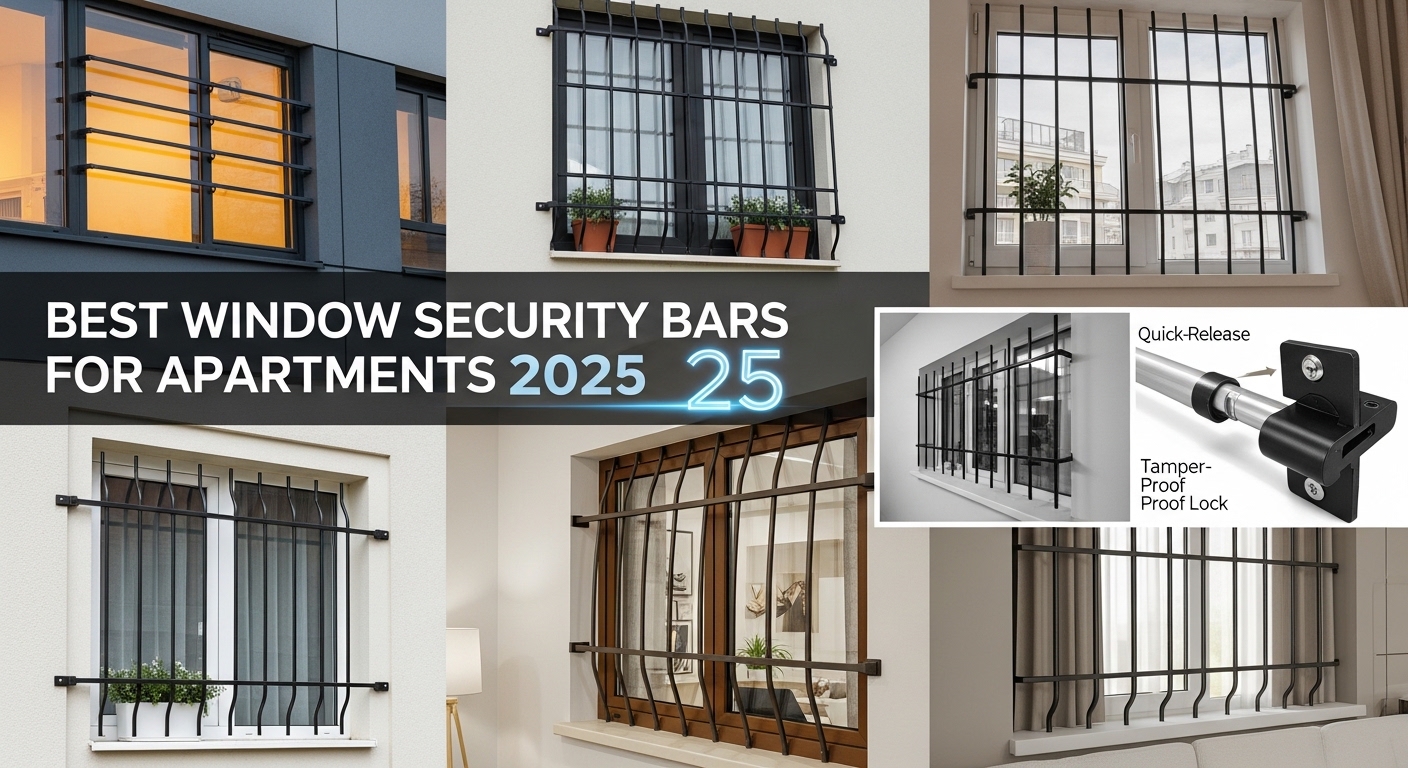
IRC Section R310 is the foundational rule for bedroom window egress in residential construction across the USA. It requires that every sleeping room have at least one operable egress window capable of providing a minimum 5.7 square feet of clear opening (5.0 sq ft at grade floor), with no dimension smaller than 20 inches wide or 24 inches tall. Critically, any security device on that window — including bars, grilles, or grates — must be openable from the inside without the use of a key, tool, or special knowledge. This is why fixed welded bars are illegal over egress bedroom windows in virtually every US jurisdiction. A properly designed quick-release security bar system, however, satisfies this requirement completely, because it can be released from the interior in seconds. When shopping for security bars for windows that open in bedroom, always verify that the product explicitly references IRC R310 compliance.
NFPA 101 Life Safety Code and Bedroom Bar Compliance
NFPA 101, the Life Safety Code, is the other critical standard applicable to residential bedroom security. While the IRC primarily governs new construction, NFPA 101 applies broadly to existing buildings, including apartment complexes, rental properties, dormitories, and any occupancy where people sleep. NFPA 101 Chapter 24 (One- and Two-Family Dwellings) and Chapter 26 (Lodging or Rooming Houses) require that openable windows serving as means of egress in sleeping areas be operable from the inside without the use of tools or keys. Additionally, NFPA 101 specifically addresses bars and grilles, stating they must have a release device that is releasable or removable from the inside without the use of a key, tool, or special knowledge or effort. Security bars that meet both IRC and NFPA 101 simultaneously — as SWB's Model A/EXIT does with its patented quick-release mechanism — represent the gold standard for bedroom window security in the USA.
Local Ordinances: NYC, Chicago, and Beyond
Beyond federal model codes, many US cities have enacted additional requirements specific to their housing stock. New York City's Local Law 57 requires window guards in apartments where children under 10 years of age reside, and the NYC Housing Maintenance Code mandates that all window guards in such units be openable from the inside for egress. Chicago's Municipal Code Section 13-196-110 requires that bars on egress windows in residential occupancies be equipped with a quick-release mechanism operable from the inside. Los Angeles Building Code Section 1029 mirrors the IRC egress requirements and is strictly enforced following several high-profile fire fatalities. If you are a landlord or property manager in any major US metropolitan area, always verify your specific city and county ordinances in addition to state-adopted model codes before installing any bedroom window bar system.
Quick-Release Mechanisms: The Technology That Makes Bedroom Bars Safe
The core engineering challenge in designing security bars for windows that open in bedroom is this: the mechanism that keeps the bar locked against an intruder pushing from the outside must be instantly defeatable by a child pushing from the inside. This sounds like a contradiction, but it is precisely the engineering problem that high-quality window bar manufacturers have solved. The principle is called asymmetric force release — the bar is designed to resist lateral inward force (the direction a burglar would push or pry) while responding immediately to a specific release motion initiated from the interior side. Quick-release mechanisms come in several forms: push-button latch releases, swing-arm pivot releases, sliding pin withdrawals, and patented telescopic compression releases. The quality and reliability of this mechanism is the single most important factor when evaluating security bars for windows that open in bedroom. A mechanism that fails to release under panic conditions — in smoke, darkness, with wet hands — is worse than no bars at all, because it creates a deadly false sense of security. Always test the release mechanism before completing installation, and practice the release motion with every member of your household, including children old enough to understand the drill.
How SWB's Patented Quick-Release System Works
Security Window Bars' Model A/EXIT features a patented quick-release mechanism specifically engineered to meet the simultaneous demands of maximum forced-entry resistance and instant interior egress. The system uses a telescopic compression design that maintains constant outward pressure against the window frame, creating steel-on-steel resistance that cannot be overcome by lateral force from the exterior. To release the bars from the inside, the occupant simply actuates a single release lever — no key, no tool, no special knowledge required. The entire release takes under three seconds for an adult and has been tested for reliable operation by children as young as eight years old. This makes the Model A/EXIT the correct choice for any bedroom where children sleep, consistent with the egress requirements of the IRC, NFPA 101, and local codes in cities from Atlanta to Seattle. You can review full specifications at the Model A/EXIT product page: https://securitywb.com/model-a-exit/.
Testing Your Quick-Release Bar Before Installation Is Complete
No matter which brand or model of quick-release bedroom window bar you purchase, testing the mechanism before finalizing the installation is a mandatory safety step. First, install the bars according to the manufacturer's instructions — for SWB's telescopic models, this means adjusting the telescopic span to fit snugly within the window frame. Then, without closing the window all the way, test the release mechanism multiple times from the interior. Confirm that the release motion is intuitive and can be executed with one hand. Next, test the mechanism with the window fully closed and the bars under normal tension. Finally, have each member of your household — including any children who sleep in or near the room — practice the release until it is muscle memory. This practice drill is as important as the bars themselves. The NFPA recommends home fire escape drills at least twice per year, and the bedroom window egress route should be a practiced component of that drill.
Child Safety and Bedroom Window Bars: Fall Prevention and Fire Egress
For parents, security bars for windows that open in bedroom serve a dual safety function that goes beyond burglary prevention. Window fall prevention is a serious and underappreciated child safety issue in the United States. According to the American Academy of Pediatrics, approximately 5,000 children under 10 years of age are treated in US emergency rooms each year for injuries resulting from window falls. The vast majority of these falls occur through open windows in bedrooms and living rooms, particularly during warm months when windows are opened for ventilation. In New York City, this problem is severe enough that Local Law 57 mandates window guards in apartments with children under 10 — but the same hazard exists in apartments and homes in every US city. The challenge for parents is selecting a bar or guard system that simultaneously prevents falls (requires the window to be blocked against outward child pressure), prevents forced entry from burglars (requires the window to be blocked against inward adult pressure), and allows emergency egress by an adult or older child in a fire scenario. This is a three-way engineering requirement, and it is exactly what a properly specified bedroom window bar system must satisfy.
Window Guards vs. Window Bars: Understanding the Difference for Kids
The terms 'window guard' and 'window bar' are often used interchangeably in casual conversation, but they refer to slightly different products with different primary design goals. Window guards — as specified by New York City's Local Law 57 and sold by various manufacturers — are primarily designed to prevent child falls. They are typically installed with a maximum 4-inch spacing between bars to prevent a child's body from passing through, and they may or may not include a quick-release egress feature. Window security bars, by contrast, are primarily designed for burglary prevention and are built from heavier-gauge steel with security as the first priority. The best products for bedroom use combine both functions: heavy-gauge steel construction that resists forced entry, bar spacing that prevents child falls, and a reliable quick-release mechanism for fire egress. SWB's Model A/EXIT is designed to satisfy all three requirements simultaneously, making it appropriate for bedrooms where children sleep in cities with strict window guard ordinances as well as in single-family homes nationwide.
Installing Bars in Children's Bedrooms: Key Considerations
When installing security bars for windows that open in a child's bedroom, several installation-specific considerations go beyond the standard adult bedroom installation. First, verify that the bar spacing does not exceed 4 inches in either the horizontal or vertical plane — this is the maximum gap through which a child's head cannot pass, as specified by ASTM International standard F2090 for window fall prevention devices. Second, position the quick-release mechanism at a height accessible to an adult rescuer from the exterior side if the child is incapacitated — typically placing the release on the upper portion of the bar assembly where an adult can reach through from outside in an emergency. Third, teach age-appropriate children how to operate the release mechanism, but install the bars at a height that prevents unsupervised toddlers from inadvertently releasing them and opening the window. A complete installation guide is available at https://securitywb.com/installation/, which covers these child-specific installation considerations in detail.
DIY Installation Guide: Bedroom Window Bars for Renters and Homeowners
One of the most significant barriers homeowners and renters historically faced when considering bedroom window security was the installation requirement. Traditional welded iron bar systems required professional installation costing between $600 and $1,800 per window (according to HomeAdvisor national averages), involved permanent wall penetrations that could void a lease agreement, and could not be removed when moving. This made professional bar installation effectively inaccessible for the 44.1 million apartment renters in the USA (US Census Bureau, 2023), who represent the demographic most concentrated in high-crime urban areas and most in need of affordable window security. Modern telescopic window bar systems have eliminated all of these barriers. SWB's Model A (Telescopic) and Model A/EXIT (Egress Compliant) install in 15–20 minutes using only a tape measure and the tension created by the telescopic adjustment — no drilling, no wall anchors, no professional labor required. When you move out, you remove the bars in minutes and take them to your next apartment.
Step-by-Step: Installing SWB Telescopic Bars in a Bedroom Window
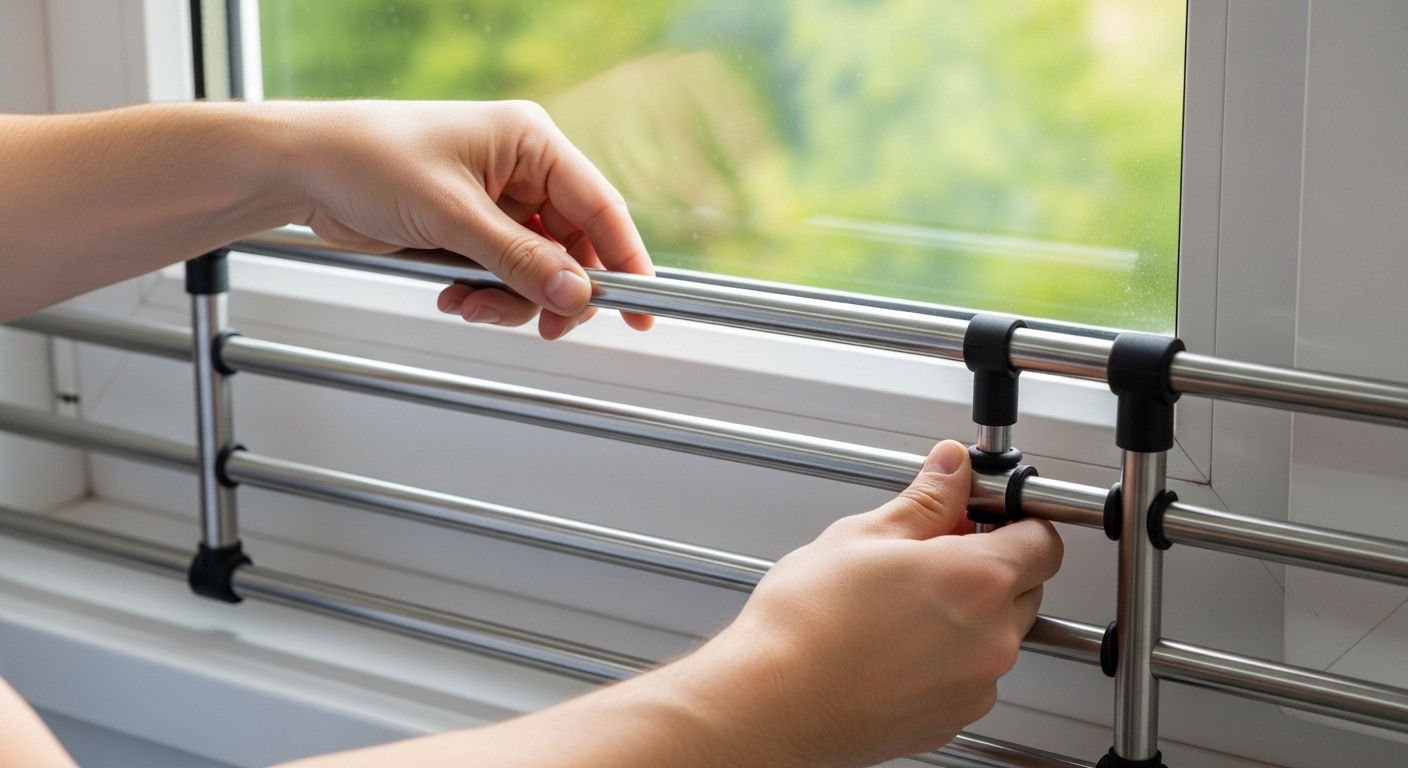
Installing SWB's telescopic bedroom window bars follows a straightforward process that any adult can complete without tools. Step one: measure your bedroom window opening width from inside jamb to inside jamb. SWB's Model A and Model A/EXIT fit windows from 22 to 36 inches wide, covering the vast majority of standard US residential window sizes. Step two: adjust the telescopic steel bar to approximately one inch less than your measured window width. Step three: position the bar horizontally across the window opening at the desired height — for bedroom egress compliance, ensure the bar does not obstruct the minimum 24-inch clear opening height or the minimum 20-inch clear opening width required by IRC R310. Step four: extend the telescopic adjustment to create firm, even pressure against both window jambs. The steel bar will be held in place by compression tension — the same principle used in tension shower rods, but executed in heavy-gauge steel. Step five: verify the installation by attempting to push or pull the bar inward and outward — it should not deflect. Step six: test the quick-release mechanism (Model A/EXIT) multiple times. Full detailed instructions are available at https://securitywb.com/installation/.
Renter-Specific Tips: Protecting Your Bedroom Without Losing Your Security Deposit
For renters in high-crime urban areas — think ground-floor apartments in Atlanta's Old Fourth Ward, basement units in Brooklyn, or first-floor units in Chicago's Near North Side — the combination of burglary risk and lease restrictions creates a genuine dilemma. SWB's telescopic bar system was specifically engineered to solve this problem. Because the installation uses compression tension against the existing window frame rather than screws, bolts, or wall anchors, it leaves absolutely zero permanent marks on the window, frame, or wall. This means installation is fully reversible and fully lease-compliant in virtually all US rental agreements, which typically prohibit modifications that damage or permanently alter the property. Before installing any window security device, review your specific lease agreement and, if in doubt, notify your landlord in writing. In many cases, landlords in high-crime areas are supportive of tenants taking security measures that do not cause property damage — and some landlords proactively install window bars themselves to reduce liability. Browse the full range of renter-friendly options at https://securitywb.com/model-a/.
Common Installation Mistakes That Compromise Bedroom Window Security
Even the highest-quality security bars can be rendered ineffective by installation errors. The most common mistake in bedroom window bar installation is improper tension setting — either too loose (allowing the bar to be dislodged by inward force) or so tight that it bows the window frame and creates gaps at the edges that reduce effective coverage. The second most common error is installing the bar too high within the window opening, leaving a gap at the bottom through which a small adult could reach or through which a child could fall. The third critical error specific to bedroom egress installations is positioning the bar in a way that reduces the net clear opening below the IRC-required minimums — always measure the actual clear opening with the bar installed, not just the rough window dimensions. The fourth error is failing to verify the quick-release mechanism under realistic conditions before completing the installation. SWB's installation guide at https://securitywb.com/installation/ addresses each of these failure modes with specific corrective guidance.
Choosing the Right SWB Model for Your Bedroom Window
Security Window Bars offers three distinct product models, and the correct choice for a bedroom application depends on your specific situation: whether you own or rent, whether children sleep in the room, whether the window is a designated egress window under your local building code, and whether you need the bars to be removable. Understanding the differences between the models is essential to making the right selection — because choosing a fixed wall-mount bar for a bedroom egress window, for example, would create a building code violation regardless of how well the bar itself is constructed. This section breaks down the SWB product line specifically from the bedroom window security perspective, covering the use cases, compliance considerations, and installation requirements for each model in the context of residential bedroom applications across the USA. For renters and homeowners navigating the broader landscape of window security options — including window security bars that open, clear bars, window grates, and door grilles — SWB's complete product ecosystem provides solutions across every entry point in a residential property.
Model A (Telescopic) — Best for Renters and Adjustable Bedroom Security
SWB's Model A is the telescopic adjustable window bar designed for bedroom windows where egress compliance is desired through the window's standard operable function rather than through a separate quick-release mechanism. Priced at $90, the Model A adjusts to fit windows from 22 to 36 inches wide and installs without drilling in 15–20 minutes. For bedroom applications where the window itself is fully openable (as in a double-hung or casement window that swings entirely clear of the bar when unlocked and opened), the Model A provides excellent burglary deterrence while satisfying egress requirements by allowing the occupant to remove the bar quickly before exiting. It is the ideal choice for renters in apartments in cities like Houston, Phoenix, or Dallas who want serious steel security without permanent installation. Available at https://securitywb.com/model-a/.
Model A/EXIT (Egress Compliant) — The Gold Standard for Bedroom Windows
For any bedroom window designated as a required egress opening under the IRC, NFPA 101, or local building codes, the Model A/EXIT at $92 is the definitive solution. Its patented quick-release mechanism allows the bars to be released from the interior in under three seconds without tools, keys, or special knowledge — satisfying the letter and intent of every major US residential building code. The Model A/EXIT is also telescopic and renter-friendly, sharing the no-drill installation advantage of the Model A while adding the egress compliance feature required by law in sleeping areas. For parents of children under 10 in NYC apartments subject to Local Law 57, for homeowners in California's earthquake-prone regions who need a fast exit option, and for landlords managing rental properties in Chicago, Philadelphia, or Detroit, the Model A/EXIT represents the most legally and functionally complete bedroom window security solution on the market. Product details are available at https://securitywb.com/model-a-exit/.
Model B (Wall Mount) — When Bedroom Bars Are Appropriate Without Egress Requirement
SWB's Model B is a fixed wall-mount security bar at $91, designed for maximum permanent security where no egress requirement applies to the specific window being protected. For bedroom applications, the Model B is appropriate in limited scenarios: a secondary bedroom window that is not the designated egress window for that room (since each sleeping room only requires one egress window under the IRC), a basement bedroom window that is below grade and not usable for emergency escape regardless, or a commercial sleeping facility where the egress window is located elsewhere in the room. The Model B's heavy-gauge steel construction and permanent powder-coated black finish provide the strongest possible forced-entry resistance — comparable to professionally welded bars at a fraction of the cost. However, installation requires wall drilling and is not reversible, making it unsuitable for renters. Homeowners who own their property and have already verified egress compliance through another window in the bedroom will find the Model B offers unmatched permanence and security.
Aesthetic Considerations: Bedroom Window Bars That Look Good
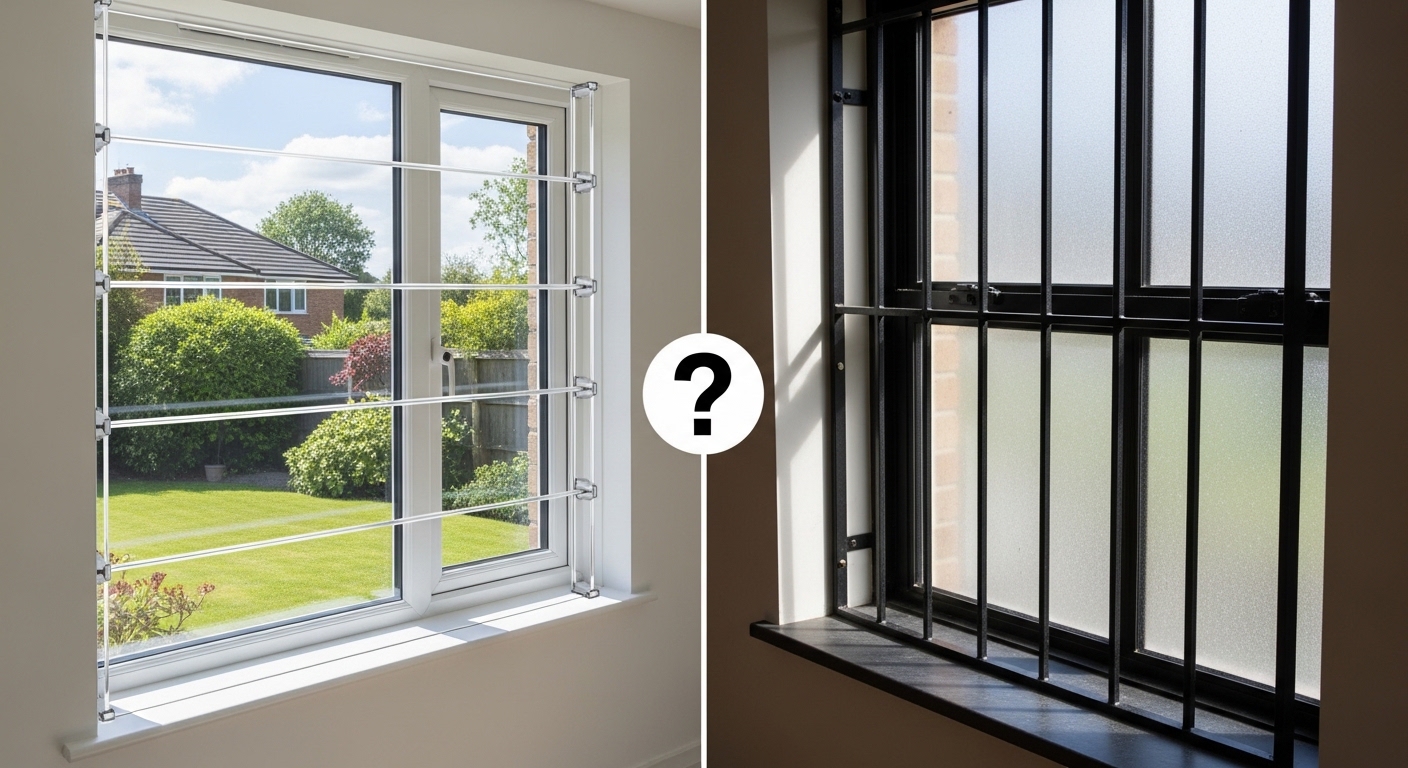
A persistent objection to bedroom window bars among homeowners and renters is aesthetic — the concern that steel bars will make a home look institutional, prison-like, or will signal to the neighborhood that the occupants fear crime. This concern, while understandable, is increasingly outdated. Modern window bar design has evolved significantly from the flat black welded grilles of the 1970s and 1980s. Contemporary window bar systems, including SWB's full product line, use clean geometric steel forms, matte powder-coated finishes, and minimal profiles that integrate naturally with modern and transitional interior design styles. The matte black finish on SWB's bars, in particular, coordinates naturally with the dark window frame hardware that has become standard in new construction and renovation across the USA — black window frames are among the most popular window styles in 2024 according to the National Association of Home Builders. Beyond finish, the telescopic single-bar design of SWB's Model A and Model A/EXIT presents a far cleaner visual profile than traditional multi-bar welded grilles, and the absence of wall-mounted hardware keeps the window surround clean and unobstructed.
Matte Black Bars and Modern Bedroom Design
Interior designers across the USA have noted the parallel between the rise of industrial and modern farmhouse interior design trends and the increased acceptance of visible steel window bars as a design element rather than an eyesore. Matte black metal accents — in light fixtures, cabinet hardware, shower fixtures, and window frames — have dominated residential interior design for the past five years, and SWB's matte black powder-coated finish positions its security bars as a natural component of this aesthetic vocabulary rather than a contradiction to it. In a bedroom with matte black window frames, matte black curtain rods, and matte black bedside lamp bases, a matte black steel security bar reads as intentional design rather than fearful fortification. This psychological shift matters because homeowners who are comfortable with the appearance of their security bars are far more likely to keep them installed consistently, rather than removing them when having guests and forgetting to reinstall them.
Balancing Privacy, Light, and Security in the Bedroom
Beyond aesthetics, bedroom window bars raise practical questions about light, privacy, and ventilation. A single horizontal telescopic bar — as used in SWB's Model A and Model A/EXIT — has minimal impact on natural light transmission, since it occupies only a narrow horizontal band across the window opening. Unlike full decorative grilles with multiple vertical and horizontal bars that can reduce light by 20–30%, a single telescopic bar reduces light transmission by less than 5% in most installations. Privacy is similarly unaffected — the bar does not obstruct sightlines from outside the window any more than a horizontal blinds slat. Ventilation is fully maintained because the bars do not prevent the window from being opened to any position — in fact, with SWB's telescopic system, you can open the window fully for maximum airflow while maintaining the bar as a barrier against forced entry. This combination of security, light, and ventilation makes SWB's bedroom bar system genuinely compatible with everyday bedroom living rather than merely tolerated as a security compromise.
Cost Comparison: DIY Bedroom Window Bars vs. Professional Installation
One of the most compelling practical arguments for SWB's bedroom window bar systems is the dramatic cost difference compared to professionally installed alternatives. According to HomeAdvisor, the national average cost for professional window bar installation in the USA ranges from $600 to $1,800 per window, with pricing varying significantly by market — installations in New York City and San Francisco can exceed $2,000 per window when including labor, permits, and custom fabrication. For a typical three-bedroom home with two windows per bedroom (six windows total), professional installation can cost $3,600 to $10,800 before any additional windows in living areas, kitchens, or garages are considered. By contrast, SWB's three-model product line — priced at $90, $91, and $92 per window — delivers the same steel security at 5–15% of the professional installation cost, without requiring permits, contractors, scheduling delays, or permanent property modification. For renters who cannot install permanent bars at all, SWB's telescopic models make bedroom window security accessible for the first time at a price point well within the reach of virtually any household budget.
Total Cost of Ownership: SWB Bars Over Time
The value of SWB's bedroom window bars extends beyond the initial purchase price. Because the bars are constructed from heavy-gauge steel with a powder-coated finish resistant to corrosion and UV degradation, they are designed for a service life measured in decades rather than years. Unlike alarm systems that require monthly subscription fees — averaging $30–$60 per month nationally, or $360–$720 per year — SWB's bars require no ongoing cost after the initial purchase. They need no batteries, no monitoring service, no annual inspection, and no software updates. Over a 10-year period, a single SWB Model A/EXIT installed in a bedroom window provides over a decade of 24/7 security for $92 total — less than a single month's alarm monitoring fee. When relocated to a new residence by a renter, the bars continue providing the same security at zero additional cost, making the effective per-year cost lower with each move.
Amazon Availability and Fast Delivery Across the USA
For homeowners and renters who need bedroom window security quickly — following a nearby break-in, after moving into a new apartment in a high-crime area, or when preparing a rental property between tenants — SWB's availability through Amazon FBA (Fulfillment by Amazon) means fast delivery to all 50 US states without waiting for a contractor's availability or a custom fabrication lead time. Amazon Prime members receive the bars in two days or less in most US metropolitan areas, including Chicago, Los Angeles, Houston, Philadelphia, and Atlanta. The purchase process is straightforward, the return policy follows Amazon's standard 30-day return window, and the reviews from verified US buyers provide real-world feedback from homeowners and renters who have installed the bars in their own bedrooms. You can browse and purchase all three SWB models at https://www.amazon.com/stores/SecurityWindowBars.
🏆 Conclusion
Securing your bedroom window is not a luxury or an overreaction — it is a fundamental element of home safety that addresses two of the most serious threats any American family faces: forced-entry burglary and fire entrapment. According to the FBI, a home burglary occurs every 25 seconds in the United States, and the bedroom is simultaneously the most vulnerable room at night and the most legally regulated room in the house when it comes to emergency egress. The right solution — security bars for windows that open in bedroom that are built from heavy-gauge steel, engineered with a reliable quick-release mechanism, compliant with IRC R310 and NFPA 101, and affordable enough for renters — exists today. Security Window Bars' Model A/EXIT delivers exactly that combination: patented quick-release egress compliance, telescopic no-drill installation, matte black steel construction, and Amazon-fast delivery to all 50 states. Whether you are a renter in a Chicago ground-floor apartment, a parent in an NYC building subject to Local Law 57, or a homeowner in Houston looking to stop paying for alarm monitoring that does nothing to physically block entry, SWB has the bedroom window security solution that protects your family without compromising your ability to get out. Do not wait for a break-in or a fire to take this step. Protect your bedroom window today.
Security Window Bars · USA
Secure Your Home Today
Protect your bedroom — and your family — starting today. Shop Security Window Bars on Amazon USA for fast delivery to all 50 states: https://www.amazon.com/stores/SecurityWindowBars. Or explore the full SWB product line at https://securitywb.com/model-a-exit/ and find the egress-compliant bedroom window bar solution that meets your specific needs.
Shop on Amazon →Frequently Asked Questions
Yes, security bars for bedroom windows are legal throughout the USA, but they must comply with egress requirements under the International Residential Code (IRC) Section R310 and NFPA 101. Specifically, any bar installed over a designated egress bedroom window must be openable from the inside without the use of a key, tool, or special knowledge. Fixed welded bars that cannot be released from the interior are illegal over egress bedroom windows in virtually all US jurisdictions. Quick-release egress bar systems — like SWB's Model A/EXIT — are fully legal and code-compliant in all 50 states.
A regular window security bar is designed primarily to resist forced entry — it is a fixed, rigid steel barrier. An egress window bar adds a quick-release mechanism that allows the bar to be opened from the interior in seconds without tools or keys, enabling occupants to escape during a fire or other emergency. Under IRC R310 and NFPA 101, any bar over a designated egress bedroom window must be an egress-compliant bar. Regular security bars without quick-release mechanisms are appropriate for non-egress windows only. SWB's Model A/EXIT is specifically engineered as an egress-compliant bedroom window bar.
In most cases, renters can install non-permanent window security bars without landlord permission, because telescopic bars that use compression tension rather than screws or anchors leave no permanent marks on the property. However, it is always advisable to review your specific lease agreement and, when in doubt, notify your landlord in writing before installation. SWB's Model A and Model A/EXIT are specifically designed to be fully reversible and non-damaging, making them appropriate for renters in apartments across the USA. In some cities, landlords are actually required to provide window security devices upon tenant request.
Under IRC Section R310, every sleeping room must have at least one egress window. If your bedroom has only one window, that window is your required egress window. If your bedroom has multiple windows, the one that meets the minimum dimensions — at least 5.7 square feet of net clear opening, minimum 24 inches tall, minimum 20 inches wide, sill no more than 44 inches from the floor — is your egress window. Any security bar installed over that specific window must include a quick-release egress mechanism. Contact your local building department if you are uncertain which window in a multi-window bedroom is the designated egress opening.
Yes, when properly selected and installed, window bars in children's bedrooms provide both fall prevention and burglary protection simultaneously. The key requirements are: bar spacing must not exceed 4 inches to prevent a child's head from passing through (per ASTM F2090), the quick-release mechanism must be accessible to an adult rescuer from outside, and the bars must not permanently block the egress window opening required by the IRC. SWB's Model A/EXIT satisfies all three requirements. In New York City, window guards are legally required in apartments where children under 10 reside under Local Law 57. SWB recommends practicing the egress release with all household members, including children old enough to understand the procedure.
SWB's telescopic bedroom window bar models — the Model A and Model A/EXIT — install in approximately 15 to 20 minutes for a first-time installer with no prior experience and no tools required. The installation consists of measuring the window opening width, adjusting the telescopic bar to fit, positioning it at the correct height within the window frame, and extending the telescopic tension to secure the bar in place. The Model B (wall-mount) requires drilling and takes approximately 30–45 minutes with basic power tools. Full step-by-step installation instructions are available at https://securitywb.com/installation/.
SWB's Model A and Model A/EXIT are designed to fit windows from 22 to 36 inches wide — a range that covers the vast majority of standard residential bedroom window sizes in the United States. Standard US single-hung and double-hung bedroom windows typically range from 24 to 36 inches in width, placing them squarely within SWB's coverage range. If your bedroom window falls outside this range — either narrower than 22 inches (uncommon in US residential construction) or wider than 36 inches (found in some large picture windows or custom homes) — contact SWB at https://securitywb.com/contact/ to discuss custom sizing options or alternative configurations.
Professional window bar installation in the USA costs an average of $600 to $1,800 per window according to HomeAdvisor national data, with prices reaching $2,000 or more per window in high-cost markets like New York City and San Francisco. For a typical three-bedroom home, professional installation across all bedroom windows can total $3,600 to $10,800. SWB's egress-compliant Model A/EXIT is priced at $92 per window and installs in 15–20 minutes with no professional labor required, saving homeowners and renters between $500 and $1,700 per window compared to professional alternatives — while delivering equivalent steel security and full building code compliance.