
BLOG

security window bars
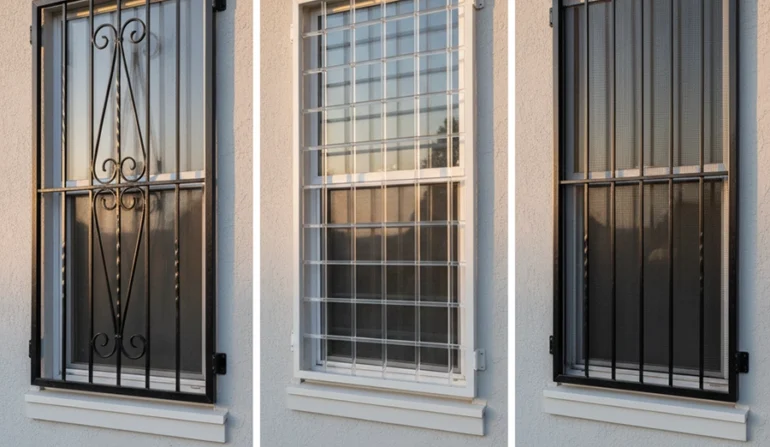
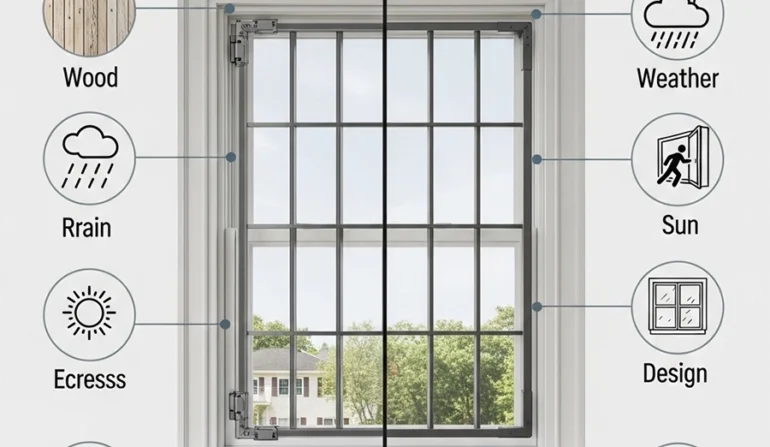
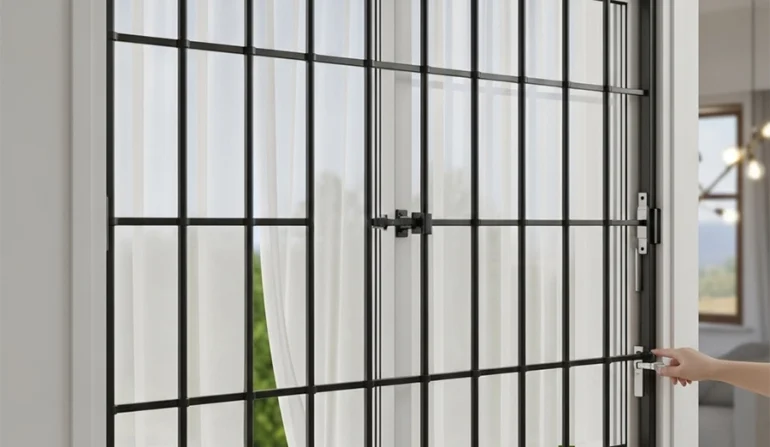
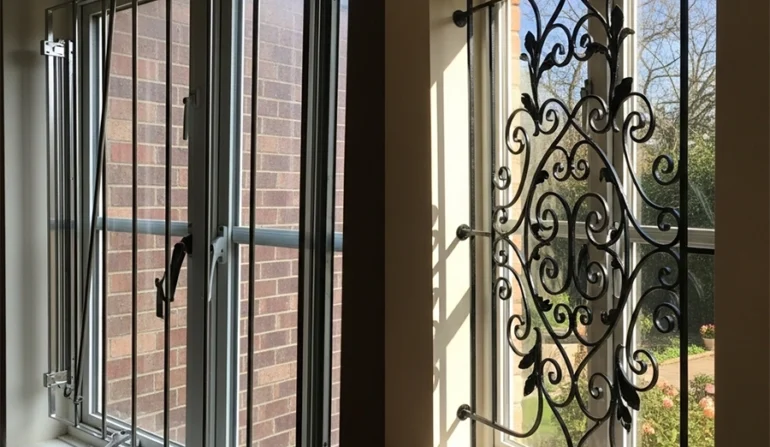
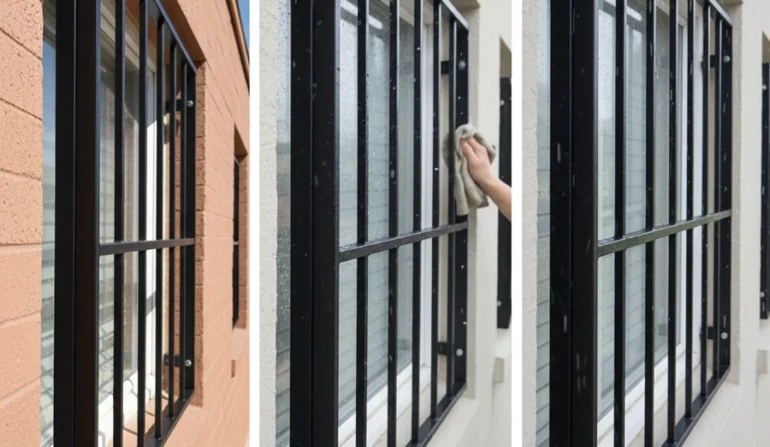
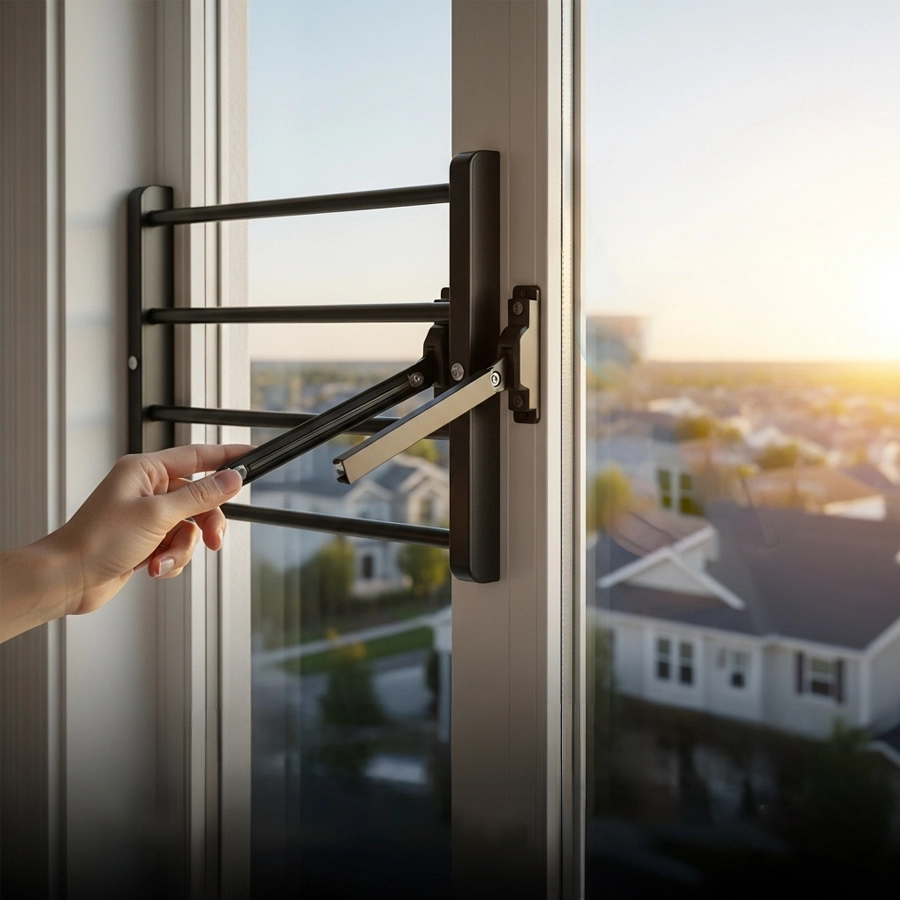
quick-release window bars opening from inside for emergency egress in bedroom

Quick-Release Window Bars: Emergency Egress & Code Compliance (2025 Guide)

Securing a window should never trap people inside. That’s why quick-release window bars—also called window security bars that open from inside—exist: they deter break-ins while preserving a fast, tool-free escape. This guide explains what “egress-ready window bars” really mean, how to pick compliant security window bars, where codes typically apply, and how to measure, install, test, and document your setup—at home, in rentals, and in small businesses.

Share

Window Bars for AC Units (Add Stability, Keep Egress)

In plain language, code-compliant window bars allow occupants to open the bars from the inside and escape, without keys, tools, or special knowledge. In practice, that translates to:

  • A one-hand, one-motion quick-release (lever, pull, or lift).
  • A clear swing path so the frame opens fully.
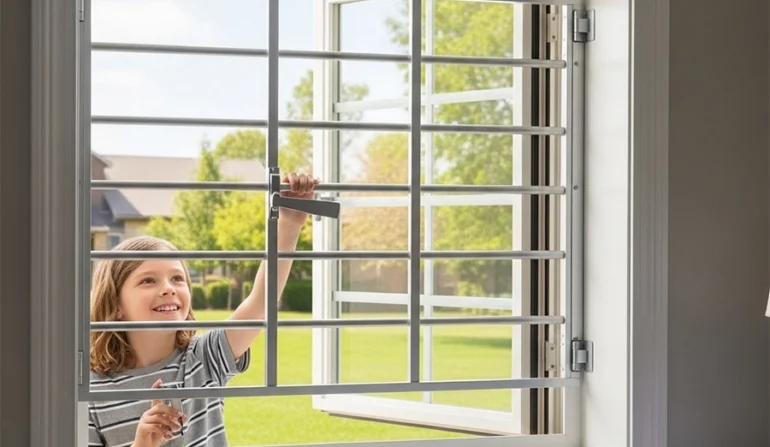
  • A reachable handle for children, seniors, and guests.
  • Monthly tests and simple instructions so anyone can operate the release under stress.

While local rules vary, these fundamentals are universally smart—and they are exactly why quick-release window bars are the recommended option for bedrooms, nurseries, and finished basements.

Where Egress Rules Typically Apply (And Why)

Treat these rooms as egress zones and design your window bars accordingly:

  • Bedrooms & nurseries (any level).
  • Finished basements used as living/sleeping space (often with window wells).
  • Multi-purpose rooms that sometimes host guests on sleeper sofas or bunk beds.

Utility spaces (laundry rooms, storage) may not need egress-ready bars—yet you should still ensure a safe exit path elsewhere.

When in doubt, choose quick-release. It is safer everywhere and simplifies approvals with landlords, HOAs, and insurers.

Quick-Release Mechanisms for Security Window Bars

Not all releases feel the same. The best systems balance child-friendly operation with tamper resistance from outside:

Lever-Latch Quick-Release

An interior lever disengages spring-loaded pins so the frame swings open. Intuitive and ideal for bedrooms where kids might need to operate it.

Pull-Handle Quick-Release

A recessed pull drops a concealed pin. Slim, modern look; ensure the pull force stays low for children and seniors.

Lift-to-Open Quick-Release

A protected lift clears the keeper. The upward motion is easy to remember under stress and works well in tight basements with window wells.

Non-negotiables for all types

  • One hand. One motion. No keys or tools.
  • Unreachable from outside (concealed linkage if frame is exterior).
  • Smooth swing—no binding on hinges or trim.
  • A handle height that kids can reach from the floor.

Interior vs Exterior Quick-Release Window Bars (Compliance Lens)

  • Interior window bars (preferred for bedrooms): release is easy to reach and test monthly; hardware stays protected from weather; minimal façade impact.
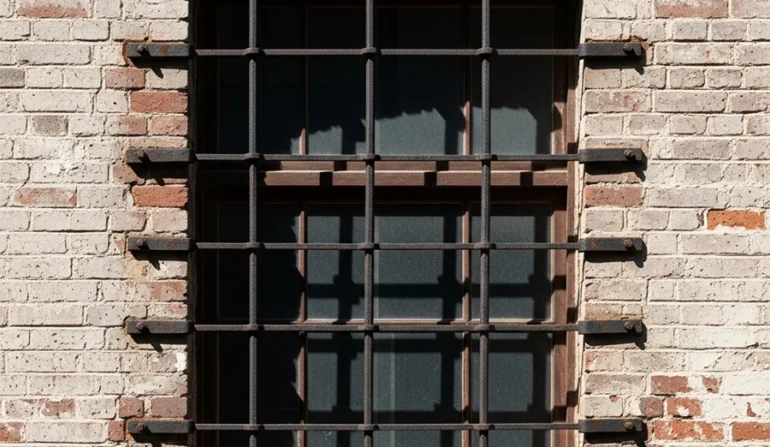
  • Exterior window bars (masonry or storefronts): can be compliant via interior-only linkage to the exterior frame; requires precise alignment and regular testing.

If anyone sleeps in the room, interior quick-release is the straightforward, compliance-friendly path.

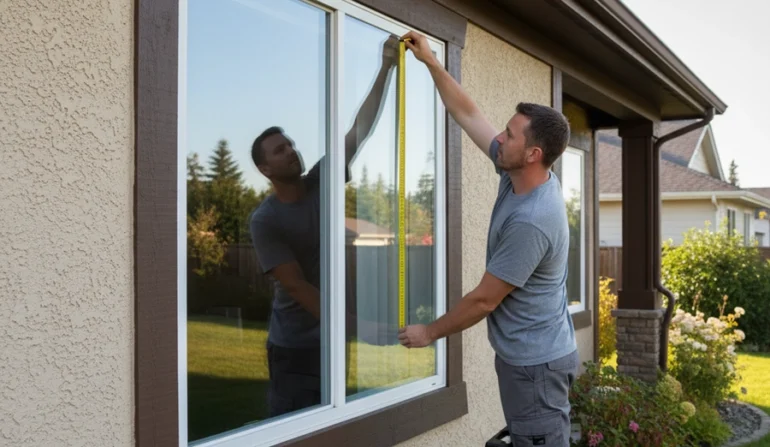
Measuring for Egress-Ready Window Bars (So They Open Fast)

Accurate measurements make releases smoother—and exits faster.

  1. Pick the mount: interior vs exterior; surface vs recess.
  2. Select hinge side & swing: choose the side with the clearest arc around blinds, furniture, and well walls.
  3. Width: inside-to-inside at top, middle, bottom—record the smallest.
  4. Height: inside-to-inside at left, center, right—record the smallest.
  5. Diagonals: both corners; note racking for shims/adjustables.
  6. Depth & obstructions: locks, cranks, shades, cords, AC brackets.
  7. Handle reach: mark a release height a child can reach without climbing.

Basement wells: measure the distance from the window plane to the well wall and cover. The swung-open bar must clear both.

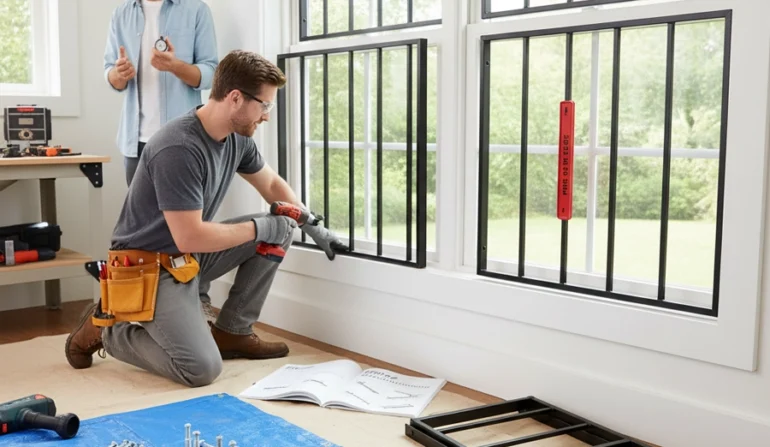
Installing Quick-Release Security Window Bars (Best Practices)

Wood Framing (Interior)

  • Locate studs; pre-drill undersized for lag screws.
  • Set two opposite corners first; level and plumb; torque in a cross pattern.
  • Install the quick-release using its template; cycle 10+ times.

Masonry (Brick/Block/Concrete)

  • Hammer drill to depth; vacuum dust so sleeve/wedge anchors set correctly.
  • Hang on two anchors; shim; level and plumb; complete the pattern.
  • Seal penetrations; use stainless pins/caps in humid or coastal zones.

Exterior Frames with Interior-Only Release

  • Route the concealed linkage inside the building envelope.
  • Verify the handle can’t be reached from outside—no gaps, no tool paths.
  • Test with windows locked and unlocked to simulate real conditions.

Documentation That Makes Approvals Easy

Keep a simple folder (digital or binder) with:

  • Photos: installed bars open/closed; handle close-ups.
  • Measurements and anchor notes (wood vs brick/block/concrete).
  • Release height from finished floor.
  • Monthly Egress Log (template below).
  • Household/Staff Training Sheet (where handle is, how to open, where to go).

Landlords, HOAs, and insurers appreciate clear records; they also help you spot issues before they matter.

Monthly Egress Drill & Release Test (Printable)

Goal: everyone can open the bars and exit in seconds—even in the dark.

  1. Announce the drill (kids first, then guests/caregivers).
  2. Lights off: reach the handle by feel; one motion to open.
  3. Open the window and step through the opening (or simulate carefully).
  4. Reset: close the window, re-latch the bars, confirm smooth operation.
  5. Log it (date, who practiced, notes/fixes).

Monthly Egress Log (copy/paste):

Month/Year: __________  Room: __________________________

Date  | Participants               | Pass/Fail | Notes (binding, obstructions, fixes)

——|—————————-|———–|————————————-

____  | __________________________ | ___       | ___________________________________

____  | __________________________ | ___       | ___________________________________

Retrofitting Fixed Window Bars to Quick-Release (Step-by-Step)

If you already have fixed window bars in a bedroom or basement, convert them:

  1. Evaluate the frame: confirm it can accept hinges and a release without compromising strength.
  2. Plan the swing: choose hinge side; verify clear arc past blinds/furniture/well.
  3. Add hinges (piano or heavy butt) to one side; reinforce as needed.
  4. Install a quick-release on the opposite side; mount the interior handle at child height.
  5. Re-anchor tabs if necessary for even load distribution.
  6. Test repeatedly; kids and seniors must open it easily.
  7. Document the change, take photos, and start your monthly log.

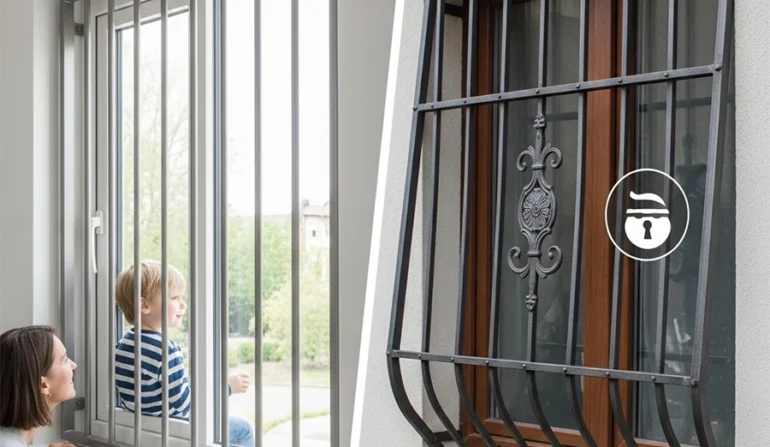
Child-Safe Quick-Release: Ergonomics That Matter

  • Low force: children and seniors can operate it with one hand.
  • Rounded edges and capped fasteners near the handle zone.
  • Cord management: route blind cords away from the handle to avoid snags.
  • Label discreetly (“Lift to Open”) for guests and caregivers.

Pair with window guards or child-safe stops if you also need fall prevention on upper floors.

Egress With Window AC Units (Yes, You Can)

A window AC security bar locks the sash height; a quick-release interior grille blocks reach-through. To keep egress:

  • Hinge the grille away from the AC side and cords/hoses.
  • Replace flimsy accordion panels with rigid inserts so drafts don’t create pry gaps.
  • Test the release with the AC running; vibration shouldn’t bind the swing.

Multi-Family, Landlords & Property Managers (Compliance & Liability)

  • Standardize on interior quick-release window bars for bedrooms in family units.
  • Keep move-in orientations: show the handle, run a demo, and provide a one-page instruction sheet.
  • Log monthly tests in common-area or digital records.
  • For apartments, consider removable window bars (compression/clamp) in non-egress rooms; bedrooms still need quick-release.

This small amount of process significantly reduces risk and shortens approval cycles with local authorities.

Small Business & Storefronts (Staff Egress)

If a barred window is part of an occupied floor area, train staff to open the quick-release and include it in closing procedures. Keep displays, shades, and signage clear of the handle and swing path. For aluminum storefronts, prefer interior bars anchored to structural members—never thin face caps.

Common Mistakes That Break Compliance

  • Installing fixed bars in rooms where people sleep.
  • Mounting the quick-release so high that kids can’t reach it.
  • Allowing blinds, cords, or furniture to block the swing.
  • Skipping dust removal in masonry holes—anchors loosen and frames rack.
  • Over-torquing fasteners and warping the frame (causes latch binding).
  • Forgetting to test monthly and update logs.

Materials & Finishes That Support Long-Term Safety

  • Powder-coated steel for rigidity and slim sightlines.
  • Galvanized + powder-coat plus stainless pins in coastal/damp zones.
  • Aluminum for lighter handling—use thicker profiles for equivalent stiffness.
  • Satin sheen hides fingerprints and looks calm in bedrooms and nurseries.

Smooth welds and rounded edges matter near kid-height handles.

Buying Checklist (Compliance-Focused)

  1. Room type (egress?): bedroom, nursery, finished basement.
  2. Mount: interior window bars preferred; exterior with interior-only release if needed.
  3. Mechanism: quick-release (lever/pull/lift), one-hand, no tools.
  4. Handle height: reachable by children; label discreetly.
  5. Hinge & swing: clear arc around blinds, furniture, and wells.
  6. Measurements: width/height at three points; diagonals; depth; obstructions.
  7. Substrate & anchors: wood lags vs sleeve/wedge anchors for masonry.
  8. Finish: black/white; coastal package if humid/coastal.
  9. Documentation: photos, egress log template, training sheet.
  10. Add-ons: window guards (fall prevention), AC sash bar, renter kits.

FAQs

Do quick-release window bars really meet egress needs?


Yes—when they open from the inside with one hand and no tools, and when the swing path is kept clear. That is the essence of egress-ready security window bars.

Can children open the release?


They should. Choose a low-force lever or lift handle at a reachable height and practice monthly in the dark.

Are interior quick-release bars safer than exterior ones?


Interior releases are easier to reach and test. Exterior frames can still be compliant if the release linkage is strictly interior-only and protected.

What if I already have fixed bars on a bedroom window?


Retrofit them: add hinges to one side, a quick-release to the other, then test and document. Converting fixed bars is common and highly recommended.

Will quick-release hardware weaken security?


No. The handle operates from inside only; from outside, the latch remains concealed and tamper-resistant.

Do I need monthly tests?


Yes—short, simple drills ensure muscle memory and reveal obstructions before an emergency.

How do window AC units affect egress?


Use a window AC security bar for the sash and a hinged quick-release grille that swings away from the unit and cords. Test with the AC installed.

What about rentals?


Use removable window bars in non-egress rooms and interior quick-release bars in bedrooms. Get written landlord approval and keep your egress log.

Ready to Make Your Window Bars Safe—and Compliant?

Choose interior quick-release window bars for bedrooms and finished basements, measure carefully, install with the right anchors, and test monthly. If you need help converting fixed bars, planning an egress-friendly layout, or documenting compliance for landlords or insurers, our specialists are ready to guide you step by step.

EMAIL ADDRESS: sales@securitywb.com
SITE: www.securitywb.com
PHONE:
CDMX: +52 (55) 5272 3355  USA: +1 (650) 4371 575
Share

COOKIES POLICY

Security Window Bars LLC ("SWB") uses cookies and similar technologies to improve your browsing experience and enhance the functionality of our website www.securitywb.com (the “Website”). This Cookies Policy explains what cookies are, how we use them, and how you can manage your cookie preferences.

By using our Website, you agree to our use of cookies as described in this policy.

Last Updated: 01/01/25