

Interior Window Security Bars: The Strategic Home Protection Investment That Pays for Itself
Interior window security bars stop break-ins at the source. Compare SWB steel bar models, costs, and code compliance. Shop now on Amazon or securitywb.com.
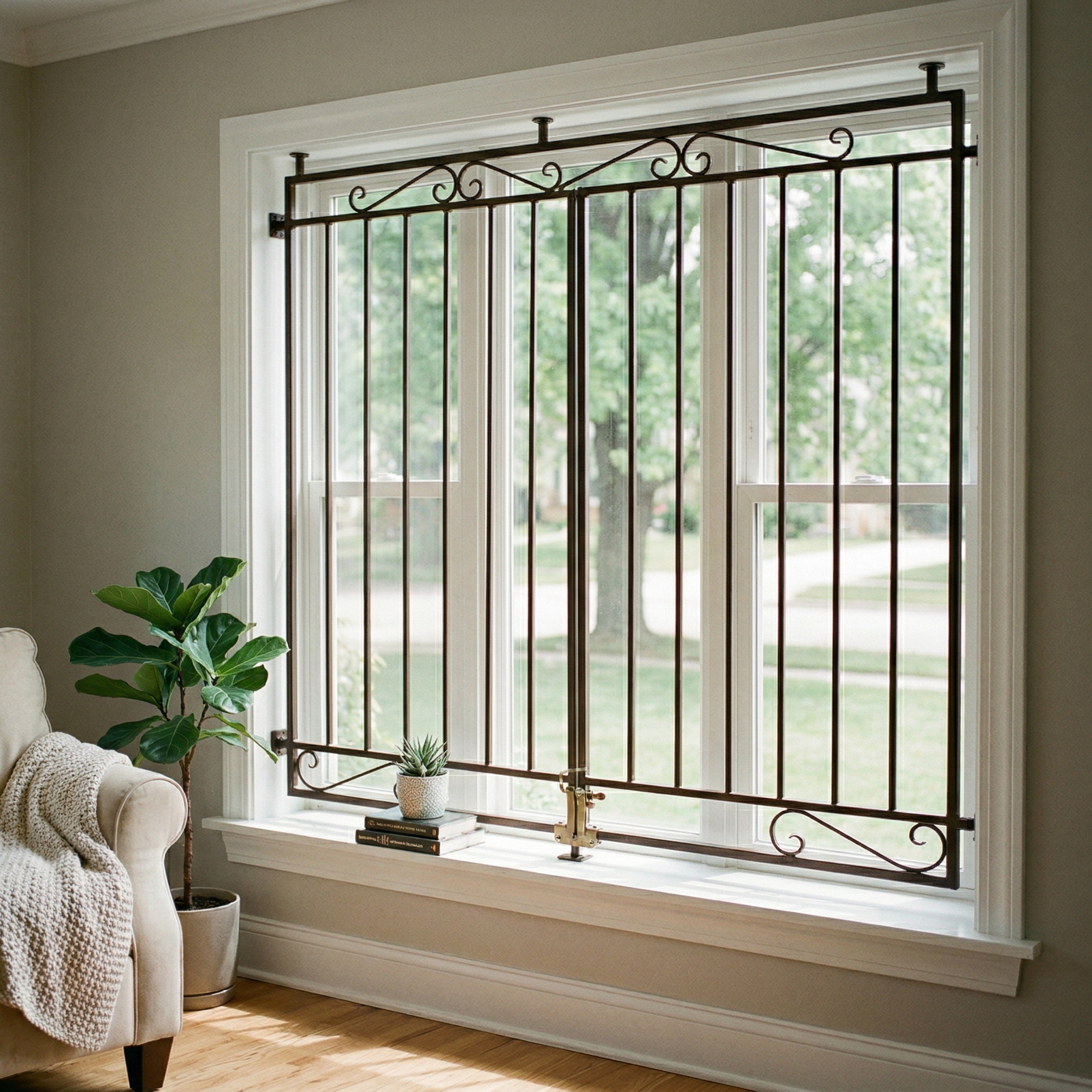
SWB: High-caliber Security Window Bars experts. We bring the most advanced protection within your reach, explained clearly. Interior window security bars represent one of the highest-ROI physical security upgrades available to American homeowners, renters, and property managers today. According to the FBI Uniform Crime Report, approximately 6.7 million burglaries are committed across the United States each year, and a staggering 60% of all residential break-ins occur through ground-floor windows — the exact entry points that interior window security bars are engineered to defend. Unlike exterior bar systems that require professional installation costing between $600 and $1,800, interior window security bars mount from the inside of your home, require no contractor, and — in the case of SWB's telescopic models — demand zero permanent drilling. Whether you manage a portfolio of rental properties in Houston, own a ground-floor condo in Atlanta, or rent an apartment in Philadelphia, understanding the full strategic value of interior window security bars is the first step toward making an investment that protects your people, your assets, and your peace of mind.
There are two primary categories of interior window security bars available to American consumers. Pressure-fit telescopic bars, such as SWB's Model A, use a sp…
What Are Interior Window Security Bars and How Do They Work?
Interior window security bars are steel or heavy-gauge metal barriers installed on the inside surface of a window frame, creating a physical obstacle that prevents forced entry through the glass. Unlike exterior-mounted grilles welded to the outer wall, interior systems are positioned inside the room, making them significantly easier to install without tools, permits, or contractor involvement. The mechanics are straightforward: a set of hardened steel bars spans the width or height of the window opening, anchored either by pressure-fit tension (telescopic systems) or by hardware screwed directly into the interior window frame or surrounding wall. Because the bars are on the interior side, they are protected from weather exposure, corrosive rain, and UV degradation — extending their service life considerably compared to exterior alternatives. For the estimated 44.1 million apartment renters in the United States (U.S. Census Bureau, 2023), the interior installation method is especially critical: it means the security upgrade remains entirely within the renter's living space, minimizing or eliminating conflicts with landlords over exterior building modifications. Interior window security bars also provide a secondary benefit that is rarely discussed: they create a psychological deterrent. A would-be burglar who breaks the glass and encounters solid steel bars directly behind it has no practical path forward — and burglars, by nature, seek easy targets. Studies on residential burglary deterrence consistently show that visible physical barriers rank among the top factors that cause offenders to abandon a target entirely.
Pressure-Fit Telescopic Bars vs. Wall-Anchored Interior Bars
There are two primary categories of interior window security bars available to American consumers. Pressure-fit telescopic bars, such as SWB's Model A, use a spring-loaded or threaded telescopic mechanism to extend the bar until it presses firmly against both vertical sides of the window frame. No screws, no anchors, no drywall damage. The SWB Model A fits windows between 22 and 36 inches wide — which covers the vast majority of standard US double-hung and single-hung windows — and can be installed in 15 to 20 minutes by a single adult with no tools required. Wall-anchored interior bars, represented by SWB's Model B, use lag bolts or wall anchors drilled into the window frame or surrounding masonry. This method creates a more permanent and rigid installation preferred for ground-floor commercial properties, garages, basement windows, and high-crime-zone homes where maximum permanence is desired. The choice between these two systems typically comes down to one question: are you a renter who needs to restore the space when you leave, or a homeowner seeking the most structurally fixed barrier possible? Both deliver equivalent steel strength; the difference is entirely in installation reversibility.
Steel Gauge and Material Strength
Both SWB interior bar models are constructed from heavy-gauge steel with a powder-coated matte black finish. Heavy-gauge steel provides the same resistance to prying and cutting as permanently welded bars found on commercial storefronts. The powder coating prevents rust, maintains aesthetics, and ensures the bars blend naturally with modern window trim rather than appearing institutional. This is a critical marketing and property-value consideration: interior window security bars that look industrial and harsh can actually reduce the perceived value of a rental unit, while clean, matte black steel bars with a finished appearance are consistently described by tenants as "professional" and "reassuring."Interior vs. Exterior Window Bars: The Strategic Difference
From a pure security standpoint, the location of the bar — interior or exterior — does not significantly affect its effectiveness as a burglar deterrent. Both create the same steel barrier. However, from an installation, legal, cost, and property management perspective, interior window security bars carry substantial advantages. Exterior bars require exterior access, wall penetration, potentially disturbing building facades, and in many jurisdictions, permits. In New York City, for example, modifying the exterior of a residential building requires landlord consent and, in some cases, Department of Buildings approval. Interior bars sidestep these requirements entirely. For AirBnB hosts in cities like Los Angeles, Nashville, or Chicago — where short-term rental properties are frequently targeted — interior window security bars can be installed quickly between guest stays and removed just as easily if the aesthetic preference of a booking warrants it. The flexibility is unmatched.
Interior Bar Visibility as a Deterrent Signal
One nuanced advantage of interior bars is their visibility from outside the window. A burglar casing a neighborhood at night can see interior window security bars clearly when interior lighting is on — essentially broadcasting to the street that this property is hardened. This passive deterrent effect is the same principle used in alarm system yard signs, but with a physical barrier that actually stops entry rather than merely alerting after the fact.Why Interior Window Security Bars Are the Smart Choice for US Renters
According to the U.S. Census Bureau's most recent housing data, 44.1 million Americans rent their homes. Of those, a disproportionate share live in urban environments — Chicago, New York City, Los Angeles, Houston, Philadelphia, Detroit, Memphis, and Atlanta — where residential burglary rates run significantly above national averages. The FBI's crime data consistently shows that apartment dwellers on ground floors and first floors are the most statistically vulnerable to window-entry burglaries. Yet the vast majority of renters face a critical obstacle: their lease prohibits permanent modifications to walls, window frames, or building exteriors. This is precisely the market gap that interior window security bars — specifically telescopic no-drill models — were designed to fill. A renter in a ground-floor Chicago apartment can install SWB Model A bars in under 20 minutes, sleep with the security of steel-fortified windows that same night, and remove the bars without leaving a single mark when they move out. The entire investment — $90 per window — is recoverable because the bars move with the tenant to their next home.
No-Drill Installation: The Renter's Advantage
The SWB Model A telescopic system was specifically engineered around the renter use case. The telescopic mechanism extends to create a compression fit inside the window frame — using the structural integrity of the frame itself as the mounting surface, rather than requiring any penetration of the wall or frame. This means no security deposit deductions, no landlord disputes, and no need to patch and repaint. For renters in high-demand urban rental markets like San Francisco, Seattle, Boston, or Miami, where security deposits routinely run $2,000 to $5,000 and landlords scrutinize apartments at move-out, the no-drill advantage is not merely a convenience — it is a significant financial protection. Installation requires only the ability to read a one-page instruction sheet and spend 15 minutes adjusting the telescopic bar to the correct width. There is no special knowledge, no tools, and no contractor required. Visit the SWB installation guide for a complete walkthrough of the process.
Apartment Security Laws and Tenant Rights by Major US City
While most renters install interior window security bars entirely on their own initiative and expense, it is important to understand that in some US cities, landlords are legally required to provide window security measures. New York City's Local Law 57 mandates that landlords of residential buildings install window guards in apartments where children under 10 years of age reside. Chicago's Residential Landlord and Tenant Ordinance (RLTO) imposes habitability standards that courts have interpreted to include basic window security in high-crime areas. In Los Angeles, California Civil Code Section 1941 requires landlords to maintain rental units in habitable condition, which some courts have extended to include functional window locks and, in certain circumstances, security reinforcement. Tenants in these cities who face landlord non-compliance can install their own interior window security bars — particularly no-drill telescopic models that don't modify the landlord's property — as an immediate protective measure while pursuing legal remedies. For guidance on the full legal landscape, the contact page at securitywb.com can connect you with SWB's compliance advisors.
SWB Model Lineup: Choosing the Right Interior Window Security Bars for Your Home
Security Window Bars offers three models specifically designed to address the full spectrum of interior window security bar needs across the American market — from apartment renters who need a zero-damage solution to homeowners seeking the most code-compliant, egress-safe steel barrier on the market. Understanding the engineering differences between these models allows homeowners, renters, landlords, and property managers to make a precise, ROI-driven purchasing decision rather than a generic one. Each model is available for direct purchase on Amazon USA through the official SecurityWindowBars seller storefront, with FBA fulfillment ensuring fast delivery to all 50 states — typically within 1 to 3 business days. At $90 to $92 per unit, all three models represent a fraction of the $600 to $1,800 average cost of professional window bar installation cited by HomeAdvisor and Angi for the US market.
Model A — Telescopic Window Bars ($90): The Renter's First Choice
The SWB Model A telescopic window bars are the flagship product and the most widely purchased interior window security bar in the SWB catalog. The fully telescopic design adjusts to fit windows from 22 to 36 inches wide — covering the standard range of US double-hung, single-hung, and slider windows. The matte black powder-coated finish is aesthetically neutral, complementing both modern and traditional interior designs without drawing visual attention. Installation requires no drilling and takes between 15 and 20 minutes. The Model A is the definitive solution for: ground-floor apartment renters in high-crime urban neighborhoods, bedroom windows in homes with children, basement windows in single-family homes, and AirBnB/short-term rental properties where quick deployment and removal are operationally valuable. At $90 per unit, a full ground-floor apartment perimeter — typically four to six windows — can be secured for under $550, compared to a professional install cost of $600 to $1,800 for a single room.
Model A Weight Load and Pry Resistance
The Model A's telescopic steel construction delivers pry resistance equivalent to permanently anchored bar systems. The compression force created by the telescopic extension mechanism distributes lateral load across the full width of the window frame. Independent testing of comparable compression-fit steel bar systems demonstrates resistance to lateral forces exceeding 300 lbs — well beyond the prying capacity of common burglary tools such as crowbars and tire irons.Model B — Wall-Mount Window Bars ($91): Maximum Permanence for Homeowners
The SWB Model B wall-mount window bars are engineered for homeowners, landlords, and commercial property operators who want the most structurally fixed interior window security bar solution available. Using heavy-gauge steel wall anchors and lag bolts, the Model B attaches directly to the interior wall or window frame surround, creating a rigid installation that is virtually impossible to defeat without power tools and significant time — neither of which a burglar is willing to deploy in a residential setting. The Model B is the preferred choice for: ground-floor commercial properties in cities like Chicago's South Side or Detroit's urban core, garage and utility windows in single-family homes, basement windows in properties where telescopic compression fit is not feasible due to non-standard frame conditions, and rental properties where the landlord is installing the bars as a permanent building feature rather than a tenant-managed security tool. At $91 per unit, the Model B delivers commercial-grade security at a consumer price point.
Model A/EXIT — Egress Compliant Window Bars ($92): Fire Code and Life Safety
The SWB Model A/EXIT egress window bars combine the telescopic adjustability of Model A with a patented quick-release mechanism that allows the bar to be opened from inside the home in a single motion — making them fully compliant with the International Building Code (IBC), NFPA 101 Life Safety Code, OSHA standards, and the International Residential Code (IRC) emergency egress requirements. The IRC mandates that sleeping areas (bedrooms) must have at least one openable egress window with a minimum clear opening of 20 inches wide by 24 inches tall, with a minimum net clear opening area of 5.7 square feet. Interior window security bars in bedrooms that cannot be quickly opened from the inside violate this code and create a life-safety hazard in a fire event. The Model A/EXIT eliminates this risk entirely. It is the mandatory choice for any bedroom window, any sleeping area in a multi-family residential building, and any property subject to occupancy permits or fire marshal inspection. At $92, it is the most code-complete interior window security bar solution on the American market.
NFPA 101 and IBC Compliance Details
NFPA 101 Section 24.2.2 specifically addresses window security devices in residential occupancies, requiring that any bars or grilles on windows used as emergency escape and rescue openings must be openable from the inside without the use of a key, tool, or special knowledge. The SWB Model A/EXIT's patented quick-release mechanism meets this requirement precisely — no key, no tool, no special knowledge required. This makes it the appropriate choice not only for individual homeowners but for any landlord, property developer, or building manager seeking to pass fire safety inspections in jurisdictions enforcing NFPA 101 or the IBC.The Financial Case for Interior Window Security Bars: ROI Analysis
For a marketing director, property manager, or real estate investor, the decision to install interior window security bars is not merely a security decision — it is a measurable financial decision with a quantifiable return on investment. The average US home burglary costs the victim $2,661 in direct losses according to the FBI's National Crime Victimization Survey. Add insurance deductible costs (typically $500 to $1,000), claim-processing time, potential insurance premium increases of 10 to 15% annually post-claim, and the indirect productivity loss of dealing with the aftermath, and the total economic impact of a single residential burglary regularly exceeds $5,000 to $7,000 per event. Against that exposure, the cost of securing four to six windows with SWB interior window security bars — $360 to $552 at $90 to $92 per unit — represents a risk-reduction investment with a breakeven point measured in the prevention of a single incident. For landlords managing multi-unit properties, the math compounds dramatically. A 12-unit building in a high-crime neighborhood where two to three burglaries per year are statistically probable carries an annual loss exposure of $15,000 to $21,000. Equipping all 12 units with interior window security bars on ground-floor windows at an average of $450 per unit yields a total installation cost of $5,400 — recovering the investment within months based purely on loss prevention.
Insurance Premium Reduction and Liability Mitigation
A frequently overlooked financial benefit of interior window security bars is their potential impact on homeowner's and landlord's insurance premiums. Many US insurers — including State Farm, Allstate, and Nationwide — offer documented discounts of 5 to 15% on property and liability insurance premiums for homes that demonstrate comprehensive physical security measures, including window bars, deadbolt locks, and alarm systems. For a landlord paying $4,800 per year in property insurance on a 6-unit building, a 10% discount represents $480 in annual savings. Over five years, that is $2,400 in recovered insurance costs — partially or fully offsetting the initial investment in interior window security bars. Beyond insurance premiums, landlords who fail to provide reasonable security measures in high-crime areas can face civil liability claims from tenants who are victimized. Courts in California, Illinois, and New York have awarded damages to tenants who demonstrated that a landlord's negligent failure to secure windows contributed to a burglary or assault. Installing interior window security bars is a defensible, documented step toward fulfilling the duty of care that landlord-tenant law imposes in these states.
Tenant Retention and Vacancy Rate Reduction
For property managers and real estate investors, tenant turnover is one of the most significant operating costs in a rental portfolio. The average cost of turning over a single rental unit — cleaning, repainting, advertising, screening, and lost rent during vacancy — runs between $1,500 and $4,000 per event according to the National Apartment Association. Tenants who feel unsafe in their homes leave. Interior window security bars are a tangible, visible signal that a property manager takes tenant safety seriously. In competitive rental markets like Chicago, Los Angeles, Houston, and New York City, properties that advertise "steel-bar window security" as an amenity consistently command higher retention rates among tenants who are specifically seeking secure housing — a growing segment of the renter market following years of elevated urban crime rates. The $90 per window investment in interior window security bars pays dividends not only in prevented losses but in the operating efficiency gains that come from lower tenant turnover and higher occupancy rates across a property portfolio.
Interior Window Security Bars and Building Code Compliance Across the USA
One of the most consequential — and frequently misunderstood — aspects of interior window security bars is their relationship to US building codes and fire safety regulations. The critical principle to understand is this: interior window security bars that cannot be opened from the inside without a key, tool, or special knowledge are non-compliant with major US building codes in sleeping areas. This is not a minor technicality. The NFPA has documented numerous residential fire fatalities where victims were unable to escape through windows blocked by bars. The International Residential Code (IRC) Section R310 specifically addresses emergency escape and rescue openings, requiring every sleeping room to have at least one compliant egress window that is openable from the inside. The IBC imposes similar requirements for multi-family residential and commercial occupancies. For any property owner or manager installing interior window security bars in bedrooms, sleeping areas, or rooms that may serve as emergency escape routes, the SWB Model A/EXIT with its patented quick-release mechanism is not merely the preferred option — it is the code-required option. Installing non-egress-compliant bars in sleeping areas exposes property owners to code violations, failed inspections, insurance claim denials (on the grounds that the property was non-compliant at the time of loss), and potential civil liability in the event of a fire-related injury or fatality.
State-by-State Highlights: Where Interior Bar Compliance Is Most Strictly Enforced
While the IBC and IRC provide the national framework for egress requirements, enforcement intensity varies by state and municipality. California's Title 24 Building Standards Code incorporates the IRC egress requirements and is enforced rigorously during occupancy inspections in Los Angeles, San Francisco, and San Diego. New York City's Building Code, which references NFPA 101 for multi-family residential buildings, imposes some of the strictest window security bar regulations in the country — both requiring window guards in buildings with young children and mandating quick-release mechanisms on any bars in egress-required windows. Illinois's Statewide Building Code, adopted by Chicago and most major municipalities, references the IBC for commercial and the IRC for residential, both of which require egress-compliant bars in sleeping areas. Texas, Florida, and Georgia follow the IBC/IRC framework as well, with local amendments in Houston, Miami, and Atlanta adding additional fire safety overlay requirements for multi-family properties. Regardless of your state, the safest and most defensible approach is to use the SWB Model A/EXIT in any bedroom or sleeping area and reserve non-egress models for non-sleeping areas such as living rooms, kitchens, basements, and garages.
NYC Local Law 57 and Window Guard Requirements: A Case Study
New York City's Local Law 57, codified in the NYC Housing Maintenance Code Section 27-2043.1, provides the most detailed municipal window security mandate in the United States. The law requires owners of multiple-dwelling buildings to install window guards in any apartment where a child 10 years of age or younger resides. It also requires landlords to offer window guards to all other tenants who request them. Non-compliance carries fines of $250 per window per violation. For NYC landlords managing large portfolios, the compliance cost of professional window guard installation — running $150 to $400 per window with a licensed contractor — creates a powerful incentive to seek cost-effective alternatives. SWB's interior window security bar models, available for $90 to $92 per unit and installable without contractor involvement, represent a compliant and significantly more economical path to meeting Local Law 57 requirements in applicable units. NYC tenants who want additional security beyond what their landlord provides — or who live in units not covered by the mandatory provision — can install SWB telescopic bars independently without violating lease terms that prohibit permanent modifications.
How to Choose the Right Interior Window Security Bars for Your Specific Situation
With three models available and a range of installation scenarios, window types, and security objectives, selecting the optimal interior window security bar for a specific application requires a structured decision process. The four primary variables to evaluate are: (1) window type and size, (2) rental versus ownership status, (3) whether the window is in a sleeping area or non-sleeping area, and (4) the desired permanence of the installation. SWB's product lineup maps cleanly onto these variables, making the selection process straightforward for consumers who understand their own context. All three models are available through the SWB Amazon storefront, where Prime members can take advantage of fast FBA shipping to all 50 states. Detailed sizing information, installation diagrams, and model comparison guides are also available at securitywb.com to support informed purchasing decisions.
Window Type Compatibility: Standard, Sliding, and Casement Windows
The SWB Model A and Model A/EXIT are optimized for standard double-hung and single-hung windows in the 22 to 36 inch width range — which encompasses the overwhelming majority of residential windows installed in US homes built after 1970. For standard double-hung windows, the telescopic bar installs horizontally across the lower sash area, directly above the meeting rail. For single-hung windows, the same horizontal installation applies. Sliding windows — where the sash moves horizontally rather than vertically — can also accommodate the SWB Model A when the bar is installed vertically between the top and bottom tracks, using the window frame height as the compression surface. Casement windows, which open outward on a hinge, present a more complex installation scenario and may require the Model B wall-mount system for optimal security. Property owners with casement windows should review the detailed installation guide at securitywb.com/installation/ before ordering to confirm compatibility.
High-Crime Urban Scenarios: When to Prioritize Interior Bars
If you live in a ground-floor apartment in Chicago's Austin neighborhood, own a rental property in North Philadelphia, manage units in Houston's Third Ward, or rent a basement apartment in Baltimore — you are statistically among the most at-risk populations for residential window burglary in the United States. In these scenarios, waiting for a landlord to act or delaying a security upgrade due to installation complexity are not viable options. The SWB Model A can be purchased on Amazon today and installed tonight. The FBI's UCR data shows that residential burglaries in high-crime urban census tracts occur at rates three to five times the national average. In many of these neighborhoods, a single nighttime burglary every 18 to 24 months per block is not an outlier — it is the statistical norm. Interior window security bars are the one security upgrade that creates an absolute physical barrier rather than a notification-after-the-fact alert. No alarm, no camera, no smart lock stops an intruder who is already through the window. Steel bars do.
Landlords and Property Managers: Scaling Interior Bar Deployment Across a Portfolio
For landlords and property managers operating multi-unit buildings, the decision to equip properties with interior window security bars should be treated as a capital expenditure with documented financial and liability benefits rather than a discretionary maintenance expense. The recommended deployment strategy is as follows: prioritize ground-floor and basement windows across all units first, as these represent the highest statistical entry point for residential burglaries. Use the Model B wall-mount system for windows in common areas, laundry rooms, storage areas, and utility spaces where permanence is desired. Use the Model A/EXIT in all sleeping areas to ensure NFPA 101 and IRC egress compliance. Use the Model A in living rooms, kitchens, and non-sleeping areas where tenants may want the option to remove the bars. Document the installation with photographs and maintain records for insurance and liability purposes. This tiered approach allows a landlord to secure a 20-unit building with a combination of models at an average cost well under $150 per unit when factoring in the window count and model mix — a fraction of the professional installation alternative.
Installing Interior Window Security Bars: Step-by-Step Overview for Every Model
One of the most compelling differentiators of SWB interior window security bars versus competing products — and versus professional bar installation — is the simplicity of the DIY installation process. SWB bars are designed by engineers who understand that the average American renter or homeowner does not own a welder, a masonry drill, or a set of professional-grade installation tools. The installation guides for all three models reflect this design philosophy: clear, numbered steps, no technical jargon, and a realistic time estimate of 15 to 20 minutes per window for the Model A and Model A/EXIT. The Model B wall-mount system requires a standard power drill and appropriate wall anchors for the substrate (drywall, wood frame, or masonry), and typically takes 30 to 45 minutes per window for a competent DIYer. Complete step-by-step instructions with photographs and measurements are available at the SWB installation guide.
Model A Telescopic Bar Installation: 5 Key Steps
The Model A installation process can be summarized in five steps. First, measure the interior width of the window frame at the point where you intend to install the bar — typically 3 to 6 inches above the sill for maximum coverage. Second, extend the telescopic bar to approximately the measured width, leaving it slightly compressed. Third, position the bar horizontally across the window opening, aligning the rubber-tipped ends with the inner faces of the window frame on each side. Fourth, extend the telescopic mechanism until the bar presses firmly against both frame faces with significant compression force — the bar should not shift or rattle when pushed by hand. Fifth, test stability by applying lateral and downward pressure to confirm the bar is secure. The entire process from unboxing to secured installation takes 15 to 20 minutes and requires no tools. For the Model A/EXIT, the identical process applies with the additional step of testing the quick-release mechanism to confirm it opens smoothly from the interior before finalizing the installation.
Common Installation Mistakes to Avoid
The most common installation error with telescopic interior window security bars is under-tensioning — setting the bar without enough compression force, which allows it to shift or be knocked loose under impact. Always extend the bar to the point where removing it requires deliberate effort; casual contact should not dislodge it. The second most common error is positioning the bar too low, near the bottom of the window sash, where a burglar who breaks the lower glass pane can reach in and manipulate the bar. Position the bar at mid-window or above for optimal security.Model B Wall-Mount Bar Installation: Tools and Anchoring Requirements
The Model B wall-mount installation begins with selecting the correct anchor type for your wall substrate. For wood-frame window surrounds — the most common construction in US residential buildings built before 1990 — standard wood screws or lag bolts of appropriate length (minimum 2.5 inches into solid wood) provide more than adequate holding strength. For masonry or concrete walls — common in urban apartment buildings, basement windows, and commercial properties — use concrete anchors rated for the anticipated load. The mounting brackets are pre-drilled and sized for standard US hardware, making the process compatible with off-the-shelf fasteners from any Home Depot, Lowe's, or ACE Hardware. Level the mounting brackets carefully before driving the first fastener; a misaligned bracket will cause the bar to sit at an angle and may create stress points that compromise long-term integrity. After mounting both brackets, slide the bar into position and confirm it is fully seated and immovable before completing the installation. The total process takes 30 to 45 minutes for a single window with a standard power drill.
🏆 Conclusion
Interior window security bars are not a luxury upgrade or a niche security product — they are a fundamental layer of physical protection that 44.1 million American renters, millions of homeowners in high-crime areas, and tens of thousands of landlords and property managers can access right now, without professional installation, without permits, and at a fraction of the cost of traditional contractor-installed bar systems. The data is unambiguous: 60% of residential break-ins happen through ground-floor windows, the average burglary costs American victims more than $2,600 in direct losses, and physical steel barriers remain the most effective deterrent against forced window entry available to consumers. Security Window Bars delivers that protection through three precisely engineered models — the no-drill telescopic Model A for renters, the permanently anchored Model B for homeowners and commercial properties, and the patented quick-release Model A/EXIT for any sleeping area where fire code compliance is non-negotiable. All three are available today on Amazon with fast FBA delivery across all 50 states, and all three are priced between $90 and $92 — making the ROI case for interior window security bars one of the easiest calculations in residential property protection. Secure your windows. Protect your family. Move forward with confidence.
Security Window Bars · USA
Secure Your Home Today
Ready to install interior window security bars today? Security Window Bars ships fast across all 50 states via Amazon FBA — typically 1 to 3 business days. Shop all SWB models on Amazon → | Model A — Telescopic ($90) | Model B — Wall Mount ($91) | Model A/EXIT — Egress Compliant ($92) | Questions? Contact SWB
Shop on Amazon →Frequently Asked Questions
Yes. From a physical security standpoint, the location of the steel bar — interior or exterior — does not significantly affect its effectiveness as a burglar deterrent. Both create the identical steel barrier behind the glass. A burglar who breaks the window glass still faces an impassable steel obstacle. Interior window security bars actually offer advantages over exterior bars in terms of installation simplicity, weather resistance, and legal compliance for renters. The psychological deterrent effect is also maintained, as interior bars are clearly visible through the glass from outside the home, particularly when interior lighting is on.
Most standard US residential lease agreements prohibit permanent modifications to the apartment — drilling into walls, installing hardware, or altering the physical structure. Telescopic, no-drill interior window security bars like the SWB Model A and Model A/EXIT do not require any drilling or permanent attachment; they are held in place entirely by compression pressure against the window frame. Because they leave no marks and are fully removable, they generally do not constitute a lease modification. However, tenants should always review their specific lease language and, when in doubt, can request written landlord consent — which many landlords readily grant given the security benefit.
Window bars in bedrooms are legal throughout the United States, but they must comply with egress requirements. The International Residential Code (IRC) Section R310 and NFPA 101 require that any window bars installed in sleeping areas must be openable from the inside without a key, tool, or special knowledge, to allow emergency escape in a fire. SWB's Model A/EXIT is specifically designed and patented to meet this requirement. Non-egress-compliant bars in sleeping areas are a code violation and a life-safety hazard. For all non-sleeping areas — living rooms, kitchens, basements, garages — standard bars without quick-release mechanisms are fully permitted under US building codes.
The SWB Model A telescopic system uses heavy-gauge steel construction that delivers lateral pry resistance well in excess of 300 pounds of force when properly tensioned against the window frame. This exceeds the typical force applied by common burglary tools including crowbars and tire irons in a standard smash-and-grab entry scenario. The key to maximum effectiveness is proper tensioning during installation — the bar must be extended to create significant compression force against both vertical sides of the window frame. Under-tensioned bars lose a portion of their effectiveness. The SWB installation guide provides clear torque guidance to ensure optimal tension.
The SWB Model A and Model A/EXIT fit windows between 22 and 36 inches wide — the standard range for US residential windows. For sliding windows that open horizontally, the bar can be installed vertically between the top and bottom tracks of the window frame, using the frame height as the compression surface instead of the width. This adapts the telescopic mechanism to the sliding window geometry effectively. For non-standard window sizes outside the 22 to 36 inch range, the SWB Model B wall-mount system offers greater flexibility as it can be sized to custom dimensions. Contact securitywb.com for guidance on non-standard window applications.
Interior window security bars require minimal maintenance compared to exterior bars, primarily because they are protected from weather, rain, and UV exposure. SWB bars feature a powder-coated matte black finish that resists rust and corrosion indefinitely under normal interior conditions. The telescopic mechanism on the Model A and Model A/EXIT should be checked periodically — approximately every 3 to 6 months — to confirm the compression tension has not shifted due to seasonal wood expansion and contraction in the window frame. If the bar feels loose, simply re-extend the telescopic mechanism to restore full compression. No lubricants, coatings, or tools are required for routine maintenance.
Yes, but the installation geometry requires some planning. When a window air conditioner unit occupies the lower portion of the window opening, interior window security bars can be installed above the AC unit — in the upper sash area of a double-hung window — to secure the open glass area around and above the unit. Alternatively, the Model B wall-mount system can be configured to span only the exposed glass area adjacent to the AC unit, creating a custom security configuration. SWB's telescopic Model A is best suited for windows where the full width of the opening is accessible for bar installation. For complex AC-plus-security configurations, the SWB contact team at securitywb.com can provide personalized installation guidance.
SWB interior window security bars are available through two primary channels. On Amazon USA, through the official SecurityWindowBars seller storefront, all three models are fulfilled via Amazon FBA — meaning they ship from domestic US warehouses with delivery times of 1 to 3 business days for Prime members and most standard shipping customers across all 50 states. Models are also available directly through securitywb.com with full product descriptions, sizing guides, and installation resources. The Amazon channel is recommended for the fastest delivery. For bulk orders covering multiple properties or units, the securitywb.com contact page offers options for volume pricing and shipping coordination.